Evesham

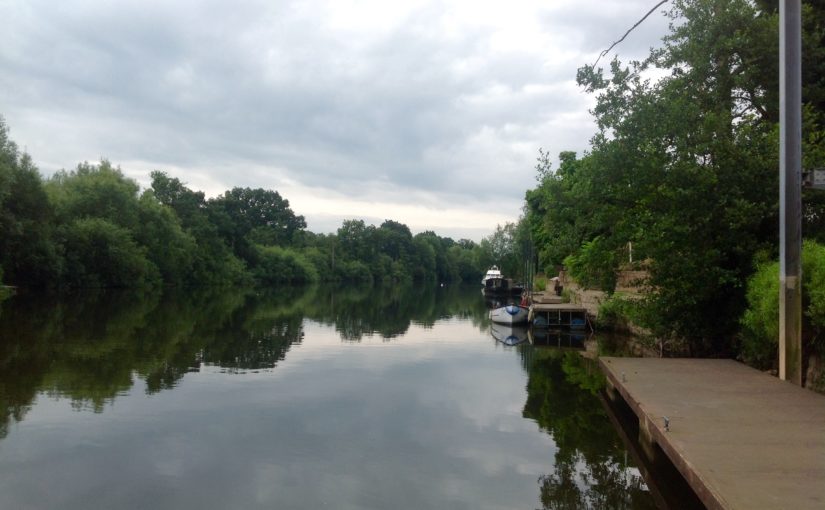
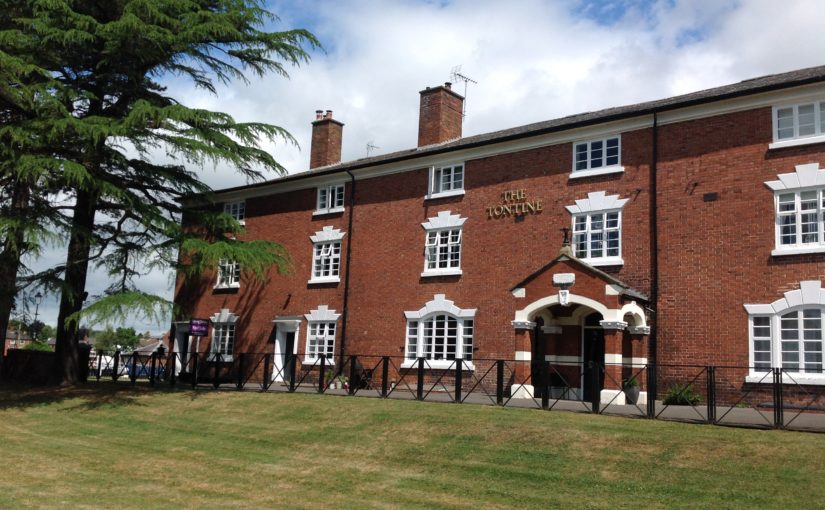
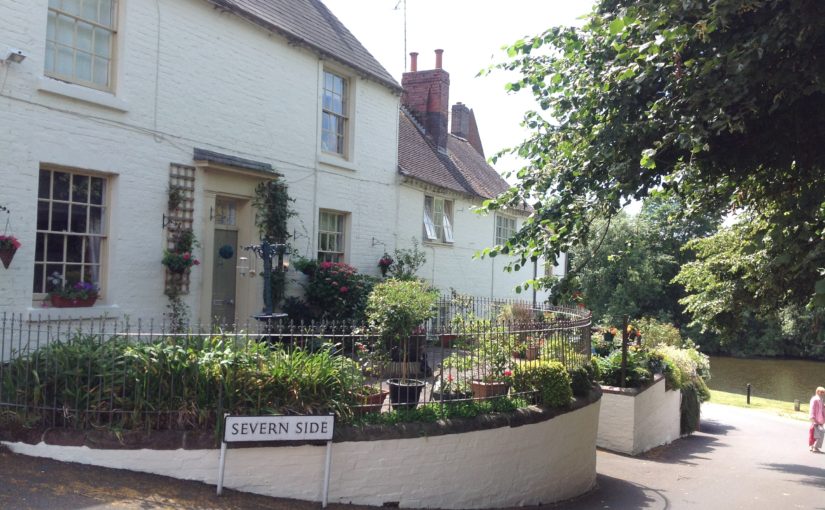
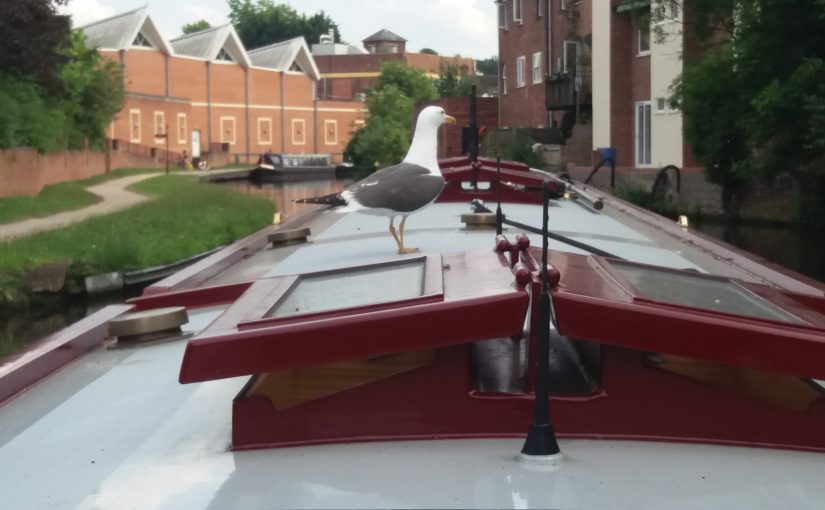
Continuing upstream to Evesham for two nights, where the river is wide and busy with river trips, sculling rowers, and swans. the floodplain has been made into a pleasant park with mooring. Evesham is on the edge of the Cotswolds so has both a thriving tourist trade and a fruit growing tradition. So the parks are well used as a congregating point with a lot of the ‘no fishing’ signs written in Polish.

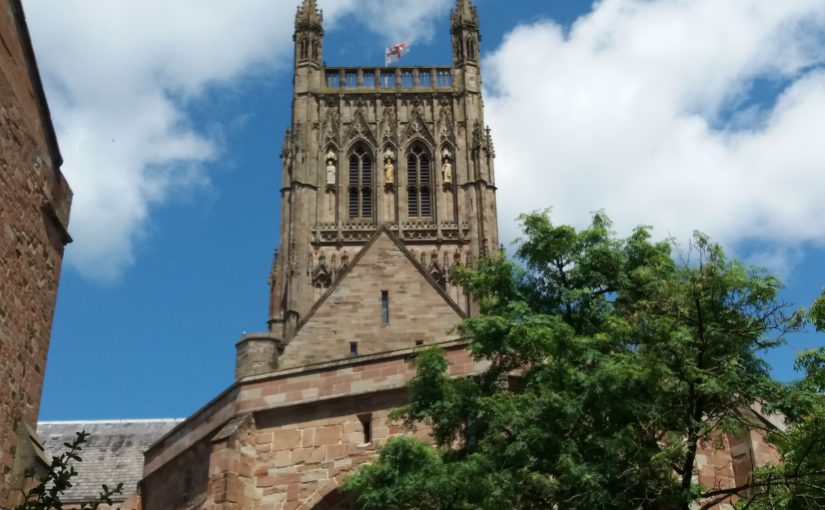
We decided to take a guided walking tour around the town and had an hour packed with information. Evesham town grew around its Abbey which was first built 700s when Eof a lowly swine herd was looking for his pigs in the forest. he looked up and saw a vision of the Virgin Mary. He rushed to tell Bishop Ecgwin of Tewkesbury, who saw the same vision. He persuaded Ethelred King of Mercia to create the Abbey.

The Abbey became a focal point for pilgrims, many seeking healing and as the monks had realised sick people often brought infections with them so built 2 more churches within the prosperous Abbey grounds, one for the local community and one for the pilgrims.  Moving swiftly on a few centuries to the 1265, the battle of Evesham was the turning point in the second Barons war (I’m a bit confused but I think the barons were effectively trying to reassert the essence of the Magna Carter which would hold the King to account, please don’t rely upon any of my summarised history to be accurate). Simon de Montford, the earl of Leicester was defeated by Prince Edward resulting in a ruthless bloody massacre.

Bad King John was raising taxes to pay for fighting and loosing wars in France, the barons were being killed off both physically and financially by all these battles, Simon de Montfort recognised that people would be less resistant to paying more tax if they had a say in the matter and therefore Simon instigated a groundbreaking system of representation by a common man from every region gathering in a parliament for consultation.

In 1540 the dissolution of the monasteries saw Evesham Abbey plundered and sold to a entrepreneur who sold the stone and made a lot of money. The town was allowed to keep the two remaining churches.

Just in case you think we are only interested in historical churches, Evesham also has a nice leisure centre and we took ourselves off for a swim.



Up the Avon to Pershore

Most of the mooring is time restricted to 48hours on the Avon, so although we could have enjoyed another day or two in Tewksebury we set off on our first cruise going upstream on a river. It would also be the first time we had done an unmanned river lock. These locks are wide enough for two boats and are fast flowing so the instructions are to use ropes both fore and aft. This needed some consideration as I would be on the lockside and neither Eric’s arms aren’t long enough to reach the bow and stern at the same time or are any of our ropes. So following the advice from Nicky the Tewkesbury lockie, the solution is to tie three ropes together and lay it down the length of the boat, once I am lockside Eric hooks the ropes around our boaters pole and passes it up to me. I wrap it around the bollard and pass it back to him so he can now hold the bow steady. And we do the same with the stern rope. It’s a bit of a palaver but it works. What’s disconcerting is having planned this all out, we shared the first lock with an experienced boater didn’t hold his boat with any ropes at all. I wonder how long it will be before we are confident of our capabilities to disregard the guide book. And our nervousness wasn’t helped any when we called into the chandlery to buy a longer rope, and the salesman couldn’t understand why the lockies were telling us to do it that way. Ho hum.  We’ll opt for safe and secure for now.

We shared all 4 of the locks on this section with the same experienced boater and he was actually very complementary of Eric’s boat handling skills, and by the end of this trip we did feel a lot less intimidated.

The cruise was pretty and easy, quite a few fibreglass cruisers that seem to travel faster than a formula 1 racing car, some sailing boats that go round in circles as the wind dictates, lots of canoes, that know to avoid 20 tons of oncoming steel and relatively few narrowboats.


We said goodbye to our travelling companions at Pershore and as there was a dragon boat race in progress mooring was limited but we were invited to double breast against NB Eli. A kind gesture as we were unsure of the protocol of asking to double up.

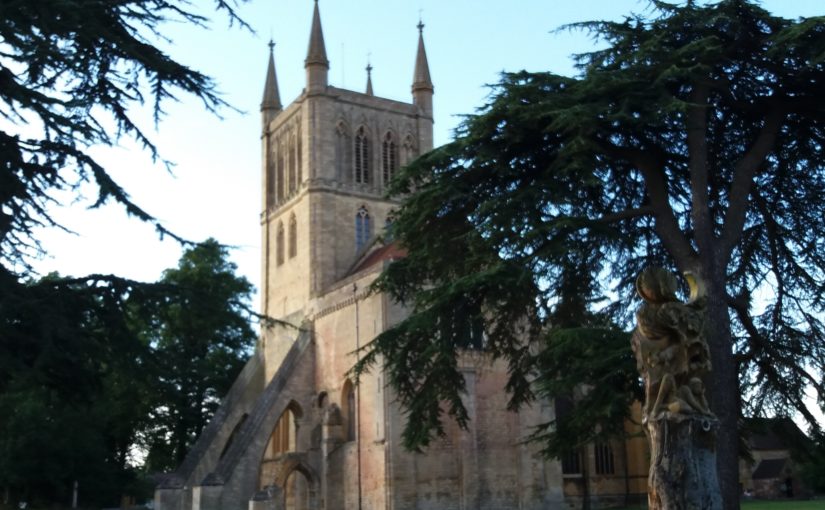
Pershore is another lovely little town centred around one main high street and its Norman Abbey. We didn’t get to go inside but enjoyed walking around the grounds, this lovely carving in an old tree represents the gift of learning.


Down River to Tewkesbury

Waving goodbye to Worcester, we set off down the River Severn for Tewkesbury.  It’s a big river and feels a bit like our equivelant of ploughing down a motorway to get from A to B. Not a lot of stopping places and not much visibility beyond the treeline, albeit an impressive treeline.

The River Avon joins the Severn at Tewkesbury so we swerved past the hidden sandbank and joined the queue for the lock onto the Avon. This is where the Avon Navigation Trust take your money for the privilege of cruising this river as its not managed by the canal and rivers trust. We paid our dues, £60 for 2 weeks, plus £3 a night to moor in Tewkesbury.

In contrast to Worcester, Tewkesbury High Street hadn’t fallen victim to too many concrete monstrosities, the Georgians got there first so the High Street is a fascinating mix through the ages, each era bringing its own style.

In the Middle Ages the battle of Tewkesbury was pivotal in the War of the Roses when the Yorkists defeated the Lancastrians. Today Tewkesbury is adorned with the banners and coats of arms of the influential families and all there’s a short inscription beside each banner. I think there are 160 displayed around the town. But I can only absorb so many Henry’s and Edwards before they all merge into one big muddle. I wonder how today’s politics will look in 500 years.

The towns history has also been dominated by the Norman Abbey, built for the Benedictine monks in 1122. But following the dissolution of the monasteries and Henry VIII lined his coffers, the towns people bought the Abbey for £453 and it became the parish church. This week there was a visiting Canadian choir singing choral evensong which made it even more special.


Wonderful Worcester

Firstly I must apologise for the lack of blog posts recently. Several things have conspired against us sharing our adventures, mainly we’re just too busy enjoying ourselves.  But also inbetween some unbearable heat,  we’ve had quite a lot of cloudy skies which don’t make for good photographs, and I’m struggling to transfer them onto the blog.

But back to Worcester. A lovely city with a lot of history, sadly concrete shopping centres have swamped the medieval magic, and only a few Tudor buildings are still standing. Not all the modern buildings lacked character, we chanced upon the Methodist church which had been built gratis by the company erecting the shopping centre on the site of its old buildings. It had stunning stained glass which was only apparent from the inside.

We took a guided tour of the NT Greyfriers Merchants house and heard how it was only saved from decaying and demolition in the 50‘s by the Matley-Moores, an eccentric brother and sister. They bought other Tudor houses in the street to stop them being swallowed up by ‘progress’. One now contains the Hand Made Scotch Egg shop, also worth visiting.

The cathedral is awesome in its grandeur that towers over the city, and I visited it several times to absorb the atmosphere and enjoy the music from both choristers and organ. I can’t even begin to imagine how such buildings were conceived and built without the technology that we have now. I guess they didn’t have health and safety regulations to comply with….

Worcester’s claim to fame, besides being the home of Lea and Perrins sauce,  was that it was the royalist headquarters during the English civil war, which had its last battle here on 3rd September 1651. We were moored outside the ‘commandery’ protected by pikes and amoury.

We saw and did an awful lot more than I have written about and I am sure we will return to this fascinating city. But it was time to move on, on our Great River adventure.

Is it a good idea to try everything once?

Faggots

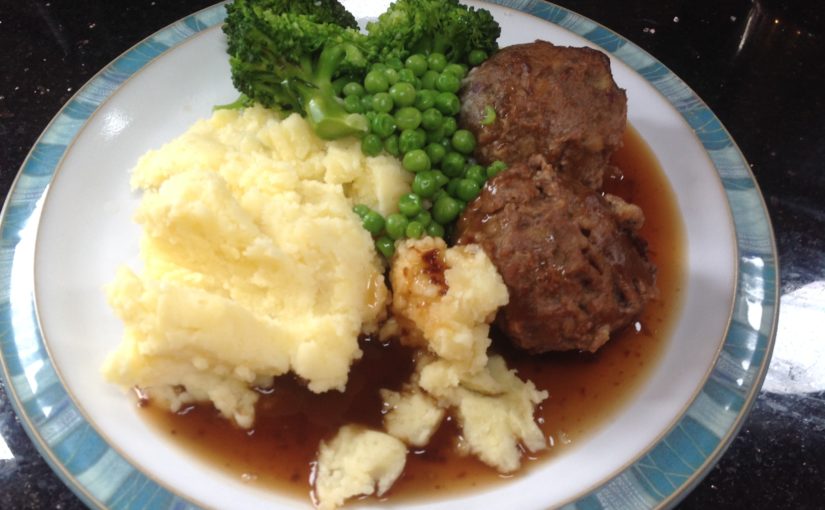
When we were in Stourport we followed our Pearsons Guide and went to Goughs Butchers. The steak was melt in your mouth deeeeelicious, the pies were flakey and full of filling, so why not try the faggots whilst we’re here. We ate them….. But never again.

The Great River Adventure begins

Well OK, perhaps not the greatest river adventure man has undertaken but it’s Firecrests first outing onto a river instead of a ‘nice safe canal’.  So to us, it’s another new adventure.

In our first month cruising we’ve realised that the best laid plans don’t always materialise, which is why we stopped in Stourport for a week instead of moving onto the Severn as we’d intended.

But during that week, we spent time with friends, John and Tina, we read the maps, checked on the weather forecast, got advice (widely differing) about moorings, and finally prepped the boat. We removed the cratch sides at the bow and laid out the anchor for easy access just in case. Tied a rope onto the ring, just in case, donned our life jackets, just in case.

And off we set, saying goodbye to a beautiful old basin and some modern entertainment and entered the River Severn.

Of course having just had summer, or rather a weeks heatwave and virtually no rain, the river was as calm as a mill pond and very tame.

It took us about half an hour to walk to the first lock last week, it felt like 10 minutes by boat. Quite a novelty to be cruising twice as fast as we walked, around 4mph instead of 2. (We could easily go at 6mph but chose not to.)

To accommodate the fall of the river, islands and channels have been created to include a lock, while the main flow of water goes over a weir. The weirs are barricaded off by huge orange barrels which spoil the aesthetics but make navigation safe. I was impressed by how substantial they are. River locks are big. They’re usually automated and manned by CART. The lock keeper has the advantage of CCTV to know a boat’s approaching and they prepare the lock and open gates. So as we rounded the bend we were greeted by a green traffic light and open gates.

To steady the boat in such a large lock there are holding pillars to wrap our ropes around.

All the work is done at the flick of a switch, none of the huffing and puffing that I go through on the narrow canal locks. And before we knew it we’d dropped 7’4“ down in Lincomb lock.

Looking back we could see the weir on the left, the island on the right (and the lock out of view further on the right.)

It was now past lunch time but on a river you have to stop at a proper mooring (unless you really know what you’re doing -or daft or brave). Luckily for us, the Hampstall Inn has a pontoon, which for the price of a pint or two we were able to moor up at.
Although we are going downstream, you always moor pointing upstream on a river. That means going past the mooring, turning the boat around and cruising upstream to moor. And instead of me leaping out to pull in with a rope I have to lasso a bollard from the bow. I’m glad we had plenty of space, Eric was going a bit fast and I needed two attempts. But it’s all part of the learning curve and we did it without falling in or making fools of ourselves.

These are floating pontoons designed to move up and down to accommodate the rise and fall of the water when it rains and floods. Again perhaps not aesthetically pleasing but knowing that you’ve got strong steel girders deeply embedded is reassuring. I’m not sure the flood measure showing a rise of 19 foot is quite so reassuring. I can’t get my head around how a river so wide can rise that much, but we’ve seen several markers showing historic flood levels so it can and does happen.

However, although cloudy, today was dry and the river was calm, and far from intimidating. Within 5 minutes we saw a heron chase a woodpecker away from the waters edge, only to be replaced by a kingfisher. We’ve been told that there are otters in these waters and the fisherman sitting nearby caught a 15lb pike yesterday.

We decided to stay moored here for the night and just enjoy the tranquility.

The Tontine

Stourport Basin still has a lot of its Georgian buildings including the Tontine. As there’s a Tontine Hotel in Ironbridge, it got me wondering whether it was something specific to the river Severn. However it is not….

Broadly speaking, it’s a 17th century investment scheme that combines an annual annuity for shareholders plus a lottery element because as each subscriber dies, their share is divided between the remaining participants, so the value of the annual annuity increases. So it does pay to be young fit and healthy as last man standing wins the lot.

Tontine schemes fell out of favour but are still in existence in various forms though can you imagine the potential for skulldeguery. Or Holywood for that matter.

There are are several other Tontine buildings in England and elsewhere in the world. Including the first home of the New York stock exchange which was the Wall Street Tontine coffee shop.

The Stourport Tontine was a hotel called the Stourport Inn, with 100 rooms and a ballroom, but after various guises and a lot of neglect it has been turned into rather nice apartments and as there’s an estate agents board outside one I suspect it’s a safer form of investment.

There’s plenty more to read on the internet about Tontines.

Stourport on Severn.

We moored up in the ‘upper basin’ at Stourport on Severn, surrounded by a wealth of canal history. Stourport itself is the first town to be created in conjunction with the development of a canal basin and it was in 1766 that parliament granted permission for the Staffordshire and Worcestershire canal company to create a navigable Cut from the river Severn to the river Trent at Great Heywood. The area was of huge importance for the transport of goods and James Brindley devised a complex interlocking series of basins to allow for loading and unloading from the river to take inland and visa versa.

It must have been a busy and noisy place at its peek in the late 18th century. Now of course it has been sympatheticly rejuvenated for the likes of us to enjoy. We loved the design of the street lighting made to look like the wharfside cranes

We decide to take advantage of an electric hook up to charge the batteries and run the boat from shore power whilst we enjoy the view, thankful that someone had forgotten the clock, because it usually chimes every quarter hour.

Being a ‘port’ somehow connects Stourport to the sea and therefore it also enjoys all the trappings of a seaside town. Eg numerous fish and chip shops, amusement arcades and a funfare, it makes for a rather interesting place to be.

The town is essentially Georgian but the Victorians made the most of Stourport as well as we discovered when sending postcards in this Victorian letter box in wall of the excellent chandlery.


We were warned about Kidderminster

….that there were reports of the kids jumping onto your boat. We hadn’t expected hitchhikers taking advantage of a free ride.

Sadly we were told on several occassions not to leave the boat unattended in Kidderminster. This becomes a  self fulfilling prophecy as we don’t have the knowledge to dispute it. And of course we don’t want to risk our boat so we heeded the advice. The roads out might be some peoples first choice but we took the lock and went underneath this 6 lane intersection.

However Kidderminster did have several good points,  including a huge Sainsbury’s, Maplin and PCworld. Plus a host of other top name retail outlets. In my previous life I could easily have spent a day or two meandering around these halls of temptation, but now I was happy just to pick up the essentials and flee.

We’ll be back another day, Kidderminster, when Firecrest has a few more scratches and we’re a bit more canal savvy. I’m sure if we look all around we’ll find somewhere worth exploring

Our journey now goes on to Stourport.
Kinver country fayre

On Sunday Kinver put on a show to be proud of. The annual Kinver country Fayre. We slathered on the factor 30, donned our sun hats and set off thankful that the boat would be in shade most of the afternoon. The first event was a transport through the ages parade down the high street. Sadly they couldn’t draw the narrowboat down the highstreet but the bargees and their horse came.

My favourite of the day had to be the beautiful VW Combi, Thanks Dad so many happy memories, I was driven to our wedding in our own 30 years ago.

Eric wanted the most modern BMW that brought up the rear. And funnily enough when we left the church happily married we were driven to the reception in Erics brother’s shiney black BMW. They were also promoting an electric BMW which was very sleek and smart but we’ve reached the age of preferring a car we can get in and out of gracefully

After the parade we moved onto the field with a huge variety of stalls and other entertainments.

I was mesmerised by a group of dancers called BellyFusion

and the HCA wrestling champions

Eric found the local Brew and got talking to one of the many bobbys around. Sadly we saw 6 armed police officers. We wouldn’t have batted an eyelid seeing them at an airport or in London but how sad that it’s now deemed necessary for a rural fundraising event.

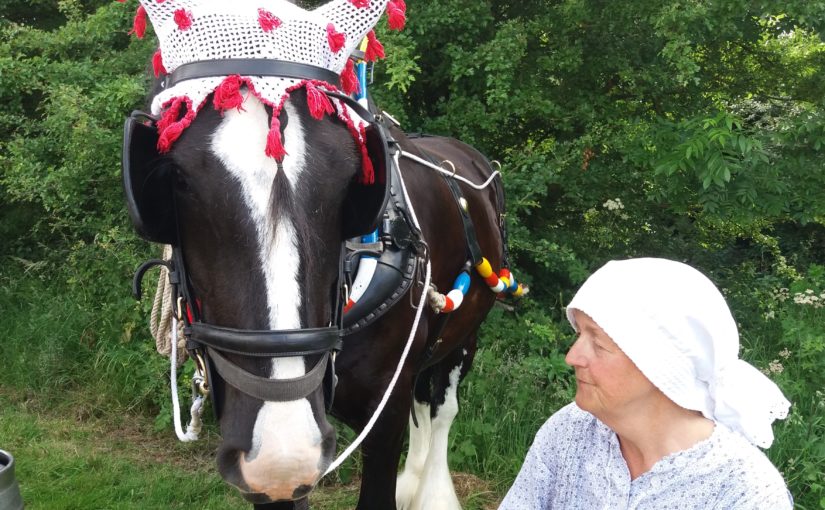
One of our highlights was being able to chat to the family with the barge horse. They were ‘Little Shire’ which was very obvious when I saw the full Shires harnessed to the drays. Notably they were bred to have close set hind legs and broad set shoulders to aid pulling the barge along the towpath. They would be no good as ploughing horses because they were used to  their loads being pulled at an angle behind them. And their harnesses included rotating ‘bobbins’ that effectively stopped the leather chaffing the horses skin. A bit like horse fenders. I loved the crocheted ears to protect against flies.

We stocked up on home made marmalade and other edible delights, then returned to our boat mid afternoon for a siesta.