Keadby lock manouvers

We’d heard a few scare stories about getting into Keadby Lock. But we listened to the advice from the lock keepers and set forth. Our first problem was locating the lock entrance as we were looking directly into the evening sun and it was really hard to see the green light.

Spot the lock

Once we had it in our sights we slowed right down, But as expected we kept moving with the flow,

We then began a 180′ pivot, to realign ourselves facing upstream. At least we weren’t in any danger of grounding as we turned.

We had been warned about a shifting sandbank on the north side of the lock entrance but the tide was still high enough to be in our favour.

Once we were facing upstream Eric held the boat stationary, treading water until he matched the speed of Firecrest to the flow of water.

Quite an achievement considering the flow of water was considerable we travelled down around 4mph and the current was also 4mph therefore our speed was roughly 8mph.

It gave Eric time to gain is composure/nerves before putting on hard throttle to turn sharp right into the lock.

However he hadn’t taken into consideration the speed of flow being slower in the leigh of the bank than the centre channel of the river, meaning he was expecting to be pulled downstream faster than he actually was.

My nerves and composure failed as we both held our breath wondering if we’d make it before being bashed against all that solid metal piling and swept away to sea. At this point I decided holding on to the boat was more important than photos Most boats bear battle scars from the lock wall, and I’m not going to reveal how close Eric got to making it in unscaithed, needless to say he wants to do it again, with a bit less throttle.

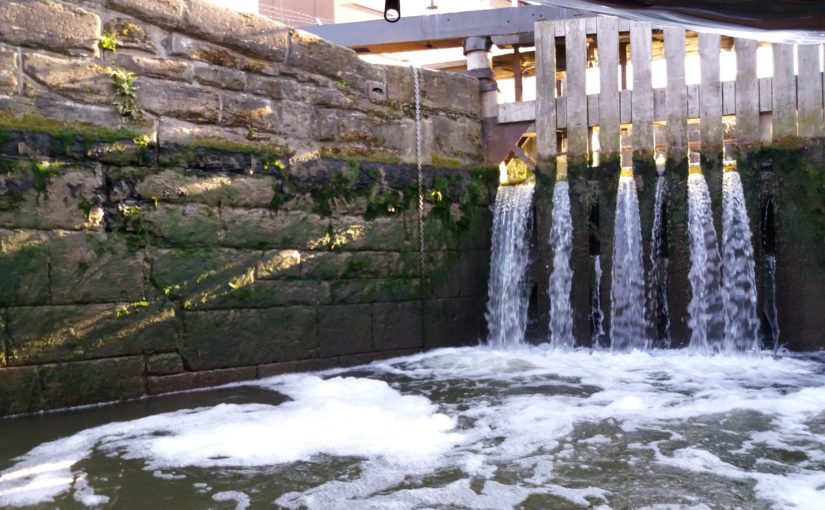
Once inside the lock the keeper took my bow rope up to secure us. There are several ways to tie off in a lock, most of the deep river locks have an inset poleor chain that ropes can be looped around which just slide up or down as the water levels change. West Stockwith threw a secure rope down for us us to hold on to, keadby passed down a rope with a carabiner clip on the end and it took me a moment to realise we had to attach our own ropes which he raised up to wrap round the bollards. The torrent of water coming in through the top gates made it feel like I was at the base of Niagara Falls. Glad I had a secured rope to hold onto.

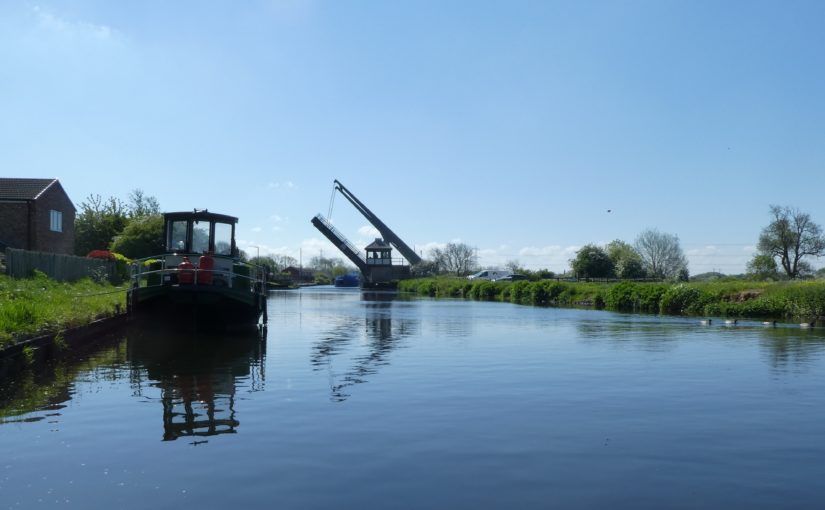
Once we were raised to canal level and gates were opened, we realised we couldn’t go any further because there was a swing bridge in front of us. Luckily the lock keeper operated that one automatically for us.

swing bridge at Keadby lock

It was nearly 8pm by the time we were through the swing bridge, all the other mooring had been taken, (not that there was a lot) so we took the anguished decision to overnight on the waterpoint, something we’d usually be vehemently against, but there was a second water point available. And we’d move straight after breakfast. All we could do now was enjoy the sunset.

Sunset on the Keadby and Stainforth canal

I’m not surprised most narrowboaters are anxious about Keadby and West Stockwith Locks. We did both in near perfect conditions and the photos don’t do justice to the power involved, both of nature and narrowboat. Part of the problem is, is that there’s no easy way to practice these locks and the next time you get to do

Back on the water.

After a glorious week in the Lake District we were itching to get cruising again. Our plan, is to spend some time in Sheffield. This meant leaving the tiny narrow Chesterfield canal with its one way traffic

Drakeholes tunnel

And the May bush and overhanging greenery that lined our way.


We had an overnight stay in Stockwith Basin and had been advised by several people as far away as Retford that we ought to visit the microbrewery, The White Hart, as both the beer and food were excellent. Frustratingly they don’t serve food on a Sunday evening but the land lady was lovely and really concerned that we’d not eaten. So much so that she offered to order in a takeaway for us to eat in the pub. Now that’s what I call service. We’d got food on the boat so after Eric had confirmed that the beer was well worth the visit. We returned to Firecrest to make her river ready.

West Stockwith Basin

The lock keeper advised us to leave on the turn of the tide at 4pm so we’d be travelling with the flow. The weather was balmy and with the sun on our backs we set off on our 2 1/2 hour journey. It was another advent calender moments when the lock gates opened and revealed the River beyond.

Leaving West Stockwith Lock

We only saw 2 other boats travelling upstream on this aquatic super highway. So as always we couldn’t resist a chuckle as we cruised underneath another motorway, this time the M180, which to my embarrassment I didn’t even realise existed, carrying traffic to and from Grimsby.

And then we came to Keadby Bridge (also known as King George V bridge. I was fascinated by the structure and a bit of research revealed that it was one of the first Scherzer Rolling Lift bridges, and had been the largest in Europe when it was completed in 1916.

Keadby Bridge

We expected something this huge needed a lot of muscle to move it so it was a nice surprise to find it was an ‘all electric bridge just like Firecrest.

Keadby Bridge looking upstream

For the final mile or two there was a lot of industry along the River, we wondered if this crane was really a rocket launcher in disguise.

We’d been warned that the lock was hard to spot but to watch for the round lookout tower and the light. They weren’t wrong

Looking for Keadby lock

Celebrations

We’ve had a lot to celebrate recently. My brother, went to live overseas several years ago and this is his first return visit to England. We Skype, text and send gifts etc, but you can’t beat a real big bear hug from your Bro. He timed his visit to coincide with the “royal” birthday, 3 of us add another year in the same week so we abandon our dates and eat cake for a whole week.

Mum Bro and me

There were too many of us to all stay at Mum’s, so we booked a cottage in the same village and had a fabulous week in the Lake District. We realised it’s been about 10 years since Eric and I had a holiday together. Whilst Firecrest was being planned we hired narrowboats in differing configurations, which we justified as research. We took ourselves off to one of our favourite places, Ulswater and went on a proper hike along the east side But to prevent withdrawal symptoms we caught the steamer back to Glen Riding. you can see the steamer on its route, and that’s Helvelyn on the left.

Ulswater

One of the things I love about the Lake District is the real Herdwick sheep.

And the bluebell woods

Beckmickle Ing Wood

It wasn’t just the bluebells that were at their finest, the yellow gorse bushes made a welcome change to the acres of sneeze inducing rape seed

Looking south towards the village of Crook, with Morecambe bay in the distance

And I couldn’t not share this photo taken by Heather of a herd of Angora goats.

Angora goats coming to say hello.

We had a fabulous week surrounded by so much love and happiness, and beautiful countryside. All the effort and preparation was worth it.

Rambling round Retford

We planned to go as far as Worksop on this trip, but as we have learnt, waterways plans are very fluid. Beautiful though this area is, it’s a slow canal. The centre channel is narrow and the banks shallow which means our average speed 1.5mph and makes grounding was an occupational hazard if we had to pass an oncoming boat. Several times we came across boats mooring directly opposite winding holes which just created an extra difficulty. Consequently because of our family commitments we decided to call it a day and wind at Retford. Still, it gave my brother a taste of our life with a few days gentle cruising before we took advantage of the mooring at the Retford and Worksop Boat club.

Retford itself provided us with a decent bank with rings, supermarket. It’s an old market town that is mentioned in the doomsday book. There’s a strong continental influence in the architecture as the flat landscape required drainage ditches to manage the flooding, and who better to advise than the Dutch.

The Retford Town Hall

And the town centrepiece is the Sebastopol cannon brought over from the Crimean war. I’m not quite sure why.

The sebastipol cannon

We did wonder if it was significant that the bank was right next door to the police station

The Retford Police Station.
Bridge 72 at Wiseton

The Chesterfield Canal trust has been restoring The 46 miles of this old canal since 1989, however housing estates and railways have somewhat hindered progress and there is still 9 miles to rebuild in order to join up with the prestigious waterside developement in Chesterfield town, itself. The goal is to complete the work by 2027 to commemorate the 250th anniversary of its original completion. I hope we’ll still be boating in 8 years to enjoy this exceptionally beautiful canal all the way.

Change of pace on the Chesterfield canal.

Our goal was to be on the Chesterfield canal by mid April as we have friends and family in this area and we just happened to have rather a lot of birthdays to celebrate this month. The next few weeks were going to be busy busy for us so it was an absolute joy to find the Chesterfield Canal so peaceful.

Bridge 72

We were surprised by just how rural it is with the occasional disused brick works alongside.

Disused Brickworks near Gringley Shaw Loc

But the price to pay for this isolated idyll is a bit of a vicious circle. The canal has very little traffic, it’s narrow, has shallow banks and few mooring opportunities. It has a reputation for becoming very weedy.

Rural idyll

We did however find a lovely spot to moor at Drakeholes

Drakeholes visitor mooring

The low concrete edging meant that Eric could relax over the bank holiday weekend in true manly fashion by repainting the gunwales

Whilst I took advantage of the sunshine and picnic bench to get my spinning wheel out and turned some fibre into yarn.

Arty and Ruby were able to join us and we shared a sumptuous picnic, I’d foolishly not believed the forecast that said it was going to be a hot weekend and made soup.

Fabulous feast

Hot days make for misty mornings full of promise.

And the main goal of our time on the Chesterfield was to meet up with my brother, Silver, who has lived overseas for the past few years and only seen photos of Firecrest.

Boater’s breakfast

What better way to celebrate than a proper Boater’s breakfast.

Cruising along to the Chesterfield

Our goal was to get onto the Chesterfield Canal by mid April so we could meet with family and friends. But we don’t do anything quickly and although we could have done Cromwell to West Stockwell in one go, we opted for an overnight stop outside Torksey Lock. We’re usually quite proud of Firecrest and used to gongoozelers asking how long she is -60 foot, but there are times when we get a real inferiority complex. Yes that’s us moored behind that “ocean liner”

Entrance into Torksey Lock

It seems that that the Trent is the place to build your power station, I guess there was a glut of coal and water. I know their days are numbered but I find the cooling towers a wonderful sight.

Cottam Power station

I wonder if they will survive like the old buildings like Torksey Castle

Torksey Castle

And this folly known as “The Chateau” a wealthy Georgian lawyer’s picnic palace

The Chateau

Of course not all the sights we saw along the Trent are to be envied

But we were paying close attention to our Boating Association Trent Maps which highlight the cruising channel so we avoid the shallows, although we could see the deep and shallow areas by looking at the chopiness of the water. And with the wind that was blowing, it was quite choppy at times.

Choppy and shallow water

We’d made good progress from Torksey but had been advised to moor in Gainsborough for a few hours until the tide was in our favour to enter the lock West Stockwith

Arriving at Gainsborough

Scarily high wall, but the Trent has a tidal bore called the Aegir that reaches Gainsborough and can be 1.5m on a high spring tide. I was quite happy to wait in the town as there’s a wool shop called the Wool Loft in the red brick building at the top of the pontoon and they invited me to join their knit and natter group

Visitor mooring at Gainsboroug

We were expecting it to take half an hour down to West Stockwith but once we hit the incoming tide it really slowed us down, we’d been travelling at nearly 6 mph and we felt the water flow change direction it slowed us to just over 3 mph without any movement on the throttle. Another word of thanks to the extremely helpful lock keepers. We’d let Stockwith know we’d left Gainsborough so he was waiting on the lock landing for us and ready to give Eric directions to manoeuvre the boat across the water into the narrow gap. It takes nerves of steel cause the advise is to do it at full throttle and it’s near impossible to see the actual gap . Even so most boats bash the wall, including us.

Entrance to West Stockwith Lock

Once through the lock we were able to moor up in the basin. It’s a lovely small marina basin, we spent 2 nights there, dismantling the anchor and radio and all the river paraphernalia.

Our Journey from Foxton Locks has been 115 miles and 65 locks, we have taken 24 days, at a leisurely pace with time off the boat for family and friends and we still have a few more days in reserve before our next commitment.

Floating Downstream

Our plan is to meet up with family on the Chesterfield Canal so now that we were all shipshape we set off, Under Trent Bridge, with it’s beautiful blue and gold metalwork

and onto Holme Lock, where we had to wait for the floating gin palace to come through. Lots of happy people looking down on us.

Our first overnight stop at Stoke Lock. Ironically on the canals we would rarely stop at a lock, for a start the landings need to be kept clear for boats on the move and there’s always a risk that the pond will drain if gates are leaky. However that’s not the case on big rivers, there are usually tall walls or floating pontoons near the locks but little else other than a great community spirit.

The turbulence as the lock fills or empties can be quite ‘exciting’ so boats are held fore and aft by our ropes around inset poles to stop us bashing into the walls or other boats.

Inside Stoke Lock

It feels quite intimidating being at the bottom of a big lock but it’s like opening an advent calendar when the gates open to reveal a whole new landscape.

Released

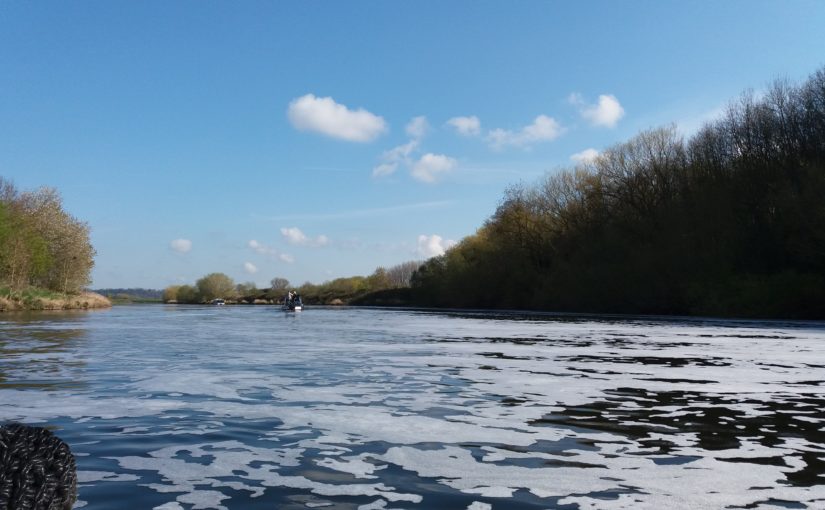
The weirs on the Trent are colossal, not to be messed with. The froth continues for quite a way.

Looking back towards the weir

We made it to Farndon, just outside Newark on day 2. Farndon marina is home to an old Norwegian fishing vessel that has been transformed into a bar/restaurant, and it’s well worth the 5 minute walk for a £6.50 plate of fish and chips.

Fish and chips at the Knot

Next stop Newark, past the beautiful castle and onto the visitor moorings by the CRT offices. We only stopped long enough for Eric to fill the water tank and for me to fill the fridge, Aldi is less than 10 minutes walk from here so a convenient place to do the chhores.

Newark Castle from Town Lock

And the final joy of this leg of the journey was to watch the sun setting from our overnight mooring at Cromwell lock.

Sunset at Cromwell


More roof work

After Nottingham the river locks are manned by lock keepers and the procedure is to announce your intention before you arrive. That way the lockies can set the lock for you or advise you where to wait your turn. You can phone ahead which is ok if there’s good reception, but using a VHF radio is the prefered option. We opted for a fixed radio rather than a handheld device because the clarity is generally better. But this requires an aerial. Last year we cobbled together a tempory mag-mount affair but we wanted something more permanent, and I finally relented and gave Eric permission to drill holes in the roof.

I’m not sure who was more worried.
I watched nervously from below, although I’m not sure what I’d have done if he’d gone through the ceiling. But he didn’t.

Job done, all ready for the base to be screwed in place.

One rachet antenna base ready for the aerial

Now we can be heard for miles and we set off downstream on the Trent underneath that beautiful bridge on our way to meet family on the Chesterfield Canal.

Adding Solar Panels

(Technical data to be written by Eric later) We’ve long believed that solar panels are a good idea for narrowboats. But the complexity of adding them to an all electric boat the way that Eric wanted seemed a step too far for our builder. For the sake our our sanity we didn’t peruse it initially, but during our week at Beeston things fell into place for us to rectify this compromise.

Eric had been researching panels on and off for several months. And the panels that fitted our bill came from Photonic Universe, a company in Orpington, Kent. We had a family event to attend in Sussex, so hired a car large enough to take advantage of close proximity and transport 4 panels back to Firecrest.

You’d think it was Christmas morning when Eric unpacked the boxes on our bed.

Inspecting the goods

My concern was, “where the heck are we going to store these until they are fitted” but Eric’s enthusiasm was such, that it wasn’t much of an issue. We were hoping for cool overcast dry weather and that’s what we got the very next day, so it was out onto the bank to unpack properly

Unpacking on the bank

First we needed to check which way we were going to position the panels. Bearing in mind that retro fitting panels means working around pancake vents, centre ropes and dog boxes, we had a lot to consider. Our choices were horizontal across the width of Firecrest or lengthwise, so we played around also taking into consideration the need to wire them into the boats electrics.

Looking at different options

We opted for length ways down the boat, 2 in front and 2 behind the pancakes, rather than width ways across the boat.

Decision made, pairs of panels lengthwise

First job though, was to wash the roof thoroughly. We don’t call him Flash Gordon for nothing.

Washing the roof

Then Eric used masking tape to mark out the chosen positions, and to protect the roof from any excess glue squelching out. He used CT1 glue as its both waterproof and flexible as well as being virtually impossible to unstick.

Glue on the panels

We worked as a team lifting each panel into place.

The point of no return, lowering the panel into place

We smoothed the panels down and held them in place with our ballast weights whilst the glue cured.

Smoothing and weighting the panels in place

Stopping for a cuppa after each one, and then completing second pair the next day.

Three down one to go

After a week at Beeston we were itching to move on, so we cruised the 5 miles along the Beeston Cut onto the River Trent outside the County Hall. Here Eric was able to add a bead of glue to mastic the edges of the panels.

Applying mastic

All four panels are now safely in position, awaiting the far more complex stage of the project. Wiring in and connecting them to our existing system.

Looking towards Trent Bridge

And just before anyone comments on the ropes across the panels in our header photo, we know this will reduce our output, generally speaking we will only have one centre rope and it fits between the panels. We have a secondary extra long rope available for deep river locks.

Turning onto the Trent

The Soar had soothed our concerns about travelling on a river again, but this morning before we set off, we prepped the anchor and donned our life jackets ready for the big water on our journey north. The Trent is the third longest river in Britain, 185 miles long. It starts its journey on Bidolph Moor in Staffordshire where it historically marks the divide between the North of England and what lies below. Its large drainage catchment area from the moors and the midlands makes it vulnerable to heavy and occassionally catastrophic flooding, hence the need for boats such as ours to treat it with respect. We shall be travelling 85 miles downstream as far as Keadby, which in theory is 24 hours travelling, however, we need to eat, sleep, explore and spend time with family so you’ll have to bear with us for another 2 months. After Keadby the river carries on for another 9 miles until it reaches the Humber Estuary and the sound of seagulls and proper shipping lanes.

Our first view of the Trent. And although we want to turn right, the arrows guide us to the left to avoid the weir.

Leaving the Soar

Things are starting to look familiar from last year’s cruising. The boat club house on the island,

Looking towards the Trent from the Soar

And the entrance to the Erewash canal

Looking towards the Erewash from the Soar

But looking back a solitary swan says goodbye and thankyou for calling.

Mouth of the Soar

After all that excitement, seeing the open water, we’re immediately guided back onto a managed canal

Cranfleet canal section

And towards Cranfleet lock

Cranfleet Lock

And finally onto our destination for the next few days, Beeston

Beeston Lock