
Archaeology shows that Leicester was a celtic settlement in the Iron age, long before the Romans arrived and created a garrison town. With Romans and soldiers and access to a navigable river, the community naturally grew. We didn’t have to wander far to see some old buildings. Sadly there is very little left of the castle other than a few walls.

But the castle grounds weren’t wasted as they were incorporated into the more modern homes.


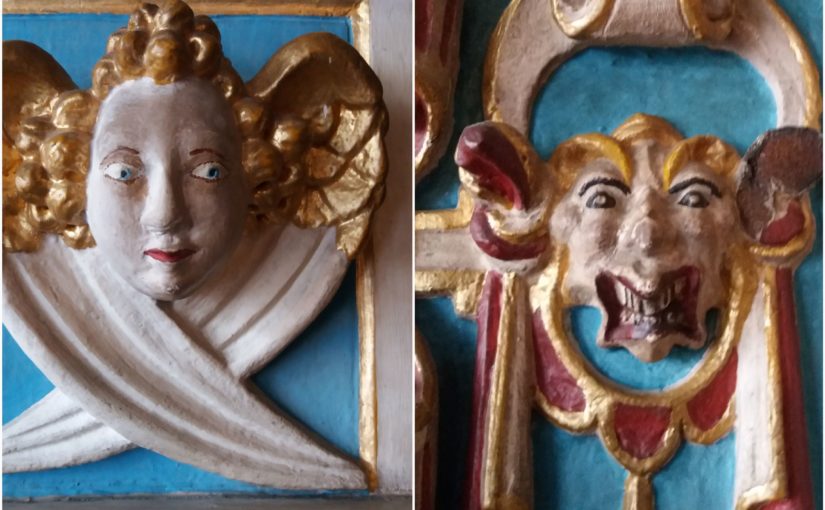
Commerce thrived, and wealth was acquired which needed showing off. Leicester has one of the countries oldest surviving guildhalls built 600 years ago. It’s now a museum, showing off it’s finery.

Guildhalls frequently became the town’s courthouses and prisons, Leicester’s being no exception, proudly showing off it’s gibbet iron. This one is a replica of one used to display the executed body of James Cook. He was hung for a grusome murder infront of a 30000 strong crowd in 1832, and that was before social media was banned from showing grizzly images. Apparently criminals weren’t always dead before they were hoisted up for public display.

Thomas Cook (no connection to the afore mentioned murderer) was born in Derbyshire but made his home in Leicester. It was here that he set about encouraging social improvement through education and consumption of less alcohol. He saw the emerging railway as a means to create this opportunity and in 1841 he organised his first escorted tour. He took a group of 500 people 12 miles from Leicester to Loughborough to attend a temperance meeting, it cost 1 shilling. The rest they say is history.

Leicester also played a pioneering role in the knitwear industry, introducing machinery to manufacture hosiery, there are knitting machines on display in the Abbey Pump house. However it is the Leicester Seamstress that is commemorated with a city centre sculpture where she is sewing up the stocking seams by hand.












 At least as we made our way through Husband Bosworths tunnel it was dry.
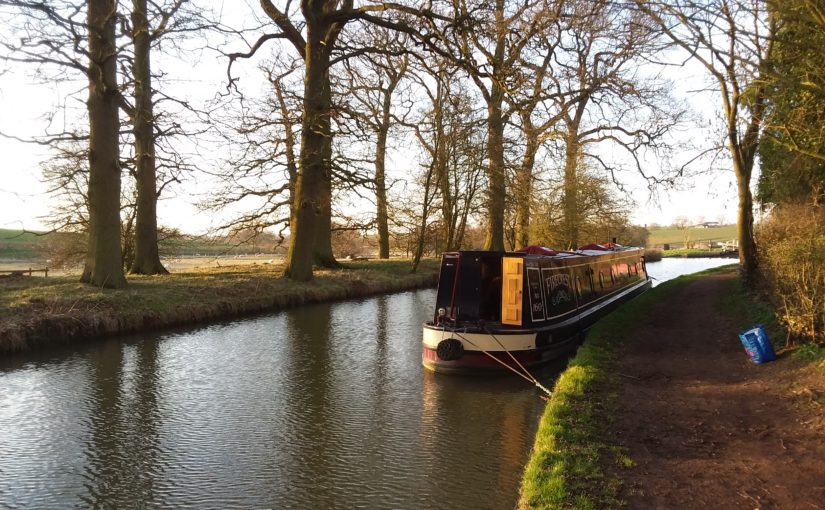
 And although it wasn’t sunny, the canal cut through an avenue of beech trees.
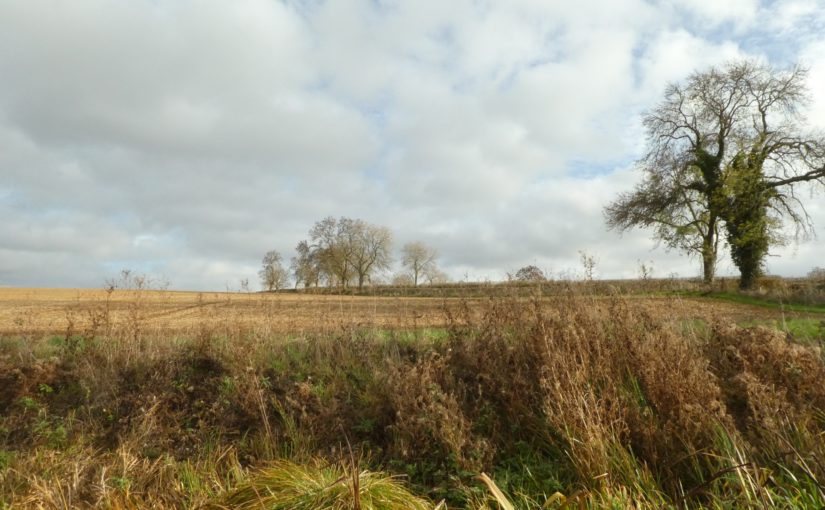
 And out into some open hilly Leicestershire countryside.
 To help warm me up I got out and walked.
 Until we got to our overnight mooring at the top of Foxton Locks. This has to be one of my top ten views from the canals, sadly the camera doesn’t do it justice.
 we woke to the most glorious of days, so decided to make the most of what autumn was left. Today was a true Codiwomple To travel in a purposeful manner towards a vague destination. We would take a detour just for the pleasure of cruising and venture down the short Welford Arm.
 First though, it was with great amusement (and smugness) that we cruised underneath the A14
 As anyone from Suffolk knows there are only 2 escape routes, the A12 and the A14, both long tedious roads that are too small for the volume of traffic using them. We had crawled the A14 many a time on our way up to Braidbar and frequently stopped off at Welford to refresh our sanity. Seeing the A14 from the canal is much much prettier.
 Mind you we did have a moment when we thought the canal would grind to a halt, we had “leaves on the line”
 More in the lock than on the trees,
 Although what were left on the branches were pure gold.
 Welford itself has a small marina basin at the end of the line, we were able to moor up and head for sustenance, this time enjoying a huge bowl of homemade soup, in Totty’s tearoom. It’s a tiny place and the as the owner/cook/waitress chatted to us, she got Eric summed up in one, and offered him a second bowl on the house. Silly man, he was too full for the best coffee and walnut cake I’ve had for a long time, not that it stopped him having a piece. The light was going as we got back to Firecrest so we didn’t walk around the village this time. But this little detour was worth it. We will be back again to visit Welford and to explore properly.