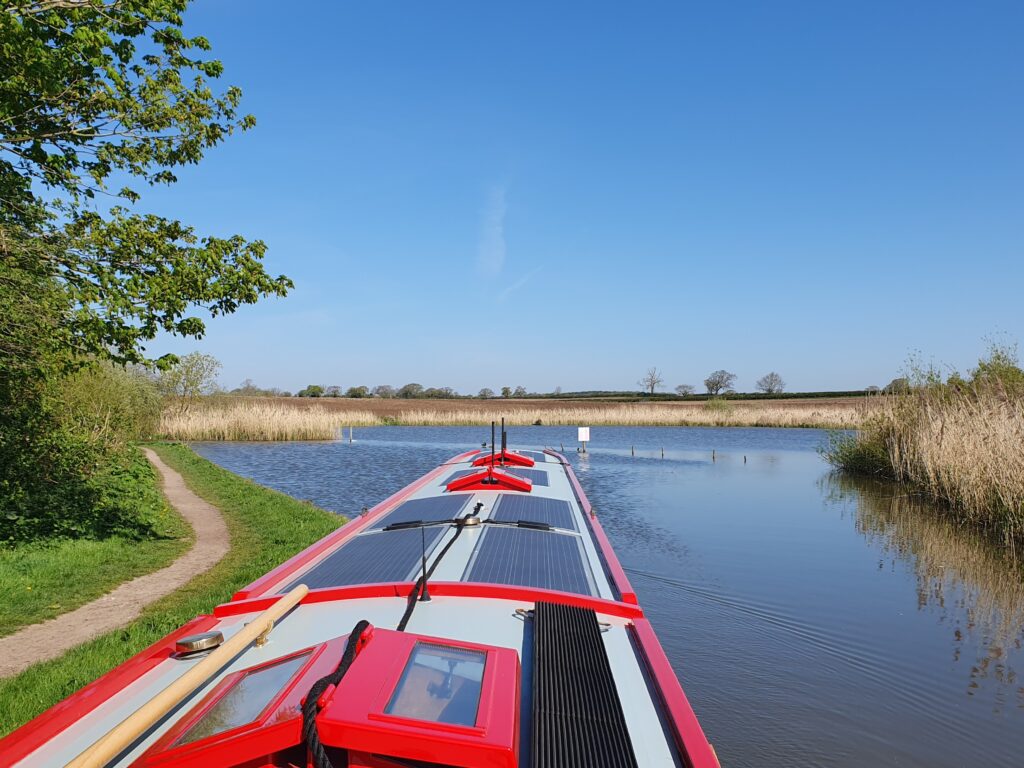
Cruising through this part of Cheshire throws up some interesting comparisons. Many many years ago, before canals were invented. (About 220 million years to be exact), this part of Britain lay under salt marshes caused by the sea flooding inland. Eventually the marshes dried up and left behind beds of rock salt, which in turn the Celts and then the Romans took advantage of. Building up settlements around the natural salty springs, they could process and produce a valuable commodity. The rest they say is history(or geography or economics) . The towns of Northwich, Middlewich and Nantwich all prospered on the salt beneath them. “Wich” being the commonly associated Anglo Saxon word used as a suffix for salt towns. (Although, more correctly the suffixes, wich, wick, and wyke refer to any settlement built up around a specialised industry). Even the canals bear the legacy of the salt mines, not only benefiting from a highly profitable route, but suffering from ground disturbance creating flashes. Most flashes are now stand alone lagoons but some have breached the canal bank causing tempting wide areas to explore…. but woe betide any foolish boater straying too far, for here be dragons lurking in the shallows. Best admired from the well dredged main channel.
As we get to the outskirts of Northwich, we come across the Tata chemical plant at Lostock. This imposing industrial site straddles the canal with a jungle of steaming hissing pipe work and forbidding structures.

Over the past few years, we have watched the progress of new building work, which is looking almost complete. Only to discover that this colossal building with a colour scheme copied from Firecrest’s roof, is nothing to do with salt but is actually the new Lostock Sustainable Energy Plant. Their website is an easy read with some interesting facts.
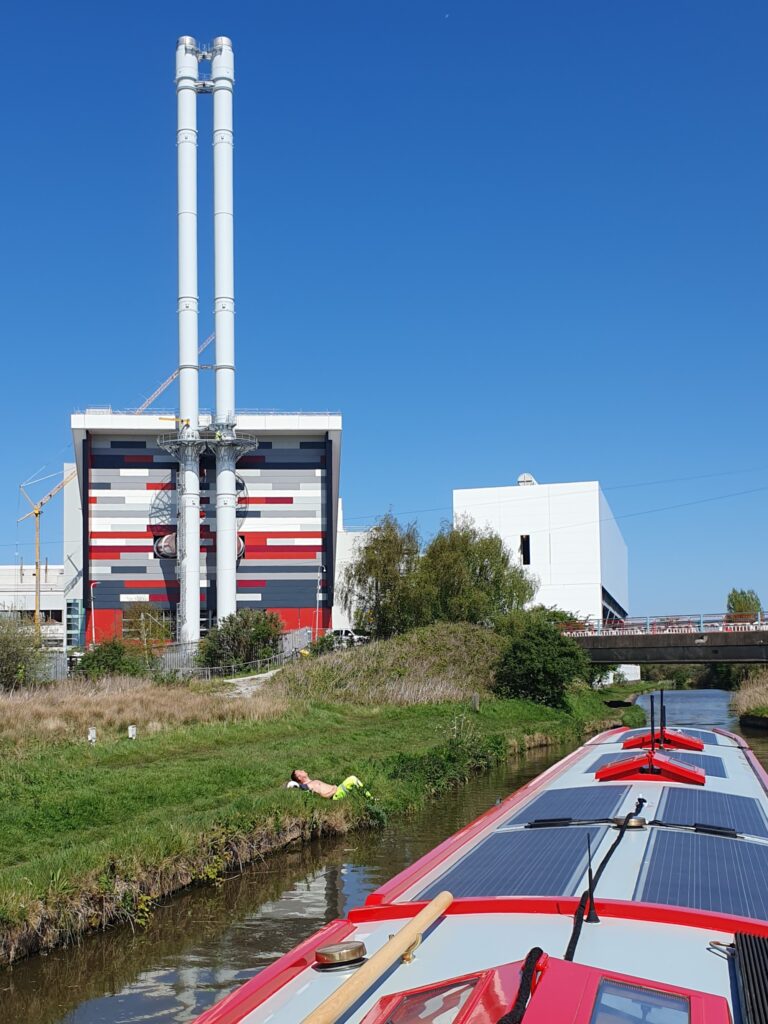
Basically, it’s a waste inceration facility, that utilities modern advances and technology to capture and reduce pollutants and generate enough electricity (About 69.9mw) for a town twice the size of Northwich, at the same time as reducing landfill by 600,000 tonnes every year.
We are fans of this sort of joined up thinking, but oh boy the fans they have on site look mighty powerful. I bet they’re noisy when they’re running.
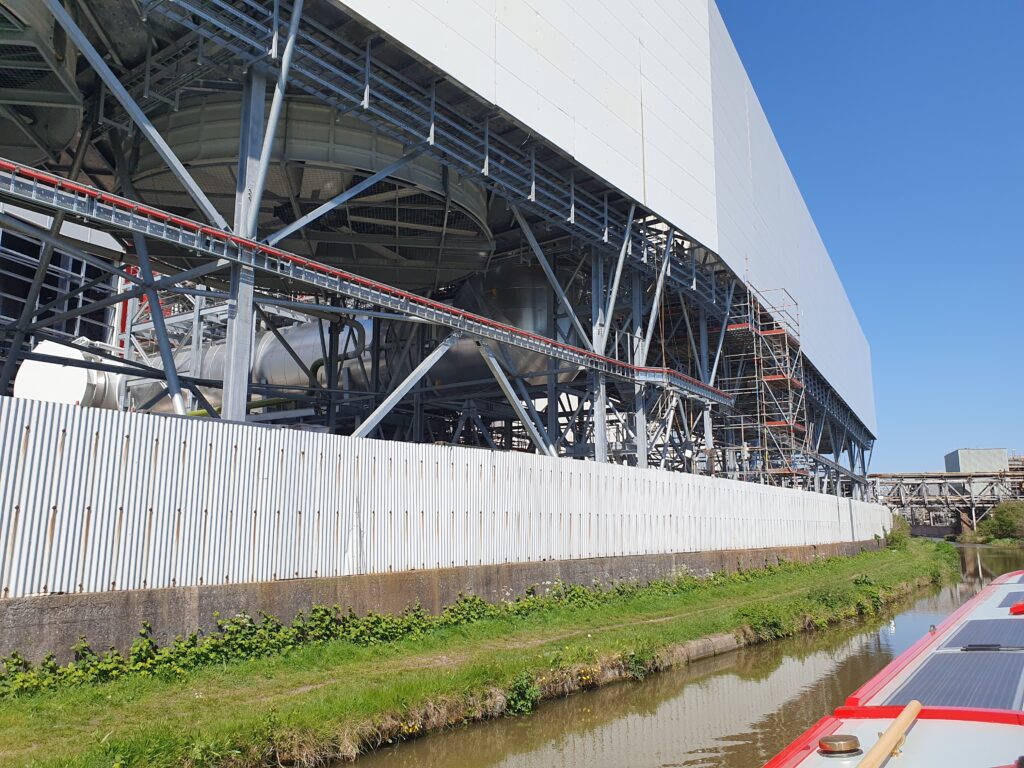
Despite our love of the tranquil green countryside, there’s always something strangely compelling about cruising through an industrial site. The public don’t generally get to see it so closely from the main roads.

Part of me would love to take a guided tour around the complex to see what happens inside, but whilst it may not be top secret, I guess it’s not built for easy public access. Especially if the only way to reach the top is to scale the walls in a harness, as we spotted this person doing.

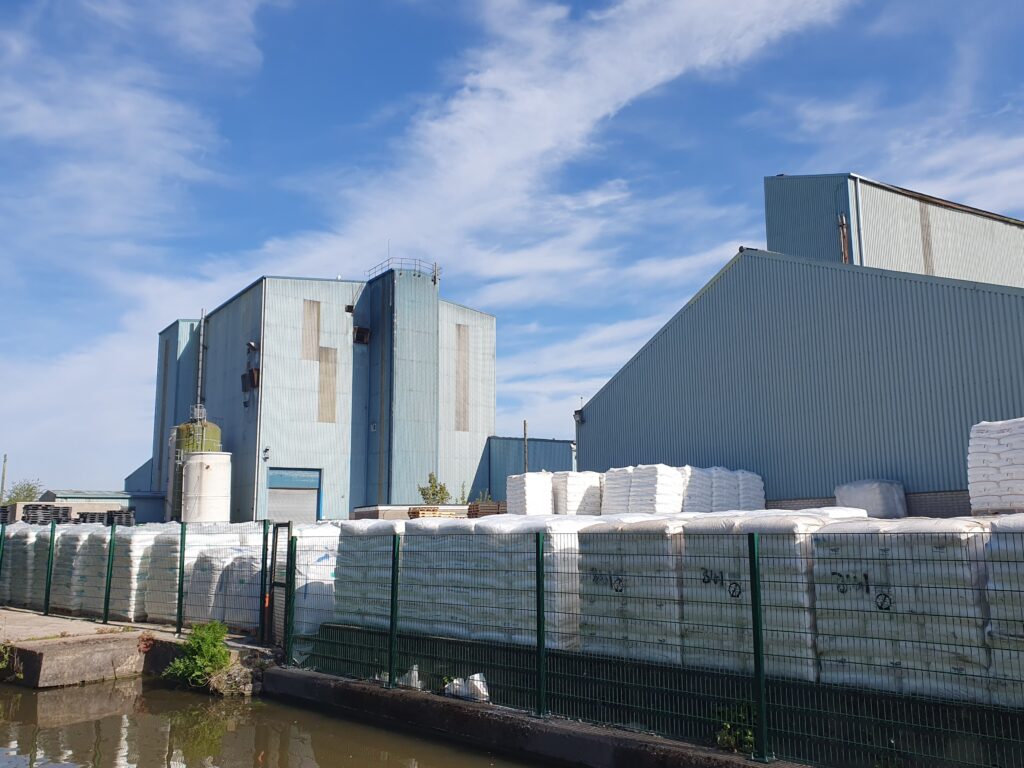
Opposite the Tata site, is the Lostock Brine purification plant.

And further down the canal, the bagged salt awaiting transport. All we need now is some vinegar, fish and chips.
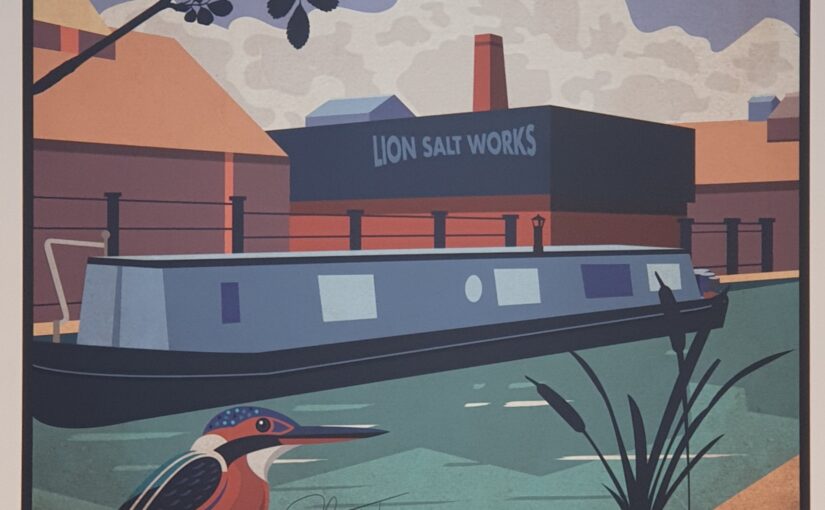
Then we reach the Lion Salt works, where we were able to explore inside.

This fascinating museum follows the history of salt in the area, from the earliest geology, through celtic and roman artifacts, 17th century salt mining until this victorian site was built for brine extraction.
https://lionsaltworks.westcheshiremuseums.co.uk/
Whereas the modern processing site seemed to be dominated by pipework, the victorians relied upon hard physical labour, but little has changed. Salt is still produced by evaporating the water away to leave the salt behind.
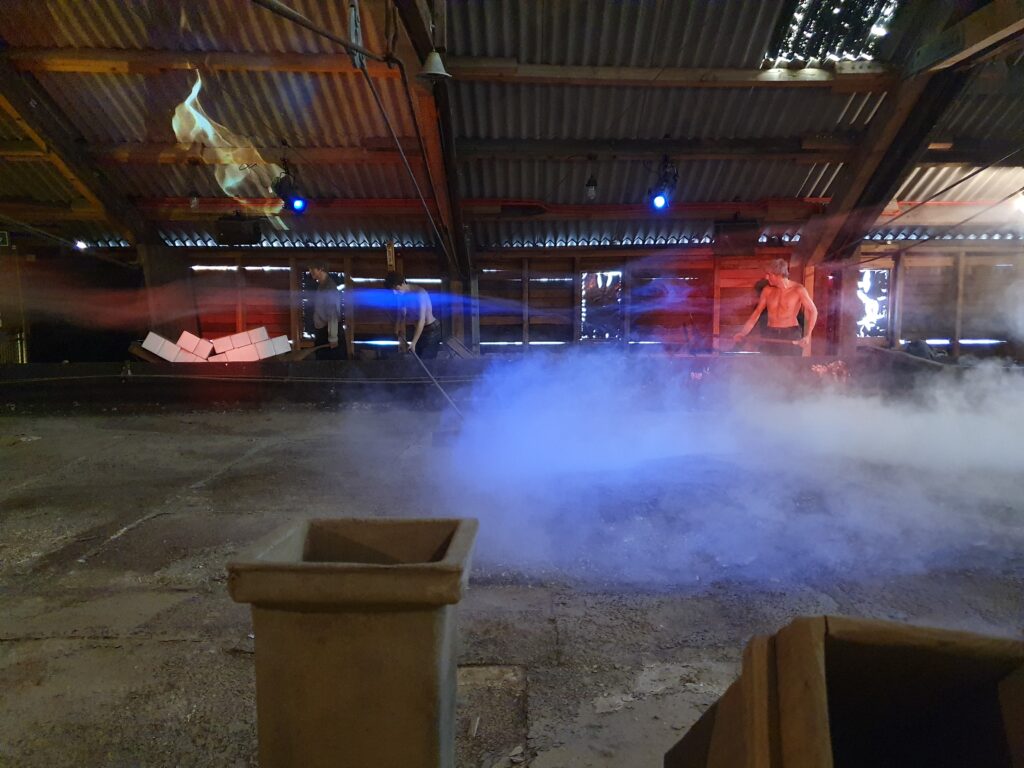
At the Lion Salt works the brine was pumped out of the ground into huge pans, housed in sheds. The precise temperature the water was heated to and the time it was heated for affected the quality and size of the salt crystals. It must have been physically exhausting work. I wonder if those men looked at the steam engines and pumps with the same fascination we do today.

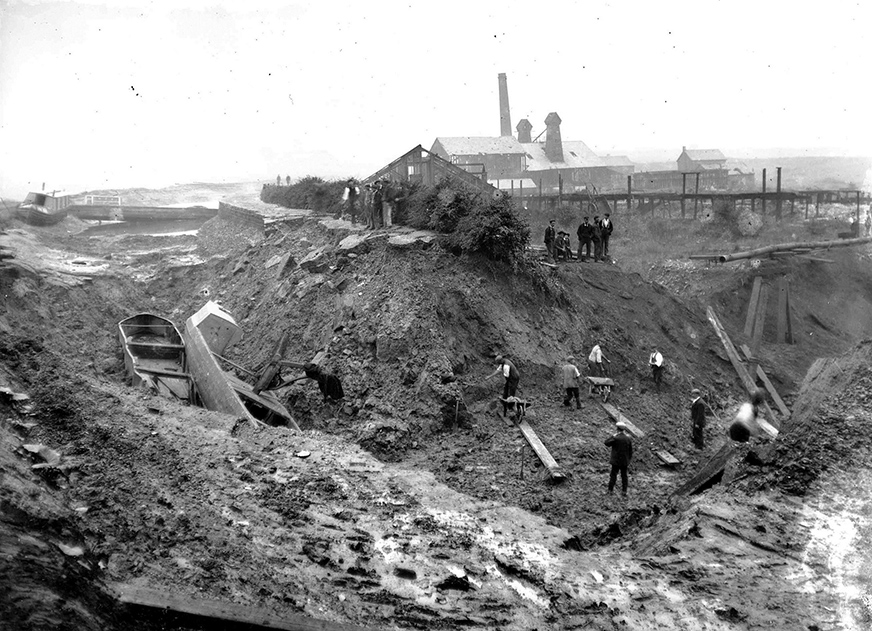
Of course all that underground disturbance lead to some catastrophic above ground disturbances as well. In 1907 there was a major collapse. CRT and Peel Holdings take note, it took a whole 2 weeks to repair and get boats moving again.