
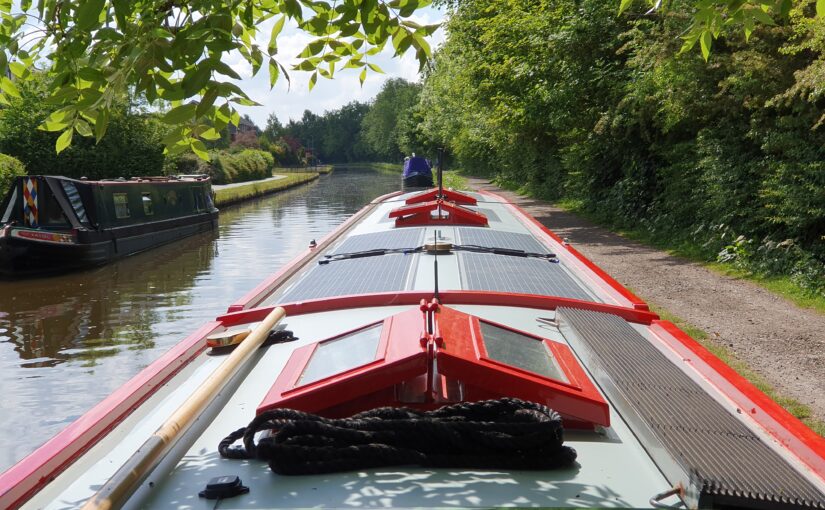
Having realised how much the boat’s solar panel array enhances our lifestyle, (eg saving hundreds of pounds on diesel not running the geni) we really wouldn’t want to be without it. The original 4 panels that we fitted in April 2019 were showing some signs of delamination, there were tiny air bubbles under the surface. Although we hadn’t noticed any reduction in efficiency (although that’s hard to quantify with 7 panels and the British weather). We decided to replace them now while the boat was repainted.
Of course technology doesn’t stand still and the identical panels were no longer available, but Photonic Universe is.
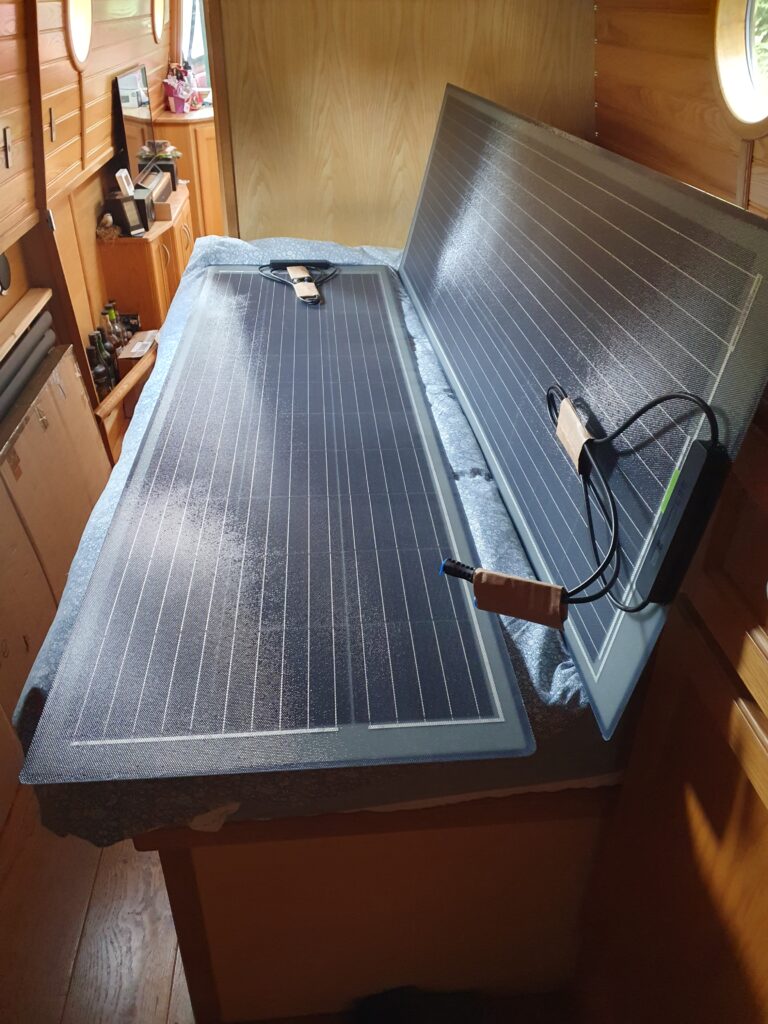
Eric put in hours of research browsing for what would fit, what would match, and most importantly which would give us the maximum power output. Photonic Universe came up trumps again. He did contact other companies, but one failed to reply to the email, and another company had done something daft like listing the size of the transport packaging rather than the panel itself. Whereas we’ve had good service from PU in the past, and they have enough choice to find something to tick all our boxes. Unfortunately, we found some panels go out of stock, and there’s no guarantee that the exact panel will reappear. So decisions were made and panels ordered back in the autumn, and had them delivered back home. Eric unpacked them, checked for faults and consolidated their packaging for easier storage until the time arrived to fit them.
We’d already had a few false starts with mooring locations being unsuitable for DIY or it being too wet or too hot. But goldilocks eventually found the golden spot at Whitebridge Lane moorings in Stone. We set to washing the roof of the boat, -again.
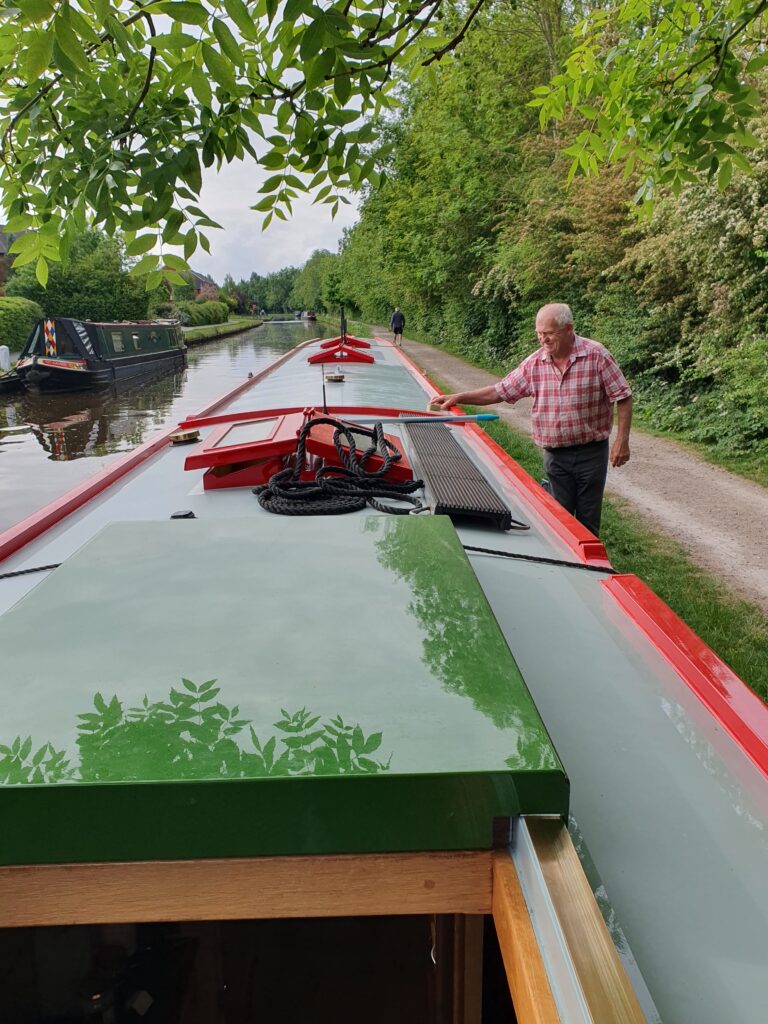
Panels were unwrapped on the bed for final inspection before fitting
Frog tape was applied to the roof carefully marking out the exact position the panel was to go, and glue was applied to the back of the panel. Eric is using “Sticks like sh*t” this time because the last time he used CT1, his glue of choice, he felt it handled differently and had lost its grip. Rumour has it that there’s been change in the formula and in our opinion, it’s no longer so good.
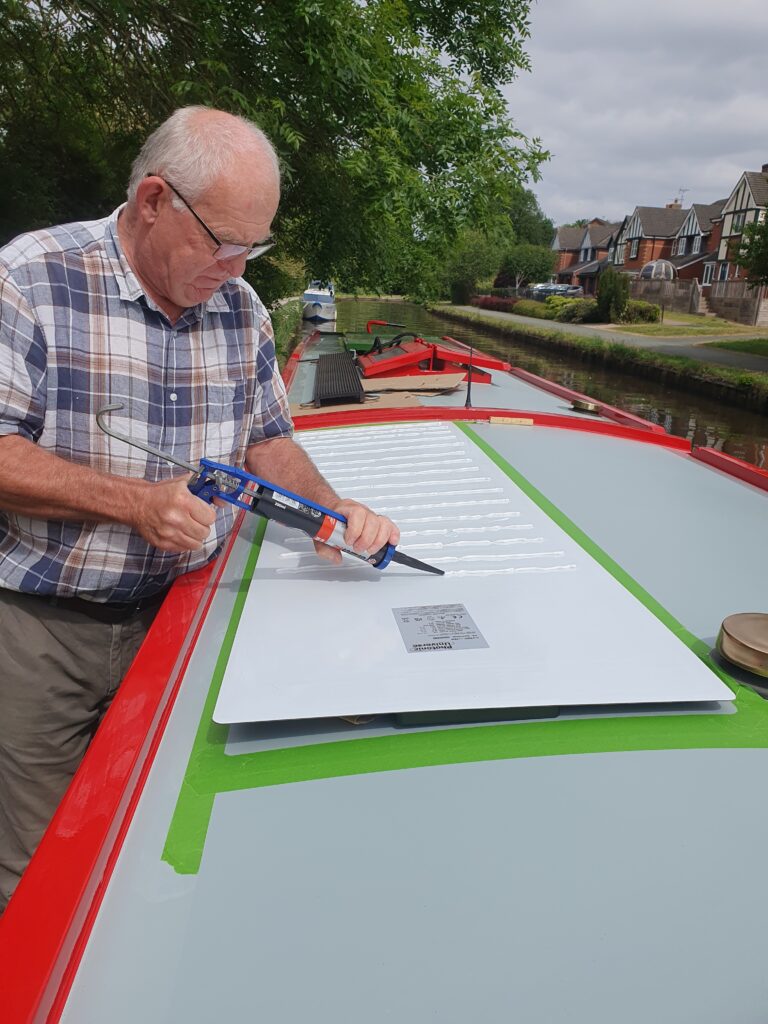
Working together and at speed, cause there’s only 15 minutes before the glue starts to cure, we flipped the panel into place and meticulously smoothed and weighted it down, ensuring the glue came right to the edge. There are two schools of thought, some installers like to leave a few mm gap between roof and panel. Eric thinks this will make the panels less stable to walk on, and potentially problems with rain/condensation getting underneath. So we have opted for bonding the panel firmly to the roof without a gap. The frog tape was removed and the edges checked that no glue was visable on the roof.
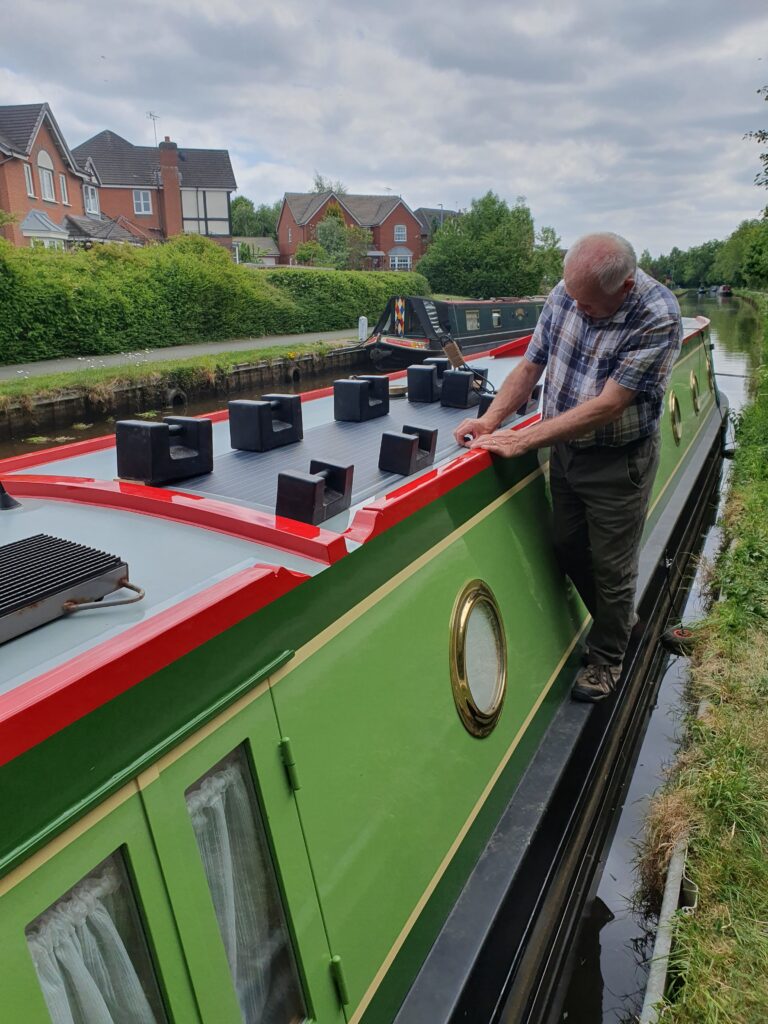
The weights we using are our moveable balast. We have 140kg in 10 and 20kg weighs. They usually live under the well deck and very rarely need to be moved, but they do come in handy for jobs like this. Because we’ve only got this many weights we can only do one panel every 8 hours or so, to give it time to set.
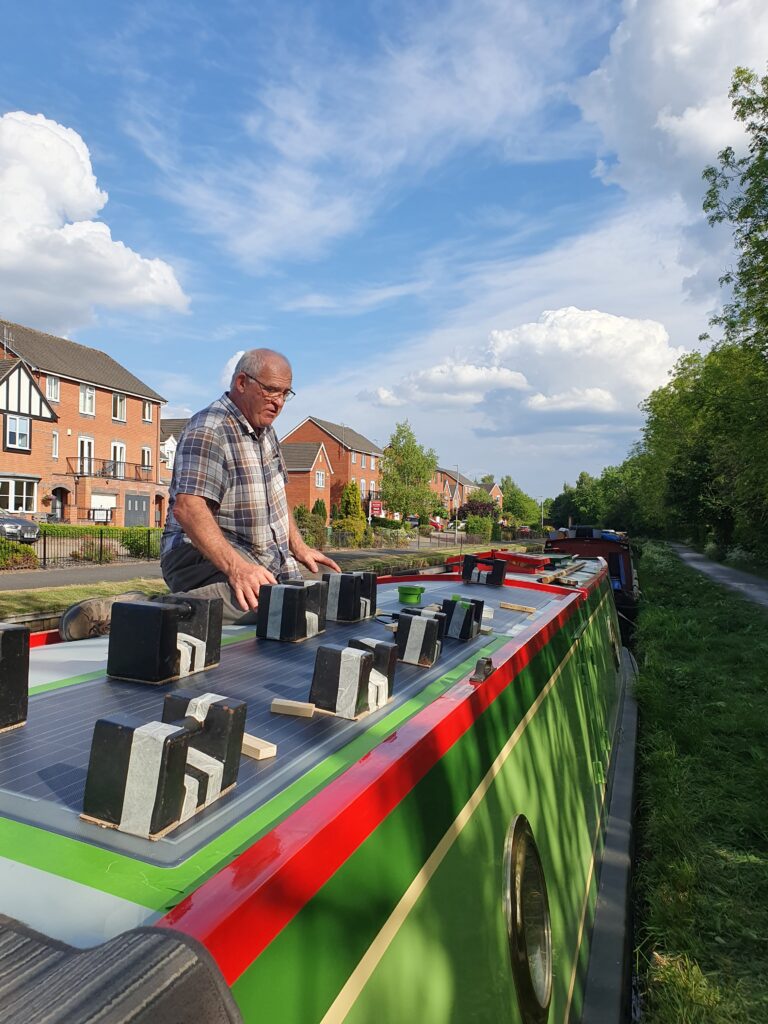
We certainly felt like we’d done a thorough workout after shifting all that weight. My job was to tape anti scratch protection to the weights (ie cardboard) which we realised we needed after the first oops. One of the nice things about the Whitebridge moorings is that there is a winding hole, which meant we were able to work on both sides with the safety of the bank. .
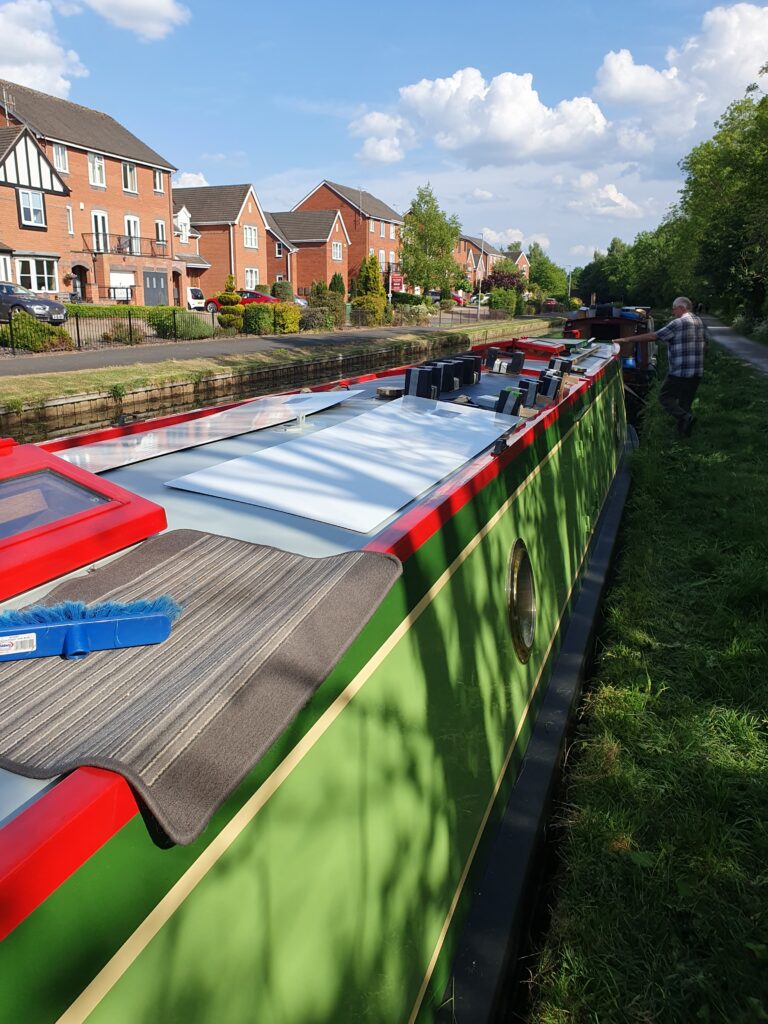
It took us 4 days to put all 4 panels on (rain stopped play inbetween 2 and 3) . Anxious, intense and tiring work. We had bought a 5th smaller panel, intending to put it cross ways between the dog box and the cross strut, but when we looked at the extra power we’d gain and the aesthetics, we both felt we could live without it.
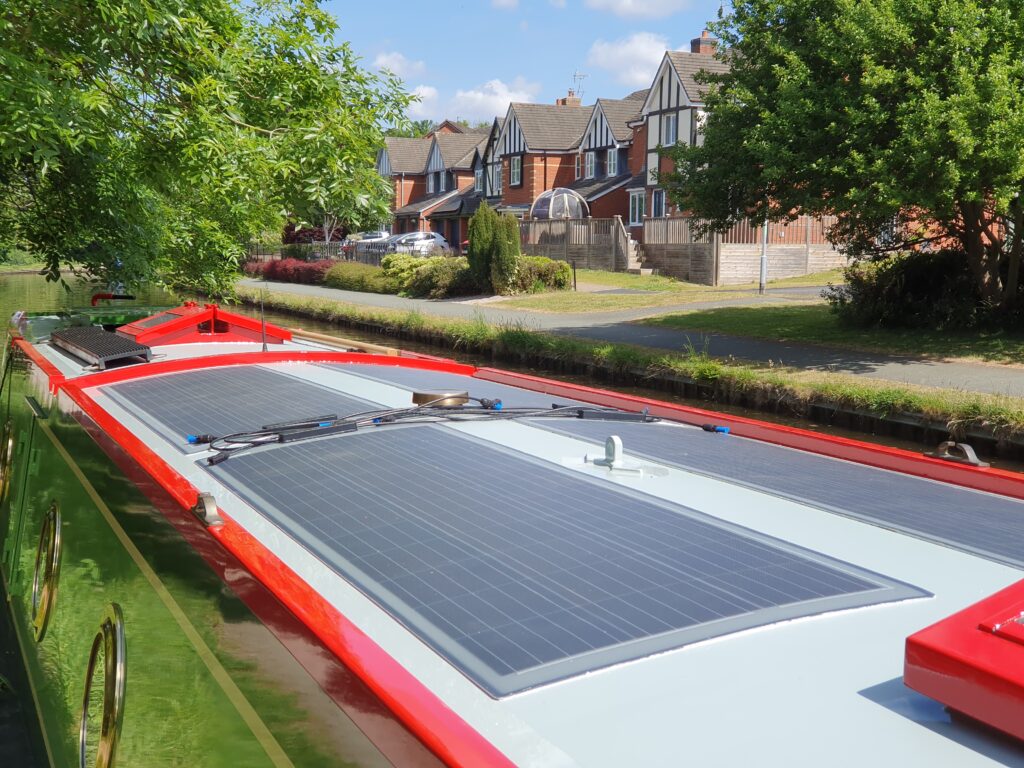
Of course having the panels stuck into place is only half the job. Eric will have to wire them in before we can take advantage off them.
The new panels 170w each, and will be wired in pairs
The 2 older panels at the front are 350w each
Giving us a total of 1380w.
In the summer this means all our cruising power comes from solar, (Admittedly being liveaboards, we don’t cruise every day and we rarely cruise for more than 3 hours in any day), and we run the generator maybe once a month.