A Salty Story

Cruising through this part of Cheshire throws up some interesting comparisons. Many many years ago, before canals were invented. (About 220 million years to be exact), this part of Britain lay under salt marshes caused by the sea flooding inland. Eventually the marshes dried up and left behind beds of rock salt, which in turn the Celts and then the Romans took advantage of. Building up settlements around the natural salty springs, they could process and produce a valuable commodity. The rest they say is history(or geography or economics) . The towns of Northwich, Middlewich and Nantwich all prospered on the salt beneath them. “Wich” being the commonly associated Anglo Saxon word used as a suffix for salt towns. (Although, more correctly the suffixes, wich, wick, and wyke refer to any settlement built up around a specialised industry). Even the canals bear the legacy of the salt mines, not only benefiting from a highly profitable route, but suffering from ground disturbance creating flashes. Most flashes are now stand alone lagoons but some have breached the canal bank causing tempting wide areas to explore…. but woe betide any foolish boater straying too far, for here be dragons lurking in the shallows. Best admired from the well dredged main channel.
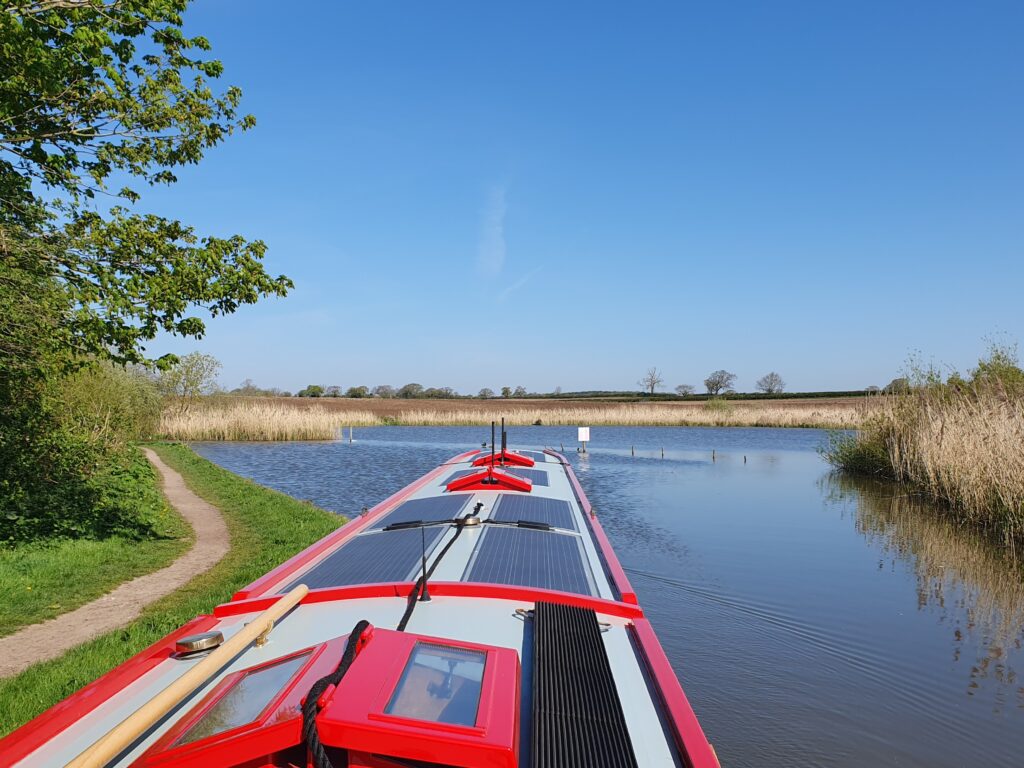
Croxton Flash

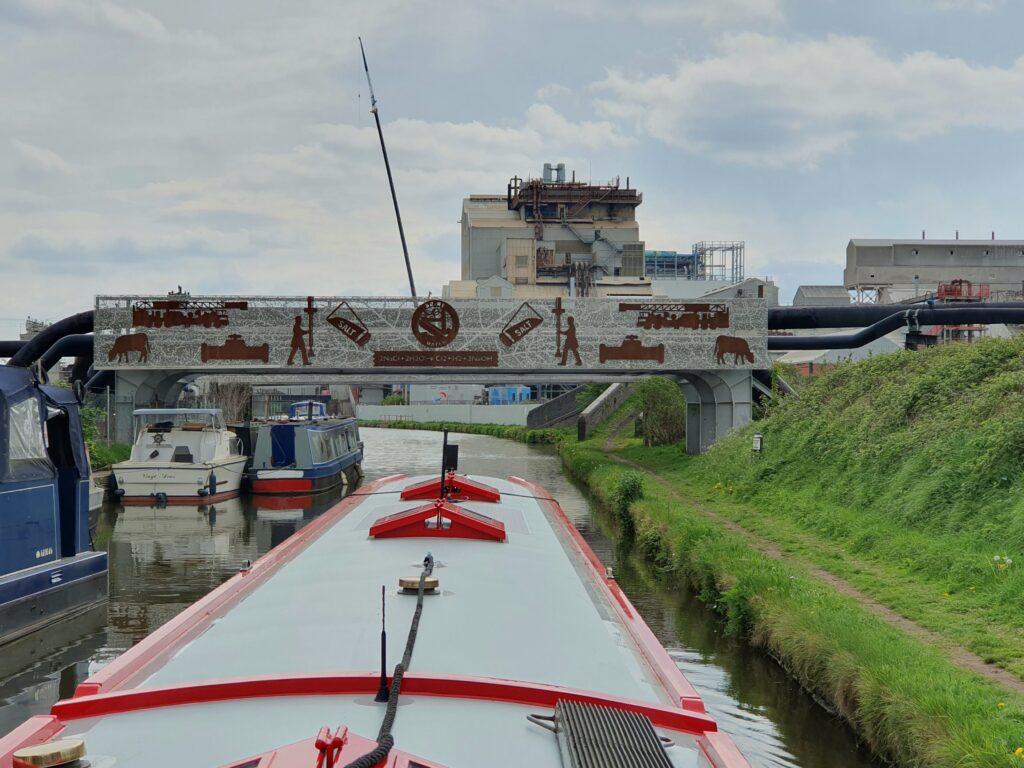
As we get to the outskirts of Northwich, we come across the Tata chemical plant at Lostock. This imposing industrial site straddles the canal with a jungle of steaming hissing pipe work and forbidding structures.

Not a place to linger

Over the past few years, we have watched the progress of new building work, which is looking almost complete. Only to discover that this colossal building with a colour scheme copied from Firecrest’s roof, is nothing to do with salt but is actually the new Lostock Sustainable Energy Plant. Their website is an easy read with some interesting facts.
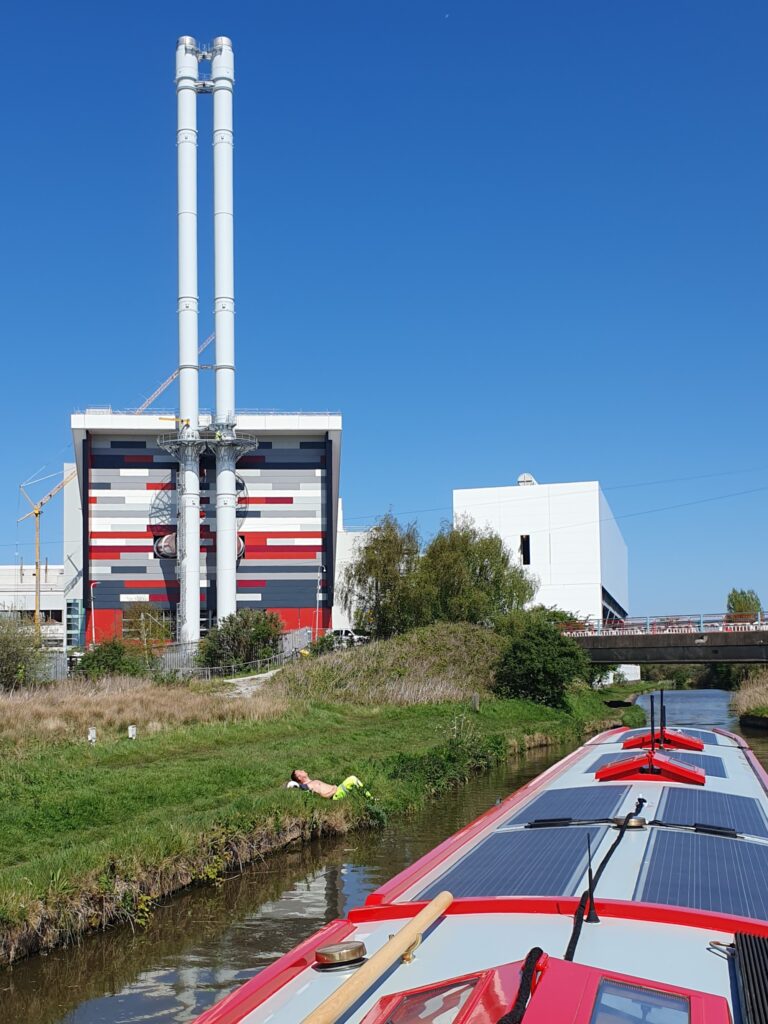
Lostock Sustainable Energy Plant

Basically, it’s a waste inceration facility, that utilities modern advances and technology to capture and reduce pollutants and generate enough electricity (About 69.9mw) for a town twice the size of Northwich, at the same time as reducing landfill by 600,000 tonnes every year.
We are fans of this sort of joined up thinking, but oh boy the fans they have on site look mighty powerful. I bet they’re noisy when they’re running.
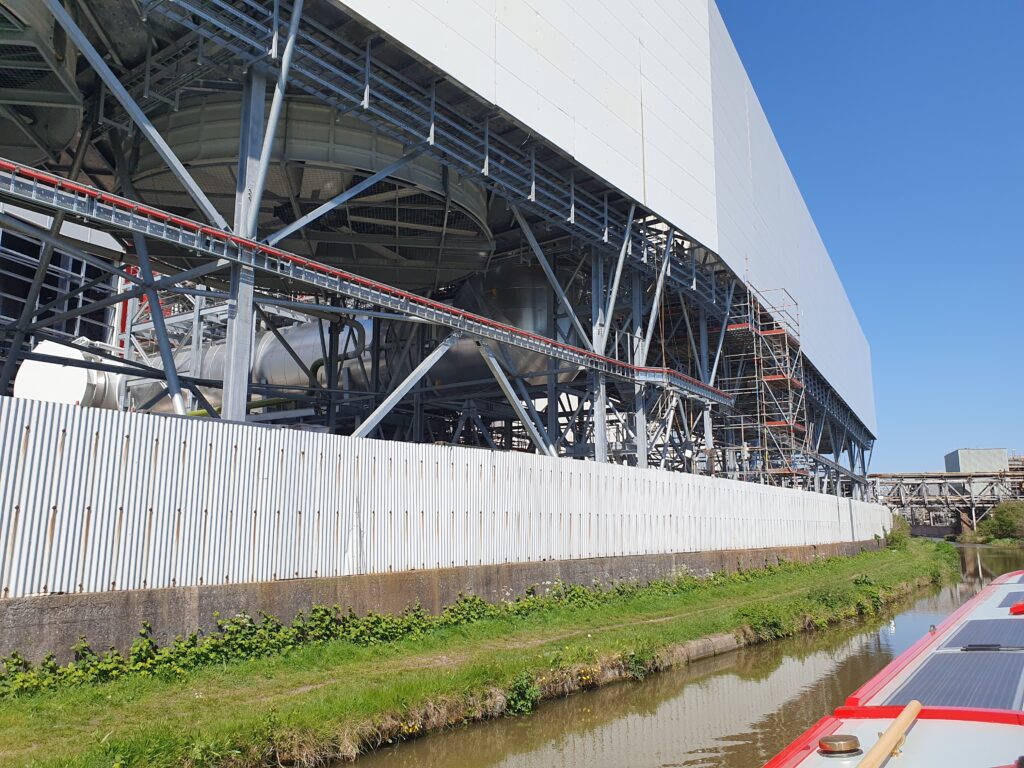
Despite our love of the tranquil green countryside, there’s always something strangely compelling about cruising through an industrial site. The public don’t generally get to see it so closely from the main roads.

Part of me would love to take a guided tour around the complex to see what happens inside, but whilst it may not be top secret, I guess it’s not built for easy public access. Especially if the only way to reach the top is to scale the walls in a harness, as we spotted this person doing.

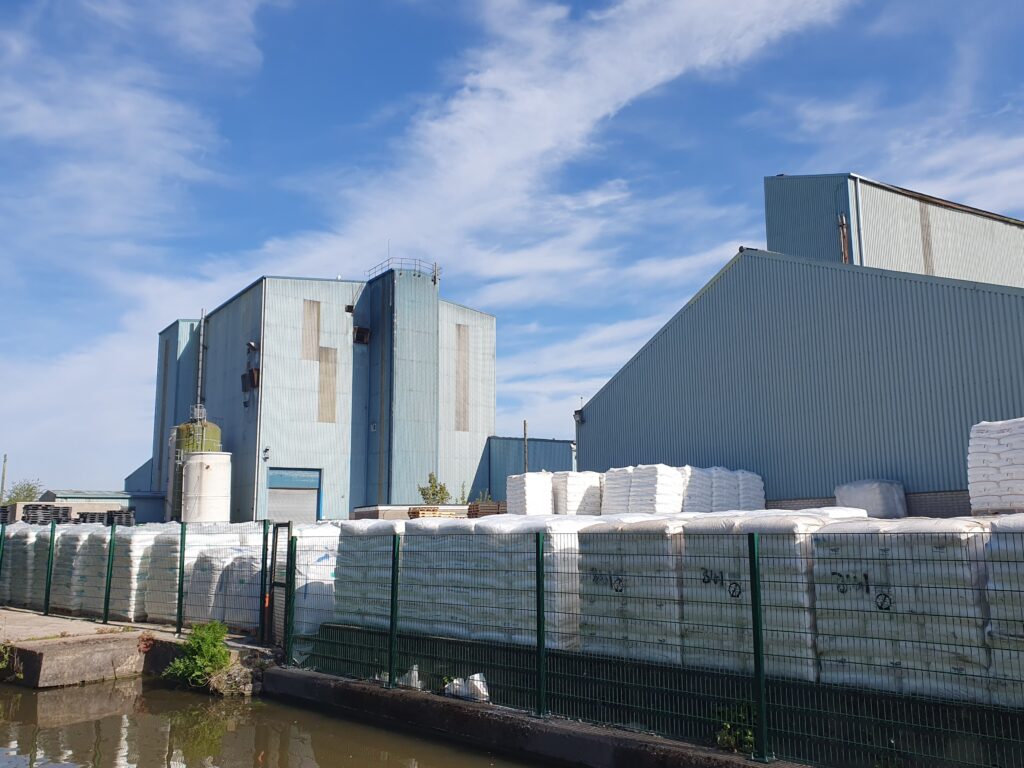
Opposite the Tata site, is the Lostock Brine purification plant.

And further down the canal, the bagged salt awaiting transport.  All we need now is some vinegar, fish and chips.
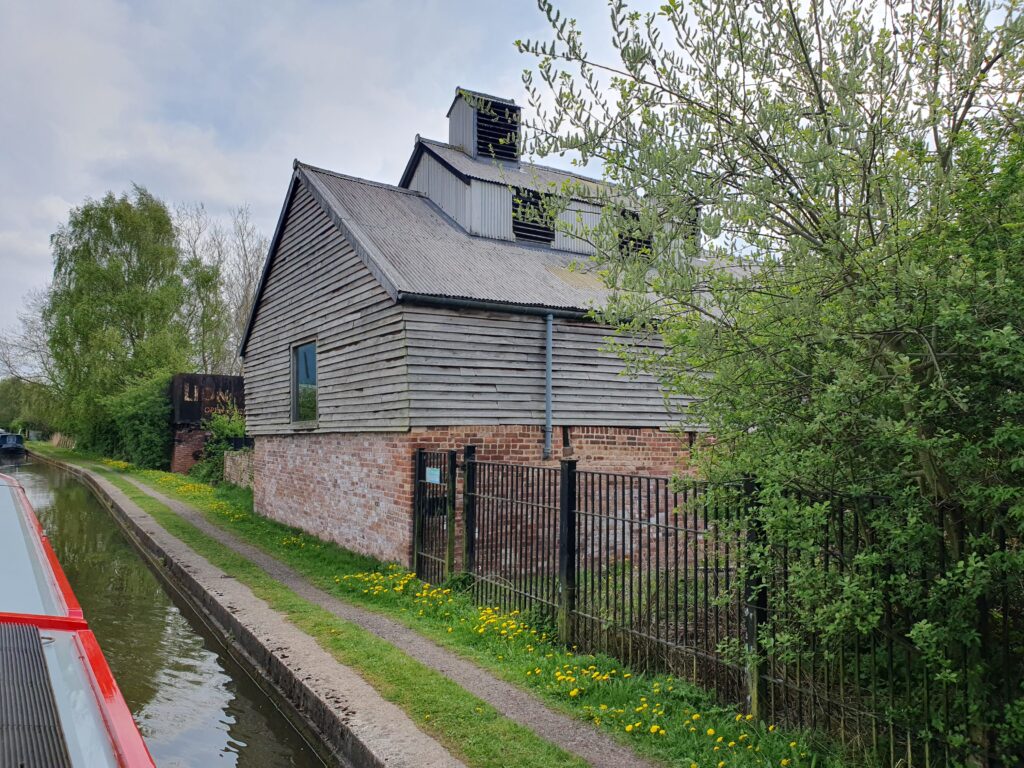
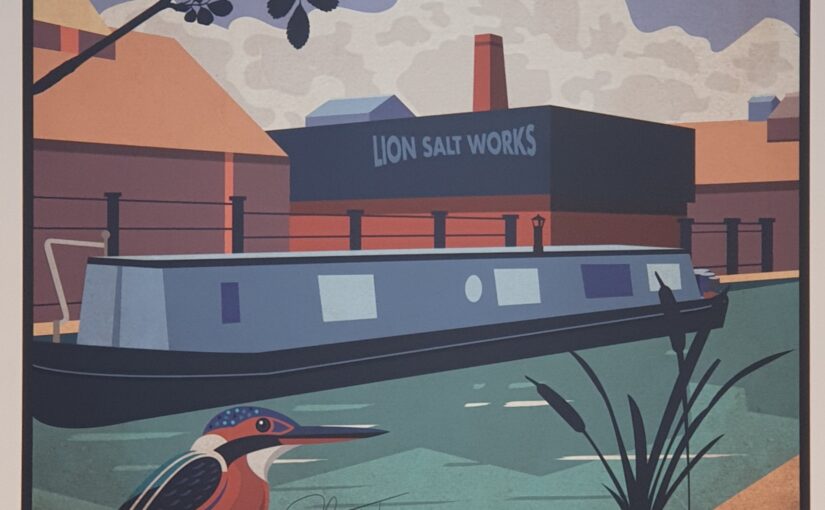
Then we reach the Lion Salt works, where we were able to explore inside.

The Lion Salt Works Museum

This fascinating museum follows the history of salt in the area, from the earliest geology, through celtic and roman artifacts, 17th century salt mining until this victorian site was built for brine extraction.
https://lionsaltworks.westcheshiremuseums.co.uk/
Whereas the modern processing site seemed to be dominated by pipework, the victorians relied upon hard physical labour, but little has changed. Salt is still produced by evaporating the water away to leave the salt behind.
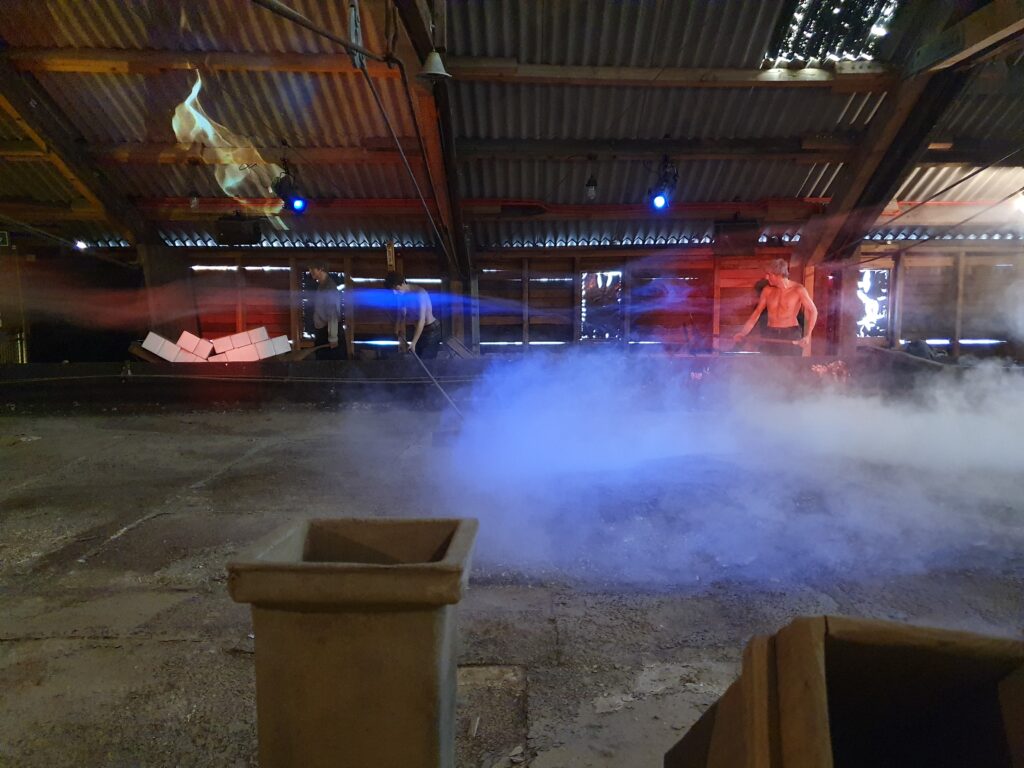
At the Lion Salt works the brine was pumped out of the ground into huge pans, housed in sheds. The precise temperature the water was heated to and the time it was heated for affected the quality and size of the salt crystals. It must have been physically exhausting work. I wonder if those men looked at the steam engines and pumps with the same fascination we do today.

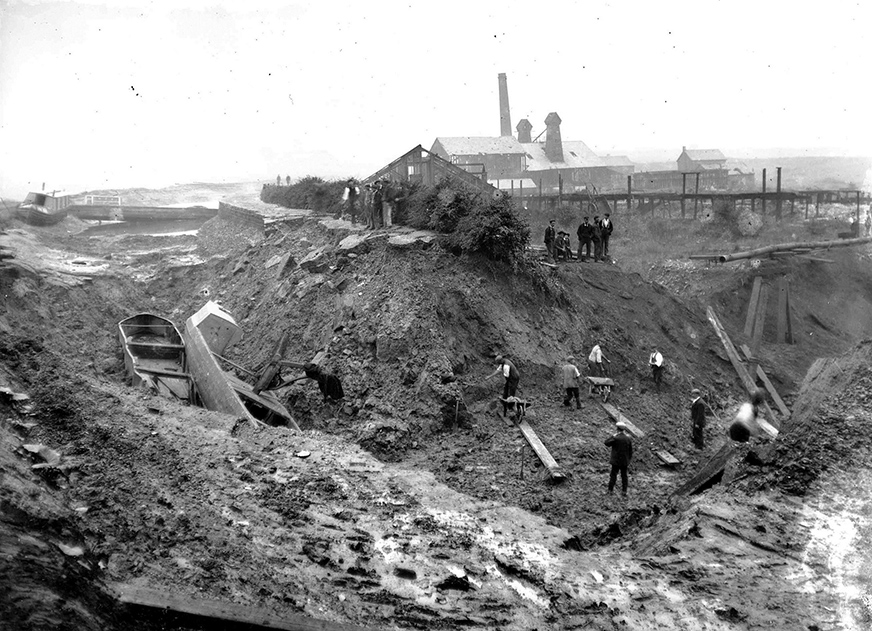
Of course all that underground disturbance lead to some catastrophic above ground disturbances as well. In 1907 there was a major collapse. CRT and Peel Holdings take note, it took a whole 2 weeks to repair and get boats moving again.
From Stone to Stoke

But first, a special first, the first ducklings of the year 6th April.

After 10 days in Stone we were itching to get moving again. We’d gone exploring, seen family and friends, visited the dentist to have a broken tooth repaired, returned the car to our daughter. And much as we’d enjoyed those 10 days- apart from the bill from the dentist, our obligations were done and we were free to just be boaters again. Setting off up the Meaford locks filled us with excitement and anticipation about what lay ahead.

Approaching Meaford bottom Lock

I’m always been fascinated cruising through Stoke. Its an industrial town striving to make its way in the 21st century, the old red brick factory yards are being wiped out by the many modern equivalents, huge warehouses compete with huge new housing estates. The canal runs through the centre straddled on each side with the multi lane Queensway and the high-speed intercity railway. Its noisy, hemmed in by concrete and razor wire fences, and nothing on earth entices me to stop and explore. But on this trip north, perhaps because it’s spring and the sun was shining it felt to me like there was an undercurrent of regeneration. Not quite so much litter or graffiti. Someone cares about this place, and I’m glad. People we spoke to were friendly and welcoming.

There are 5 locks climbing up through Stoke, and I usually walk that mile, and theres always something to make me smile, especially the Fritillary that im fairly sure someone had planted rather than it seeding naturally.

Some encouraging art work, even though it feels like fighting a loosing battle against the plastic.

Is that a mermaid lounging by the canal?

This boat always makes me smile with its grass roof and wooden cladded face

Stoke on Trent’s heyday began in the 18th  century when the combination of natural resources and local talent came together to create the Potteries. Back in the day there were over 2000 bottle kilns firing the pottery now there are just 47 remaining standing. The Clean Air act in the 1950’s put an end to their commercial use, and the remaining kilns are all listed. Some have been lovingly preserved and integrated into new housing developments

But sadly even though Olivers mill continued into the 1990’s for the calcination of flint, where the flint is heated to over 1000°C then ground to use in ceramics production. It doesn’t seem to be so loved now.

The bone and flint mill at Etruria is a private heritage site

Etruria junction is the final lock north of the town. The Cauldon Canal branches off here into the peak district to transport products for the potteries.


There used to be a CRT bin facility here but it has moved to Festival Park Marina. And to give CRT its due, after my post 2 weeks ago from Stone, these bins deserve 5 stars.

That one cardboard box on the far bin belongs to me.

Spring Greens with a sprinkling of salt

Plan C is to travel south, aiming towards Rugby by mid summer. We might take a detour through some of the Birmingham canals that we’ve not yet cruised but we’re taking full advantage of our new found freedom to decide later.

First we were going to call in to Uplands Marina for an overnight stop. We had completely forgotten to include the side hatch window inserts in the repaint contract, and honestly who would want blue curtains on a green boat. ¯\_(ツ)_/¯ As soon as we realised, Nick offered to do them whilst we cruised up to Lymm.

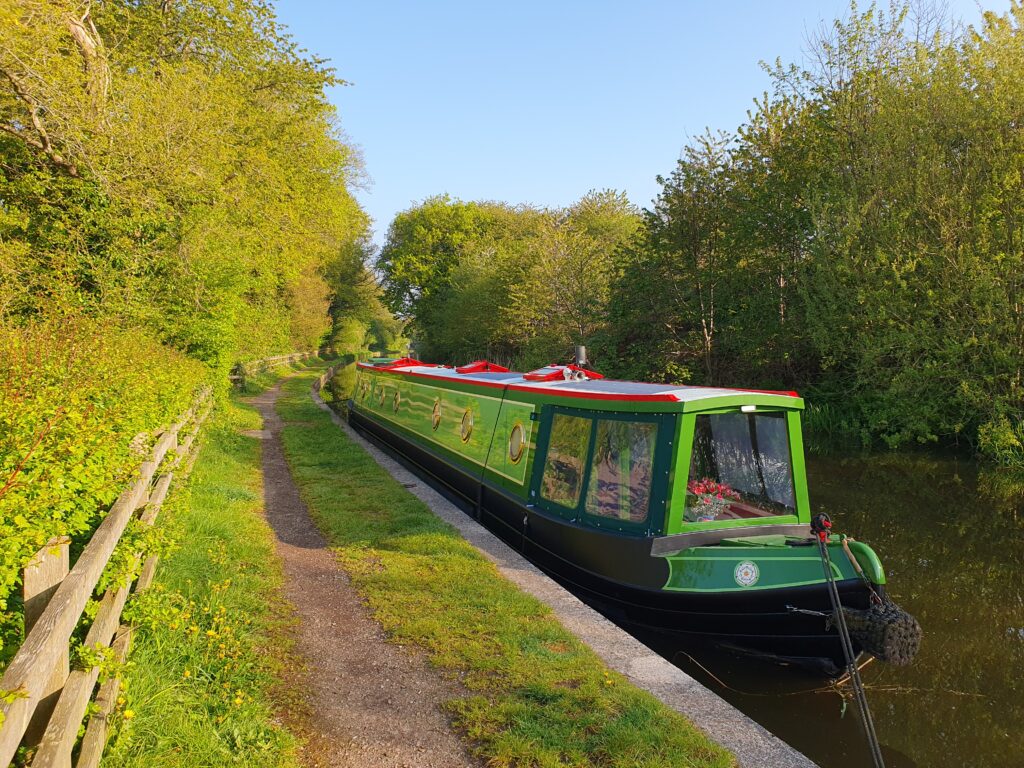
Sometimes blue and green make the perfect combo

Plus we still had some electricity left on the meter so we might as well charge up the batteries, especially as we still haven’t replaced the solar panels that were removed before our repaint. Not having our full solar capacity was most frustrating when we were enjoying a mini heatwave.

Enjoying the evening sun at Dutton

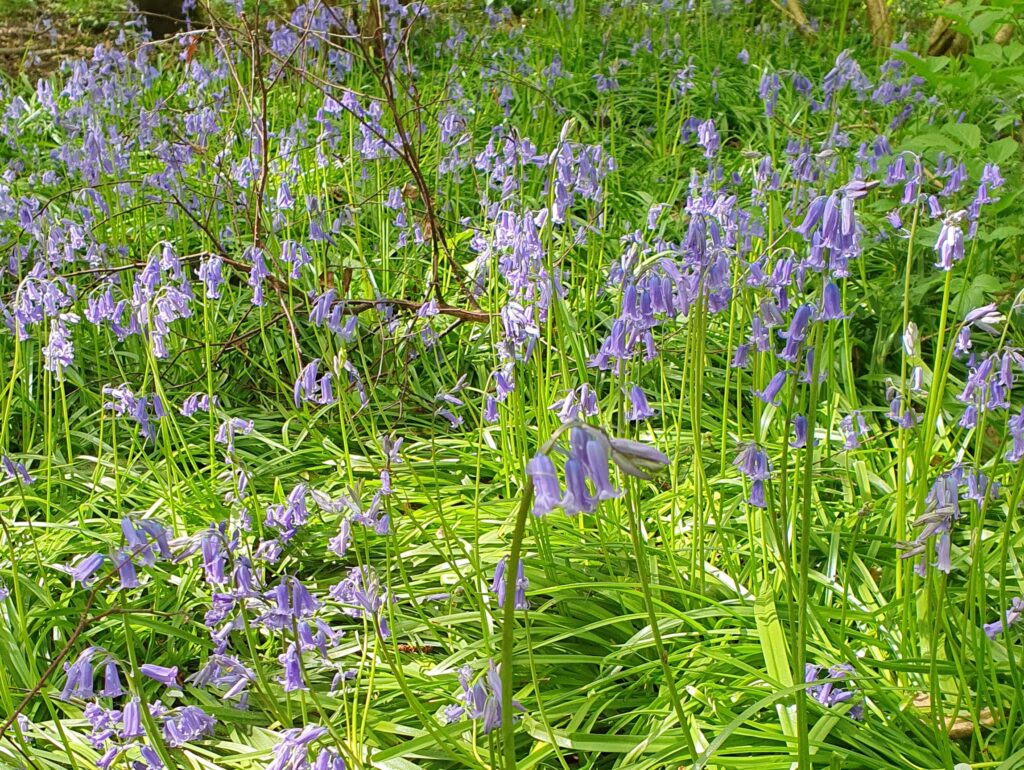
Leaving the lovely spring greens behind

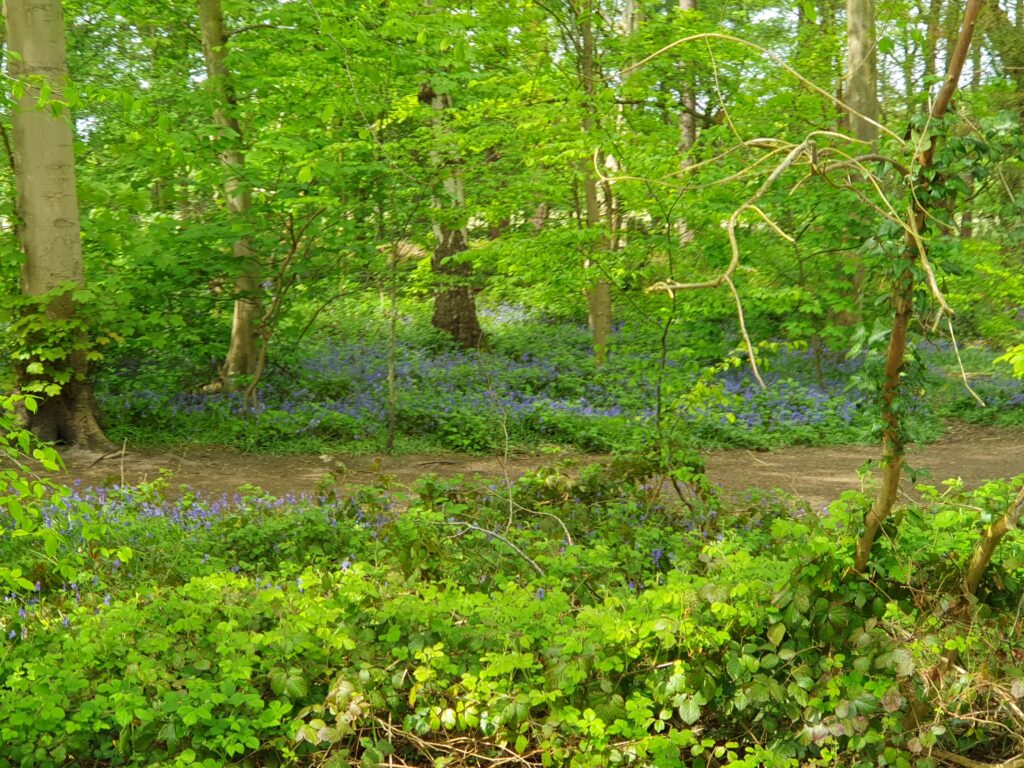
Marbury woods, Northwich

we travelled through the 2000 year old salt mines and brine pits of Eastern Northwich, past the Victorian Lion Salt works, which is now a fascinating museum and well worth a visit.

The Lion Salt works museum

Through the modern day chemical processing plant currently run by Tata

From the ancient salt mines to the modern chemical works.

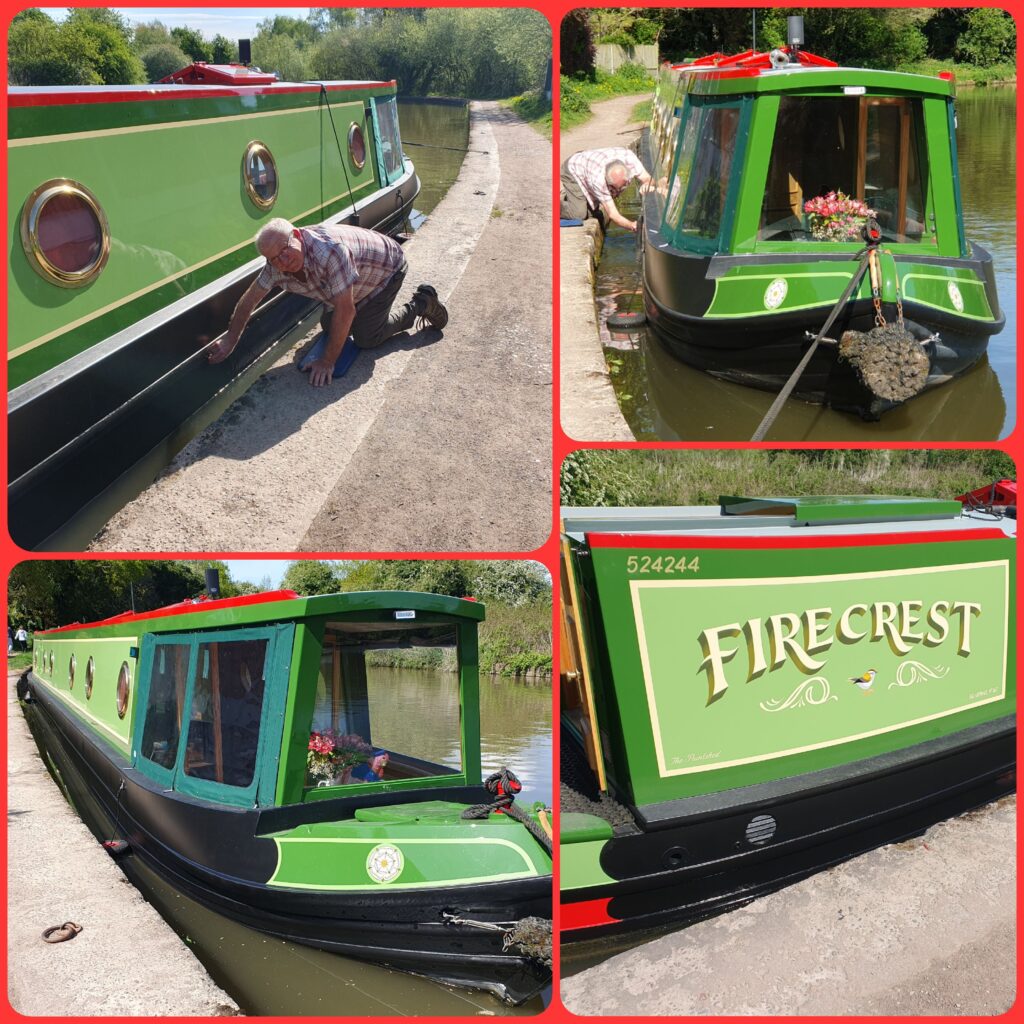
Onto Middlewich, where we moored against a perfect painting edge for Eric to touch up the blacking

Another opportunity not to be missed

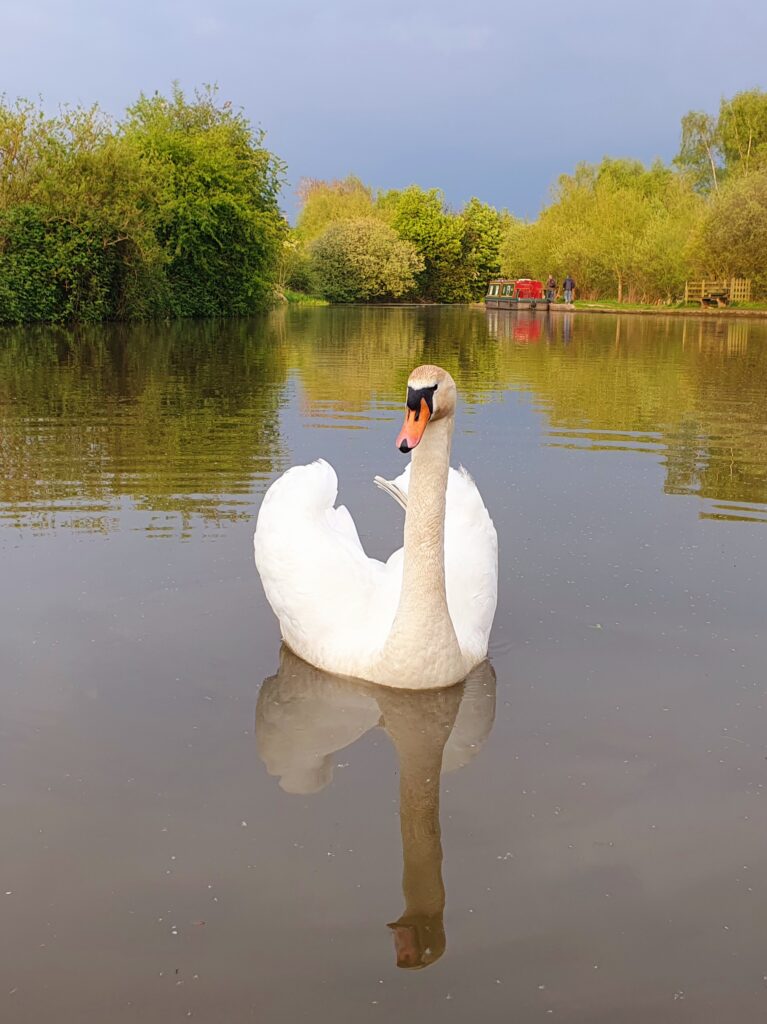
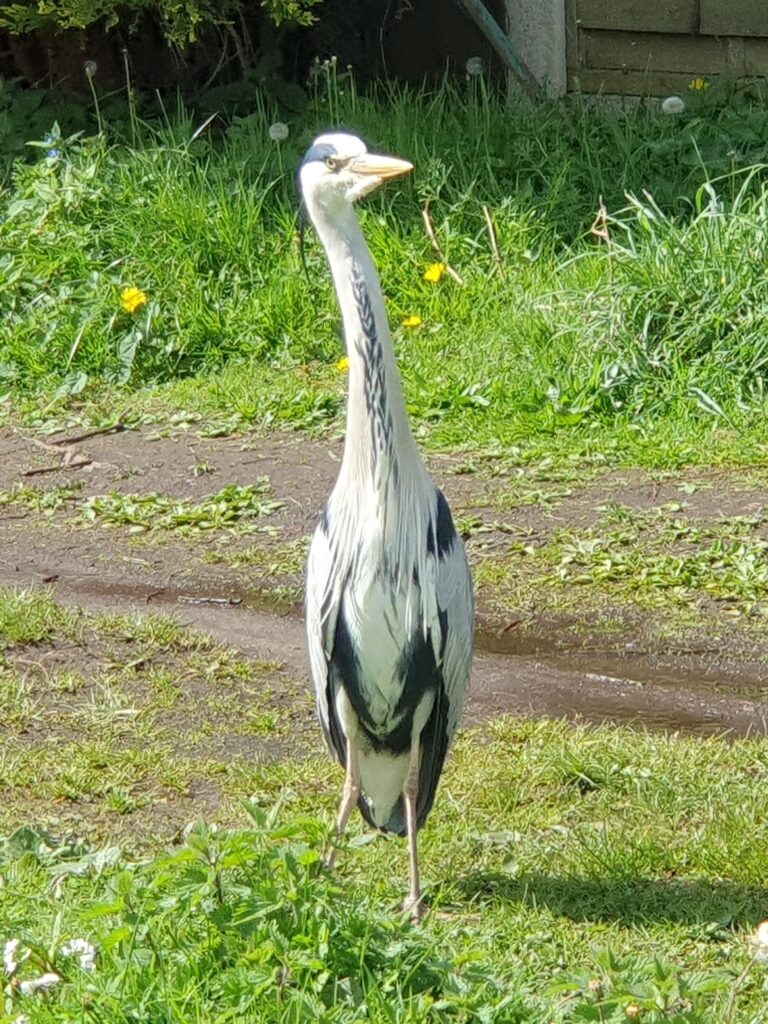
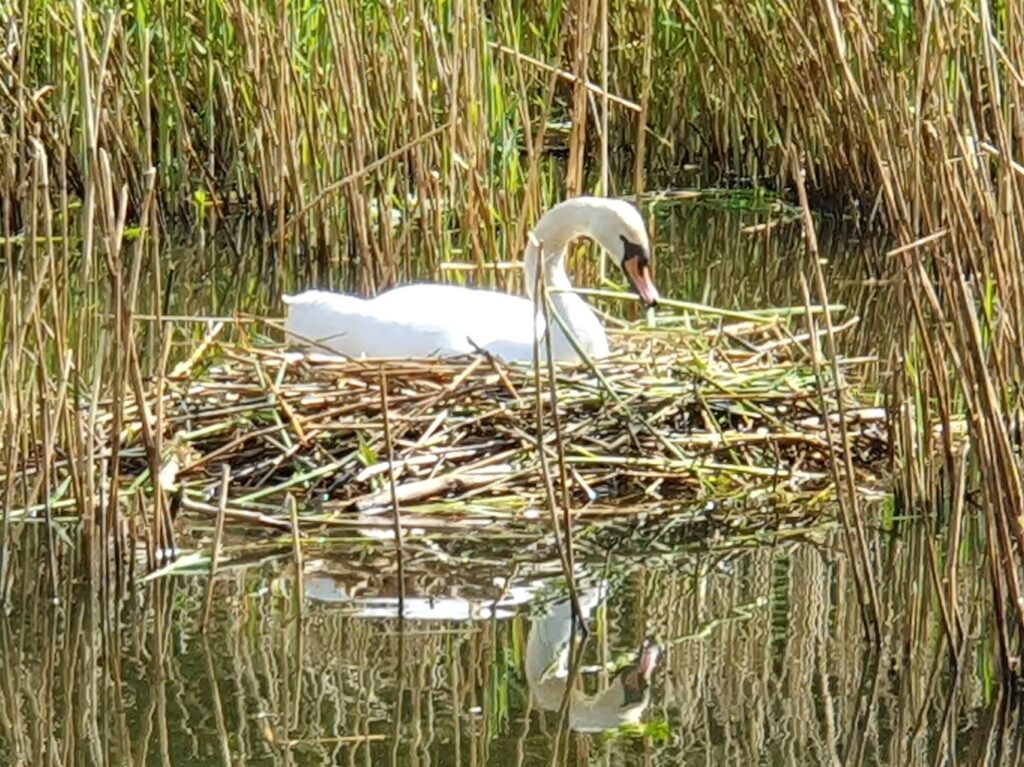
Whist I kept a  eye on the wildlife

Or were they keeping an eye on me?

One of CRT’s new volunteers for checking boat licences
Wont be long now