A Salty Story

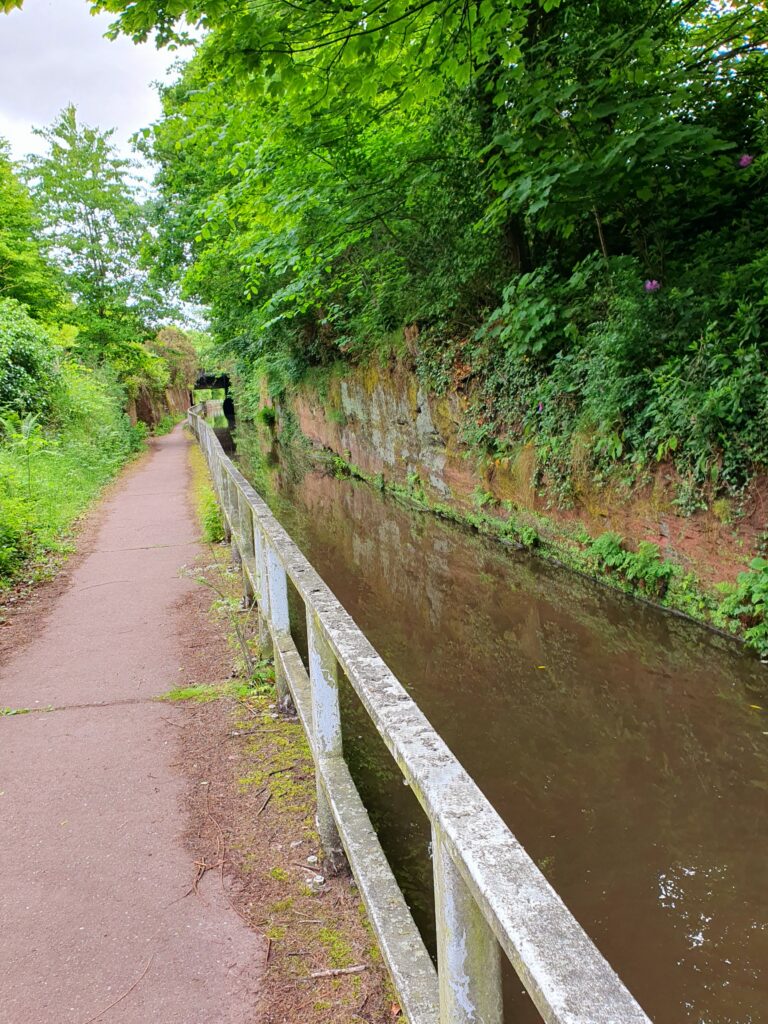
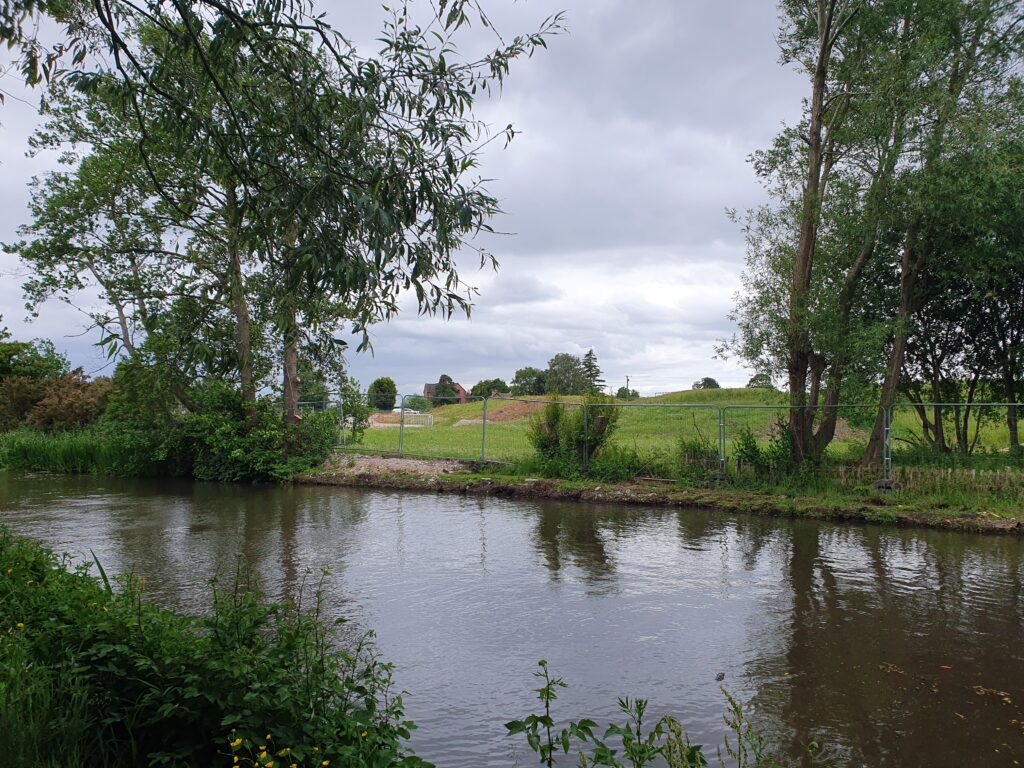
Cruising through this part of Cheshire throws up some interesting comparisons. Many many years ago, before canals were invented. (About 220 million years to be exact), this part of Britain lay under salt marshes caused by the sea flooding inland. Eventually the marshes dried up and left behind beds of rock salt, which in turn the Celts and then the Romans took advantage of. Building up settlements around the natural salty springs, they could process and produce a valuable commodity. The rest they say is history(or geography or economics) . The towns of Northwich, Middlewich and Nantwich all prospered on the salt beneath them. “Wich” being the commonly associated Anglo Saxon word used as a suffix for salt towns. (Although, more correctly the suffixes, wich, wick, and wyke refer to any settlement built up around a specialised industry). Even the canals bear the legacy of the salt mines, not only benefiting from a highly profitable route, but suffering from ground disturbance creating flashes. Most flashes are now stand alone lagoons but some have breached the canal bank causing tempting wide areas to explore…. but woe betide any foolish boater straying too far, for here be dragons lurking in the shallows. Best admired from the well dredged main channel.
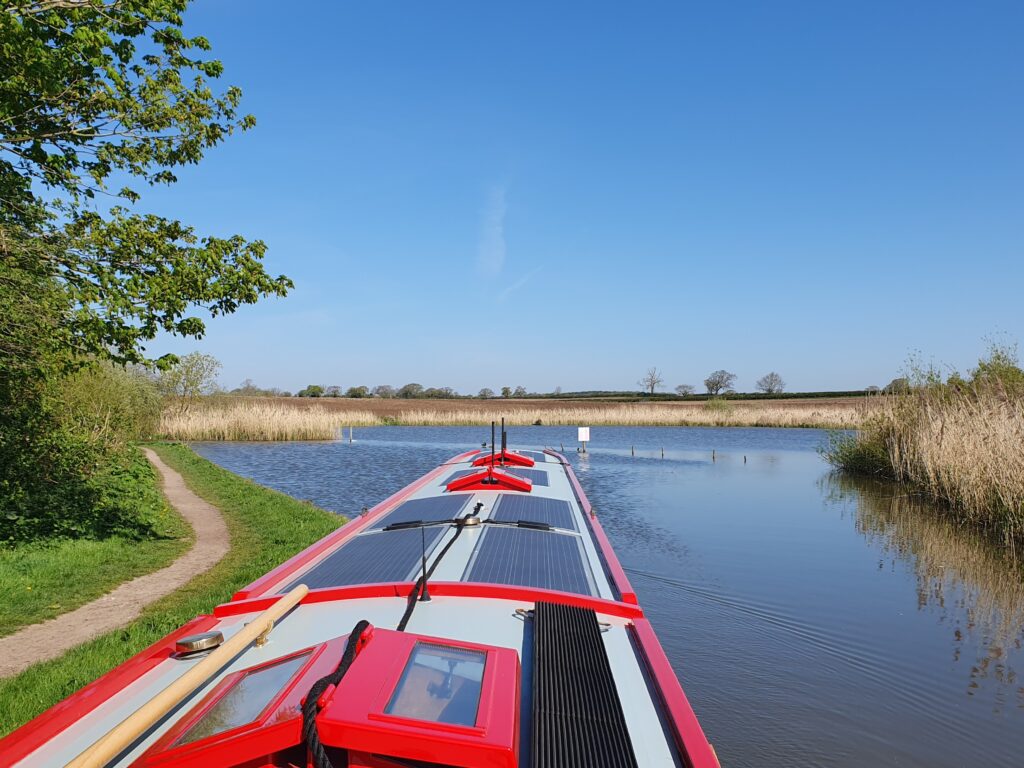
Croxton Flash

As we get to the outskirts of Northwich, we come across the Tata chemical plant at Lostock. This imposing industrial site straddles the canal with a jungle of steaming hissing pipe work and forbidding structures.

Not a place to linger

Over the past few years, we have watched the progress of new building work, which is looking almost complete. Only to discover that this colossal building with a colour scheme copied from Firecrest’s roof, is nothing to do with salt but is actually the new Lostock Sustainable Energy Plant. Their website is an easy read with some interesting facts.
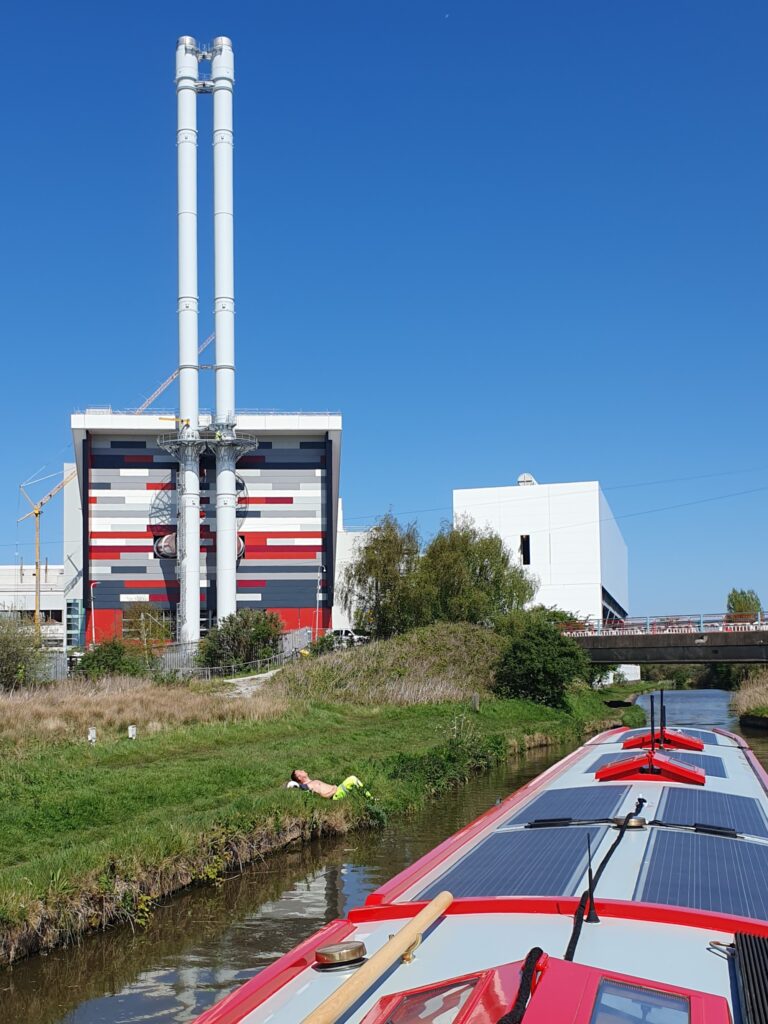
Lostock Sustainable Energy Plant

Basically, it’s a waste inceration facility, that utilities modern advances and technology to capture and reduce pollutants and generate enough electricity (About 69.9mw) for a town twice the size of Northwich, at the same time as reducing landfill by 600,000 tonnes every year.
We are fans of this sort of joined up thinking, but oh boy the fans they have on site look mighty powerful. I bet they’re noisy when they’re running.
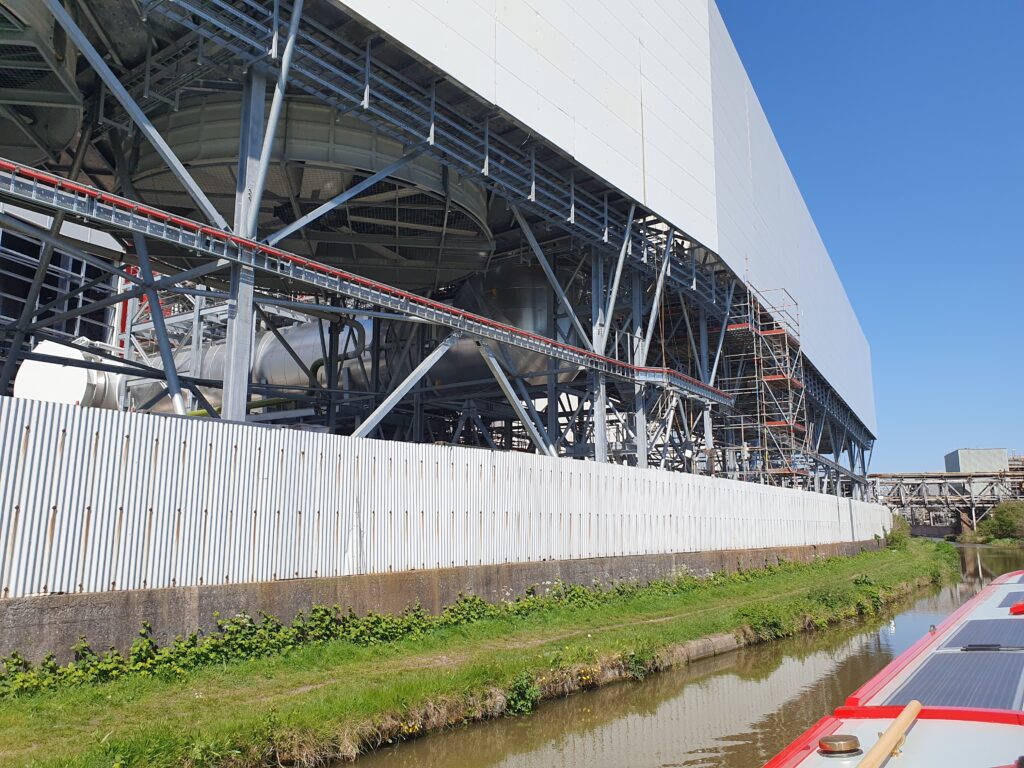
Despite our love of the tranquil green countryside, there’s always something strangely compelling about cruising through an industrial site. The public don’t generally get to see it so closely from the main roads.

Part of me would love to take a guided tour around the complex to see what happens inside, but whilst it may not be top secret, I guess it’s not built for easy public access. Especially if the only way to reach the top is to scale the walls in a harness, as we spotted this person doing.

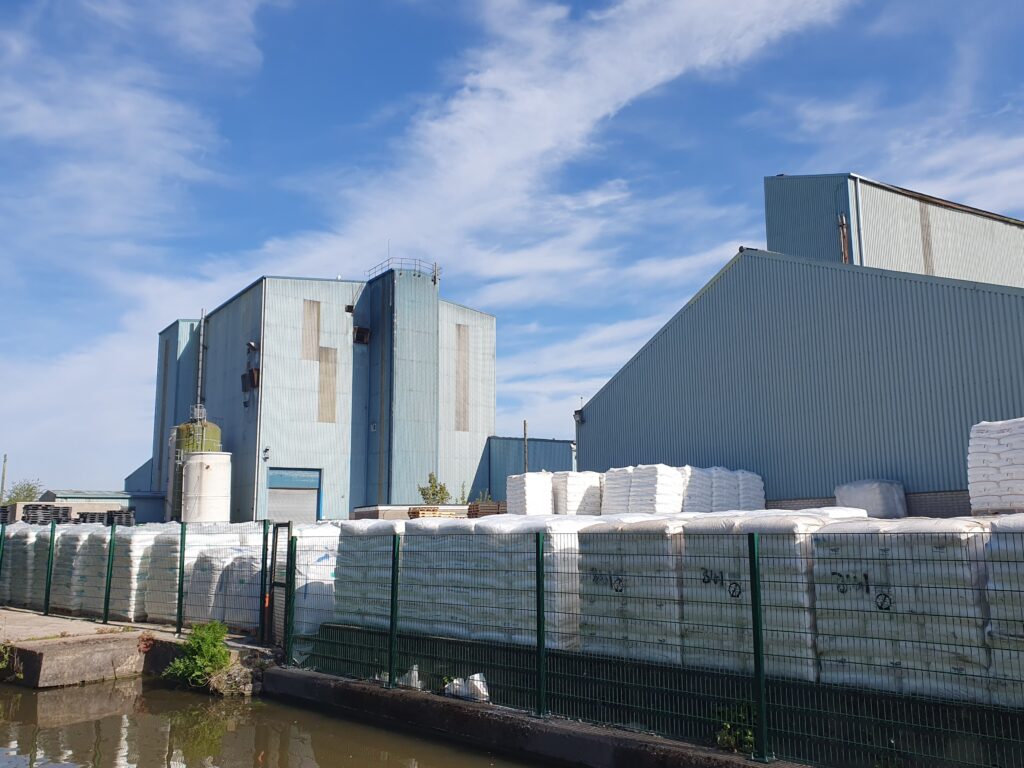
Opposite the Tata site, is the Lostock Brine purification plant.

And further down the canal, the bagged salt awaiting transport.  All we need now is some vinegar, fish and chips.
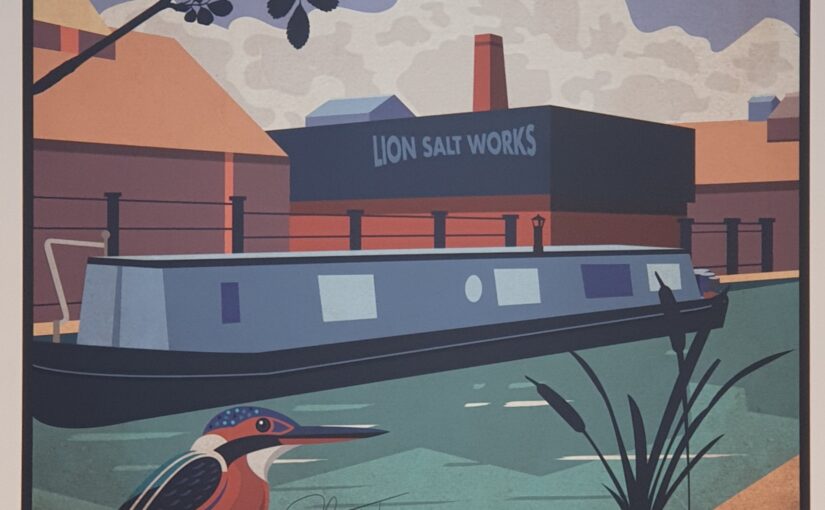
Then we reach the Lion Salt works, where we were able to explore inside.

The Lion Salt Works Museum

This fascinating museum follows the history of salt in the area, from the earliest geology, through celtic and roman artifacts, 17th century salt mining until this victorian site was built for brine extraction.
https://lionsaltworks.westcheshiremuseums.co.uk/
Whereas the modern processing site seemed to be dominated by pipework, the victorians relied upon hard physical labour, but little has changed. Salt is still produced by evaporating the water away to leave the salt behind.
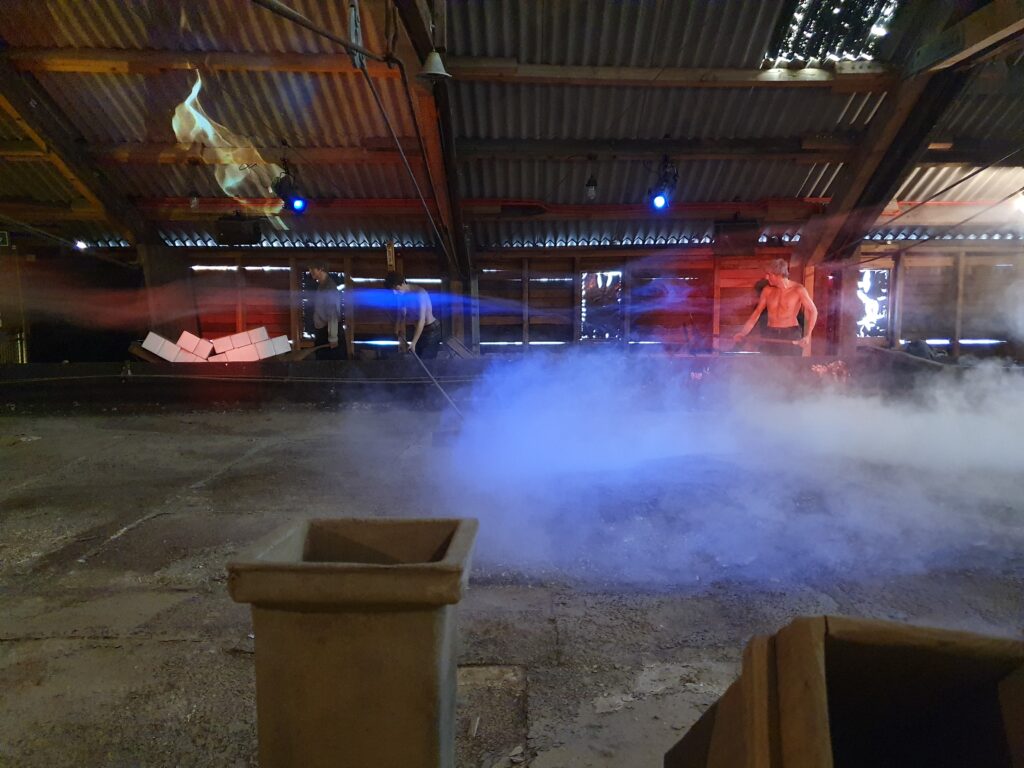
At the Lion Salt works the brine was pumped out of the ground into huge pans, housed in sheds. The precise temperature the water was heated to and the time it was heated for affected the quality and size of the salt crystals. It must have been physically exhausting work. I wonder if those men looked at the steam engines and pumps with the same fascination we do today.

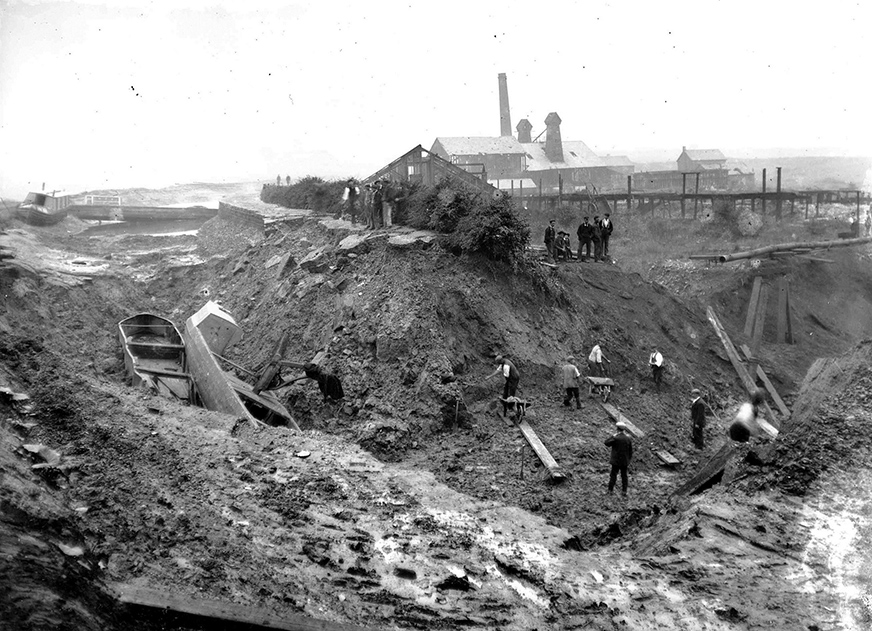
Of course all that underground disturbance lead to some catastrophic above ground disturbances as well. In 1907 there was a major collapse. CRT and Peel Holdings take note, it took a whole 2 weeks to repair and get boats moving again.
Through the Tunnel and a bit of a scare.

The tomato soup (iron oxide ground seepage) was looking good as we pulled up at the tunnel entrance to await an unbooked passage. There was a boat coming south, so the gate keeper agreed we had plenty of time to fill up with water.

Making good use of our waiting time

And it gave me a chance to wander around and see the second tunnel

Brindley’s tunnel

The second tunnel was actually the first. Built by James Brindley as part of the initial canal structure in 1770. At 1.6 miles long, it was the longest tunnel on the network but its 7 year construction was fraught with engineering difficulties as the ground structure changed from soft earth to hard millstone grit. The tunnel was narrow and it took 2 men 3 hours to leg through. The boat kids walked the ponies over the top of the hill along Boathorse Lane. It was decided that the ecconomic value of the canal to the potteries warranted a second tunnel, this time built in 3 years by Thomas Telford. It was wide enough to accommodate a towing path, although the ponies still didnt like being underground for such a long time. Average transit time was now 90 minutes. Despite its limited capacity and frequent structural problems, Brindley’s tunnel remained in use until 1914 when it became uneconomical to repair. Telford’s tunnel also had its fair share of subsidence with the towpath sinking below water level. In 1914 electric tugs were used to haul the boats until the mid 50’s, when most boats had a diesel engine. Major repairs were needed in the 70’s so the authorities removed the towpath completely.
Nowadays it takes between 30 and 40 minutes to complete the passage. CRT operate a booking system, to manage the traffic, although there is still turn up and wait option from 10 until 2 each day (please check their website as these times change)
And we made it out the otherside.

Here be dragons

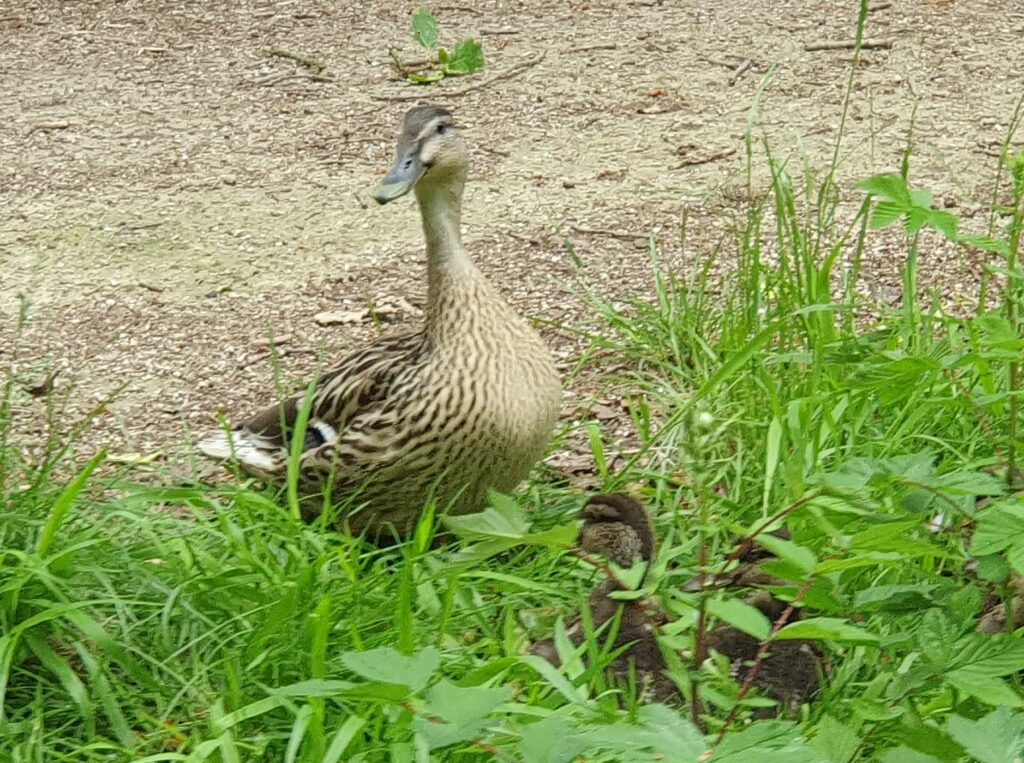
There’s a very convenient Lidl on the canalside just after the tunnel, so we moored up and I went off to restock the fridge. We had full sunshine and it fell safe and secure so we stayed put for the night. Besides I was busy trying to take photos of the ducklings.

If only they’d keep still for a good photo

Safe and secure we thought…. until the following morning when we fell out of bed, literally, and I do mean literally. The boat was listing at a horrible angle. It was barely light, but we realised that there had been a significant drop in the water level and we were hanging on with our ropes. What with last year’s Bridgewater Breach and this year’s Whitchurch Breach we were relieved not to see any water rushing past us, but even so, with a drop of two foot, that was significant. And yes we were quite worried.

That doesn’t look right

We could barely stand up inside, and things had slid onto the floor. Luckily no breakages. It was difficult to get off the boat with the combination of the level difference and angle.

And I dont like the look of that Armco either

But our first thought was that some *%&£@ had left the paddles up on the lock below us. We walked to both the locks above and below us and all the gates and paddles were closed, and the adjacent water levels seemed to be correct. It was only our pound between locks 45 and 46 that had lost water.

The angle the boat was at was a lot more scarey than it looks

The obvious solution was that we should simply run some water down from the pound above us, but what if this level drop were a structural incident or an imminent failure. At 6.30, having spoken to the other boater in the same plight as us, we decided to play the better safe than sorry card and call the CRT emergency line only to get a recorded, “all our operators are busy right now” message. Not even an option to leave a message. What would have happened if this had been a serious breach or real emergency, ok I’d have dialled 999 but even so what good is an unmanned emergency line. When I did get through at 7.30 . Stating we were moored between 45 and 46 on the Trent and Mersey, the operator, then asked “exactly where are you” …between locks 45 and 46 on the T&M… “and where’s that?”… Kidsgrove, near the harecastle tunnel…”I can’t find that on the map” ….Eventually, they located us, and said they’d contact the local team who would call us back. Come on CRT, forget installing fancy signage and food waste bins, how about a better map system for your operators. By now we were thoroughly cheesed off, worried and annoyed and other boaters were also chomping at the bit. By 9.30 some volunteers had turned up. And they did what we should possibly have done 3 hours earlier. They just opened up the lock and ran water through. We never got our call back. We have no idea if any investigation was done as to the cause of the water loss. They just patted us on the back and said someone must have left a paddle up. Of course I should really have filed a “near miss” complaint. The what ifs dont bear thinking about. And I’m not even going to think about the state of that Almco below water level. Out of sight out of mind.

That’s better, I can stand up straight now.

Once we were refloated we just escaped and worked our way down the next 5 locks and left them too it. We were going to enjoy a late brunch and some peace. Our emotions had been put through the wringer and we’d had enough for one day.

That’s more like it.

Messing about at Middleport

Waking up with history on our doorstep

We have a vague memory from back in 2017 when we moved aboard, of us saying we’d always try to moor in a different place. Middleport pottery quickly fell through that net. Its not the perfect mooring, but its a mooring we enjoy and we seem to keep coming back to it. Probably because its within easy reach of the Harecastle Tunnel, and we dont have to put up with honking geese and goose poo if we were to moor at Westport Lakes. And of course, we love the architectural heritage of being able to moor right opposite a pottery built in 1888. I can’t get enough of bottle kilns.

Being Easter Weekend we assumed we’d get some bad weather, but Saturday proved to be dry and sunny- until storm Dave put in an appearance and blew the cobwebs away. The pottery was hosting a Steam Punk extravaganza on the Saturday, alas victorian sci-fi fashion isnt the most practical boat wear so we donned our jeans and waterproofs and went to admire what others were wearing.

I love the idea of creating a unique outfit, where  rules are meant to be broken, but not all steam punk is quite so relaxed. We came across the highly competitive sport of tea dueling.

These two starving urchins had been dragged off the street for our entertainment with the temptation of being allowed to eat a whole malted milk biscuit. However, they were first to endure a tortuous duel. Having dunked their biscuit into a freshly poured cup of tea for precisely 3 second, (as counted down by the audience) they competed to hold their biscuit upright, without it breaking, for the longest time without devouring it in one greedy mouthful. One urchin lasted 41 seconds the other 42. And the audience was well entertained.
We resumed our self guided tour of the pottery, which although it has developed as a heritage site, preserving its old buildings, it is still a working pottery and a teaching site for budding potters. I’d have loved to have joined a class but they were all full up this weekend. Instead we had a look at the bath house. Right up until the 1950s it was unusual for the workers terrace houses to have an indoor bathroom, or even a zinc tub of their own, so the Mills would often have bath houses available for their employees to use. During world war II this bath house was the designated bomb shelter to accommodate 38 people. The factory employed over 200.

Whilst we were enjoying Middleport, I saw directions to  Oatbakers. Which according to various online reviews serves the best Staffordshire oatcakes available. As you would expect Eric opted for the challenger, a giant Oatcake. I always thought an Oatcake was a crisp biscuit that you’d eat with cheese. These however are more like a pancake, served with a sweet or savoury filling. We chose cheese and bacon. If you moor at Middleport or at Westport, the bakery is within easy walking distance, and worth a visit.

Despite the area being quite run down, theres a great community spirit. Even though Port Vale lost against Chelsea in the football FA cup quarter final. Someone has a sense of humour creating the secret garden

I was curious to know what was behind the doors. And I just happened to meet a local who had lived in Middleport all his life. This building used to be a state of the art bakery. But it is now crumbling away and the secret garden is just a teaser, someone covering up a boarded up entrance.

We stayed 4 nights at the Middleport Pottery, this time. I am sure we will be back. But for now we were preparing to say goodbye to Staffordshire as we cruised towards Cheshire, so I couldnt not share this Staffie who came to say hello to us.

From Stone to Stoke

But first, a special first, the first ducklings of the year 6th April.

After 10 days in Stone we were itching to get moving again. We’d gone exploring, seen family and friends, visited the dentist to have a broken tooth repaired, returned the car to our daughter. And much as we’d enjoyed those 10 days- apart from the bill from the dentist, our obligations were done and we were free to just be boaters again. Setting off up the Meaford locks filled us with excitement and anticipation about what lay ahead.

Approaching Meaford bottom Lock

I’m always been fascinated cruising through Stoke. Its an industrial town striving to make its way in the 21st century, the old red brick factory yards are being wiped out by the many modern equivalents, huge warehouses compete with huge new housing estates. The canal runs through the centre straddled on each side with the multi lane Queensway and the high-speed intercity railway. Its noisy, hemmed in by concrete and razor wire fences, and nothing on earth entices me to stop and explore. But on this trip north, perhaps because it’s spring and the sun was shining it felt to me like there was an undercurrent of regeneration. Not quite so much litter or graffiti. Someone cares about this place, and I’m glad. People we spoke to were friendly and welcoming.

There are 5 locks climbing up through Stoke, and I usually walk that mile, and theres always something to make me smile, especially the Fritillary that im fairly sure someone had planted rather than it seeding naturally.

Some encouraging art work, even though it feels like fighting a loosing battle against the plastic.

Is that a mermaid lounging by the canal?

This boat always makes me smile with its grass roof and wooden cladded face

Stoke on Trent’s heyday began in the 18th  century when the combination of natural resources and local talent came together to create the Potteries. Back in the day there were over 2000 bottle kilns firing the pottery now there are just 47 remaining standing. The Clean Air act in the 1950’s put an end to their commercial use, and the remaining kilns are all listed. Some have been lovingly preserved and integrated into new housing developments

But sadly even though Olivers mill continued into the 1990’s for the calcination of flint, where the flint is heated to over 1000°C then ground to use in ceramics production. It doesn’t seem to be so loved now.

The bone and flint mill at Etruria is a private heritage site

Etruria junction is the final lock north of the town. The Cauldon Canal branches off here into the peak district to transport products for the potteries.


There used to be a CRT bin facility here but it has moved to Festival Park Marina. And to give CRT its due, after my post 2 weeks ago from Stone, these bins deserve 5 stars.

That one cardboard box on the far bin belongs to me.

Stories from Stone

We like Stone, it’s an interesting town with a lot of history, especially for the canal. This is true Brindley country, where James Brindley met to discuss the building a canal to link the River Mersey to the River Trent, thus providing an infinitely more practical and profitable way to transport goods. Particularly the raw products needed for the potteries and a much safer way to transport the finished pottery both throughout the country (ie London) and around the world.

Seen from Star Lock

Despite its blue plaque, the Star Inn predates the canal by some 200 years and is more famous for its entry in the Guinness book of Records for having the most levels of flooring in a public house. Which although I can’t confirm accuracy of that claim, I can confirm that carrying 2 pints of beer across the original flagstones doesn’t lead to good photographic evidence.
The Star has many other notable claims to fame, but the story I like is the one that happened during the opening ceremony of Star Lock. Someone had bright idea to fire a cannon to mark the event….. subsequently the lock required a bit of a rebuilt to repair the damage.

We were too early in the day to enlist the merry helpers with opening the gates

Of course The Star of Stone isnt the only pub in town. The quality of the water, (from the river trent, not the canal) and the presence of an Augustine Monastery, ensured that Stone’s reputation was also for good beer, both the big breweries have gone now, but Joule’s Ales still makes use of the canalside building for its micro brewery.

If this is a micro brewery, id like to see the size of their pints

Stone’s name is derived from the Anglo Saxon word “stan” meaning stone or rock. There are several stones that Stone could be named after, including a nearby prehistoric megalith, a roman stone bridge or mile stone, but the most appealing is from the cairn of stone placed over the graves of princes Ruffin and Wulfad by their mother, after their father, king Wulfhere murdered them for converting to Christianity in AD665. this particular tale is now known to be inaccurate. King Wulfhere himself had already converted to Christianity so who knows what his sons had done to deserve their fate. The town still proudly displays the tale on two artistic railings at the entrance to the high street.

Sadly it isn’t only kings and princes that fall foul of being murdered. Colin Dexter, who wrote the Inspector Morse stories highlighted the sad fate of a young woman called Christina Collins. In 1839, she was travelling as a passenger on a Pickfords barge when she complained to the Stone lock keepers about the lewd behaviour of the crew and that she feared for her safety. Her concerns were dismissed but that night she was viciously raped and murdered, her body was weighted down with an iron chain and thrown overboard. After a lengthy trial the crew were found guilty and 2 were hung and one was transported. Last time we travelled through Stone in May 2025, Christina was so overgrown with weeds I couldnt see her, but she’s been tidied up and although I doubt she’s looking her best at least shes presentable.

I think perhaps its time to move on, it seems Stone isnt such a safe place after all.

ps apologies for our disappearance from BlogLand last week, we were subjected to some unexpected site maintenance, we think its all sorted now.

Have you seen the table?

….. we were asked when we finally got the bus into Lichfield. No we hadn’t, but our interest was piqued. What could be so special that a stranger on a bus asks us that. We would find this table in Lichfield Cathedral, so off we set to find out what all the fuss is about. And I have to say I am now quite happy to ask you the same question because the table is quite  magnificent.

the table in Ely Cathedral-Swiped from website

The table is known as The Table for the Nation, and came about through the discovery of a truly impressive piece of Bog Oak. Its creation was overseen by The Fenland Black Oak Project team

The table in Lichfield Cathedral

5000 years ago there was an oak forest in the Norfolk Fens. But unlike today’s oak trees, that grow to roughly 20m tall, these oak trees were giants, and grew to 50m tall. ( Firecrest is 18.3m long).

At the time this particular tree fell, the rising sea levels on the East Anglian lowlands were creating stagnant anaerobic lagoons. The lack of organic life and soluble iron deposits all helped to preserve the wood and turn it black. Over millenia it became buried in the peaty bogs, until in 2012, during routine cultivation it was exposed. Fenland farmers are well aware of how rare and valuable Bog Oak is so they had the presence of mind to call in the experts. And so the Jubilee Oak (named in honour of the late Queen’s diamond jubilee ) began a new journey.

Swiped from website

What was particularly amazing about this piece of oak is it’s length, 13.2m long. It was undamaged, it was straight and  there was no insect or fungal damage. It is incredibly rare, probably unique and a plan was made to preserve it for the nation.

Glad that didn’t get stuck in the prop, (Swiped from website)

The story of the of how this piece of wood became The Table for the Nation, is told so well on their website that I am not going to attempt to reproduce it. It’s a short easy read and I strongly recommend you take a look.

The Fenland Black Oak Project (where most of my photos have been Swiped from)

In 2022, after 10 years of skilled craftsmanship, borrowing a mobile sawmill from Canada, developing new innovative techniques, and a lot of love and care, this magnificent table was unveiled in Ely Cathedral

The tables intended home, Ely Cathedral (Swiped from website)

The craftsmen managed to keep the 13m length, and echoing the period when the acorn became an oak, they incorporated a bronze understructure and a wheeled folding mechanism that allowed the table to be moved by just two people.

Showing the undercarriage. (Swiped from website)

I don’t know how heavy the table is, but during construction it took 18 people to move just one plank.

Showing drop leaves (Swiped from website)

The size of the table means it requires an equally impressive sized venue, and if you have such space you can apply to host the table. Useful for family dinner parties

Who would you sit at the far end…. (Swiped from website)

The table is currently on display in Lichfield Cathedral for 10 months. One of the lovely things about this table is that the public are at liberty to touch and stroke it unlike many precious artifacts, although one of the guides nearly had a heart attack when I little boy bored of her explanations decided to race his toy tractor along it. Lichfield Cathedral itself is a beautiful building.

Both inside and out

And just for good measure, here’s Firecrest’s table

870mmx590mm

Love it or Hate it, a few days in Burton

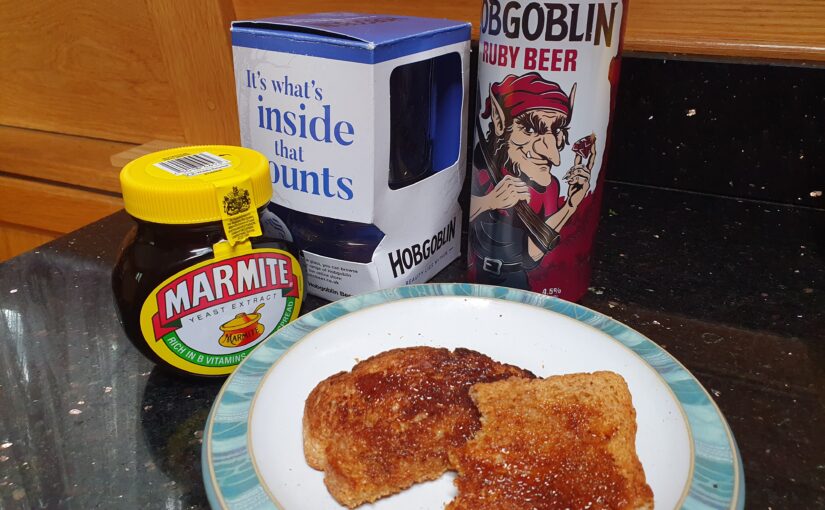
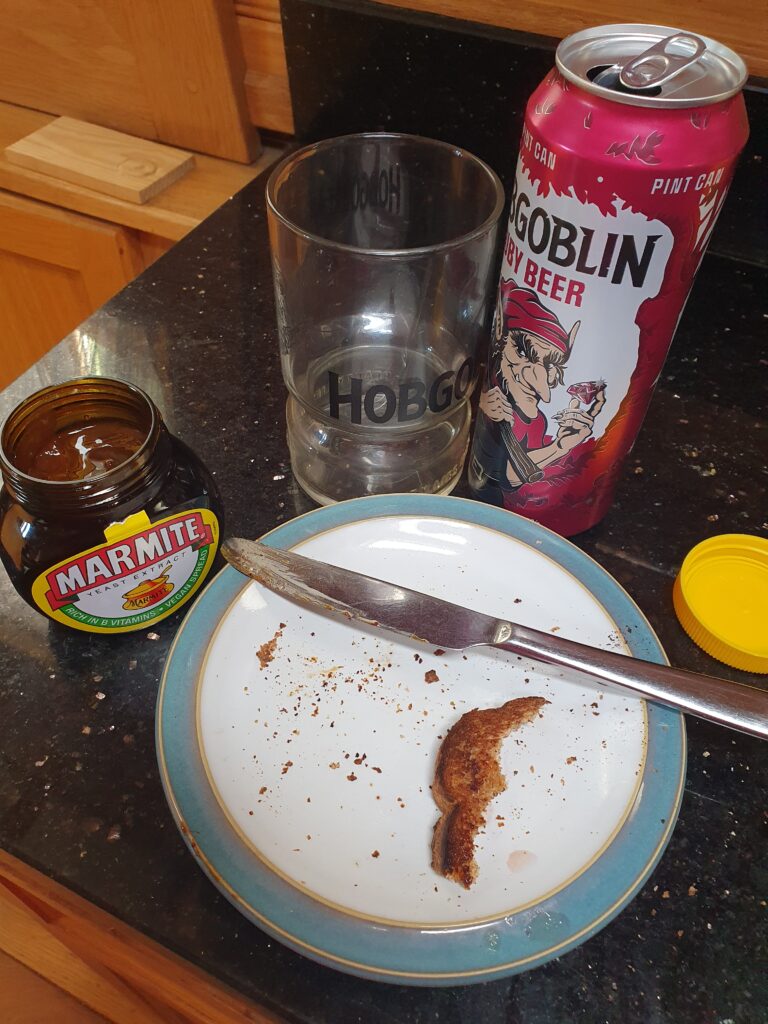
Burton upon Trent is the home of Marmite and was, at its heyday, the home of beer brewing in England. Sadly for us  because Eric loves a pint of Hobgoblin as much as I love the dark sticky stuff, Burton’s manufacturing industries have shrunk to almost none existence in the town, leaving it with a rather run down neglected feel. That said the mooring is excellent, with a newly laid  and well used towpath.

14 day mooring opposite the park

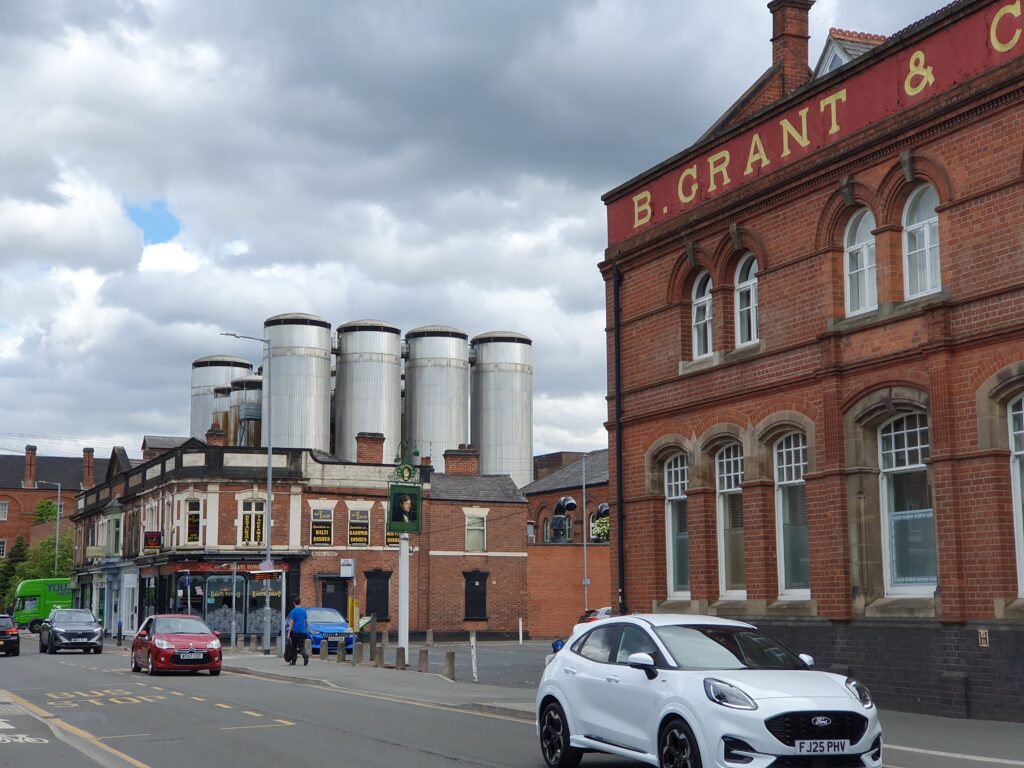
Breweries dominate the sky

A common sight around Burton, the old and the new side by side

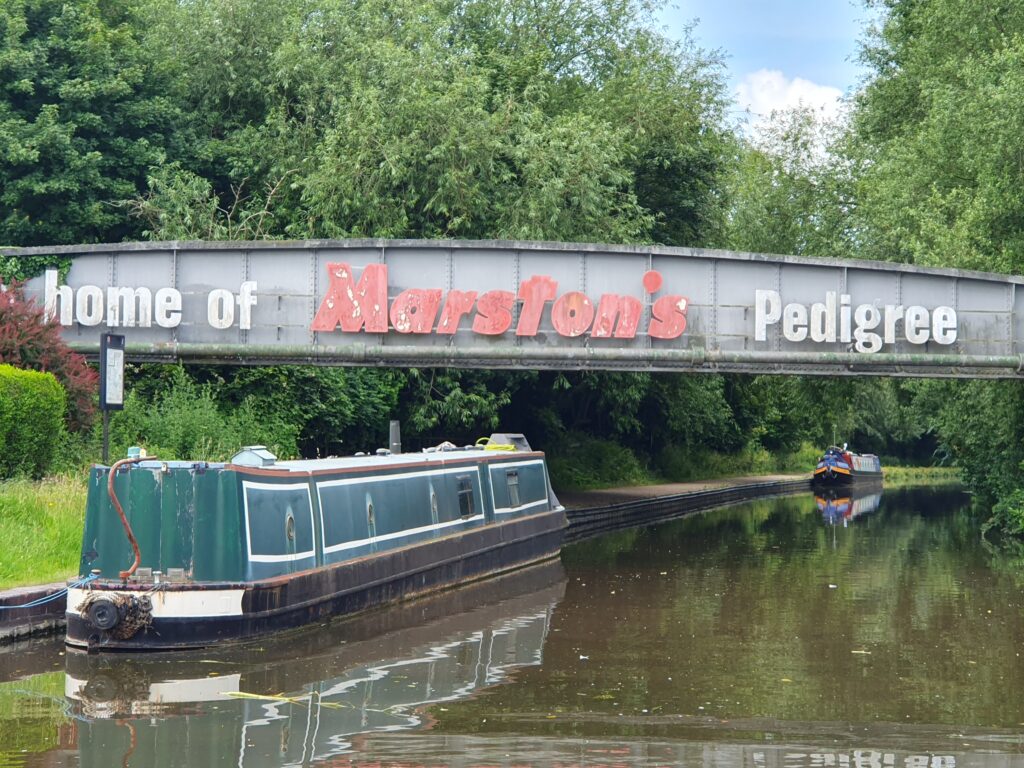
And there’s never an advertising opportunity missed

Marstons is the oldest brewery still in Burton

Brewing was the predominant industry in Burton, the high mineral content of the local water created a good flavour and when it was discovered that hops were a natural preservative, Burton became a leading brewer of India Pale Ale, so named because it was  exported for the British troops in serving in India. Of course the canals also contributed to this commercial success because the beer could be transported easily to the sea ports. Even the canal took advantage of the local industry when the extremely hard wearing Staffordshire Blue bricks were used to line the locks  and build bridges.

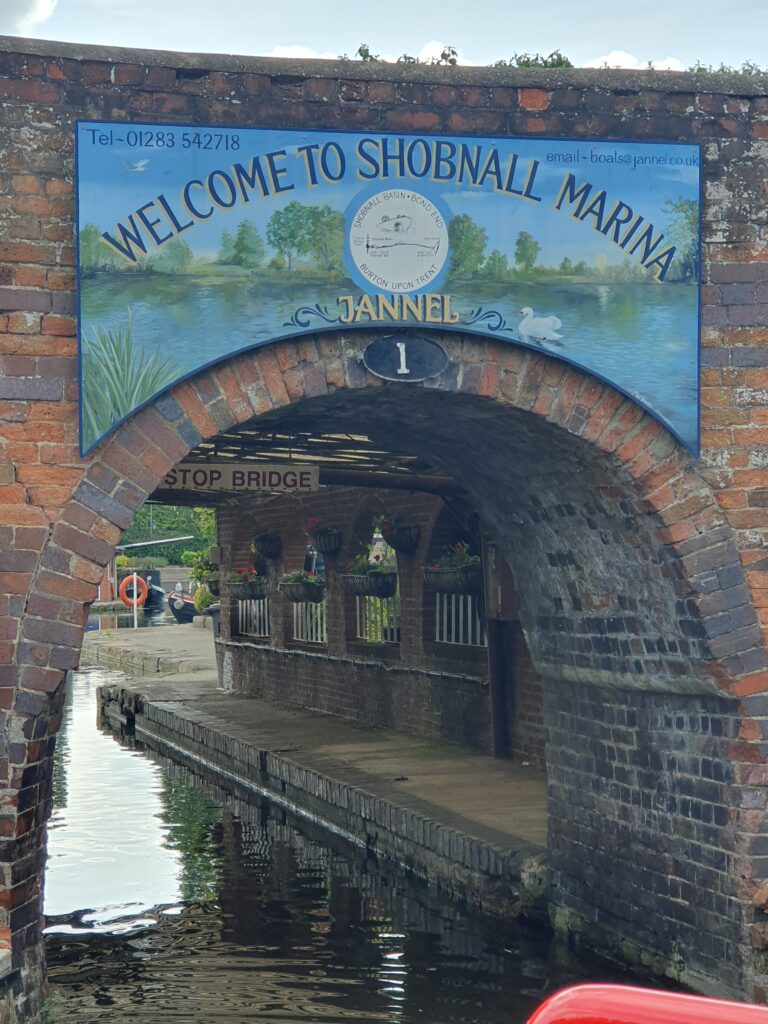
The Burton Boat Company owned warehouses on the river, known as Bond End. They tried to persuade James Brindley to amend the planned route of the Grand Trunk Canal to include these warehouses but for whatever reason- probably money, it didnt happen. So the short Bond End canal terminated at what is now Shobnall marina. Companies were forced to unload their goods at the Shobnall Bar and reload them onto the Grand Trunk boats. After much political wrangling and shenanigans, the railways took over as the preferred transport system and the Bond End canal fell into neglect but the mid 1800’s. Eventually it was only the basin that was left and in 1973 Jannel Cruisers took ownership and created Shobnall marina as we know it today. We filled our diesel tank for 81p/l and booked ourselves in for 3 nights mooring so we could leave Firecrest safely whilst we went off visiting family. There is a detailed history page on their website, it’s worth a read, even if you only look at the photos of how it was to how it is now.

Bit of a tight squeeze getting in, but the fuel price is worth it

Whilst I was looking at Burtons history I discovered that the name Marmite is taken from a French term. A marmite is a large earthenware covered cooking pot, just like the one you see on the Marmite label. Of course I should say other savoury spreads are available …. but they’re nowhere near as delicious. Do you think I could become an “influencer”?

meandering slowly

We’ve been feeling a bit overwhelmed by all our to-ing and froing and exciting adventures over the past two or three months. Our next fixed commitment is to visit the dentist in Kendal in the second half of June. With Firecrest still being super shiny, we aren’t ready to leave our beloved boat unoccupied on the cut so we’ve booked a few nights into Shobnal Marina, at Burton. As its only 21 miles away and we’ve almost 21 days to get there, we are in meandering mode.

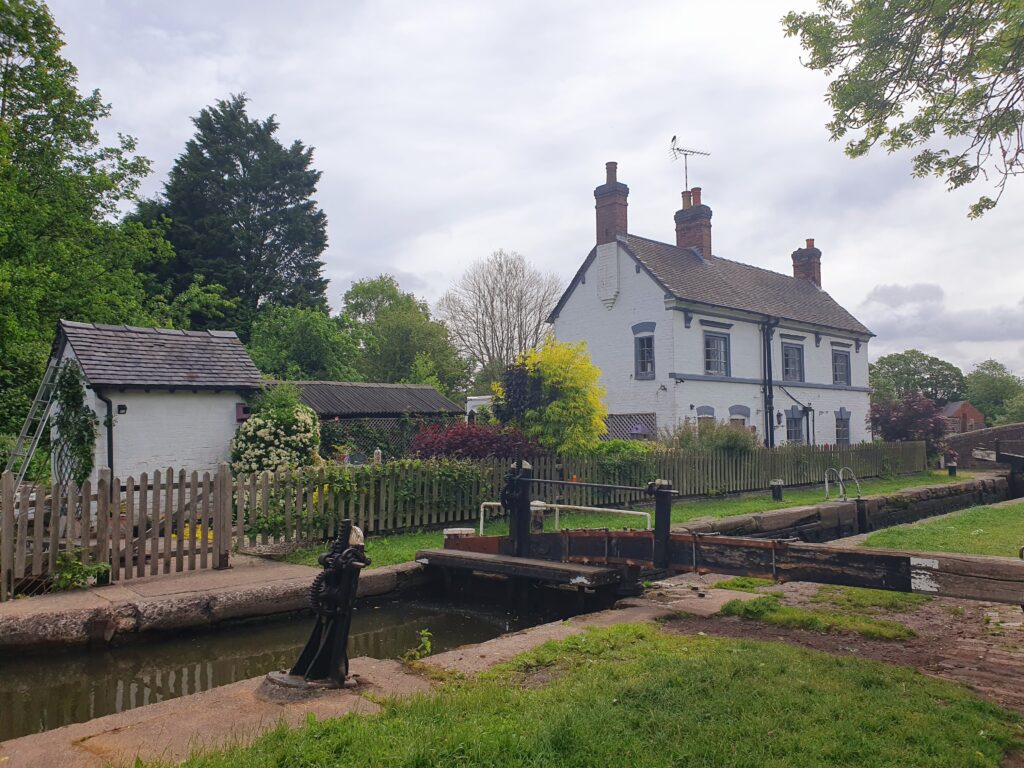
Through Colwich lock with its beautiful cottage, I wonder what it would be like to live in a cottage lock side,

Colwich Lock, south of Great Haywood

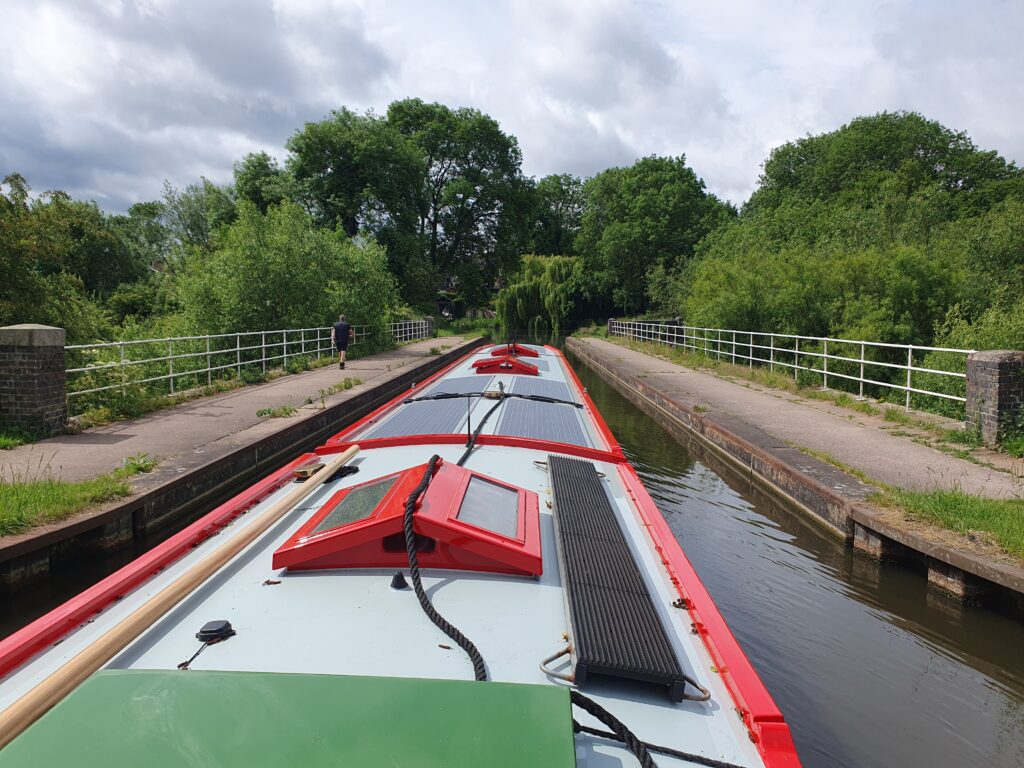
Over the Brindly Bank Aqueduct

the Brindley Bank Aqueduct

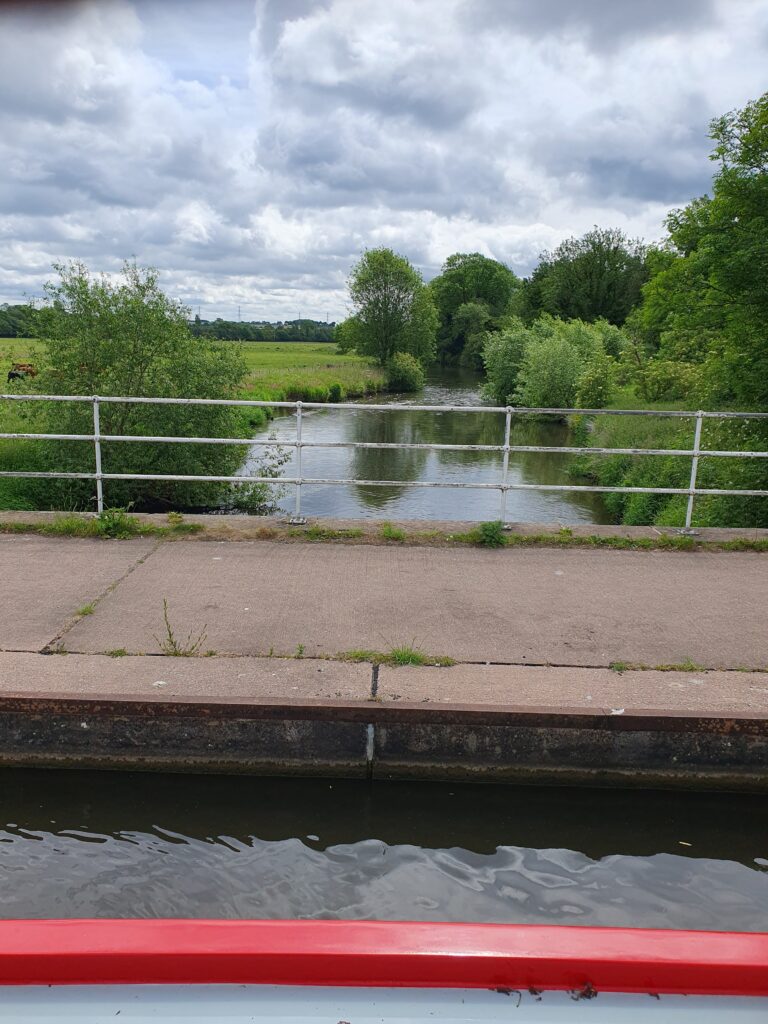
Which crosses over the River Trent, which is now quite a significant River and in need of some wide flood plains

The River Trent

.
And around the corner at Brindly Bank Corner. This particular spot is also infamously known as the Bloody Steps, (obscured by trees on the right.) after the dead body of Christina Collins was hauled up them. In 1839, Christina was a young woman travelling as a passenger to London. At Stone she made a complaint at the canal company offices that the crew were harassing her, but she continued her journey. By the next day she had been raped, murdered and thrown overboard. Two of the crew were found guilty and executed, a third was deported. The legend was used by Colin Dexter for one of the Inspector Morse stories.

Brindley Bank Corner

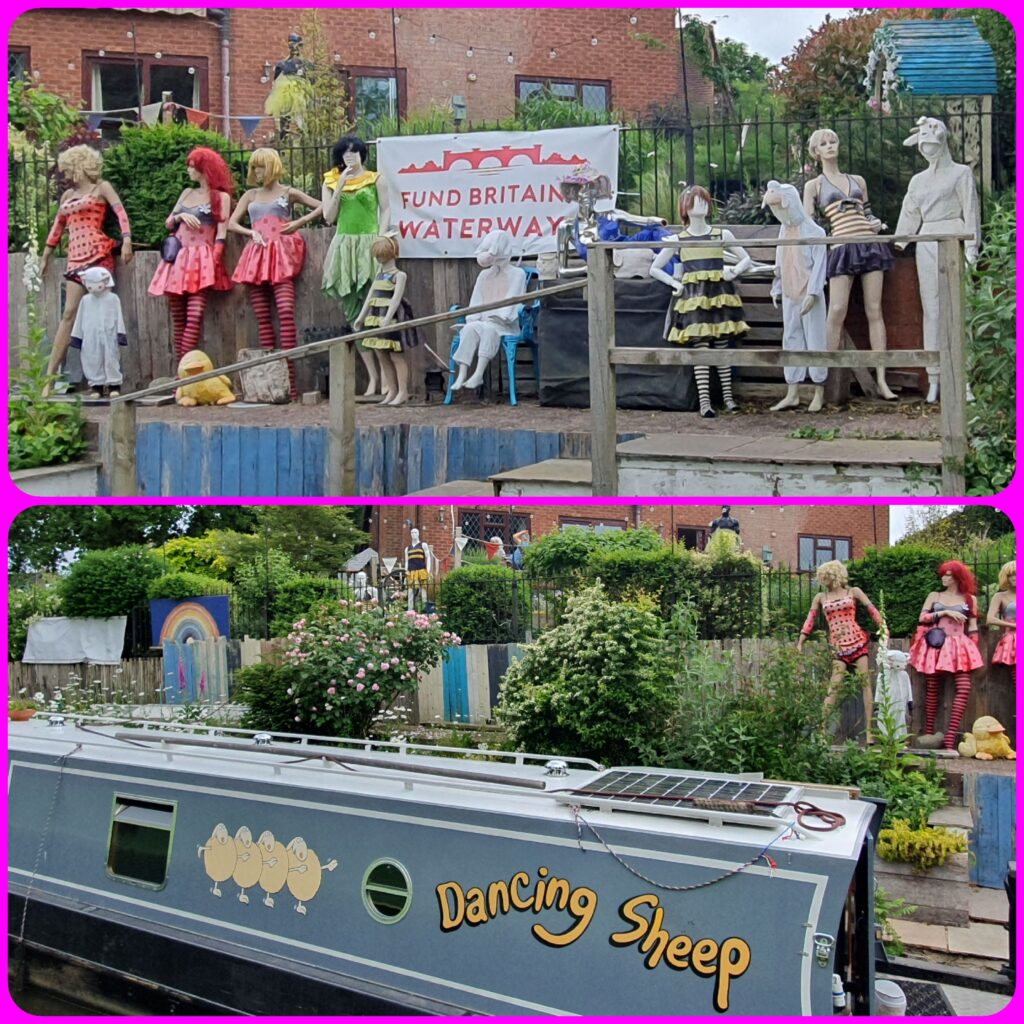
I always look forward to this next little stretch because the owners of narrowboat Dancing Sheep, have a family of mannequins inhabiting their garden. Each time we see them, they are up to something different. This time they were campaigning to Fund British Waterways, a national campaign to highlight the urgent need for funding to keep this precious resource maintained, safe and accessible.   https://waterways.org.uk/waterways/sites/fund-britains-waterways-overview
There is a link to the petition on the website

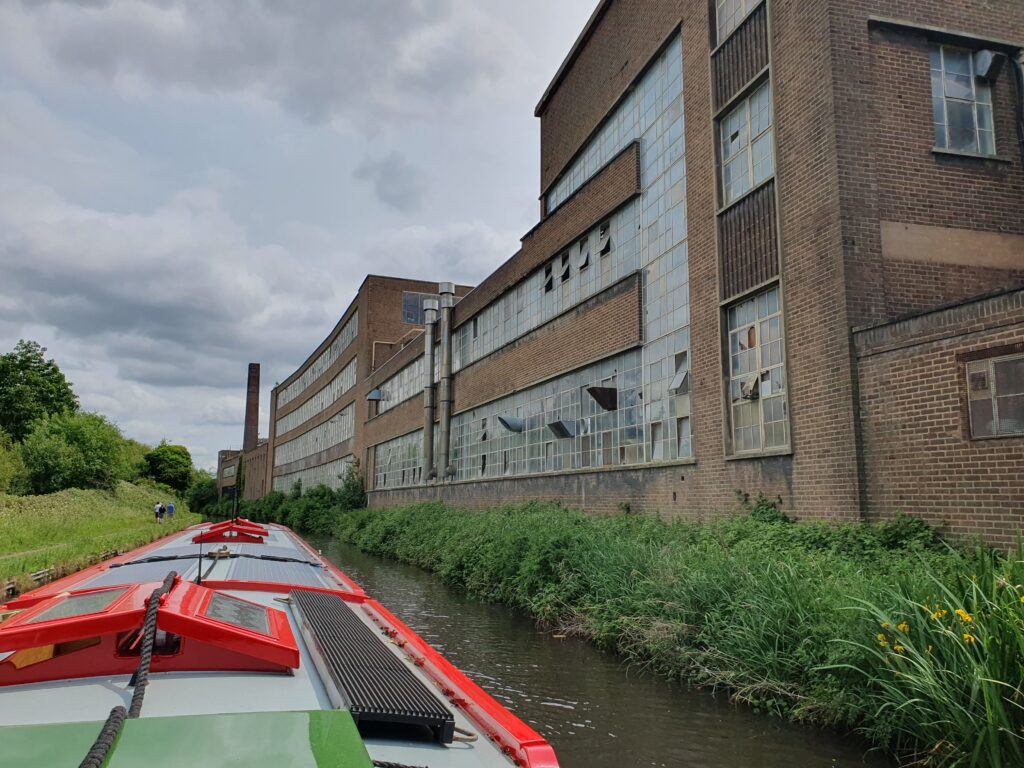
We had a night in Rugeley as there is a very convenient Tesco, canal side, we also took a bus ride into Lichfield for a bit of a wander, it’s a lovely city and I’m sure we’ll do it again. After Rugeley comes Armitage, which, thanks to the Staffordshire clay pits, was known for making clay pipes. In the 1850’s the small pottery had moved on to making sanitary ware. In 1867, the congregational minister Rev Edward Johns bought the business which went on to become Armitage Shanks. Athough the company is now based in Dubai, toilets are still made here. Sadly like many factories backing onto the canal, it’s not a particularly pretty site.

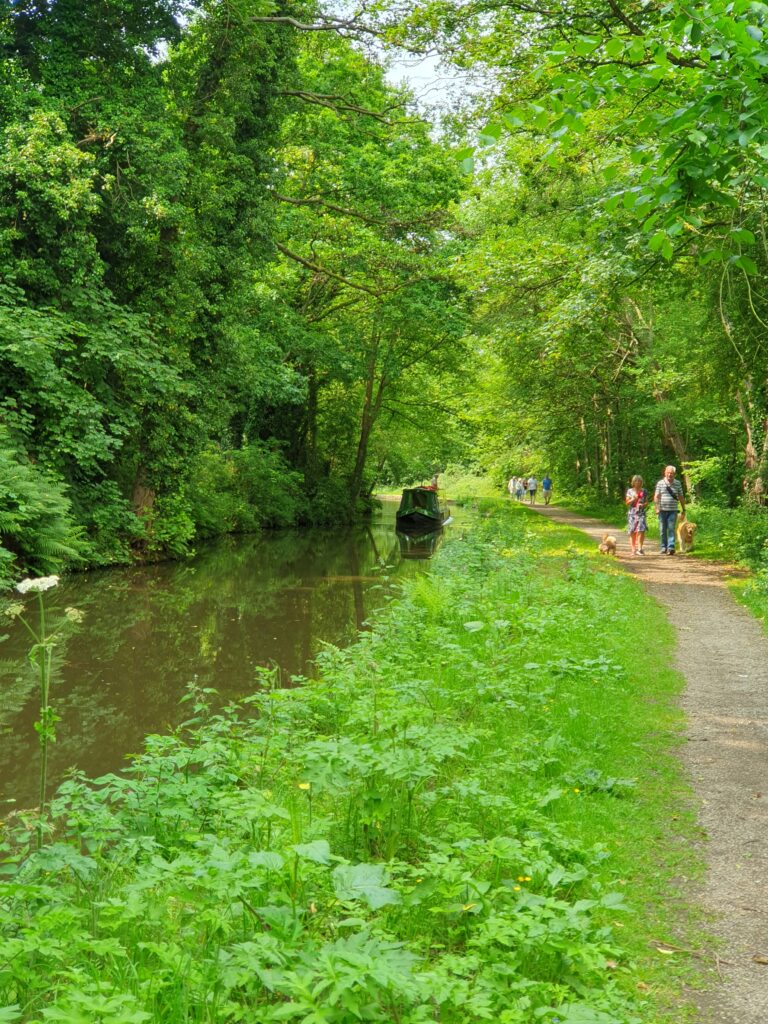
But the canal is lovely here, under its canopy of big trees

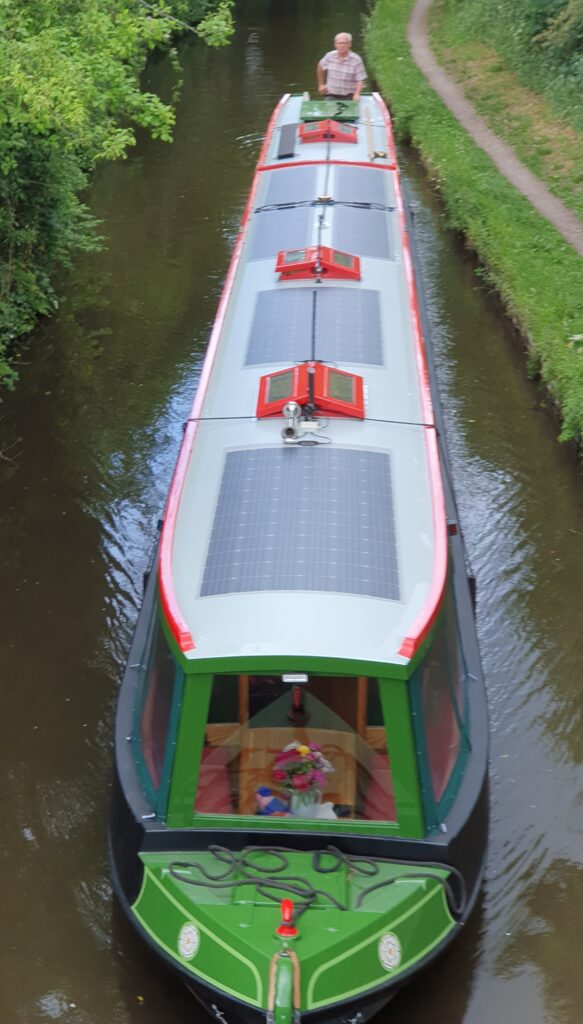
Unless of course you are wanting some sunshine on your new solar panels

Through the Armitage tunnel…. which is missing its top half. This is where I get off and walk ahead with my red and green stop go boards

There’s some lovely old woods around here, sadly some were sacrificed for the building of HS2, which has been abandoned. Much as I hated the destruction of the landscape for its route, and to some extent I questioned its necessity. I was not for abandoning it. Too much had been spent and we’ll never get back those ancient trees or hide the scar its left.

the rhododendron avenue survives though

And onto Fradley junction with its flight of 5 locks and helpful volunteers

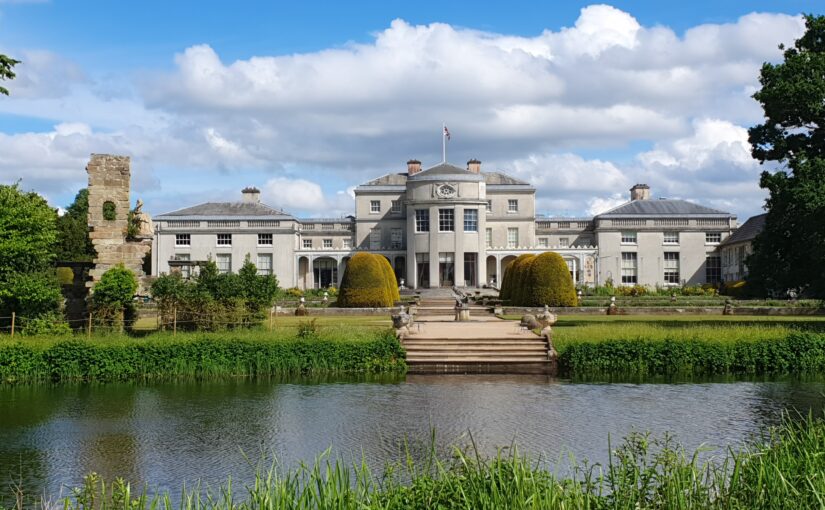
Shugborough Hall

We woke to a perfect cruising day. I was determined that as we passed Great Haywood Junction, where the the Staffordshire and Worcestershire canal meets the Trent and Mersey Canal, we would moor up so I could visit Shugborough Hall.

Bye bye Burston

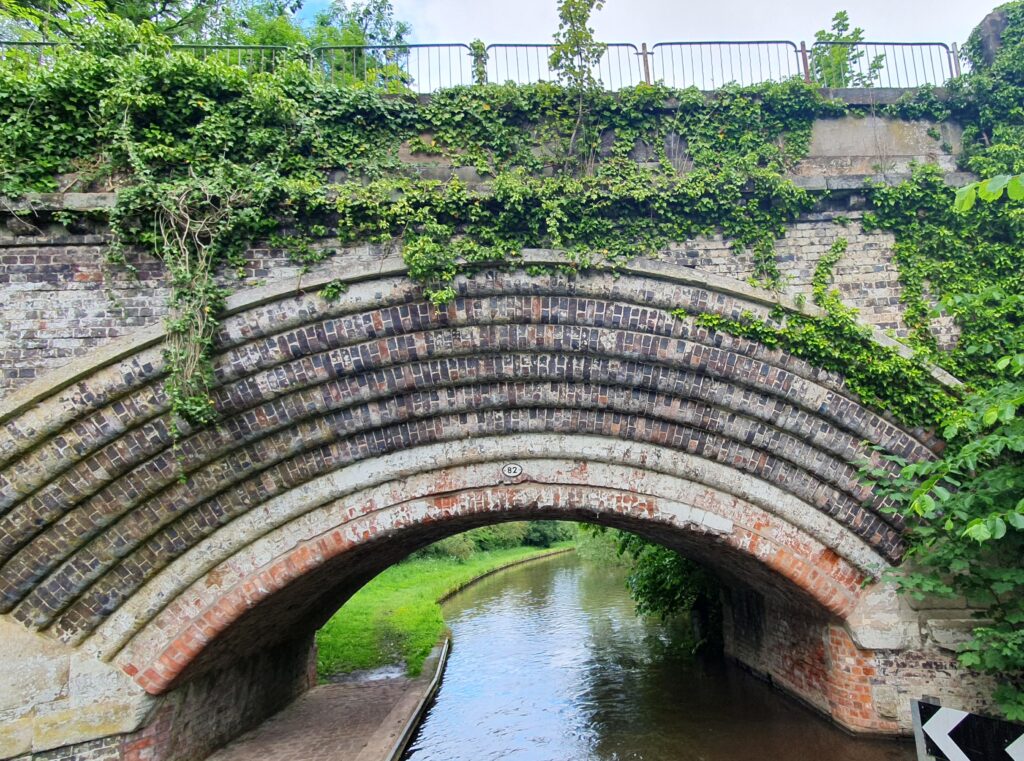
6 or so miles travelling south, under one of my favourite bridges, Salt Bridge, (named as it leads to the village of Salt- where you’ve guessed it, they mined Salt).

Salt Bridge, 82

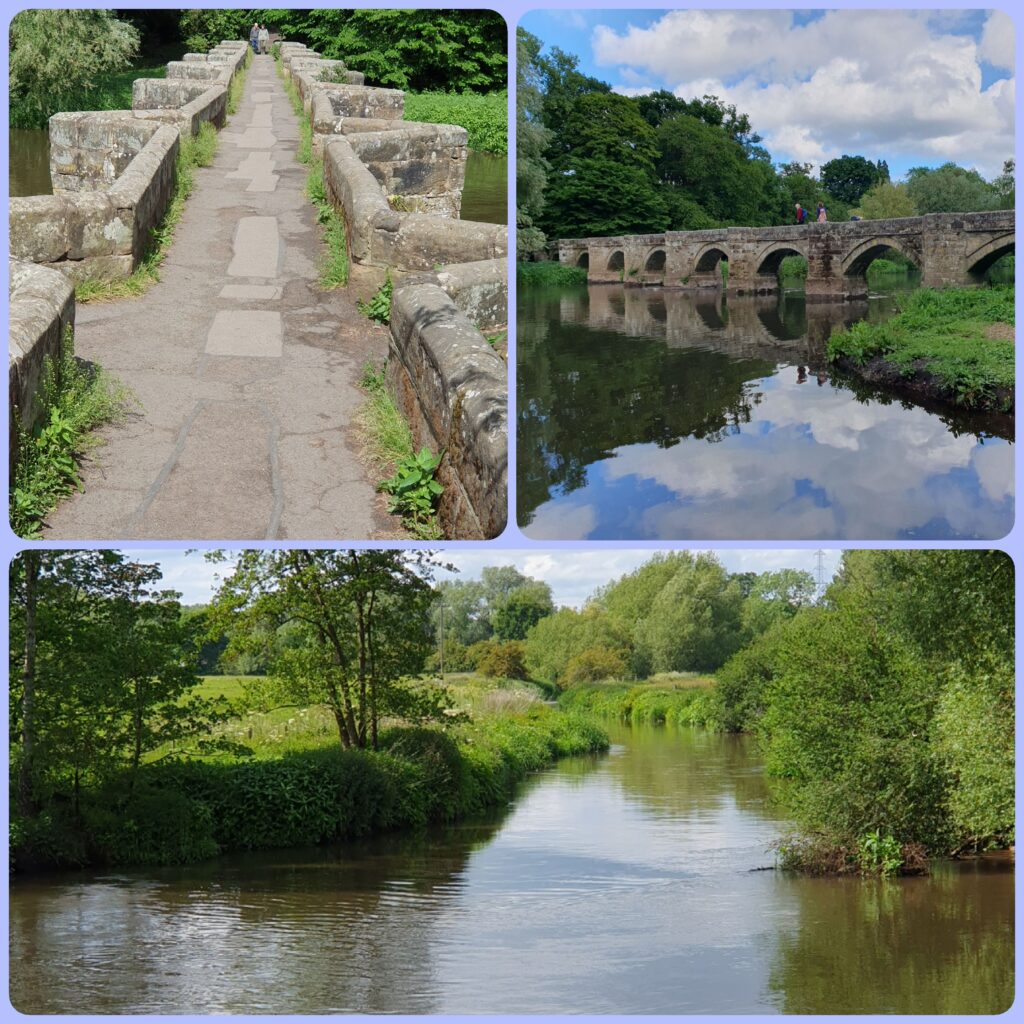
The junction was busy as always, but we managed to get one of  the last spaces on the 2 day mooring. Eric had some work to do, so I left him to it and went for a walk. The estate is reached by crossing over the 16th century packhorse bridge, Essex Bridge. This where the Trent and the Sow meet and the Trent becomes the major river. This is another of my favourite bridges, although only 14 of the original 40 arches remain.

Essex Bridge, worth stepping off the towpath at Haywood lock to see, even if you don’t go onto the estate.

Although the estate is a National Trust property, the grounds are open to the public to enjoy, with monuments and follies hidden amongst huge trees.

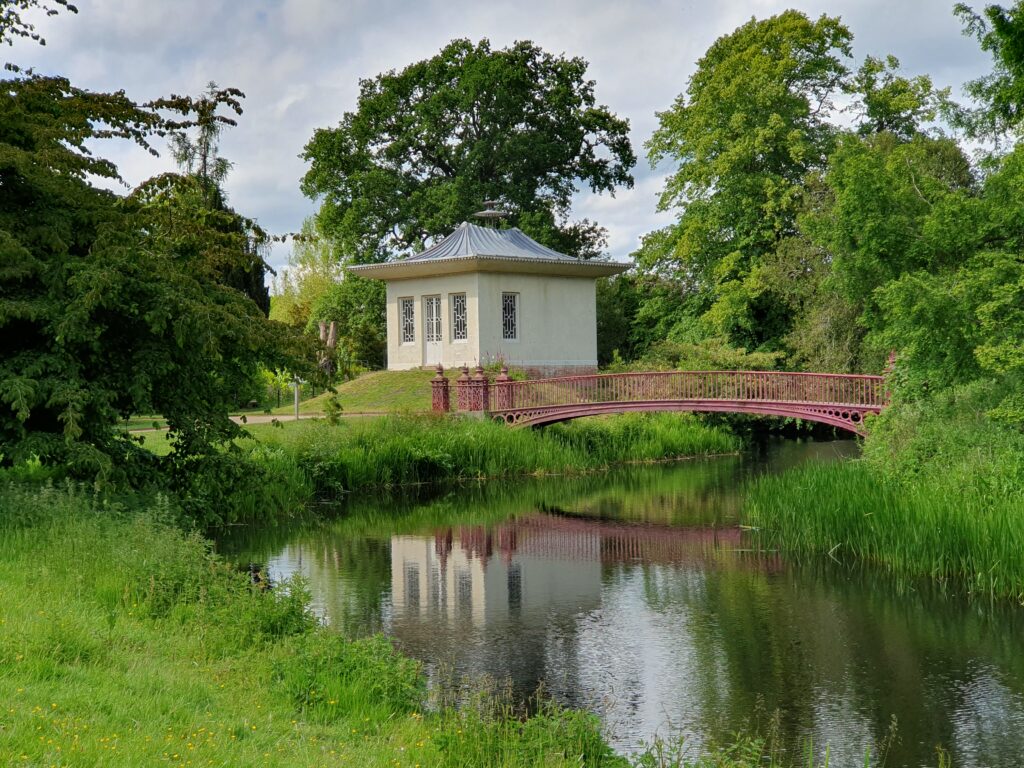
The Chinese house and bridge over the River Sow

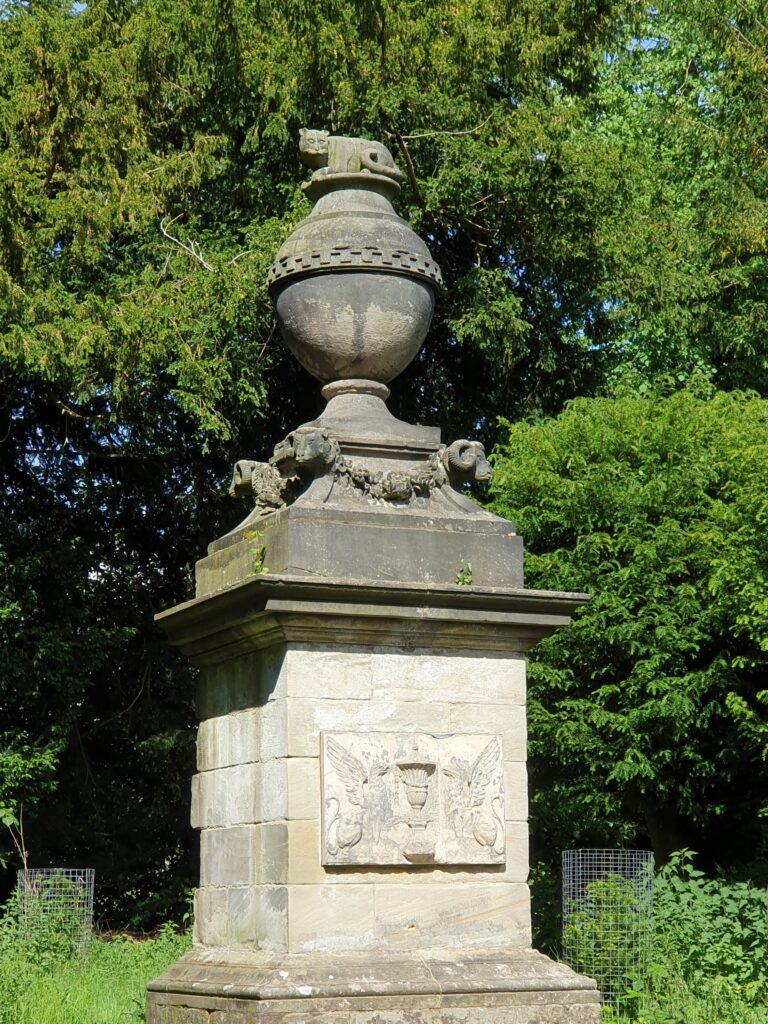
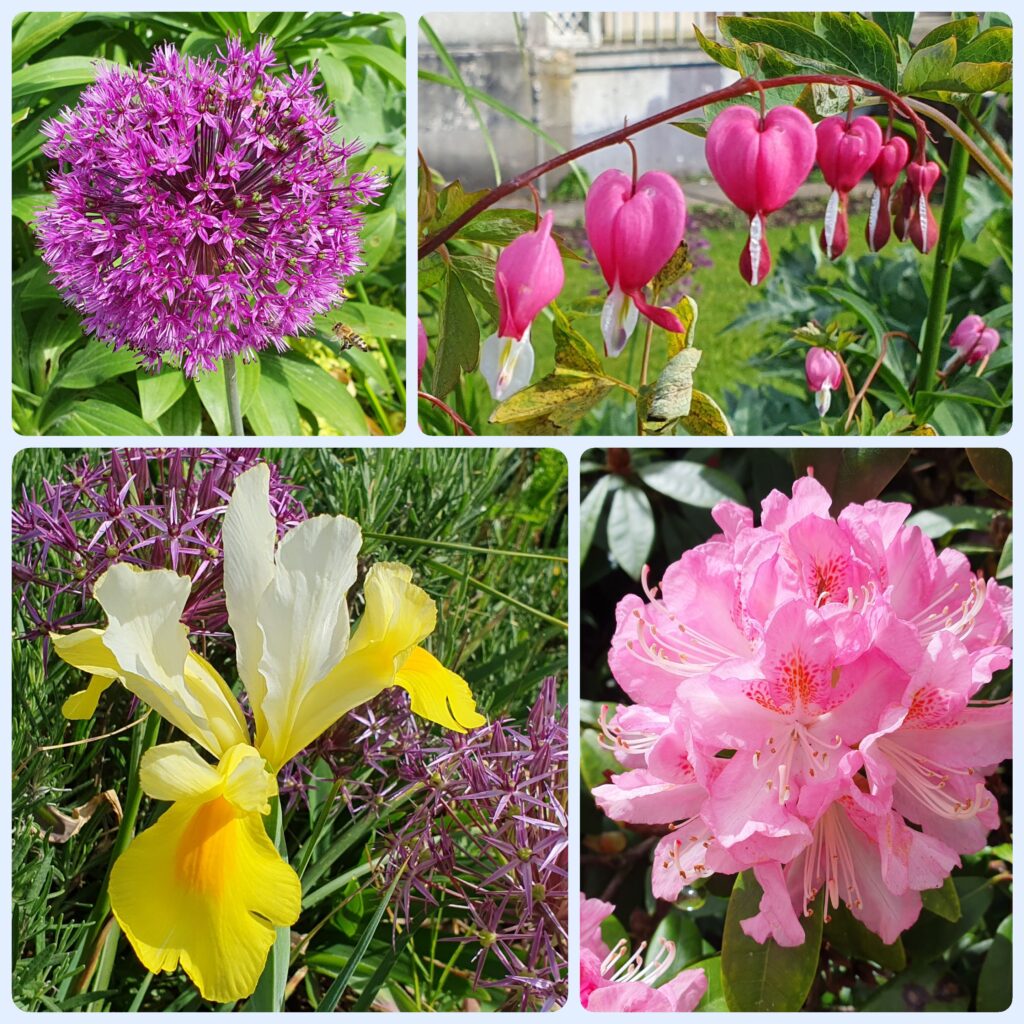
The cat monument celebrating Lord Anson’s Persian cat and his flock of Corsican goats built in  1750. And of course some beautiful flowers in the garden

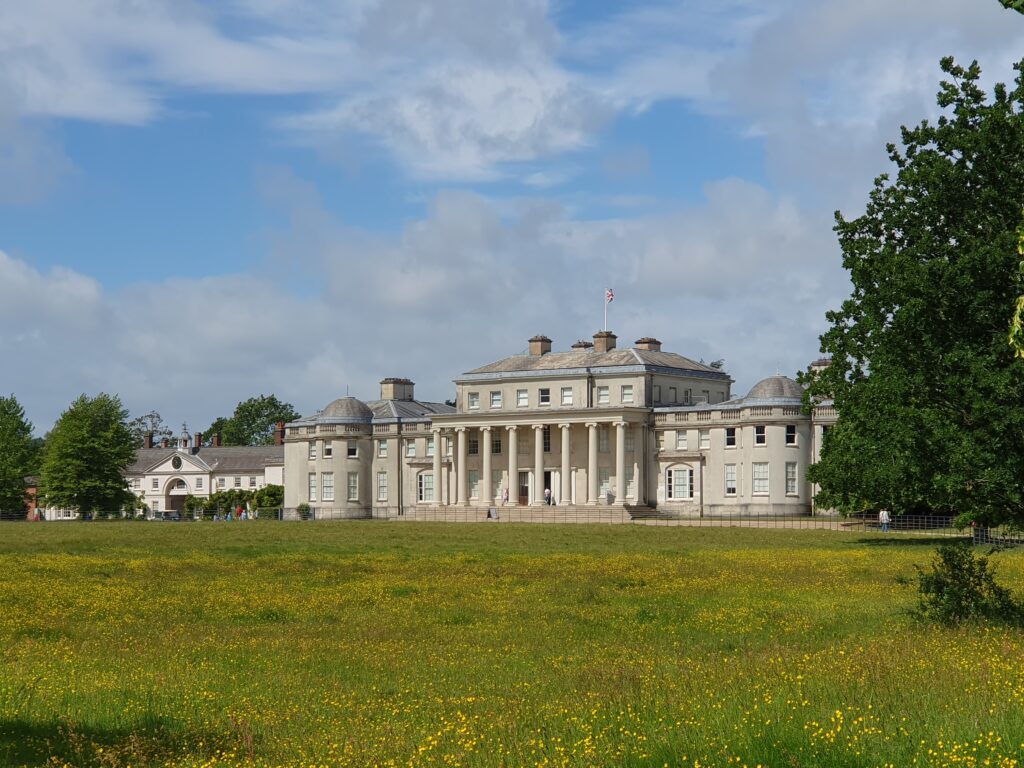
The next day Eric and I set off to explore the house

The estate lands were owned by the Bishops of Lichfield until Henry VIII threw a spanner in the works, and seized their assets. In the 1600’s the Anson family bought the estate, knocked down the manor house and built themselves a stately home. The rest they say is history

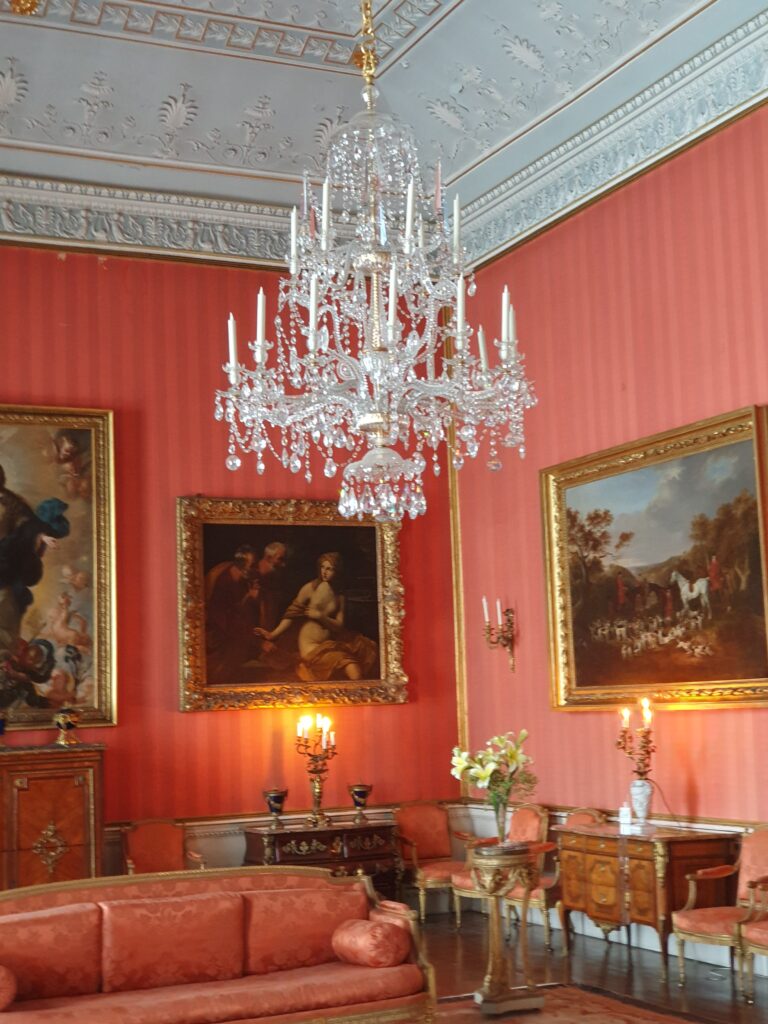
Over the years, wealth was amassed through commerce and marriage, the house was extended. They travelled extensively

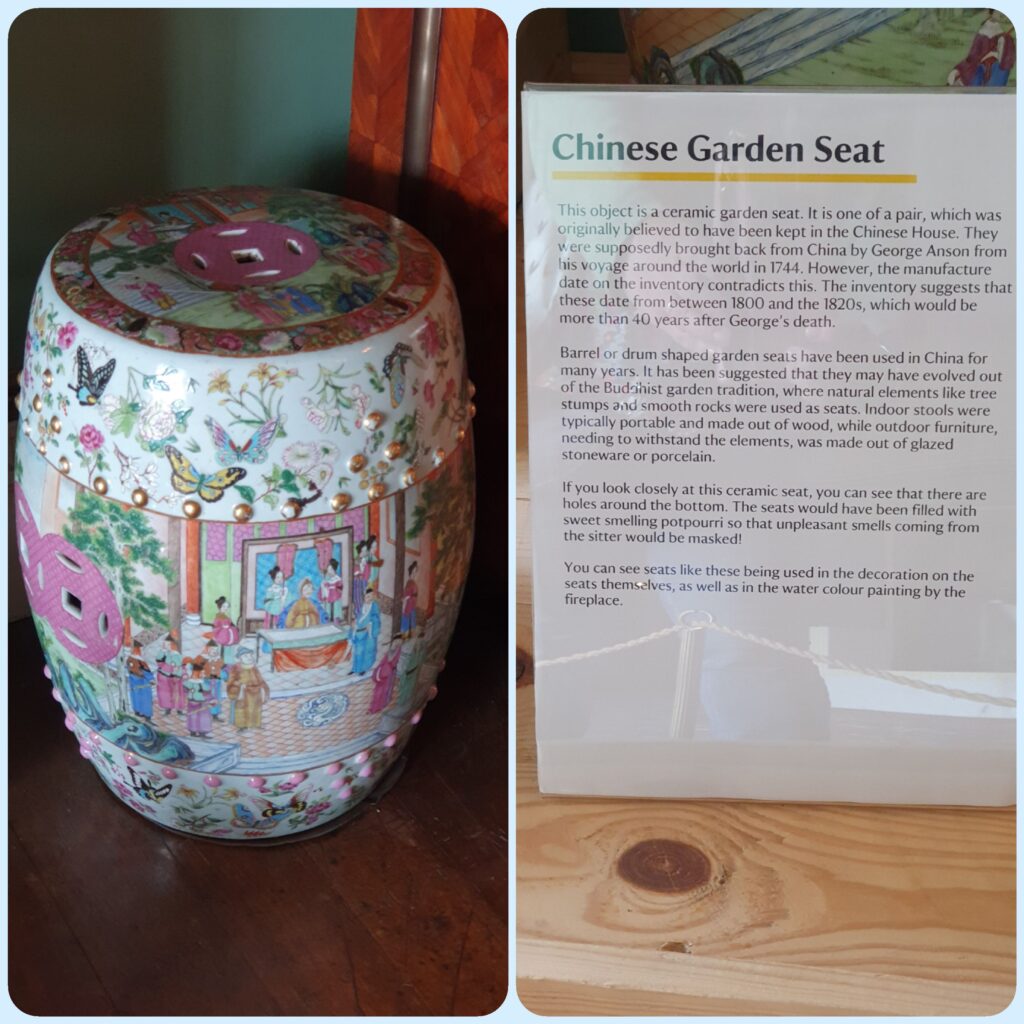
And many “treasures” and design styles were brought back to the house. We particularly liked this one, a Chinese garden seat, which was was filled with potpourri to help disguise odours emitting from the sitter. Personally we thought it was a forerunner to a USB charger socket

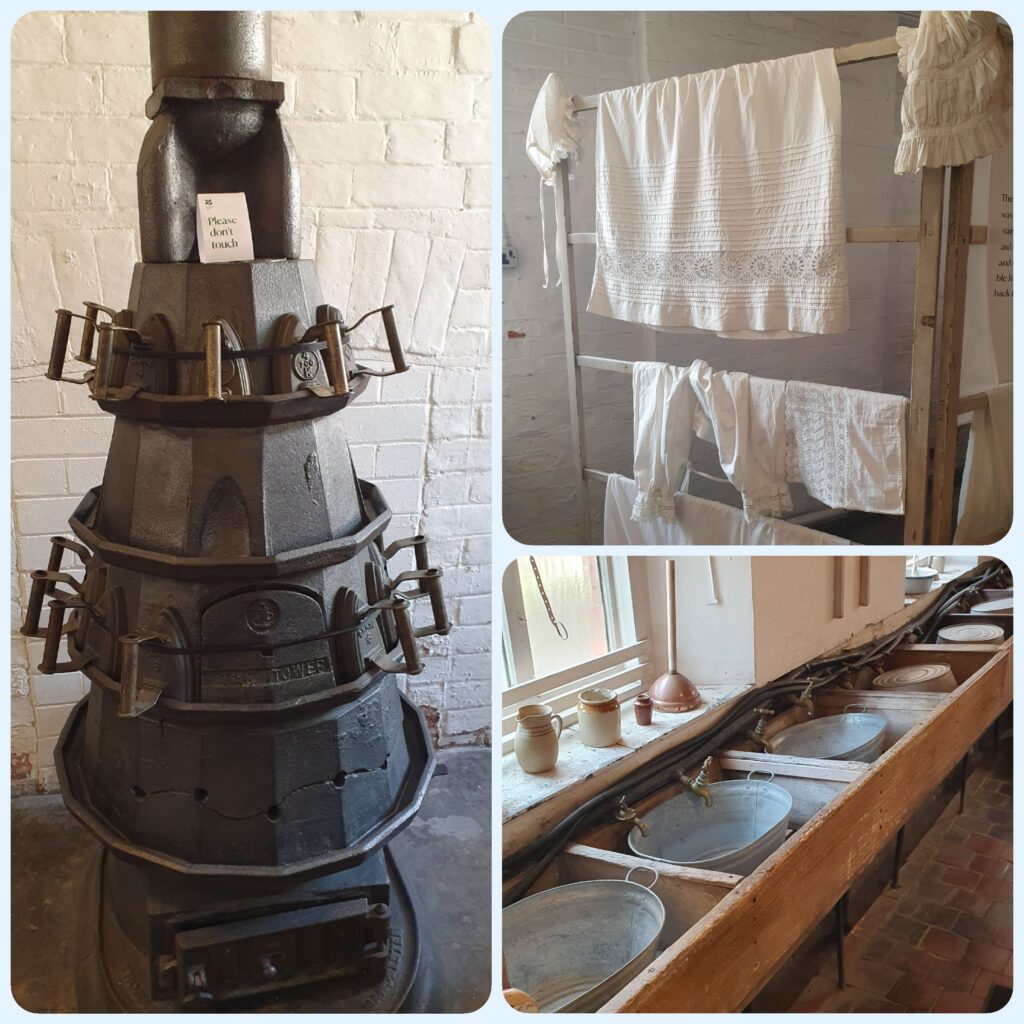
Battles were fort and won on behalf of the crown, and titles were awarded. The most prestigious was in 1831 when the family were given a hereditary peerage, and Thomas Anson became the 1st Earl of Lichfield. However even members of the aristocracy still need to wash their smalls, or employ a small army to do it for them.

Shugborough Hall was given to the National Trust in 1960 in lieu of inheritance taxes, but the 5th Earl was granted an apartment to continue living in. He was the photographer Patrick Lichfield, and many of the items on display were photos he’d taken. This wing is now open to the public which was fascinating seeing it filled with familiar, albeit now retro, crockery and appliances-the sort of thing that savvy shoppers can pick up at car boot sales, and some of us are still using- like our trusty Kenwood Chef. We weren’t permitted to take our own photos in this wing. After so much grandeur and a picnic in the grounds, we were quite happy to return to our little narrowboat to enjoy some natural landscaping along our canal.

Well Well Well

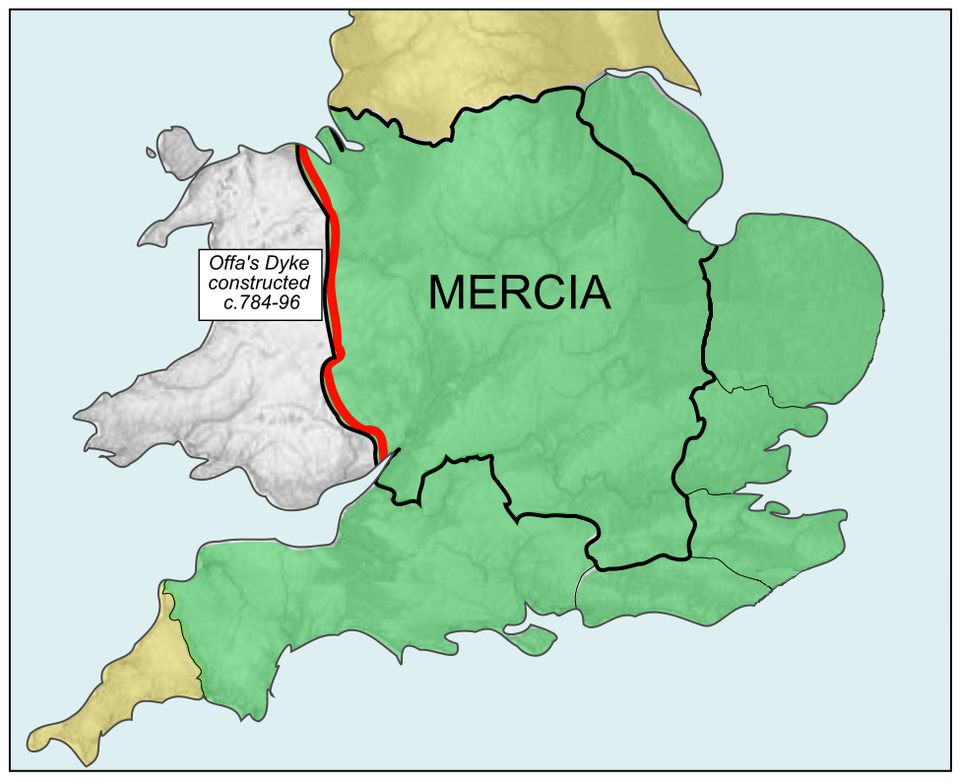
Back in the day, (1500 years ago give or take) the area we are cruising in now, was in the Kingdom of Mercia, the post Roman, Anglo Saxon region, not the rather trendy Marina south of Derby.

Wiki’s identification of Mercia

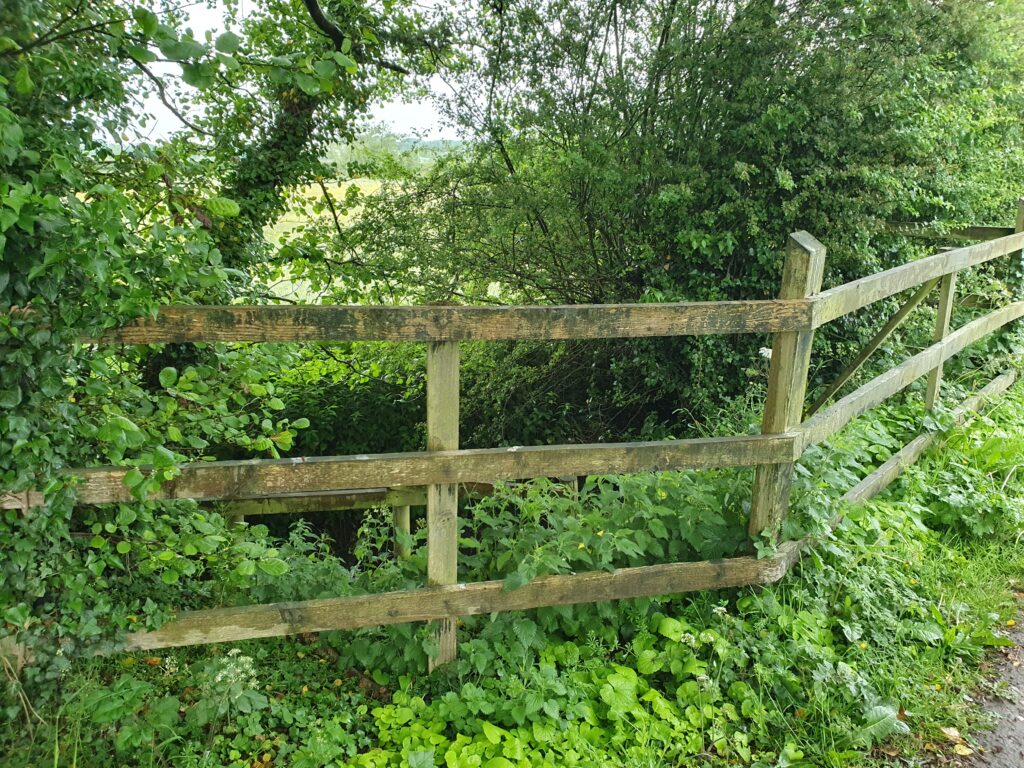
It’s a bit hard to pin down the specifics as literacy didn’t seem to take priority over Kingdom building.  And to be honest, I still can’t make sense of who owned what or when. But if you look on Google maps there’s a purple historical landmark pin where we are moored. Well, well, well, as soon as the rain had stopped I needed to go and investigate. Right next to the canal is where you will find St Rufin’s Well.

St Rufin’s Well

Alas, it’s not all that remarkable at first sight,

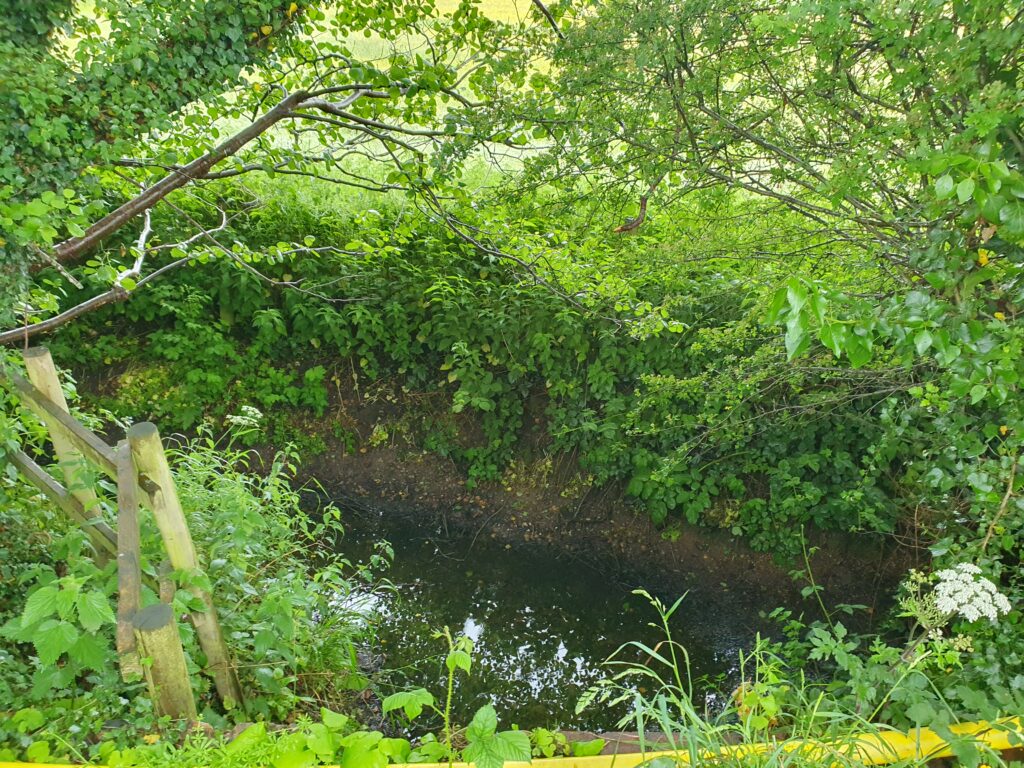
But it still has water in it

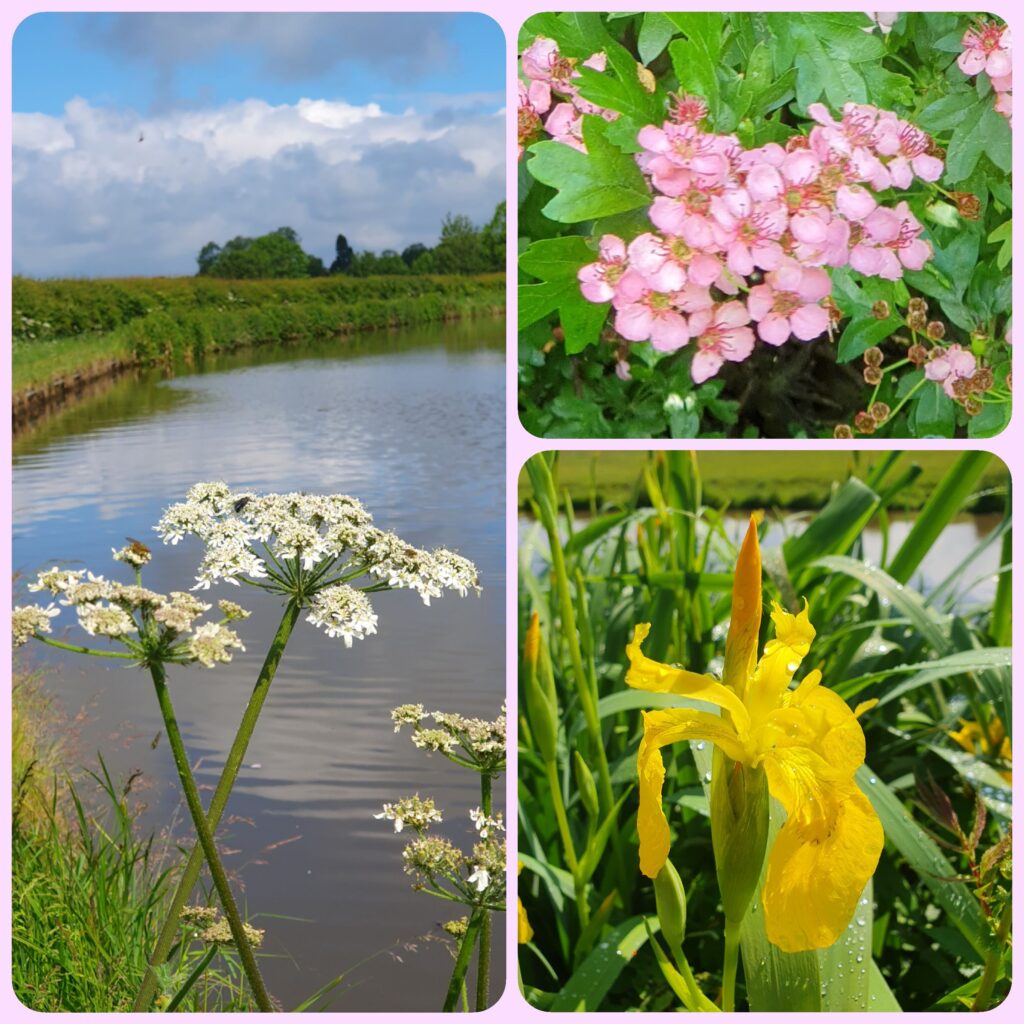
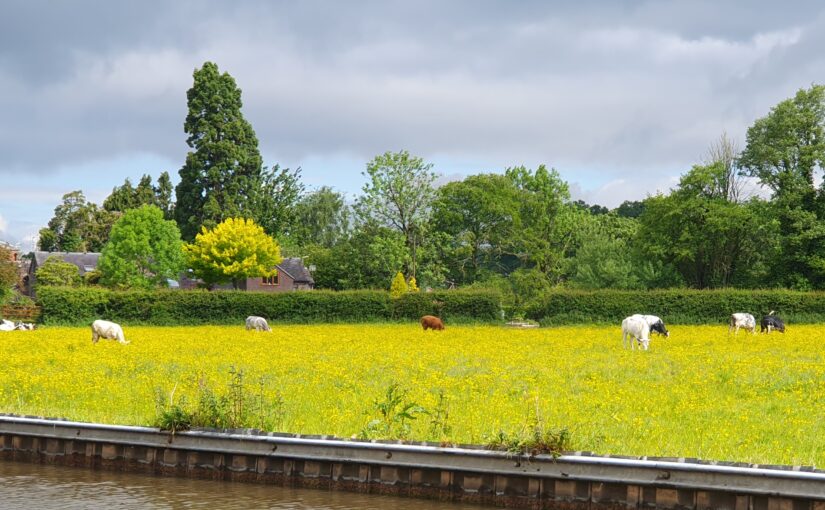
And there was a nice circular route around the buttercup meadow, through the hamlet of Burston that would get me back to Firecrest.

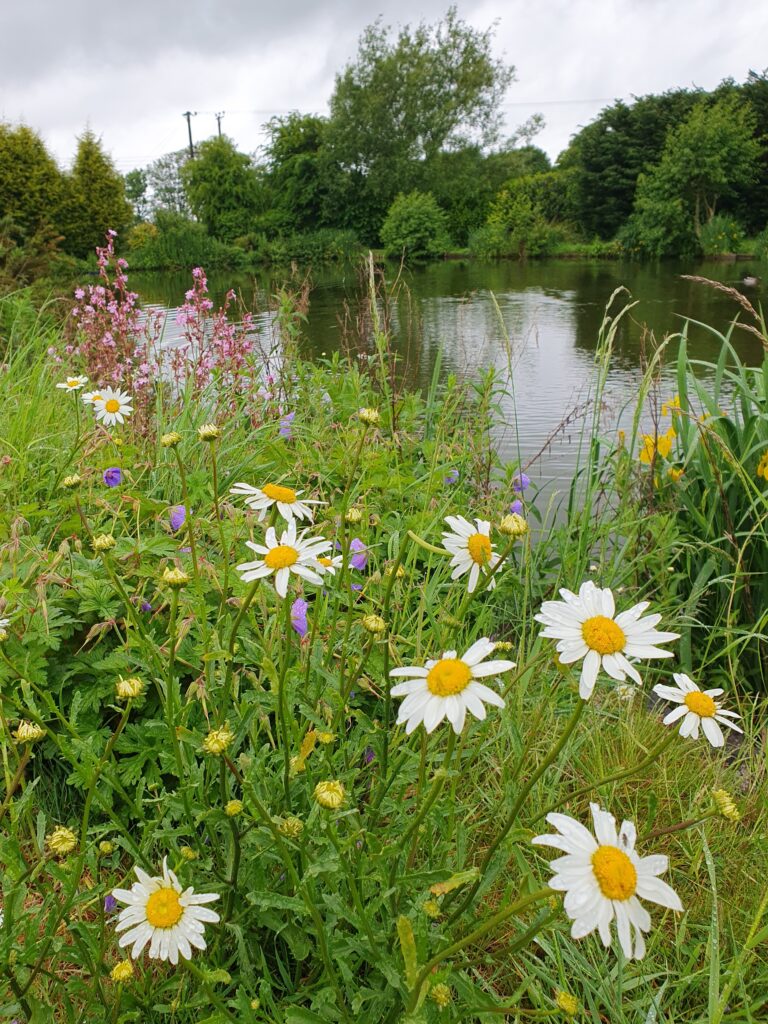
Burston pond

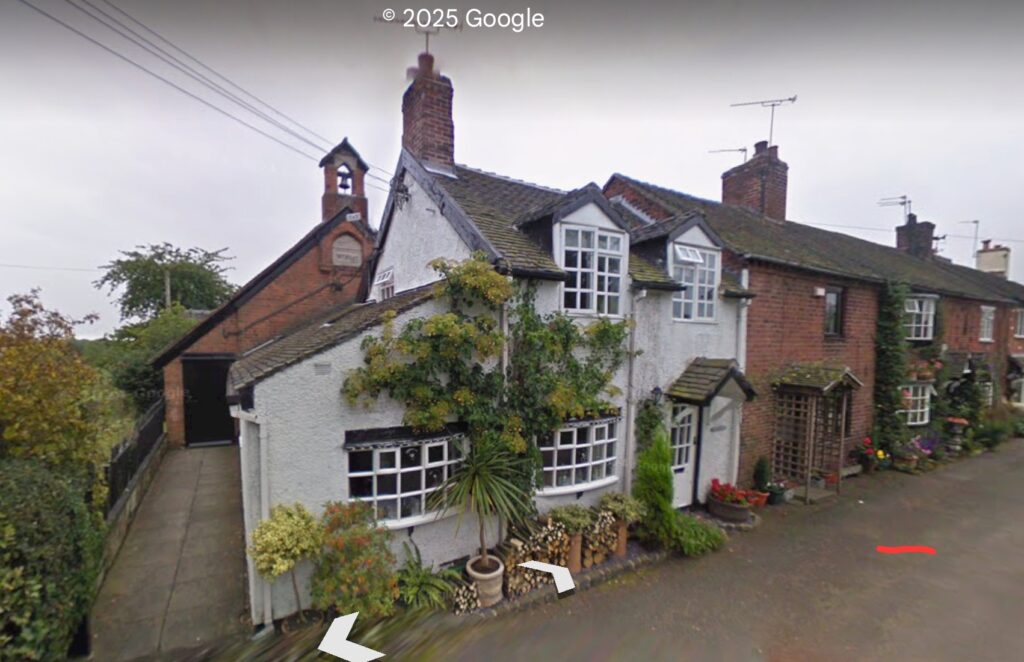
Next to the village pond was an info board that told me a bit about St Rufin’s Well and the little chapel tucked away behind the cottages.

Rufin and his older brother Wulfad were the sons of the Pagan King Wulfhere.  They had the “good fortune” to meet a prominent monk called Chad who converted them to Christianity. It is believed they were baptised here, in this well. However their father the king was furious and ordered them to be killed, an action he immediately regretted. He went on to meet with Chad and was also converted to Christianity. Chad went on to become the Bishop of Mercia, and both he, Rufin and Wulfad were all canonized for their martyrdom. This all happened in the 7th century and there are many legends and storys about what went on at this time.  The power struggles between the Christians and the pagans led to many more slaughters. St Rufin’s Well was also known as the Druids well.
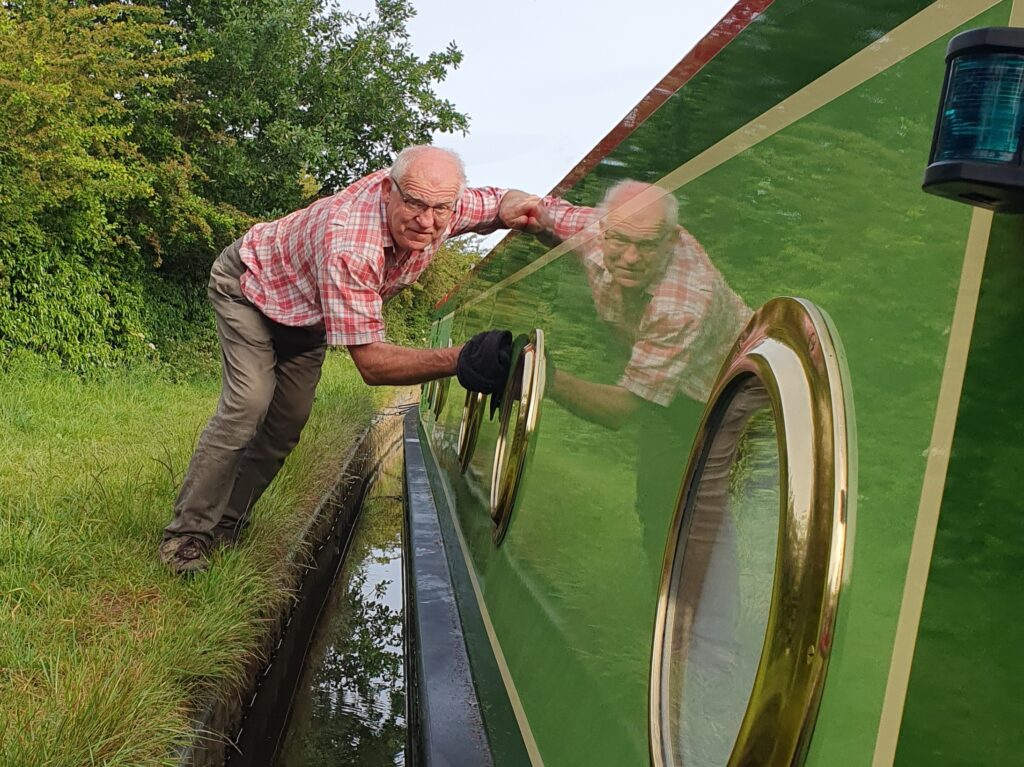
Whilst I was out researching a bit of history, Eric was communicating with his porthole spirit. Just like Aladin polishing his lamp, Eric was polishing his brass when his genie appeared.

Double trouble

This is obviously a spiritual place, there are many churches and memorials dedicated to Rufin, Wulfad and Chad, and there is a recognised pilgrimage walk between Lichfield and Chester cathedrals.