A Salty Story

Cruising through this part of Cheshire throws up some interesting comparisons. Many many years ago, before canals were invented. (About 220 million years to be exact), this part of Britain lay under salt marshes caused by the sea flooding inland. Eventually the marshes dried up and left behind beds of rock salt, which in turn the Celts and then the Romans took advantage of. Building up settlements around the natural salty springs, they could process and produce a valuable commodity. The rest they say is history(or geography or economics) . The towns of Northwich, Middlewich and Nantwich all prospered on the salt beneath them. “Wich” being the commonly associated Anglo Saxon word used as a suffix for salt towns. (Although, more correctly the suffixes, wich, wick, and wyke refer to any settlement built up around a specialised industry). Even the canals bear the legacy of the salt mines, not only benefiting from a highly profitable route, but suffering from ground disturbance creating flashes. Most flashes are now stand alone lagoons but some have breached the canal bank causing tempting wide areas to explore…. but woe betide any foolish boater straying too far, for here be dragons lurking in the shallows. Best admired from the well dredged main channel.
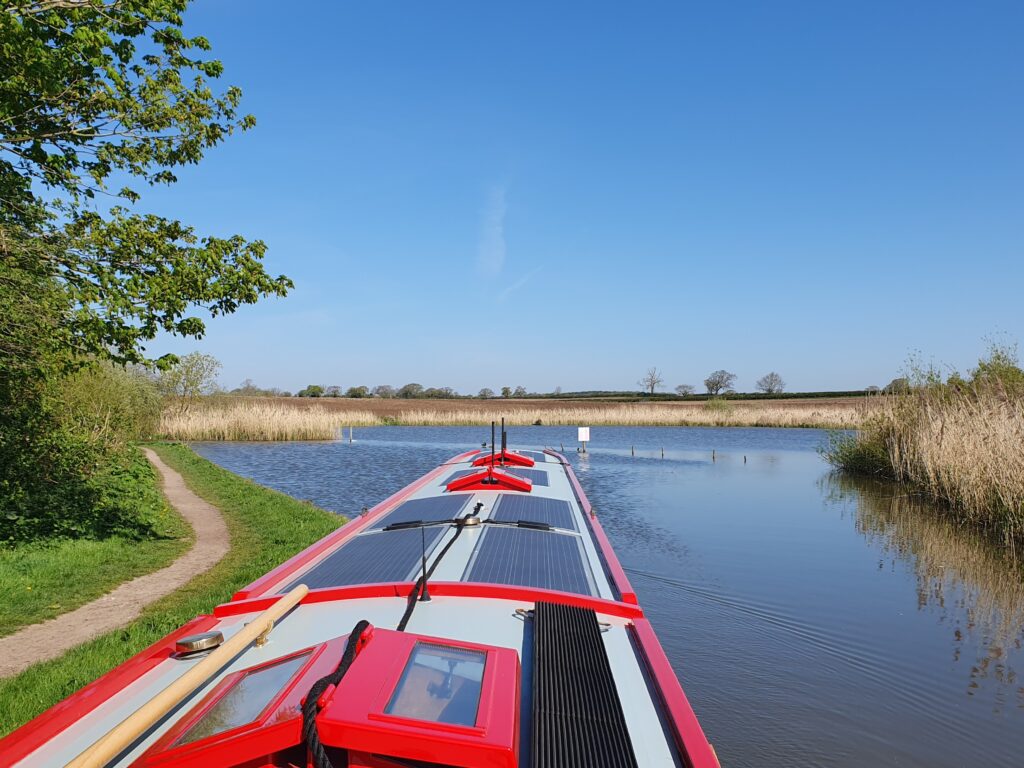
Croxton Flash

As we get to the outskirts of Northwich, we come across the Tata chemical plant at Lostock. This imposing industrial site straddles the canal with a jungle of steaming hissing pipe work and forbidding structures.

Not a place to linger

Over the past few years, we have watched the progress of new building work, which is looking almost complete. Only to discover that this colossal building with a colour scheme copied from Firecrest’s roof, is nothing to do with salt but is actually the new Lostock Sustainable Energy Plant. Their website is an easy read with some interesting facts.
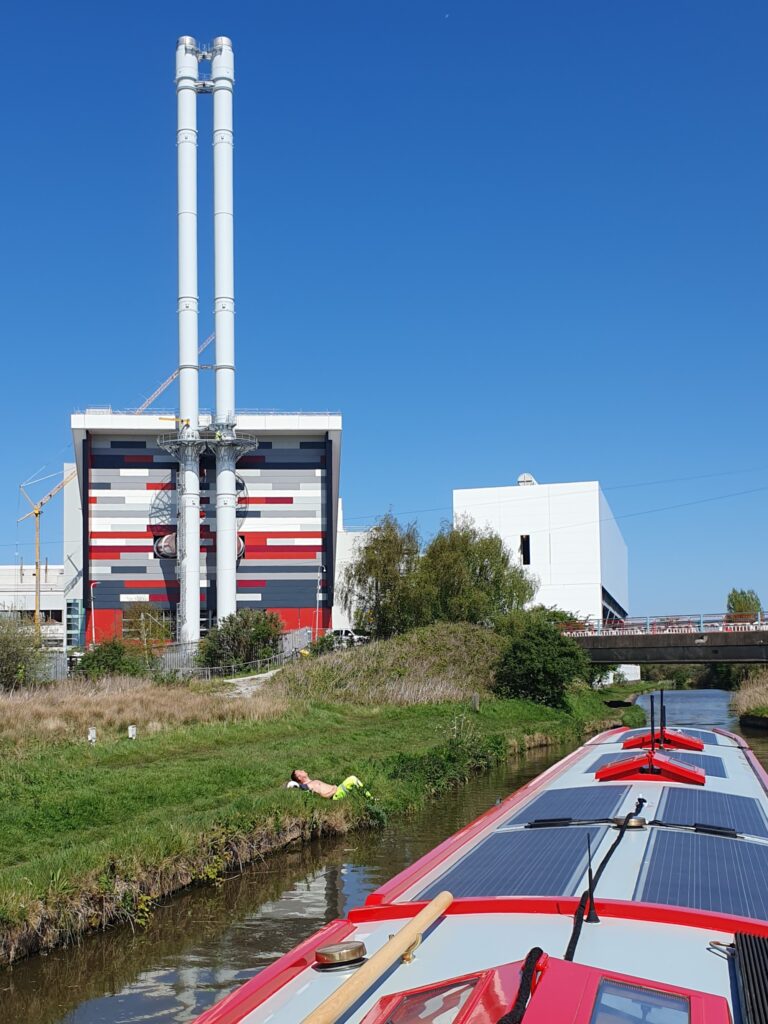
Lostock Sustainable Energy Plant

Basically, it’s a waste inceration facility, that utilities modern advances and technology to capture and reduce pollutants and generate enough electricity (About 69.9mw) for a town twice the size of Northwich, at the same time as reducing landfill by 600,000 tonnes every year.
We are fans of this sort of joined up thinking, but oh boy the fans they have on site look mighty powerful. I bet they’re noisy when they’re running.
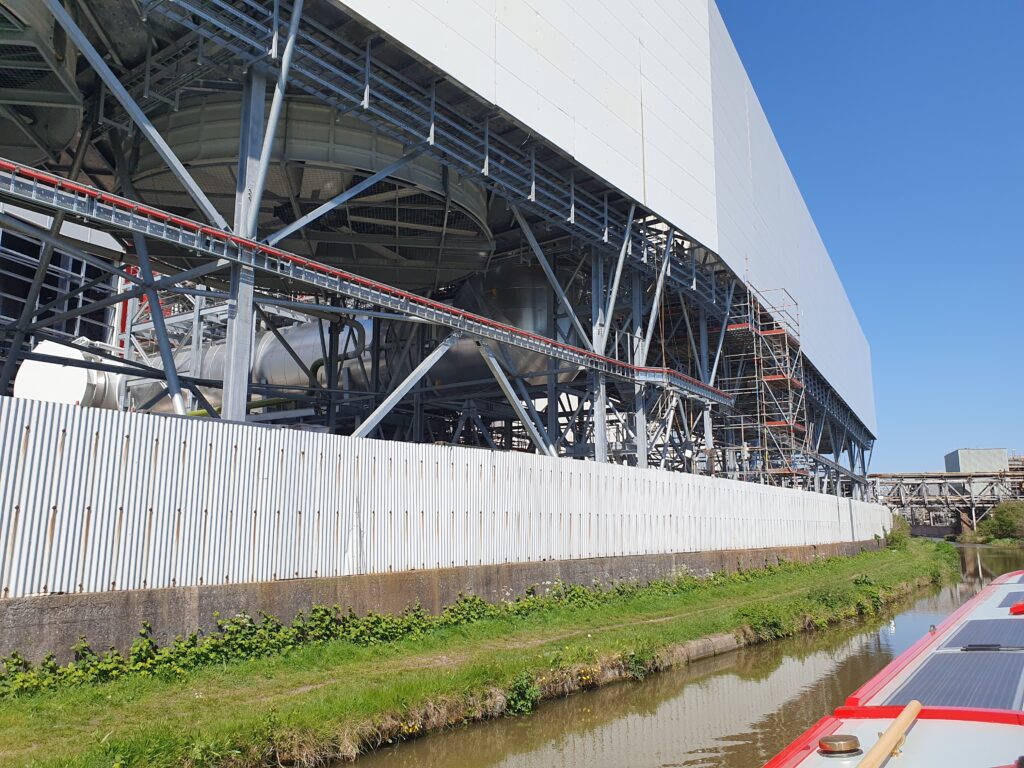
Despite our love of the tranquil green countryside, there’s always something strangely compelling about cruising through an industrial site. The public don’t generally get to see it so closely from the main roads.

Part of me would love to take a guided tour around the complex to see what happens inside, but whilst it may not be top secret, I guess it’s not built for easy public access. Especially if the only way to reach the top is to scale the walls in a harness, as we spotted this person doing.

Opposite the Tata site, is the Lostock Brine purification plant.

And further down the canal, the bagged salt awaiting transport.  All we need now is some vinegar, fish and chips.
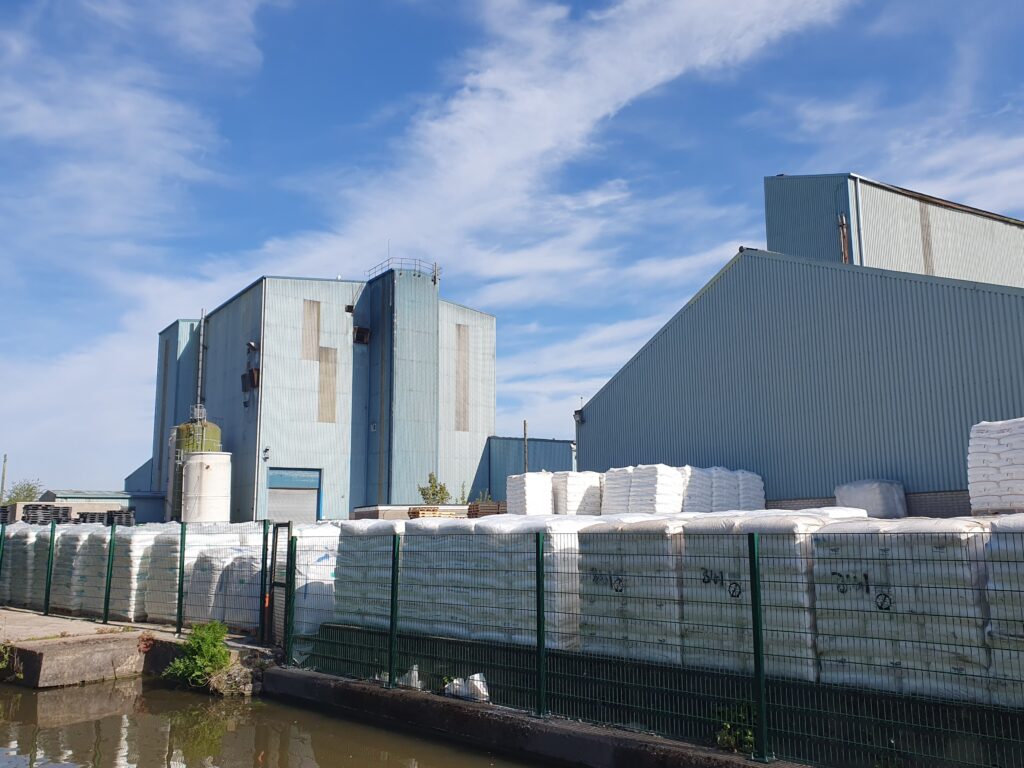
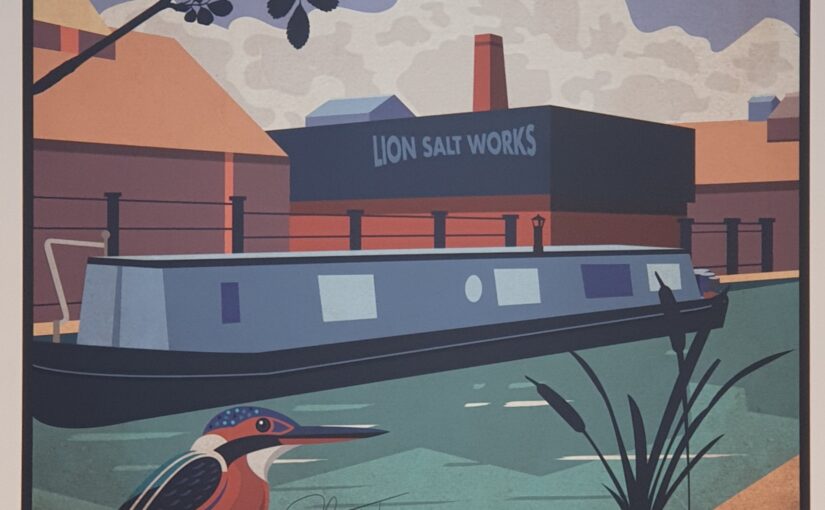
Then we reach the Lion Salt works, where we were able to explore inside.

The Lion Salt Works Museum

This fascinating museum follows the history of salt in the area, from the earliest geology, through celtic and roman artifacts, 17th century salt mining until this victorian site was built for brine extraction.
https://lionsaltworks.westcheshiremuseums.co.uk/
Whereas the modern processing site seemed to be dominated by pipework, the victorians relied upon hard physical labour, but little has changed. Salt is still produced by evaporating the water away to leave the salt behind.
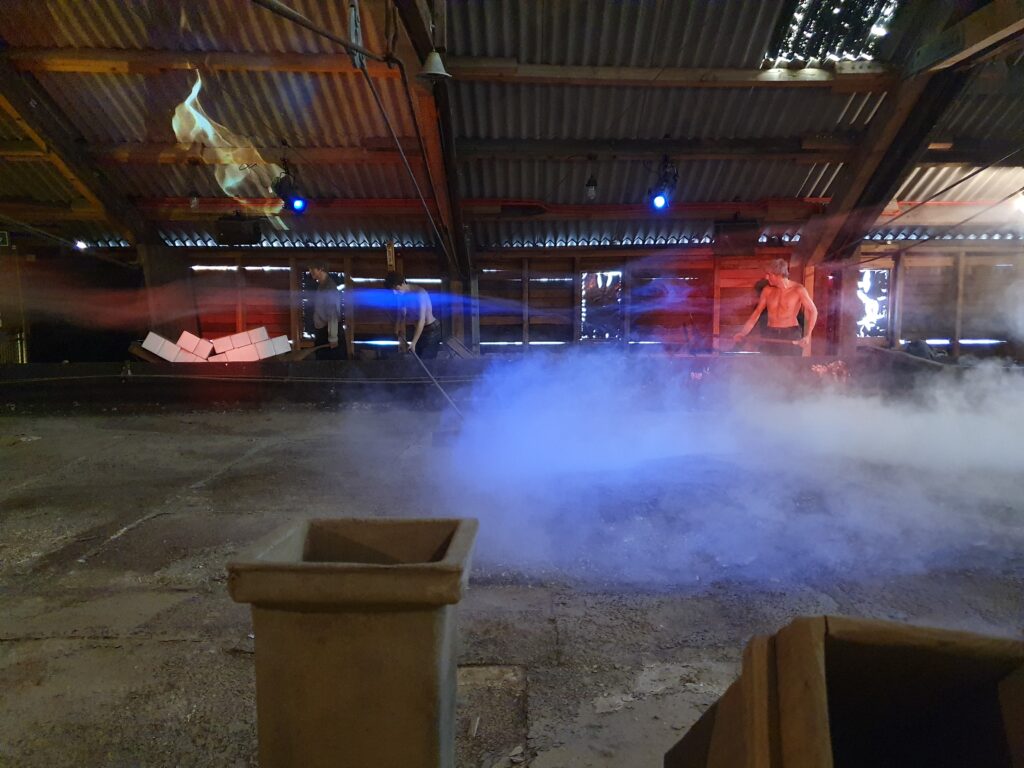
At the Lion Salt works the brine was pumped out of the ground into huge pans, housed in sheds. The precise temperature the water was heated to and the time it was heated for affected the quality and size of the salt crystals. It must have been physically exhausting work. I wonder if those men looked at the steam engines and pumps with the same fascination we do today.

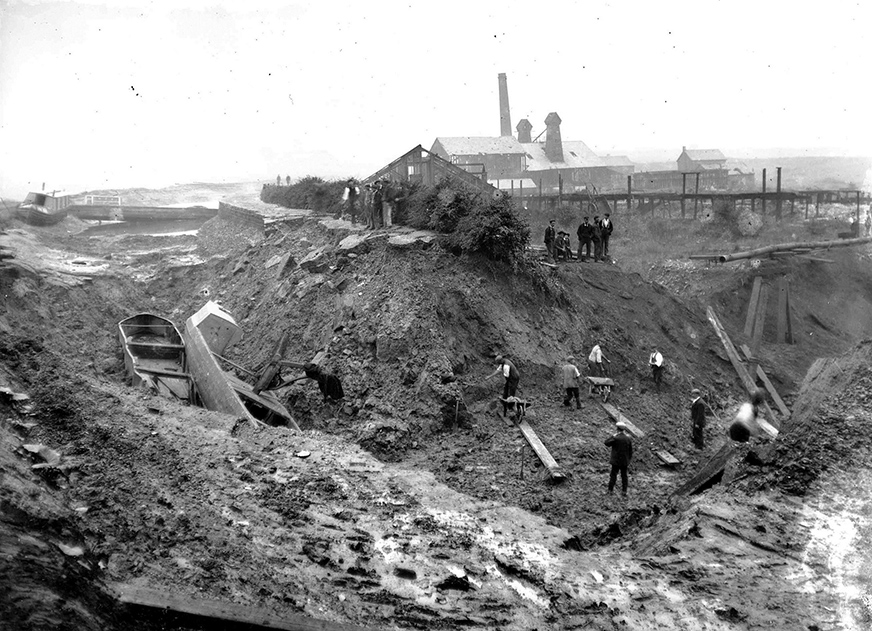
Of course all that underground disturbance lead to some catastrophic above ground disturbances as well. In 1907 there was a major collapse. CRT and Peel Holdings take note, it took a whole 2 weeks to repair and get boats moving again.
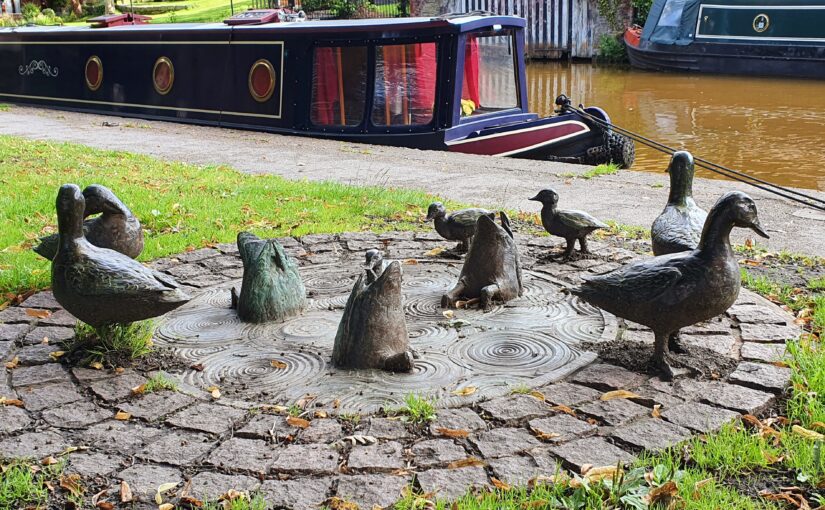
Back onto the Bridgewater

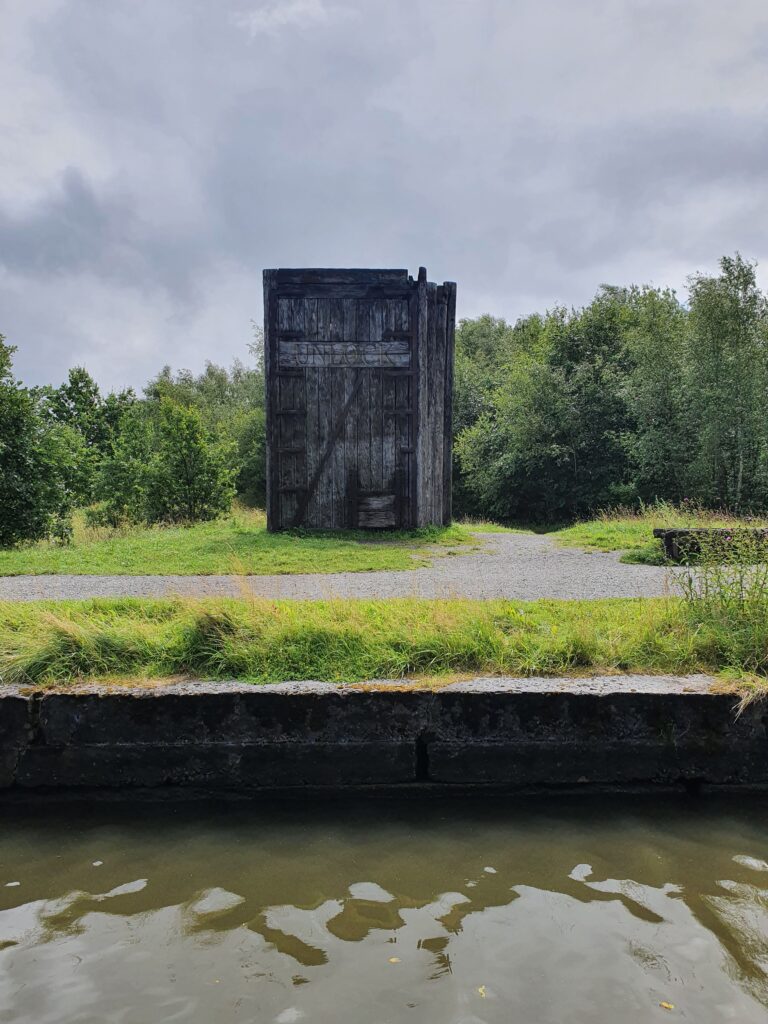
As we couldn’t trust being able to cruise the full length of Leeds and Liverpool, we’ve opted to meander towards Chester. We’re going to stay in the northwest with the hope that we can cruise east next spring. But watch this space things could change. So for now we’ve booked ourselves 7 nights on the Bridgewater, to unlock the rest of our summer

Its scary seeing the size of lock gates out of the canal

Our RHS tickets were valid until the end of the month so we stopped off for the night outside RHS Bridgewater Garden

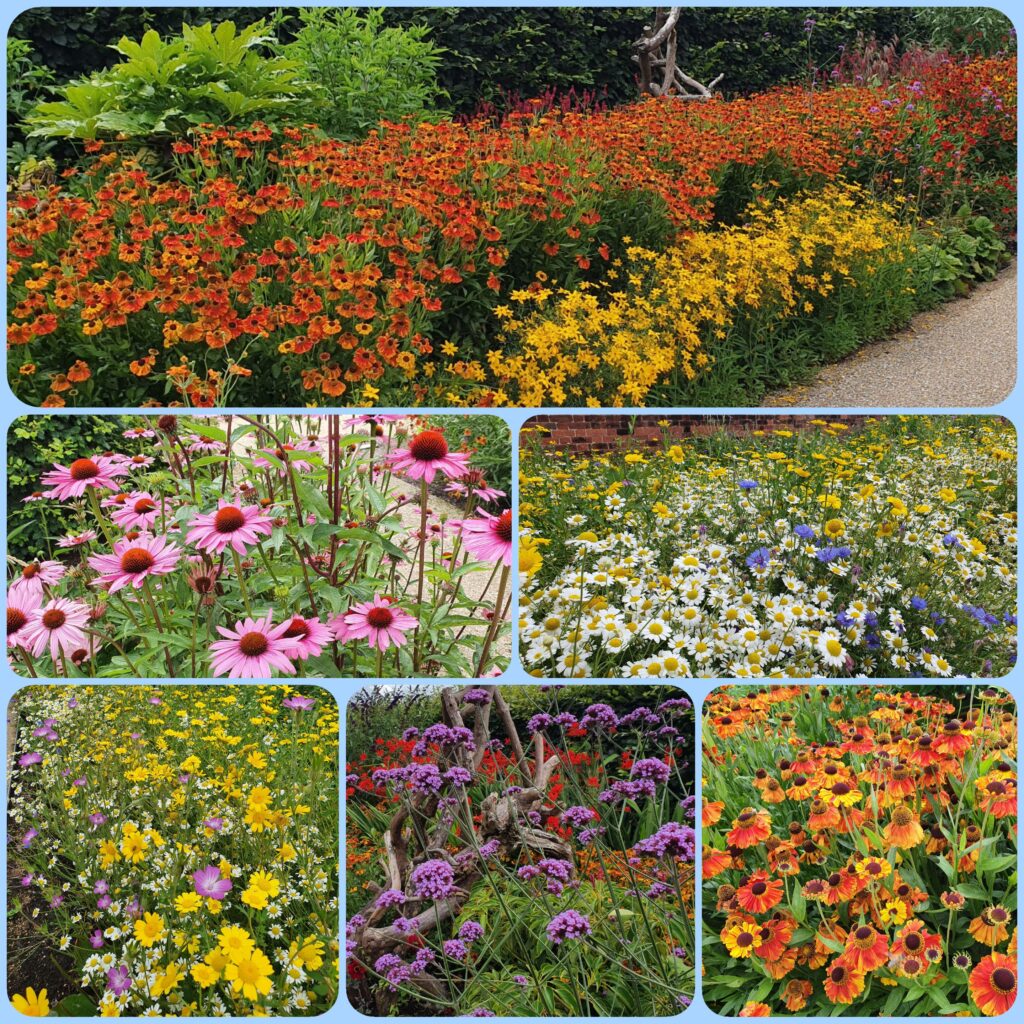
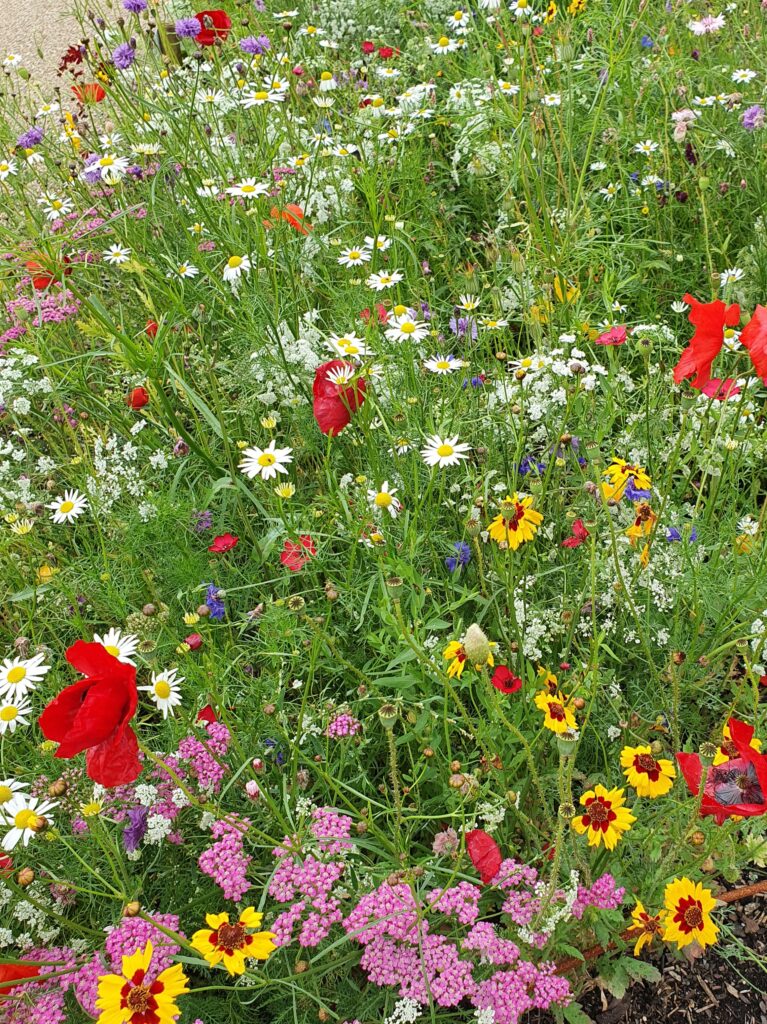
Its just over two months since we were last here, and the plants had magically transformed from a mass of purple iris and alliums into a hot bed of oranges and yellows. Hard to say which season I prefer. RHS Bridgewater is very much a 21st century garden where nature has been embraced and encouraged. Several potentially formal herbaceous borders  were scattered with wild flowers seeds and the rewards were worthy of Monnet’s painting skills, or perhaps Jackson Pollock could splatter some colour like this.

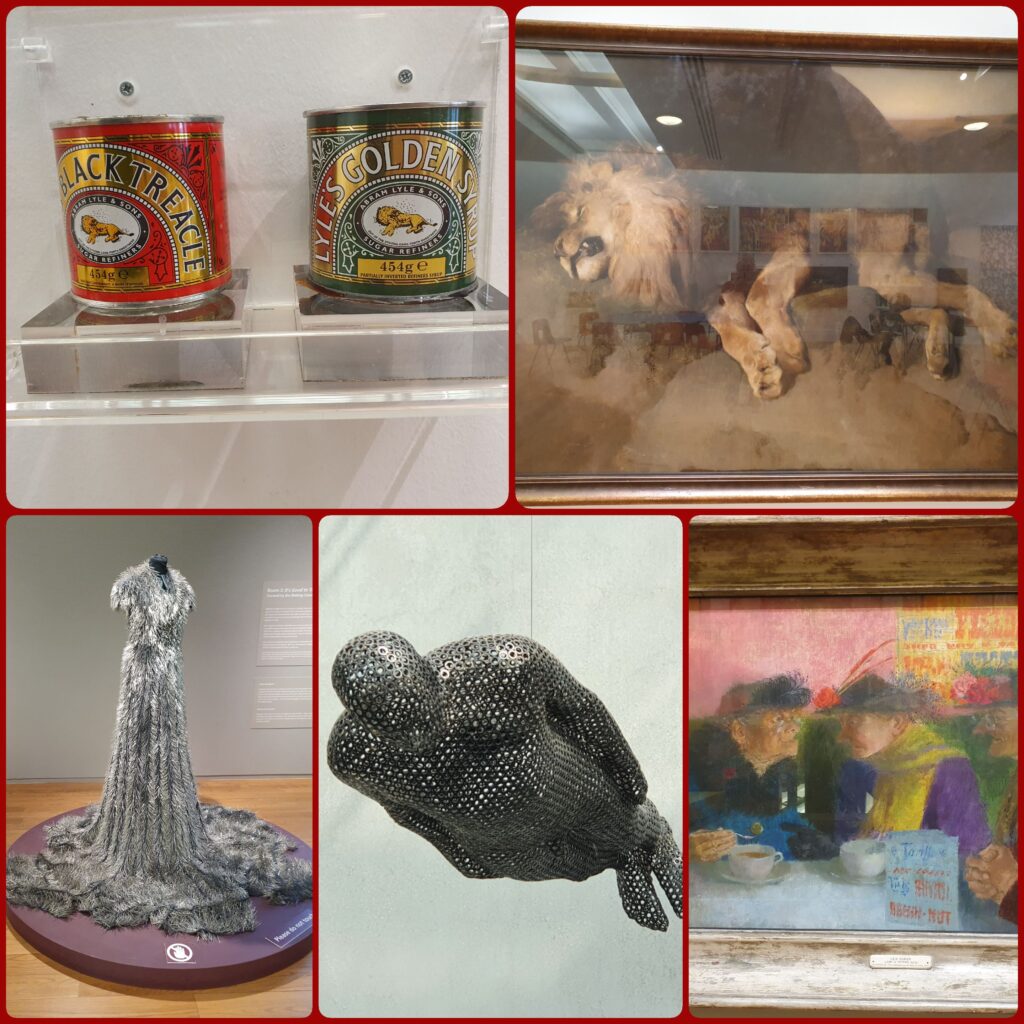
Our meanderings into the art world took us into the heart of Manchester, as we took a detour and turned left at Stretford for a night moored in Castlefields. We were lucky to be able to meet up with Rito and overwhelmed by the choice of what to do in the city, we opted for the Manchester Art Gallery

You can never quite tell what impact an art gallery is going to make.  Some are stuffed with halls and halls of old masters which beyond appreciating the detail and talent of the artist, leave me a bit bored. Manchester hit the nail on the head by mixing up the periods, giving them context, and celebrating local art in all shapes and forms, and really made us stop and wonder

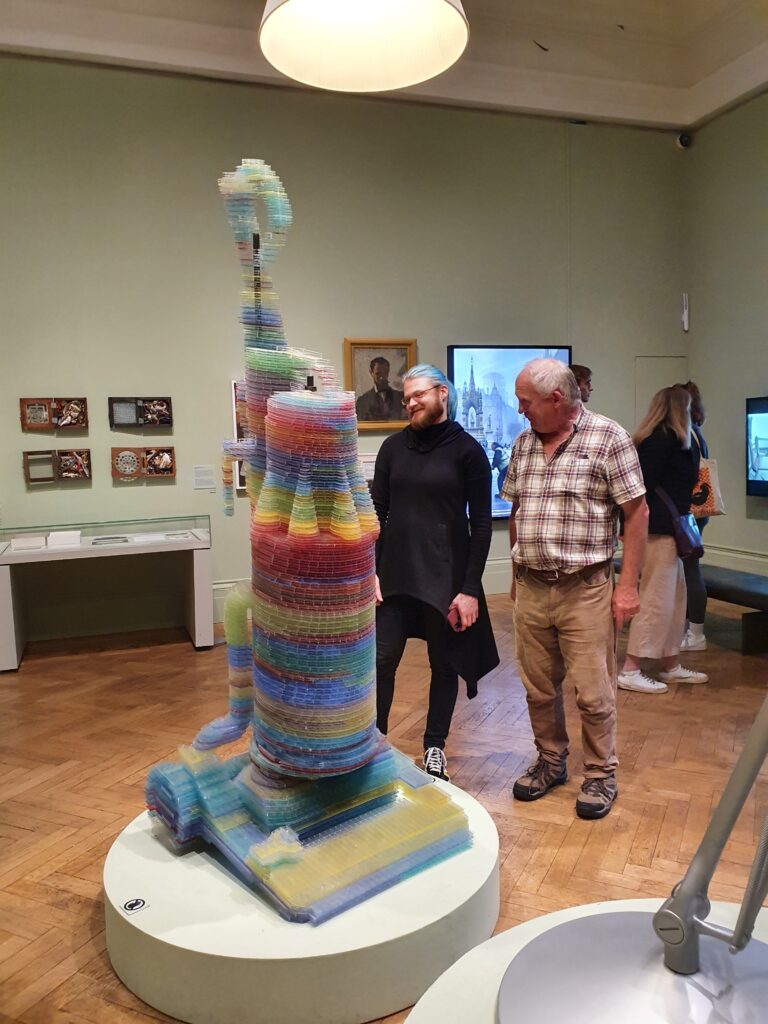
what is this strange object ?


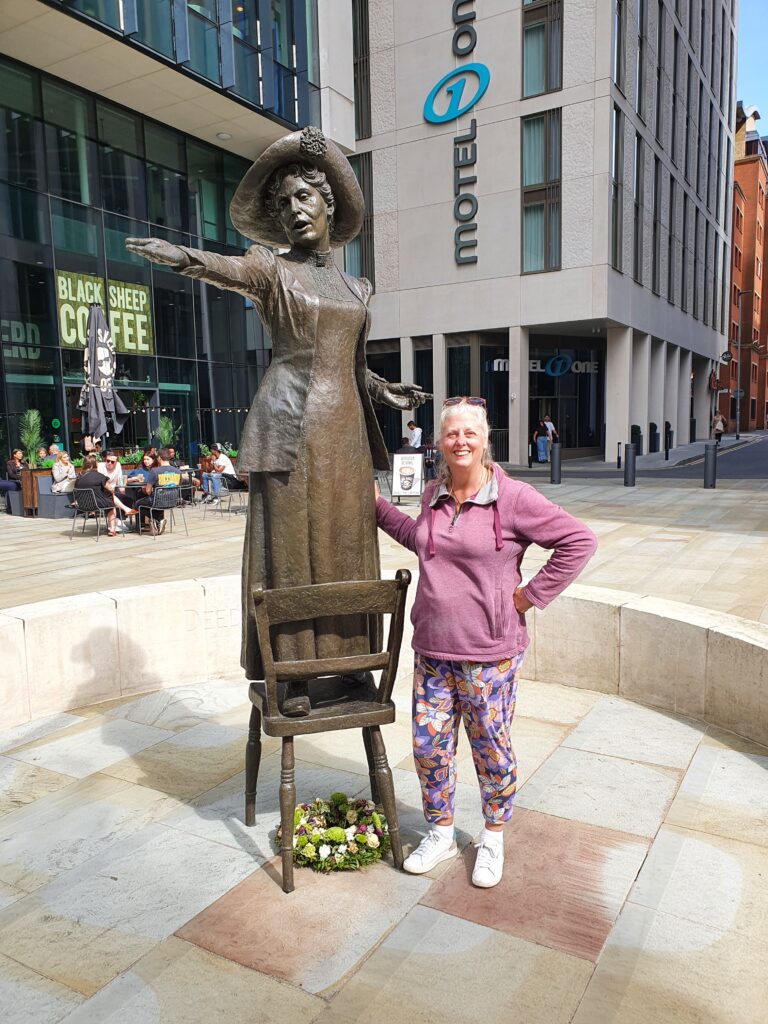
We saw a fair few Lowry’s, but outside I had to pay homage to a hero of mine, Emmeline Pankhurst who came from Manchester, thankyou.

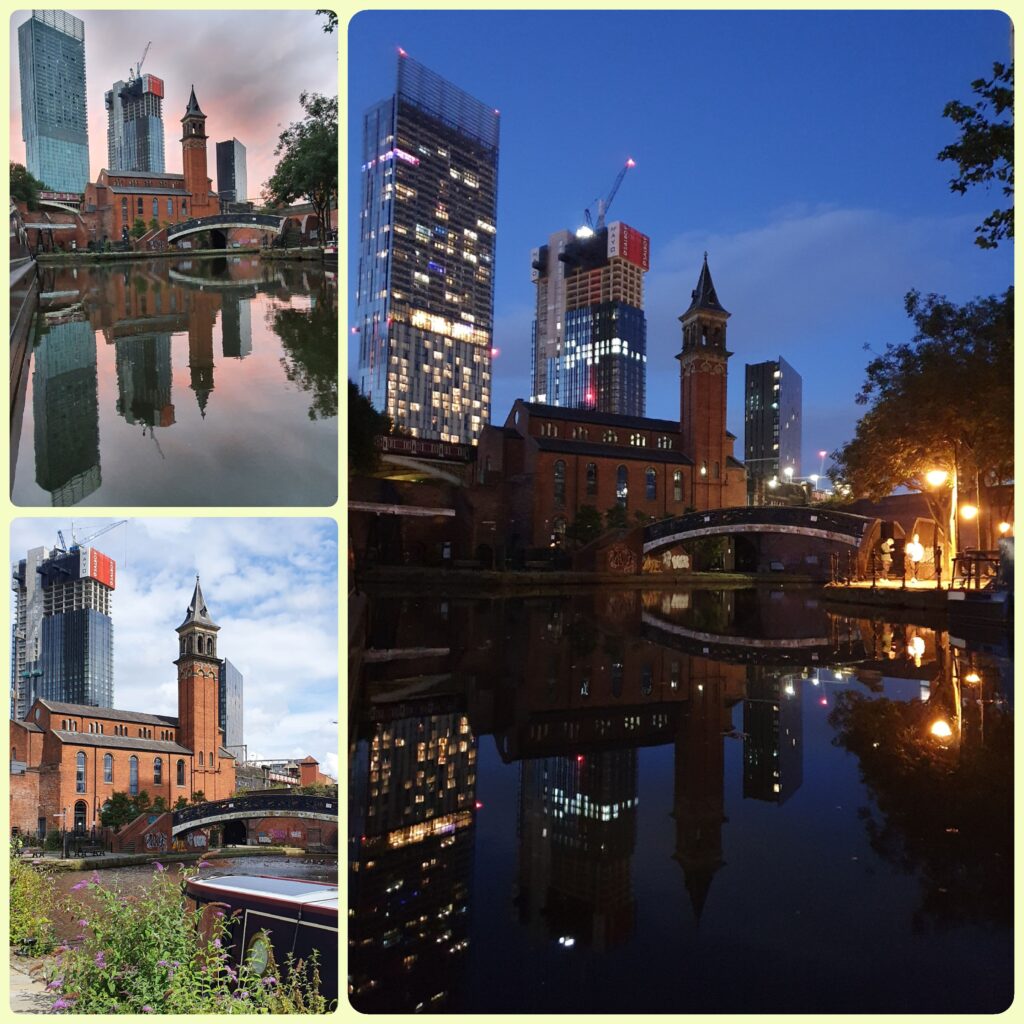
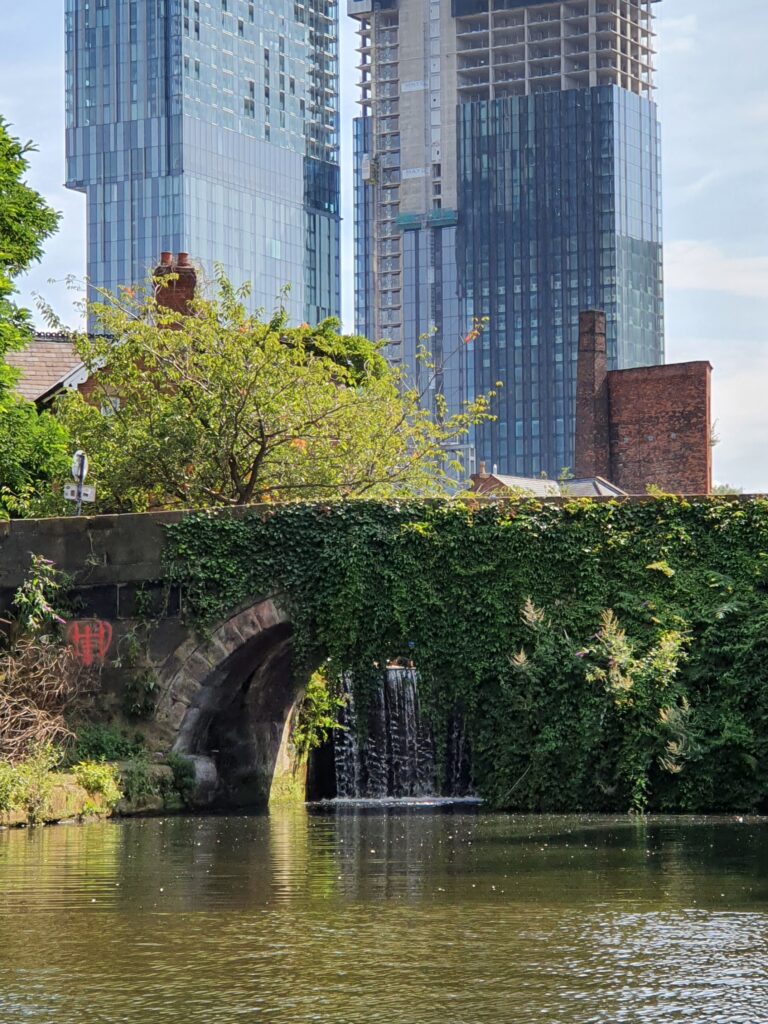
Cruising through Manchester has a bit of a reputation, and it wasn’t certain that we would be able to get a mooring in Castlefields but we were lucky, we found a space and it felt safe enough. Interesting being surrounded by the old and modern buildings, ( although I think the planning board need to consider the aesthetic impact of the high rises)

Castlefields by day evening and early morning

Rito went home to sleep in his own bed overnight, but joined us again as we cruised back out of central Manchester. Past the start (or end) of the Rochdale canal,

Im not sure I fancy going through that lock

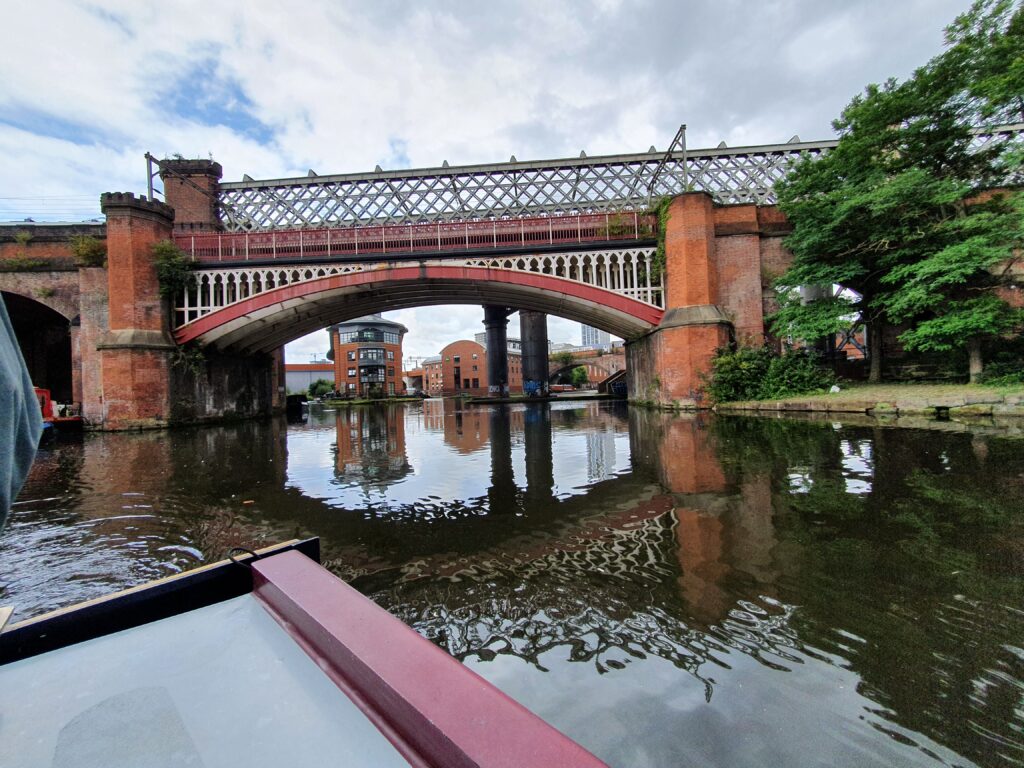
And some very impressive arches carrying the transport infrastructure that helped make Manchester the thriving city it is.

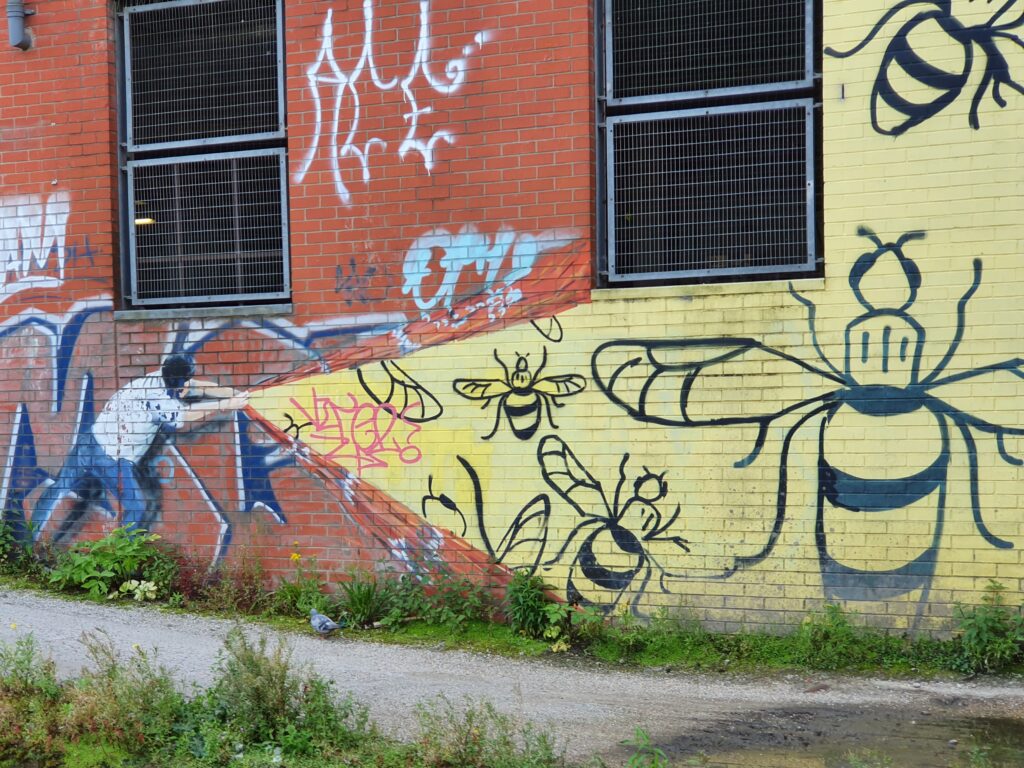
Past some impressive street art, and some bad graffiti,

the city of Manchester adopted the image of of the worker bee over 150 years ago because it encompasses the ethic of hard work and a hive of activity

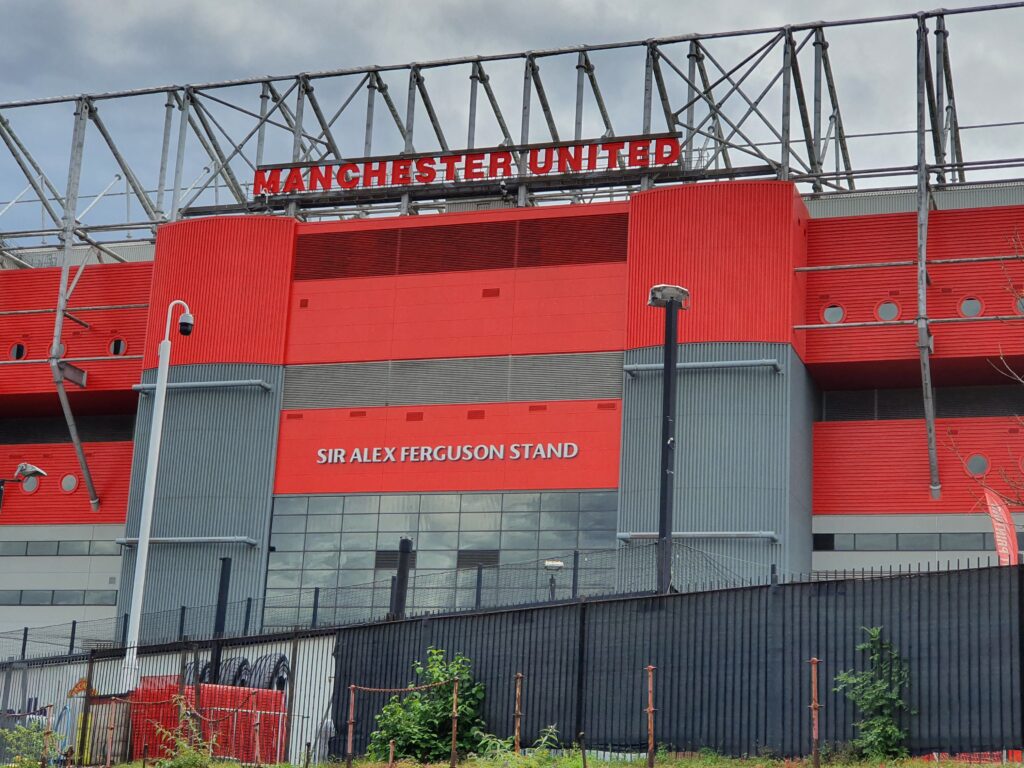
Past the famous football ground,

Work hard and play hard

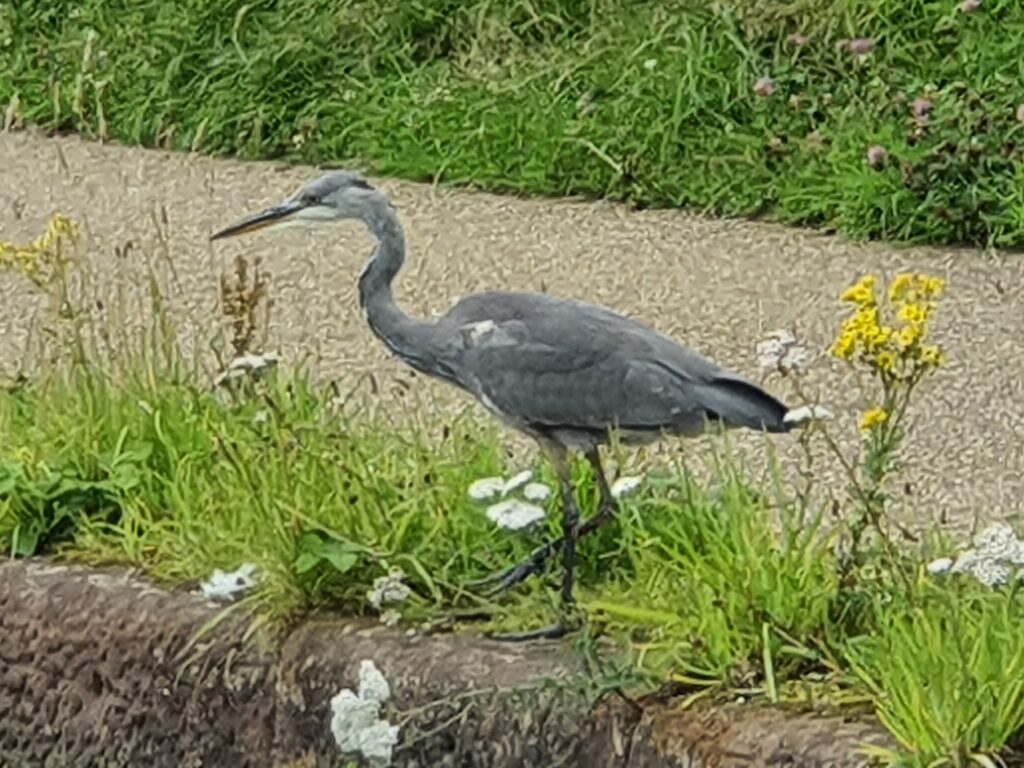
And back into the “country side”

but that can’t be real countryside, just look at the towpath quality

A good 2 days enjoyed.

Stourbridge Glass Museum

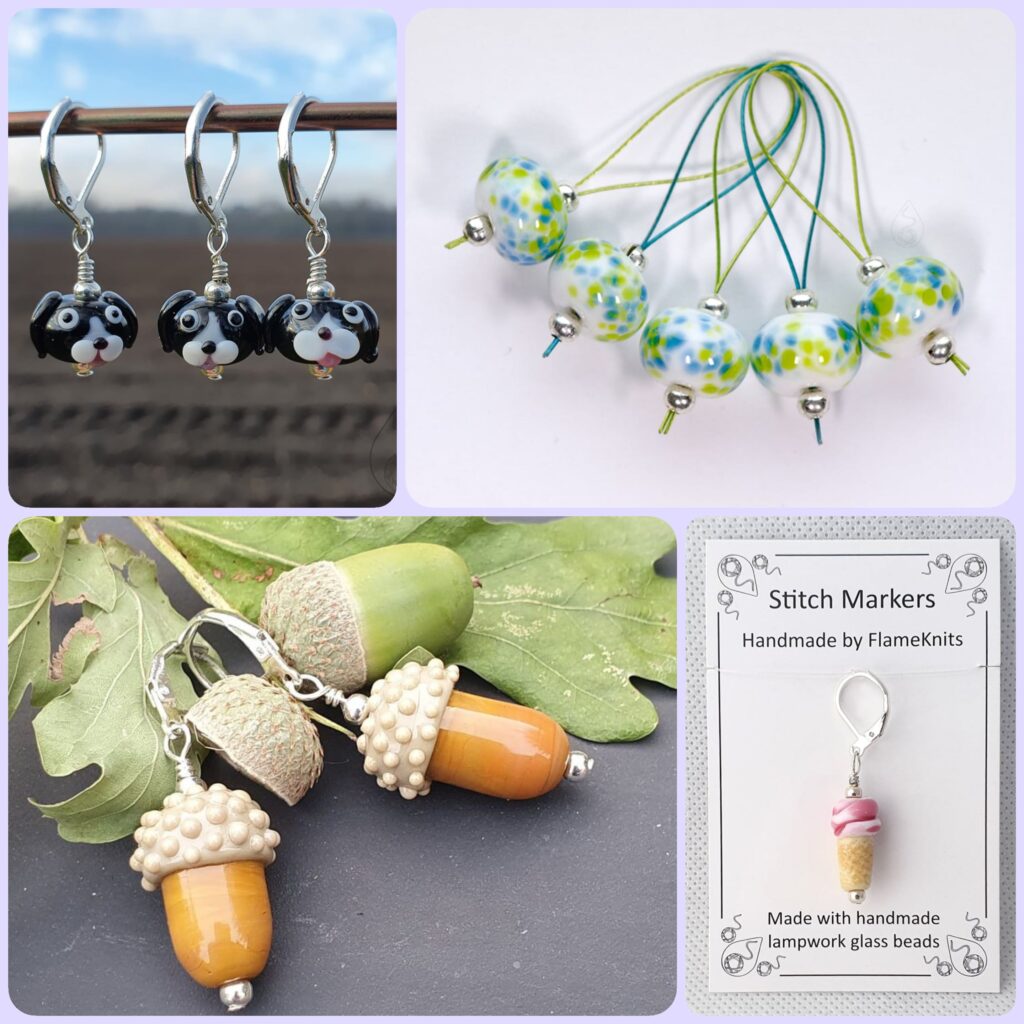
We have a special affinity for all things glass in our family, as our daughter is a lampworker- that is someone who works with glass heated by an oil lamp, (or for the past few centuries a gas torch, but the name stuck.) As opposed to glass blowing which is heated till molton in a furnace. She specialises in glass beads which she makes into knitting accessories. So when we realised we were cruising right through the traditional heart of the English glass industry it would have been a pity not to visit the museum.

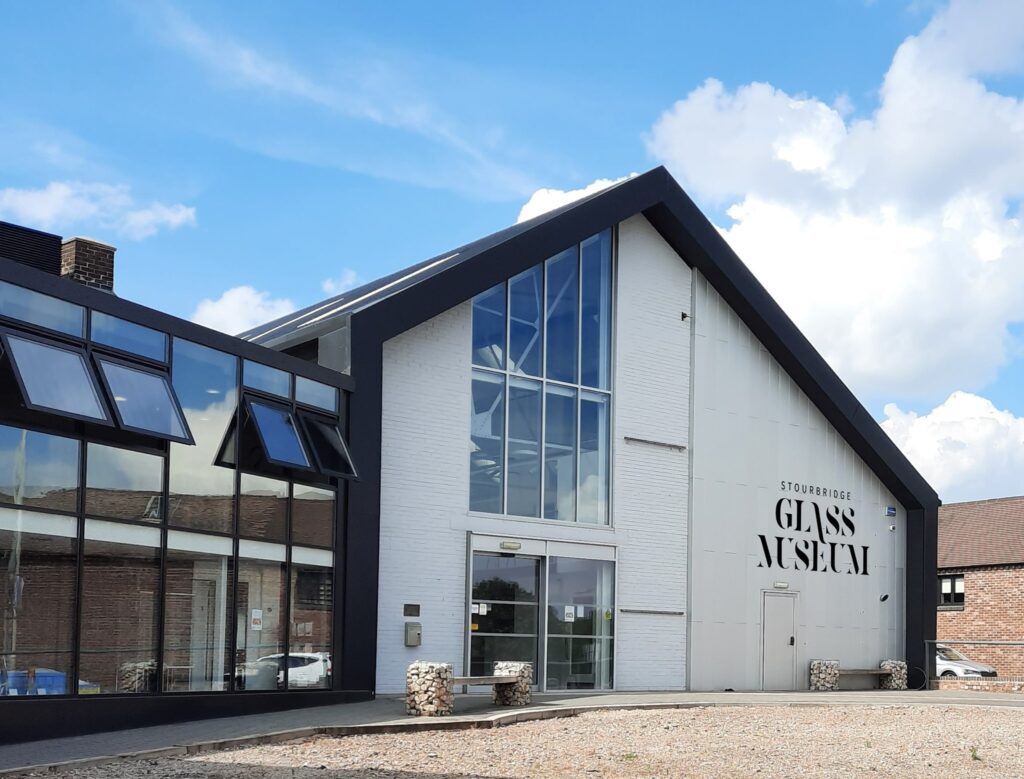
Stourbridge Glass Museum

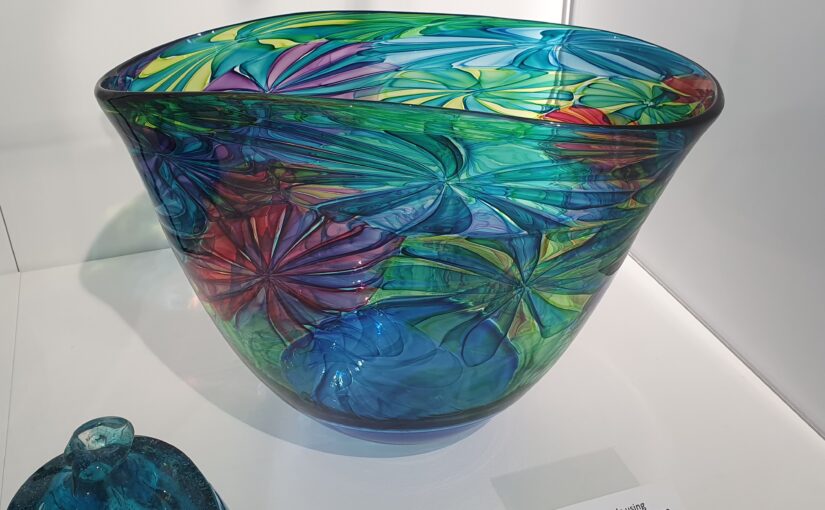
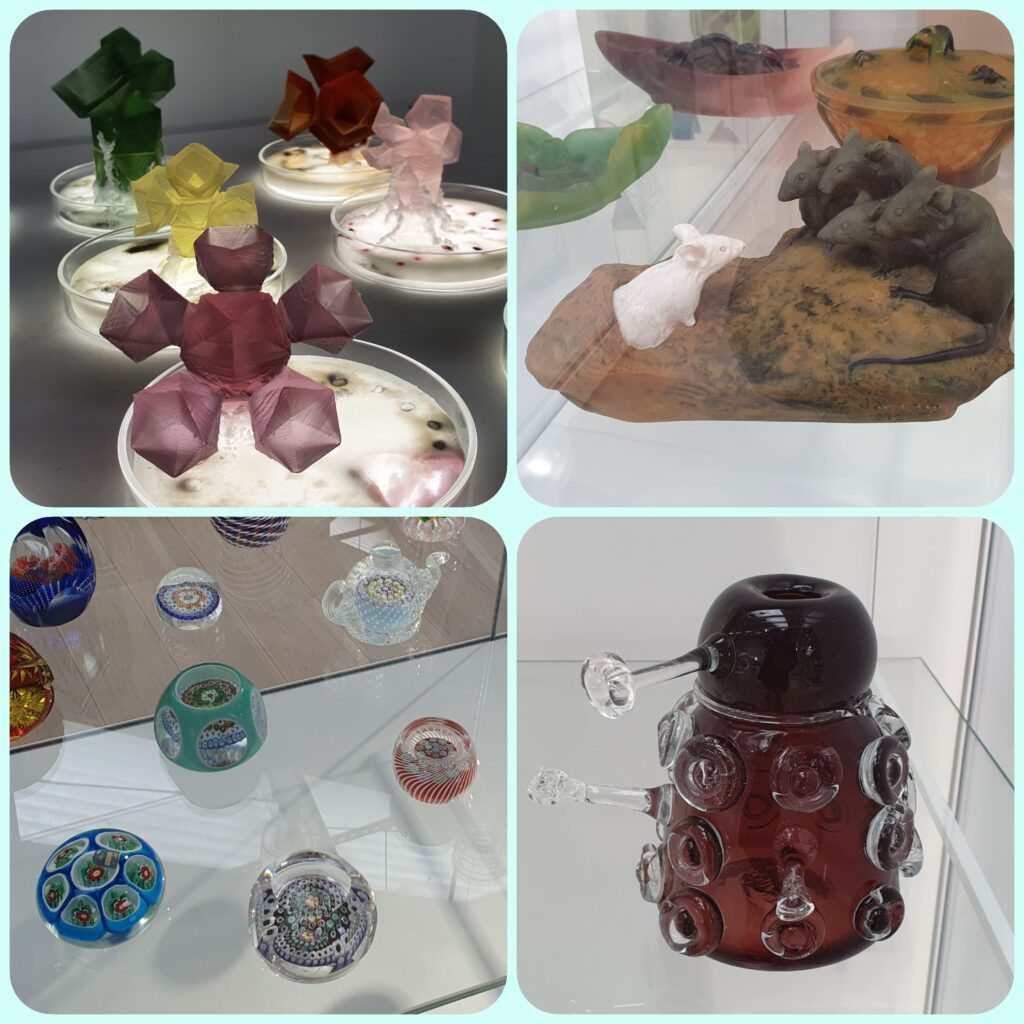
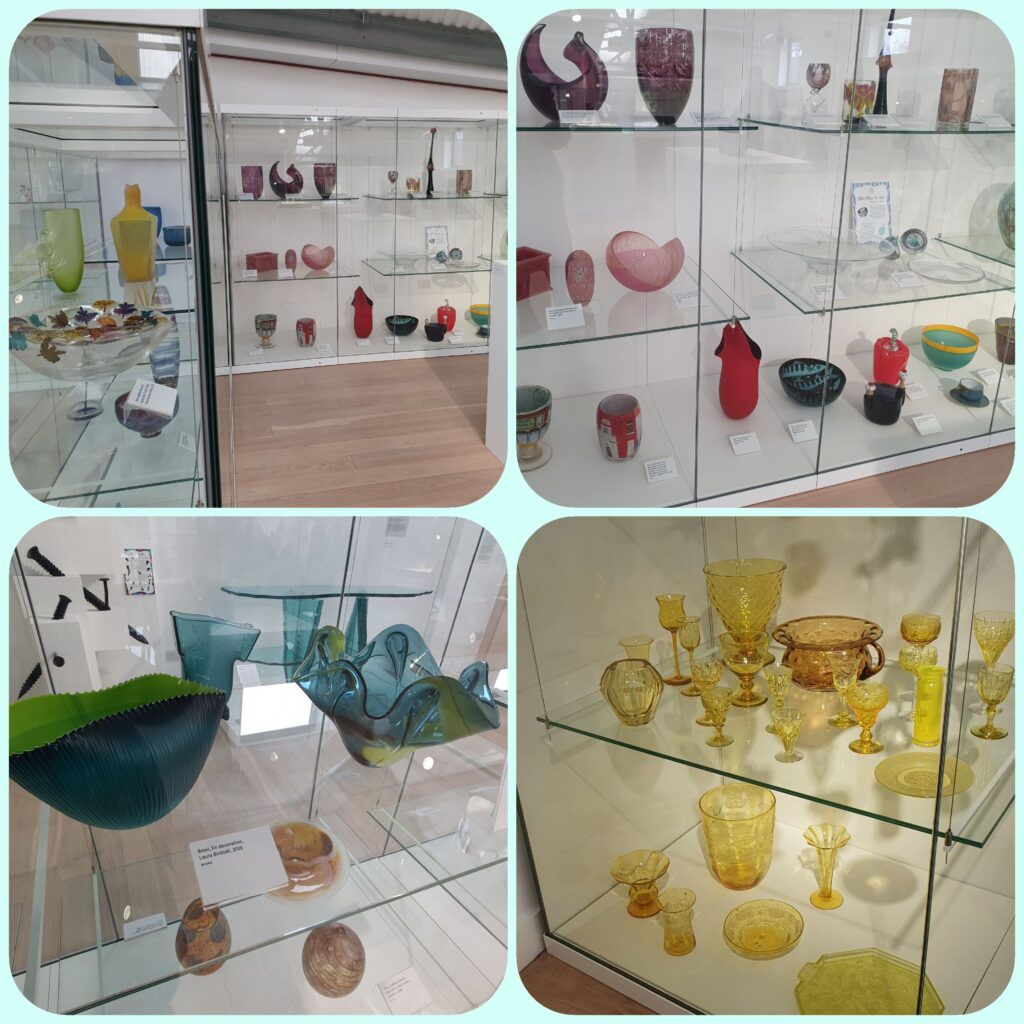
Set over 2 floors there was a  collection of historic glass dating from Roman times following the transformation of utility functional pieces through to the highly decorated cut glass crystal. And if I’m honest that section didn’t excite me, but upstairs I was overwhelmed by the modern colourful art glass. Which begs the question, museum or gallery?

Very hard to do justice to the glass on a phone camera

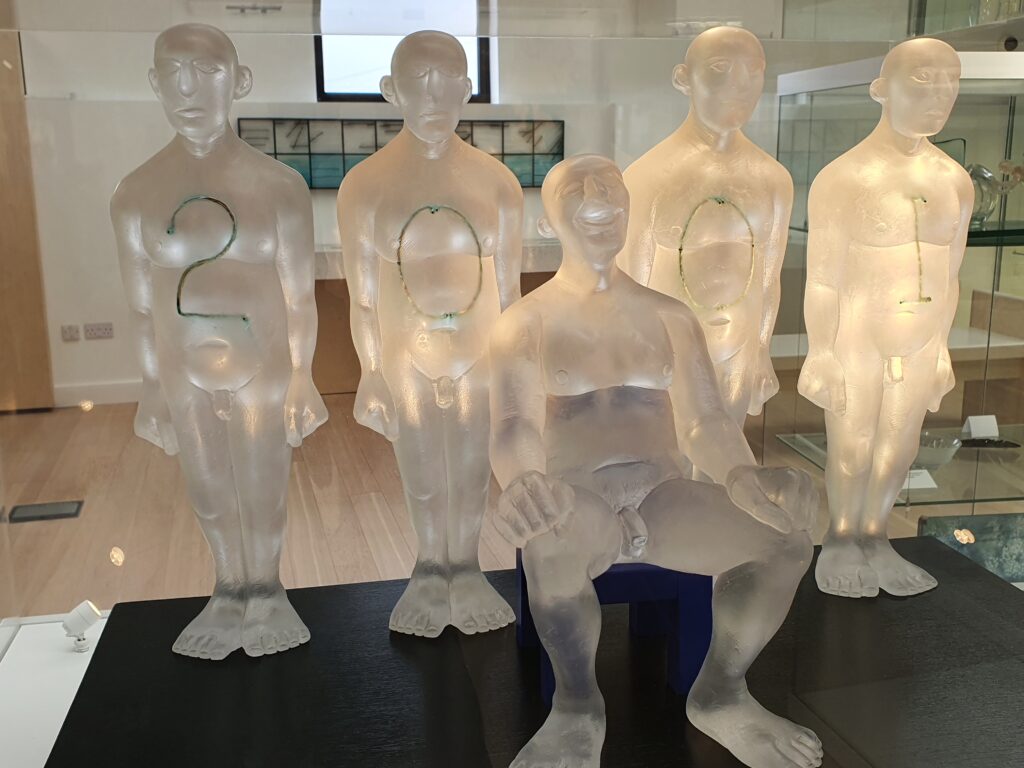
Either way, in our dreams, if we weren’t already living it, we would live in some fabulous architect designed house, with huge windows letting the light shine onto our white walls setting off beautifully displayed pieces of art, like the glass we were looking at today.  And of course because this is fantasy land, it would never need cleaning, although I’m sure this piece that made us chuckle, wouldn’t mind the flick of a feather duster

they certainly look happy

The contemporary glass really did cover a huge range of styles and techniques

Who doesn’t need a glass Darley

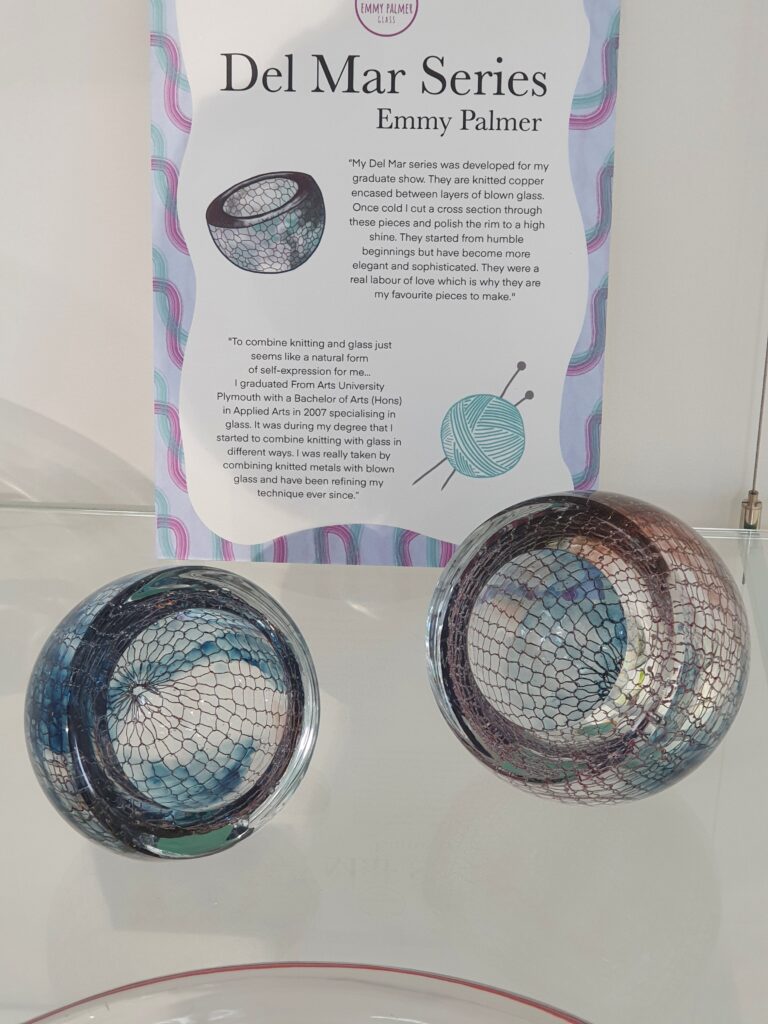
Although I was particularly impressed by this artist who included her love of knitting into her glass

emmy palmer knitting in glass

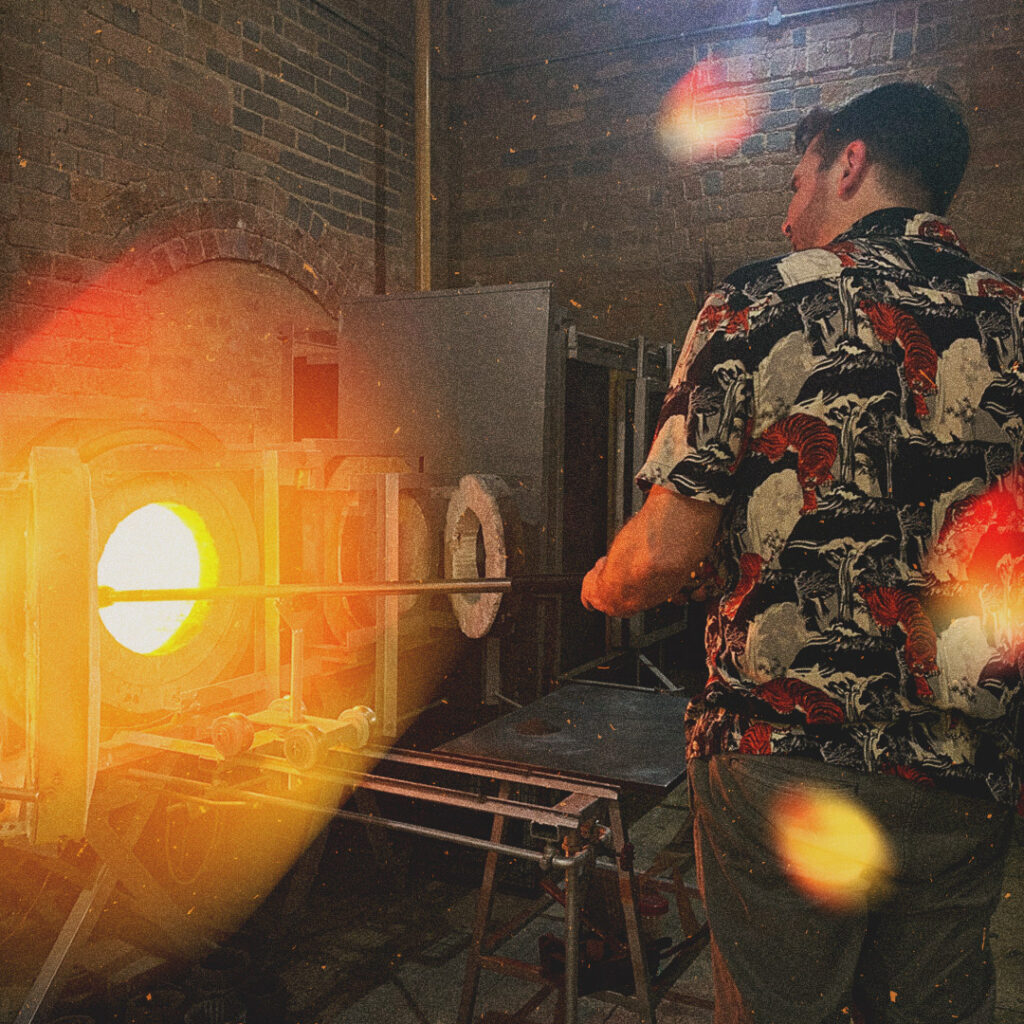
Emmy  had been featured on the BBC Make it At Market show earlier this year and consequently had sold out of these quirky little bowls otherwise I’d have been tempted to buy one. However there is an artist in residence who regularly gives demonstrations. Although he wasn’t demonstrating when we visited, we spent quite a while chatting to Alistair. Glass production is one of those industries that seem to have slipped through the support network dealing with fuel price rises. His gas bill has risen from around £4000 to over £70000 in the past 18 months and he is currently installing solar panels and replacing his gas kiln with an electric one.

Alistair at work (photo from museum website)

It wasn’t a difficult decision to decide to buy some of his glass, the difficult it was choosing just one piece

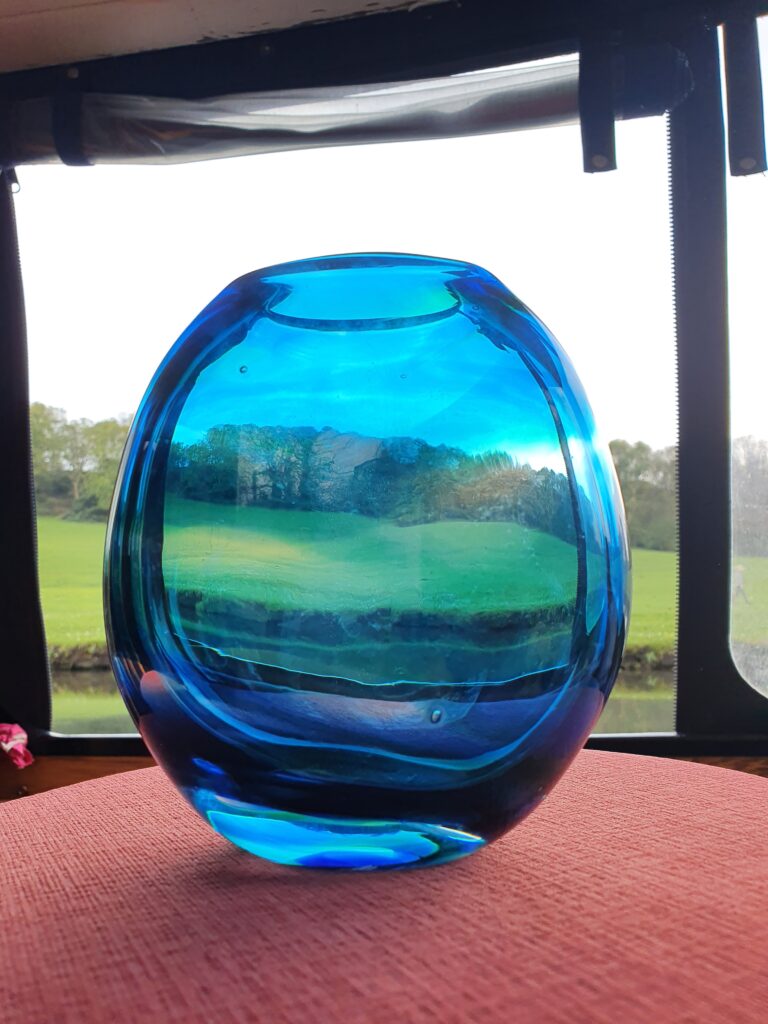
my little piece of art

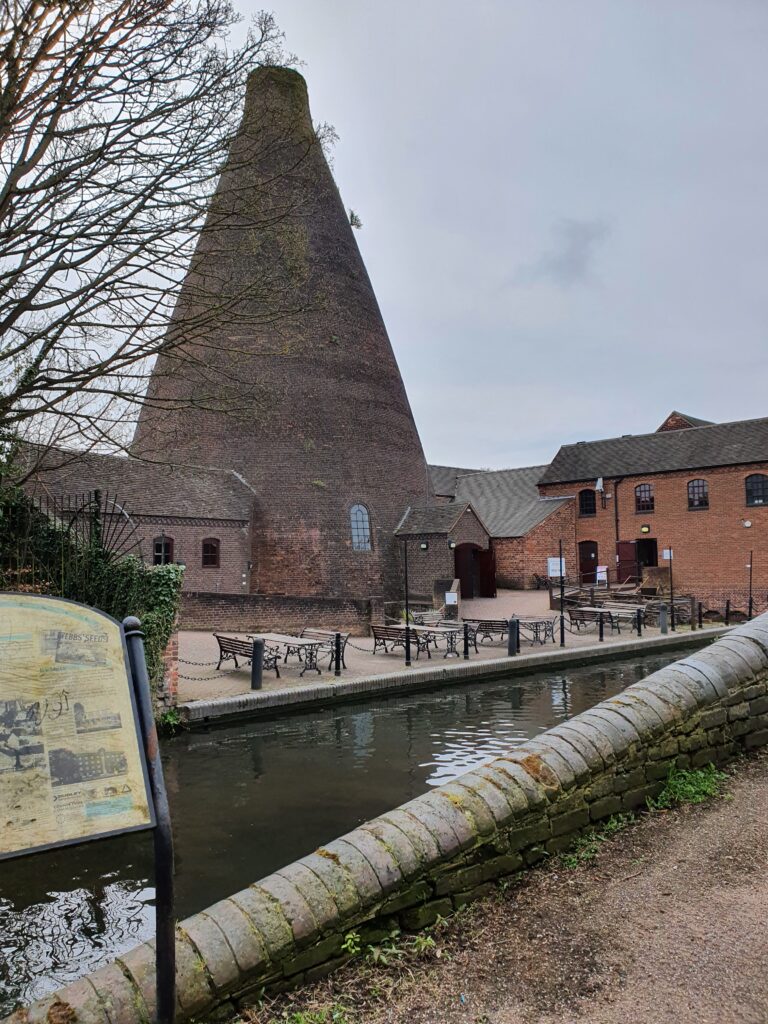
Next to the museum is the Red Cone museum,

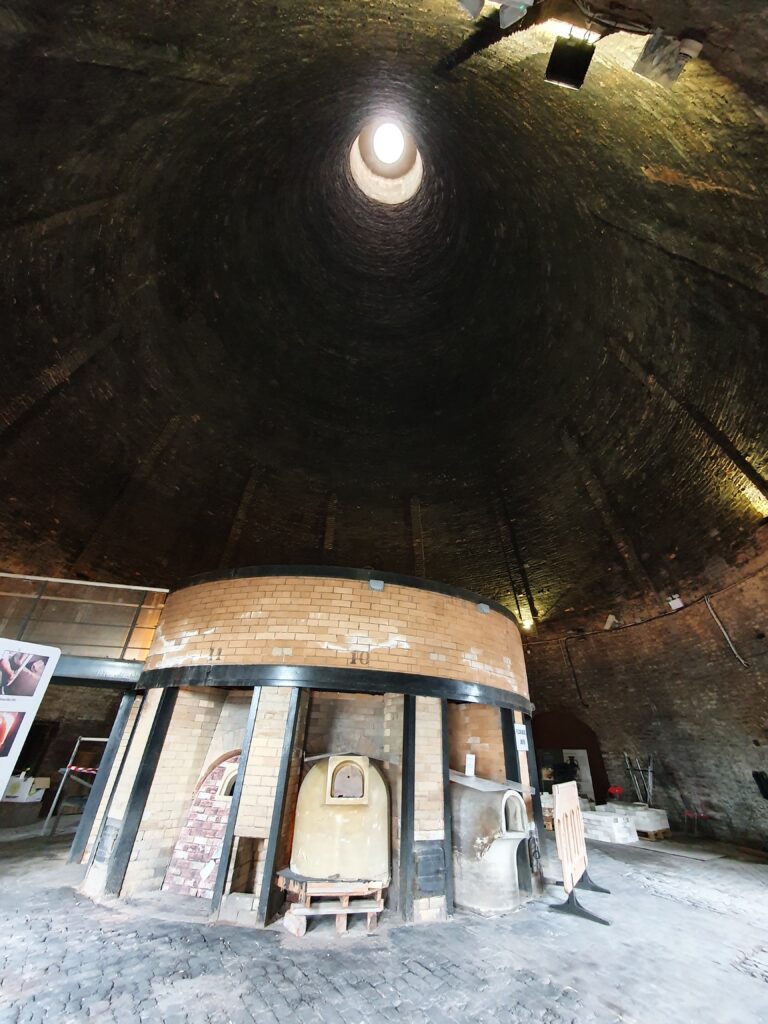
Its undergoing some renovation work right now so we could only look through the open doors, the furnaces are in the centre with coal fires underneath and the cone shaped chimney to draw the flame and gain the searing 1000° temperature needed.

We got our timings wrong so didn’t get a chance to do the full walking tour of all the glass in Stourbridge, but I’m sure  we will make the effort to do so next time. But until then I’m sure Heather will give me an impromptu lesson in her studio.

Just an assortment from Flameknits, our very own artist in residence
And back to the canal

Oxford part 3, expanding ourselves, museums and markets

As usual when faced with an overflowing abundance of choice, I never know where to start. Oxford is an affluent city centre that attracts the curious, both academic and tourist, and a curious mix of both. Oxford is where Charles Dodgson, aka CS Lewis studied and taught so a lot of the curious tales of Alice in Wonderland were set in and around Oxford and particularly Christ Church college.

Christ Church

So we resorted to simply exploring on foot, searching out independent retailers, and avoiding anything that herded us like sheep. Whilst we were wandering around we discovered the Covered market which first opened in 1774, now it is home to some fabulous little independant retailers and celebrates Alice’s adventures with a collection of paper lantern sculptures hung from the rafters

We also had a very tasty, and affordable Thai meal from Sasi’s and the best icecream from the Wicked Chocolate store.

The wicked chocolate shop and gelateria

Not everything in the market was edible, or should I say desirable because the notice claims it is edible, Fellers butcher’s proudly displays the worlds oldest Ham

The world’s oldest ham


Following on from our market musings, it was time to take in some museums, and again so many to choose from that we had to prioritise. We chose the History of Science museum which celebrated over 1000 years of beautiful and intricate instruments, some collected by the eminent scholars of Oxford and some celebrating the work of more recent times, in particular the Oxford Astazenica covid vacine

And having done the science, I chose the botanical gardens, the rose garden planted in honour of the researchers who discovered the clinical importance of penicillin

And the alliums because we cant all go to Chelsea

We barely scratched the surface of all the things we could do and see in Oxford, but we have to save some for next time

Ellesmere Port

Having got to Chester, we just had to complete the journey to the end of the line at Ellesmere Port. Back in the 1790s, engineers had a similar idea when they wanted to create a waterway which would connect the Mersey and the Severn. However disagreements, rising costs and falling traffic needs meant that the full route was never completed, and instead of being the Ellesmere canal, this section earnt the nickname of the most unsuccessful canal. Nowadays however it is a interesting change from the rest of the Shroppie. Much much quieter than the run into Chester, floating weed replacing hire boats as the main obstacle
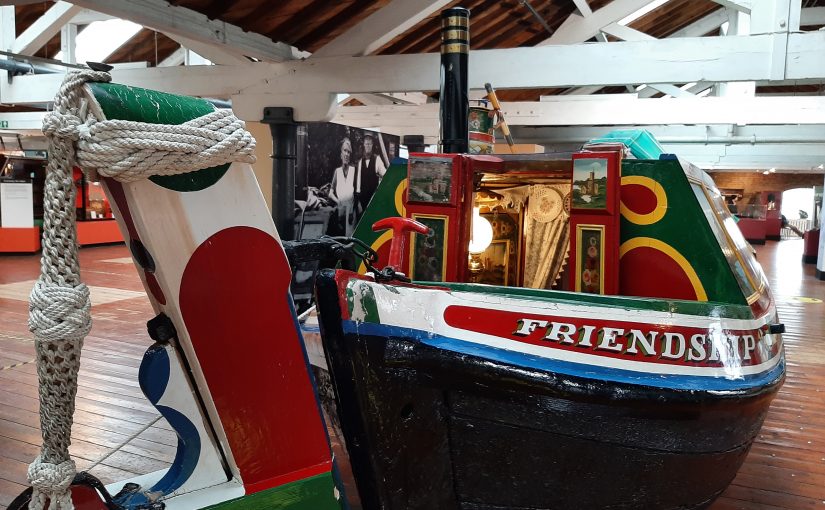
Weedy waters

It would have caused havoc if the weed had got wrapped around the prop so we were going extra slowly, so the locals didn’t really need it keep such a close eye on us, cause we weren’t going to trigger this speed camera

Smile you’re on camera


But apart from the weed it was ok to cruise along, and we found some lovely mooring places

No weed here

At Ellesmere Port , where the Shroppie, Manchester Ship canal , Mersey all come together the Canal and River trust have utilised the old wharf buildings to create a fantastic museum

The incline plane down to the Manchester Ship canal

It showcases canal history, how times have changed. When families worked the canals instead of mooching about like we do, they lived in a fraction of the space we have, with one tiny cabin for the whole family to cook, eat and sleep in, and moving from first to last light every day.

I’m glad we have so much space on Fircrest

It brings a new meaning to WFH(working from home)

No room for a dishwasher


And they were no less proud of their homes. A tradition barge would have been beautifully decorated with ornate paintwork of roses and castles, crochet trim and polished brass.

What a beautiful boat


The horses would also have had crocheted fly protectors and painted tack. But I don’t think they would have had a whole granny square coat like this one.

Meet Rainbow, the granny square horse

Of course not all narrowboats were how we imagine them with our rose tinted glasses. The first commercial canal was the Bridgewater canal , servicing the coal mines at Worsley. These were known as Stavationers, because the internal ribbing looked like a starving persons ribs.

A Stavationer coal boat


And the wide beam boats often did shorter journeys so didn’t all have living quarters. The site at Ellesmere Port was not only a wharf for goods ferried across the Mersey, but it was the site of the local gas works, where coal was burnt to produce Town gas. One of the buildings is dedicated to some magnificent old engines and we were lucky to get a guide who talked us through the machinery.

Theres a machine for everything

The entry ticket to the museum is valid for a whole year, which is a good thing because there is so much to see and too much to absorb in a single visit. But the day we visited felt like November not September and we got our wires crossed about what we both wanted to do, so didn’t stop overnight as we could and should have done. And of course once we had left and moored up the weather improved.

No more rain

I would wholeheartedly recommend a visit to this museum for all boaters. Just don’t cycle to it along the Towpath.

Cheddleton Flint Mill

We stummbled upon this gem on our way down the Froghall branch. The Cheddleton Flint Mill is a restored mill that has been on this site for 800 years, although the current buildings are from the industrial revolution when the canal was used for bringing the flint and lime. There are 2 water wheels that are powered by the water race from the river Churnet.

George and Helen, the two wheels


The opening times are a bit sketchy right now, but the wheels are turning when there are volunteers on site

Inside the mill

One thing that I appreciated about the work that had been done in creating this heritage site, was the lack of physical barriers between me and the working machinery. I didn’t feel restrained by the Health and Safety elves, but free to exercise my own common sense, knowing not to stick my fingers underneath the grinding wheel .

Flint grinding pit

Over the centuries the mill has ground flour, flint, glass and other things, although mainly products relating to the potteries. The Trust has been gifted various other pieces of machinery over time. So not everything is “original”

This engine was gifted to the site, but it can’t be given back, without demolishing the walls around it

Or housed in it’s original place

One of the smaller grinders outside

The site includes several buildings, including the Miller’s cottage. His daughter lived here until she died in her 90’s

Hard to imagine some homes have less space than we do.

Whilst we were poking around the mill we could hear that familiar toot of a steam train, and sure enough the cheddleton heritage station is just a further 10 minutes along the canal. It hadn’t yet reopened to the public but we were able to walk along the platform, they had been working on the engines preparing them for the coming season. We didnt see any of the classic engines, but I imagine the scenery makes for a stunning journey regardless of the train.