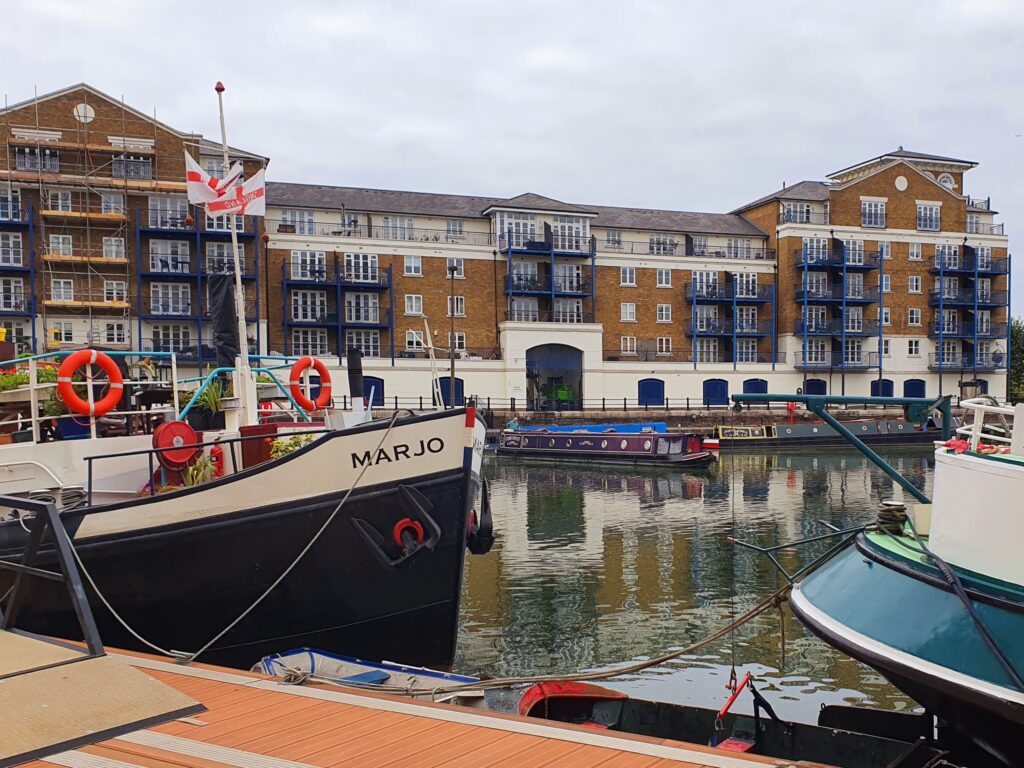
London, a week of reflections

We arrived at our Islington Eco Mooring whilst Her Majesty was being driven to Windsor, her final place of rest, we were so glad that we had had the opportunity to visit St Georges chapel in July, and that we had enjoyed choral evensong there.
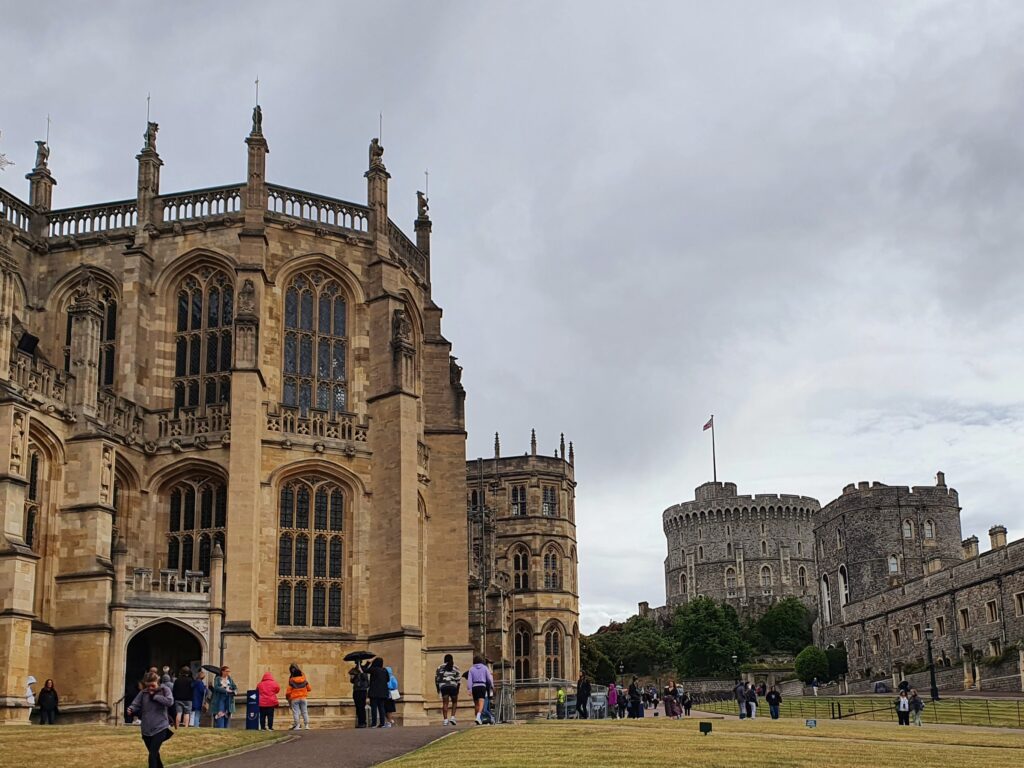
St Georges Chapel, Windsor Castle, in July

On the Tuesday we went to pay our respects outside Buckingham Palace, (which I shared at the time)
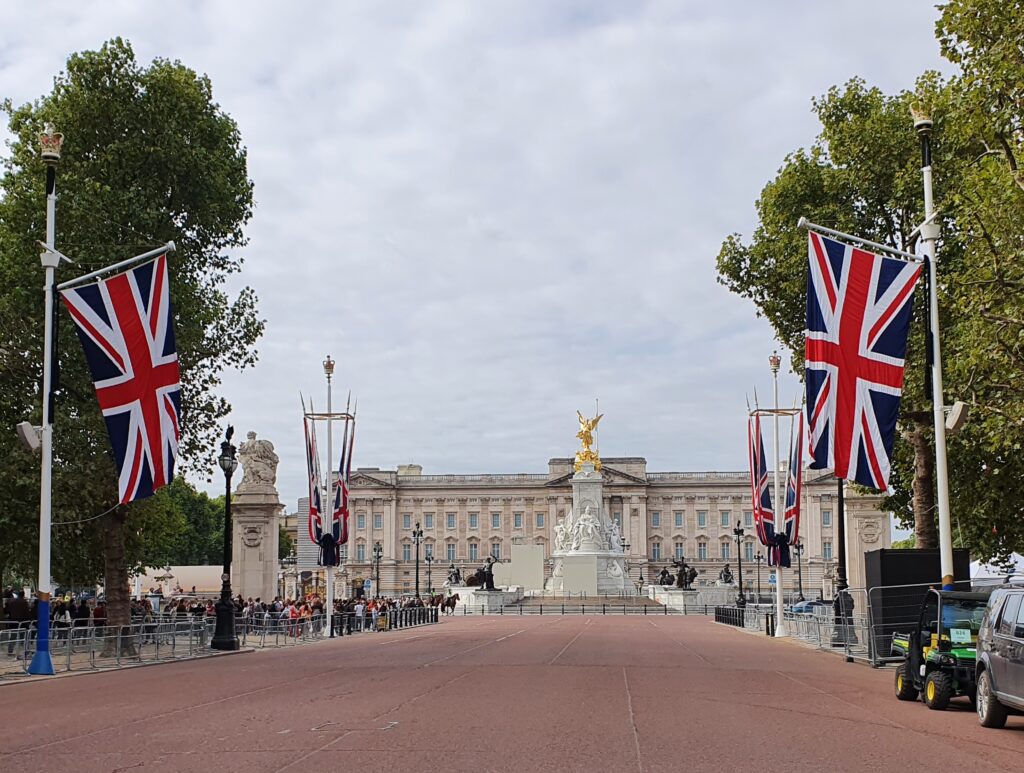
Buckingham Palace at the end of the Mall the day after Her Majesty’s funeral

And as we wandered around the royal parks, absorbing the sights we hope we wont be seeing again for many years, we saw something we really weren’t expecting,
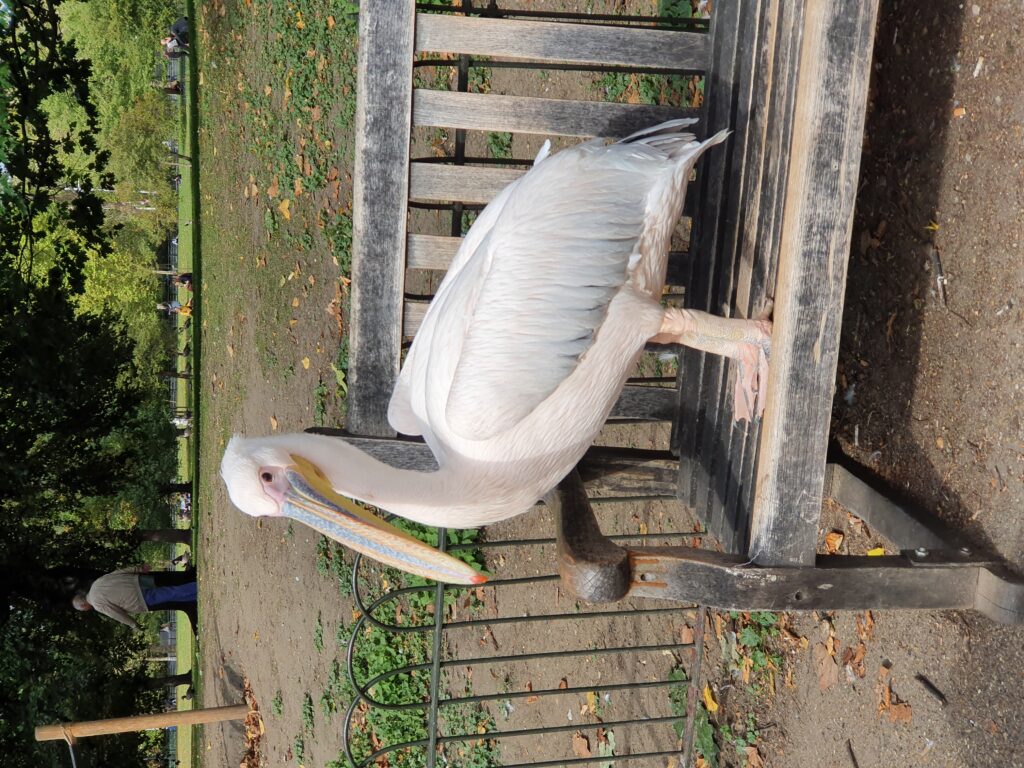
A pelican sitting not crossing

Apparently there are 6 pelicans currently making their home in St James Park. The original flock were a gift from a Russian ambassador in 1664. They are free to roam and fly (the pelicans not the russian ambassadors), but as they get fed fish every day (around 2:30) they are happy and sociable and choose to stay. Of course being in the royal parks I couldn’t resist adding to my men in uniform collection.
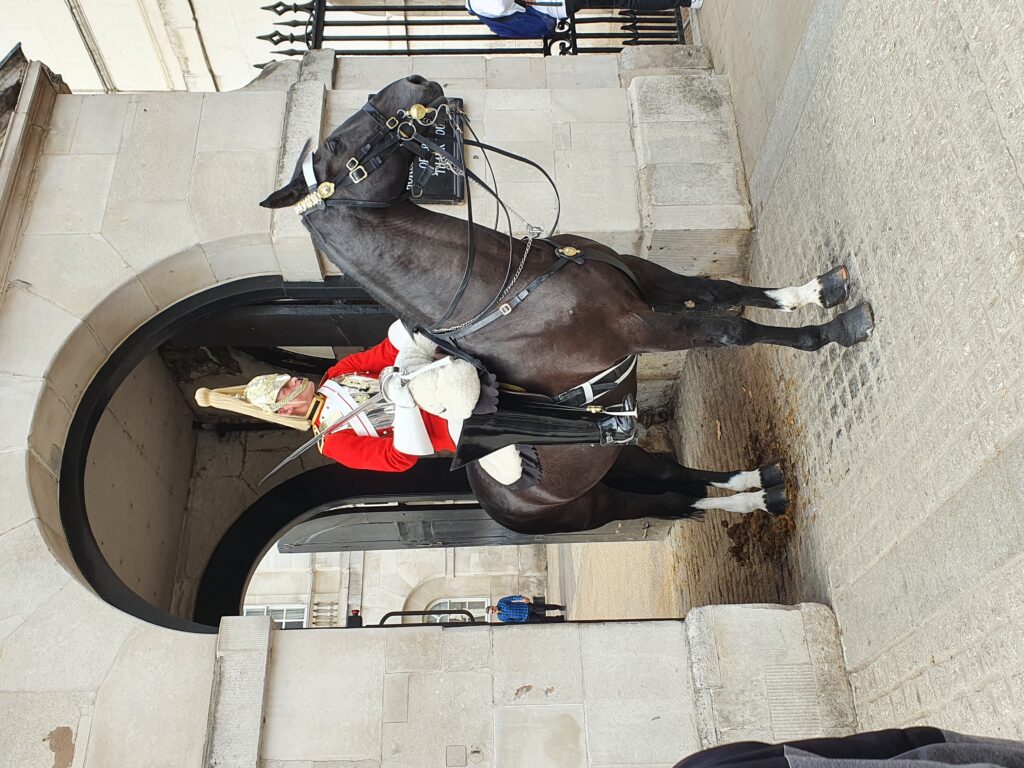
One of the Royal Cavalry


On Wednesday we visited Kensington Palace. William and Mary bought this Jacobean mansion in Kensington Village back in 1689 to escape from the damp London fogs.
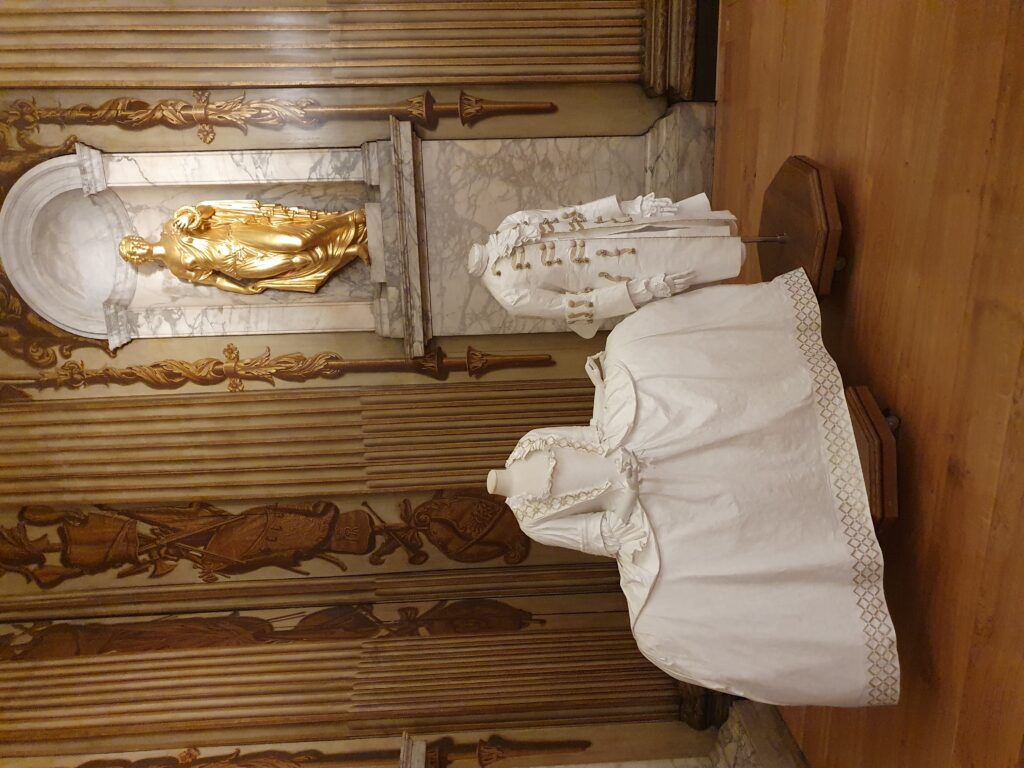
Now thats one way to practice social distancing

Its where Queen Victoria was born in 1819
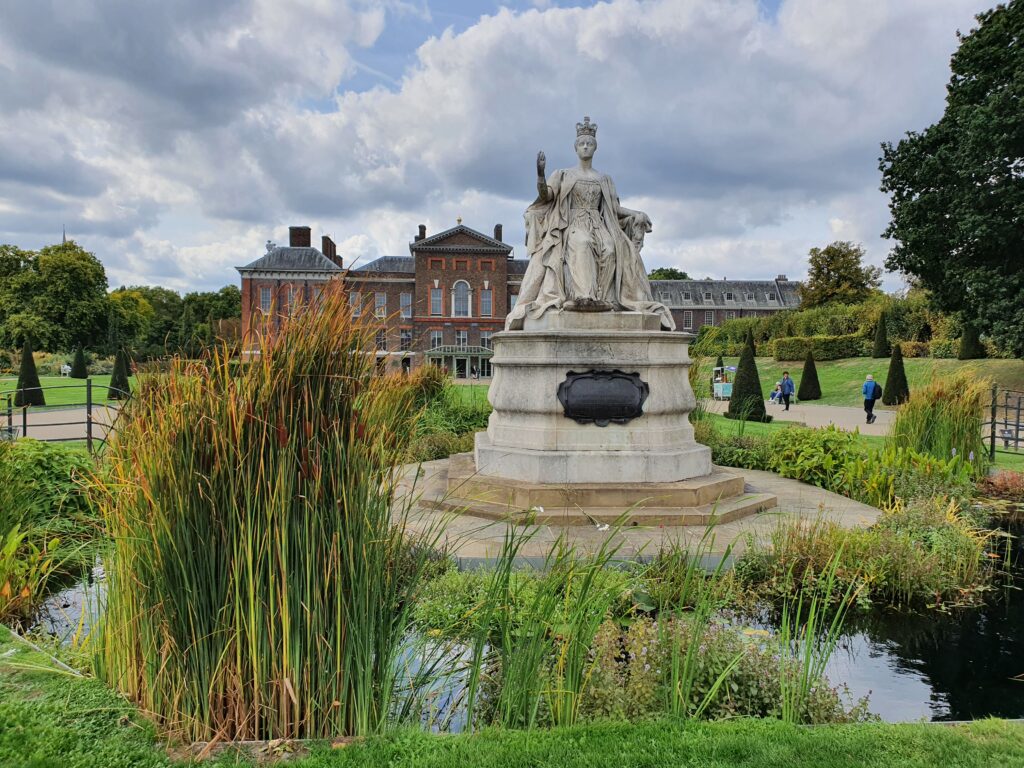
The Queen Vic

And it is famously where Diana, Princess of Wales lived.
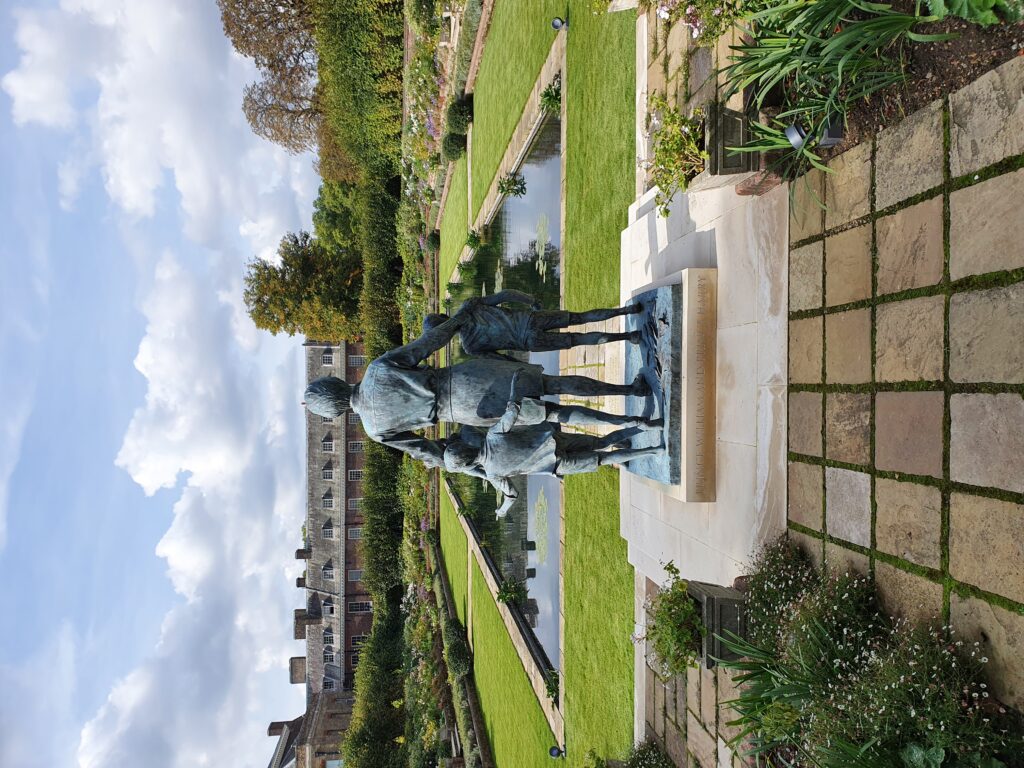
Diana, with three children representing her ability to reach out compassionately and universally.

In 2012 Kensington palace was opened up to the public, with the Historic Royal Palaces trust overseeing various exhibitions and artefacts. Of course my favourite had to be the display of 3 Tiaras.
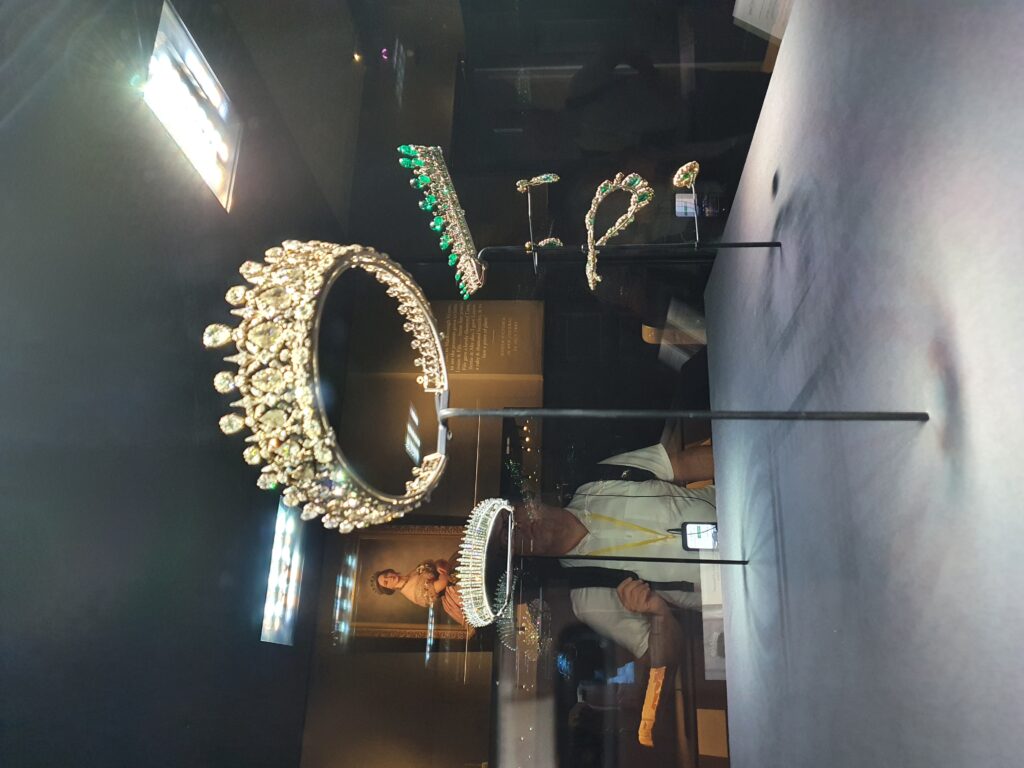
Unlike the Crown Jewels at the Tower of London I even got to try one on
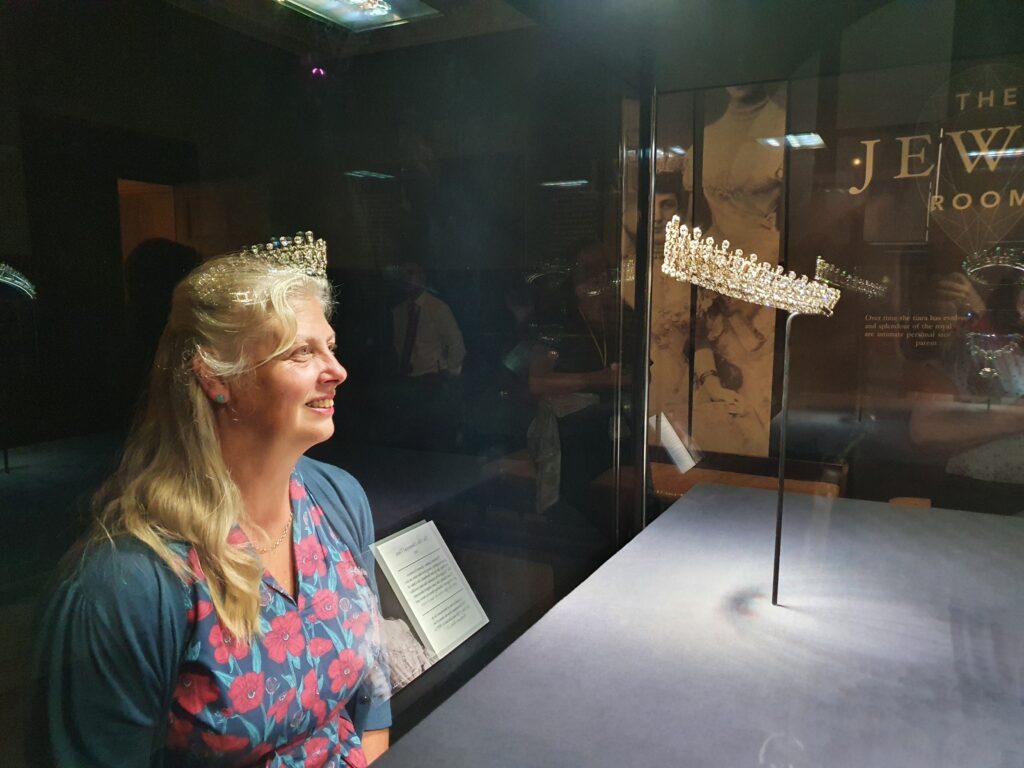
If only…..

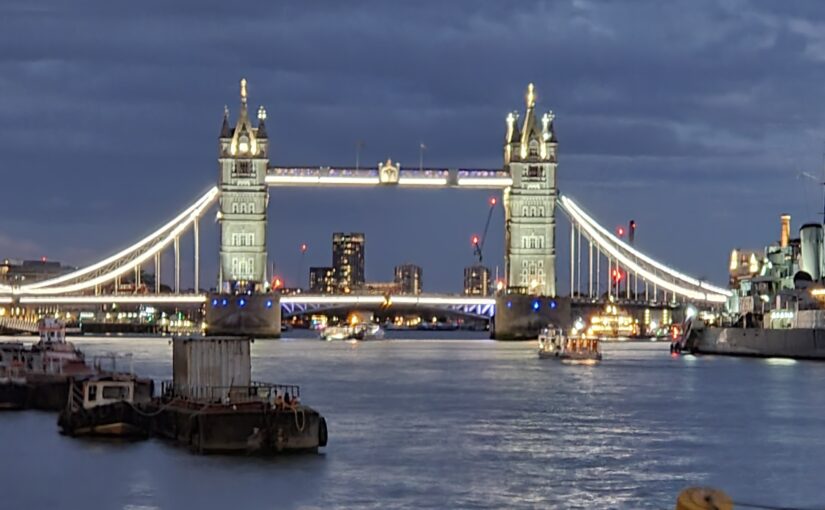
It was to be a week of reflections, culminating in the Reflections Flotilla. An event originally conceived as part of the Platinum Jubilee Celebration, but now a memorial celebration for our Queen. With 150 boats including the Royal Barge, lit up for a night cruising down the Thames from Chelsea to Tower Bridge
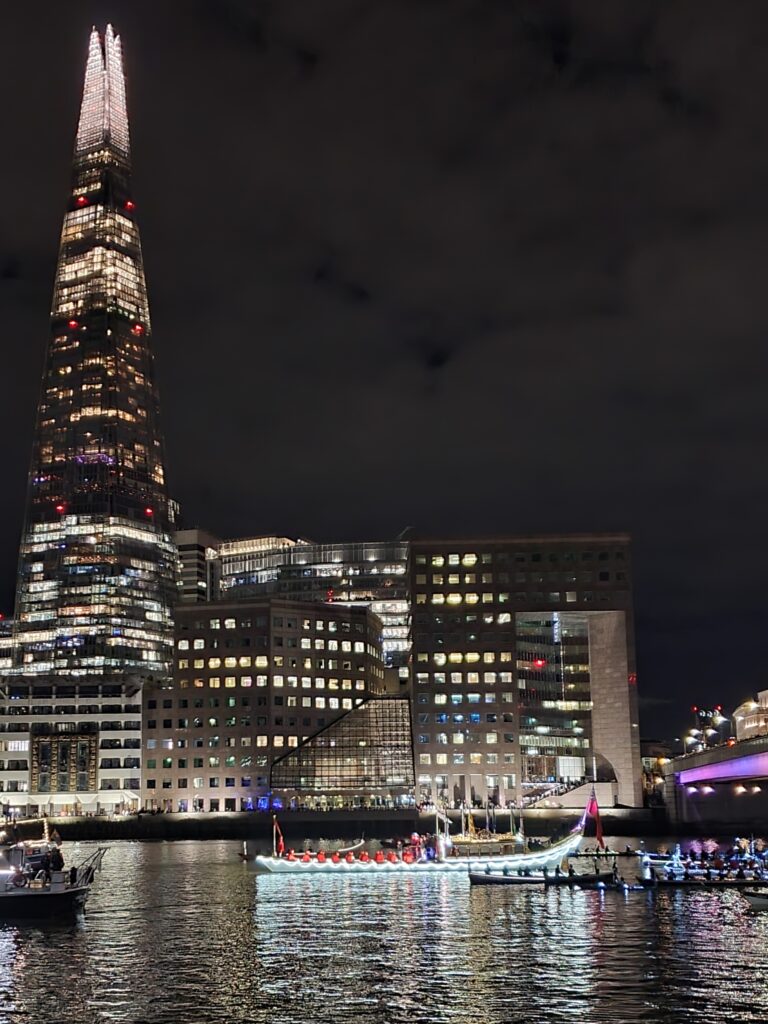
The Royal Barge in front of the Shard

Of course the boat we were really looking out for was Mick and Pip’s NB Oleanna as they had moored up at Islington, on their way to join the flotilla. Perhaps not the best photo of the night, but we waved as they passed.
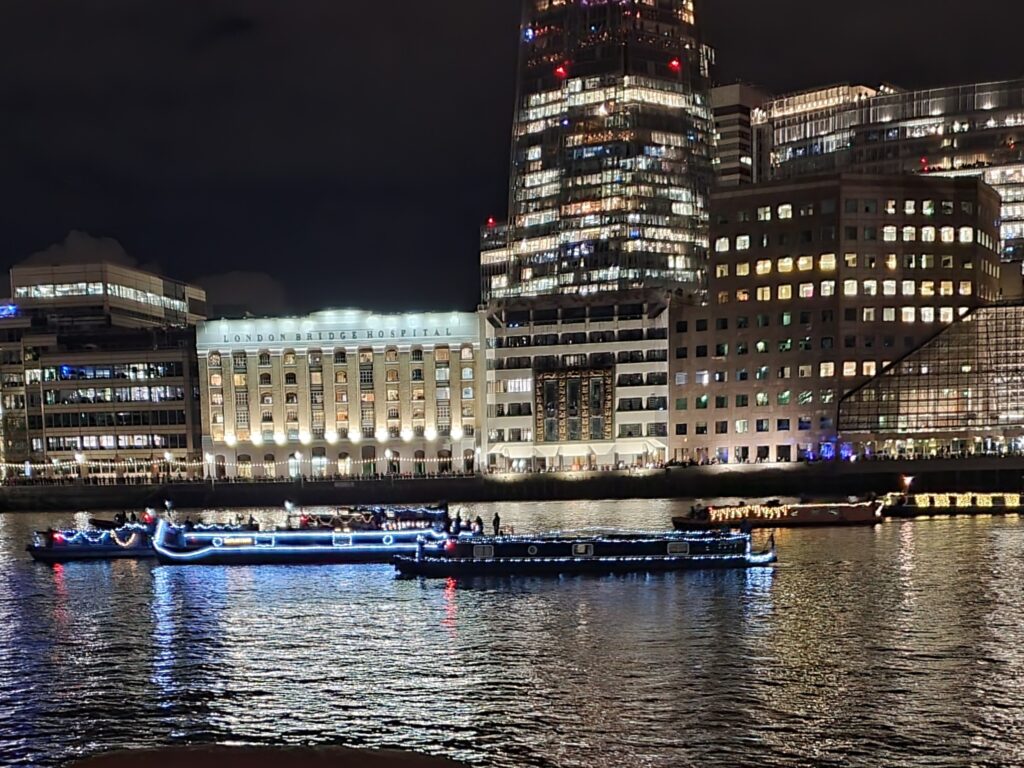
Thats NB Oleanna


And then cheered loudly as Tower Bridge raised her arms in a full salute, something usually reserved as the highest mark of respect
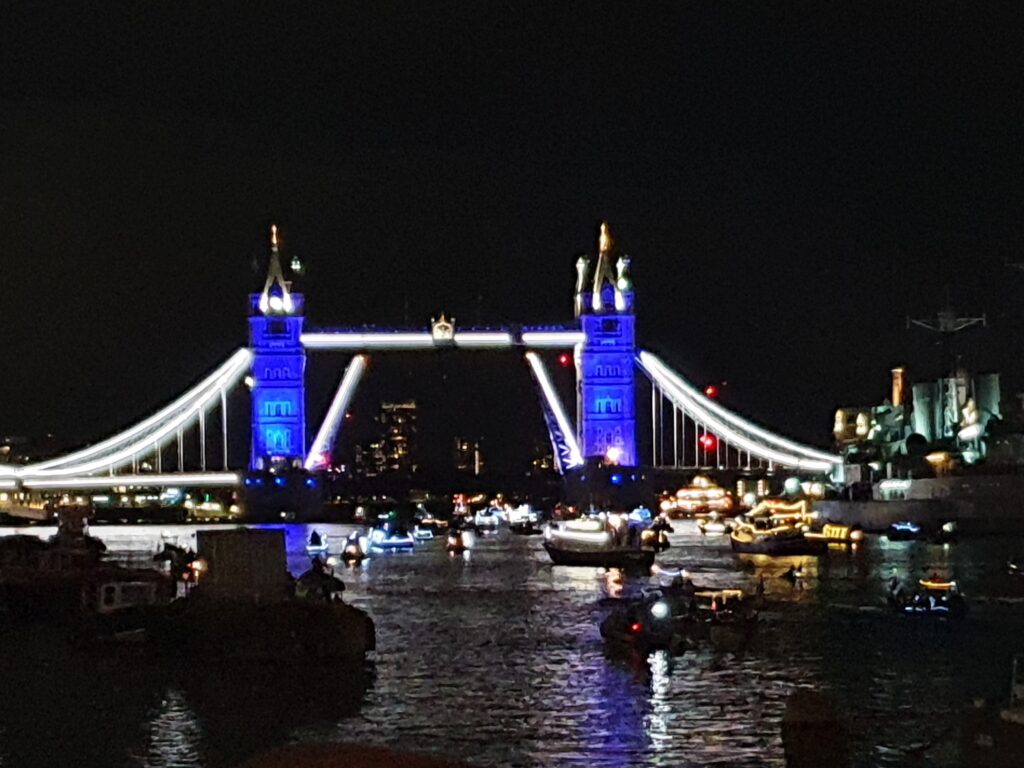
Its very unusual to see the span fully upright.

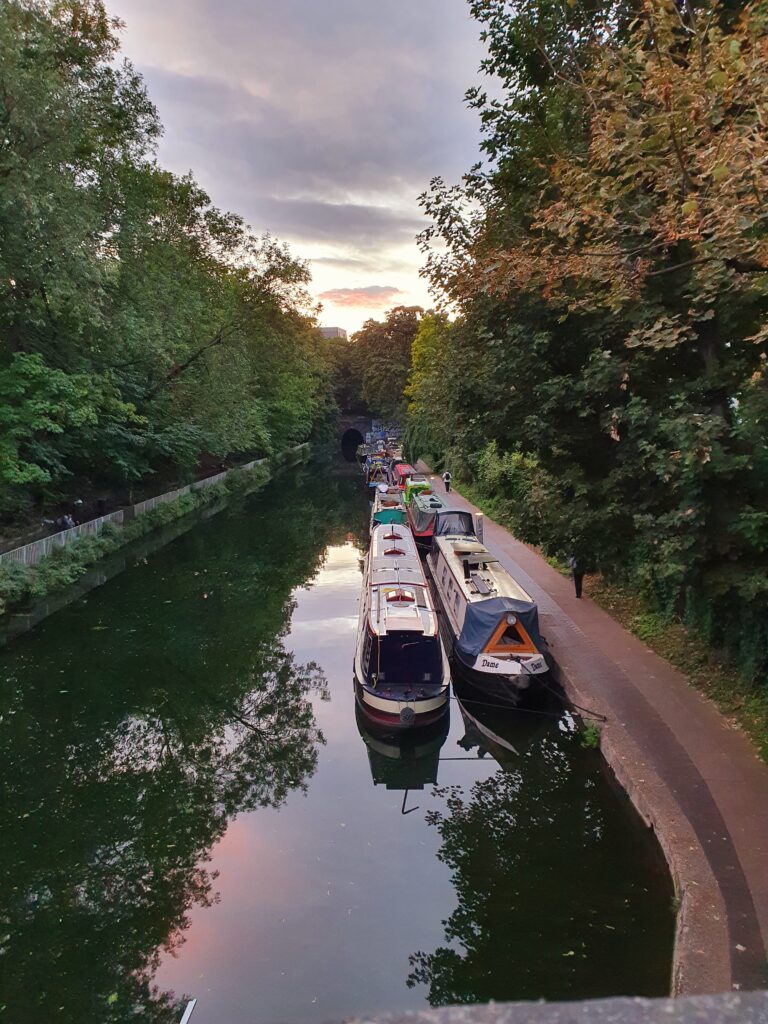
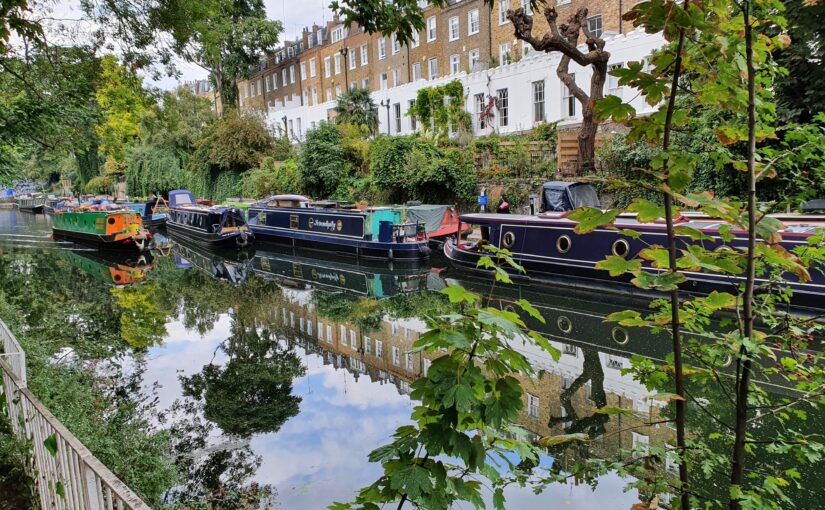
Back to Islington

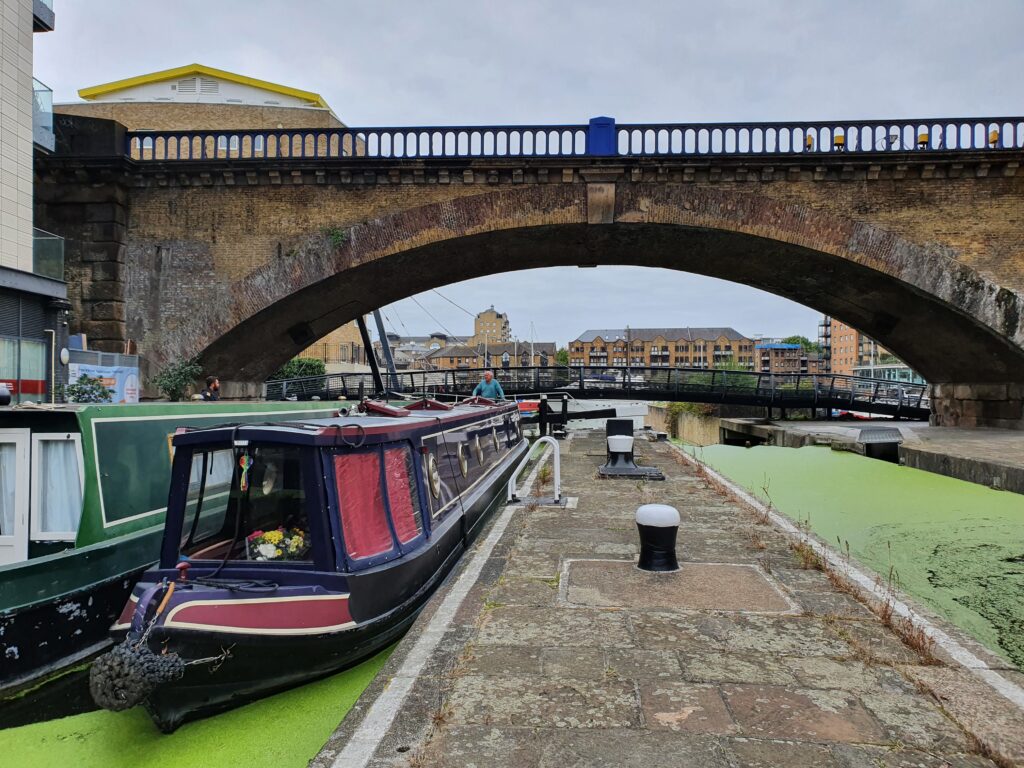
Once we had made the decision not to venture onto the Tidal Thames at Limehouse, (mainly because the St Pancras Cruising Club tend to run their flotillas in the spring not the autumn) we booked ourselves another week at Islington. Little did we know our Queen was going to die and our mooring was to start the day of her funeral. (Yes, my blog diary is a bit behind the times) We would have preferred not to have cruised that day but, in the end it turned out ok. We set off from Limehouse braced for a long 4 hour cruise and 8 locks

We felt very small amongst these big boys

I walked around basin to set the first lock, and was greeted by a magnificent sight, a lock buddy,

Pea soup for lunch,

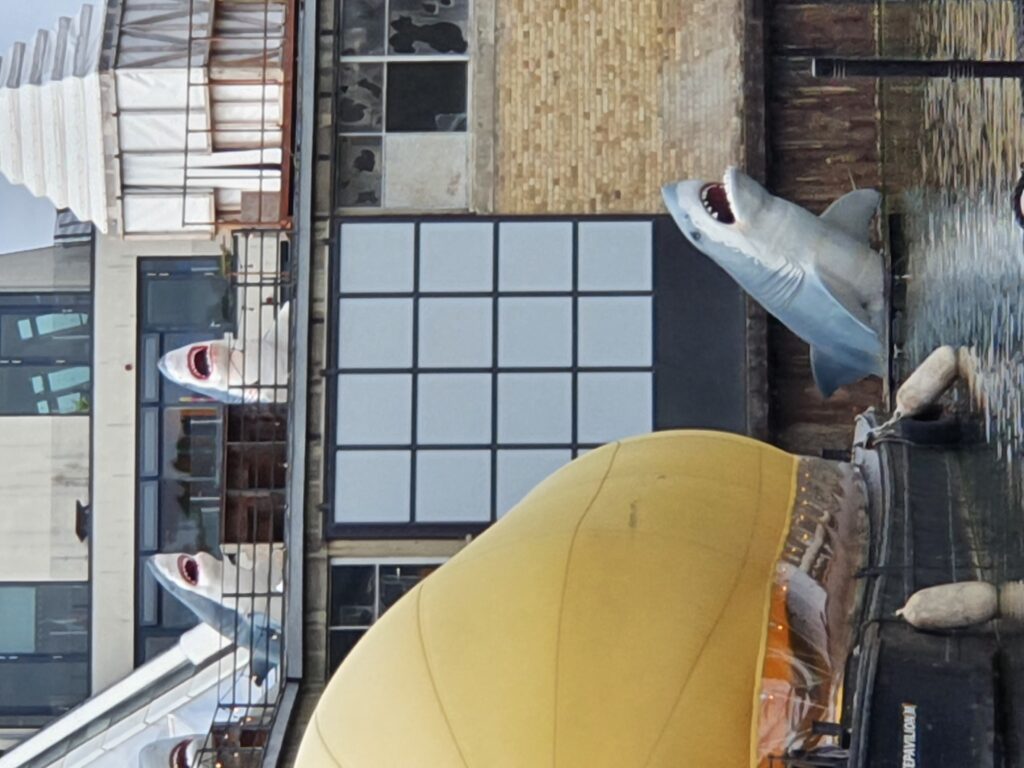
Our buddy was a professional boat mover, who could work through a lock single handed quicker that Eric and I working as a team. We quickly got into the swing of me walking ahead to set the next lock whilst the two men efficiently moved the boats. The journey took just over 4 hours. There were very few boats moving but the towpath was heaving in true bank holiday style. We wouldn’t have guessed that there was a state funeral taking place a few miles away. Even the Hackney sharks had come out to keep an eye on things.

Not sure why, but 3 sharks were now on the roof and one remained hiding in its yellow coccon

Thankfully we found ourselves a space on the eco mooring. It irks us that, despite us having booked, getting in isn’t a guarantee.

All set for another week in Islington

Riding the Tide, from Teddington to Brentford

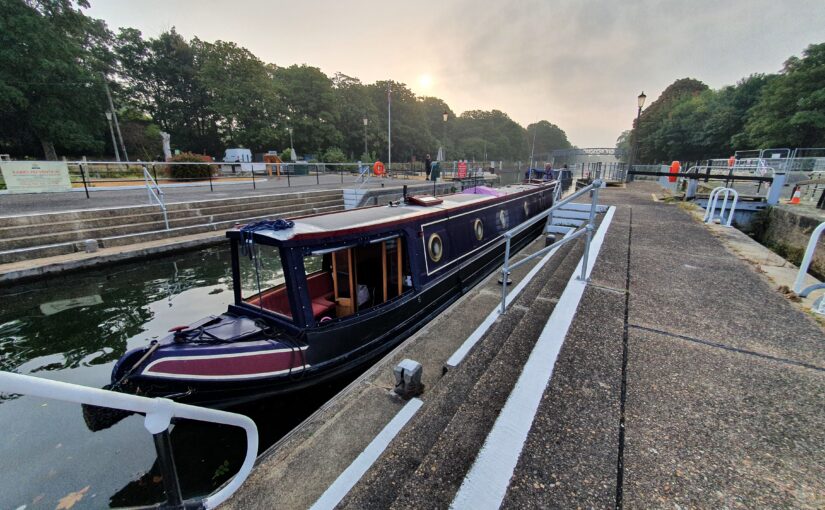
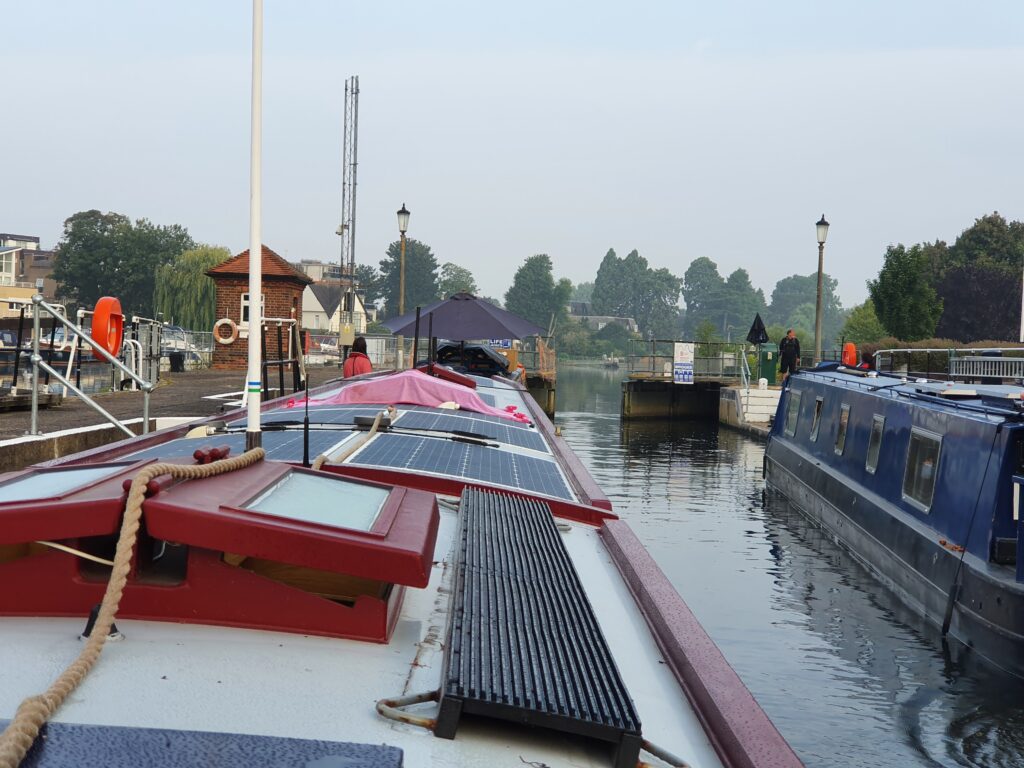
We rose early as our Teddington Lock booking was for 7am.

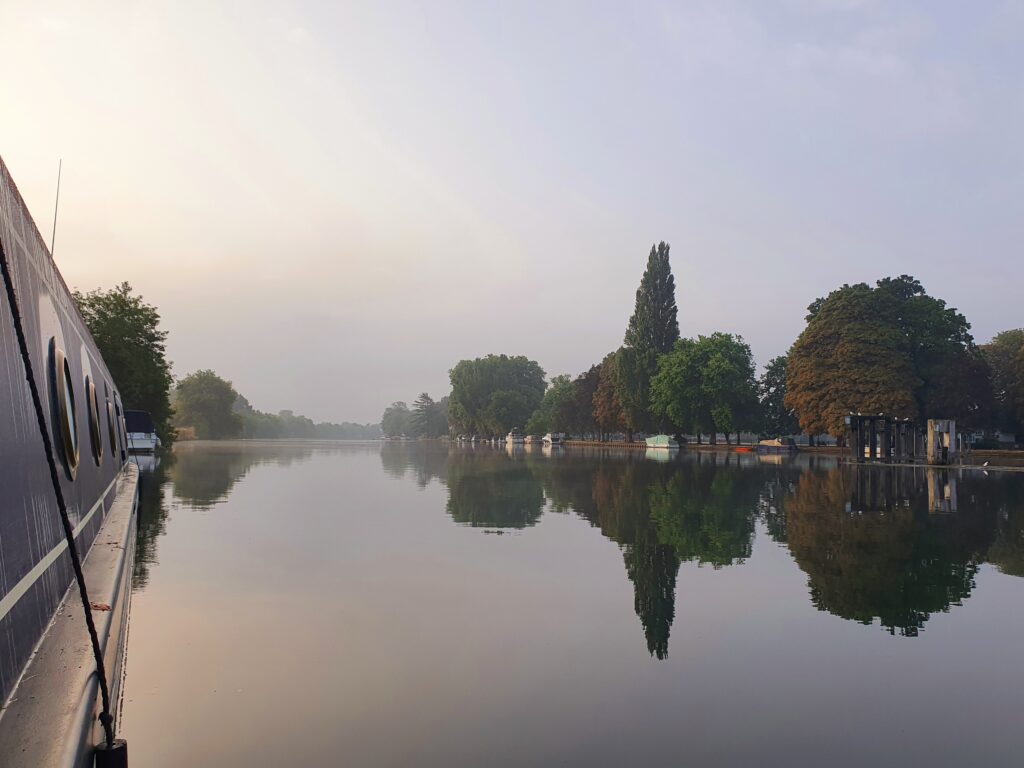
Looking back to say goodbye to the Thames that we had spent 4 months enjoying

Eric had plugged in the VHS radio and erected the aerial, to comply with the Port of London Authority (PLA) bylaws

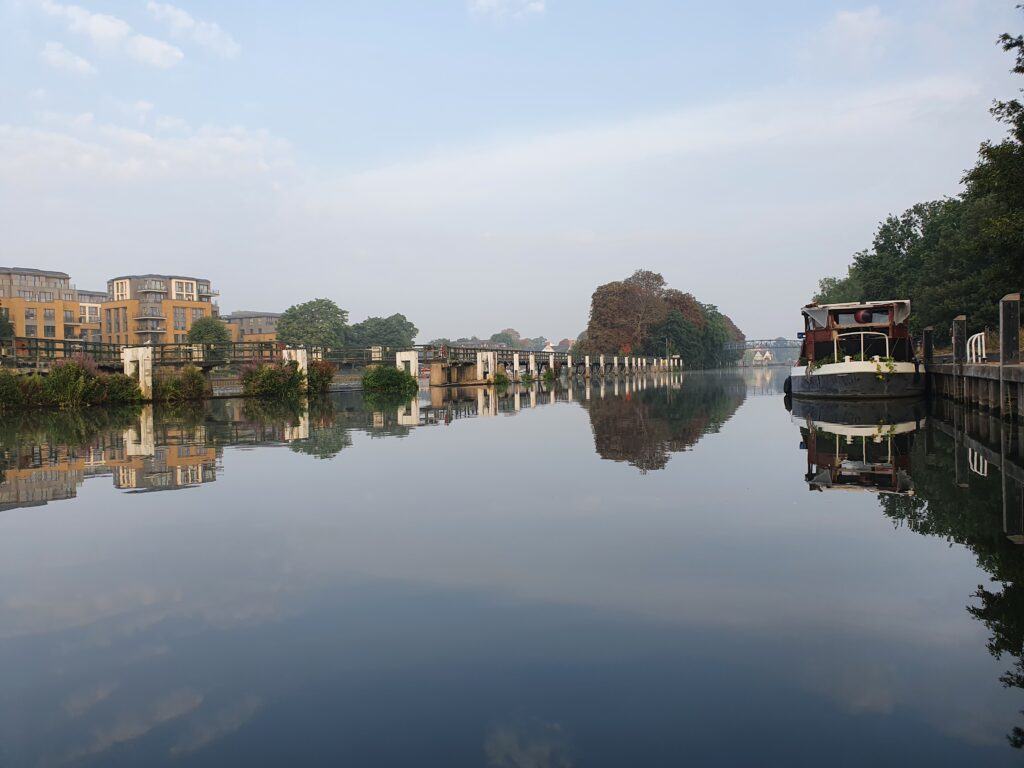
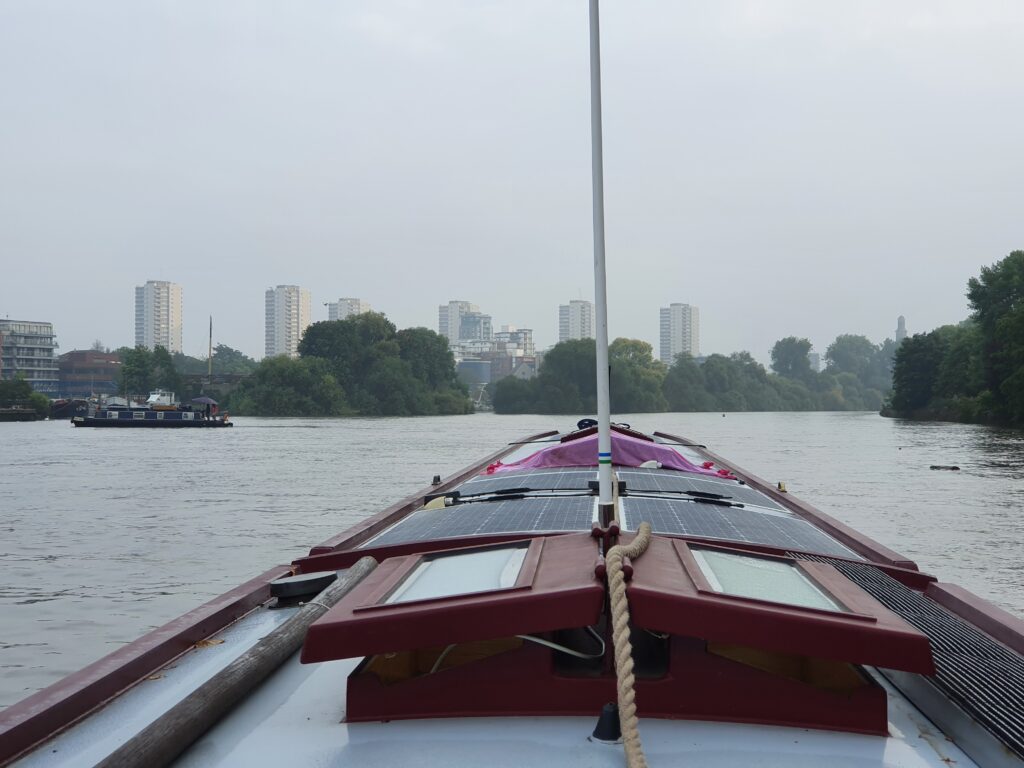
Looking forward

And off we set

Under the footbridge and into the lock

We were sharing the lock with 2 other boats, also going to Brentford. And as they had both done the journey before, were happy to take the lead and keep us in view.

And being released

Teddington Lock is actually a triple lock system, the “great” lock or barge lock accommodates the largest boats such as the floating gin palaces, the launch lock for the little boats like Firecrest and the skiff lock, which is a tiny narrow affair for the rowers. Although there are lockies on duty 24/7, they hold back the majority of boats until the tide is high and turning so that we are carried with the down stream flow instead of fighting against it. Hence the need to book our passage. Because we were being given safety instructions, I forgot to take many photos, and because the tide was high, it was more like going through a 6 inch stop lock than the colossal deep trench that we had seen the evening before.

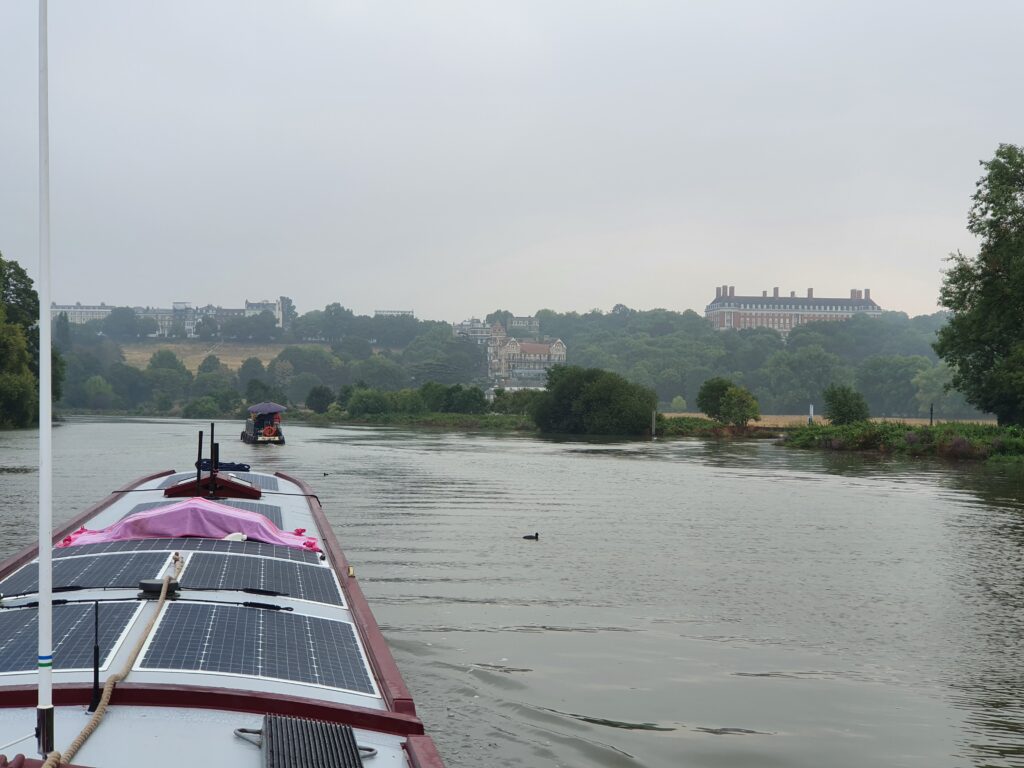
Soon we were on our way, unfortunately the weather was not obliging with the view, and we can only imagine what Ham house up on its hill ought to have looked like.

Ham House, up on the hill

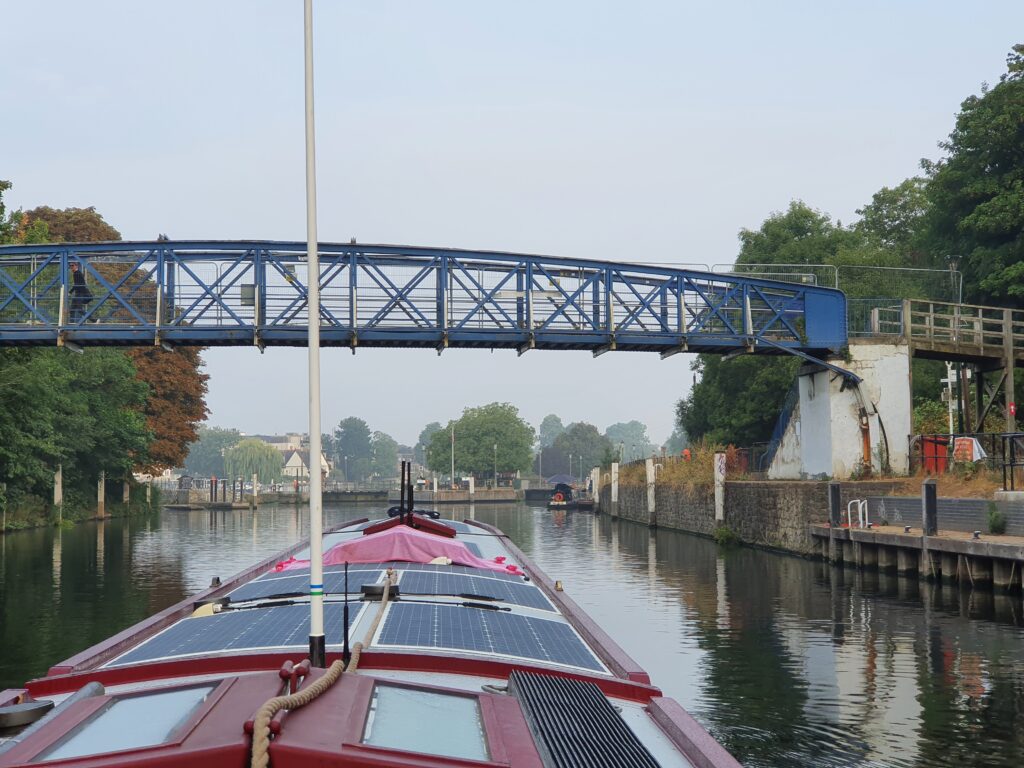
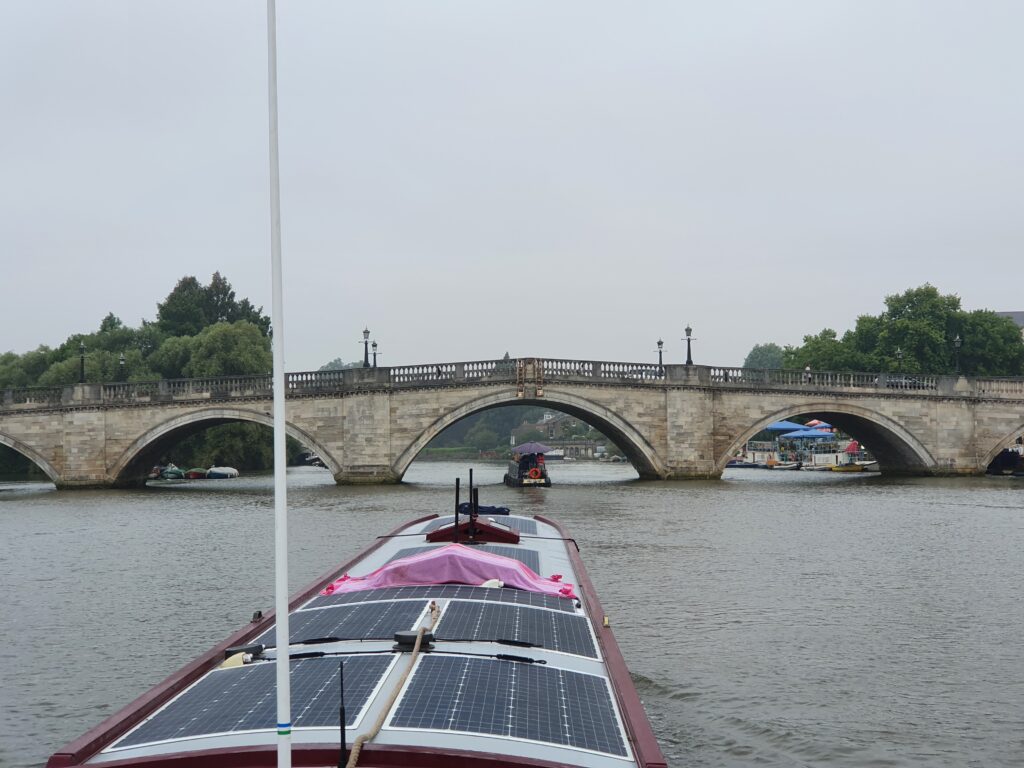
We soon approached Richmond Bridge

Richmond Bridge

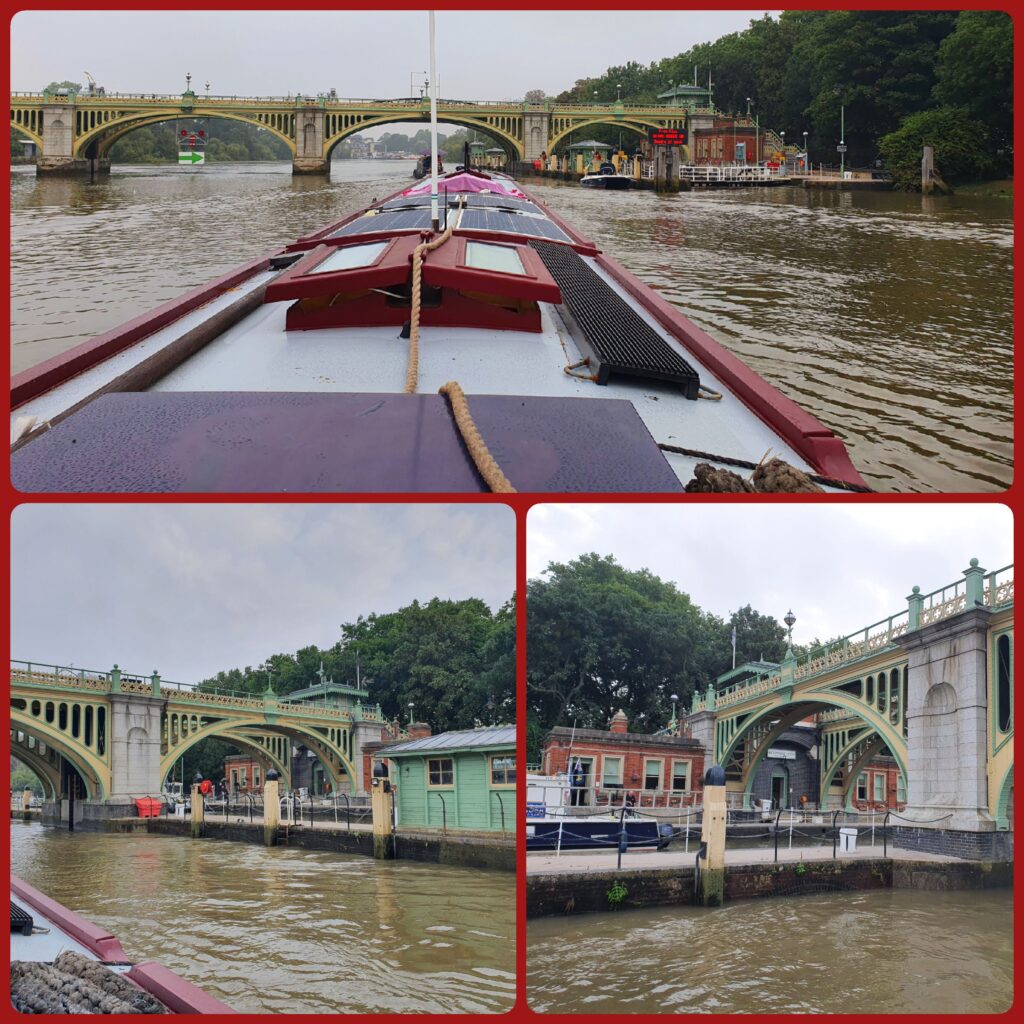
And then Richmond half tide lock. This is a barrage lock that manages tidal river levels, you can pass under the designated arch freely 2 hours either side of high tide, at other times, you have to pay a fee to use the manned lock.

Richmond half tide lock

We duly went under the arch and continued speeding downstream. The journey from Teddington to Brentford is about 5 miles, and it had taken us an hour. To put it in perspective, on the canals we travel at roughly 2.5miles per hour. The london skyline was now visible, but we also saw our lead boat turning left.

The london skyline

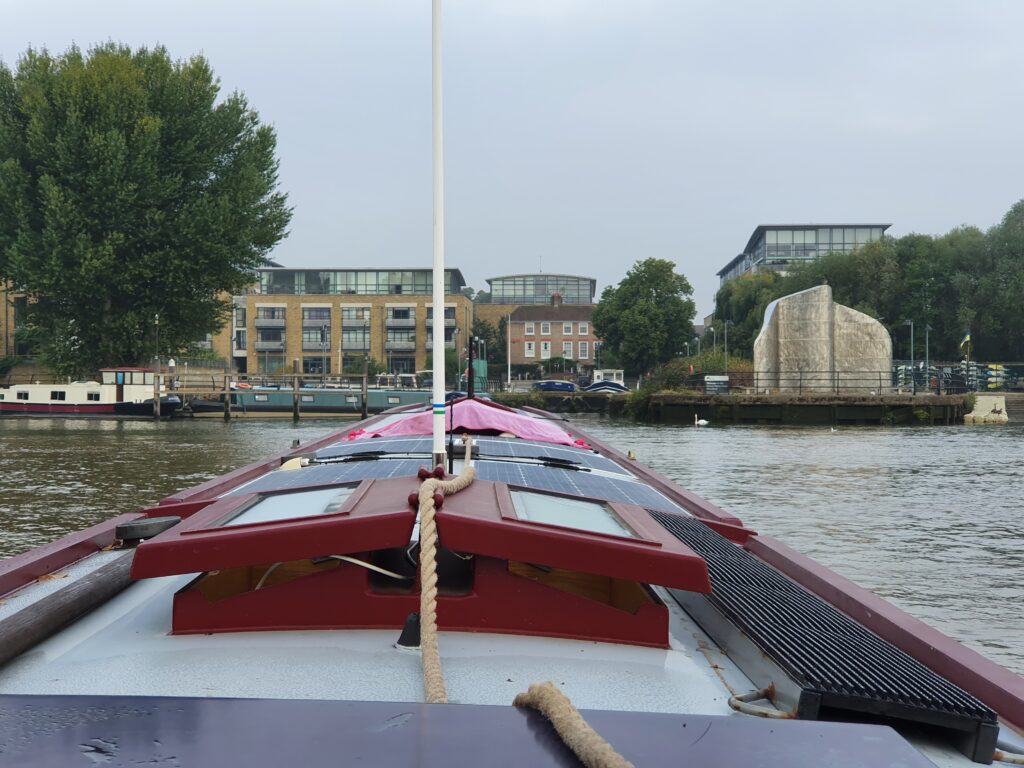
And the glint of the stainless steel sculpture known as Liquidity that was our marker point to guide us back onto the Grand Union Canal

Liquidity, where the Grand Union Canal joins the Thames

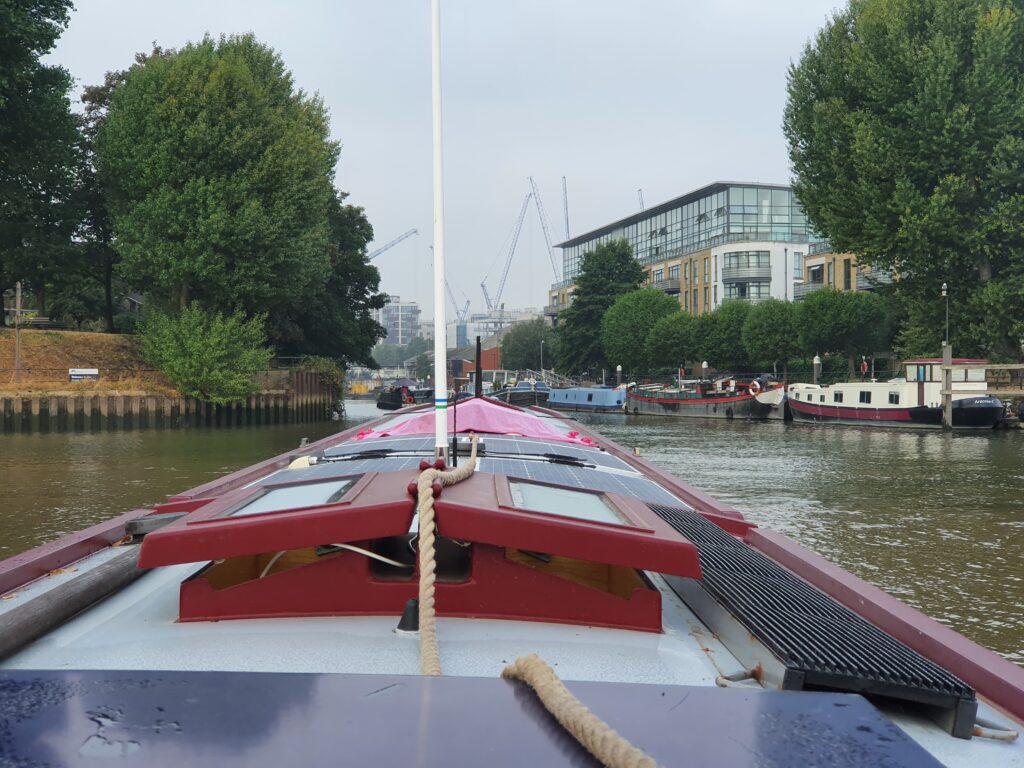
Its quite a tricky manouver to take a narrowboat across the river which has both a downstream and a tidal flow to compete against, but Eric put full throttle on and Firecrest behaved beautifully. We didnt overshoot or get swept downstream backwards. But oh what a difference, from a flowing river that was easily 100m wide, to a much narrower channel, which at this point is still tidal, and into Thames Lock 101. Thames lock also needs to be booked to accommodate the tide levels.

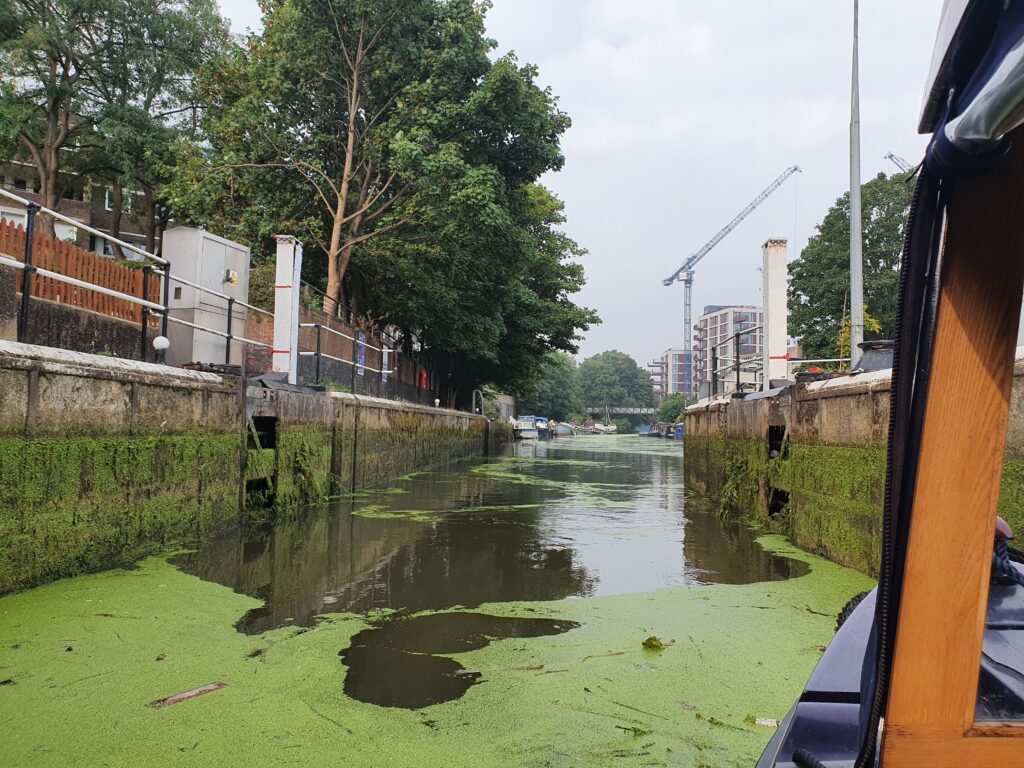
And then we were here, back onto the canal system, goodbye Enviroment agency, hello CRT, hello duckweed, hand cranked locks and urban jellyfish (aka plastic bags and other detritus)

Welcome back onto the grand union

Back on track

With the chores checked, and the chums chatted to, we were back on track travelling towards London. We had a very pleasant overnight stop at the 48 hour Shepperton VM. (Visitor mooring)

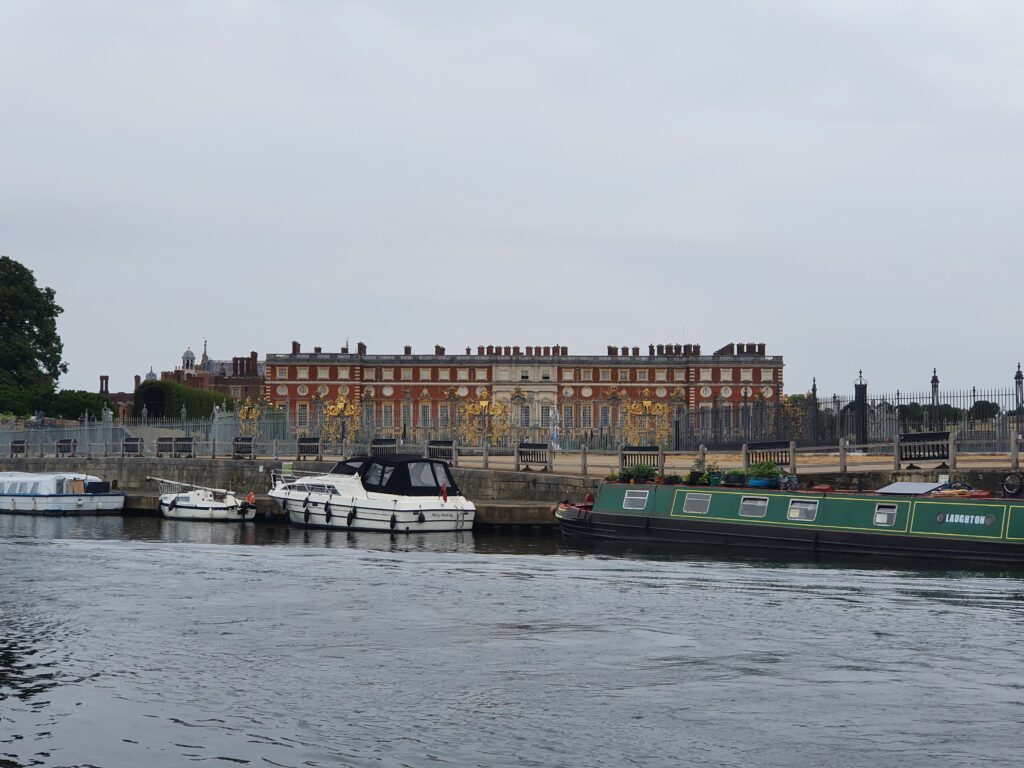
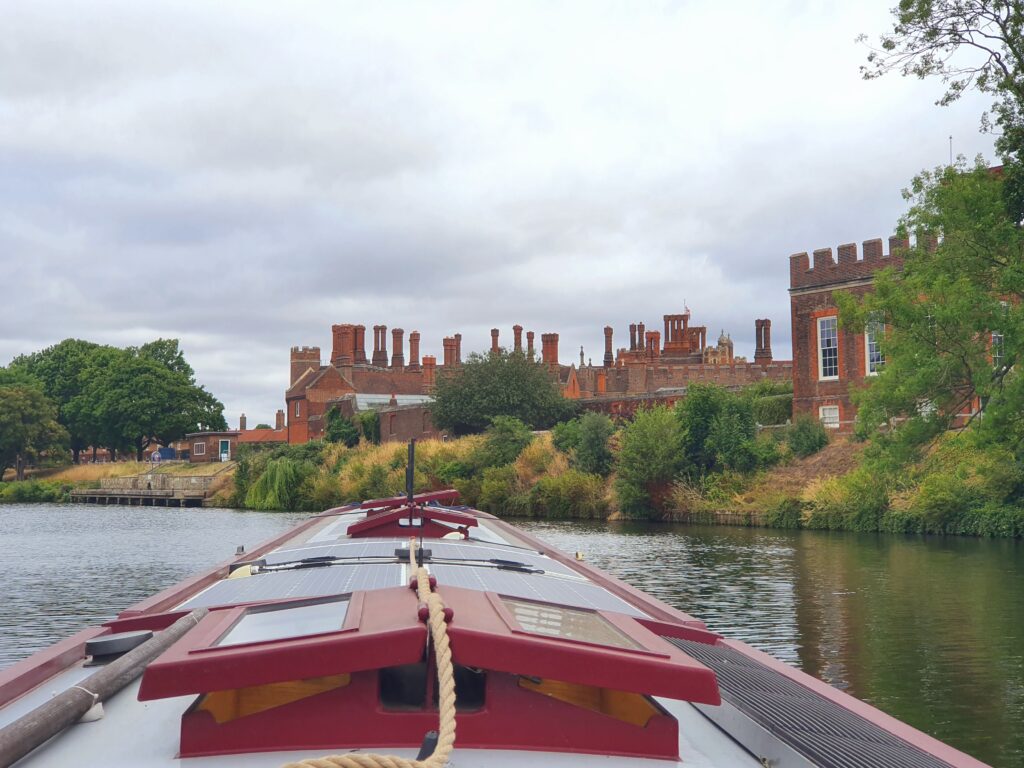
Sailed right past Hampton Court palace, (with a touch of envy at the boats moored there)

Hampton Court palace from the river

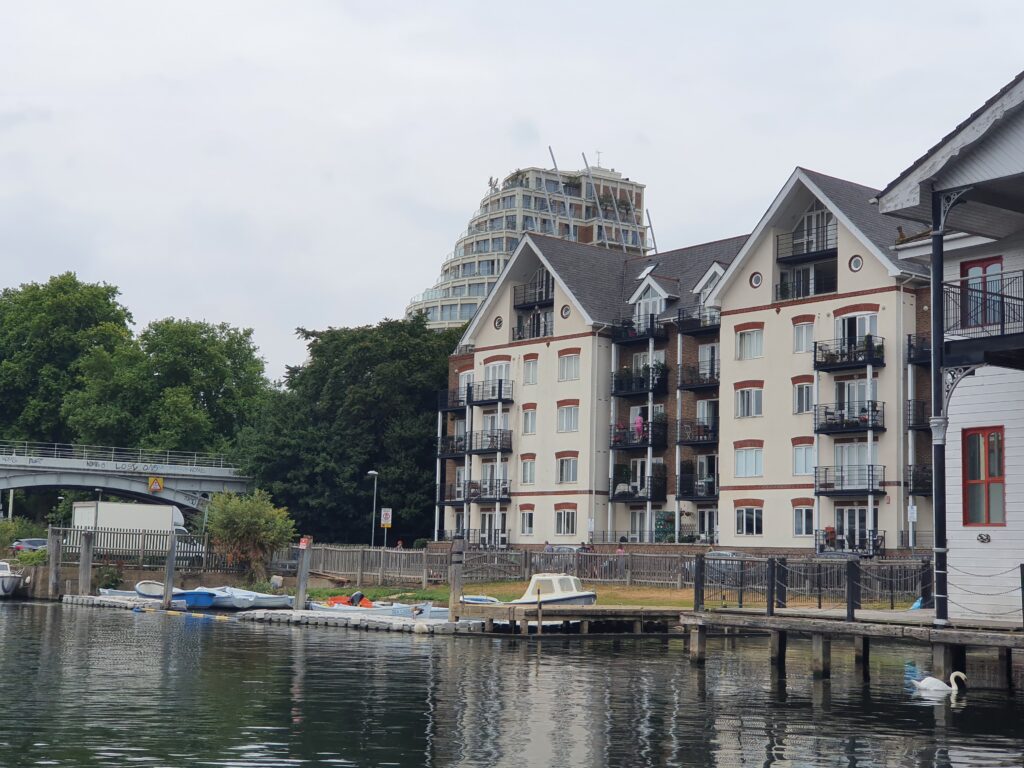
Through Kingston, where some modern architecture thought he was designing a cruise liner, its actually called the Admiralty building

And under Kingston Bridge. Eric had spent his teenage years around this area, so spent some time checking out his old cycle routes but found it so different from how he remembered it that it wasn’t fun.

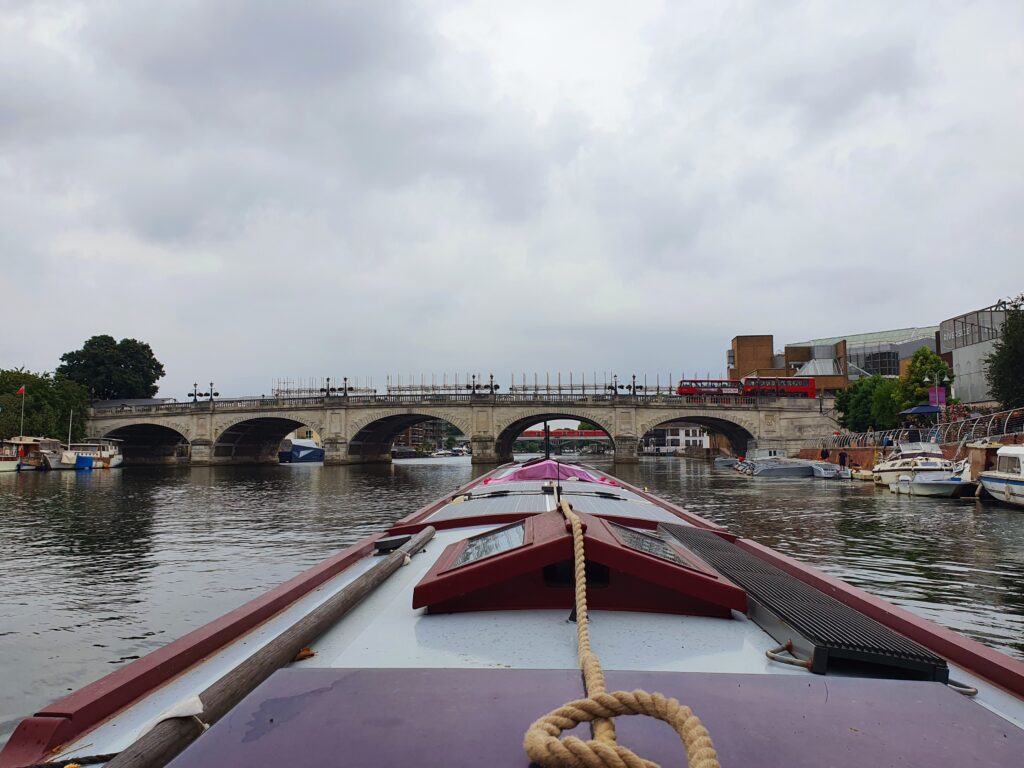
Kingston bridge

And we moored up for the night at Teddington lock

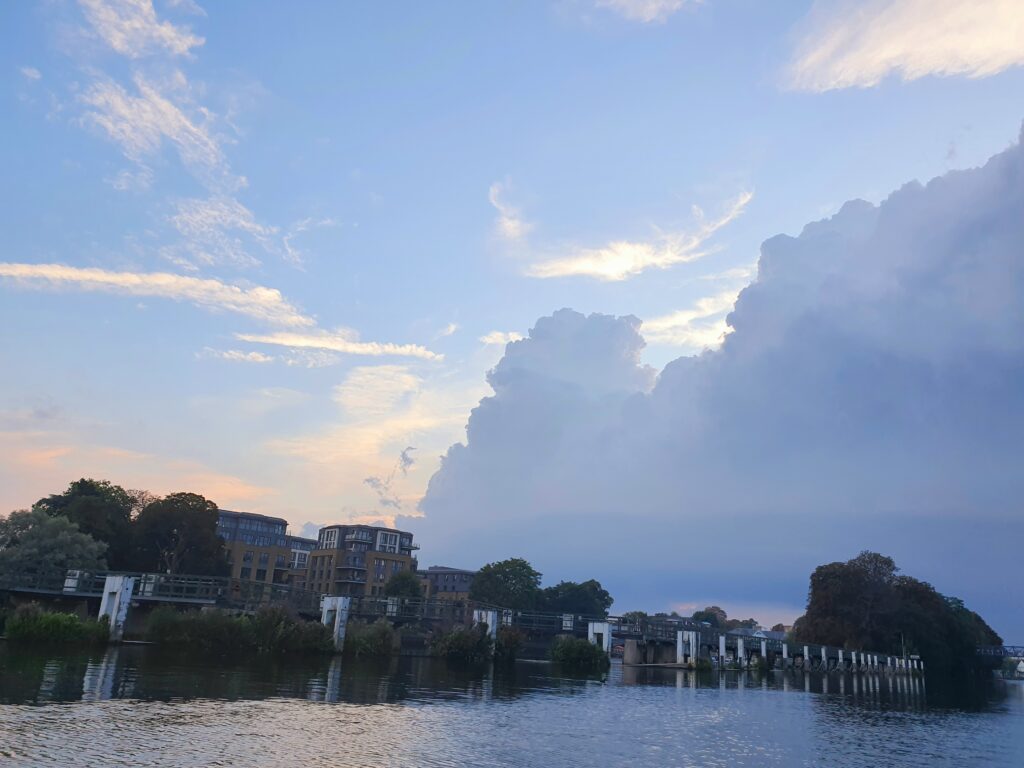
Looking across the river at teddington

Teddington locks mark the start (or end) of tidal reach for us. The locks are managed by the enviroment agency and transit needs to be booked and is timed to aid navigation go with the flow. We dutifully paid our mooring fee and set the alarms our passage for 7am the following morning.

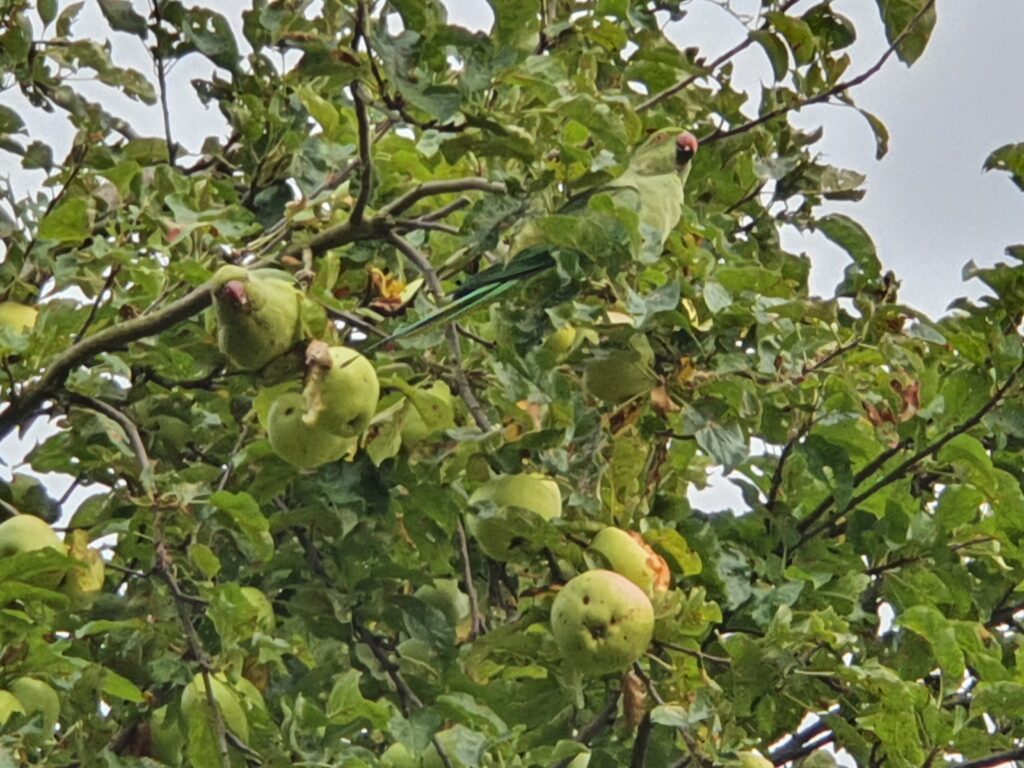
It had been a long days cruise so we didn’t go far exploring, but I was quite excited to see a fully laden pear tree along the towpath, until I realised, it was also full of parakeets and all the pears had been “tested” we’ve been seeing and hearing these colourful pigeons since we reached Windsor, but I hadn’t been able to snap a photo of them until now because they fly so quickly and are so well camouflaged in the tree tops. Mind you we can certainly hear them. There have been parakeets living wild in the UK since victorian times but their numbers have increased drastically since the 1990s. In 2012 There were around 32000 in London, I suspect its a lot higher now, and it doesnt take a rocket scientist to wonder about the impact these birds will have on our native wildlife.
A slight detour, back to Windsor.

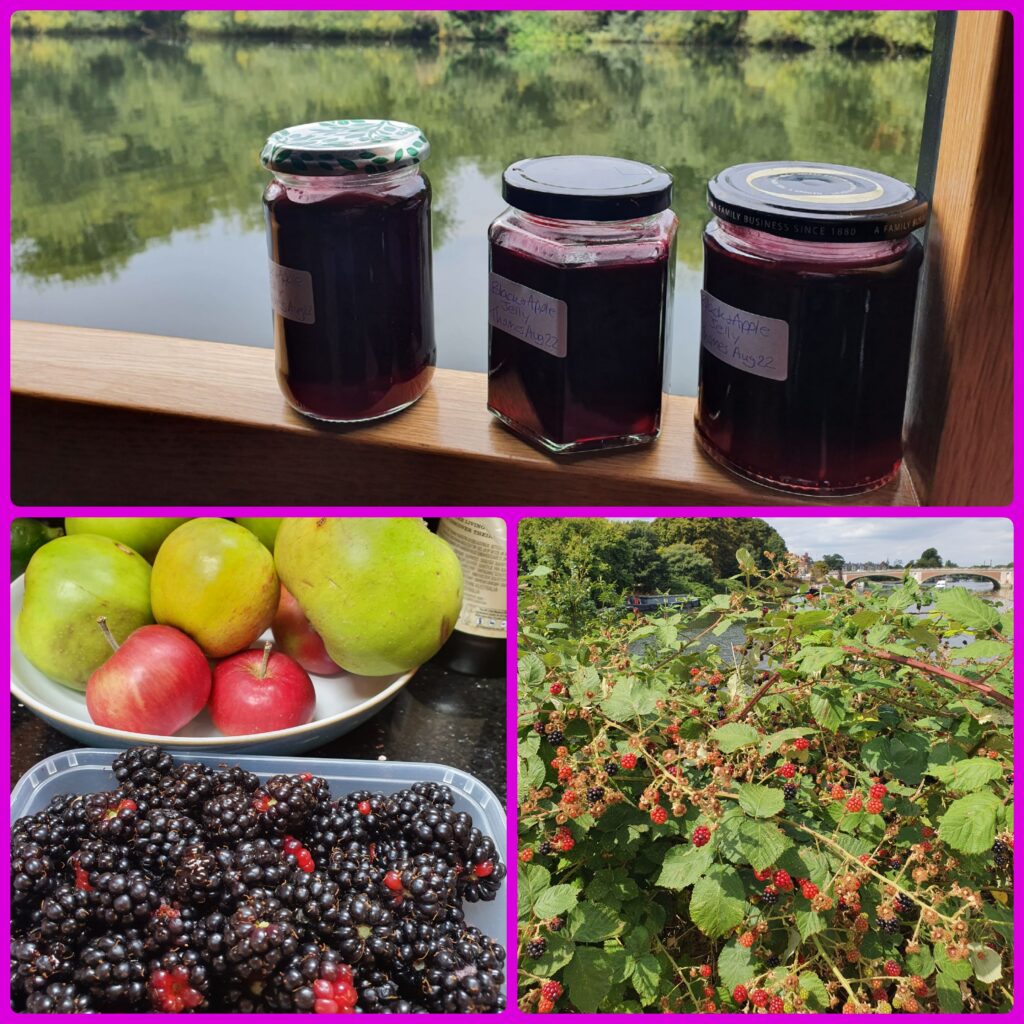
Having enjoyed several days at Hampton Court, we should have continued downstream towards London. But we’d made a few commitments to see people, including having found a dentist willing to see us as walk in customers for our long overdue check ups. Accessing routine health care as a continual cruiser is a continual frustration. We snatch what we can where we can and try to keep healthy, which probably means I shouldn’t take advantage of hedgerow foraging. But the fruit came from Hampton court so I couldn’t miss an opportunity to make Royal Jelly.

3 jars of royal bramble and apple jelly


We turned the boat around, said goodbye to Hampton Court palace and began our cruise back to Windsor.

Thats a posh pad on the banks of the Thames

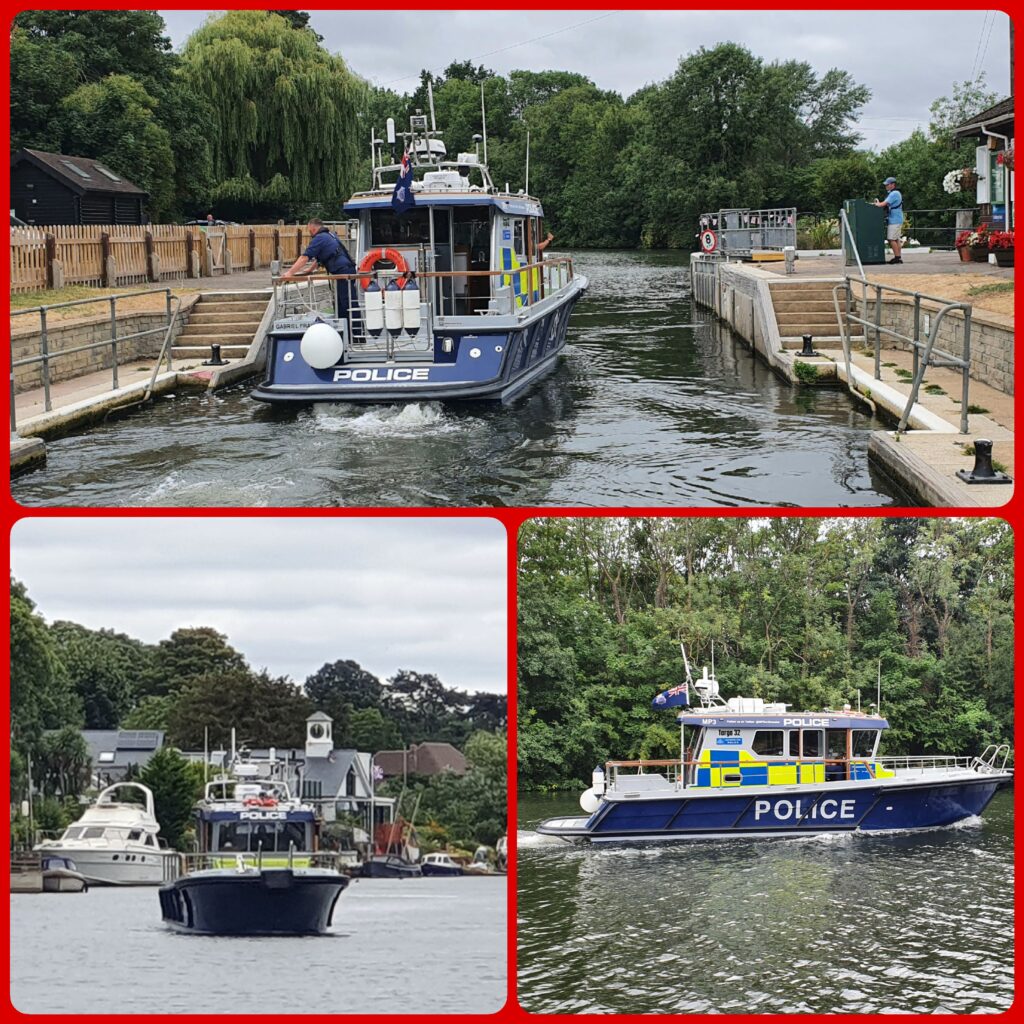
But Eric had warned me I might face execution, poaching from Henry VIII’s back yard, so we were a bit worried when we realised we were being chased down by the police.

Hello hello hello, what have we here

Turns out it was the Met on the run, not us. They were escaping from their regular city patch to familiarise 2 new officers with the route to Windsor Castle. They occasionally provide royal river protection along that section of the Thames. But whilst they cracked on apace, we meandered more slowly, stopping at Staines, to see the London Stone.

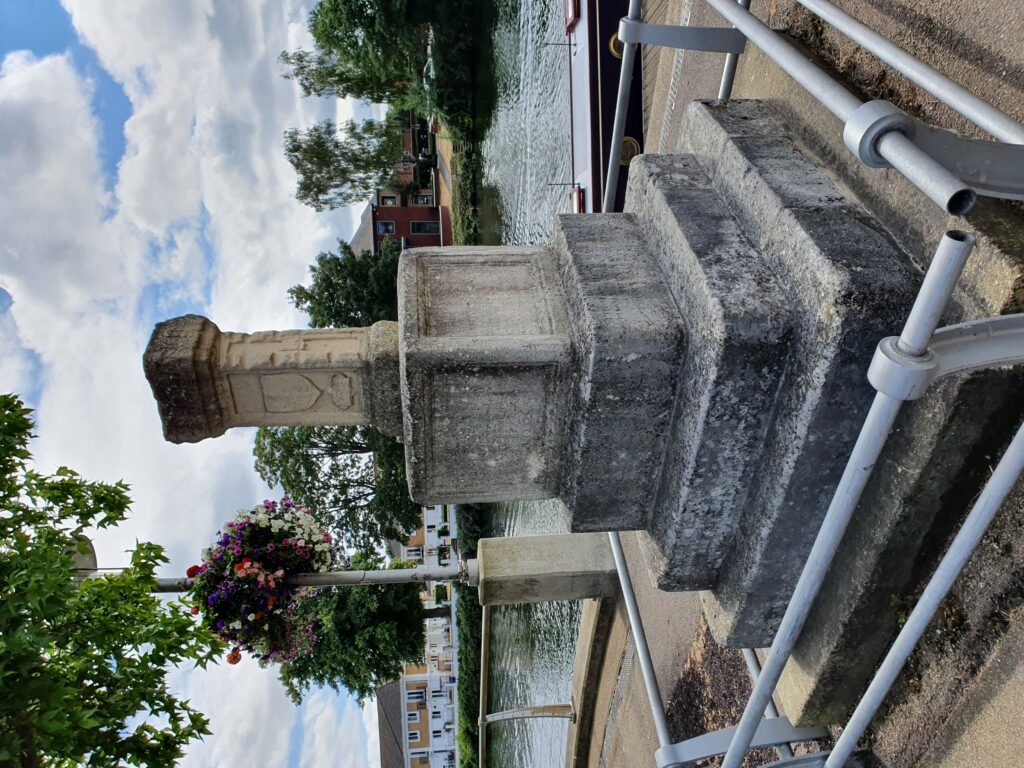
The Staines London Stone

In 1197, Richard I needed money to pay for his Crusades, so he sold the crown’s rights over the River Thames, from the estuary to Staines, to the Corporation of the City of London. The date, 1285 is engraved into this stone as the boundary marker of that new jurisdiction. The original stone is in a local museum but this replica is next to the river in the memorial park

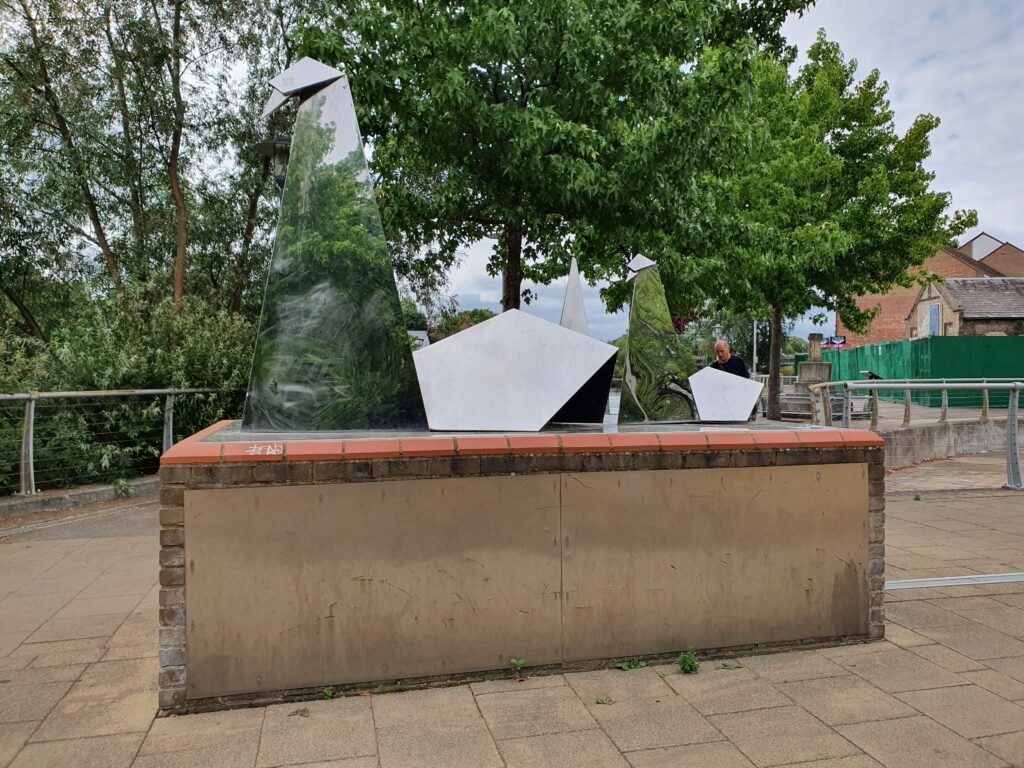
Staines stainless steel swans

We took advantage to restock the fridge in Staines and enjoy some nice moorings overnight

Looking towards Staines

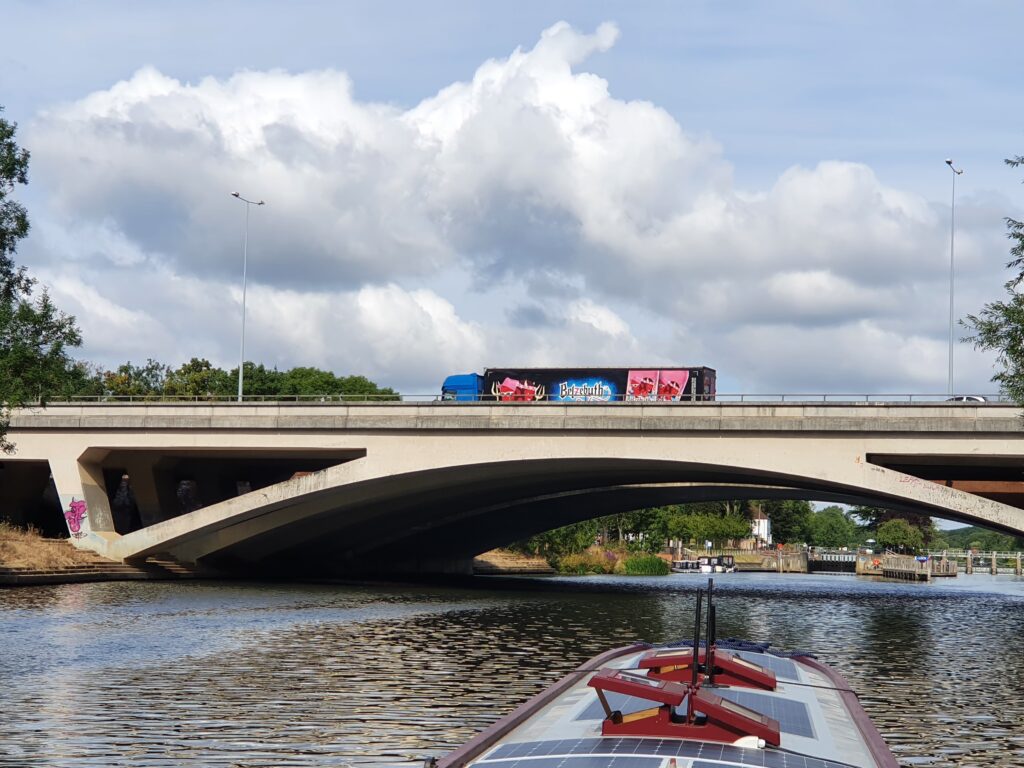
before heading back upstream, under the M25

We know which side we are happier

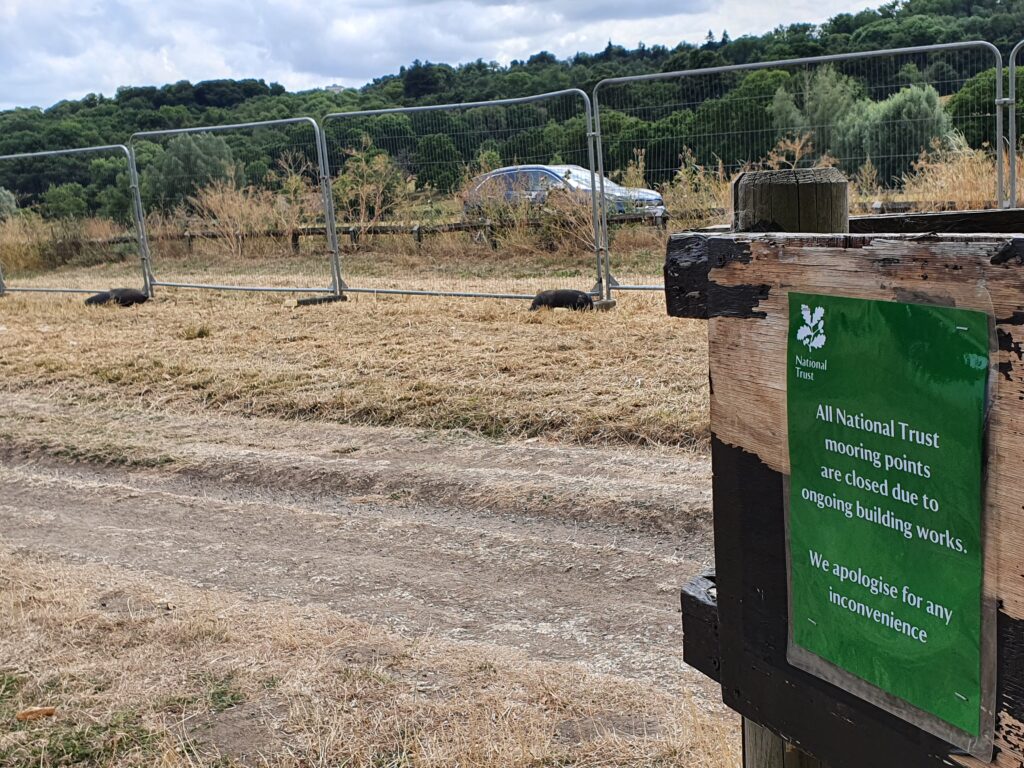
Past the lovely mooring at Runnymede, although the NT had decided August would be a good time of year to relay the footpath so although we were able to moor, we were effectively caged in and unable to access the actual site.

Mmmm, thats a disappointment.

When we got back to Windsor we checked onto the electric mooring point and had visits from some good friends

Cathy, Eric and Ali

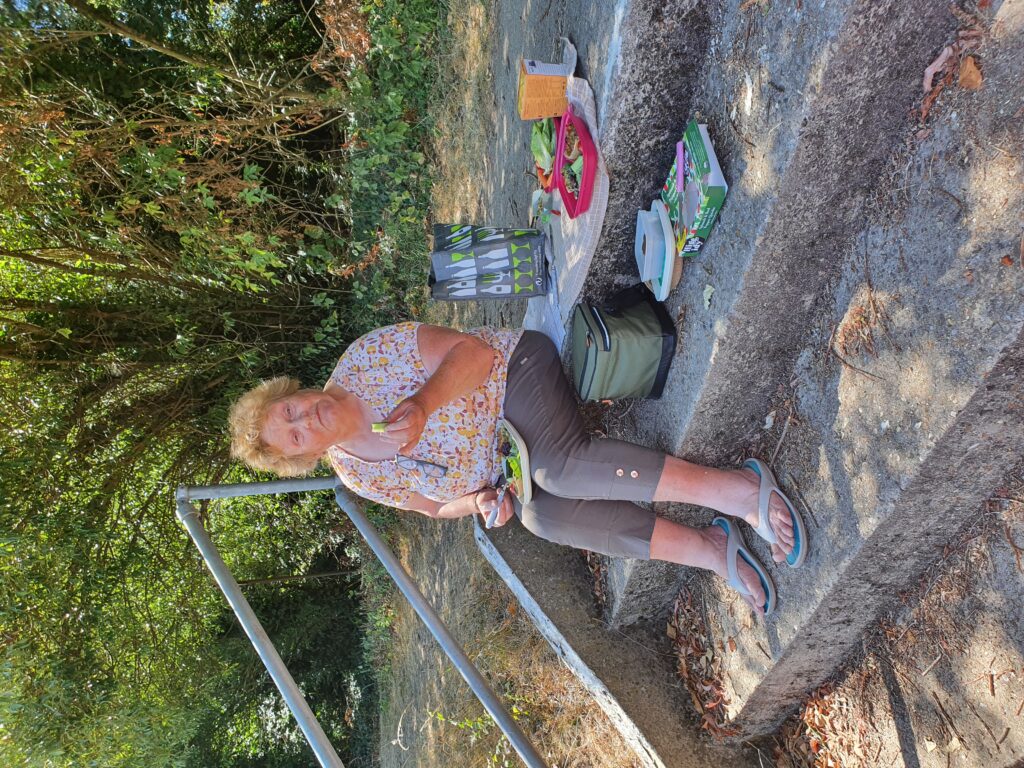
Jo and I sharing a picnic in the shade

Hoping for the leftovers

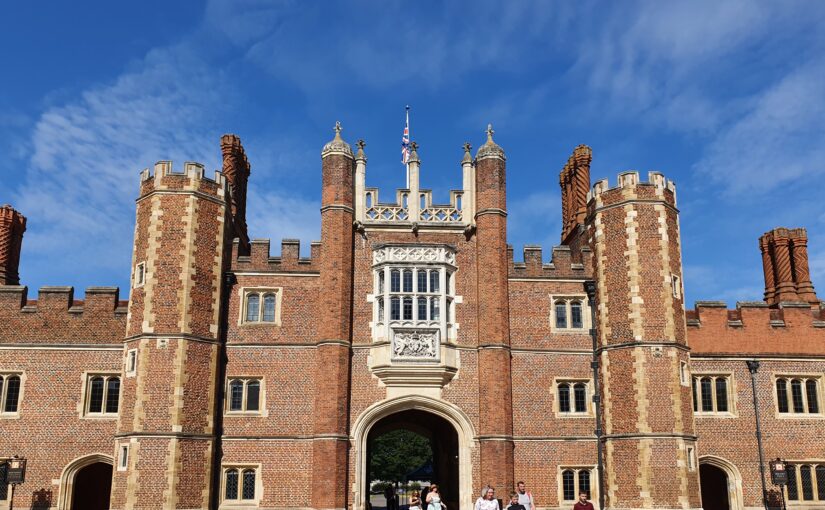
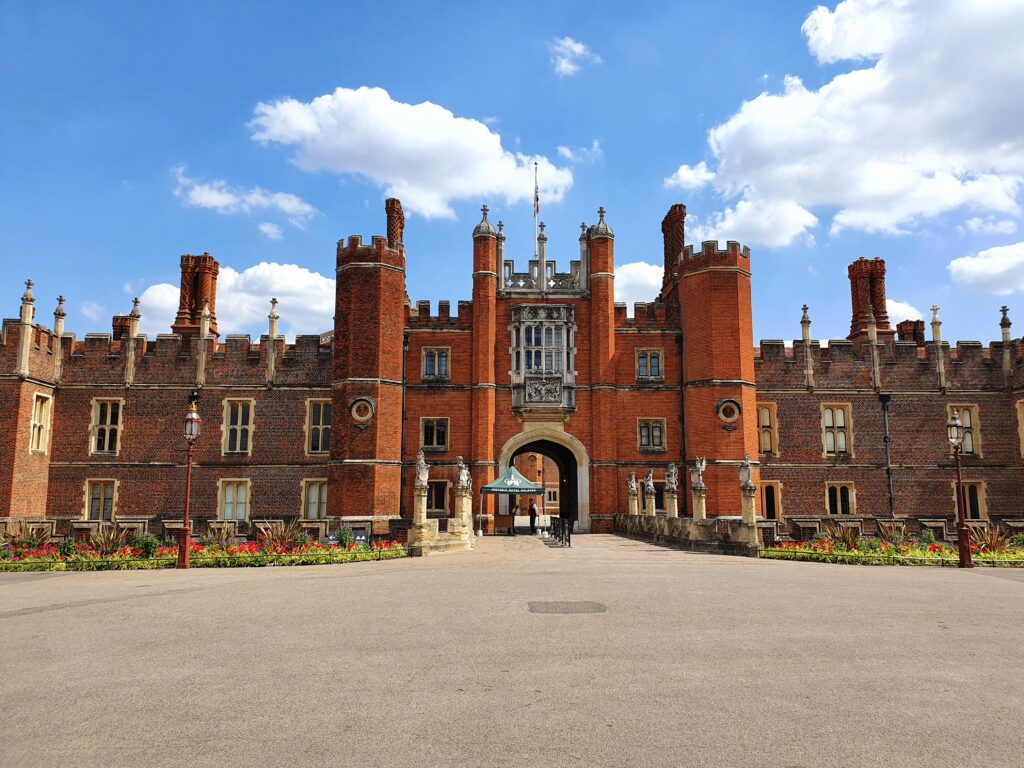
Hampton Court Palace

When your next door neighbour is Henry VIII’s pleasure palace, it would be wrong not to take advantage. We decided to treat ourselves to a years membership of the Historic Royal Palaces trust which allows unlimited visits to Hampton Court, plus 4 other royal abodes.

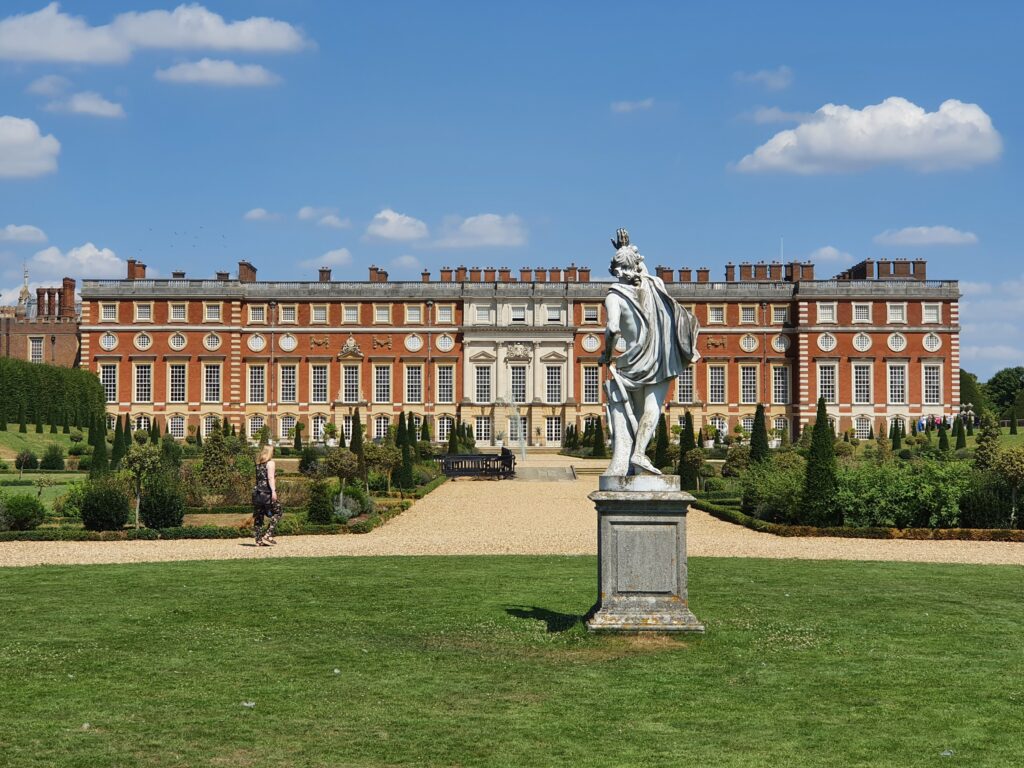
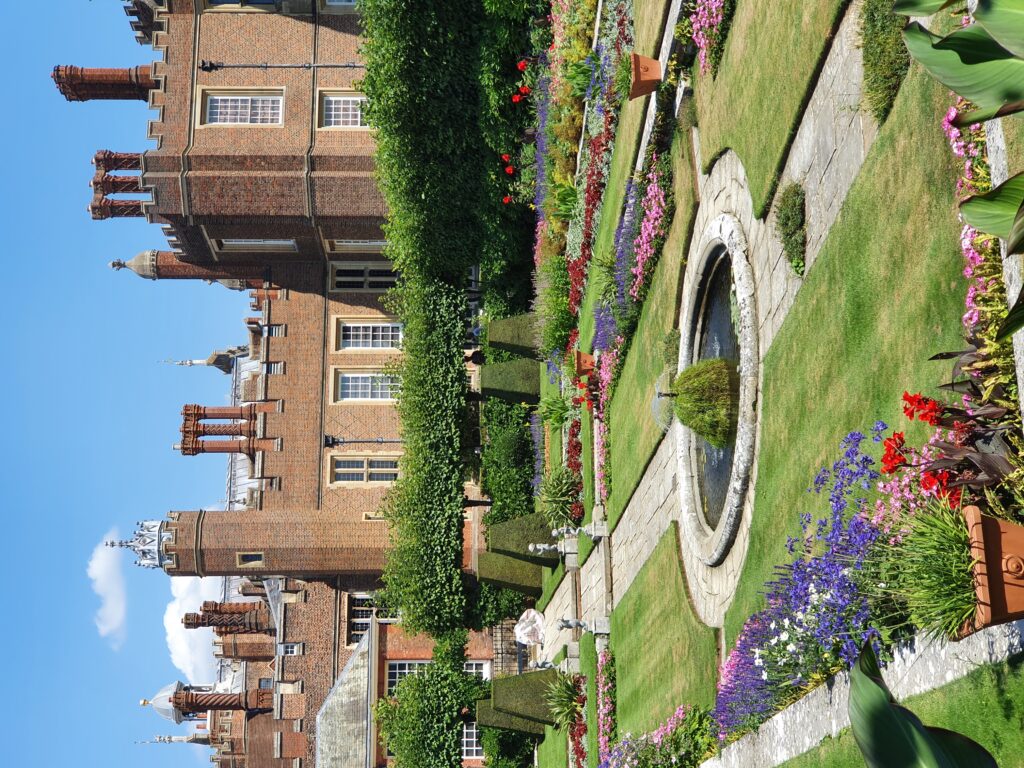
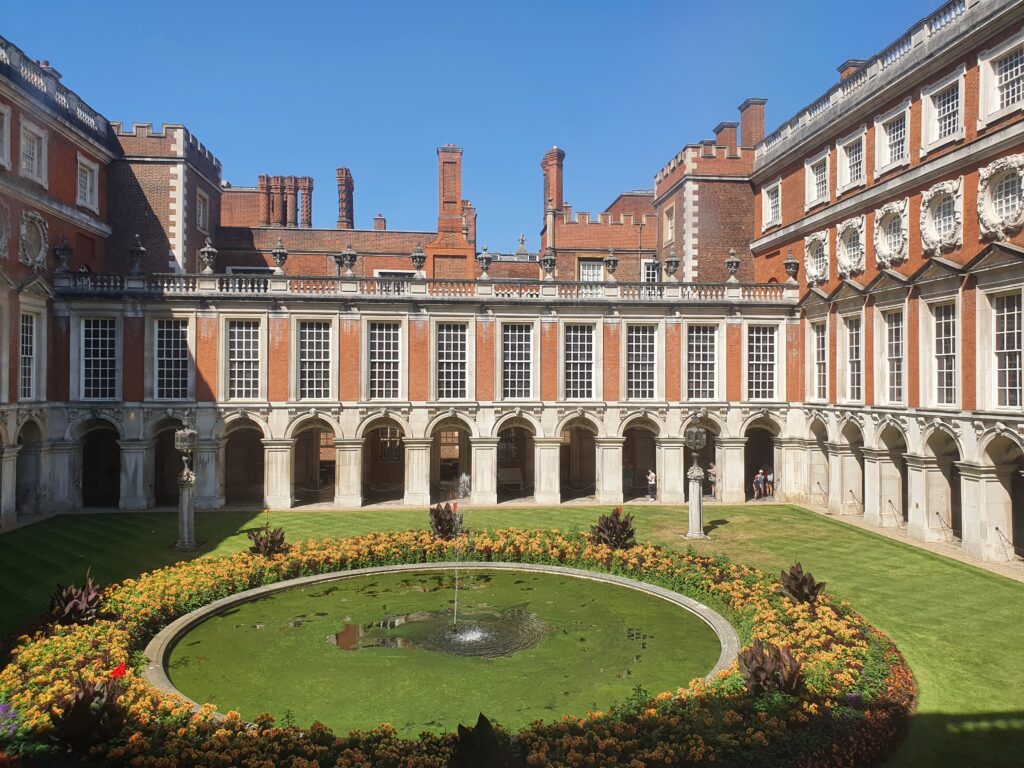
Hampton Court palace


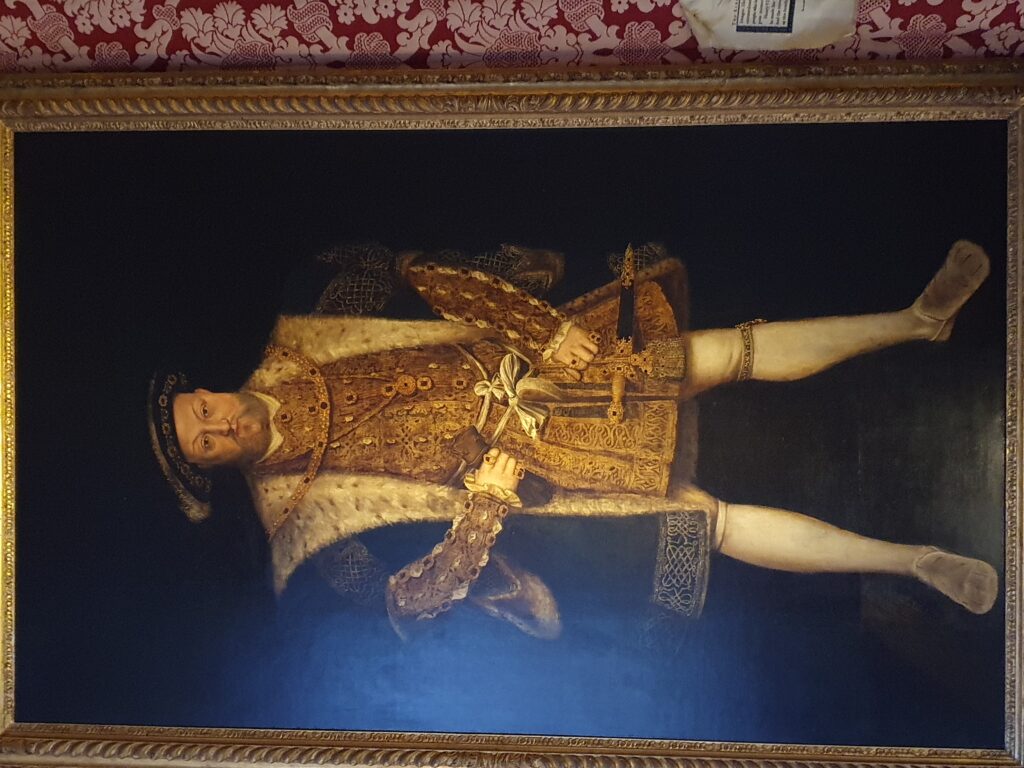
The Lord Chancellor, Cardinal Thomas Wolsey, (born in Ipswich, rose to prominence as a catholic priest serving Henry VIII, died of natural causes on his way to face charges of treason after the fiasco around the annulment of Henry’s first marriage to Catherine of Aragon.) Wolsey began the building up of Hampton Court for his own purposes in the early 1500’s but Henry took a liking to it and by 1530, it became one of his homes, showcasing his wealth and power.

King Henry VIII

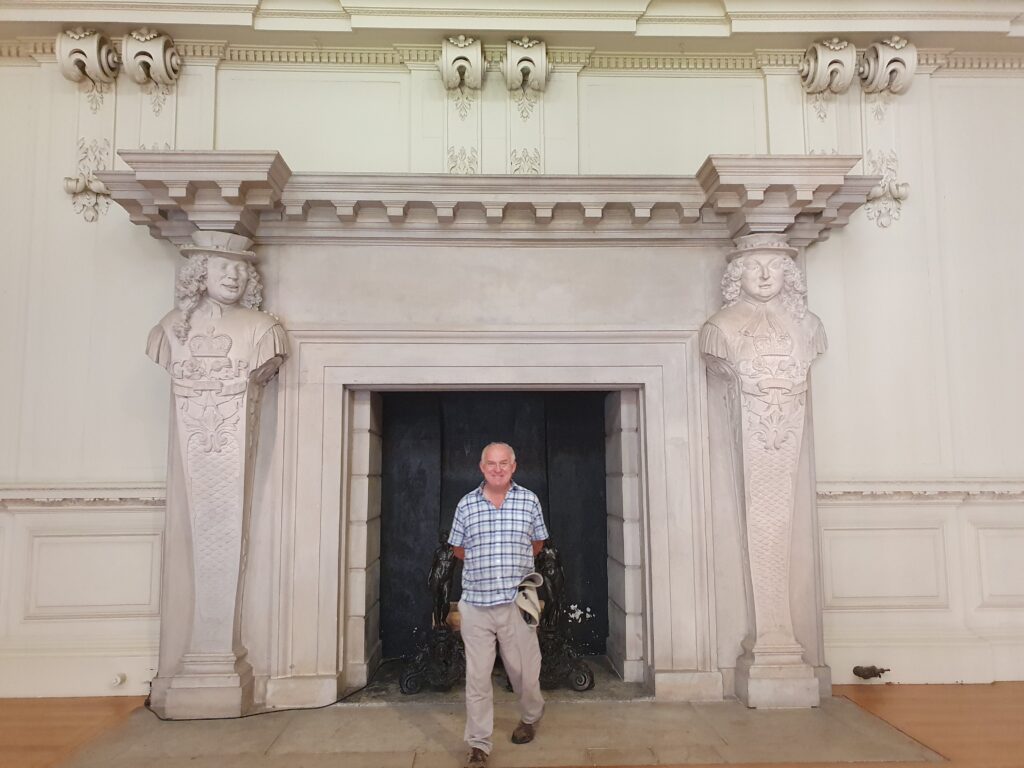
Everything is on a grand scale

Eric in minature


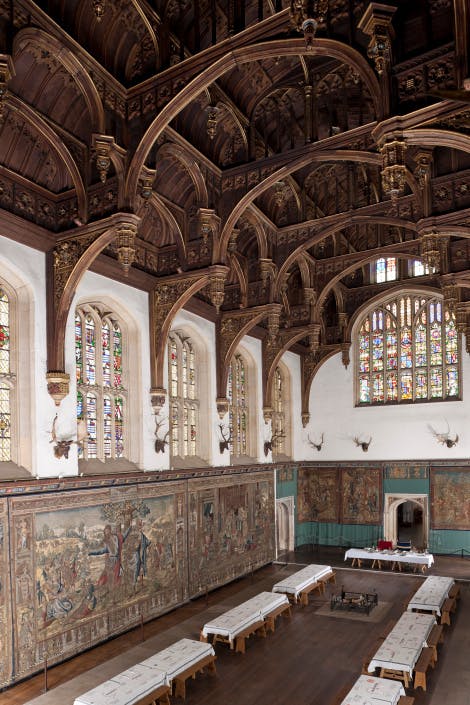
and my photography doesn’t do any justice to the inside of beautiful old buildings Hence me borrowing this photo of the Grand Hall and its 500 year old tapestries from the HRP trust web pages.

The Grand Hall (from HRP story of Hampton Court)

These priceless tapestries depict the story of Abraham as Henry tried to affiliate himself with good biblical teaching. They would have travelled with Henry as he moved his “court” to various other palaces around the country. But Henry did love the lavish lifestyle and this was where he chose to spend a lot of time, entertaining and showing off. The palace continued to be a royal residence long after Henry and his six wives had lived there.

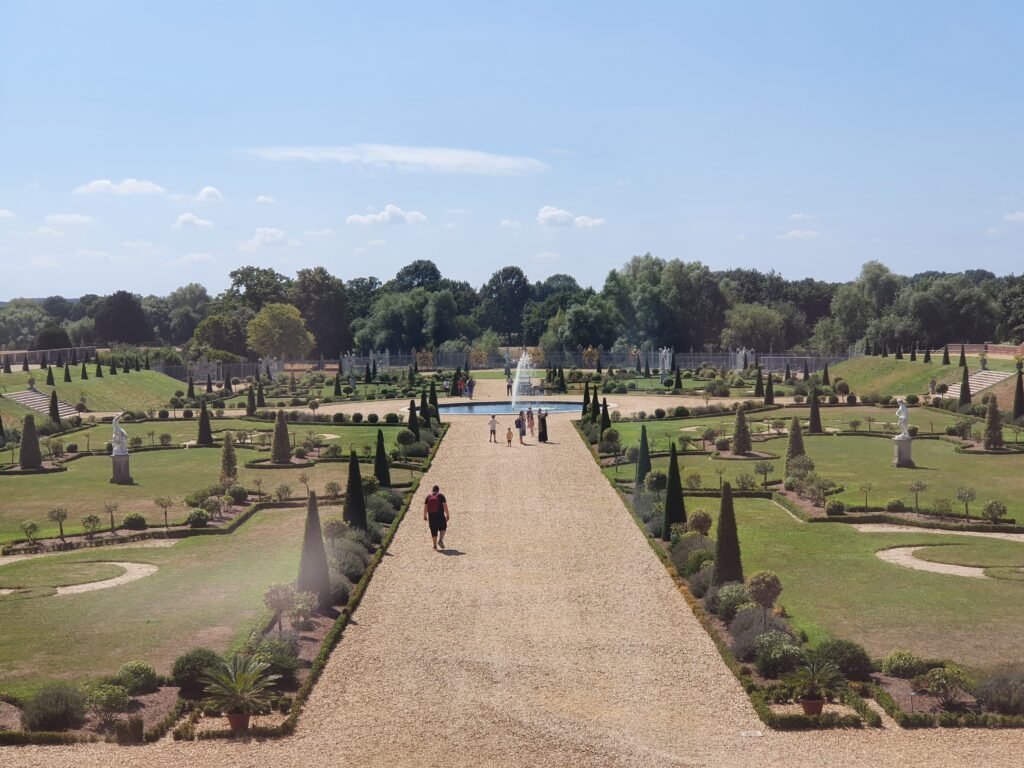
Now thats some back garden

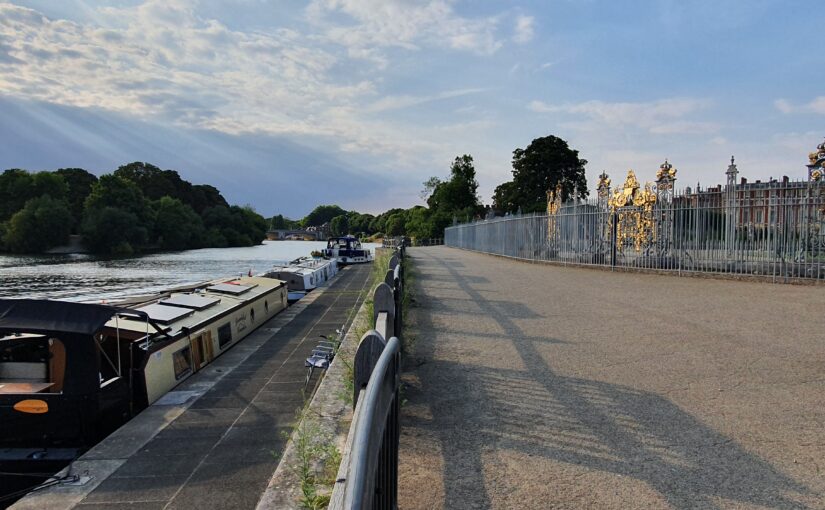
And if you look over the fence, theres Firecrest.

Hello neighbours

Shakespeare performed many of his plays for Elizabeth I and James I in the 1600s. During the Georgian era in the 1700s Sir Christopher Wren was commissioned to revamp the palace and thankfully instead of tearing down the old Tudor buildings he added the little extention that we can see through the gates from our mooring.

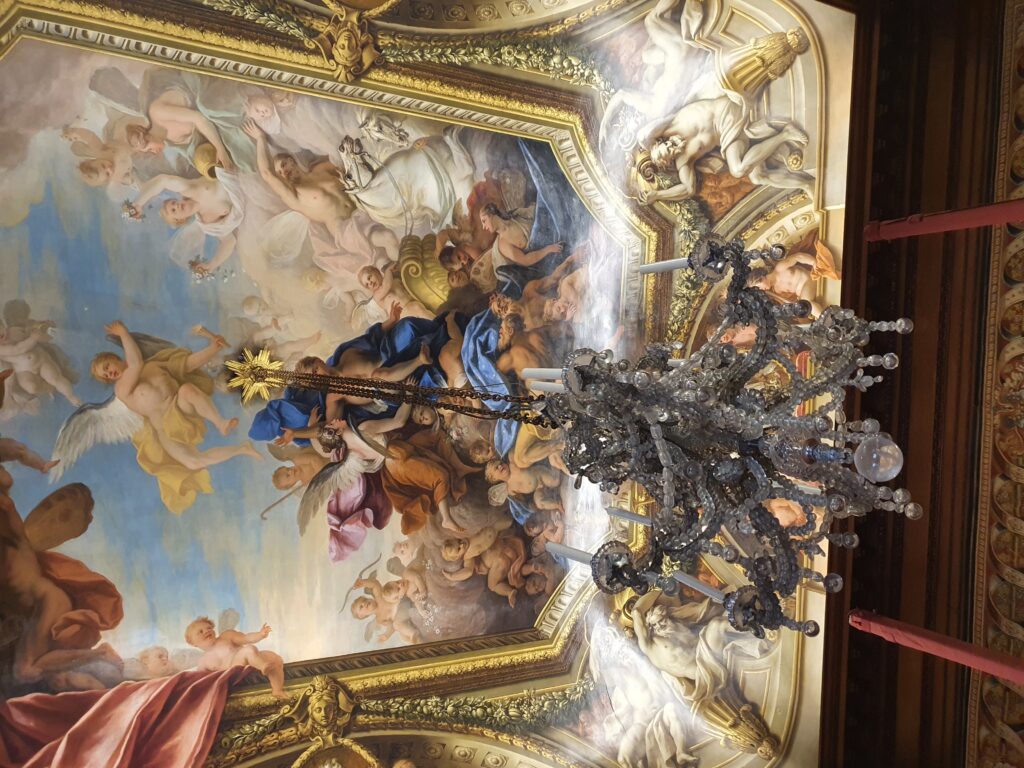
No money was spared with the decor, and Hampton Court is likened to the palace of Versailles

But grand though the insides were, I do love wandering around the gardens

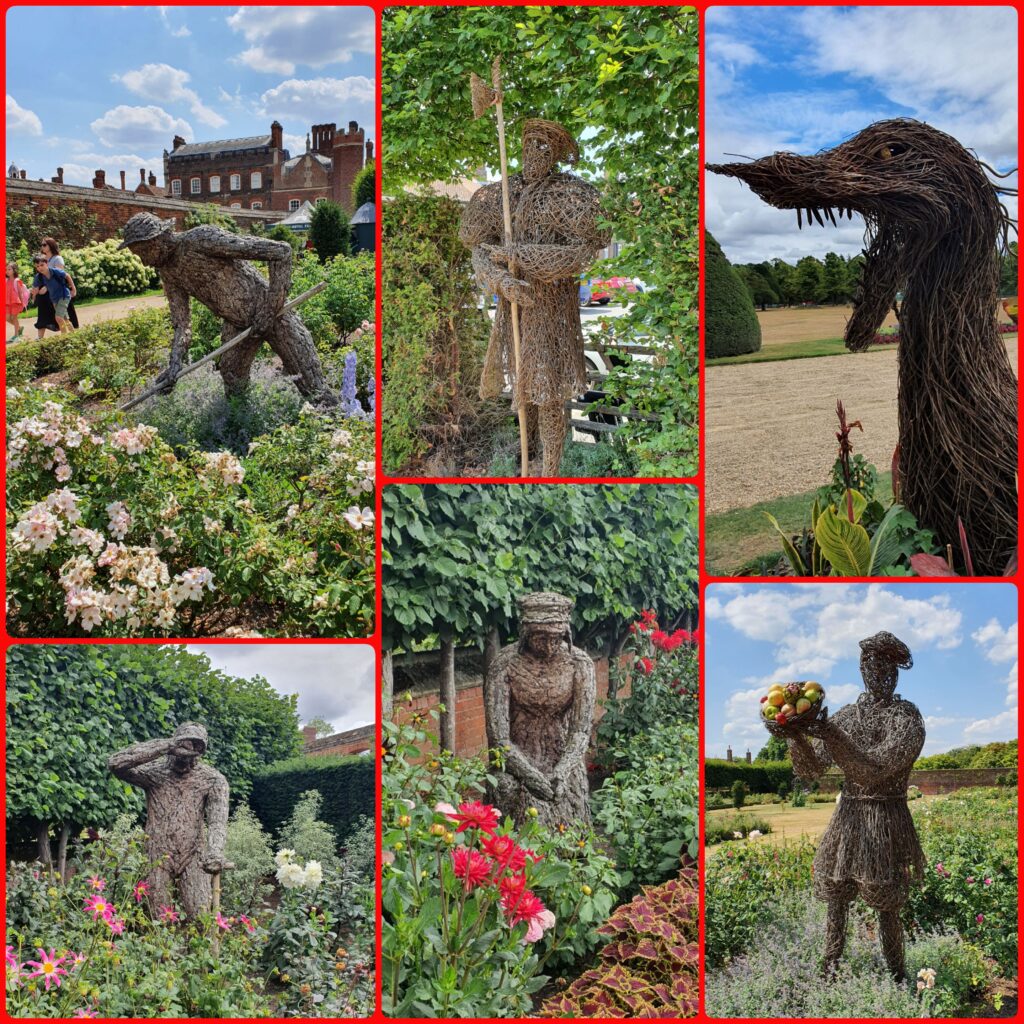
Hampton Court is famous for its maze, but we didn’t fancy competing with hordes of little kids getting lost. Instead we enjoyed searching for all the amazing characters made out of willow weaving that were lost amongst the flower beds

The gardeners at work

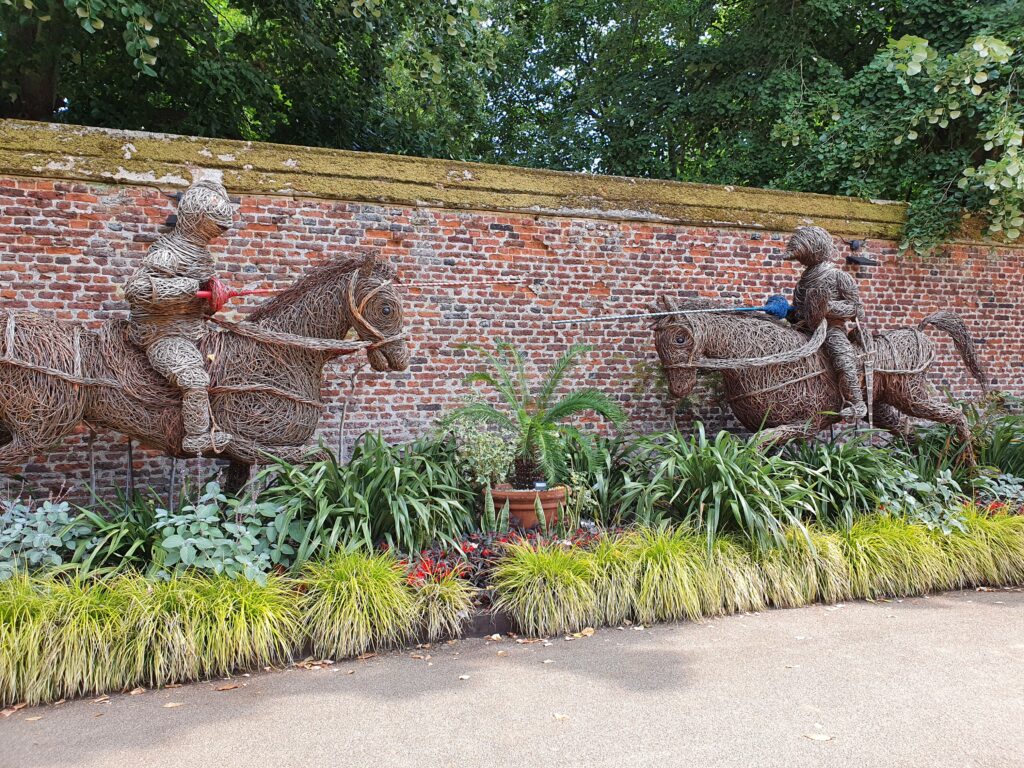
But thankfully the war of the Roses was done and dusted before Henry VIII came to the throne

Jousting in the flower beds

Hampton court fell out of favour as a royal residence in the 18th C. Many of the rooms became Grace and Favour apartments for the aristocracy if they had fallen upon hard times and had served the monarchy well. This continued until the 1980s. It was Queen Victoria who first opened up the Court to the general public to stroll around.

Whilst I have barely scratched the surface of what we saw, having HRP trust membership definitely paid for itself as we both popped in and out several times to enjoy different aspects of the palace during our 5 day stay.

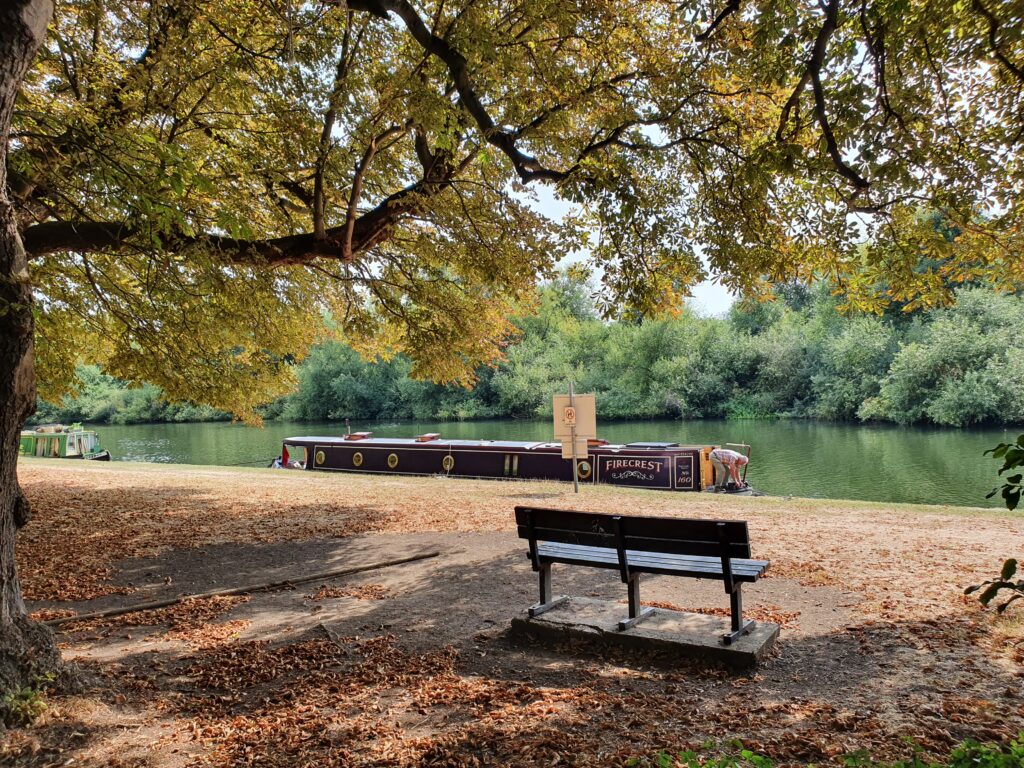
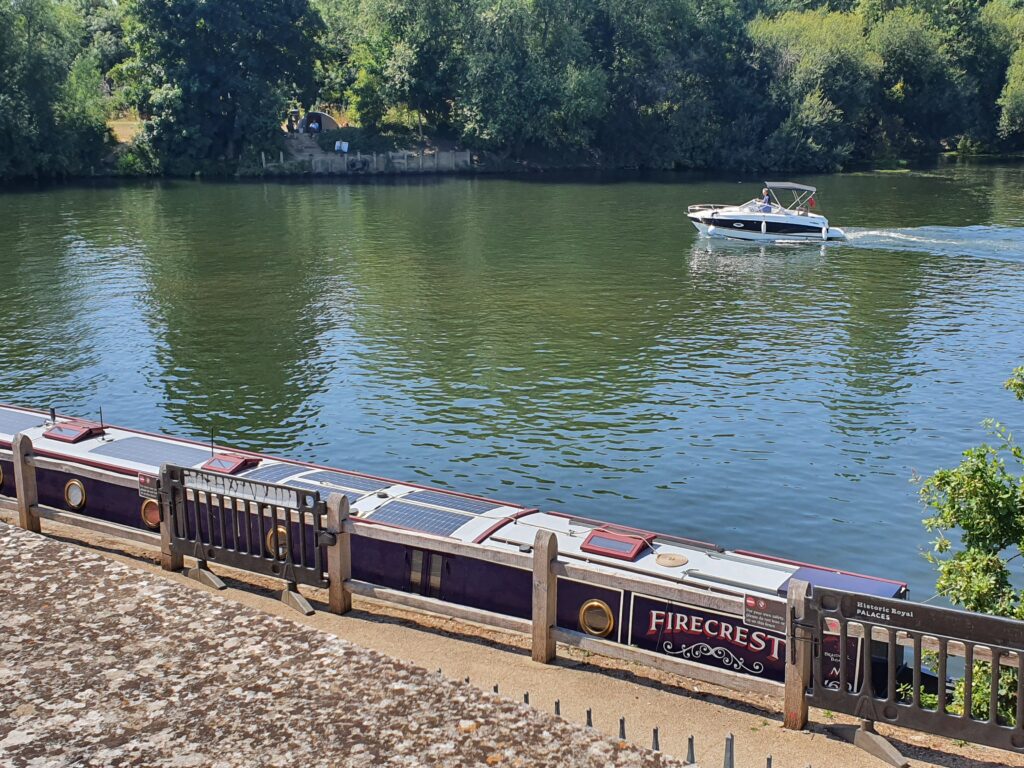
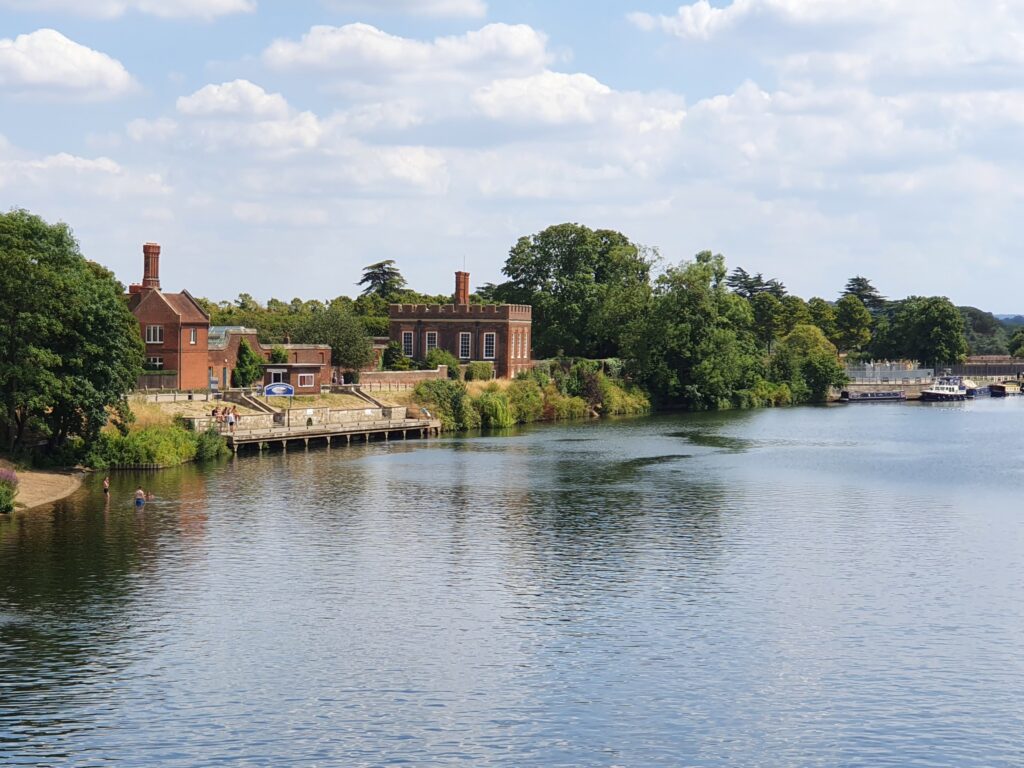
Standing on Hampton Court Bridge looking at Firecrest moored (on the right of the photo)

https://www.hrp.org.uk/hampton-court-palace/#gs.a0czva

On our way from the Wey

After three weeks on the Wey, it was time for us to push off from Thames Lock.

Farewell beautiful River Wey, We’re sure we will come back

And rejoin the big river Thames.

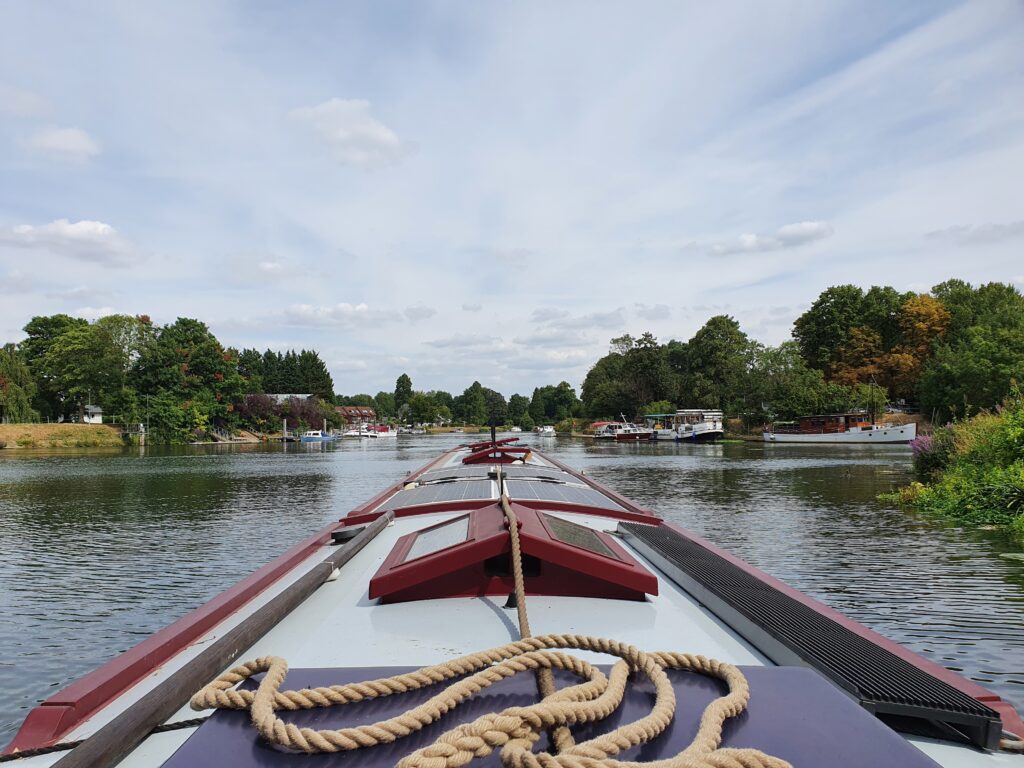
Back on the Thames near Shepperton

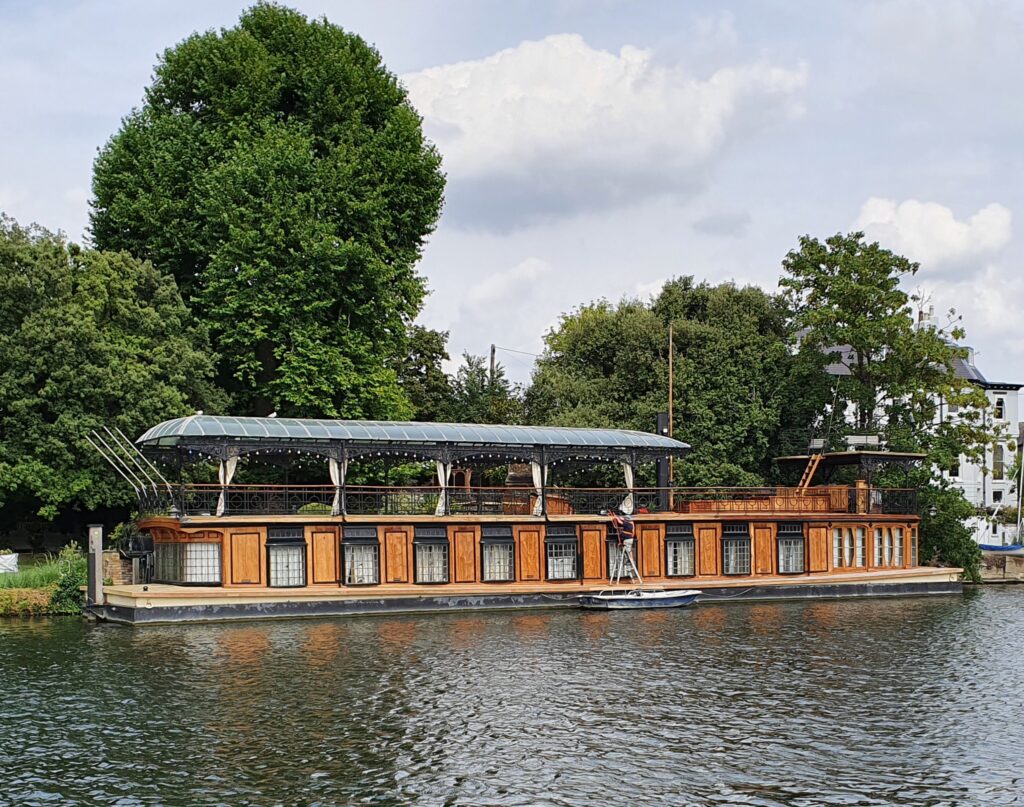
past some pretty impressive houseboats


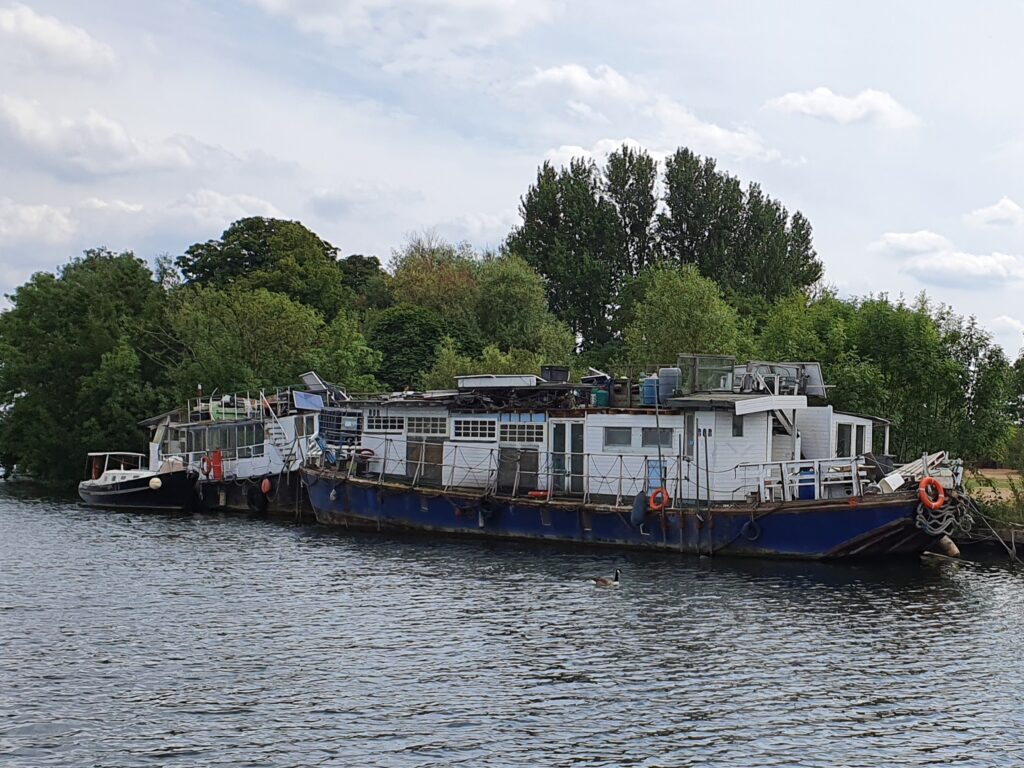
And some …. well …. some in need of a bit of a declutter


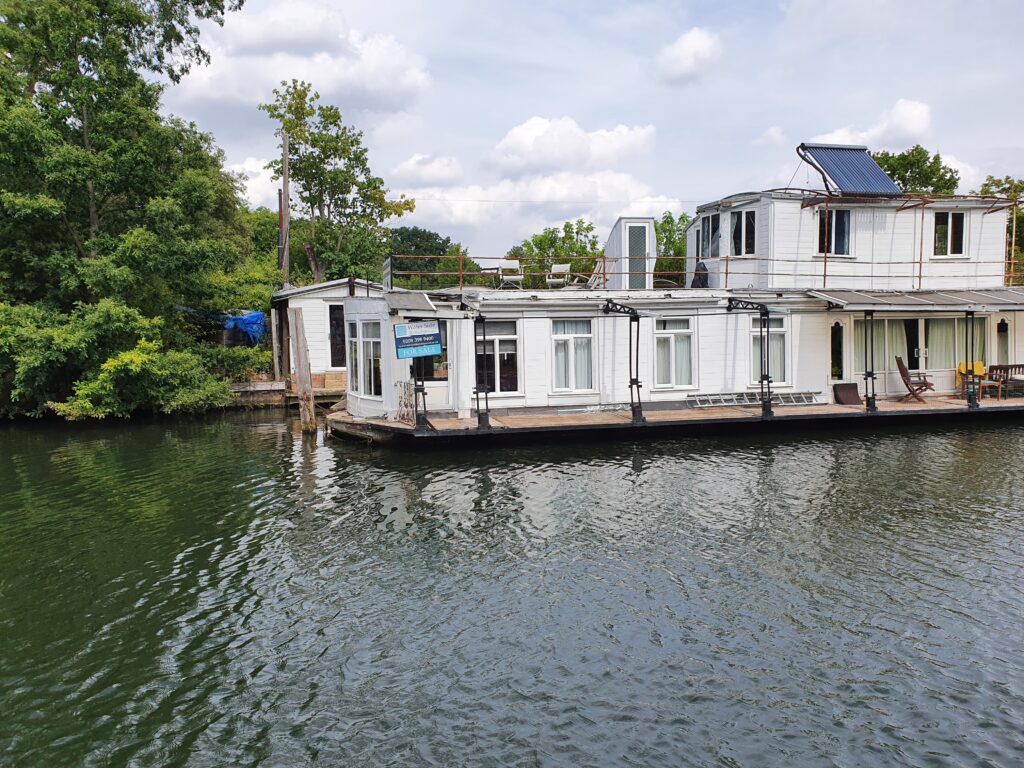
And some that were for sale… if you have a spare £1.8 million. But it is Edwardian, has 5 bedrooms and has an extremely large plot, but not even the temptation of a large workshop could persuade Eric to buy it for me, as it is “… in need of restoration ”

Dream on

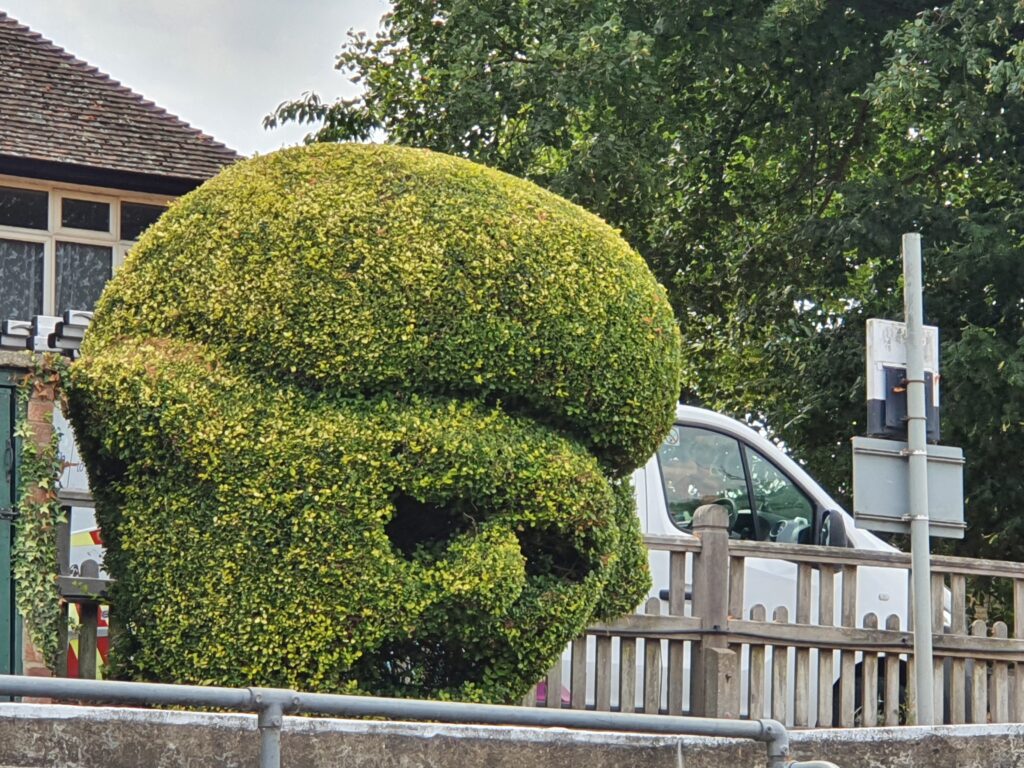
So we sailed on, aiming for the Electric charging point at Molesey lock. We had followed the guidance and emailed 48 hours in advance to request a booked mooring, but hadn’t received a reply. So it didn’t come as much of a surprise when the lockie laughed and told us it was broken…. but we didn’t laugh back when he told us it had been broken for over two years. And to be quite honest we were hot, tired and low on power so pretty “cheesed“ off that, after 2 years, it was still listed on the website as available. Perhaps Molesey’s topiary was quite appropriate.

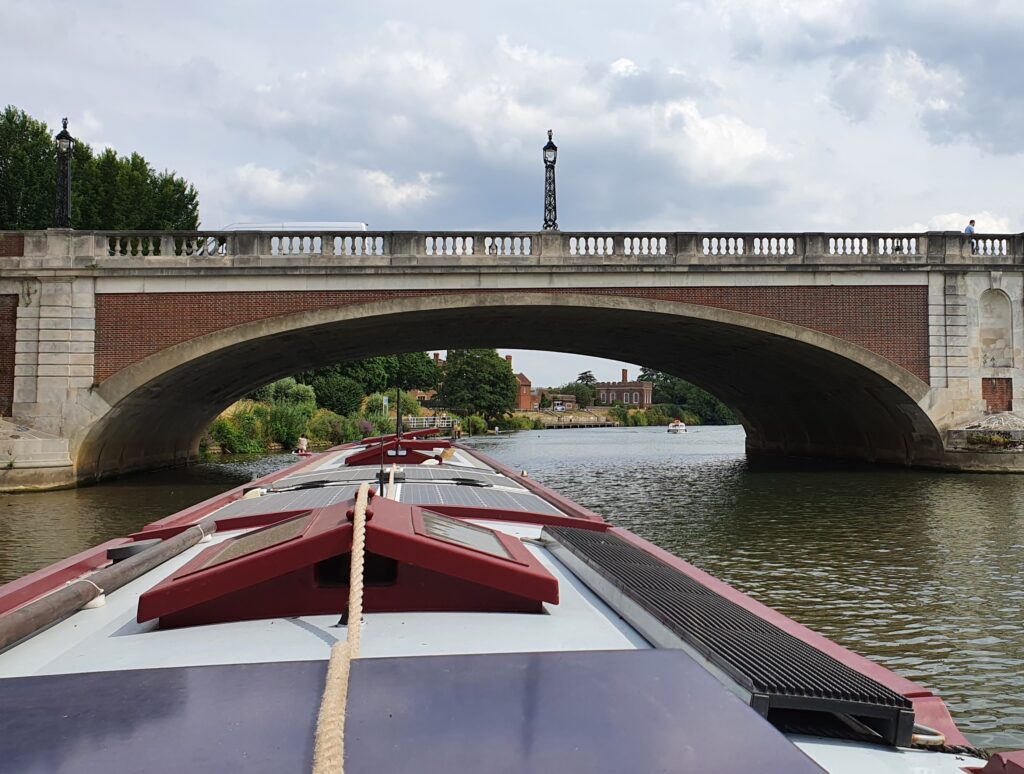
Reverting to plan B, we continued on under Hampton Court Bridge

Just one of the Hampton Court bridge arches

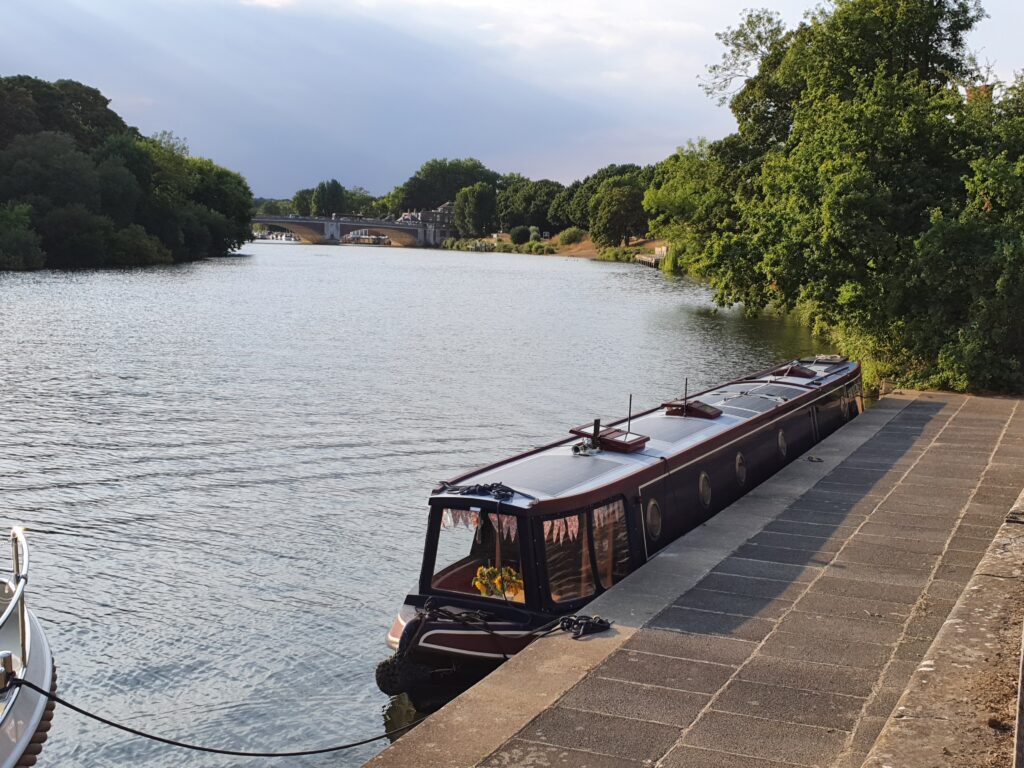
And 5 minutes later we moored up on the Hampton Court visitor moorings

Hampton Court Visitor Moorings

The charging fee was a bit confusing, all boats have to register on arrival, but the first night is free, the second night is £16 for a 60’boat, or £8 for a shorter boat, then I got very confused and had to phone up. In the end we paid £32 for 5 nights, which we consider pretty good value considering, we were sitting outside Hampton Court Palace’s back gates. No electricy but plenty of sunshine

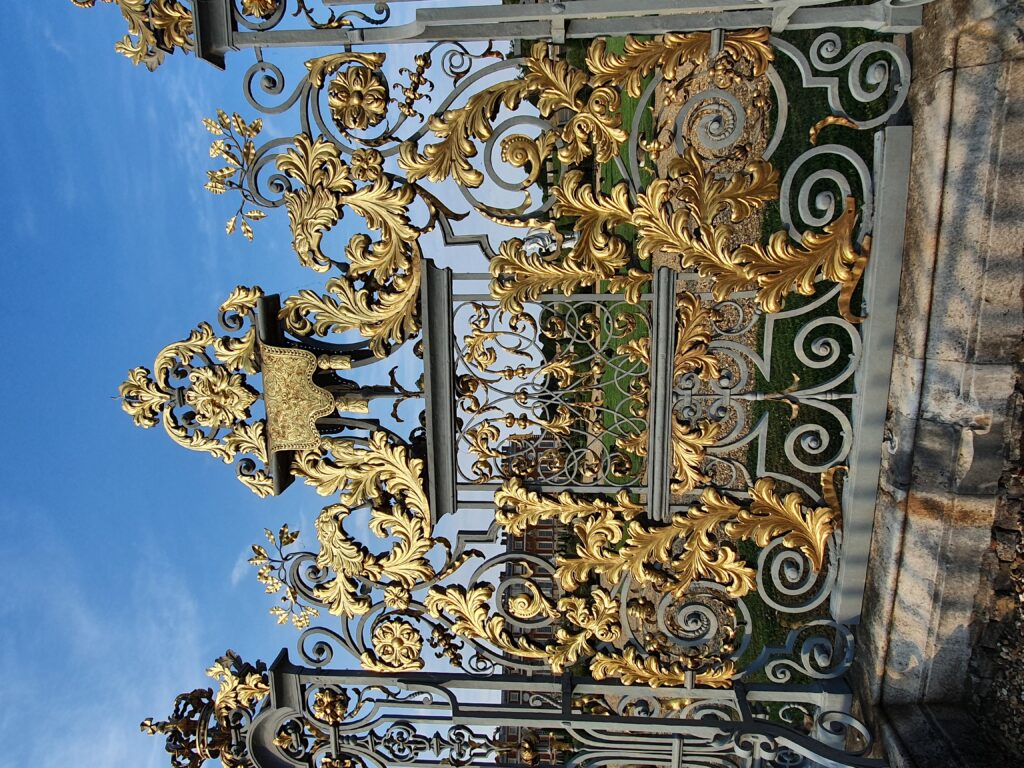
Now thats some entrance


And as Eric spent his teenage years in this area, we had a lot of friends and more family to catch up with.

Hello Mark and Judith

And to our amusement we received an email about our electric point booking request at Molesey lock.. no apology, just an “I understand the lock keeper has explained the situation” to which I responded by acknowledging that we understand things break down…. but if its been out of action for two years, WHY is it still listed as a facility, and please treat this as a complaint…. to which I am pleased to say, has been acted upon and after a few emails, the website has been updated.

From Windsor to Wey via America

We spent our final night in Windsor on the Baths Island electric charging point, which is exceptionally good value, £10 to moor plus £5 for the electric.

Baths Island, Windsor Mooring

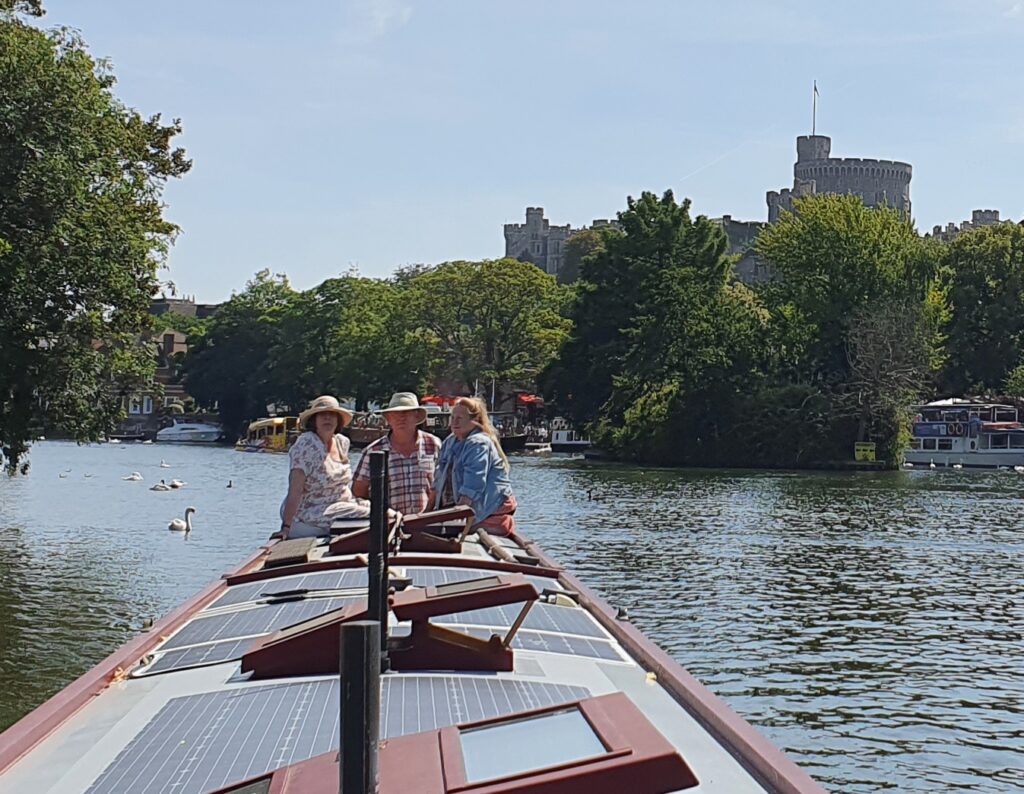
And I make no apology for sharing more photos of the amazing views of Windsor castle when we set off. After Romney Lock the river skirts the royal estate with strict warnings not to even think about stepping foot on the hallowed turf

One of the smaller castle cottages, keeping watch to make sure we dont set foot on Home Park

But it didn’t stop us getting out our long lens’ to enjoy another side of her Majesty’s home

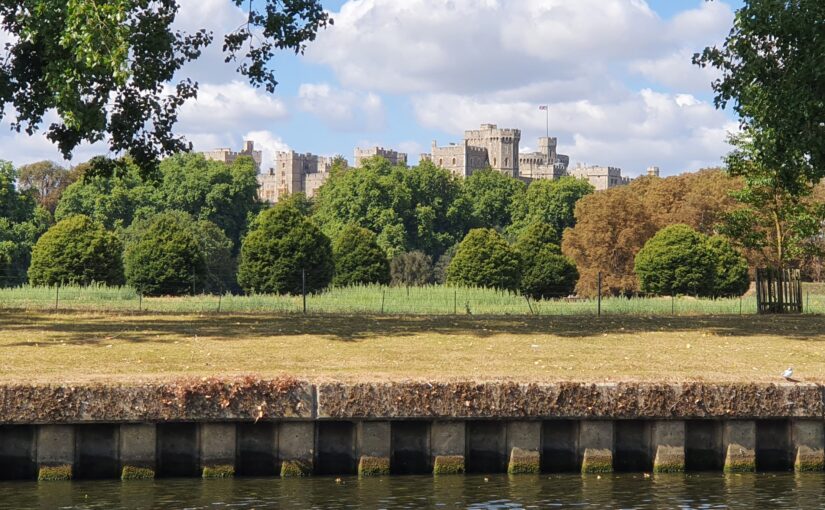
Windsor castle from the river near Datchet

The river seems to have changed again, its wider, the cruisers are huge, and we are seeing more and more residential moorings, many that appear to be in fabulous old river barges.

We couldnt find out any details but this is possibly a dutch sailing barge, over 100 years old

We moored up for the night at Runnymede.

National trust moorings at Runnymede

It had been such a hot day we didnt go exploring until the early evening which meant we missed the visitor centre, (and icecream seller)

The Magna Carta, the document that still enshrines Justice into, not only our own legal system but many countries around the world have followed our example.


but we got to wander around some of the monuments and installations

“The Jurors”

I particularly liked “the Jurors” a series of decorated chairs representing the concepts of law and the struggles to gain freedoms and equalities. I like accessible art that is free to be enjoyed by all and thought provoking to those who want to look more deeply.

A place to play not just ponder

Having pondered the impact of the Magna Carta and its worldwide impact, we then found ourselves ascending a path known as the Steps of Individuality, only to realise we had also stepped over onto American Soil, as this “English Acre” was given to to America for the UK Kennedy memorial. (Thats one for the pub quiz)

The steps of individuality leading tothe Kennedy memorial

The memorial is entered from the flat, but often wet, meads of Runnymede through a gate. Once a visitor, who is assumed to be a ‘pilgrim,’ passes through this gate he or she steps onto American soil and into the allegory of life, death and spirit.
The gate gives access to a pathway of 60,000 individual axe-hewn Portuguese granite setts, which rise steeply through the surrounding woodland. There are 50 steps in all, each representing an individual state in the USA. The setts can also be seen to represent a multitude of pilgrims on their progress through life to enlightenment. Each step is unique and each sett has been laid at random. The craftsmen were unable to comprehend the need for individuality, and could only complete their task when the steps were likened to the uneven appearance of a crowd at a football match.
” Copied from the info board

We continued our journey back on English water, looking out for one of the very few statues of our Queen Elizabeth, but whilst she and her loyal subject might have had a good view of us cruising past, with the sun directly behind her we couldn’t see much
She’s standing in front of the tree

We had a few move overnight stops on the Thames before we reached another significant point in our journey, the confluence of the River Wey joining the River Thames.

Thats the River Wey ahead

And through Thames lock(which is on the Wey) to pay our fee to the National trust allowing us 3 weeks cruising on the Wey

Thames Lock at Weybridge
We came back to see the Queen’s statue

Windsor part 3, Visiting the Castle

Where do I start? The castle was a real treat. We aren’t particularly interested in ticking off tourist attractions on our travels but some things can not be missed. And looking at the crowds it felt like the whole world had the same idea.

Glad we came by boat,


We bought our tickets online, (more about that later) to help beat the queue

Welcomed by Queen Victoria


and also so that we could watch the changing of the guards inside.

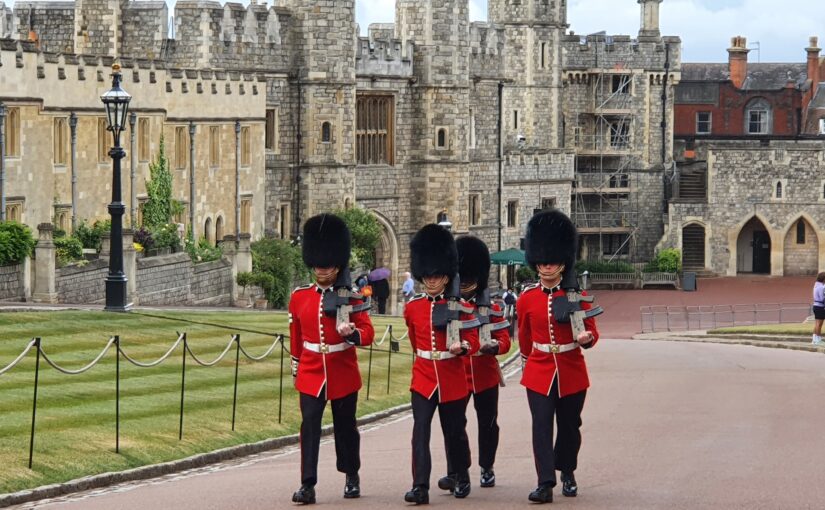
The new guards arrive to cover the next 24 hours

As luck would have it, we chose to go on the day it rained so there was no band accompanying them And only the well protected stuck it out.

I knew it was worth keeping my wimbledon poncho

But although it didn’t last long it meant the day was cool, and it didn’t stop me posing for the iconic photo op

It just had to be done


We did ask the guard if it was ok and he smiled and said yes but that was about the limit of his conversation. Eric preferred to pose with a castle backdrop.

With the norman gate and state rooms behind

There was quite a wait to get into the state rooms and we weren’t allowed to take photos inside, but oh boy was it magnificent. It felt like a privilege to be able to wander, (or shuffle due to the number of visitors) around these rooms. I’ve never yearned to receive an official honour, but I do now just for an invite to the presentation.

Ths grand reception room (swiped from the RCT website)

Windsor castle was originally built in the 11th century, when William the Conqueror, paid us a visit. Back then it was mainly a defensive structure, but it has since become the favoured place called home to many of our monarchs. Its the longest occupied castle in Europe and is the largest castle in the world. Its undergone many makeovers during its time, most recently in 1992 when many of the state rooms were destroyed in a fire.

Even castles need a garden


When Queen Elizabeth II is at home the Royal Standard is flown from the round tower. But she’d gone to Scotland for the day when we visited.

Perhaps she was looking for some sunshine

When we arrived in Windsor we asked one of the assistants at the entrance, what the best way to see the changing of the guard was and the answer was to buy a ticket (online) to come into the castle and watch by the horseshoe cloister. Which we duly did. However I made the mistake of googling “watching changing of the guard”. Once we were inside the castle, we saw the notice offering to upgrade our tickets at NO Extra cost to an annual pass. Brilliant we thought, but oh no, it turns out I had bought our tickets through an agency not direct from the Royal Collection Trust site, (which is the charity organisation responsible for maintaining these treasures and opening the royal residences to the public.) At £26 each its not a cheap place to visit, so not somewhere we would pay to visit twice in quicksticks. But had we had annual passes, we would have been inside several times during our stay in Windsor. Don’t make the same mistake as us. It was worth the entrance fee, the staff were plentiful and helpful, and the audio tour was full of useful snippets of information, but it was a full on experience, and would have been even more enjoyable spread over two days.
Windsor Castle, seen from the north; (l to r) Upper Ward, Middle Ward, Round Tower, St George’s Chapel, Lower Ward and Curfew Tower
(Swiped from windsor castle wiki page )


But all was not lost. The changing of the guard ceremony takes place every day and during the summer months the guards are escorted to and from their barracks by a marching band. Several streets are closed for the half hour this takes, and it meant that for a few moments each day we could stand outside and watch

What an escort

The guards and bandsmen might be fully trained soldiers whose primary function is to protect our Queen, but there is also a very visible presence protecting them.

Dont worry boys I’ve got you covered

Whilst we were in Windsor I also took the opportunity to attend Choral evensong in St Georges Chapel. Well worth doing as the choristers and organ are magnificent and I got to walk inside the castle grounds after closing time.

What a place to reflect

Windsor part 2, wandering around Alexandra Gardens

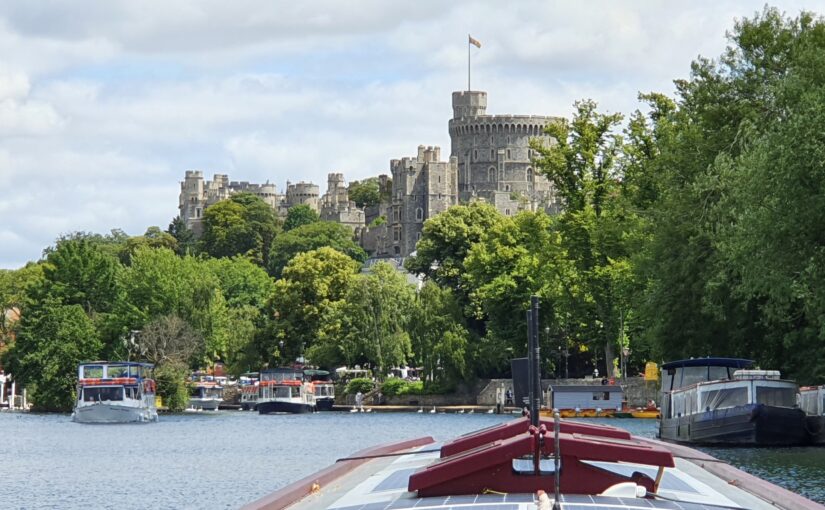
Of course the main focus of Windsor has to be its royal heritage, especially as the castle can be seen from most of the town, (our header photo is taken from Baths island)

The castle from Windsor Central train station

The promenade along the Windsor side of the Thames is no different, the adjoining park is known as Alexandra Gardens, and honours King Edward VII’s wife queen Alexandra. At the end of the Queens Walk is the Jubilee fountain build to commemorate our Queens Diamond Jubilee,

The Jubilee Fountain

During the summer there’s usually music at the bandstand on a Sunday afternoon and we stumbled upon the rotary club summer fete. We won the “guess the weight of the cake” competition but sadly didn’t win the £400 prize duck race

Just be glad they dont have canada geese races

It seems that Windsor has a thing about Ducks as we also stumbled on this odd mode of transport

The Windsor Duck Bus

Or perhaps its not ducks but transport that floats their boat, as the elegant Windsor Royal (train) station has been transformed into a very upmarket shopping arcade, including a replica of Queen Victoria’s steam train that took her from London to Windsor.

The Queen

There is still a single track station in operation, which I took advantage of to make a flying trip back to Suffolk, whilst Eric was moored safely and you can see the castle from the train

The castle from the train

Windsor isn’t just about boats and trains. Windsor was home to Sir Sidney Camm who designed the Hawker Hurricane fighter plane in the 1930s. Its quite a shock to come round the corner and be confronted by a full scale hurricane in the park

The Hawker Hurricane

Camm’s love of planes and inspiration came when in 1911 Windsor received the first airmail post in the country


We found the aerial postbox in the Windsor museum but the other pillar boxes were around the streets of Windsor. Sadly I missed the blue box.

Just a few of Windsors post boxes


…but the river, mooring on the Eton side, is probably the best place to see the castle from elsewhere in the town. And there’s ample mooring on both the Windsor and Eton banks for just £10 for 24 hours, and on Baths island there’s even 4 electric charging points for an extra £5, which we made use of on our last night’s stay.

Moored at the electric charging point on Baths Island

Windsor is a fascinating place to visit as a boater, almost too overwhelming to do justice in a few day, and definitely too busy for our liking, though as visitors ourselves, we cant really complain. We were very lucky to have found our wild mooring so close to town, it was nice to retreat to tranquillity in the evenings

Tranquillity

And as a personal post script one of our friends who regularly reads our blog lost their beloved dog today, We hope doggy heaven is full of juicy bones and sniffy lamposts

In memory of Butch