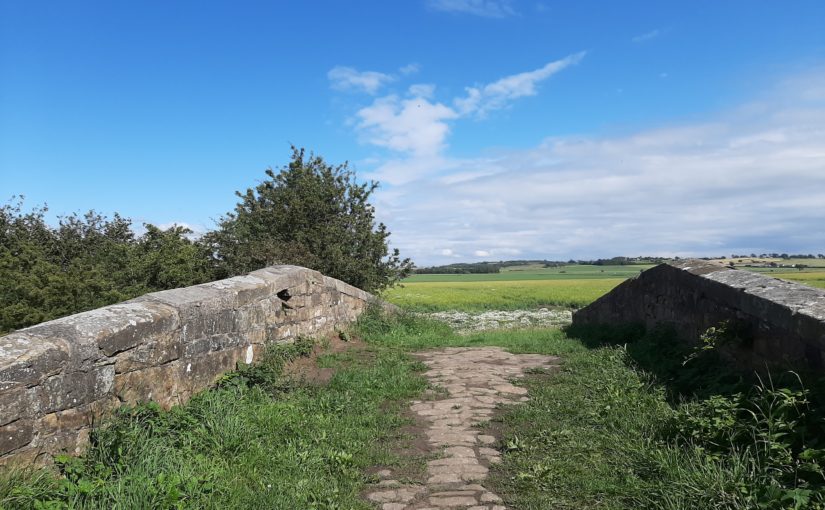
We haven’t seen hills for months, so now that we have one on our doorstep I thought it time to stretch some dormant muscles. There are two significant local beauty spots with in walking distance of Appley Deep Lock, both involve a climb, Parbold Hill rewards with views for miles and we’d chosen a good day.
On a clear day, you can see forever
To the southeast we could see way beyond Wigan towards Manchester and the peak district beyond. My photo doesn’t do it justice, we could see the M6 crossing the river Douglas and the Heinz factory
To Wigan and beyond
To the southwest we could see the tall cranes along the Mersey docks
That’s where we have come from, Liverpool in the distance
And to the northwest Blackpool tower and a hint of the Lakeland fells behind
If you squint you can see Blackpool tower
Parbold hill has special memories for me as a child. Mum and Dad would lift me and my brother from our beds, wrap us in blankets and put us into to boot of the VWCombi at 6 am on a Saturday morning and we’d drive from our home in Crosby up to the Lake District in time to make Bacon butties in Ambleside for breakfast. Ok I know that would never be allowed to happen now, but just in case you were worried, it was more of a parcel rack than a closed in boot, and I don’t think seatbelts had been invented back in the early 70s. The combi must have chugged and splutterd to get to the top of Parbold Hill, cause we always greeted it with a fanfare. Those carefree days must have really nurtured my inner hippy and my love of outdoor living. Half a mile down the hill is a trail that leads to the Fairy Glen. A woodland walk that follows the path of Sprodley Brook almost back down to the canal. I did search high and low for the fairies but I think they were practicing social distancing.
I’m sure there’s a fairy in the glen
The path became steeper and more of a scramble, perfect for little waterfalls
Fairy showers
I wanted to skip back to the boat filled with the joy of the day, but oh boy did we ache. 8 months in Liverpool didn’t do our fitness levels any good. Time for tea and cake back on Firecrest
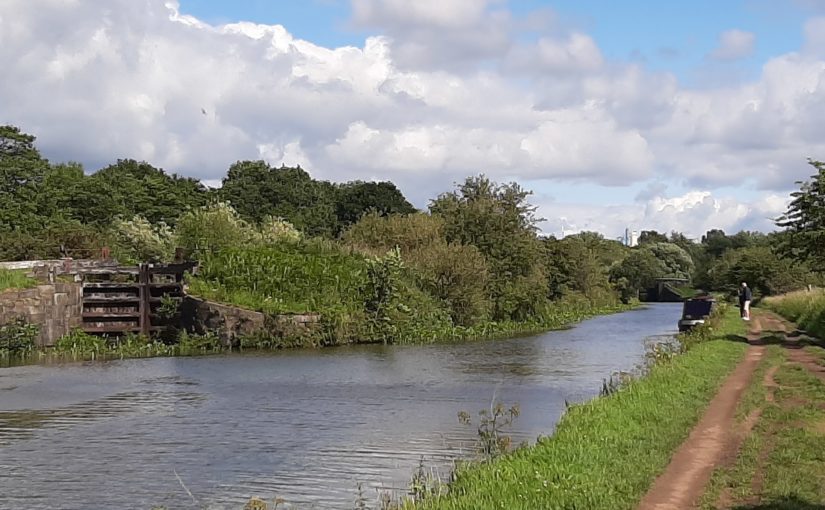
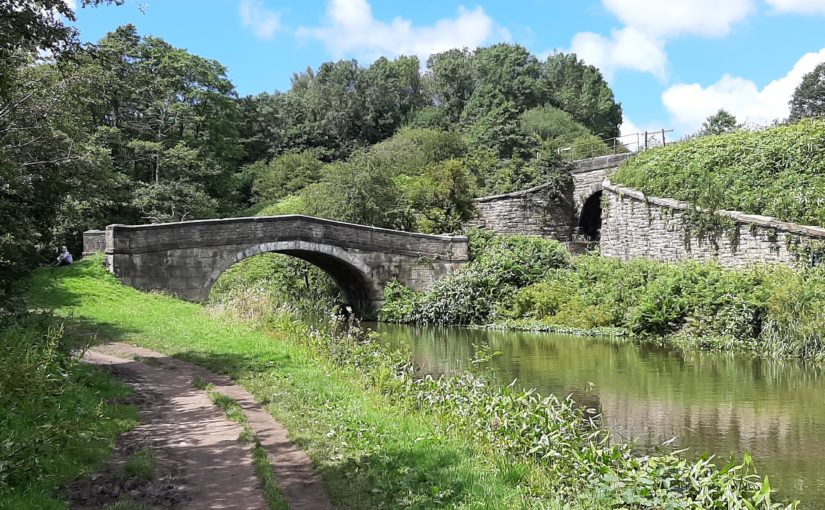
One distinct advantage of being continual cruisers is that we don’t have to cruise continually, (with the proviso that we move on every 14 days in accordance with the rules) So when it rains we stay put, but when the sun shines we make the most of it and enjoy hearing the frequently used phrase “nice day for it”. And we agree, “it’s a hard life but someone’s got to do it” So onward we meander. Past the bridge that traverses the junction of the Rufford branch of the L&L. Our plans back in April were to have cruised this way so we could cross over the Ribble link onto the Lancaster, however with all the uncertainties we’ve decided to do it another year.
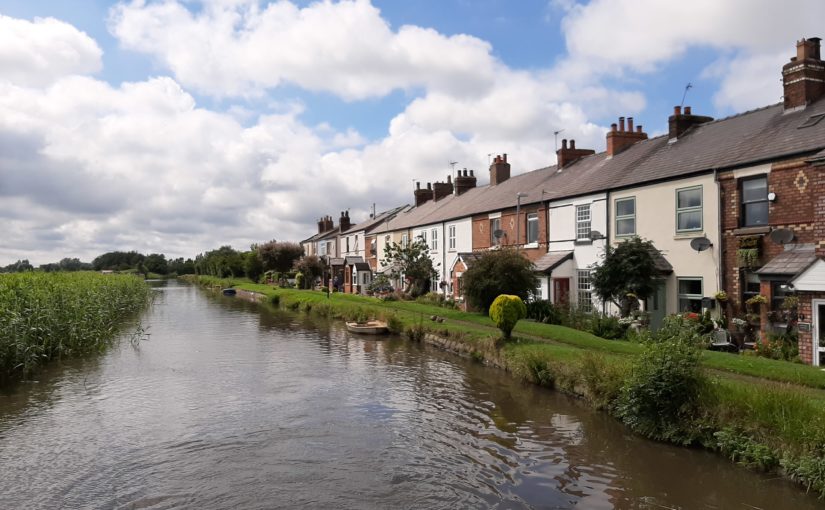
Once the navvies had built the canals, lots of hands were needed to maintain and work them. So rows of canal cottages were built along side the Cut for the workers and their families. This part of Lancashire, around Burscough has some very des-res cottages. I’m never sure if it’s the cottages or the gardens that appeal to me the most.
A garden to share
Beautiful they may be, I don’t think I could ever imagine raising a family living in a traditional boatsmans cabin on an old working boat
A traditional working boat
Of course not everyone needs a house….
Setttle down children, time for bed
And where you have canals and wharfs you also need watering holes. This Burscough Pub is the “old Packet House” and it has an interesting information board outside, (no, not the one about social distancing etc). Originally called the Bridge Inn, built in 1775 it became a staging post for passengers travelling to and from Liverpool and Wigan, who wanted to use the stage coach, (known as the Union Machine) to get between Ormskirk and Preston. Passengers travelled by Packetboats, (Union Packets) which carried small parcels as opposed to the Flyboats that carried merchandise. It cost 2/- to travel first class from Liverpool and 1/3d second class. They were allowed up to 14lbs luggage. These packet boats were over 60′ long and 9’wide and were drawn by 2 horses, one of which was ridden. They used a bugle to warn waiting passengers of their approach. Sadly we were a day too early to be allowed in.
The Old Packet House, Burscough
Sadly not all canal side pubs thrive even in a good year, as we found when we moored up outside the Ring o Bells.
The closed down Ring o Bells
However the pub car park is still accessible and it made a perfect for mum to drive down from the Lakes for our first post lockdown “hug”
A get together worth waiting forPerfect cruising day
A little bit of history.
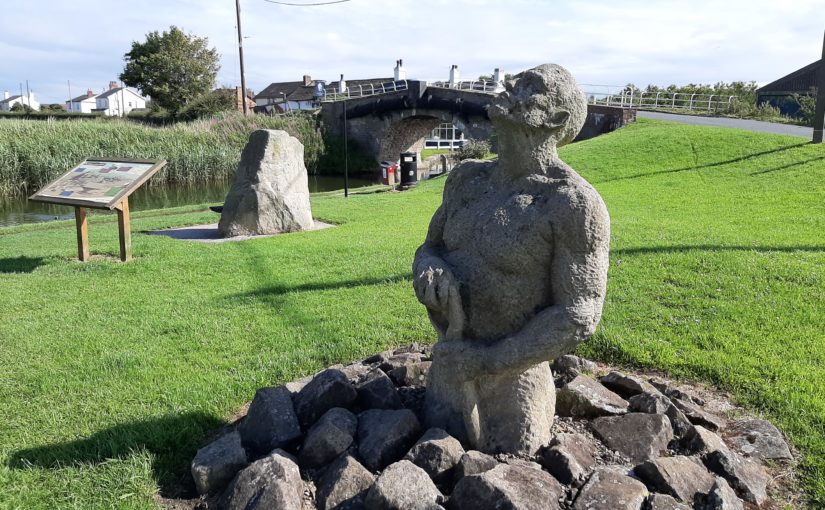
What were you doing on 5th November 1770, Col Charles Mordaunt was cutting the first turf of the Leeds and Liverpool canal. This was in Halsall, West Lancs. Somewhere, by the bridge, there’s a plaque marking the spot, but I couldn’t find it. However there is a fine stone sculpture known as the Halsall Navvie here. I doubt old Charlie did much more of the hard work, but the information board set me thinking about the Navvies who toiled along the cut.
The information board at Halsall
It’s hard to imagine that these canals were all build by hard manual labour. Originally the workers were known as Cutters. But they soon became known as Navvies abbreviated from Navigator. The canal is still often referred to as the Cut.Contrary to general belief only 30% of the navies were Irish. Over 500 men were involved in building the Leeds and Liverpool canal. Local farm labourers often supplemented their income by joining the workforce until they were needed at harvest time.
The Halsall Navvy by Thomas Dagnall 2004
In 1770 it cost £5048 to build a mile of canal equivalent to around £275 000 today. Locks cost extra. And the total financial cost of the Leeds and Liverpool was £1 250 000, around £50 000 000 today. I’ve read that an experienced navvy could shift 12 cubic yards of earth a day: that’s the same as digging a trench 3ft wide, 3ft deep and 36ft long every day. Canal boat and Tillergraph magazine have a fascinating piece giving a better insight
We’ve got a lot to be grateful for, cause I doubt Halsall looked as lovely as this 250 years ago
Lancashire comes into its own along this stretch of the canal. We’re surrounded by rich open farmland full of crops, no uninspiring supermarket, but farm shops in barns selling potatoes that still smell of earth and taste so good you don’t need anything else on your plate, except perhaps a bit of butter.
You dont get this in a supermarket
Of course good crops don’t grow with out that essential element and whilst we are still grinning from ear to ear about being back in the countryside, I was reminded of another reason I’d enjoyed a long winter in Liverpool.
Muddy towpaths
But being surrounded by wild flowers makes up for it.
We’re sometimes asked if not having a permenant base makes canal life lonely, but not at all. It’s amazing what a small world it is, during our few days at Downholland we discovered our neighbour and I had attended the same secondary school, albeit just a few years before me, but never the less we traded names of friends and acquaintances we had in common, and it turned out he had also owned a Braidbar boat for some year.
Mooring at Downholland
So it was a lovely surprise to find our next mooring spot would also become a social occasion-OK, we did know John and Martina on Burnt Oak was cruising in this area so not a total surprise.
Halsall
It didnt take long for Martina and I to grab our fold up chairs, find our fibre and start spinning together
Towpath Twizzlers
Martina is setting up a small business and has a roving traders licence to sell hand dyed yarn and fibre. The first week of a pandemic isn’t the ideal time to launch a new venture, but Jubilee Fibres will be making an appearance at events along the Towpath in the future, but I was lucky to restock my own stash with some lovely kingfisher blue. Martina explained to me why she chose the name and logo Jubilee Fibres. The word Jubilee comes from the Hebrew, to celebrate. And Hebrew celebrations often included the blowing of a rams horn, which looks very similar to a canal bridge. Some great combination of symbolism.
The metropolitan borough of Sefton might not hold the most beautiful section of canal, but after being cooped up for 8 months we smiled at CRTs latest advertising banner.
Sound advice
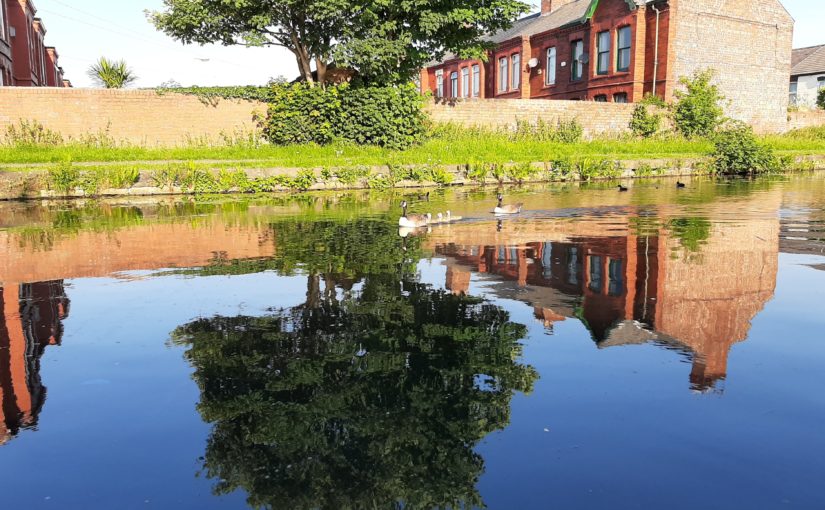
We woke to a family of goslings cutting across the calm reflection at Litherland, but knowing the forecast was predicted to hit the 30’s we didn’t hang around. And off we set, cruising freely again. Although we weren’t sure if the geese were seeing us off.
Too many to count
And the herons were providing a guard of honour
Nice tho see Herons again
It was a joy to see such a variety of wildlife again
Coots on their nest
Perhaps some was a little stranger than we expected.
Whatever floats your boat
And we’re not sure that exercise suits everyone
On the road to nowhere
One of the events to be cancelled during Lockdown was the Aintree Grand National. I wonder how many of those race goers have any idea what the turn at Canal Corner looks like on the outside of the fence.
Canal Corner
There are too many trees for us to see the course properly
The Aintree race course
So we carried on our way. We had been worried that the canal would have become a dumping ground with the council tips closed. To some extent we were right, but although there were a number of big plastic items bobbing around, we only had to stop once to remove the urban jelly fish from the prop. We hadn’t expected our journey to be stopped by a carpet of waterlillies
Are we still on the Canal?
We continued our journey though Maghull and into Lancashire, I’d had to open 7 swing bridges on today’s journey.
Yet another swing bridge
But I was well rewarded with views of fields with yellow rape and red poppies
Fields of gold
And dog daisies growing along the bank.
Dog daisies
Oh the sheer joy of being back on the canal, Anyone would think we hadn’t enjoyed Liverpool, which is wrong, we had made the most of a completely different lifestyle, it had been like being on a good holiday, but we were glad to be back home. One thing remained the constant. Our evening sunset.
At long last we’re able to cruise again. Back in March when the country realised the need to protect ourselves from the looming pandemic, we mulled over how we felt, were we safer or more at risk in a big city like Liverpool. There were pros and cons but on balance we decided safer. With a tall harbour wall protecting the handful of boaters from the general public and a fully serviced pontoon, we only needed to emerge when we chose, the food shops were an easy walk so we considered ourselves very lucky, when CRT made the decision to lock us in. Shortly after, the whole canal system was shut down with only essential travel permitted. Even the towpaths became off limits as well meaning passers by stopped to talk to moored boaters. We knuckled down for an unknown future, even fearing a second winter in Liverpool. I reinstated my nursing registration and volunteered to work at the Nightingale Northwest in Manchester, but thankfully the NHS coped and I wasn’t needed. Unsure of when we would be allowed to cruise, we lost our first companions in mid May, when they arranged to have their boat craned out and transported by road to where they needed to be.
Cruising to the marina ready to be cranes out
At the end of May, 3 more of our friends made a bid for freedom even though the rules still remained not to use locks.
Nb Buffalo leaving via the Albert Dock
Another 2 followed the week after, we weren’t looking forward to cruising through all that weed and other debris thrown into the canal, whilst council tips remained off limits.
Thwarted only 10 minutes after setting off
By now we were getting weekly phone calls from the CRT office as the guidance was updated. The final 3 boats agreed to go our on June 17th. We weren’t too pleased to get a call on the 16th asking us to stay put another week, but we dutifully complied. And at 8am on 24th June 2020 with huge smiles on our faces, we finally all set off.
Sun’s shining, life jackets on and ready to go
The Green boat, as we affectionately called it cause their name isn’t painted on the side went first
The green boat, clearing the way
We were next
Entering Albert Dock
One of the advantages of travelling in convoy is receiving photos of Firecrest in fantastic places
Getting ready to go through Mann Island Lock
Thankfully the weed had been dispersed as we cruised under the watchful eyes of the Liver birds
Firecrest enjoying a clear run
The reward for waiting an extra week, was that lock keepers were back from furlough, so even though we had enough crew between us we only had to get off the boat to record the day
You’d imagine we’d run out of conversation after 8 months, but no
Sid has been looking after this stretch since it’s creation nearly 20 years ago and in recognition, the narrow channel between West Waterloo Dock and Trafalgar Dock is known as Sid’s Ditch. We had the honour of being accompanied by Sid as he hitched a lift on Bluebell’s bow.
Sid in Sid’s ditch on Bluebell
The volunteers were out in force, all happy to do the hard work to help us through the Stanley flight
We weren’t quite ready to say goodbye to our friends as we all moored up for the night at Litherland. And I was rewarded with another evening sunset
Sunset at Litherland
We all slept well that night.
With many thanks to Andy, Angie, Avril, Becka, Darren, David, Freya, James, Kitti, Little Darren, Mark, Paul, Reuben, Sharon, Sid, Stuart, Tam, the bin men, the checkout assistants, the CRT team the Dock security, the volunteers, and our families and anyone whose name I have missed off by mistake. Thankyou for helping us through Lockdown, stay safe x.
As I’ve already said, there’s just so much to see in Liverpool, 8 months isn’t nearly long enough. I took full advantage of my daily outdoor exercise to explore. So here are a few of the people I met hanging around, watching the world go by . Obviously there’s the 4 lads from Liverpool strutting their stuff on the Pierhead. And if you’ve got the Beatles, you’ve also got to have “our Cilla” on Matthews Street.
Cilla Black
where there’s always someone hanging around keeping the buskers in tune.
John lennon and the masked busker
There are Beatles monuments everywhere, And several more representing their individual achievements The John Lennon Peace Monument which was part of a global peace campaign shows a world wrapped up in music and peace doves, just imagine….
Peace on earth
Not all the sculptures are so modern with these wooden gargoyles keeping an eye on us in Dale Street
This is what happens if you hang around pubs too much
But I can give these guys a miss, the Lambananas. 125 of them appeared since 2008. As part of the European City of Culture, the 5m high original Superlambanana ( which has now been removed) was created to represent both the import and export of Sheep and bananas through Liverpool Docks and to highlight genetic manipulation. A lot of the 125 were sold off but there are 8 still scattered around the Pierhead
A bunch of Lambananas
The Pierhead is quite a walk through history, remembering the rock stars
Billy Fury
The workers, including the horses that hauled the cargo around the docks
The Carter’s horse
The regal,
Edward V11 and his loyal subject
And the innovative, this sculpture celebrates liverpudlian Jeremiah Horrock’s, astronomical discoveries, he was the first person to calculate the transit of Venus accurately, not bad for the early 17th century
Heaven and earth
The departing, commemorates emigrants leaving to start new lives in America, (I wonder if we will be worthy of a monument, narrowboaters finally allowed to leave liverpool)
Early 20th century Emigrants
The departed, Liverpool bares the pain of loosing many at sea, this particular monument remembers the engine room crew of the Titanic, many came from Liverpool.
The Titanic memorial
The hero’s. Captain Frank Walker, who was the most successful anti submarine warfare commander serving in both WW1 and WWII
Cpt Frank Walker
And the fallen, although these three monuments aren’t objects of beauty, they mark a communal place of rememberance , they hold plaques honouring the servicemen and women from various countries and services connected with Liverpool, who lost their lives at sea in times of conflict
The three war memorials
The Tate Modern North has it’s home in the Royal Albert Dock, and there are installations outside as well as in. The art works certainly fall into the sculpture rather than monument category and I shall leave to ponder their significance.
The Sound
This one grew on me, especially with a winter sunset to light it up
The Liverpool mountain
Although I think the buildings themselves are testaments to an era gone but not forgotten as the Royal Albert Dock is a grade 1 listed heritage site,
The Royal Albert Dock
and there are strategically placed artifacts and abandoned industrial and maritime debris scattered around to marvel at.
The prop from The sunk Lusitania
I was a little saddened not to see any figurative monument directly outside the maritime museum, (which houses the museum of slavery,) remembering the transatlantic slave trade, that clouded Liverpool’s 18th century. But across the Strand is a magnificent horse sculpture called The Great Escape, the horse made out of rope, which unravels in a bid for freedom, it is meant to represent man’s effort to free himself from slavery. It’s a bit off the beaten track, (unless you’re walking to the Tesco express for icecream)
The Great Escape
The monuments in the city centre continued to be thought provoking though for many reasons
Eleanor Rigby sits all alone on Stanley Street
Just one of the lonely people
Whilst one of Lewis’ stands proud over his department store. (which is sadly now closed, along side George Henry Lee’s and TJHughes about to follow suit-for those of you who remember the big old stores)
Lewis’
Liverpool is a mighty and grand city which liked to erect monuments to the great and the good of the victorian era. Although they are the ones I tend to hurry past without recognition, I’ve had the time to read up more about these people and the service they gave to our country.
The good and the mighty
Many just followed questionable orders out of loyalty and obligation, while others sacrificed much and build a city of extremes. Extreme poverty and wealth success and destruction, nothing can be taken at face value, there is always more than one side to the story. But throughout I get an immense sense of humanity.
As the Bombed out Church, St Luke’s, is preserved to remind us. The sculpture reminds us of the British and German soldiers, who were allowed to stop fighting on Christmas day so they could play football during WW1
Football in the bombed out church
As does one of the most beloved liverpudlian of all.
Ken Dodd at Lime st Station
And you can’t beat a bit of well meaning graffiti
Well written words
Even if there’s always a Liver bird watching over you
This replica stands over the canal in the Museum of Liverpool
But we knew it was coming to a end and it was time to pack up our suitcases and move on
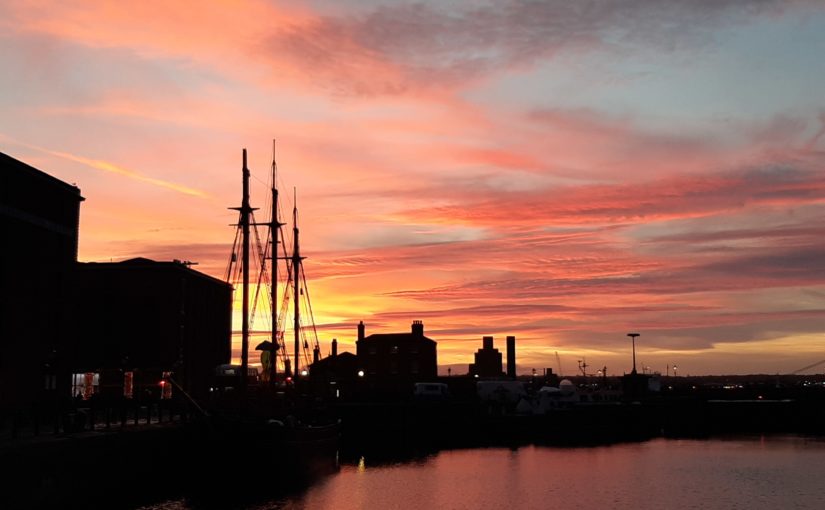
One of my favourite things about our Liverpool staycation has been watching the sunsets, I could nip out of the boat and be facing West over looking the Mersey in 2 minutes. I’d head to where Billy Fury was taking the pose
Billy Fury
and usually there’d be a small group of us anticipating the end of the day. It created a sense of shared faith as we all reflected on our strange circumstances
Gathering to say goodnight to the day
During the winter we would get the occasional splash of pink lightning up Salthouse Dock
The carousel by Salthouse dock
And if I walked to the far side of the dock I could look back towards Firecrest and the stunning backdrop. It was unusual to see the water as mirror still as this in an evening, much more common in the morning
Looking north towards Firecrests mooring
Of course during the winter waking up early enough to catch the sunrise wasn’t too difficult and I didn’t even need to leave Firecrest to see views like this most January mornings.
Looking south, from the boat early in the morning.
Although some mornings were so shrouded in mist that we couldn’t see anything in front of us.
Misty mornings
But it was always lovely to return to Firecrest after an afternoons winter shopping when everything was lit up
Winter dusk
The first Sunday in December saw the annual Santa dash, I couldn’t count how many, but they raised a lot of money before setting off for Lapland to pick up the toys. I’m glad it was such a lovely day for them.
Frosty December glow
And it never failed to amaze me how dramatically the Liver buildings changed colour at dusk with the lovely reflection over Canning Dock
Golden evening glow
And despite all my evening walks I was surprised that I only picked up this view looking at the Liver building through the Albert Dock this week.
Midsummers day at 9.30pm
Possibly because I liked walking past the tall ships anchored in Canning Dock, which they have recently moved into the Albert dock. This is the Kathleen and May, back in April
The Kathleen and May
One of the things I’ve missed during lockdown is spring in the countryside, no green fields full of frolicking lambs. But I know that when we start cruising again I’ll miss my evening strolls to see what colour the sky has turned, burning embers
Looking across the Mersey to Wallasey town hall
Or soothing duvet
Summer sunsets were soft and fluffy
It would always feel hopeful, the way ahead lit up
Lights along the waterfront
That there will always be someone looking out for us
Got Frank Walker
On Easter day in Suffolk the local churches would gather for a sunrise service by the river, in Liverpool that wasn’t possible, but I did see sunrise over the cathedral which helped me feel connected with my family and friends when we were all keeping apart.
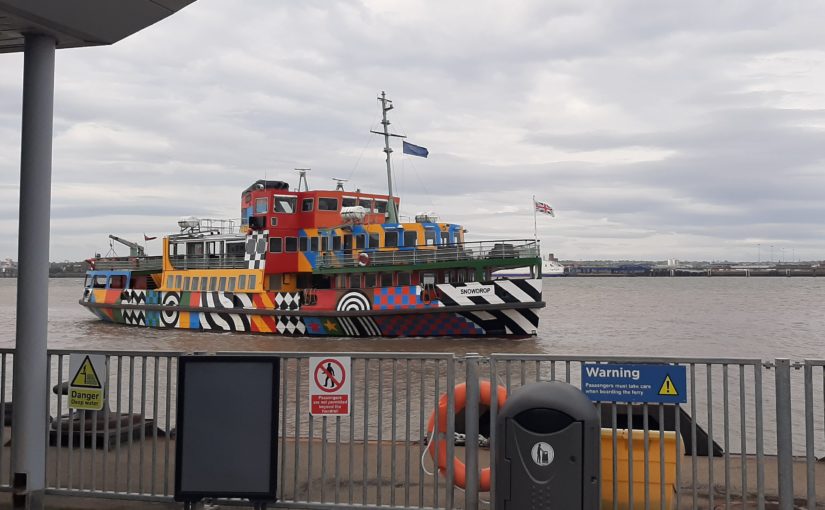
There have been many interesting things we’ve seen in Liverpool. Snowdrop, the Mersey ferry painted in its dazzle camouflage paint is one of the most iconic. We never got the opportunity to take the hour long tourist trip, accompanied by Jerry and the Pacemakers, but once we were allowed a bit more freedom, we hopped onto the direct crossing once the commuter run was over. It was fun to see the “iconic skyline from a different angle and to walk along the promenade to New Brighton.
Liverpool from the Mersey Ferry
I make very little apology for over using the word iconic, simply because so much of Liverpool is iconic. The Three Graces comprise of the Liver building, the Cunnard Building and the Port of Liverpool building. The canal runs through a large pedestrianised area known as the Pierhead
The three Graces.
But these 3 magnificent buildings aren’t the only buildings of note, Victorian Liverpool was affluent and not afraid to show off.
Liverpool town hall
But for all the wealthy merchants, there were a lot more hard working and impoverished unseen people in the city. The White star line was the company that owned the Titanic, and most of her crew were Liverpudlians. And it is from the balcony of the “streaky bacon” building that the news broke of her sinking.
The streaky bacon building
Many of the cities seamen were Chinese and in 2000 the people of Shanghai gave a Chinese gate as a symbol of unity and trade between the two cities. It is the largest Chinese gate in Europe, sadly Covid restrictions meant that the Chinese New year festivals were low key this year we kept an appropriate distance.
The Chinesegate
Not all of Liverpool is grand and affluent, huge areas of deprived areas still exist here, and the number of rough sleepers is heart breaking, even during the Covid crisis. (Though I also saw key workers offering help, so that may or may not have been by choice) I could easily fill pages of Liverpool’s extremes, but it’s not always appropriate to take photos of those in need.
Something I have missed during lockdown is being able to spend time in the cathedrals. I’m sure there’s a competitive streak between the musical directors as I was spoilt for choice during advent, with the number of concerts and services I attended, but it looks like choirs and church singing will be one of the last things, to be allowed again. Both cathedrals are modern, being completed in the 20th century, The Metropolitan (catholic)church is a very meditative space.
The Metropolitan Catherdral
The Anglican cathedral is more dramatic and dominates the skyline as it rises out of the local red sandstone, and when the organ is played every fibre of your being feels it. I was lucky to enjoy several recitals.
The Anglican Cathedral
But one of the Anglican cathedrals endearing features is that the architect sir Giles Gilbert Scott, also designed the iconic red phone box
The iconic phone box
Liverpool suffered from horrendous bombing during WWII meaning that huge swathes of the city has been and is still being regenerated. Some of the modern buildings are stunning and I think will stand the test of time,
Looking towards the Graces from the Maritime museum
But others have been allowed to dwarf the historic skyline and I think that in 20 years time they will need to be rebuilt
The old and the new
Some of the war damage has been made structurally sound and allowed to stand as a reminder, St Luke’s church is such a memorial. And whilst I was chatting to Eric’s brother David, we discovered that their great great grandparents were married. It’s nice to think we have another small reason to think of Liverpool with such affection.
Inside St Luke’s, the bombed out church
Liverpool isn’t just about architecture, we were treated to some unusual wildlife for a narrowboat lifestyle. During the spring the docks are invaded by swarms of moon jellyfish. And on certain days you could easily have counted a thousand floating around the boat, yet on other days only a handful. Very difficult to photograph without a polarizing filter, which doesn’t come as standard on my phone.
A 6inch Moon Jellyfish
The dock must have been teeming with life, we got quite used to seeing the cormorant trying to swallow 50cm eel. And such was the battle, we never knew who was going to win, even after the it had been devoured.I didn’t manage to snap that excitement, but several times we were woken up early by voices outside the boat to see swimmers braving the waters.
The things some people do for fun
The dock got used for a lot of water sport, with canoes and paddle boarders, and interesting visitors from all over the place.
May the Force be with you
Transport seemed to be a theme for a while as Liverpool played host to Britains newest aircraft carrier, the Prince of Wales. We had the privilege of seeing it dock. And I can tell you, huge is an understatement, aircraft carriers are colossal
The Prince of Wales aircraft carrier
But the Albert Dock is the home of some historic tall ships, which felt a lot more approcable.
The Kathleen and May in the Albert dock
The museum of liverpool puts on regular special exhibitions and we were lucky to catch two, Liverpool s transport, which featured cars made at Ford’s Halewood plant, which in the early 70s is where my Dad worked. I hadn’t anticipated the sense of pride I’d feel seeing some of their classics
A classic car
As I said earlier, Liverpool has been an amazing place to spend 8 months. Had we known in November what was ahead of us, we would probably have explored differently, but after 8 months, the one thing I really wish I had indulged in that got lockdowned, was football. Having been born in this fair city, it’s in my blood to support Liverpool but sadly I never got to visit Anfield. But even now that we have been allowed out and are 15 miles, I could still the fireworks sent me news came through that “we” had won the cup. (Other teams are available, but they don’t warrant blog space)