
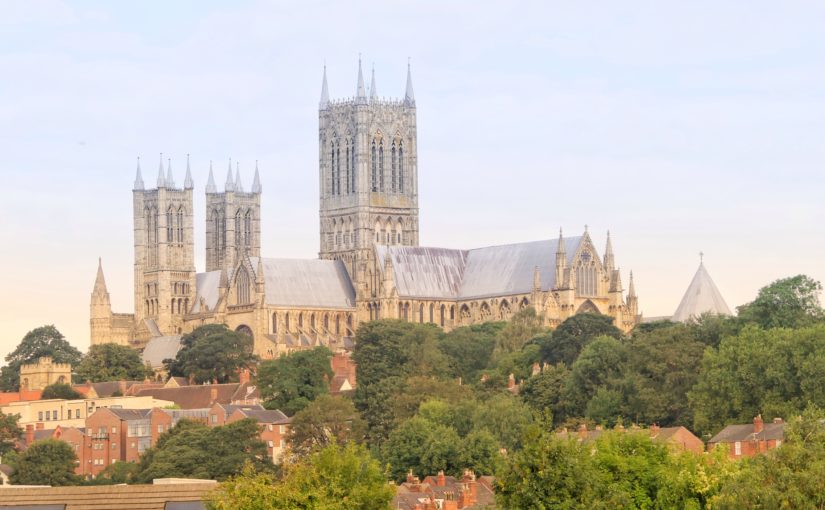
Lincoln’s Cathedral is a beacon for miles and miles as it towers over the fenland. In fact my sister in law, Anne, tells me on a good day they can see it from the Peak District Moors, over 60 miles away. And as it offered a tower tour, well I just had to go climb those towers and learn it’s history and see the view.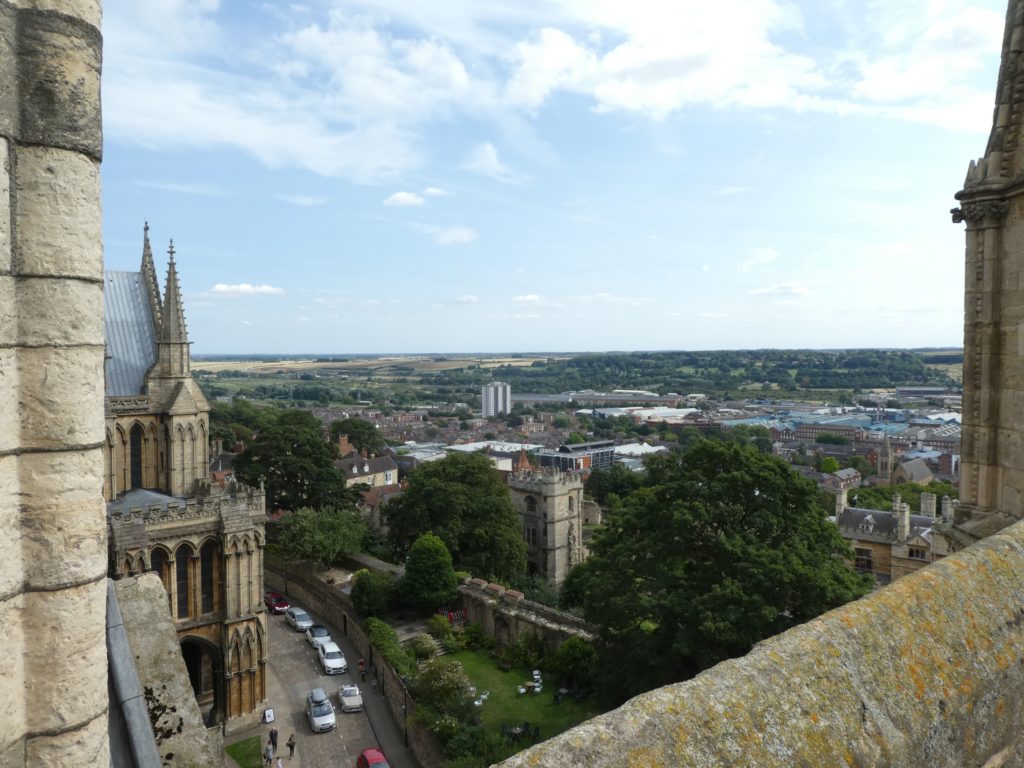 Back in the day when the Romans came to stay, they fortified Lincoln with a city wall. Although it was to later get in the way of one of the cathedrals many extension.
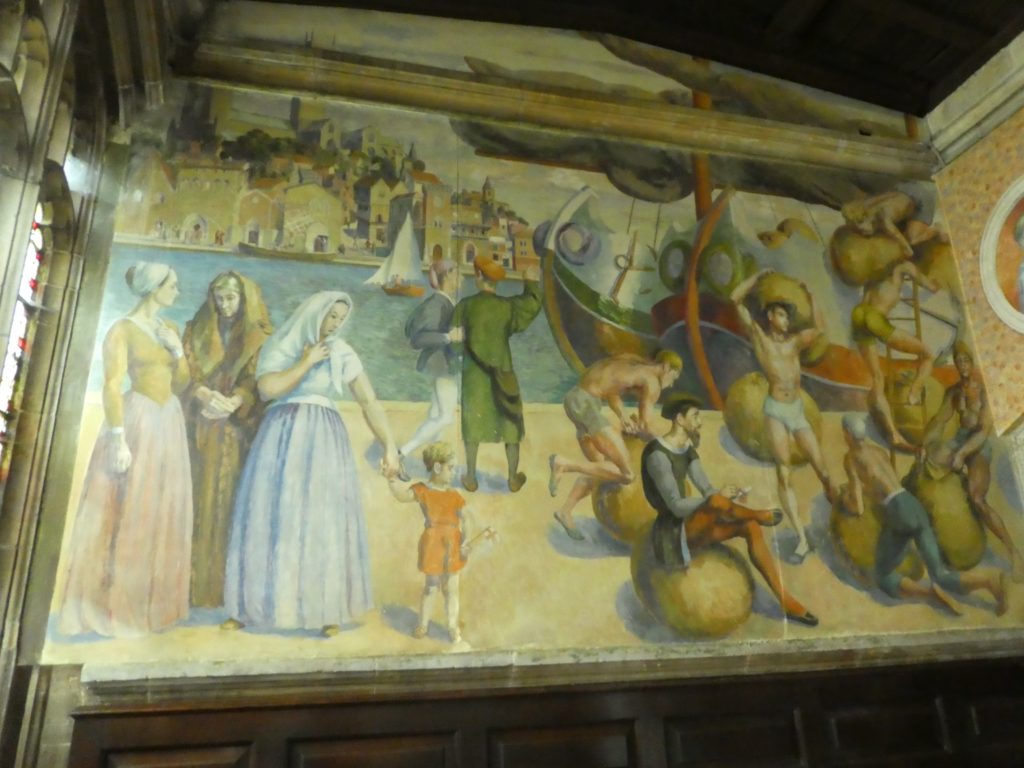 Then the Vikings also took advantage of the river access and the deep water of Brayford Pool. As did these folk as shown in a painting hanging in one of the chapels.
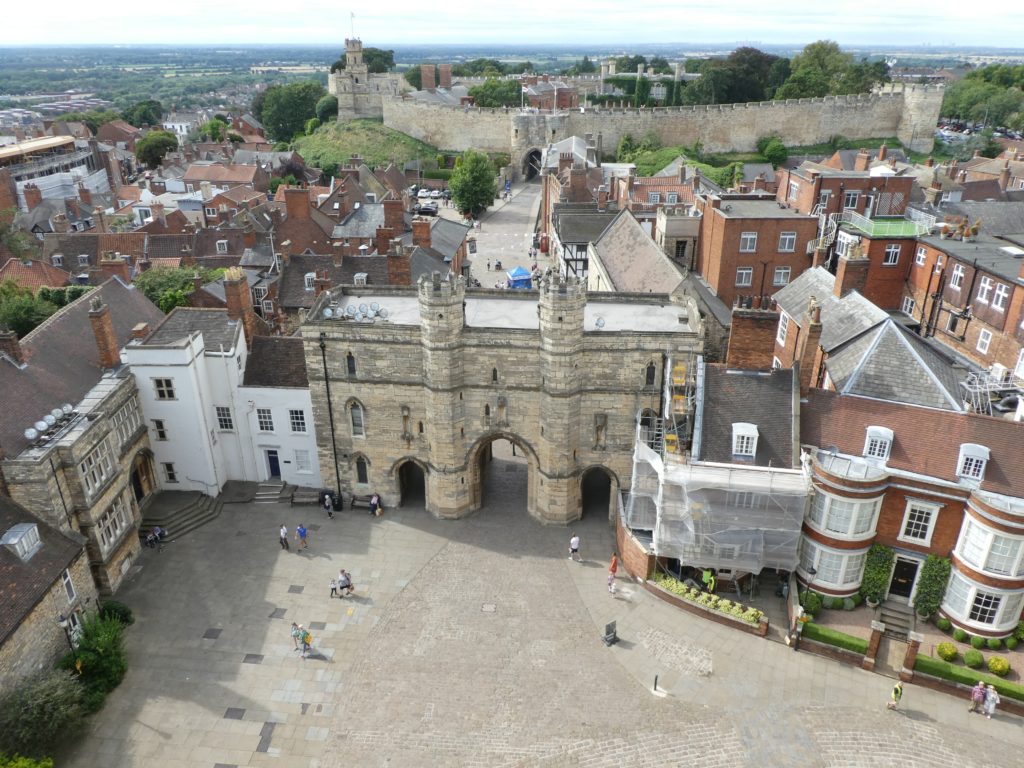 However it wasn’t until William the Conqueor wanted to stake his claim, and show his Norman dominance on the marauding hordes of northerners, that the catherdral and castle were built out of local stone. It was a hugely significant seat of power and in 1215 the Magna Carter was brought here to be signed by the Bishops. Lincoln still holds one of the only 4 remaining originals in its library.
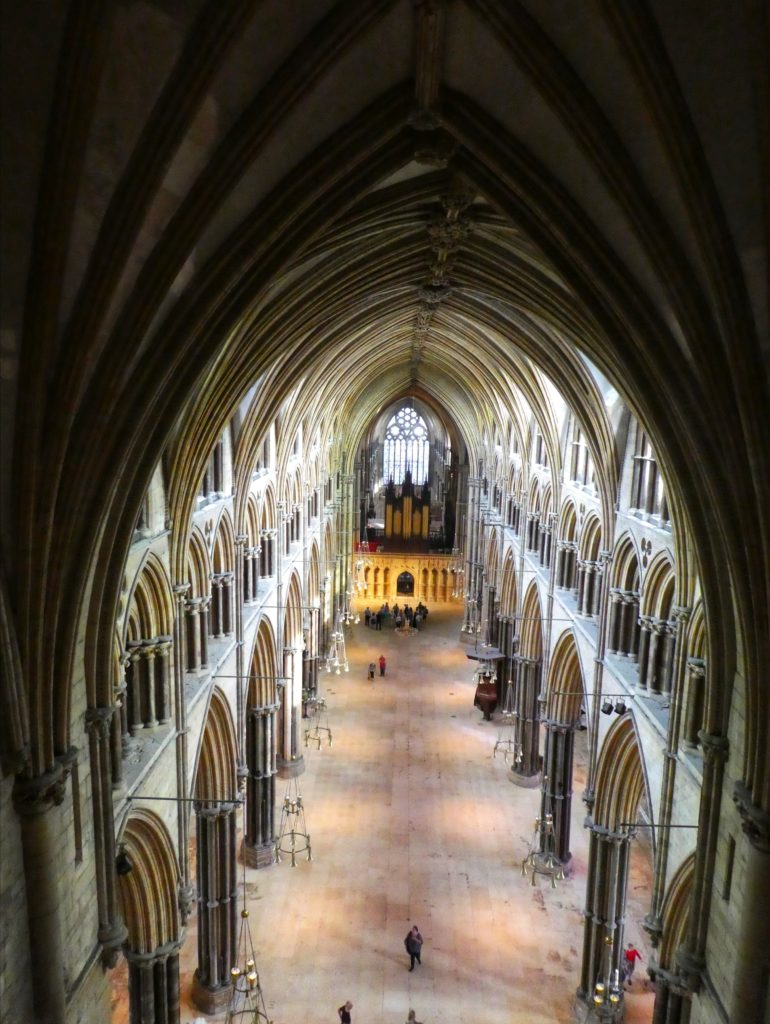 The Cathedral’s life hasn’t always been an easy one, 50 years after it was built it burnt down. It was rebuilt but in 1185 it was destroyed by an earthquake. Rebuilding wasn’t always well planned, the person responsible didn’t align the east and the West correctly so the spine along the beautiful vaulted ceiling is wonky and doesn’t meet up as it should.
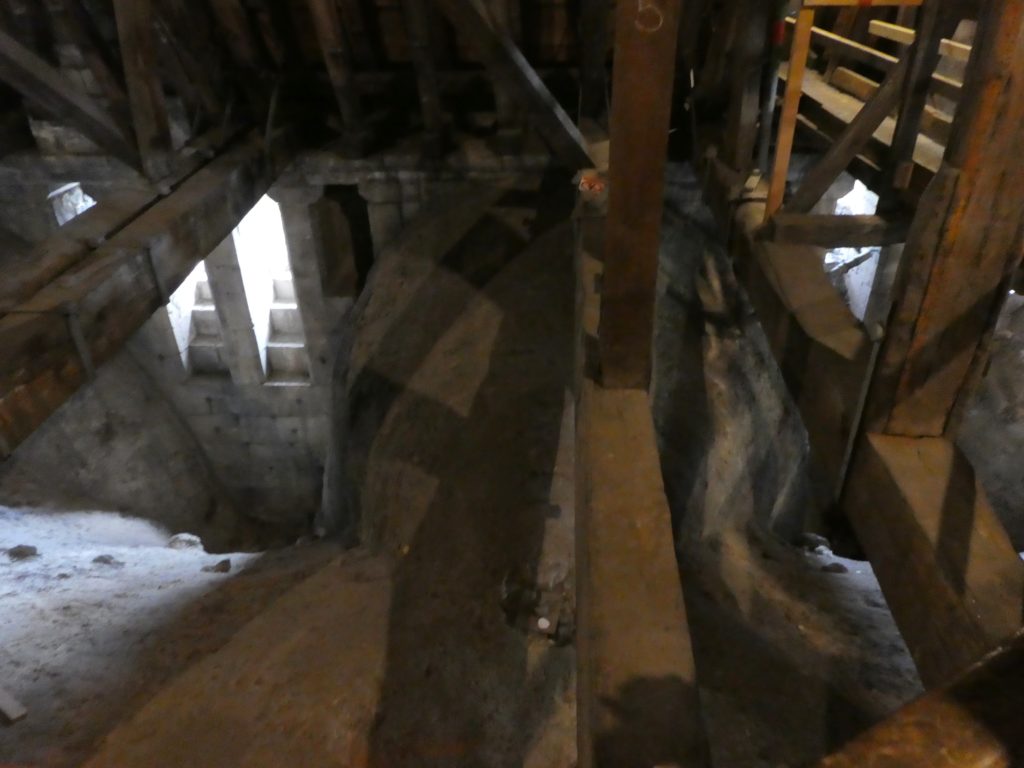 The tower tour takes you right up into the rafters so you can look down onto the lime mortar on the upper side of the vaulted ceiling. You don’t always realise when you look up that there’s another 30 feet of cathedral above what you see.
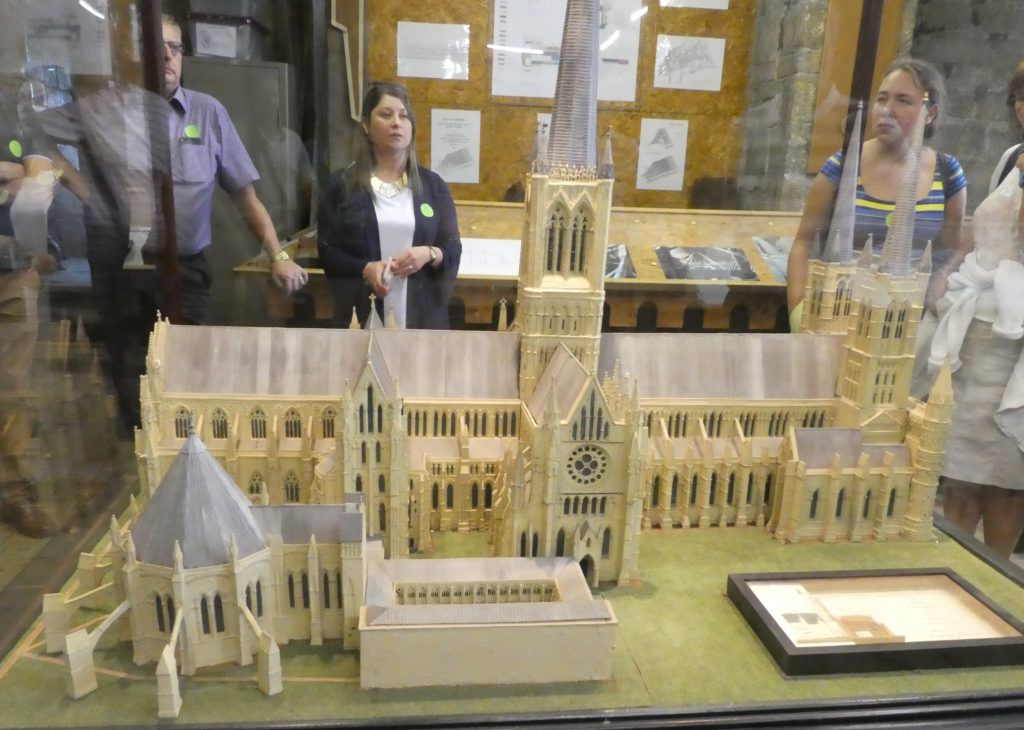 In 1311 a spire was added to the central tower, reaching 160m, taller than the Pyramids of Gaza. It became the tallest building in the world for over 200 years but being a wooden structure encased in lead, it was a bit heavy and in 1548 it blew down in a storm. In 1807 the north and south tower spires were removed much to the consternation of the people of Lincoln but Health and Safety was being adhered to by then.
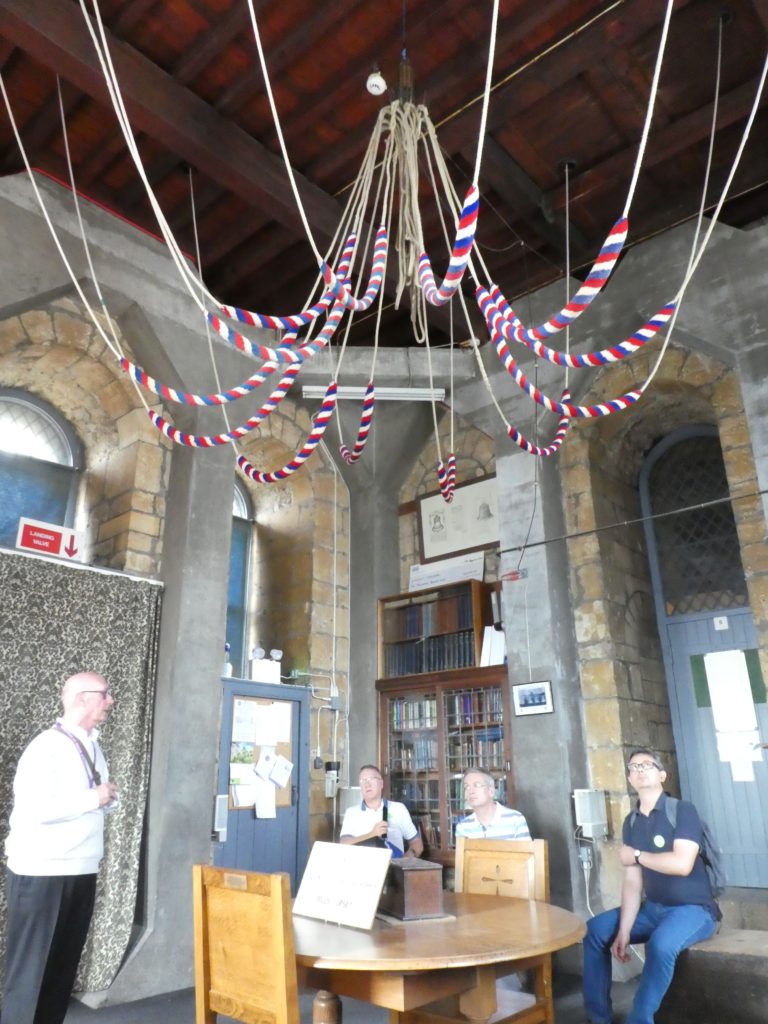 Health and safety also decreed that although we were allowed in the bell tower, the ropes had to be out of reach. The bells rest in an upright position so that the the first chime is correctly timed.
 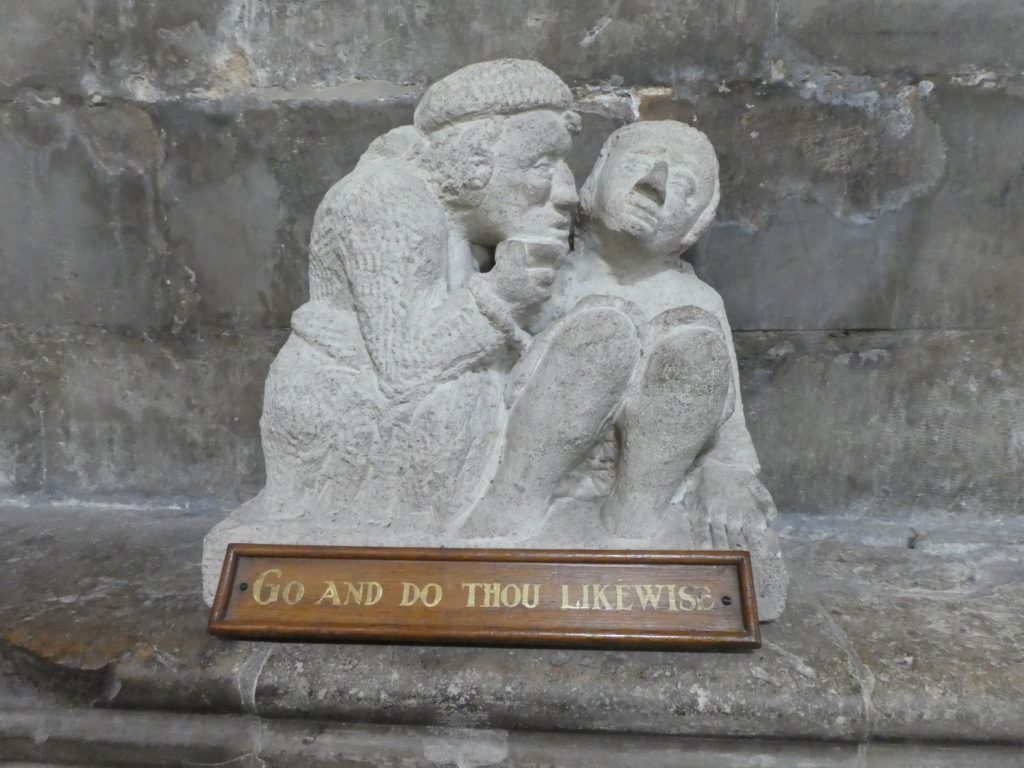 Obviously there’s a huge amount that I haven’t recounted, condensing 1000 years of history into 10 minutes leaves a lot of gaps for rebellions, civil war But I recommend paying the extra to do the tour.
 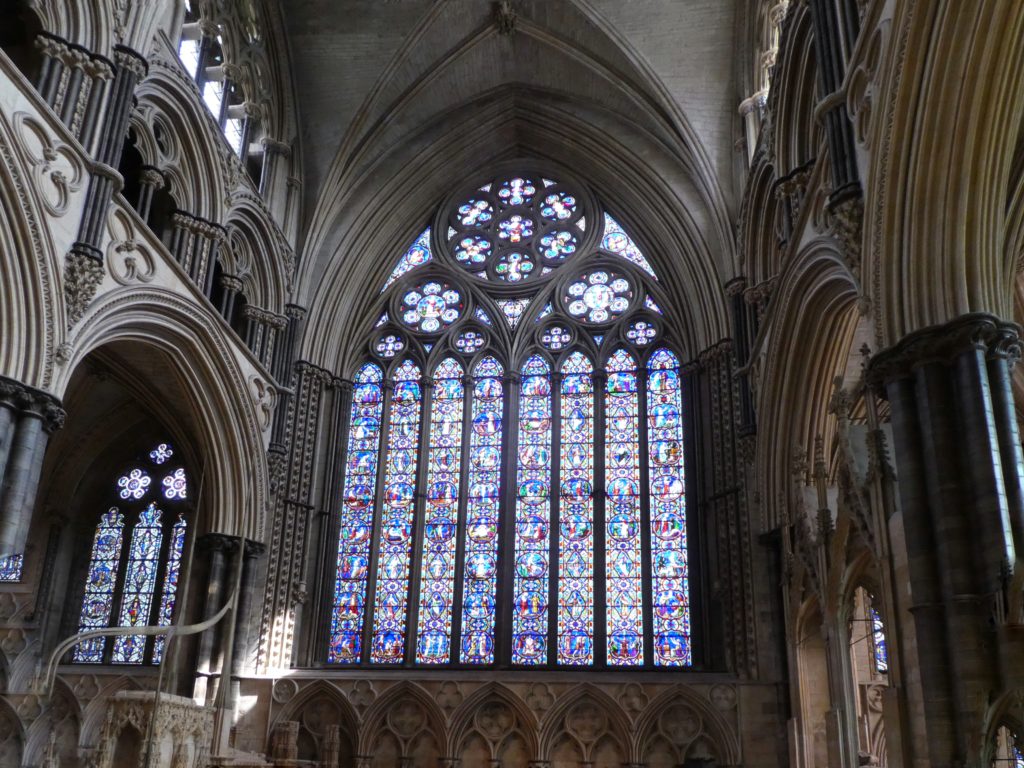 Stained glass is always a beautiful thing to see in a cathedral, this one is known as the Bishops Eye
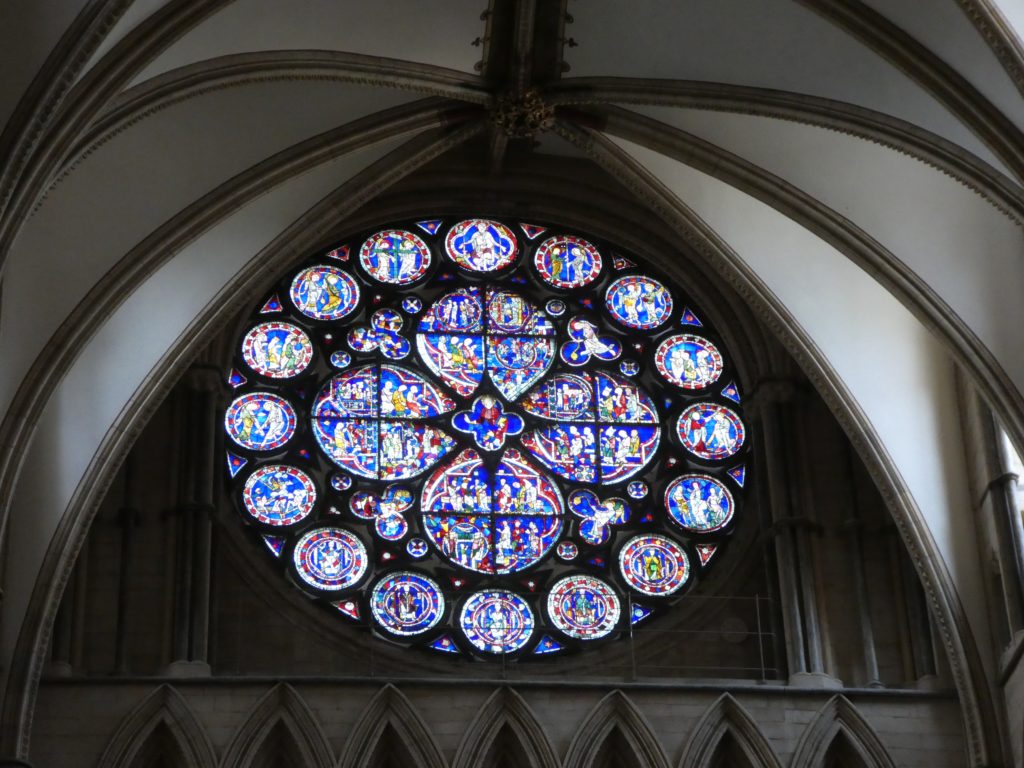 and the rose window opposite is the Deans Eye
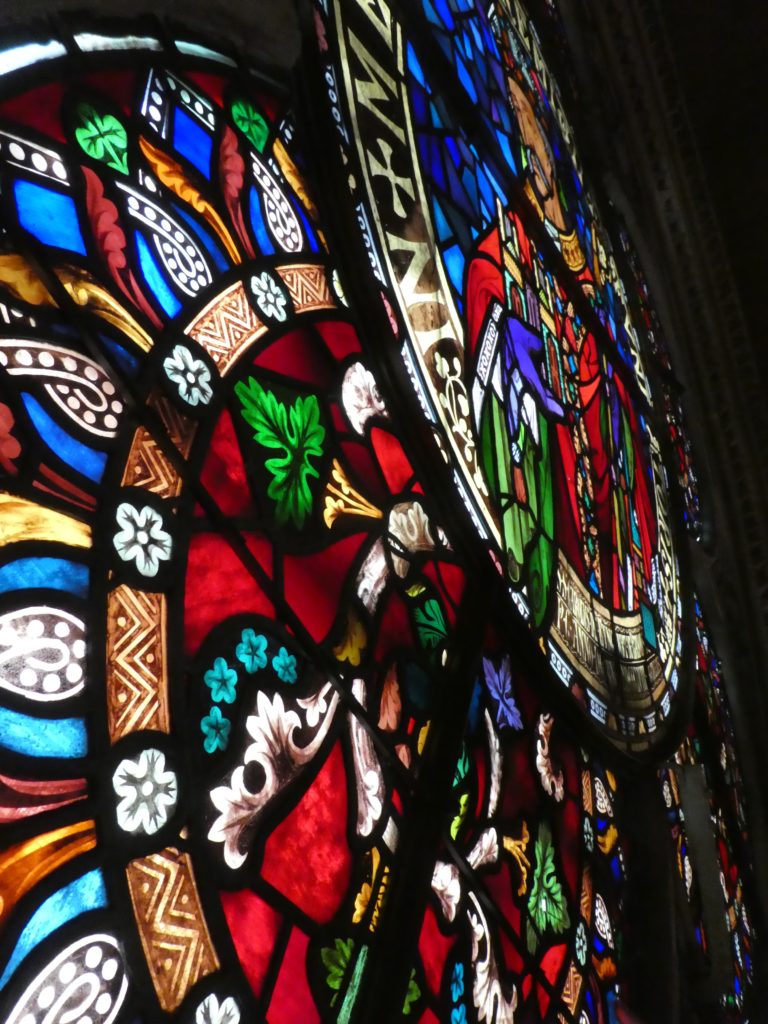 This one facing West shows Revious, the monk William the conqueor put in charge of building the cathedral originally. It still contains some medieval glass, when It was a real honour to be able to walk right in front of it on the tower tour. There is so much to see and most of it hundreds of years old, but there are some new pieces of art work on display.
 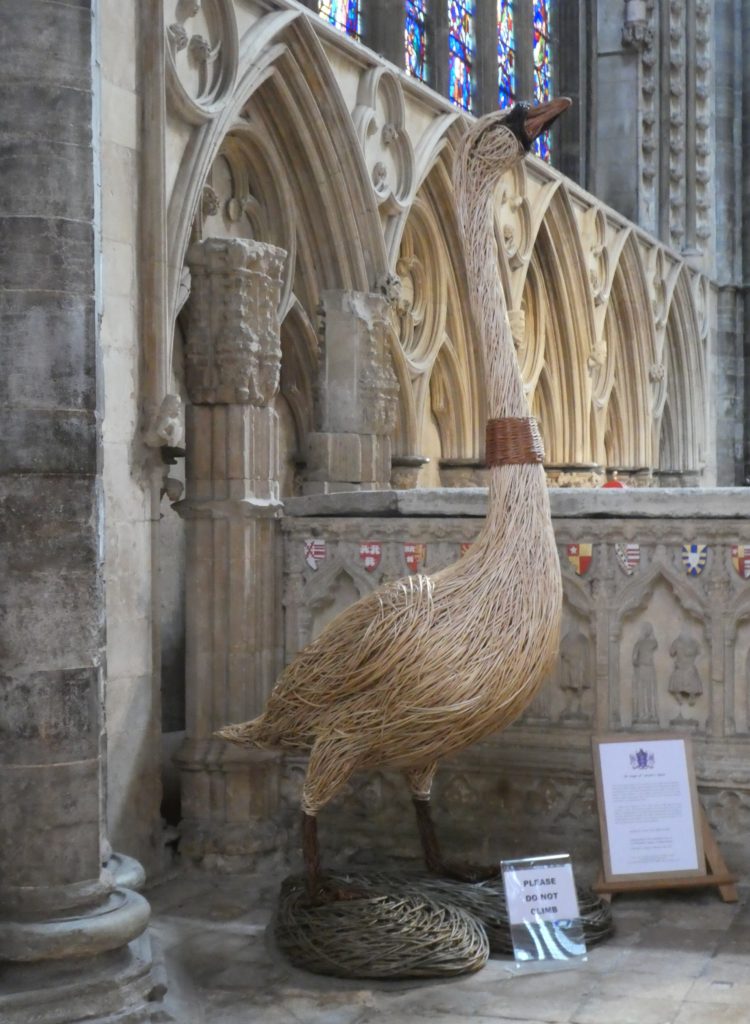 I particularly liked the giant swan. St Hugh of Avalon was one of the early bishops and he befriended this fearsome bird, which terrorised the people whenever St Hugh was away, but behaved like an angel whenever he was in residence.
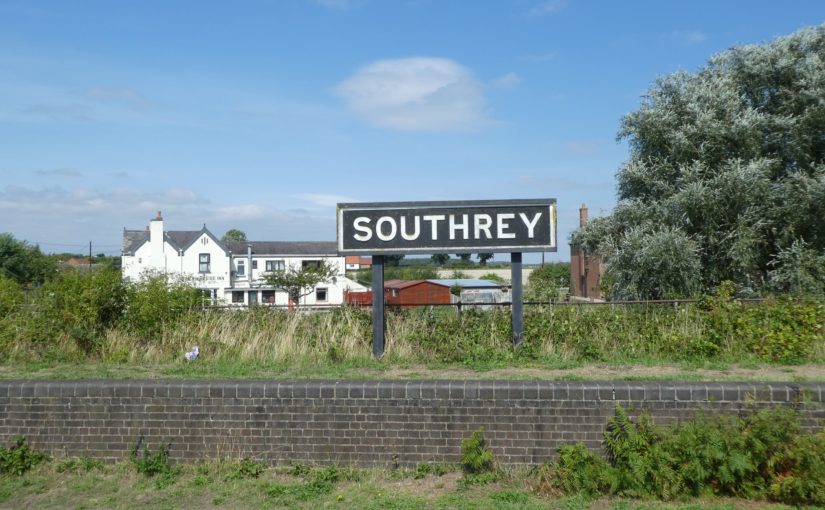
 Many of the stations
  and junctions have been turned into beautiful homes.
 And there are several sculptures to enjoy. Some can be seen from the river,
  Some look like they’ve escaped from the River
  And some I saw when I got to walk after we’d moored up for the day. This one is engraved on both sides, “For men may come and men may go, But I go on forever.” Which was taken from Lord Tennyson’s poem, The Brook. Tennyson was born in Lincolnshire. I would have liked to have seen all the others, another time maybe.
 We have enjoyed being in Lincolnshire. The actual cruising has been a little tedious, long straight stretches with restricted views and limited mooring opportunity,
  but once we climbed up onto the path we could see for miles, all the way across to Lincoln cathedral.
 And for part of our journey we had dramatic storm clouds billowing overhead rather ominously.
 Thankfully the rain fell on someone else.

 Leaving Dogsdyke, we cruised upstream along the River Witham taking in the peace and tranquillity. Sadly the beauty of the River was scarred by rather more than usual dead fish floating along the banks. A few questions to locals revealed that there had been a chemical spillage in the spring and 100 000 fish died. The river has been restocked but we dread to think how long it will take the whole ecosystem to recover.
  We’re not sure if the amount of duck weed is as a consequence of the chemical,
 but it was an un-nerving experience travelling through it.We wondered how it would affect the fish
 but were reassured when we saw this sole floating by.
 And what with the willow trees and hidden entrances to the Drains, on it did brighten what could have been a tedious journey.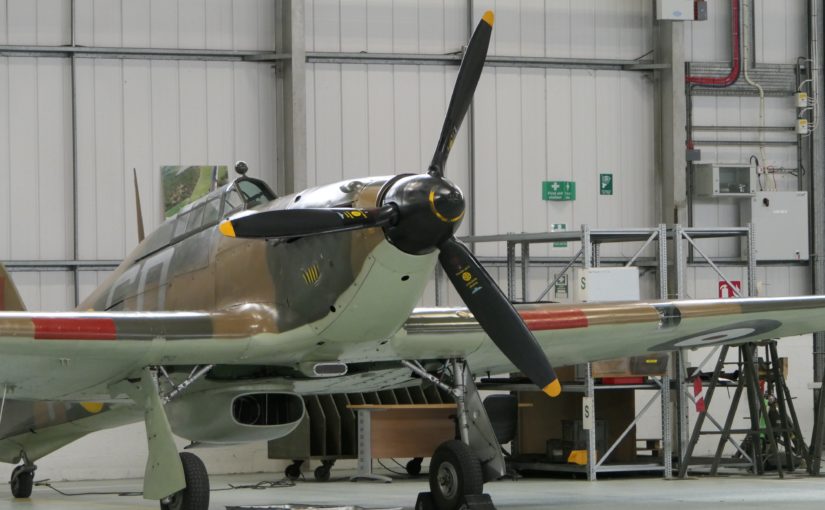
 The Lancasters played a vital part in Britain’s war effort. They were the huge heavy duty bombers, capable of night flights, and often, if they had been hit, able to limp home on only 2 of their 4 engines. Sadly being part of a Lancaster crew was still one of the most dangerous places to be in the RAF. Out of the 7377 built, 3249 survived and only 35 completed more than 100 sorties. The crew of 7 had only a 15% chance of being able to bail out if hit, and due to the cramped conditions in the turrets, the gunners would often have removed their parachutes. Life expectancy of a rear gunner was rummered to only be 4 weeks, exposed and unable to escape they were very vulnerable. Unlike today’s stringent rules with supervised flying hours before obtaining a pilots licence, some of these men were lucky if they got 2 weeks training. Consequently a lot of the tragedies occoured when landing back on home ground due to sheer lack of experience. Probably the most famous Lancaster mission was delivering the Dam Busters bouncing bombs.
 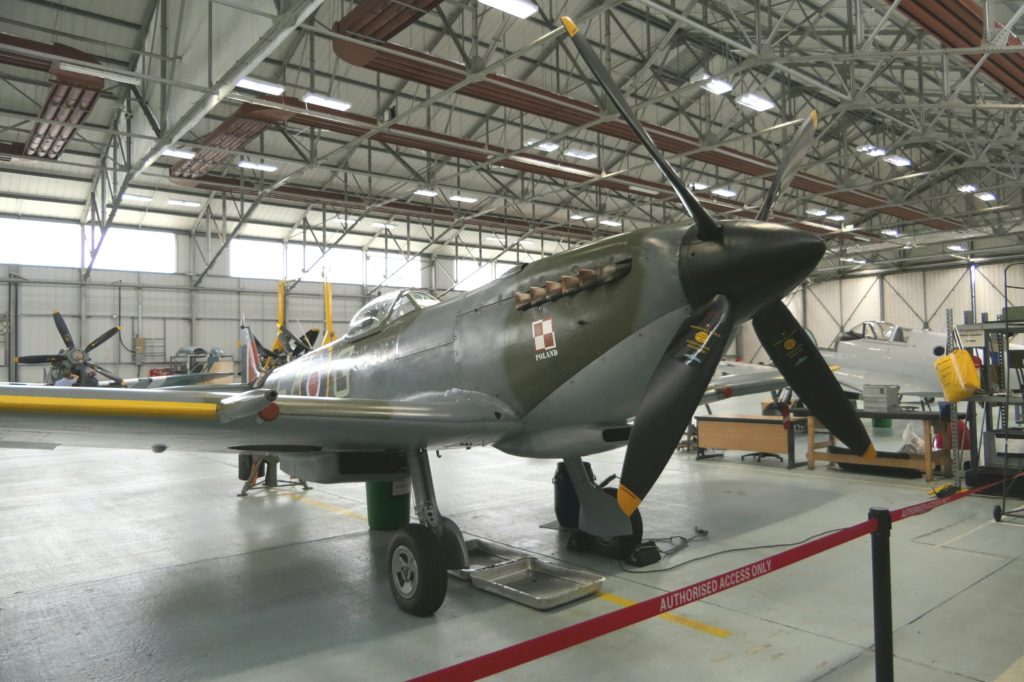 The Spitfires were midgets compared to the Lancasters. They were the short range high performance single seat fighters. They often flew photo reconnaissance missions unarmed because they could fly higher and faster than the enemy.
 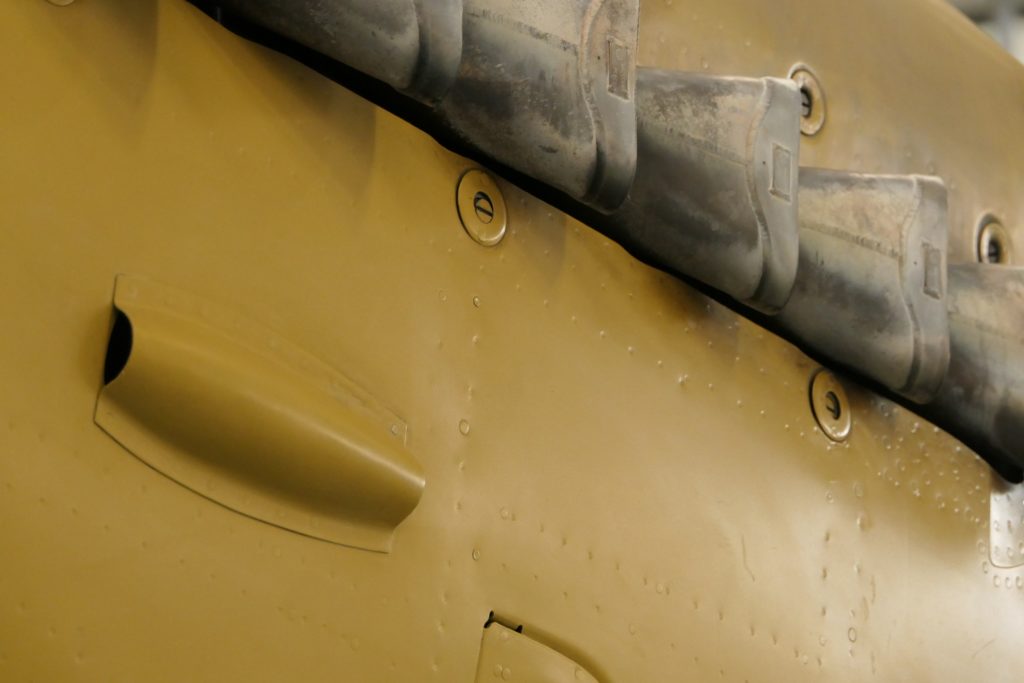 Their design was streamlined and although costing a lot more, the air force insisted on flat rivets because it allowed an extra 15mph. We wonder if some boaters realise this, as there is a trend for having raised rivets added to hulls purely for the aesthetics. Going 15mph faster might not actually be possible but going 15mph slower would have a very negative impact….
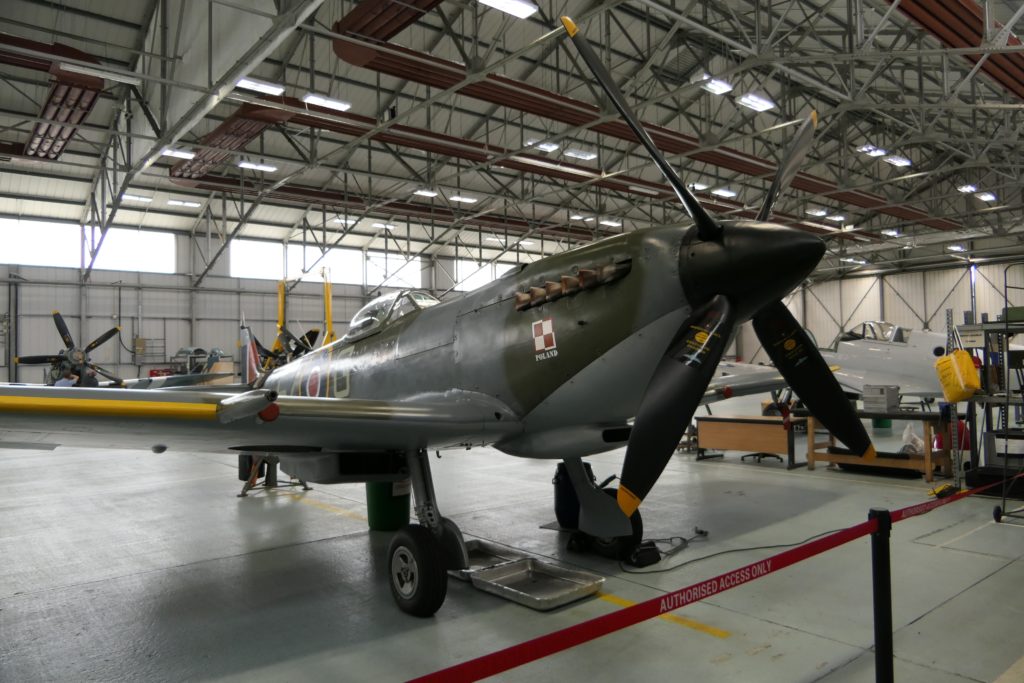 Although the Spitefires have captured the public’s affections,
 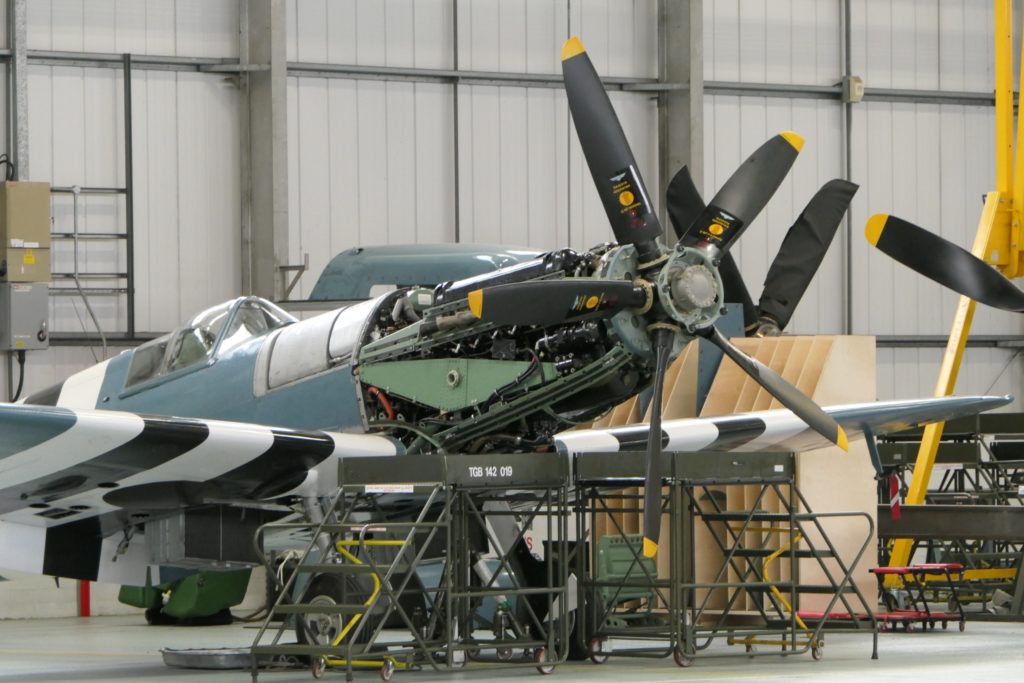 the Hurricanes were responsible for 60% of the enemy losses during the Battle of Britain. They were essentially a fore runner of the Spitfire using tried and tested cheaper manufacturing methods. They were straightforward and easier to fly, also easier to repair, but the agility and speed of the Spitfire was too beneficial to ignore.
 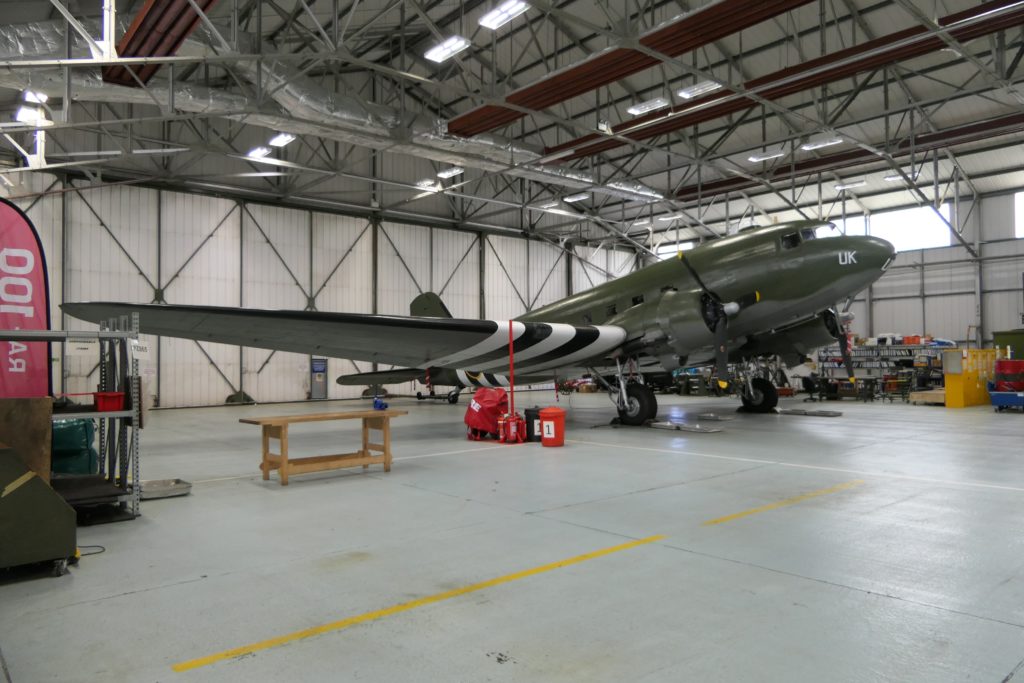 The Douglas Dakota was used primarily as a military transport plane but looks equally impressive when seen as part of the team.
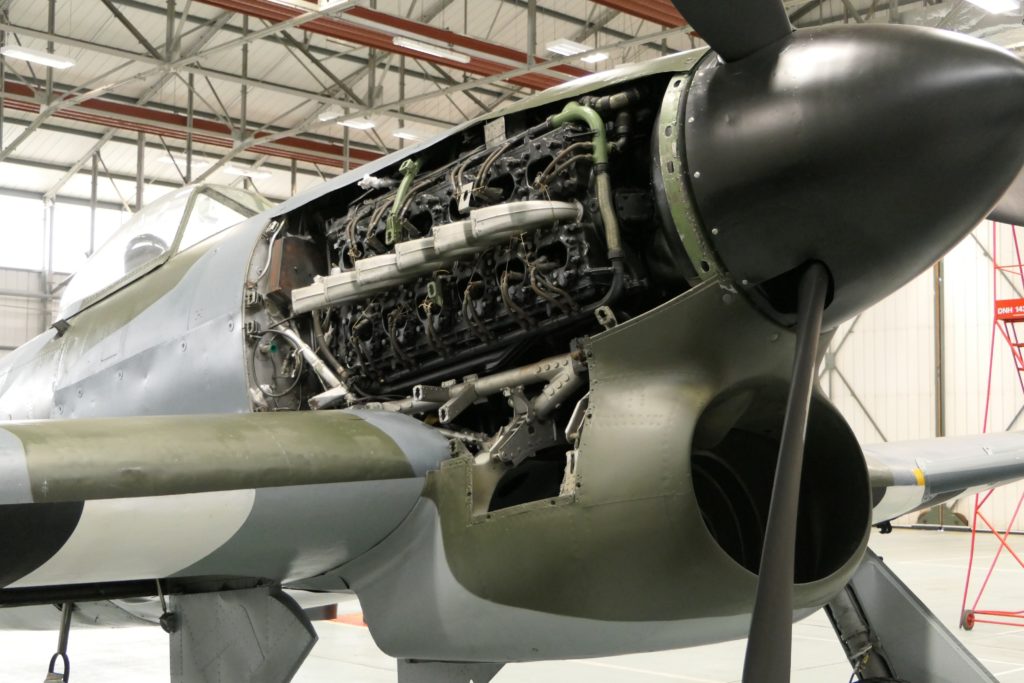 The BBMF has to undergo strict and rigerous maintenance throughout the year.
 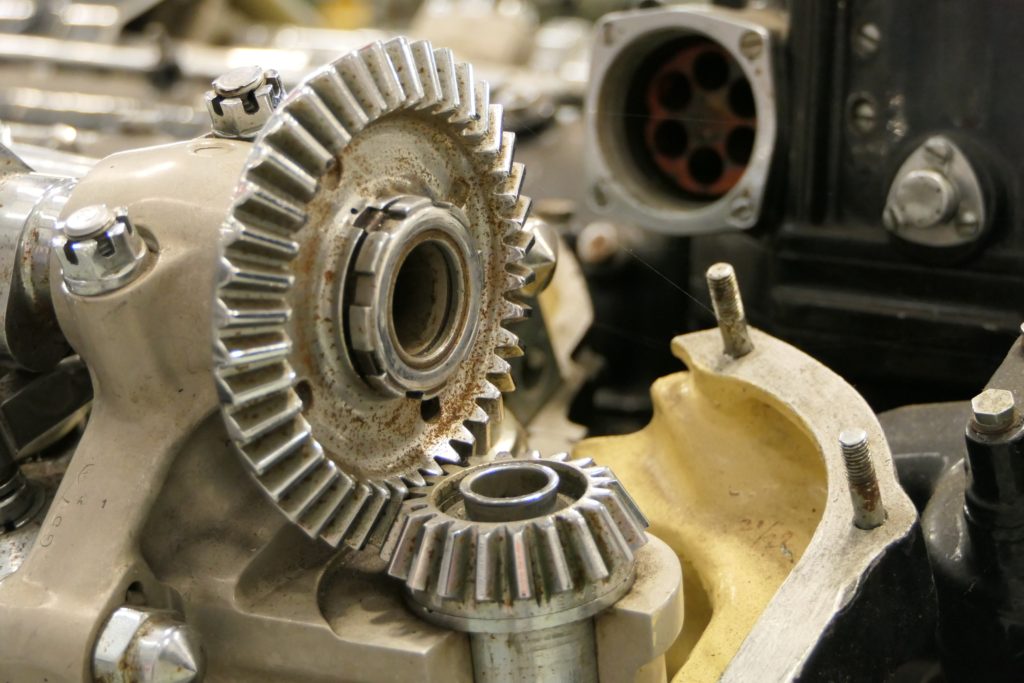 The cogs
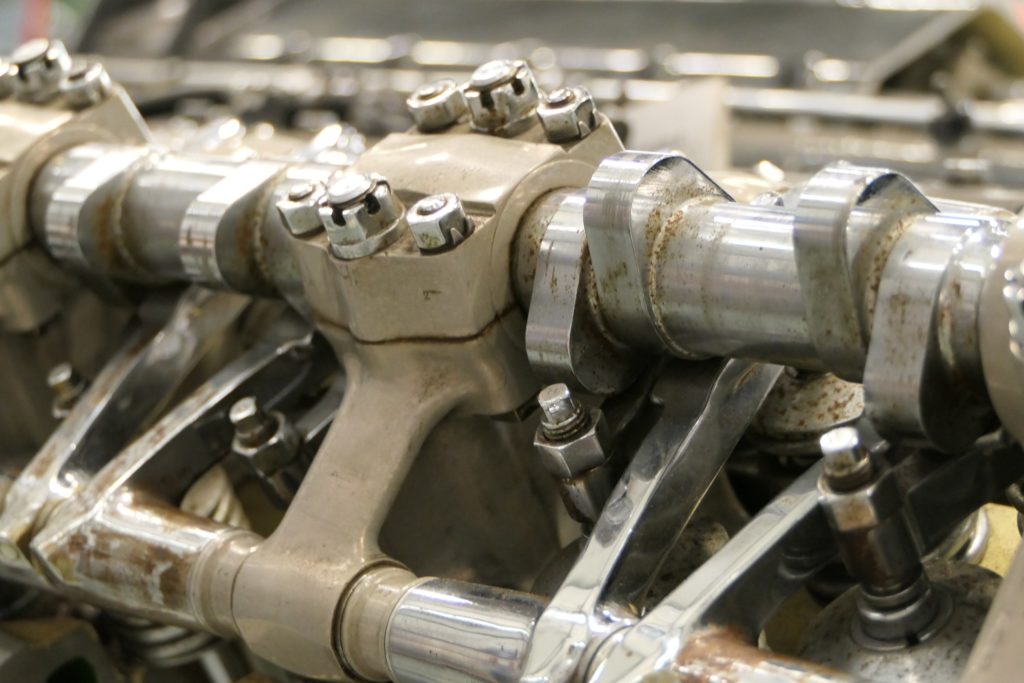 and pistons gleam (or to be more corrct the Camshaft and followers, as pointed out by Steve and probably a lot of others who have kept quiet at my mistake, cheers mate)
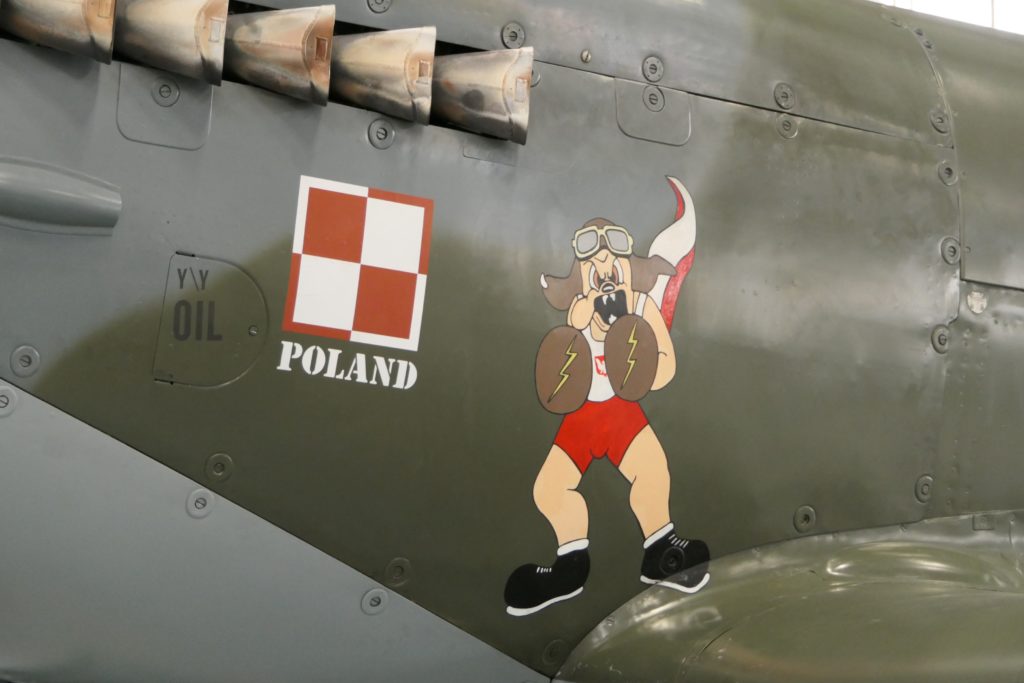 And each time the planes are repainted, the colours of the various countries that played a part in the allies victory are chosen, this shows the Polish Boxing Bulldog.
 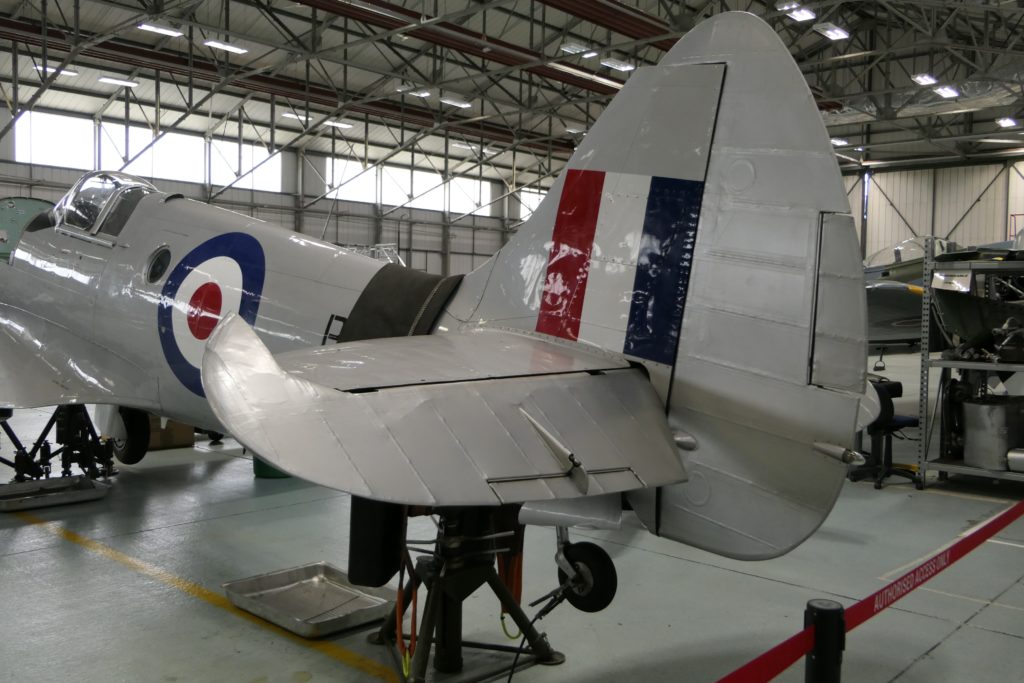 The French Spitfire is silver with the French Flag but this plane isn’t flying this season. The pilots also undertake many hours of additional training before they are allowed to fly any of the BBMF. There is only one Lancaster left in Britain that is able to fly and the RAF is doing their best to preserve it for as long as possible. It certainly gave us a huge thrill every time we saw it flying over. The deep rumble is quite unique. And as we were in Lincolnshire for nearly a month we got to see and hear it many times. It’s been a highlight of our summer and in true narrowboat life totally unexpected experience.
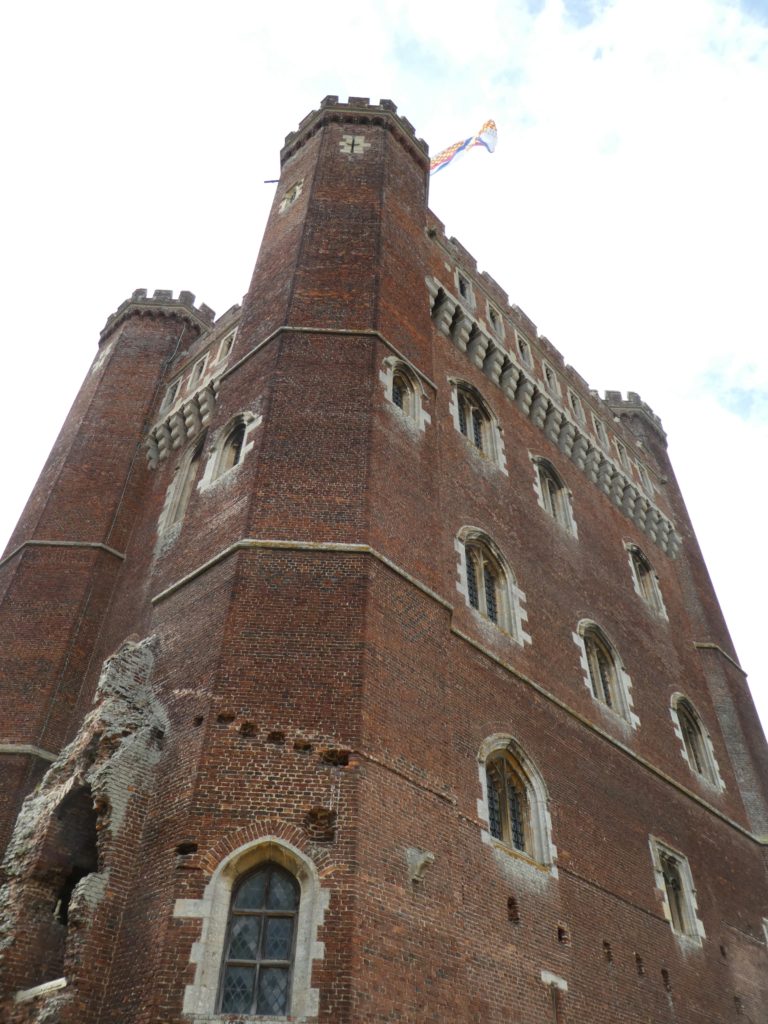 Of course, such a tower just begged to be climbed. Despite it being a NT property it didn’t feel over commercialised and the audio tour was well done and informative as it guided us, first down the 12 steps into the servants quarters, then up 149 steps through various floors, each one getting grander the higher we climbed.
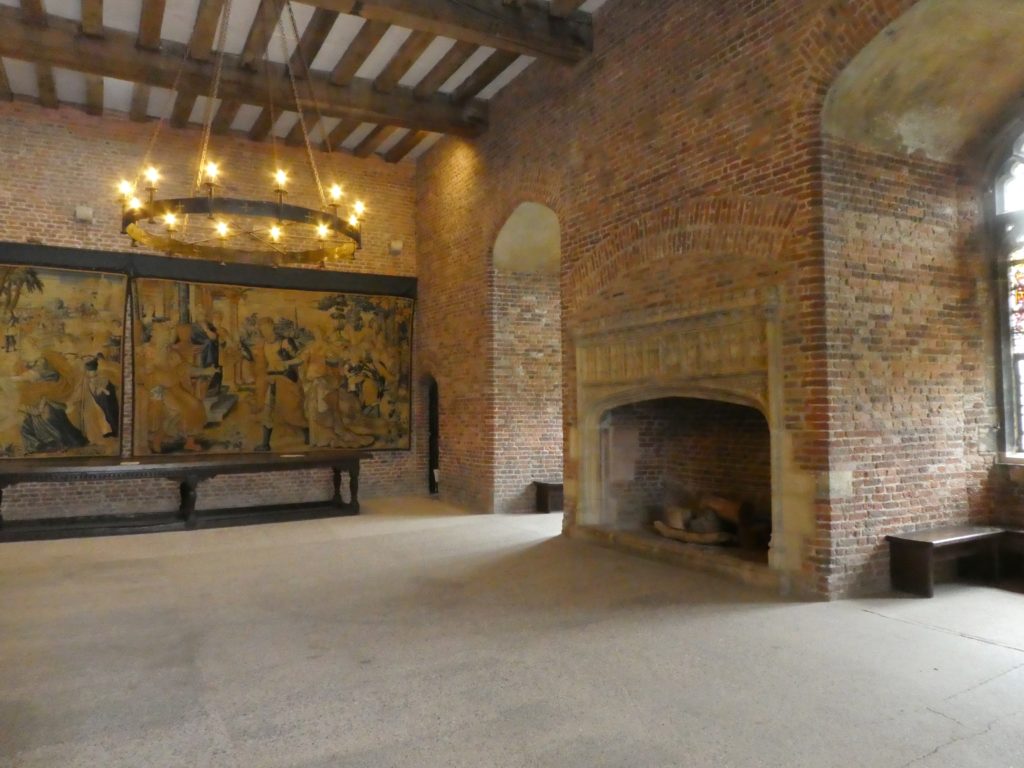 until we reached the roof.
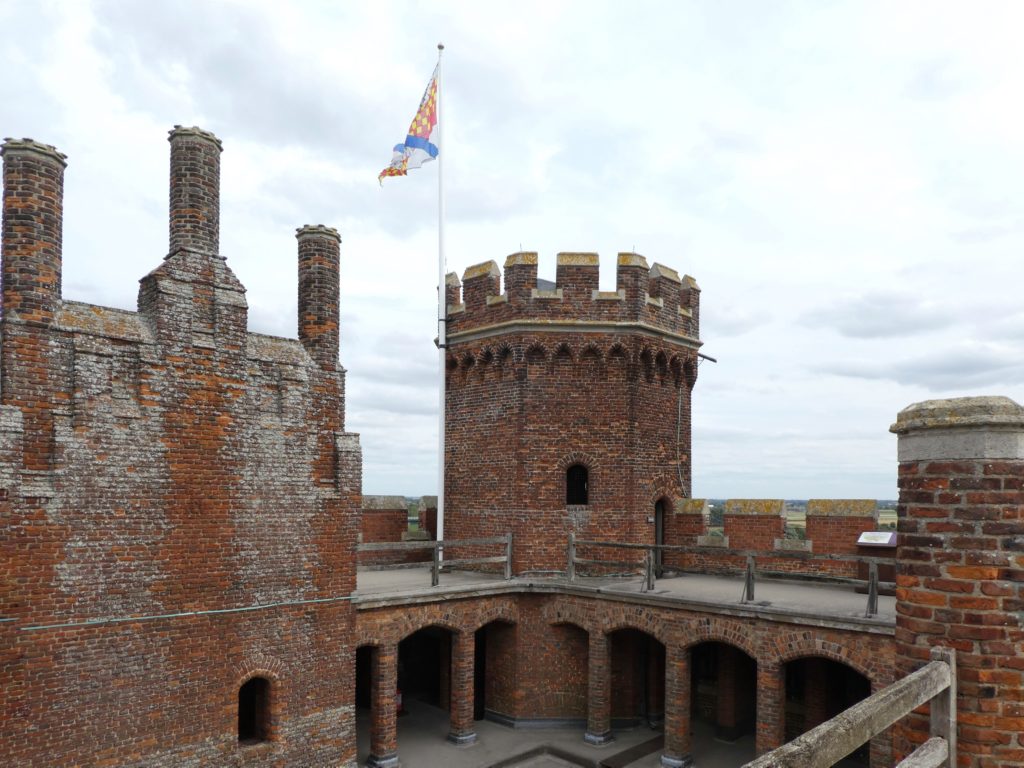 And oh what a view
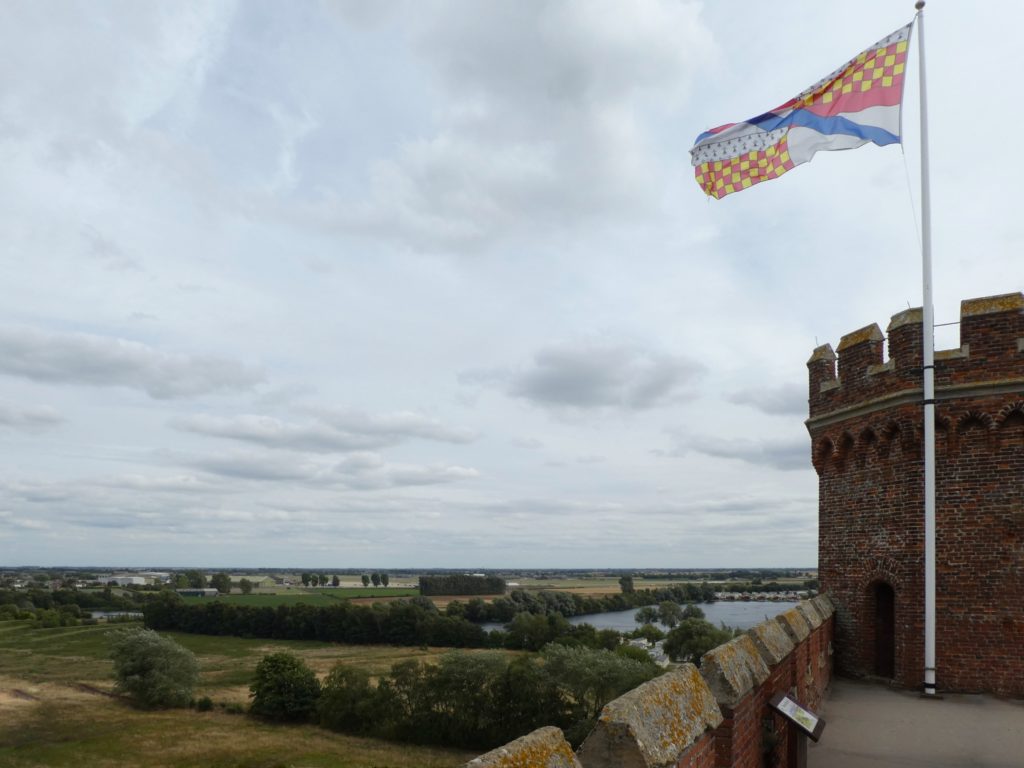 Looking south east, we could see the white buildings of RAF Conningsby and the water park lake.
 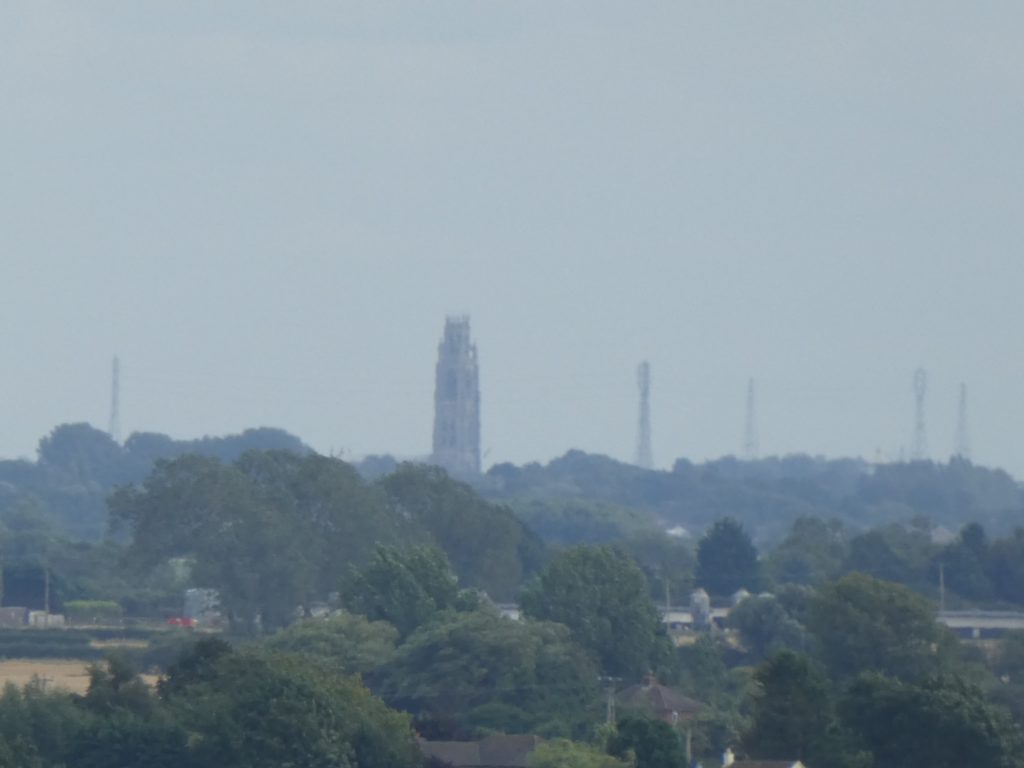 And in the far distance, about 11 miles away was the Boston Stump.
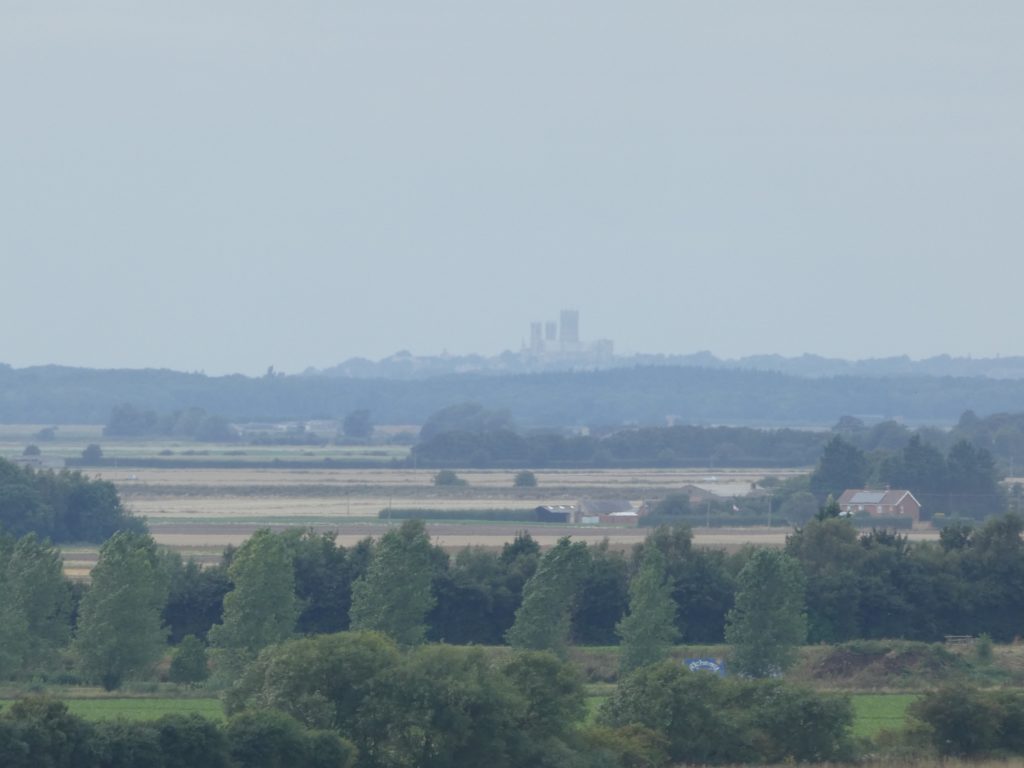 When we looked to the north west, Lincoln cathedral dominated the skyline about 20 miles away.
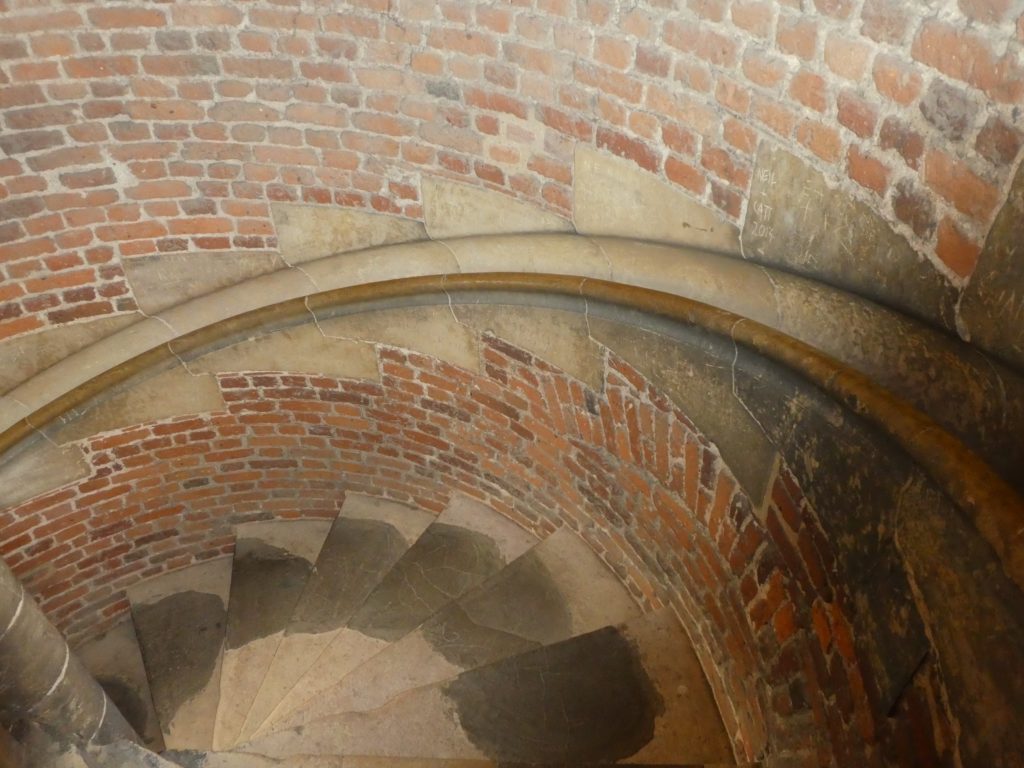 Coming down the steps was much much easier than the Boston Stump, the handrail was smooth stone set into the bricks.
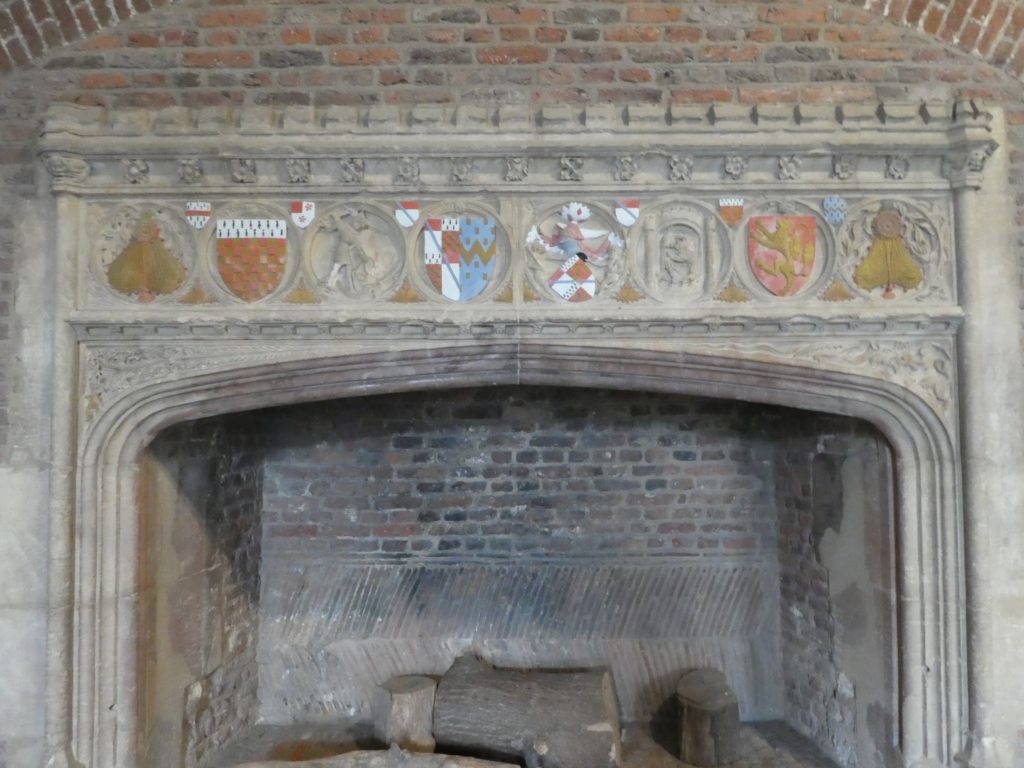 One of the notable features of Tattershall castle are the 4 magnificent stone fireplaces. I reckon if they had been a bridge we’d have got Firecrest through with room to spare. We are lucky to still have the fireplaces, because the castle had fallen into disrepair and the NT declined to purchase the building. In 1910, just before it was about to be demolished, the fireplaces were sold to the Americans, but a local vicar contacted the philanthropist, Lord Curzon. He stepped in and purchased the castle for a few thousand, and demanded to know “where were his fireplaces”. After a bit of detective work he found they were sitting at Tilbury docks awaiting their passage. Luckily he had the funds, from memory about £5000 but definitely more than he paid for the castle.
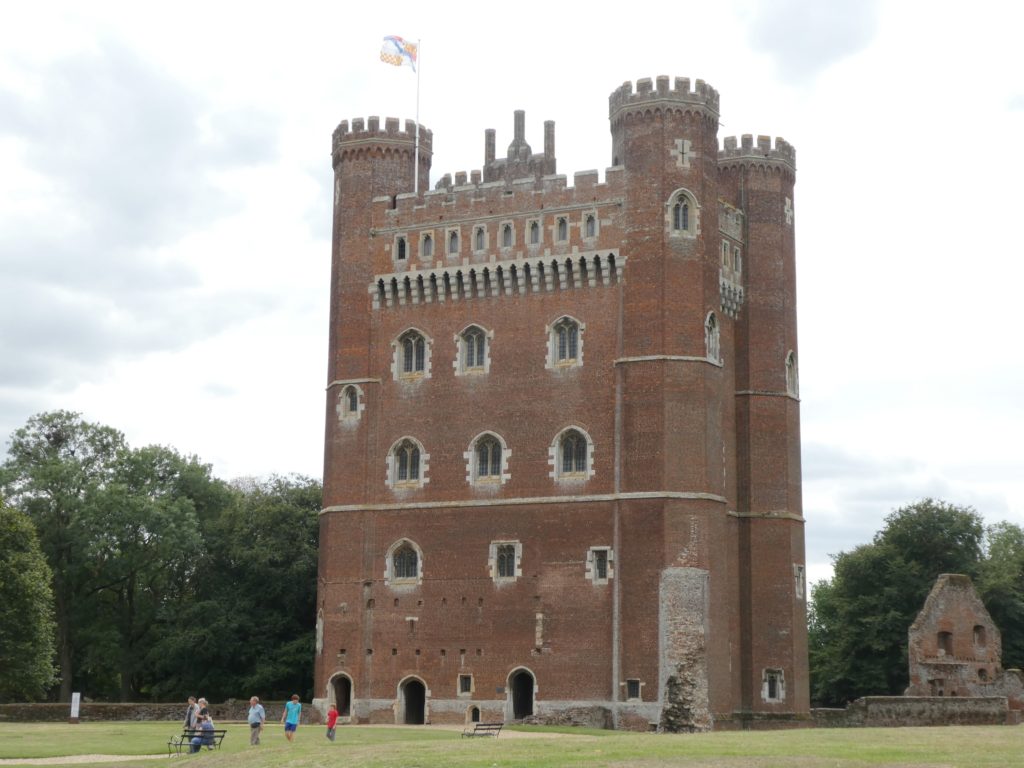 He was able to buy them back and he restored the castle at his expense before bequeathing it to the NT after his death in 1925 for all to enjoy.
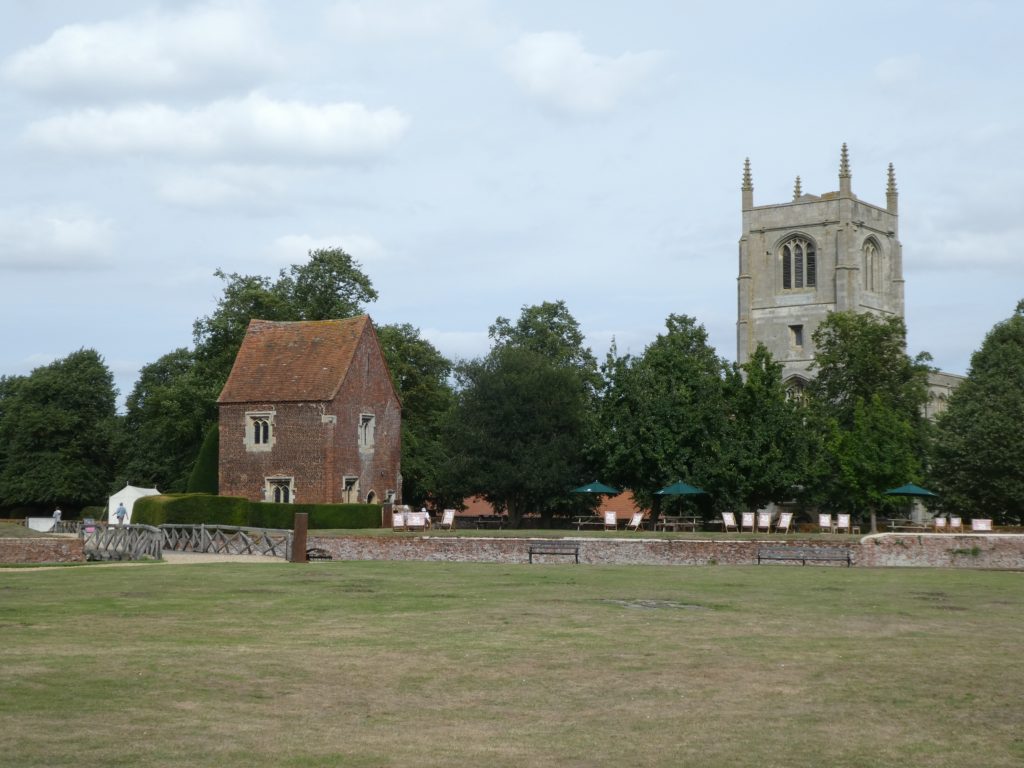 Across the moat, is Tattershall church,
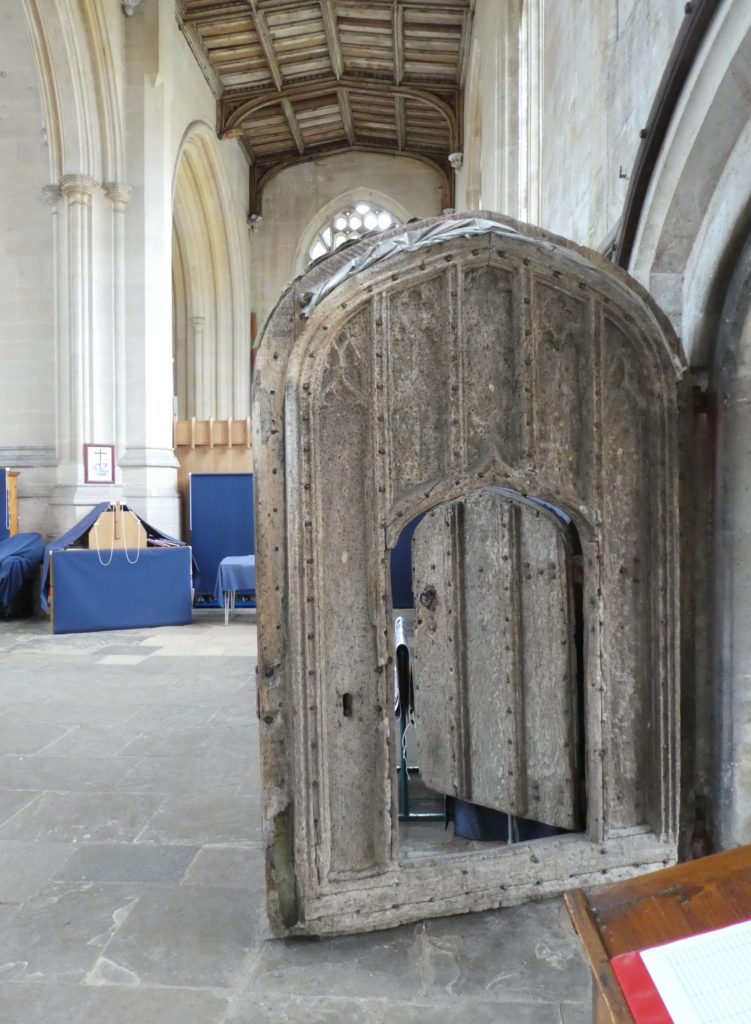 which has interesting tales to tell. You might be able to see the furnishings are draped with blue cloth. This is because the church is home to a colony of bats. Not just in the belfry, but throughout the whole church, and the evidence was clearly seen. Whilst I admire wildlife preservation, I think the novelty of bat poo in a well used building would wear rather thin in my opinion. But the bats aren’t the churches only claim to fame
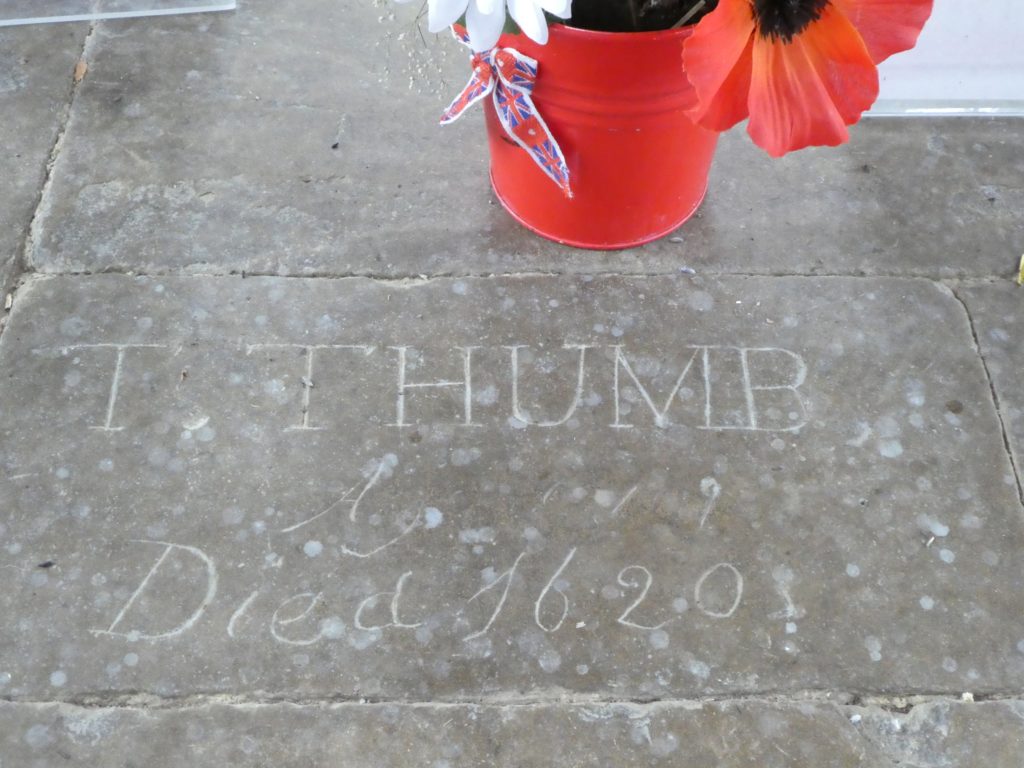 It is where Tom Thumb is buried. He died in 1620 aged 101. I make no claims about this tales acurracy.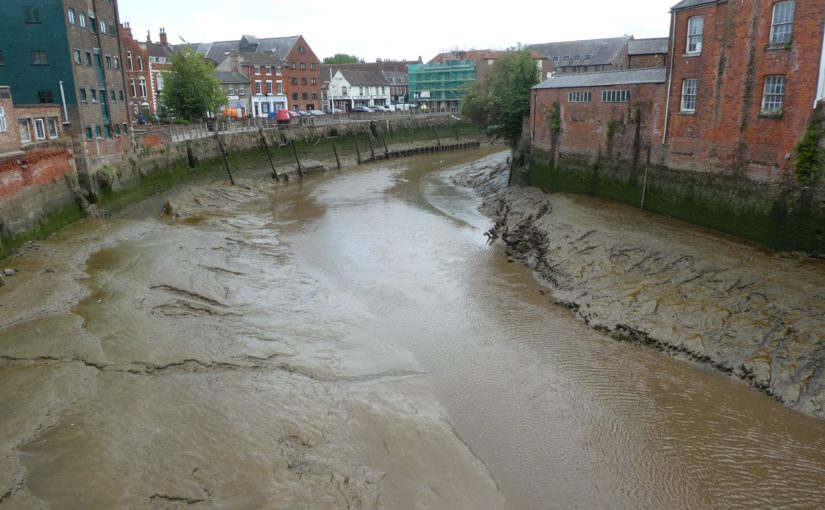
 Ian and Cherryl were first off the boat because they’d also done their homework and knew it was high tide at 10am so wanted to see the lock keeper. The Grand Sluice lock is a bit of a muddle to understand, it’s underneath the rail and the road bridge. And there’s particular ways of passing through depending on the time tide and size of your boat. They picked up a lot of useful advice and contacts, but we just observed, Unlike Seren Rose, Firecrest is a canal boat and although we could make her seaworthy, it isn’t something high on our priority list right now. But never say never, there’s usually a handful of intrepid travellers who do it each year.
 But undeterred by my apparently common mistake, we had a good look around.
 Leaving Boston has to be carefully thought out if you want to go out onto the the sea, that nice deep river we saw at full tide, looks like this on the retreat.

 This towering beacon guided us along the river to the visitor moorings, where a fellow boater said “….you do know you can go up to the top….” of course I didn’t need telling twice. Despite the clouds, the forecast suggested this would be the clearest day for the best view.
 So with my eager accomplice Cherryl, we persuaded our boys that it was only 220 steps and off we went.
 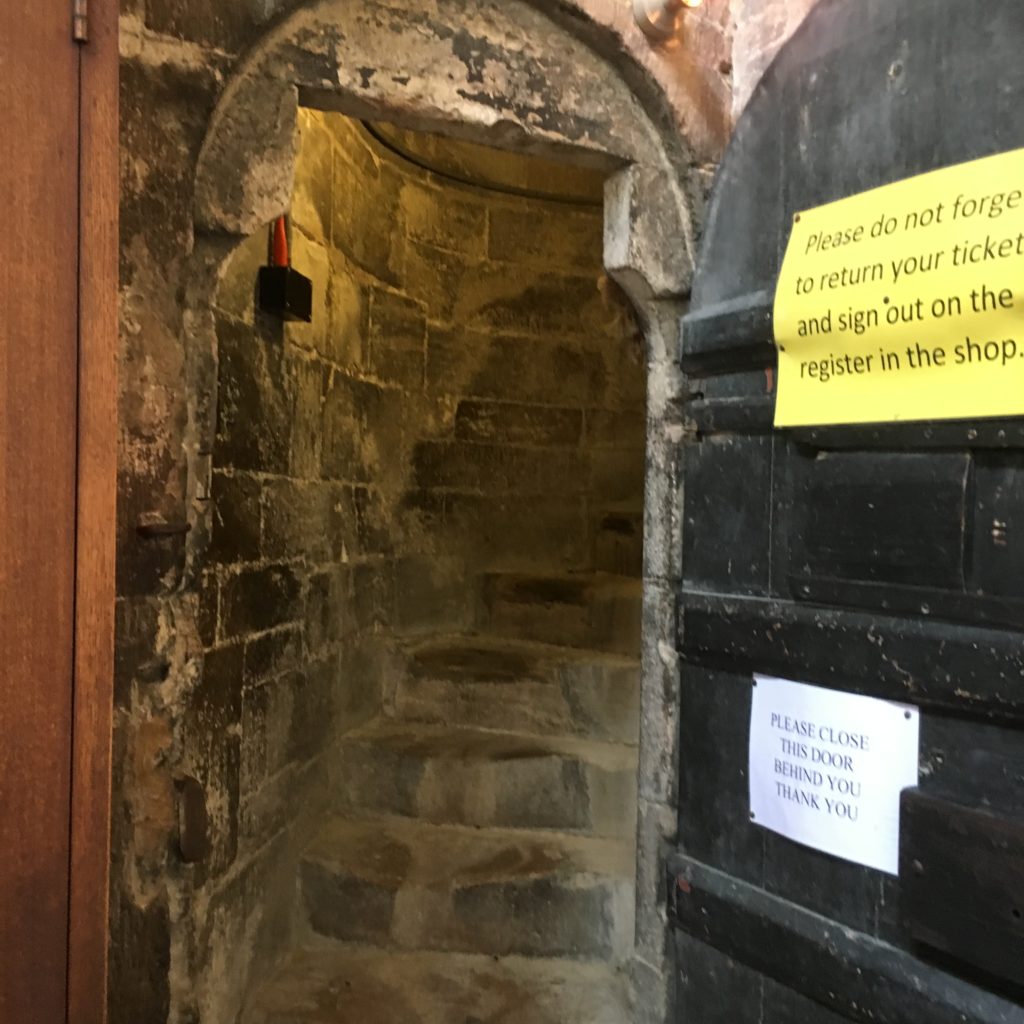 Only 220 steps indeed, we were both looking for the oxygen cylinders by the time we got to the top.
  But then we realised it was the view that claimed the breath taking prize. We were able to stand outside on all 4 aspects of the tower.
  Looking down we could see the market
  and some of the grand Boston properties built in its thriving heyday.
  And if we followed the river west, in front of the Grand Sluice, Boston lock, (under the rail bridge) the tide had retreated revealing uninviting mud going out to the estuary,
  but Seren Rose and Firecrest were moored safely upstream in non tidal water.
 Looking straight out we could see over to the Norfolk coast and the in/off shore windfarms (we’re still debating which term is correct).
 To the north was a “proper” 1820s windmill, this is one of the largest still operating in England.
  Looking to the west were the great, soon to be redundant, cooling towers of the coal power stations on the Trent and medieval Tattershal castle.
 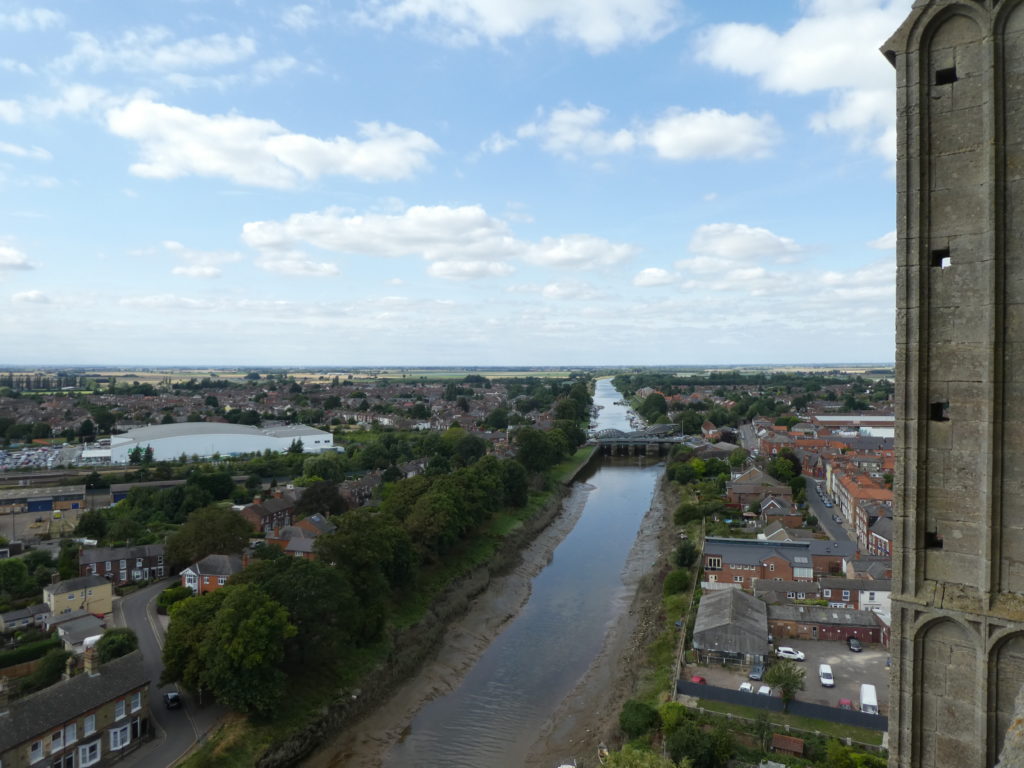 On a good day you can see over 30 miles and Lincoln cathedral but it was too hazy for us.
 I don’t usually like heights but the stone balcony encased us safely. We had climbed 145 feet up, the remaining 100 feet was closed to public access.
 Coming down was harder than going up, narrow spiral stairwells are good for the defending soldiers wielding swords. Ian and Eric obviously didn’t meet the enemy as they practically flew down. Cherryl and I took a more ladylike descent, and emerged triumphant and in need of a cuppa-provided by a very pleasant cafe in the church.
  St Botolphs seems to be a very welcoming and inclusive church. Lots of beautiful architecture but more importantly full of people.
 There were several community activities going on, the local art club had an exhibition, there were some spinners and knitters creating a WWI remembrance display of red poppies, there was a replica of St Botolphs being made out of Lego, a wood carving group working on church restoration, a cafe and a large second hand book area. The following day I had the joy of attending an organ recital, but sadly as we only had 2 nights in Boston we missed taking part in any of the many Christian worship activities also advertised.
 Our first night was at Bardney Lock. The visitor moorings, with electric hook up, are about a mile away from the village, so as we’d arrived quite late we didn’t stop to investigate.
  The further East we travelled, the thicker the duck weed became, the swans didnt mind but not much fun to cruise through. Combined with the retaining levees, it wasn’t an exciting journey, until we heard a rumble and a roar in the skies above us.
  As we looked up, we realised a hurricane had just passed us. Not the windy variety, but we were directly under the runway flight path from
  We had to work out which way to look as both the Hurricanes and Typhoons had come and gone before we heard them, but always seemed to fly in pairs, so if we missed one we knew there’d be a second close behind. I’m not to sure we would like to live so close to the airbase, but we were only too pleased to be able to moor up at Dogsdyke, within walking distance of the base. Of course it would have been rude not to take advantage, so we all went exploring.
  There’s a viewing mound just outside the perimeter fence for all the enthusiastic plane spotters, one or two armed with radio which we assumed allowed them listen in to air traffic control, so they knew what to expect.
  The runway was still quite a distance away but it didn’t stop the excitement build as we realised not only were active RAF Typhoon and Hurricane squadrons based here, but also it was the home of the Battle of Britain Memorial Flight,
  Not only were we watching the modern, super fast and noisy,
 we were being treated to a close up of the only flying Lancaster bomber,
  The Dakota coming into land,
  And one of the Spitfires flying overhead.
  What a privilege, having missed most of the fly past over Lincoln’s 1940s weekend, we were now getting our very own personal air display of this magnificent part of our heritage.
 Ian and Cherryl were more worried than us because Seren Rose is a true “Fat Boy” with a wheelhouse, which they would have to collapse to allow them through. With a close eye on the weather, cause they really didn’t want to get rained on with their roof down, Seren Rose set first. Waving goodbye to Brayford Pool and entering the River Witham.
 This twisting narrow passage takes us under a thriving shopping street and a magnificent medieval building which is now the home of Stokes coffee house. Ironically this awkward passage is actually called High Bridge. It has a fascinating history. Built by the Normans in the 12th century It is England’s oldest stone bridge still in use to have occupied medieval buildings on it. Then it was our turn.
 First we had to pass under the modern road bridge, with its slogan “Where have you been” inscribed across It.
  Then we saw the hole…. It certainly looked ominous as we approached.
 And more like a tunnel than a bridge. We’d never have guessed what was above us. If we hadn’t walked across the bridge first.
  Once through the Glory Hole we breathed a sigh of relief, the only casualty being one of Seren Roses fenders, which Cherryl was able to fish out with their boat hook.
  Lincoln has embraced it’s waterways and tried to prettify a 20th century shopping centre with hanging baskets and a stunning millenium sculpture called Empowerment. Sadly this area has a deprived feel to it. As well as the busy shoppers and tourists, it’s sheltered walkways attract quite a number of drug addicts, homeless and unemployed people, who looked anything but empowered. My moral conscience is always troubled when I see such hopelessness. I feel so blessed and privileged to be able to live on a narrowboat the way we do. And we do bring pleasure to many,
 As we dutifully wave to our admirers on the next bridge.
 Farewell for now Lincoln, we will be back to explore the rest of this magnificent city next week.
 There were quite a few Yanks over here helping the party go with a swing. There was live music, big band and swing with dancing.
 We were treated to a lesson on doing the Lambeth Walk at an open air tea dance.
 And a pipe band to help with the fling
 I thought Eric had taken a shine to the dancers
  but he had his eye on this rather fine vehicle
 Ian and Cheryl fancied this one in green.
 While I was in stitches over the fancy bunting.
  And wondering where I’d be now if my nurses uniform hadn’t been the functional trousers and tunic it is today.
 Of course with it being RAF weekend, we were treated to fly pasts by a Lancaster, Spitfire and Hurricane. Unfortunately despite the blue sky it was quite windy so they arrived earlier than advertised, which meant we didn’t get a really good view of them as we were cloistered in the cathedral quarter.
  Poirot and his friends offered to go and find them for us but they were enjoying the pink fizz too much.
  Away from the cathedral quarter there were more stalls and a display of RAF fire engines on the waterfront.
 Although we weren’t sure if this guy had suffered 100% burns, was the Michelin Man, Stig or wearing his uniform.
 In the evening, events switched venues with the party atmosphere moving to the waterfront with street food and music. The grand finale on Saturday was a firework display set off from the island in the Brayford Pool, which we got to enjoy sitting on the roof of Seren Rose with Ian Cherryl and their family, Tony and Jo. And 5 minutes afterwards it started to rain.