

….. we were asked when we finally got the bus into Lichfield. No we hadn’t, but our interest was piqued. What could be so special that a stranger on a bus asks us that. We would find this table in Lichfield Cathedral, so off we set to find out what all the fuss is about. And I have to say I am now quite happy to ask you the same question because the table is quite magnificent.

The table is known as The Table for the Nation, and came about through the discovery of a truly impressive piece of Bog Oak. Its creation was overseen by The Fenland Black Oak Project team

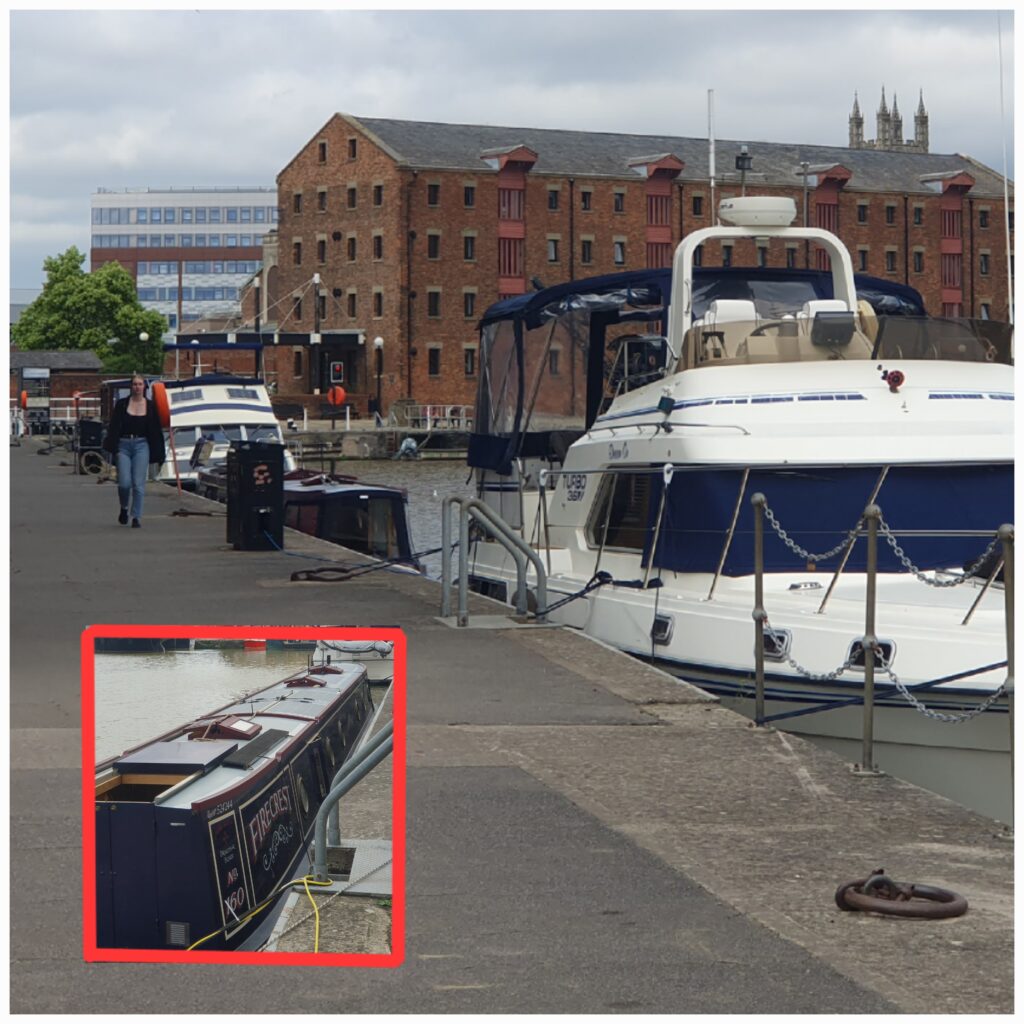
5000 years ago there was an oak forest in the Norfolk Fens. But unlike today’s oak trees, that grow to roughly 20m tall, these oak trees were giants, and grew to 50m tall. ( Firecrest is 18.3m long).

At the time this particular tree fell, the rising sea levels on the East Anglian lowlands were creating stagnant anaerobic lagoons. The lack of organic life and soluble iron deposits all helped to preserve the wood and turn it black. Over millenia it became buried in the peaty bogs, until in 2012, during routine cultivation it was exposed. Fenland farmers are well aware of how rare and valuable Bog Oak is so they had the presence of mind to call in the experts. And so the Jubilee Oak (named in honour of the late Queen’s diamond jubilee ) began a new journey.

What was particularly amazing about this piece of oak is it’s length, 13.2m long. It was undamaged, it was straight and there was no insect or fungal damage. It is incredibly rare, probably unique and a plan was made to preserve it for the nation.

The story of the of how this piece of wood became The Table for the Nation, is told so well on their website that I am not going to attempt to reproduce it. It’s a short easy read and I strongly recommend you take a look.
The Fenland Black Oak Project (where most of my photos have been Swiped from)
In 2022, after 10 years of skilled craftsmanship, borrowing a mobile sawmill from Canada, developing new innovative techniques, and a lot of love and care, this magnificent table was unveiled in Ely Cathedral

The craftsmen managed to keep the 13m length, and echoing the period when the acorn became an oak, they incorporated a bronze understructure and a wheeled folding mechanism that allowed the table to be moved by just two people.

I don’t know how heavy the table is, but during construction it took 18 people to move just one plank.

The size of the table means it requires an equally impressive sized venue, and if you have such space you can apply to host the table. Useful for family dinner parties

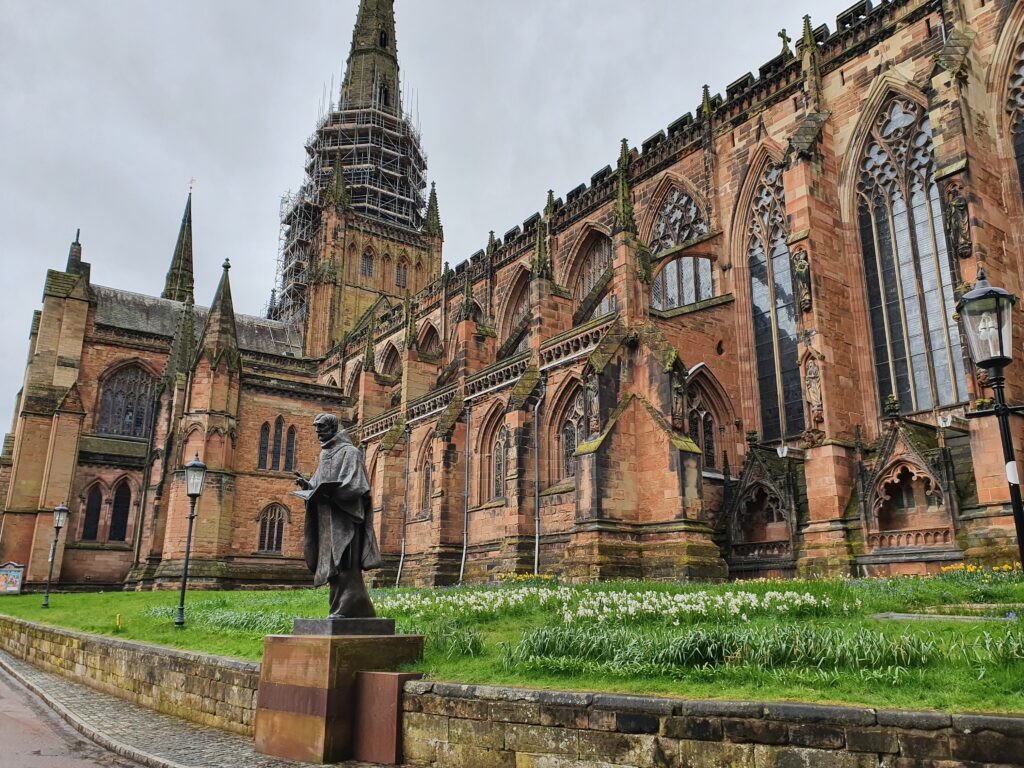
The table is currently on display in Lichfield Cathedral for 10 months. One of the lovely things about this table is that the public are at liberty to touch and stroke it unlike many precious artifacts, although one of the guides nearly had a heart attack when I little boy bored of her explanations decided to race his toy tractor along it. Lichfield Cathedral itself is a beautiful building.

Both inside and out


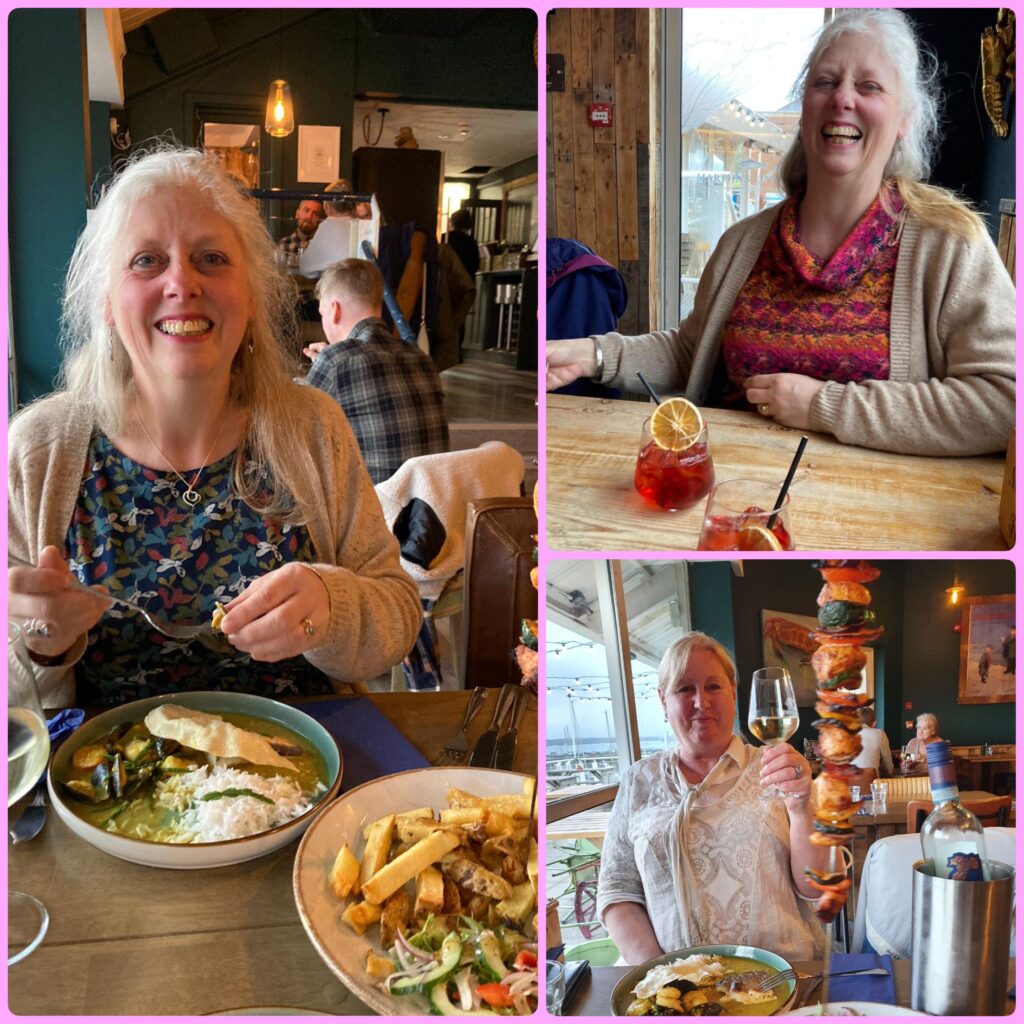
And just for good measure, here’s Firecrest’s table









 Back in the day when the Romans came to stay, they fortified Lincoln with a city wall. Although it was to later get in the way of one of the cathedrals many extension.
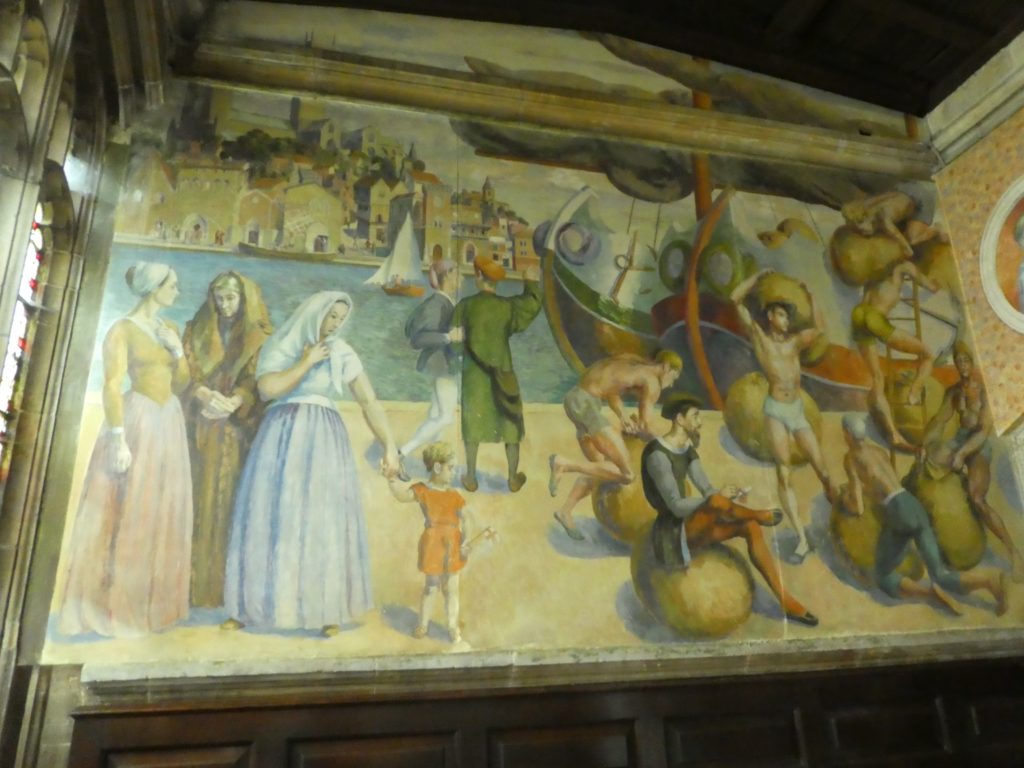 Then the Vikings also took advantage of the river access and the deep water of Brayford Pool. As did these folk as shown in a painting hanging in one of the chapels.
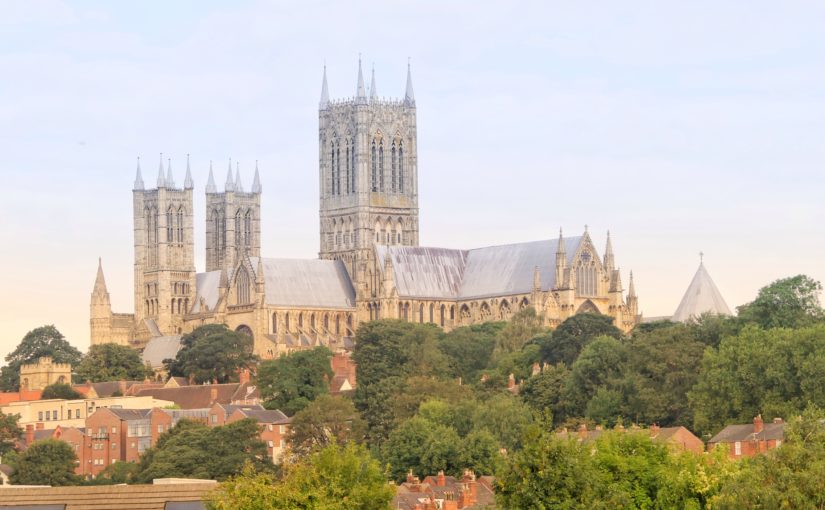
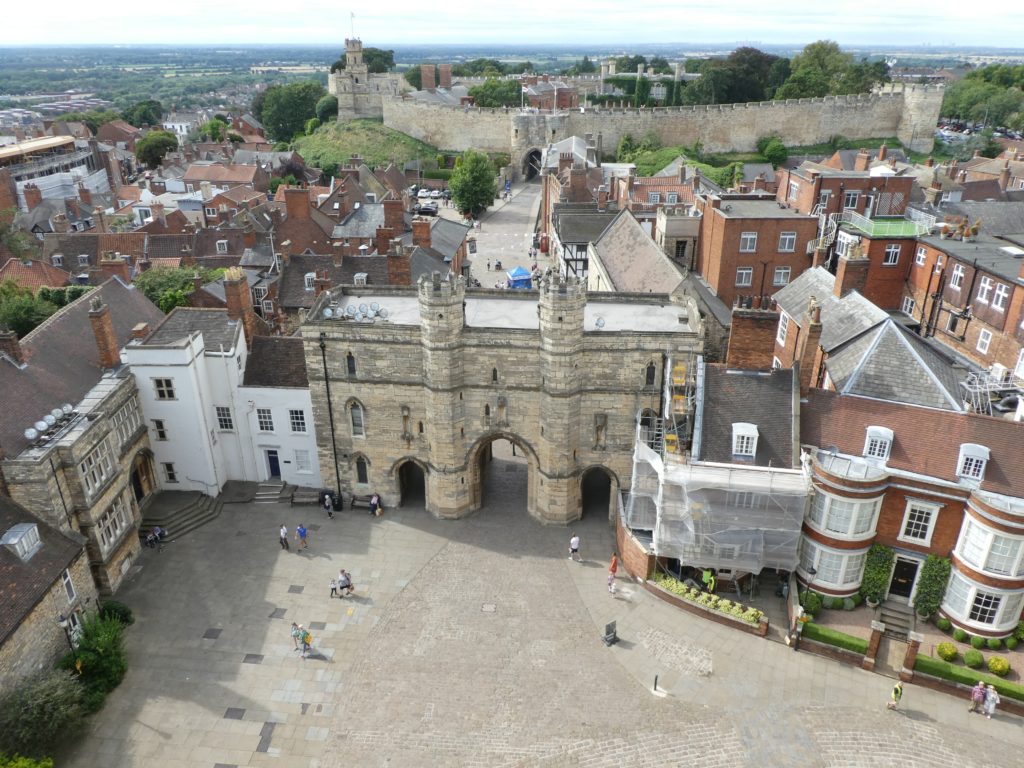 However it wasn’t until William the Conqueor wanted to stake his claim, and show his Norman dominance on the marauding hordes of northerners, that the catherdral and castle were built out of local stone. It was a hugely significant seat of power and in 1215 the Magna Carter was brought here to be signed by the Bishops. Lincoln still holds one of the only 4 remaining originals in its library.
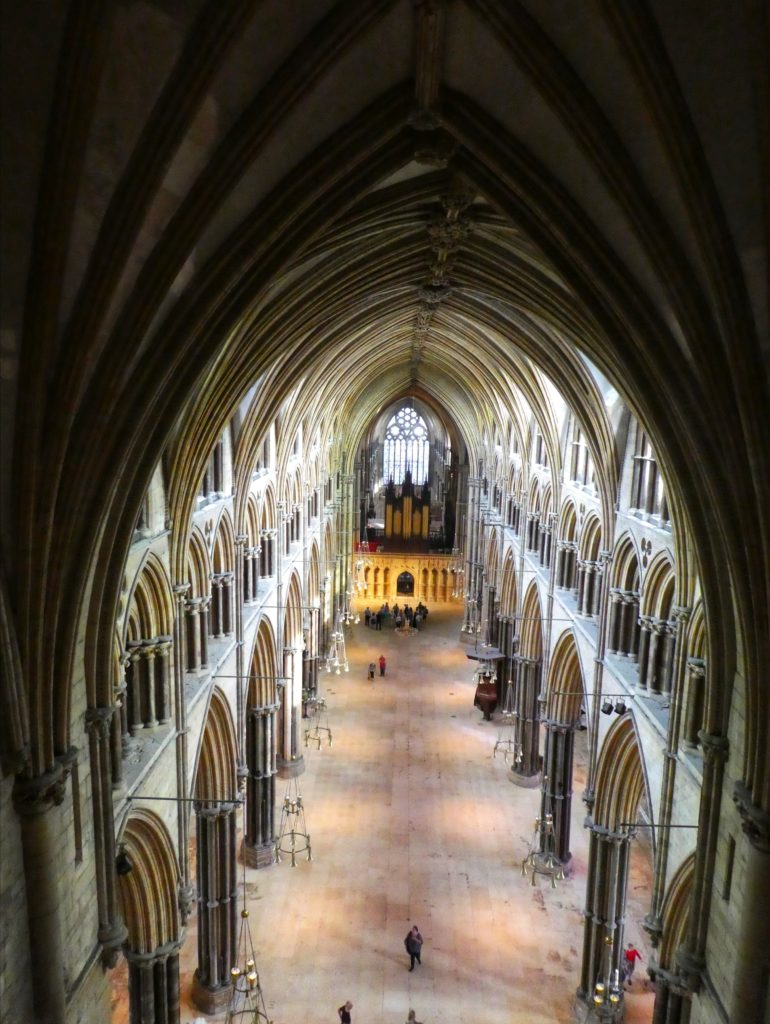 The Cathedral’s life hasn’t always been an easy one, 50 years after it was built it burnt down. It was rebuilt but in 1185 it was destroyed by an earthquake. Rebuilding wasn’t always well planned, the person responsible didn’t align the east and the West correctly so the spine along the beautiful vaulted ceiling is wonky and doesn’t meet up as it should.
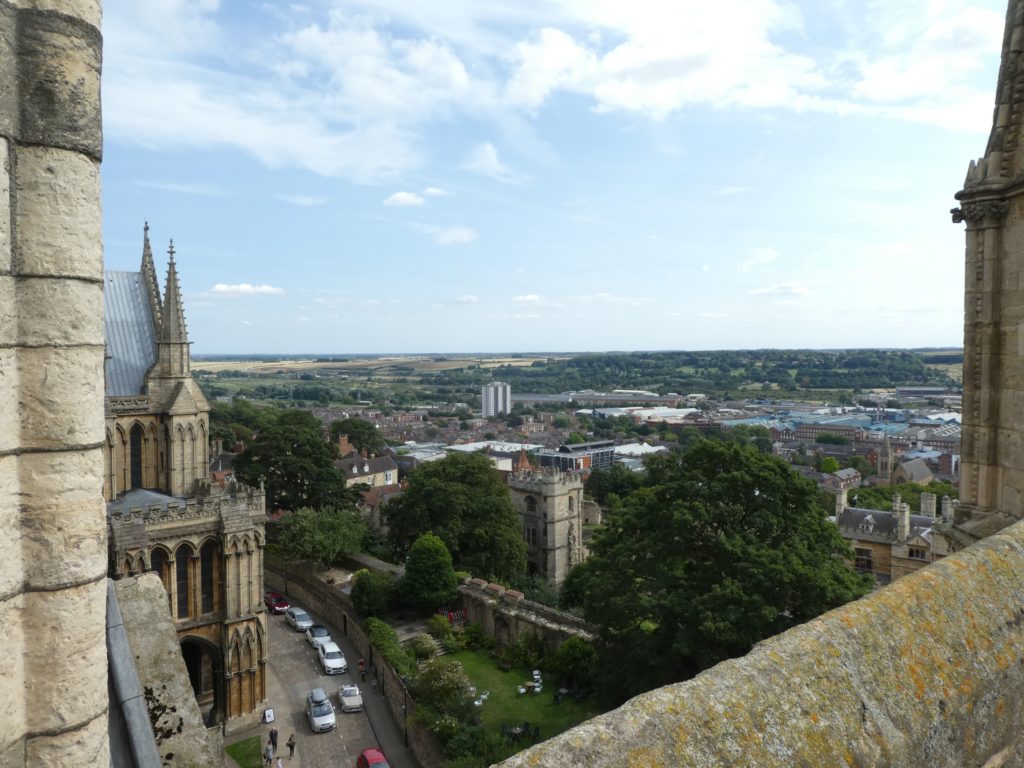
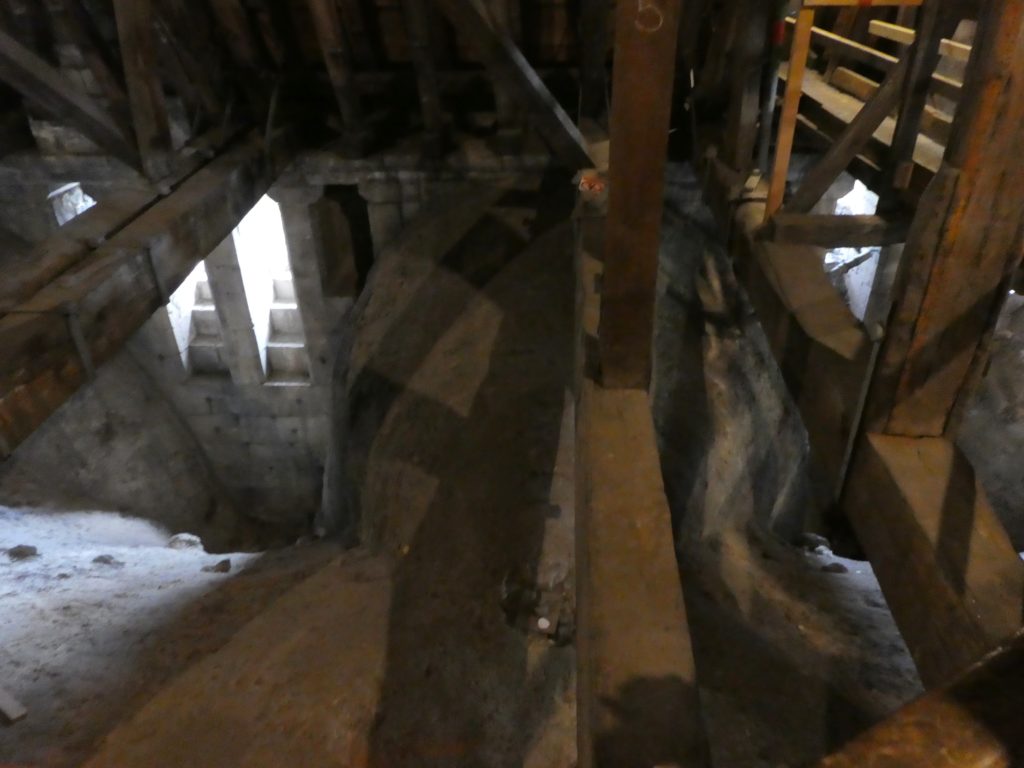 The tower tour takes you right up into the rafters so you can look down onto the lime mortar on the upper side of the vaulted ceiling. You don’t always realise when you look up that there’s another 30 feet of cathedral above what you see.
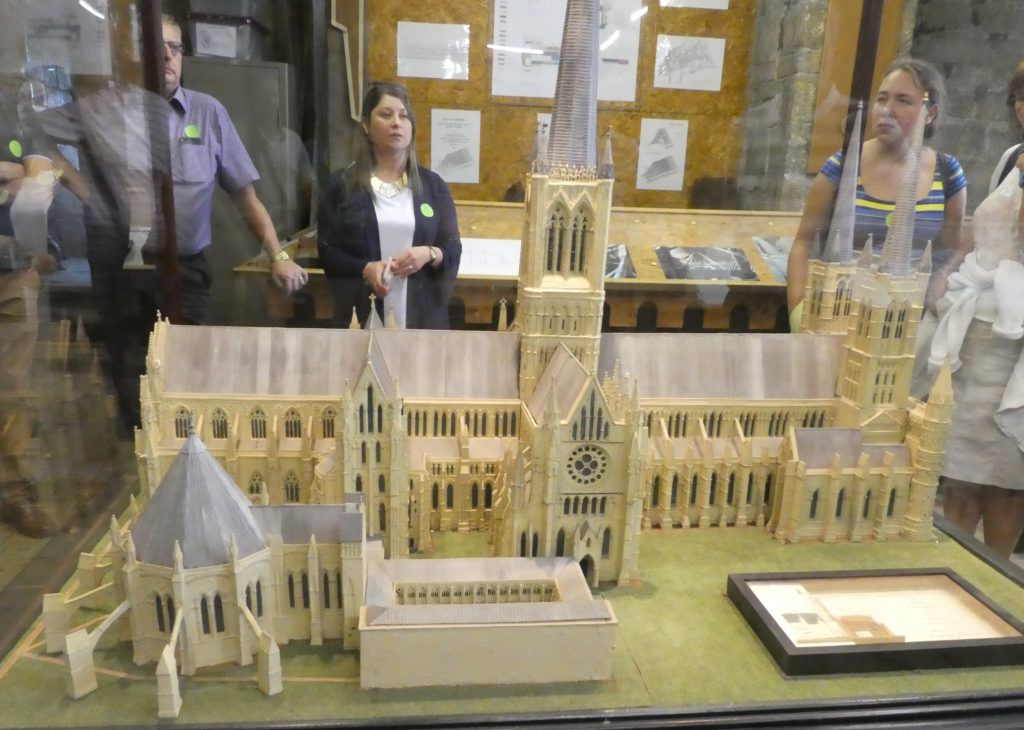 In 1311 a spire was added to the central tower, reaching 160m, taller than the Pyramids of Gaza. It became the tallest building in the world for over 200 years but being a wooden structure encased in lead, it was a bit heavy and in 1548 it blew down in a storm. In 1807 the north and south tower spires were removed much to the consternation of the people of Lincoln but Health and Safety was being adhered to by then.
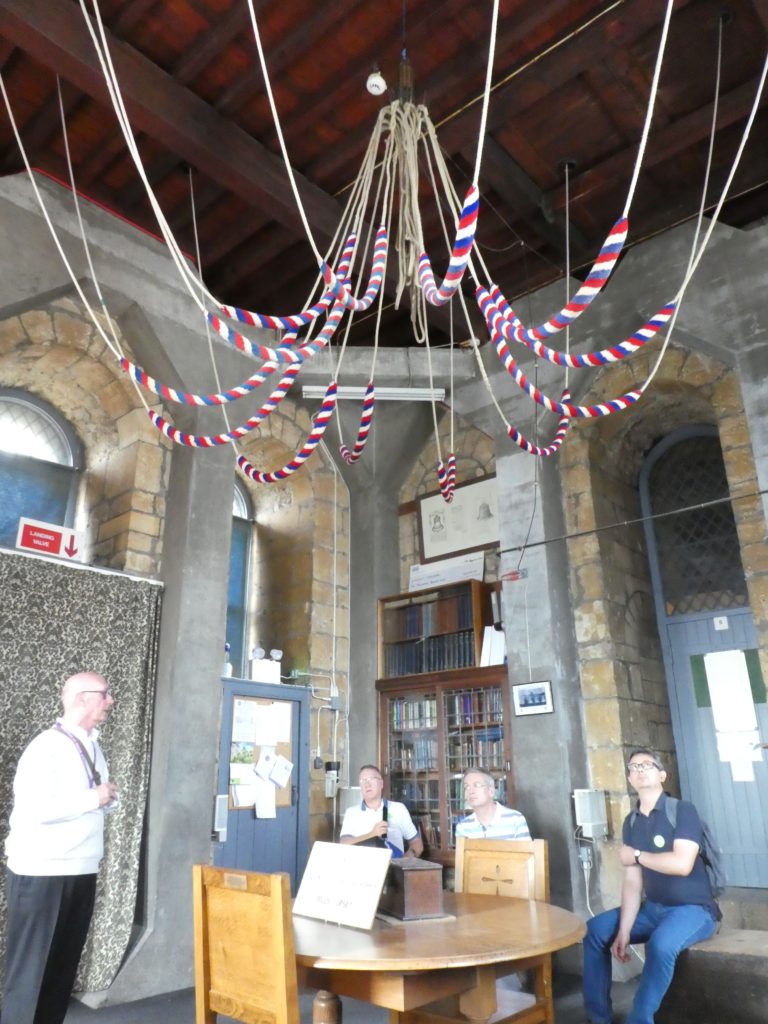 Health and safety also decreed that although we were allowed in the bell tower, the ropes had to be out of reach. The bells rest in an upright position so that the the first chime is correctly timed.
 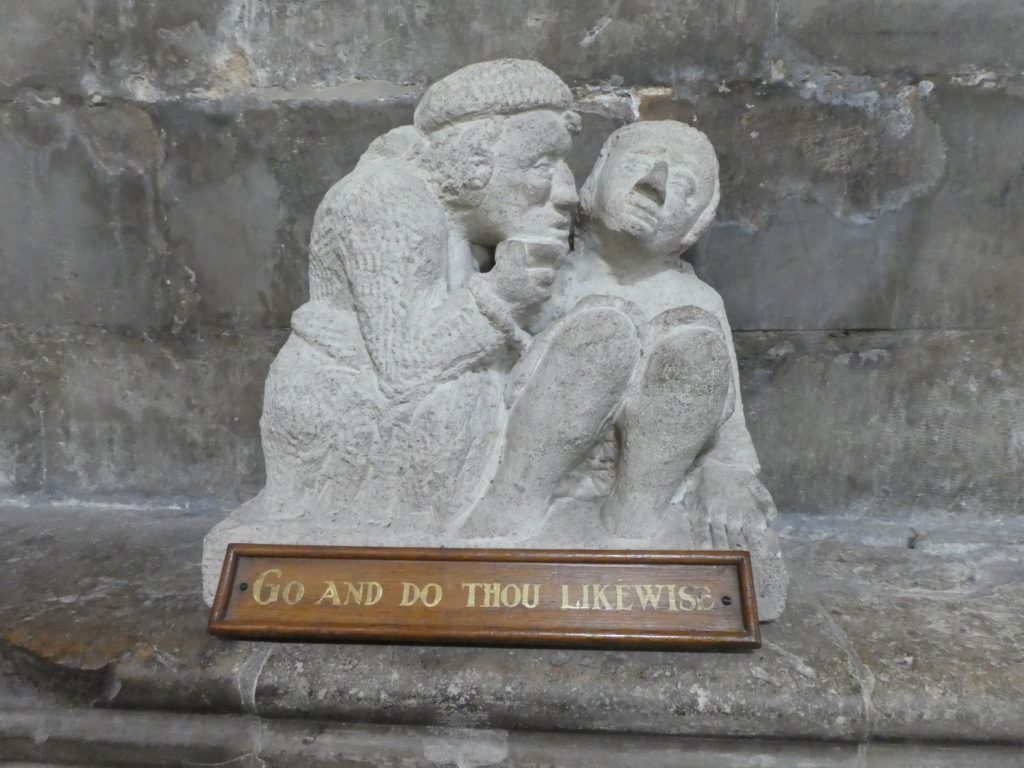 Obviously there’s a huge amount that I haven’t recounted, condensing 1000 years of history into 10 minutes leaves a lot of gaps for rebellions, civil war But I recommend paying the extra to do the tour.
 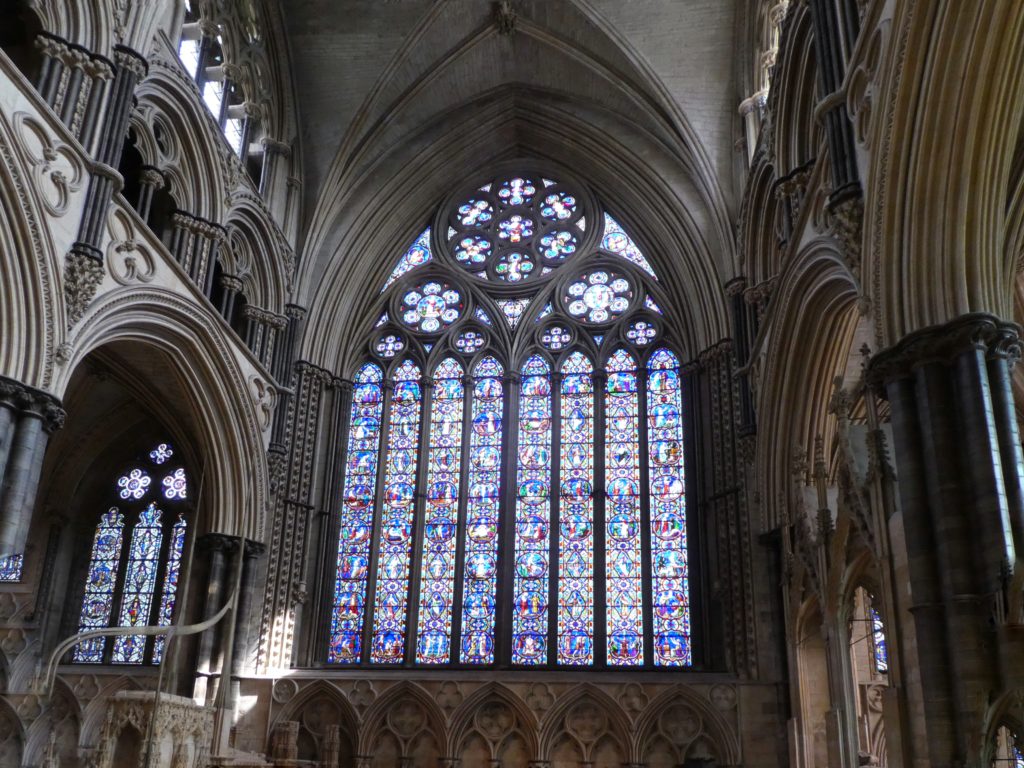 Stained glass is always a beautiful thing to see in a cathedral, this one is known as the Bishops Eye
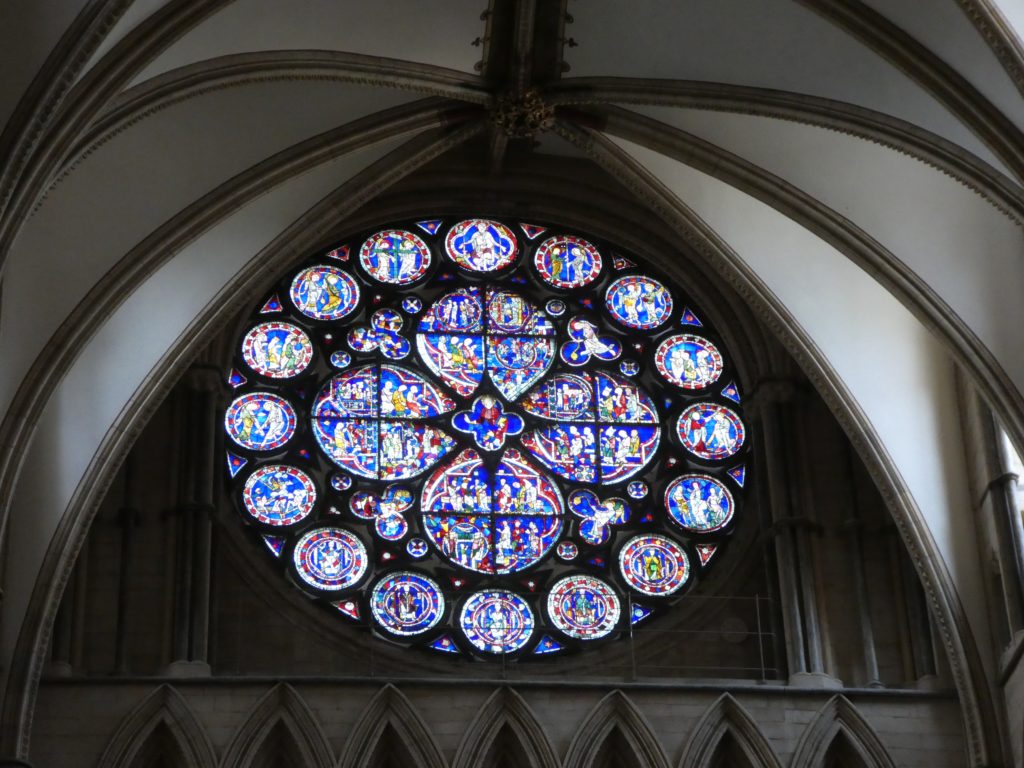 and the rose window opposite is the Deans Eye
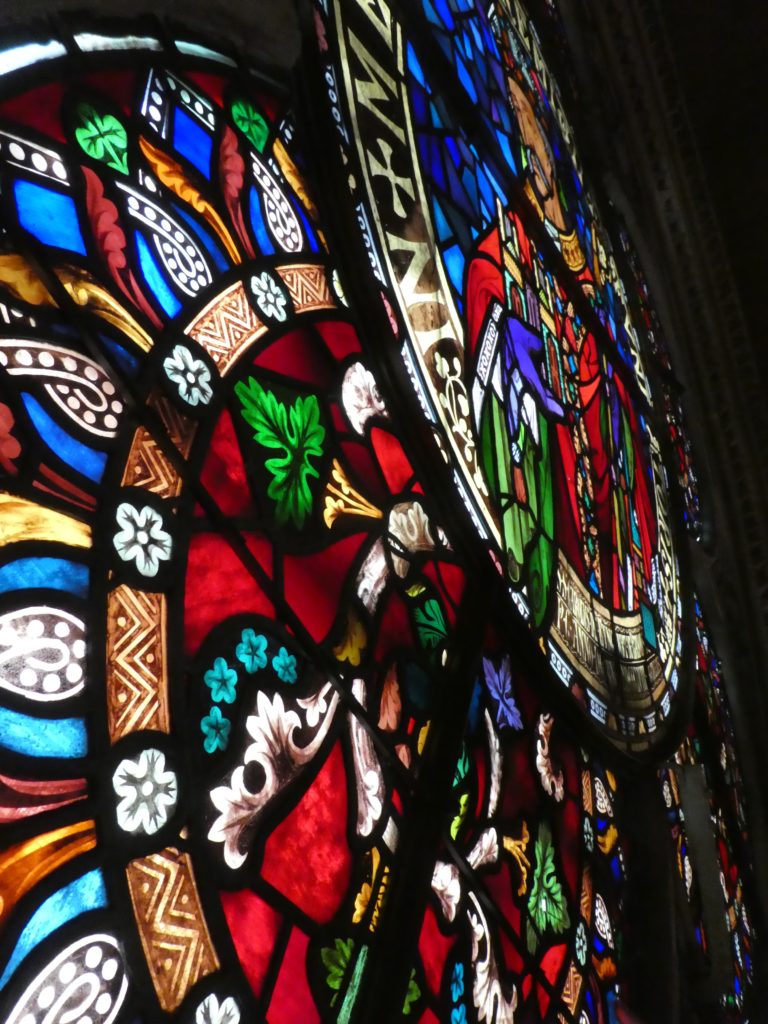 This one facing West shows Revious, the monk William the conqueor put in charge of building the cathedral originally. It still contains some medieval glass, when It was a real honour to be able to walk right in front of it on the tower tour. There is so much to see and most of it hundreds of years old, but there are some new pieces of art work on display.
 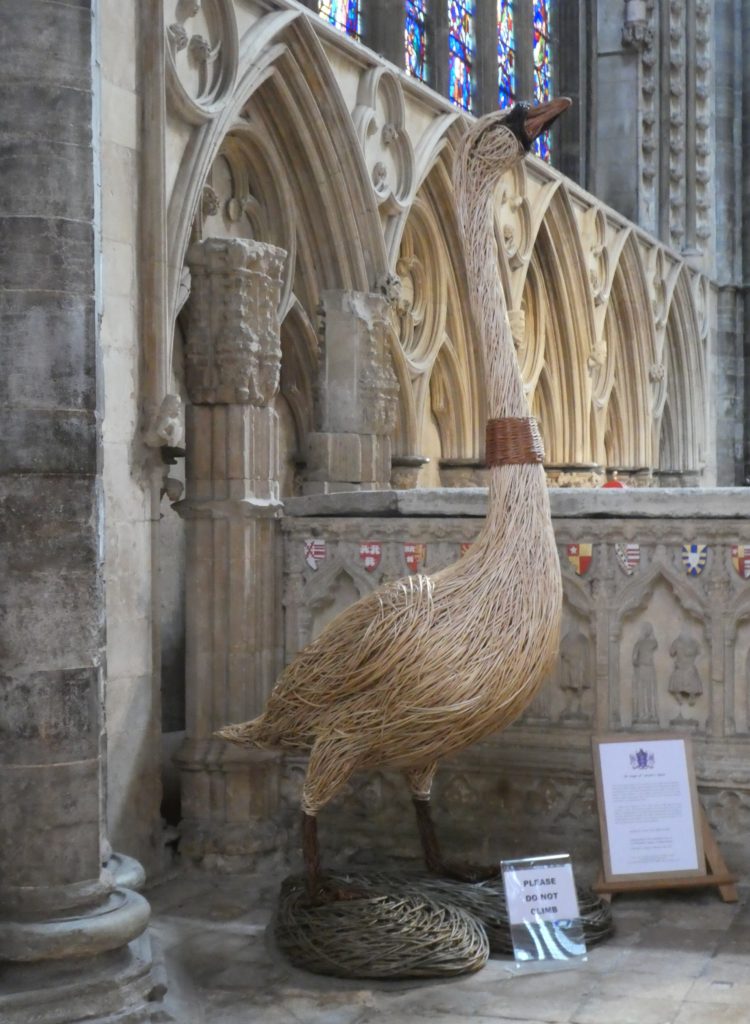 I particularly liked the giant swan. St Hugh of Avalon was one of the early bishops and he befriended this fearsome bird, which terrorised the people whenever St Hugh was away, but behaved like an angel whenever he was in residence.