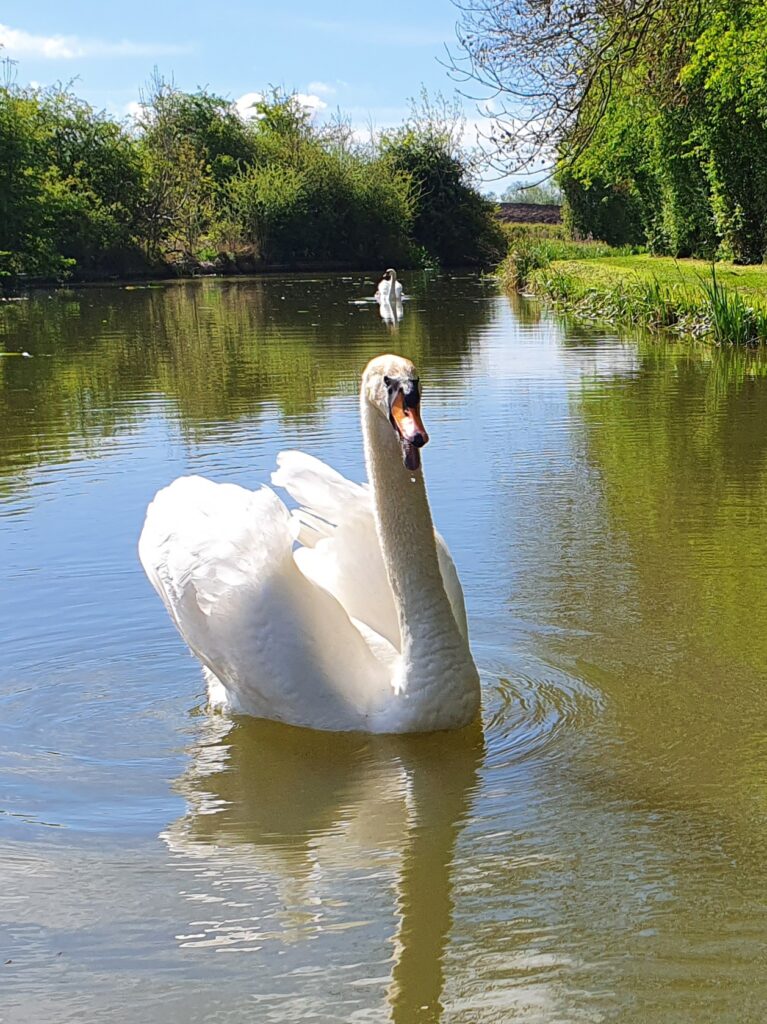
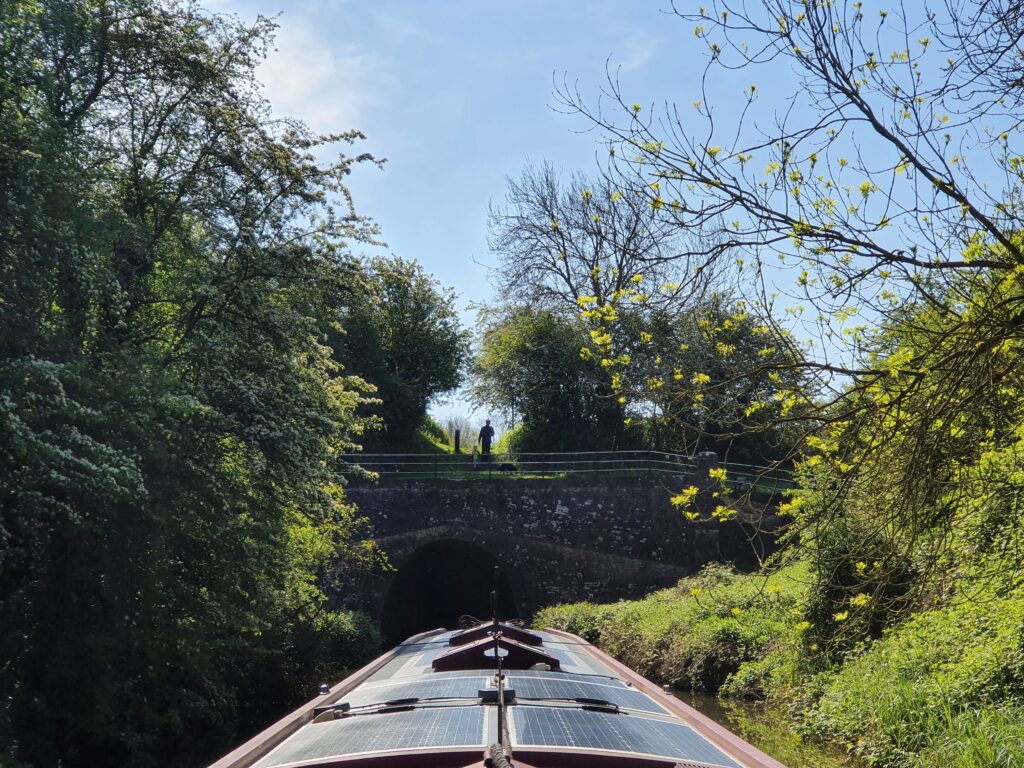
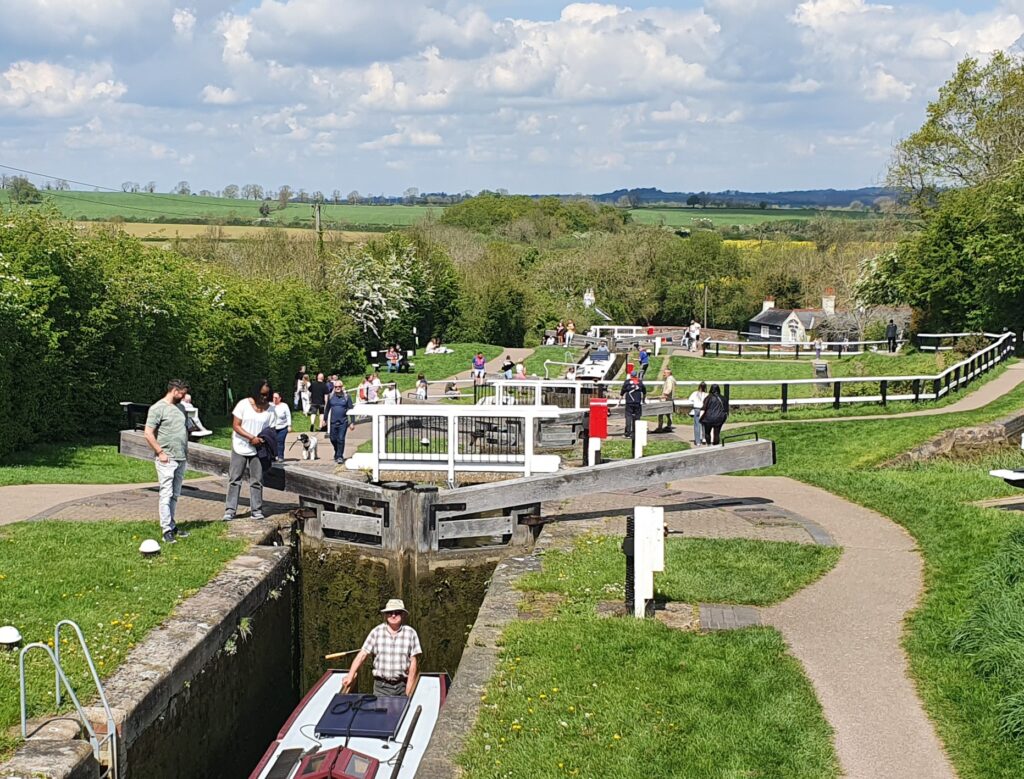
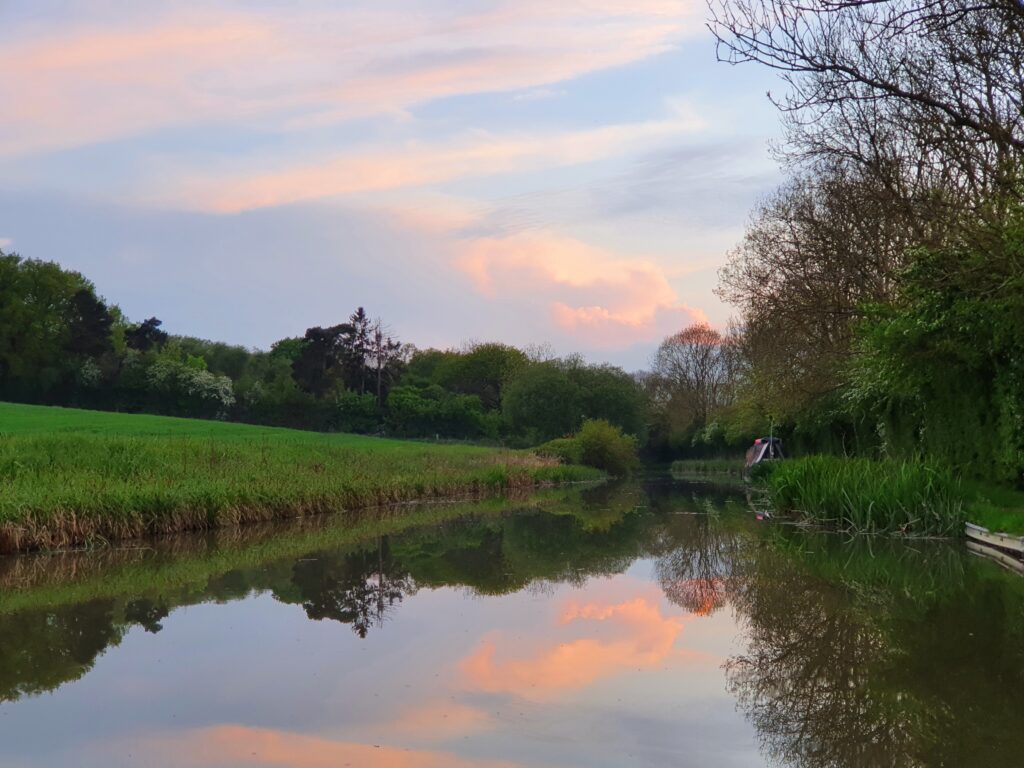
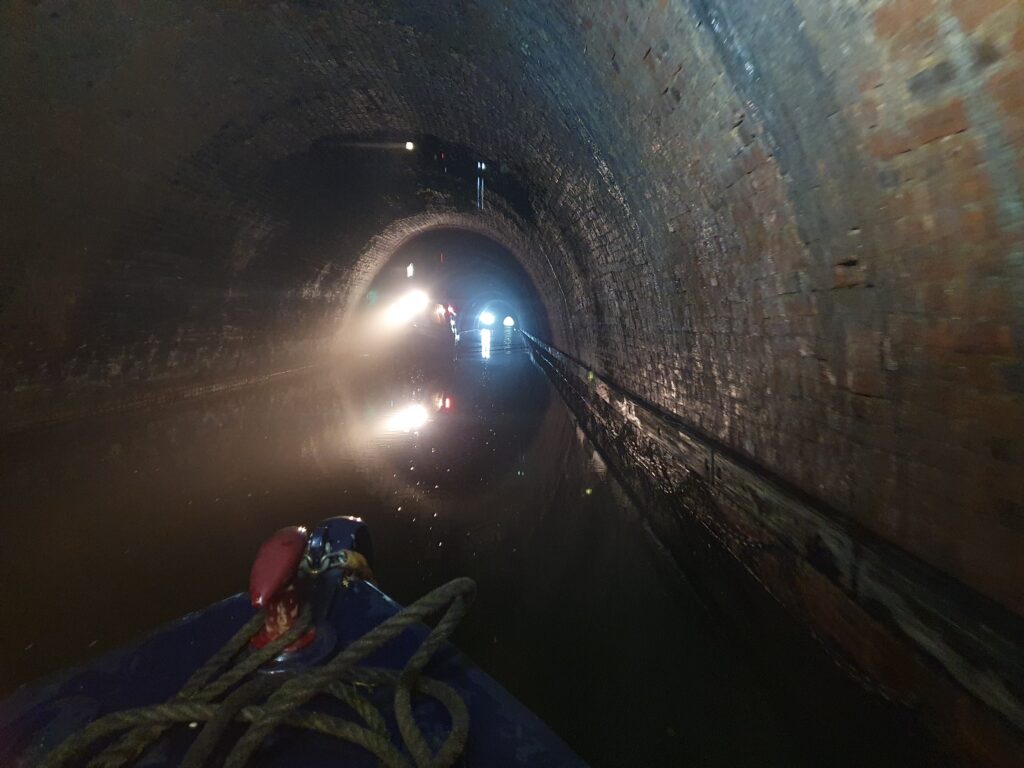
But first, a special first, the first ducklings of the year 6th April.

After 10 days in Stone we were itching to get moving again. We’d gone exploring, seen family and friends, visited the dentist to have a broken tooth repaired, returned the car to our daughter. And much as we’d enjoyed those 10 days- apart from the bill from the dentist, our obligations were done and we were free to just be boaters again. Setting off up the Meaford locks filled us with excitement and anticipation about what lay ahead.

I’m always been fascinated cruising through Stoke. Its an industrial town striving to make its way in the 21st century, the old red brick factory yards are being wiped out by the many modern equivalents, huge warehouses compete with huge new housing estates. The canal runs through the centre straddled on each side with the multi lane Queensway and the high-speed intercity railway. Its noisy, hemmed in by concrete and razor wire fences, and nothing on earth entices me to stop and explore. But on this trip north, perhaps because it’s spring and the sun was shining it felt to me like there was an undercurrent of regeneration. Not quite so much litter or graffiti. Someone cares about this place, and I’m glad. People we spoke to were friendly and welcoming.

There are 5 locks climbing up through Stoke, and I usually walk that mile, and theres always something to make me smile, especially the Fritillary that im fairly sure someone had planted rather than it seeding naturally.

Some encouraging art work, even though it feels like fighting a loosing battle against the plastic.

This boat always makes me smile with its grass roof and wooden cladded face

Stoke on Trent’s heyday began in the 18th century when the combination of natural resources and local talent came together to create the Potteries. Back in the day there were over 2000 bottle kilns firing the pottery now there are just 47 remaining standing. The Clean Air act in the 1950’s put an end to their commercial use, and the remaining kilns are all listed. Some have been lovingly preserved and integrated into new housing developments

But sadly even though Olivers mill continued into the 1990’s for the calcination of flint, where the flint is heated to over 1000°C then ground to use in ceramics production. It doesn’t seem to be so loved now.

The bone and flint mill at Etruria is a private heritage site

Etruria junction is the final lock north of the town. The Cauldon Canal branches off here into the peak district to transport products for the potteries.

There used to be a CRT bin facility here but it has moved to Festival Park Marina. And to give CRT its due, after my post 2 weeks ago from Stone, these bins deserve 5 stars.