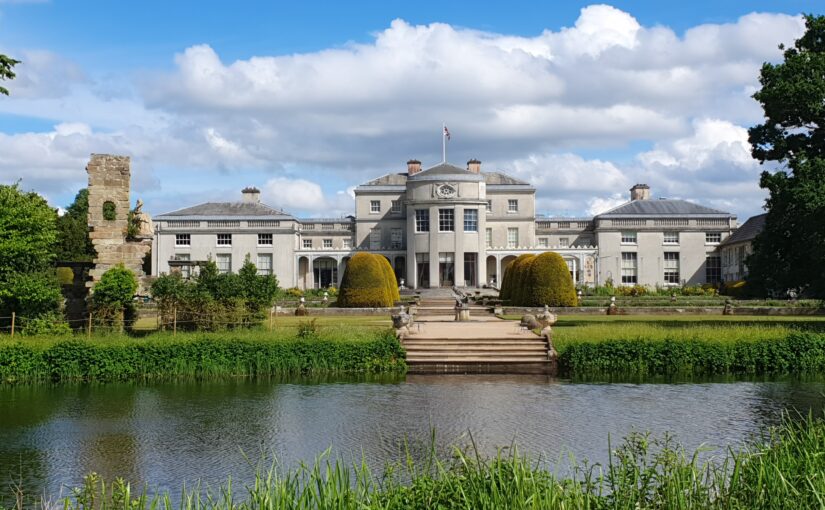
Shugborough Hall

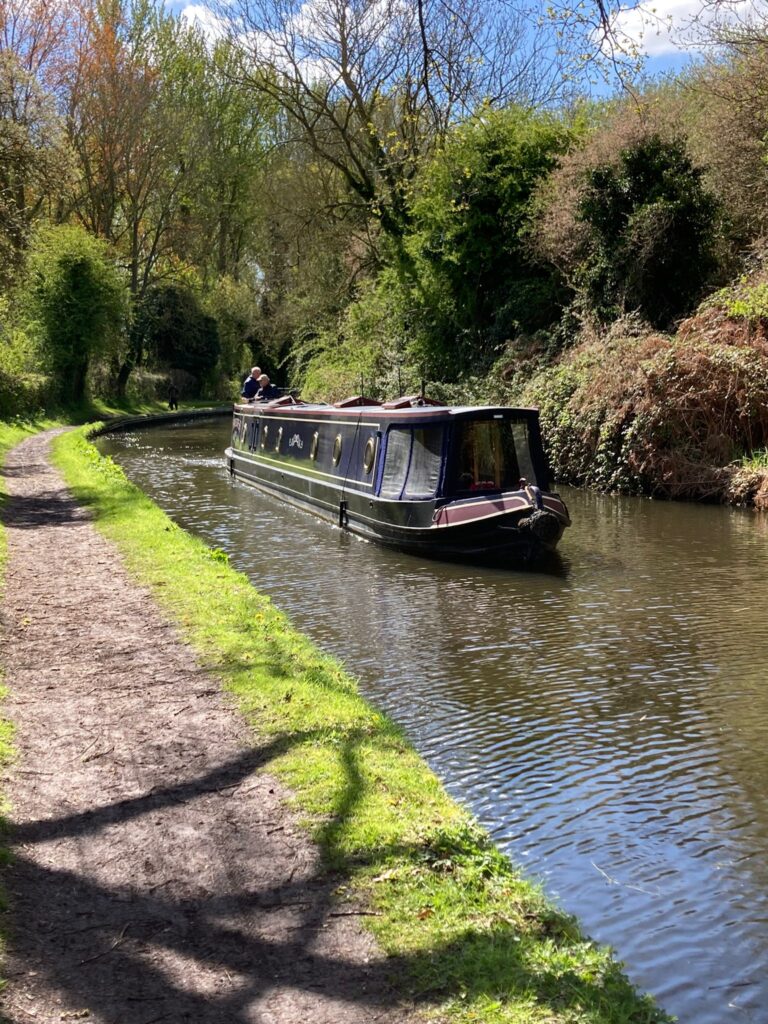
We woke to a perfect cruising day. I was determined that as we passed Great Haywood Junction, where the the Staffordshire and Worcestershire canal meets the Trent and Mersey Canal, we would moor up so I could visit Shugborough Hall.
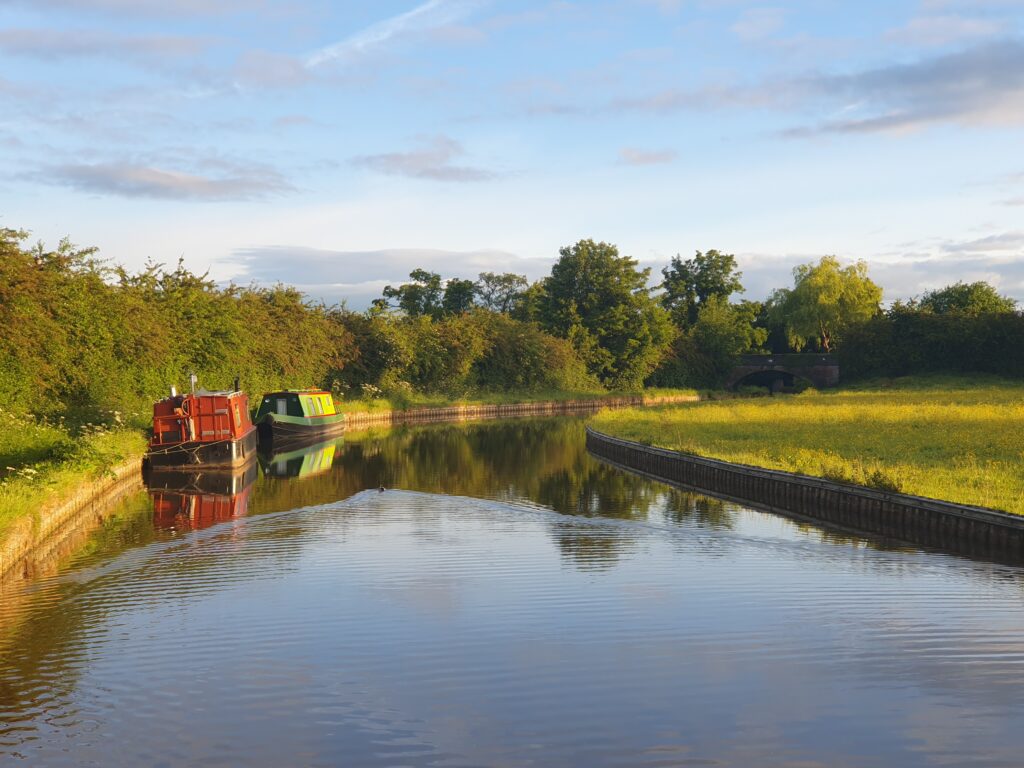
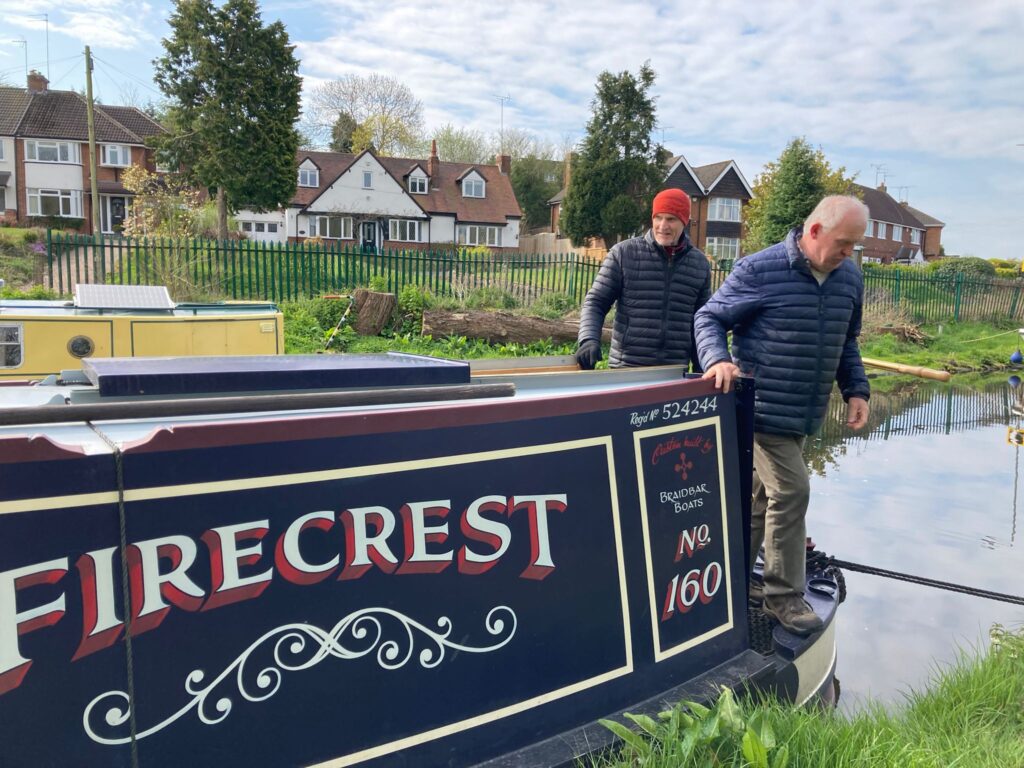
Bye bye Burston

6 or so miles travelling south, under one of my favourite bridges, Salt Bridge, (named as it leads to the village of Salt- where you’ve guessed it, they mined Salt).
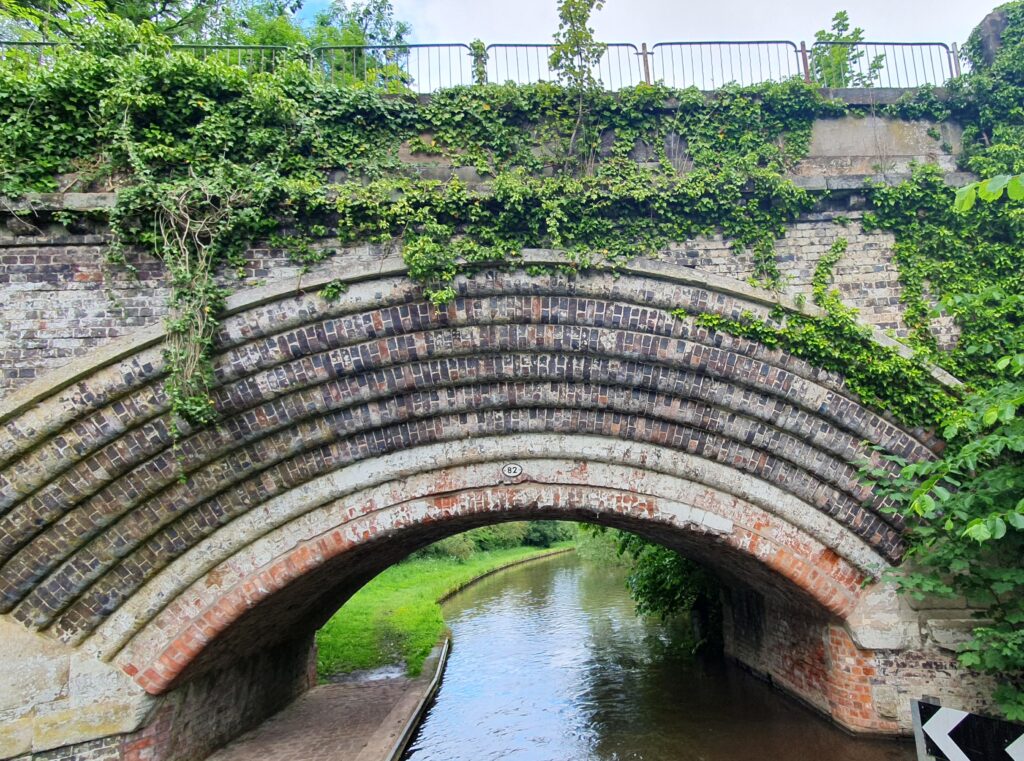
Salt Bridge, 82

The junction was busy as always, but we managed to get one of  the last spaces on the 2 day mooring. Eric had some work to do, so I left him to it and went for a walk. The estate is reached by crossing over the 16th century packhorse bridge, Essex Bridge. This where the Trent and the Sow meet and the Trent becomes the major river. This is another of my favourite bridges, although only 14 of the original 40 arches remain.
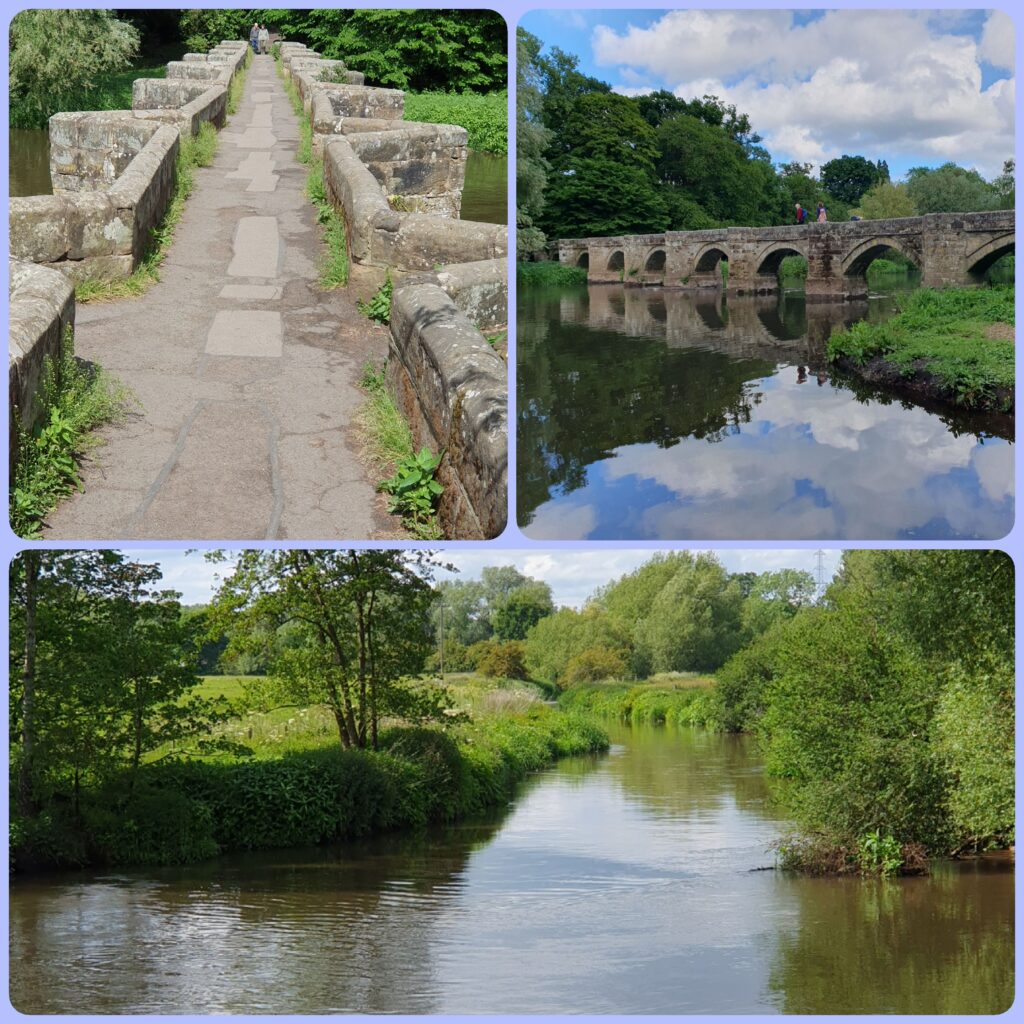
Essex Bridge, worth stepping off the towpath at Haywood lock to see, even if you don’t go onto the estate.

Although the estate is a National Trust property, the grounds are open to the public to enjoy, with monuments and follies hidden amongst huge trees.
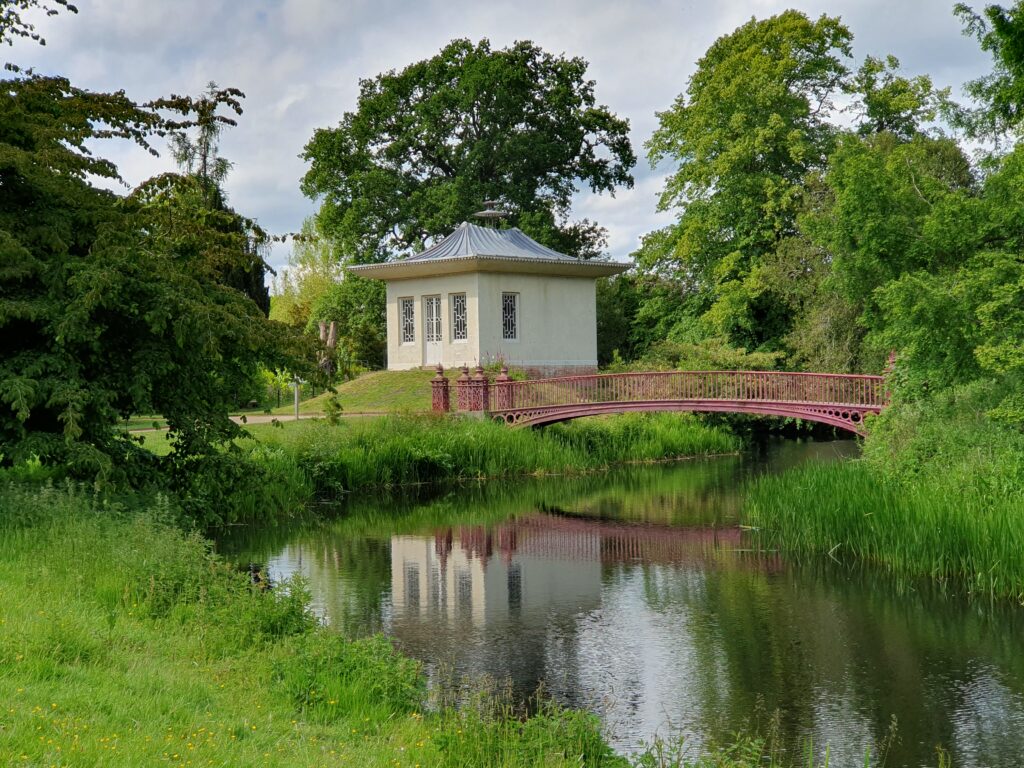
The Chinese house and bridge over the River Sow
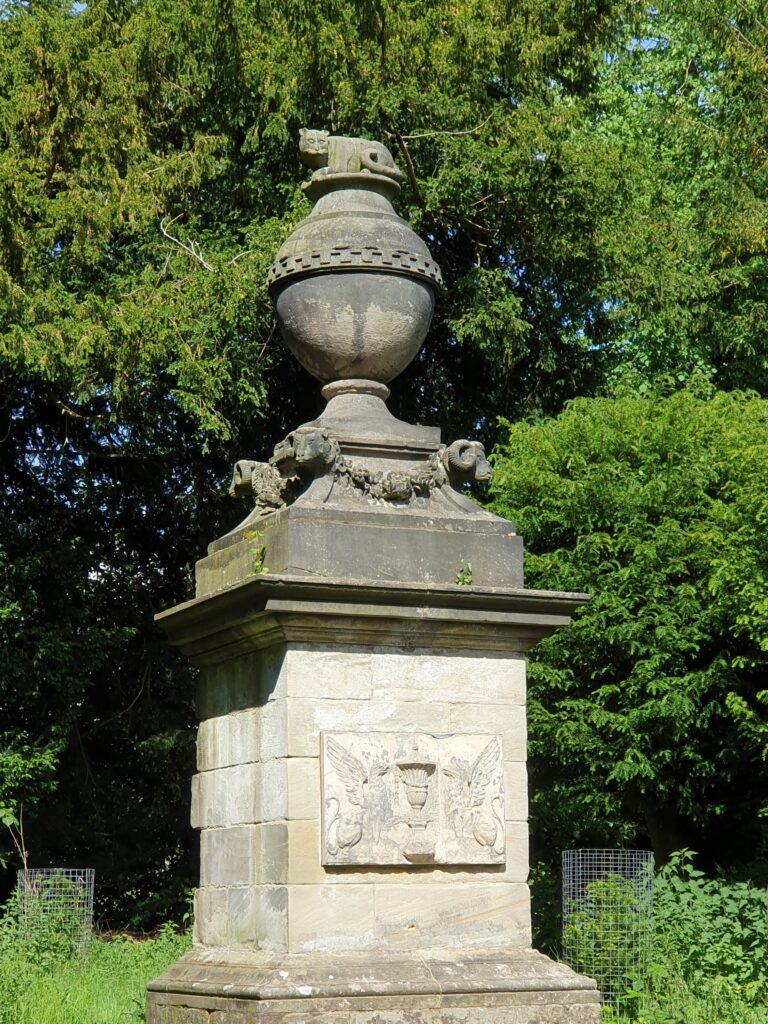
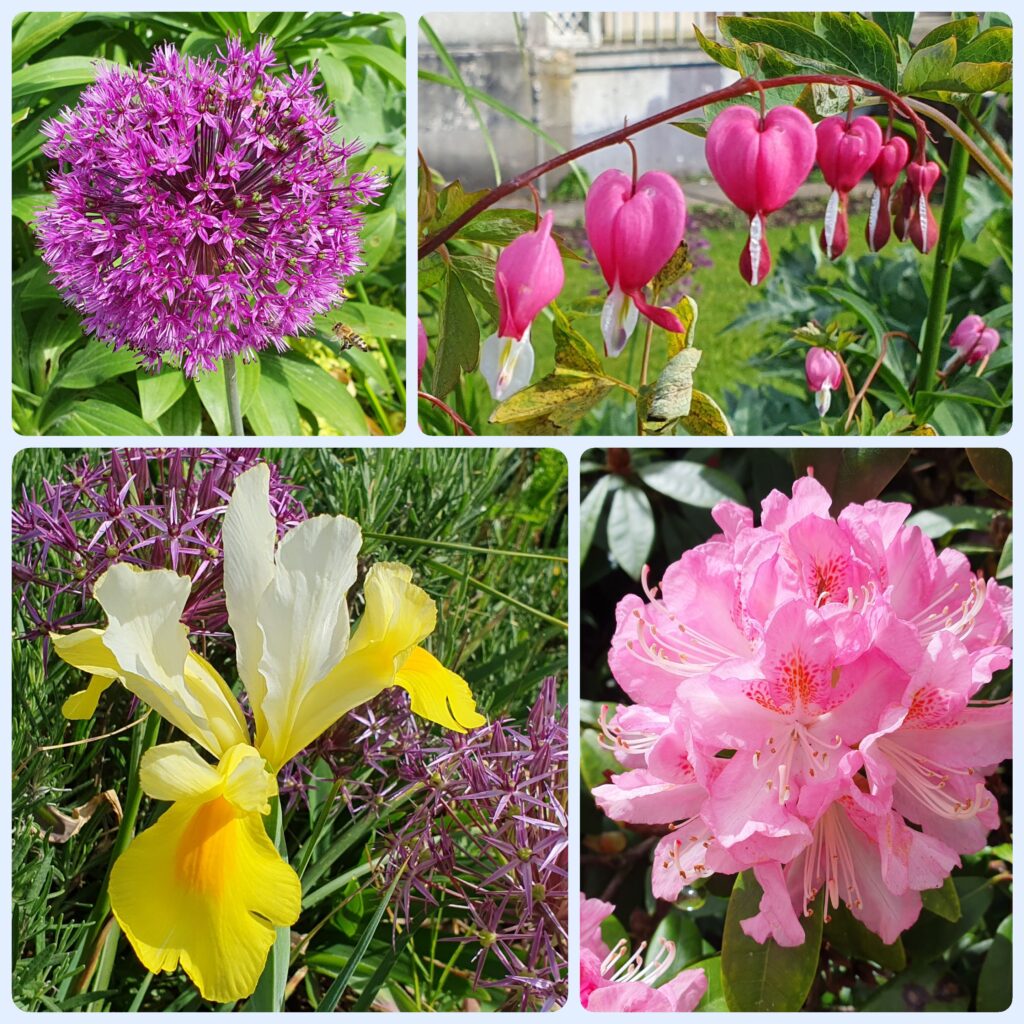
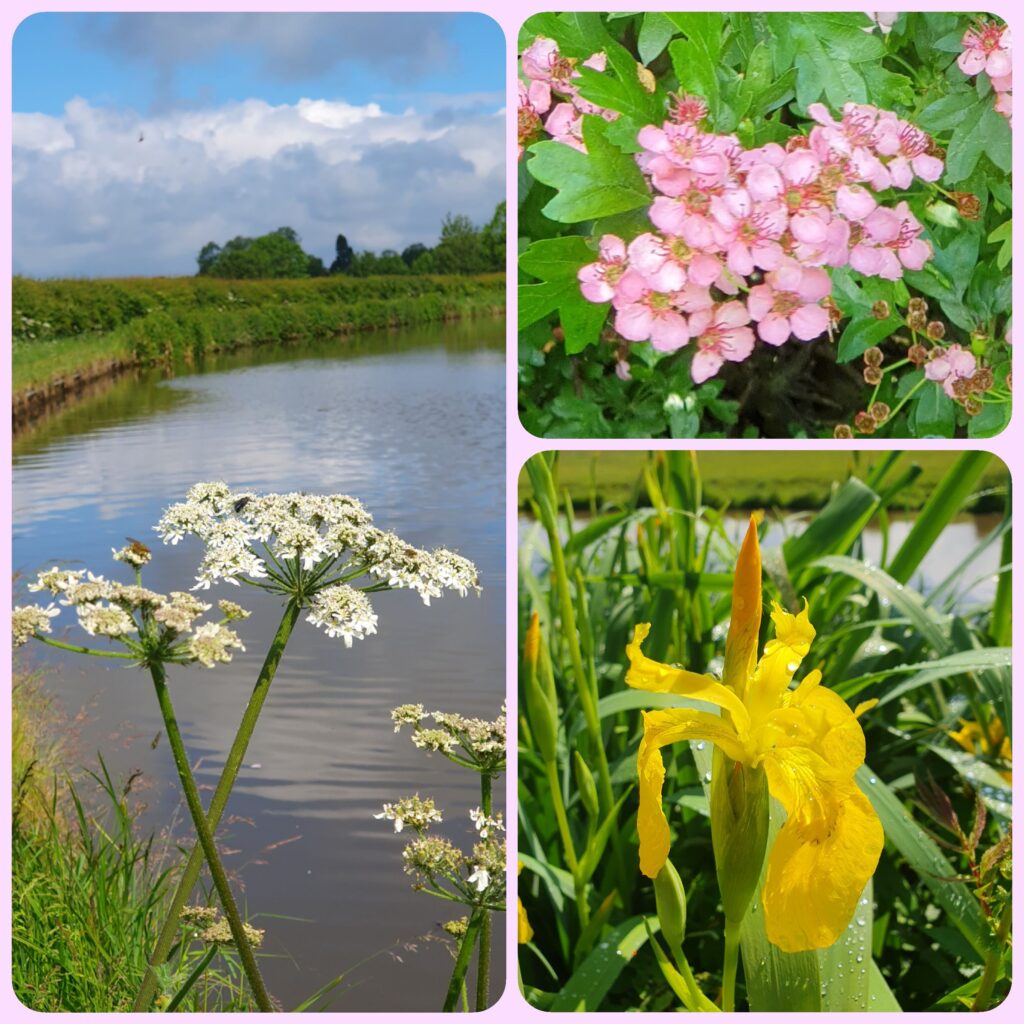
The cat monument celebrating Lord Anson’s Persian cat and his flock of Corsican goats built in  1750. And of course some beautiful flowers in the garden
The next day Eric and I set off to explore the house
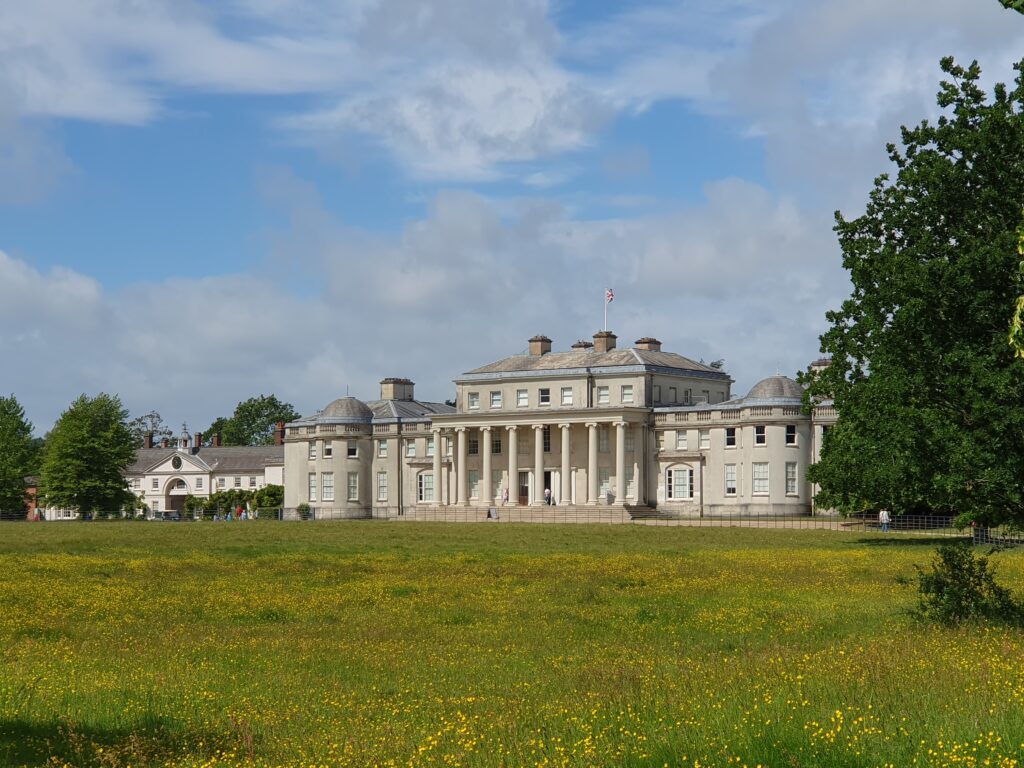
The estate lands were owned by the Bishops of Lichfield until Henry VIII threw a spanner in the works, and seized their assets. In the 1600’s the Anson family bought the estate, knocked down the manor house and built themselves a stately home. The rest they say is history
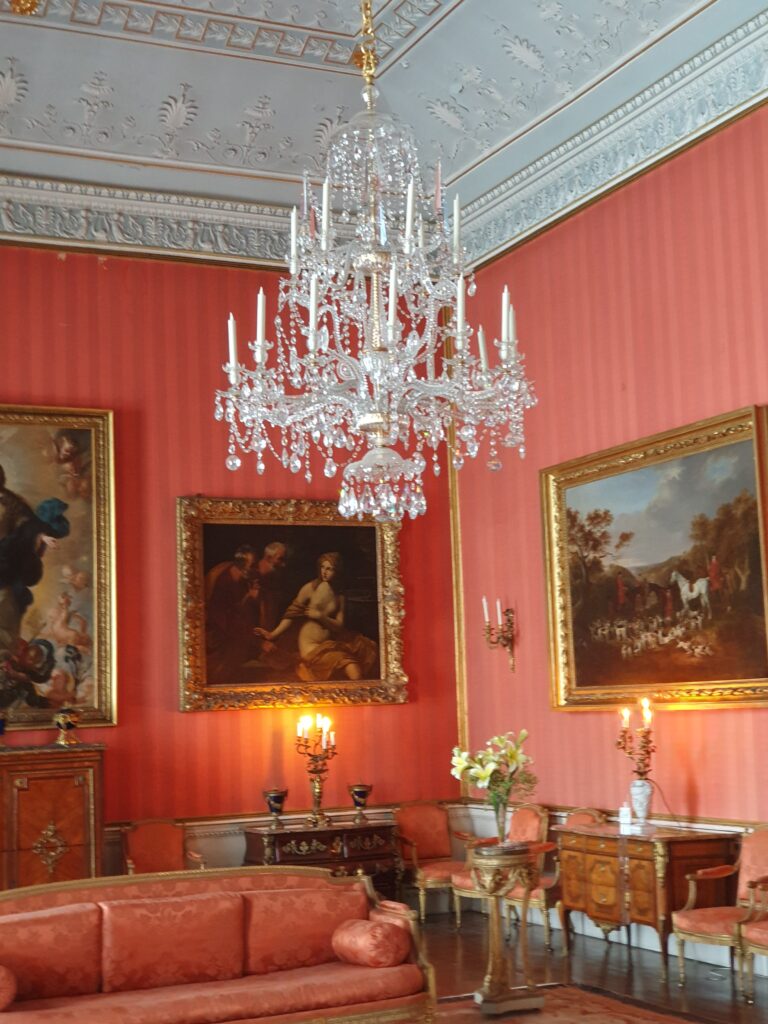
Over the years, wealth was amassed through commerce and marriage, the house was extended. They travelled extensively
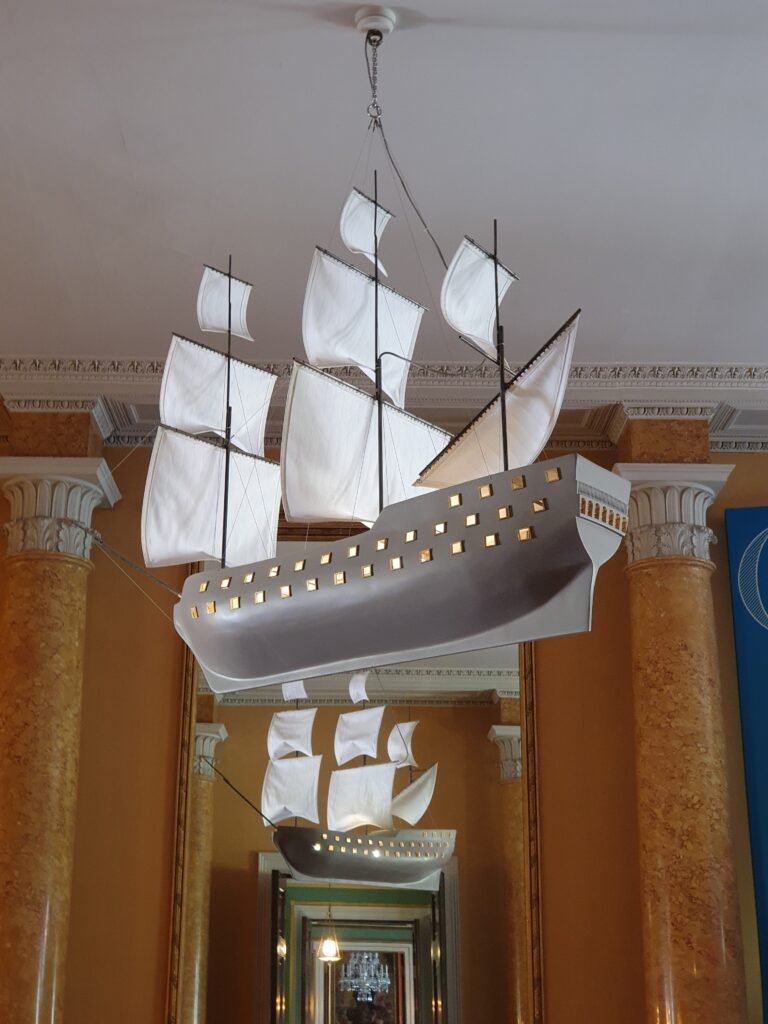
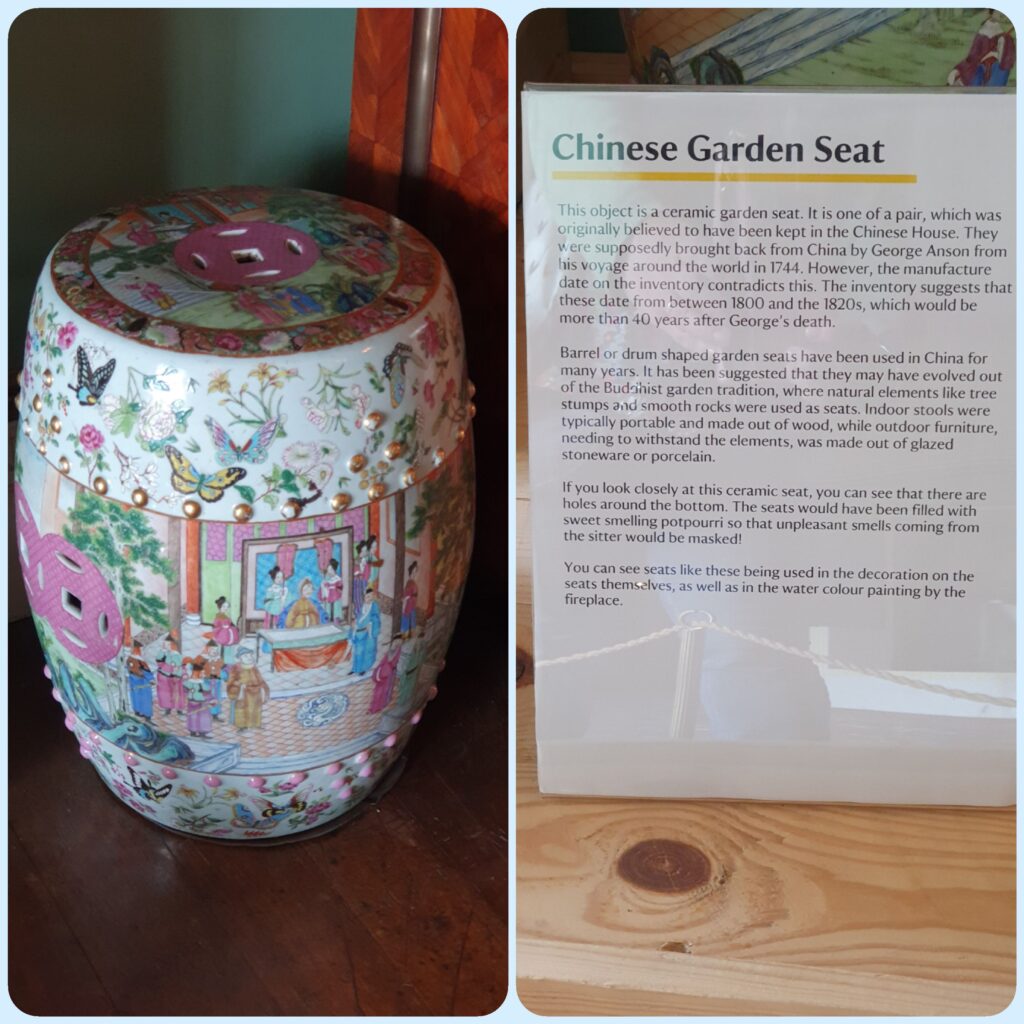
And many “treasures” and design styles were brought back to the house. We particularly liked this one, a Chinese garden seat, which was was filled with potpourri to help disguise odours emitting from the sitter. Personally we thought it was a forerunner to a USB charger socket
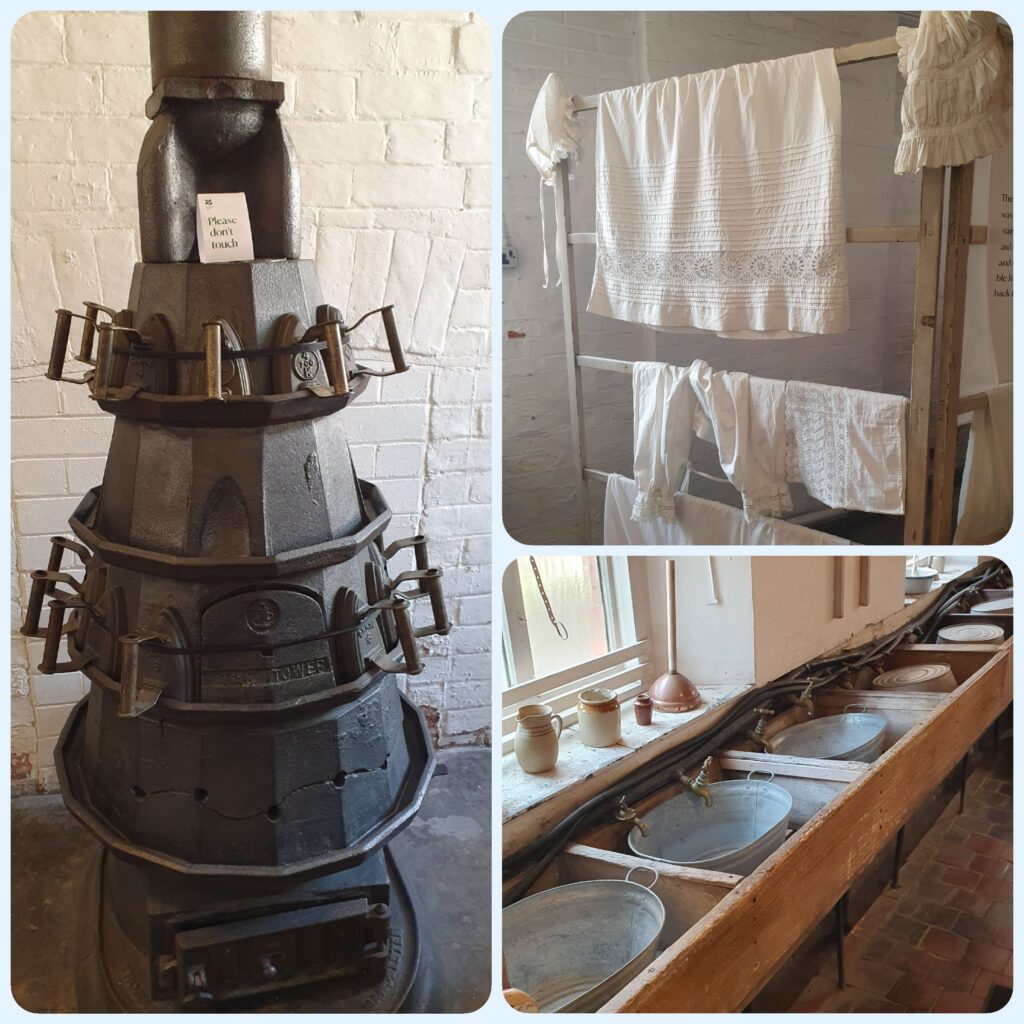
Battles were fort and won on behalf of the crown, and titles were awarded. The most prestigious was in 1831 when the family were given a hereditary peerage, and Thomas Anson became the 1st Earl of Lichfield. However even members of the aristocracy still need to wash their smalls, or employ a small army to do it for them.
Shugborough Hall was given to the National Trust in 1960 in lieu of inheritance taxes, but the 5th Earl was granted an apartment to continue living in. He was the photographer Patrick Lichfield, and many of the items on display were photos he’d taken. This wing is now open to the public which was fascinating seeing it filled with familiar, albeit now retro, crockery and appliances-the sort of thing that savvy shoppers can pick up at car boot sales, and some of us are still using- like our trusty Kenwood Chef. We weren’t permitted to take our own photos in this wing. After so much grandeur and a picnic in the grounds, we were quite happy to return to our little narrowboat to enjoy some natural landscaping along our canal.
Meeting at the Manor

Would you like to come to our house? Our friends Helen and James asked us as we travelled north up the Staffs and Worcester, well not actually their house but their local NT property and only 5 minutes walk from the canal. And so after a mornings cruise together,


James at the helm

we moored up at Wightwick Bridge Visitor Mooring

Good mooring at wightwick bridge

and strolled across to the Manor.

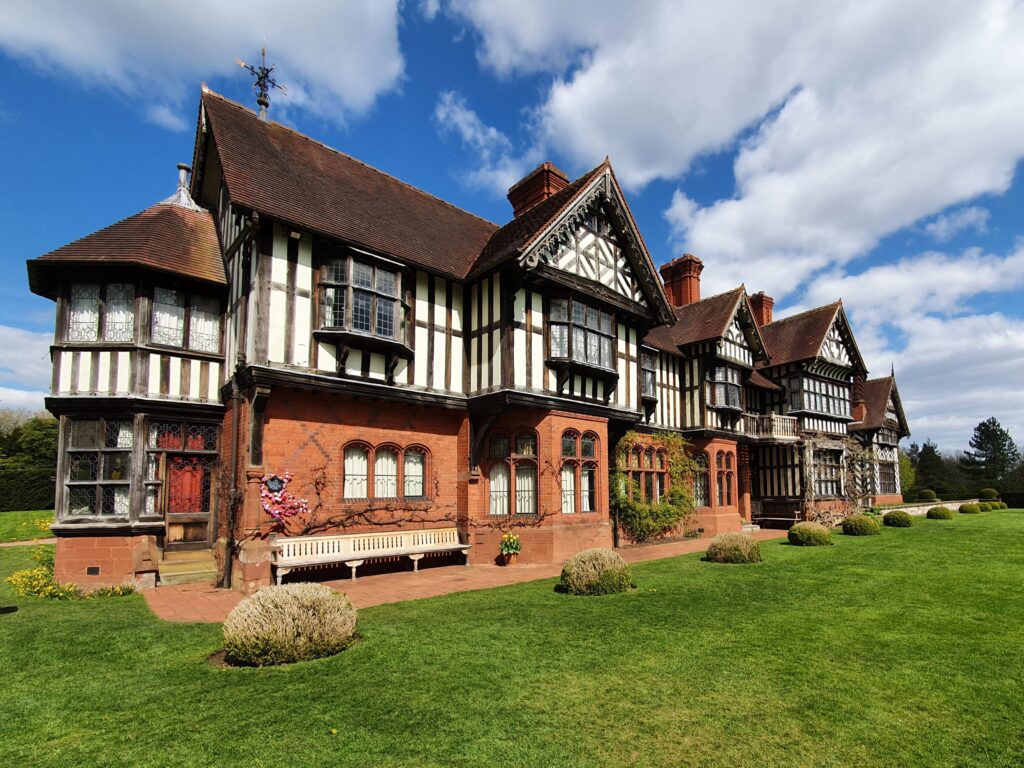
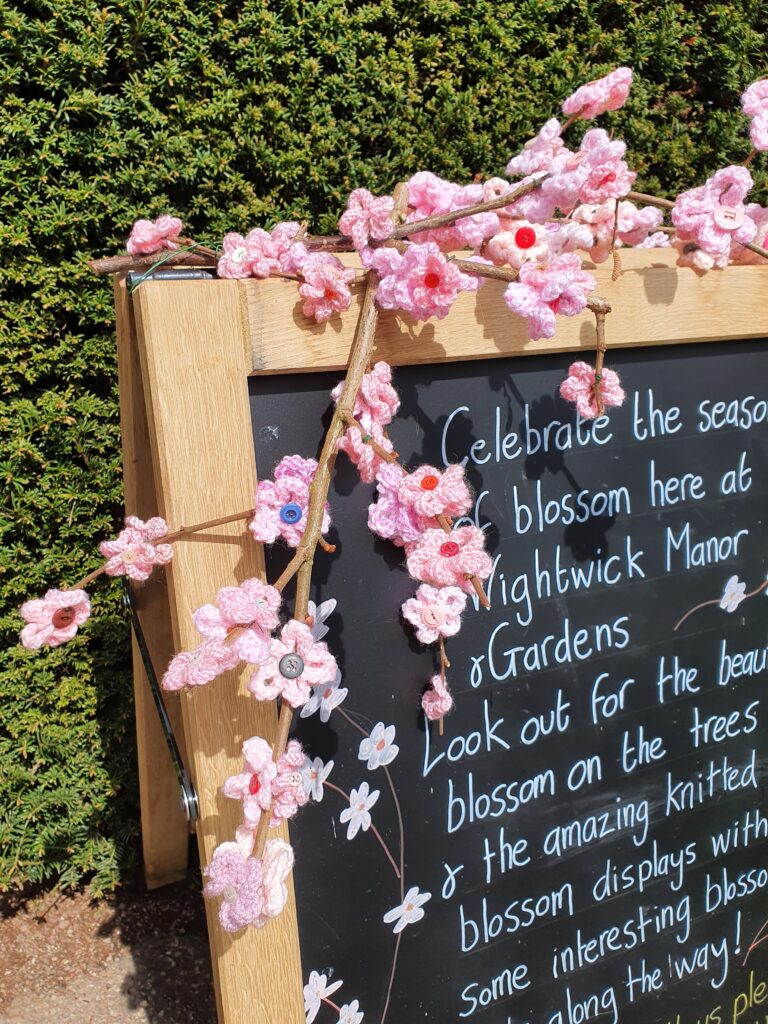
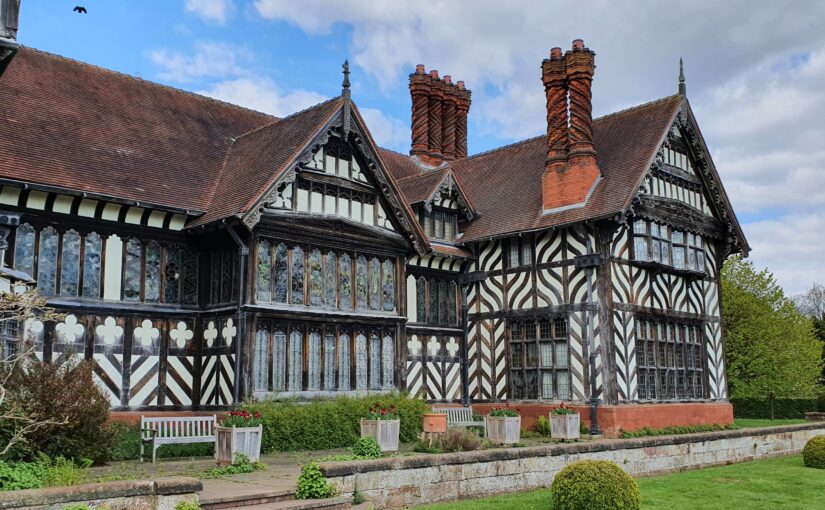
Wightwick Manor (pronounced witick)

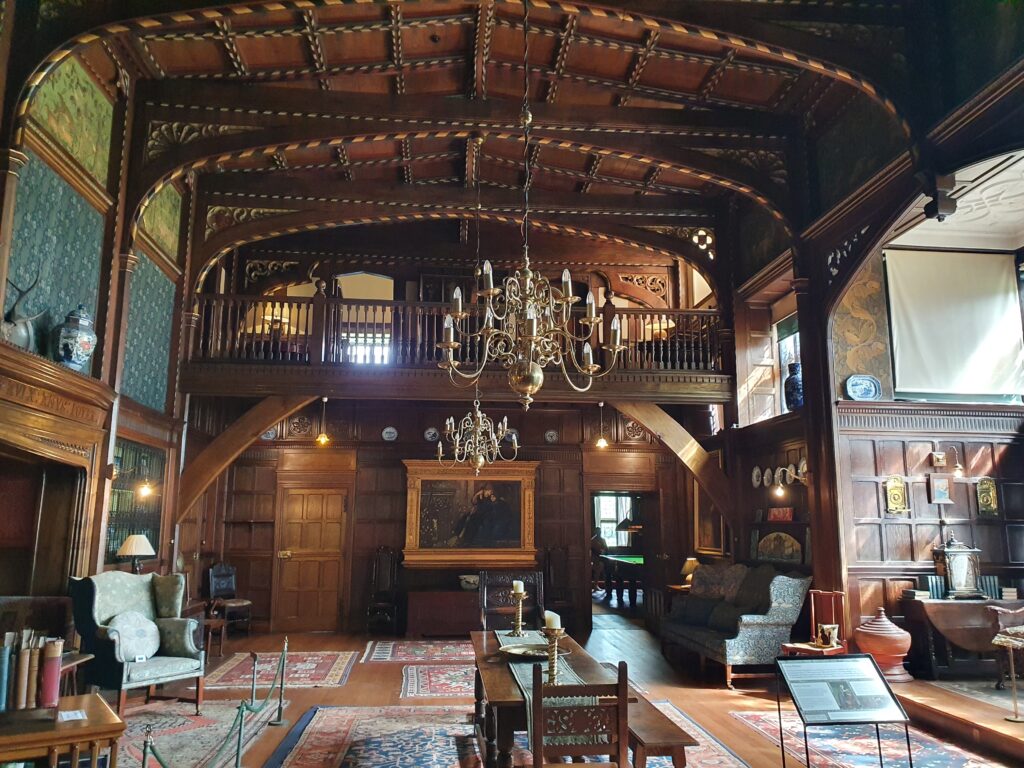
Built in the late 1880’s, Wightwick Manor, was built for Theodore Mander and his family. They were inspired by the Arts and Craft style so lots of William Morris and Rossetti to see. It was also a period known as the Aesthetic movement -basically art for arts sake.

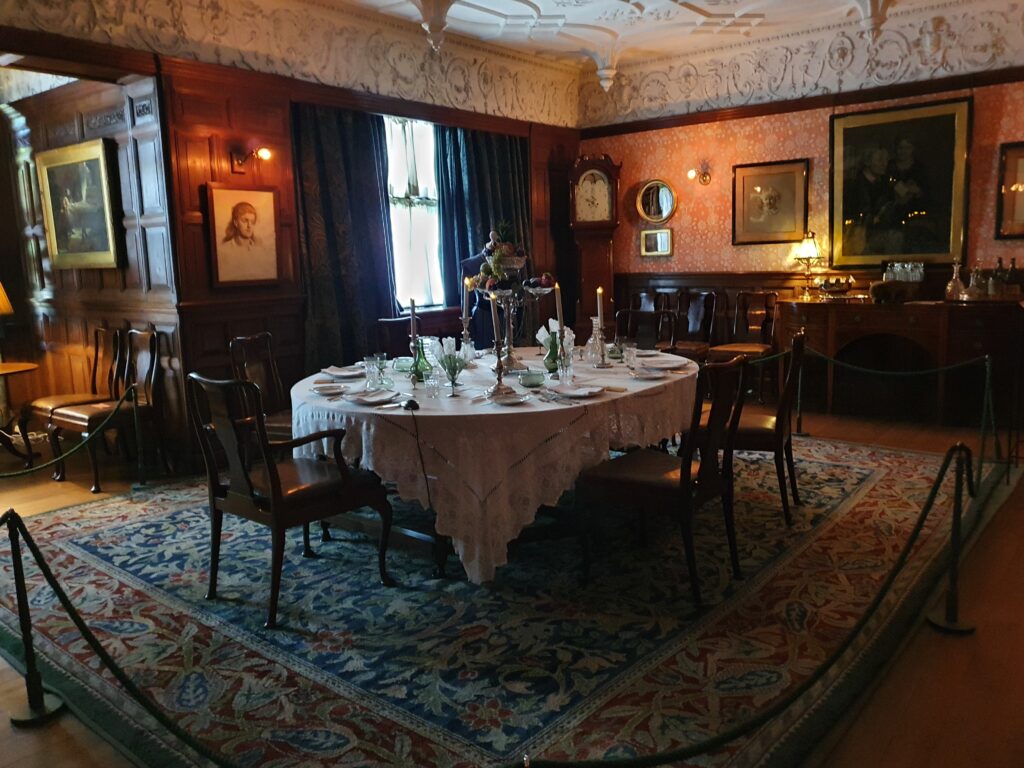
The family still have an apartment in the house and are known to enjoy Christmas there, although I’m not sure if they still use the dining room.

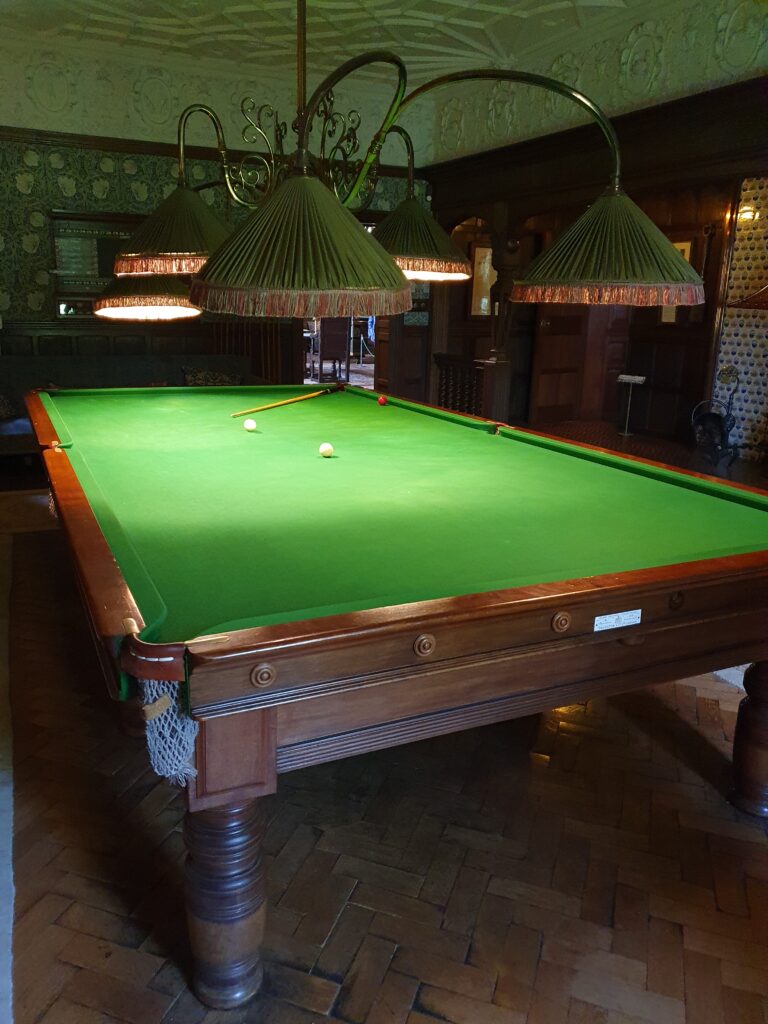
But I bet they are tempted to play the odd frame of snooker

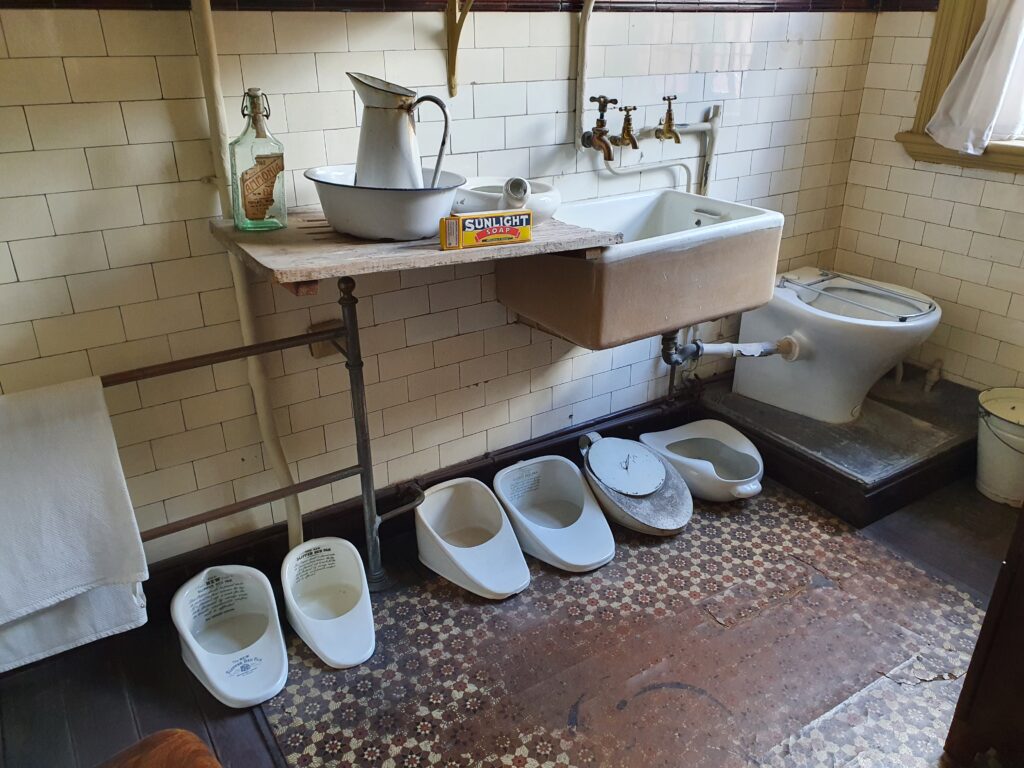
As always you can’t visit a NT house without a visit to the bathroom,  and in this case the sluice, containing a collection of slipper bedpans, not all that dissimilar to the sluices and bedpans in the hospital where I did my nurse training and that was in 1983.

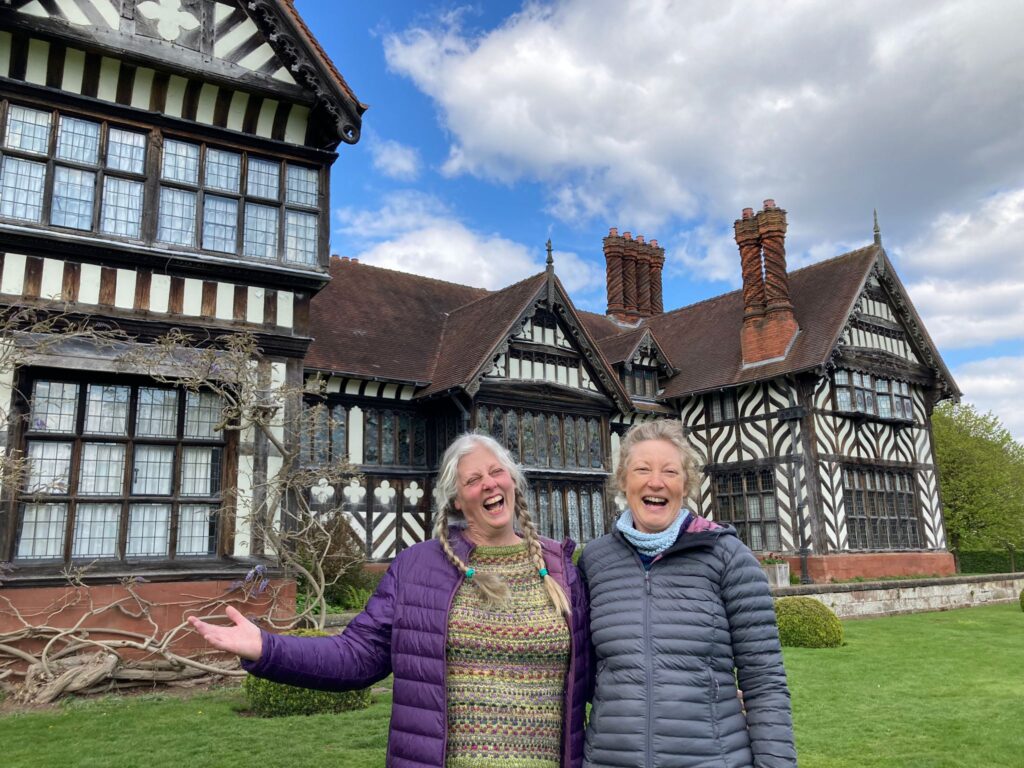
Lots more laughter as we enjoyed the gardens

me and Helen

Definitely a property I’d visit again. Even if just to walk around the garden.

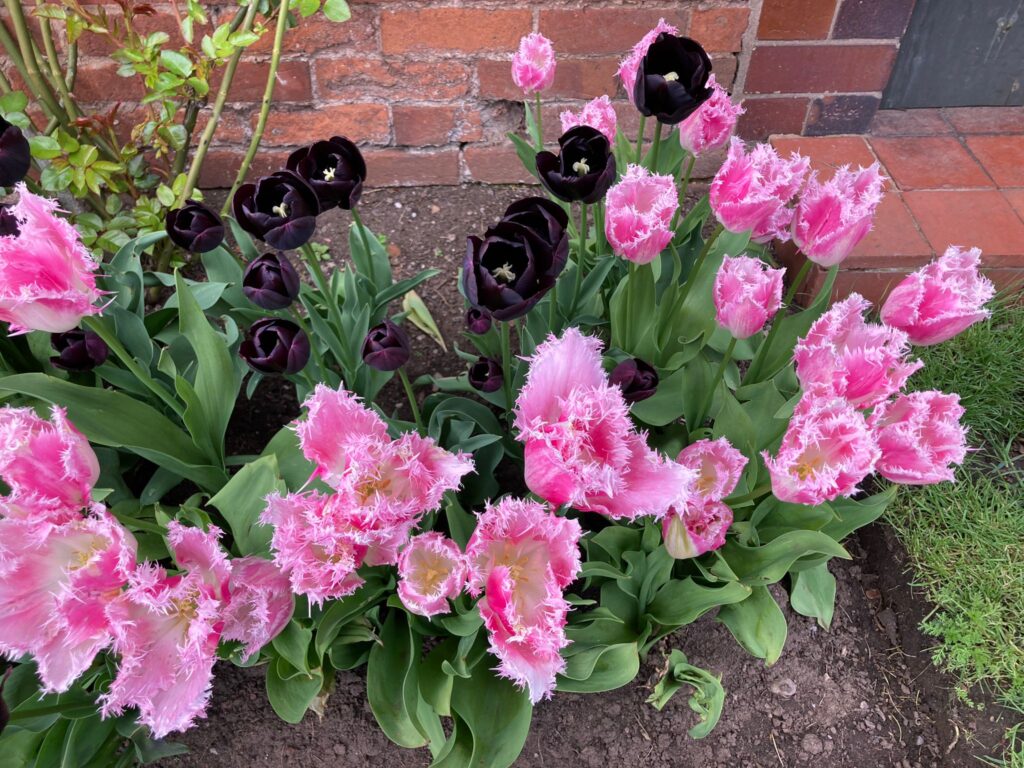
Tulip season


https://www.nationaltrust.org.uk/visit/birmingham-west-midlands/wightwick-manor-and-gardens

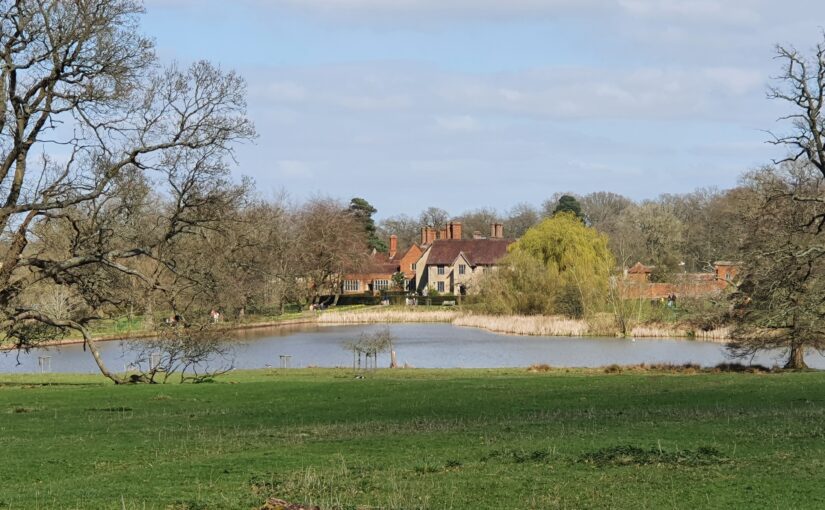
Packwood House

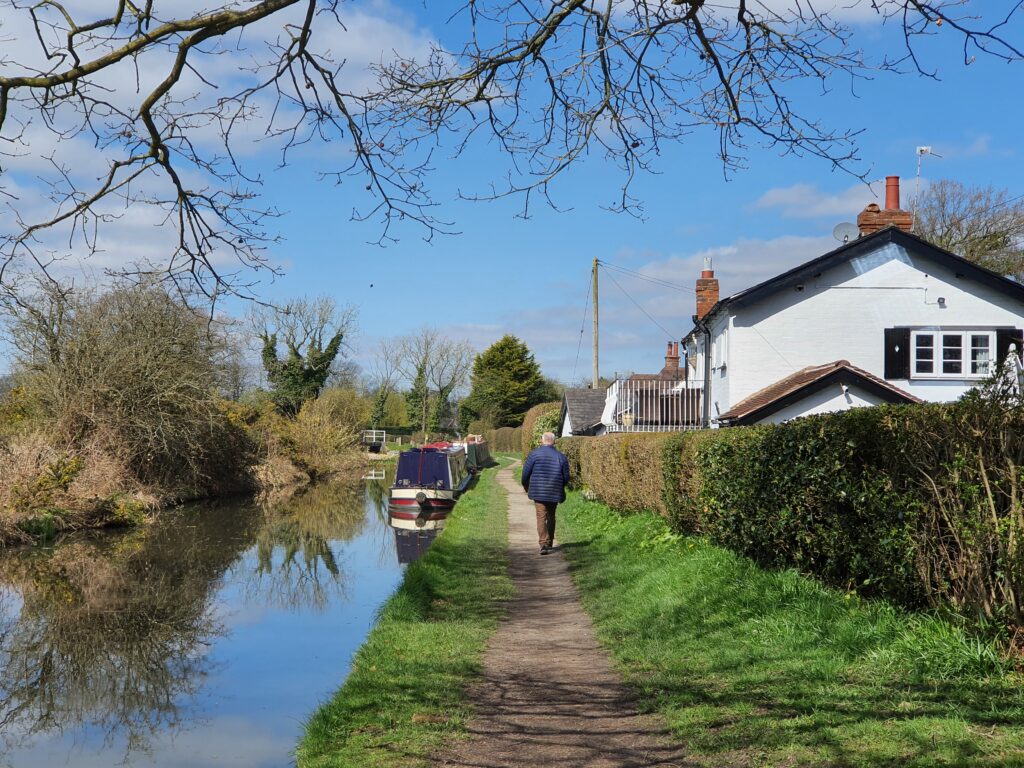
We don’t take advantage of our National Trust membership as often as we should but Packwood House in Lapworth was a mere 20 minute stroll from our mooring. The sun was shining so off we set.

Moored just below the Drawbridge farm lift bridge

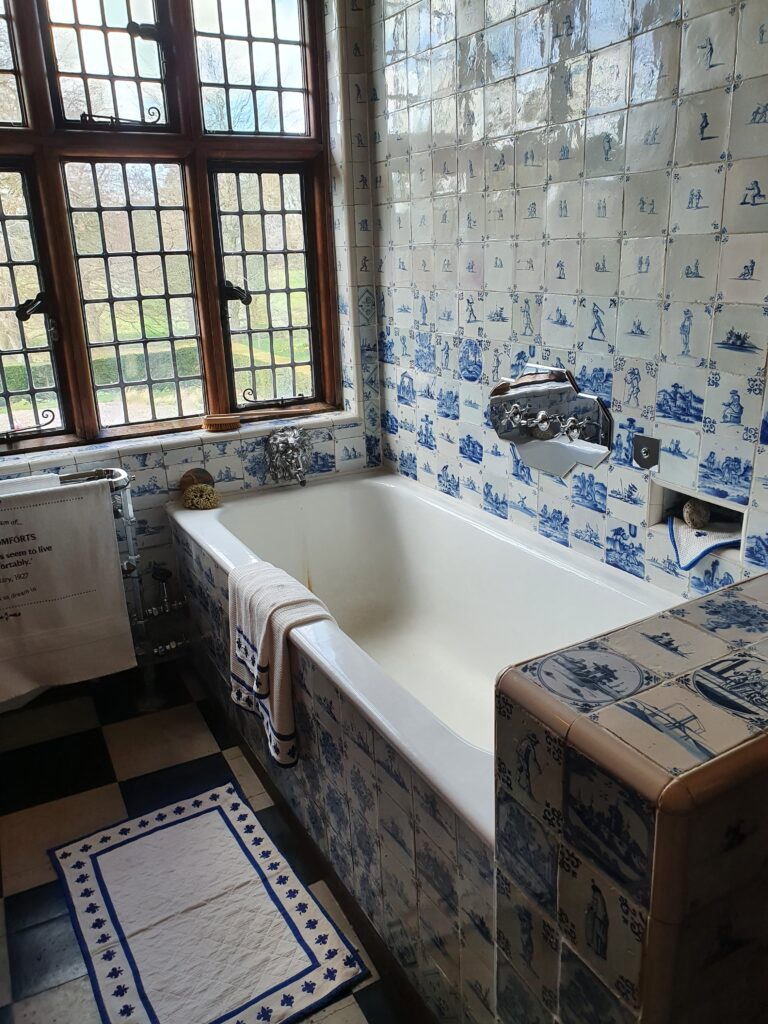
Originally built in the 1500s this grade 1 listed manor house fell into neglect until it was bought and restored by Graham Baron Ash in the 1920s. He donated it to the NT in the 1940s. Baron (his name not a title) continued to live there until he moved out to Wingfield Castle taking a fair bit of the best stuff with him. However, as with a lot of this magnificent old buildings the bathrooms remain and continue to fascinate us.

oh to be able to soak in a bath like that

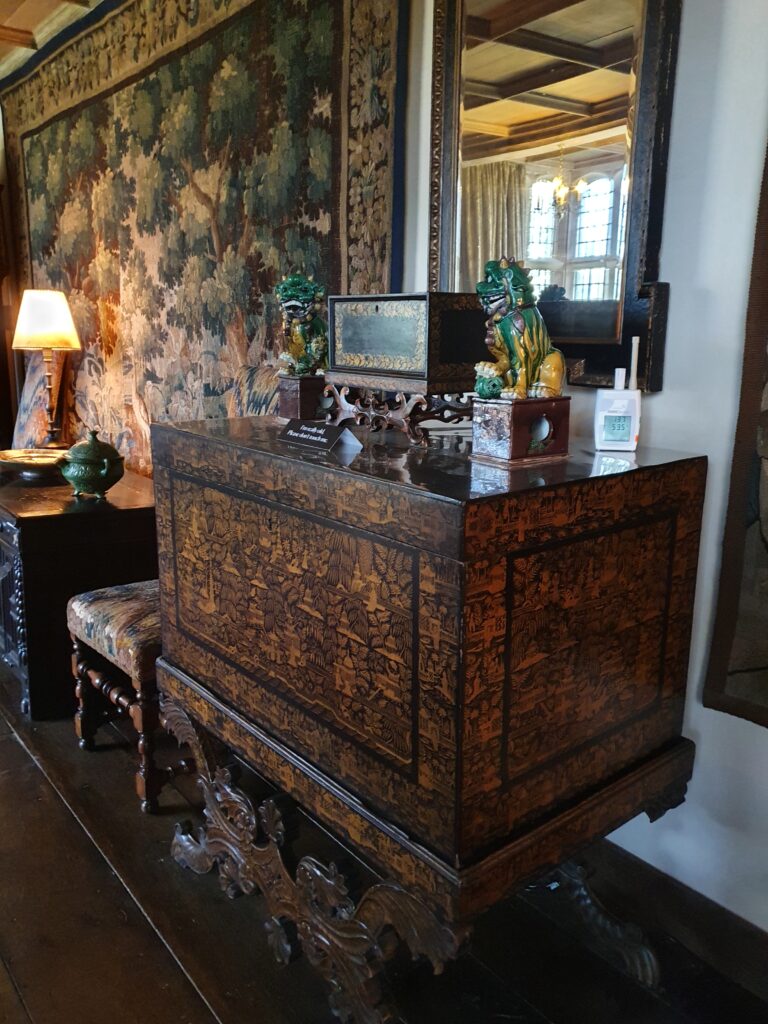
Baron had been a keen traveller and great collector of things that pleased him. And nowadays the volunteers bubble over with enthusiasm to share their knowledge of the artefacts. We particularly liked this intricate lacquered chest.

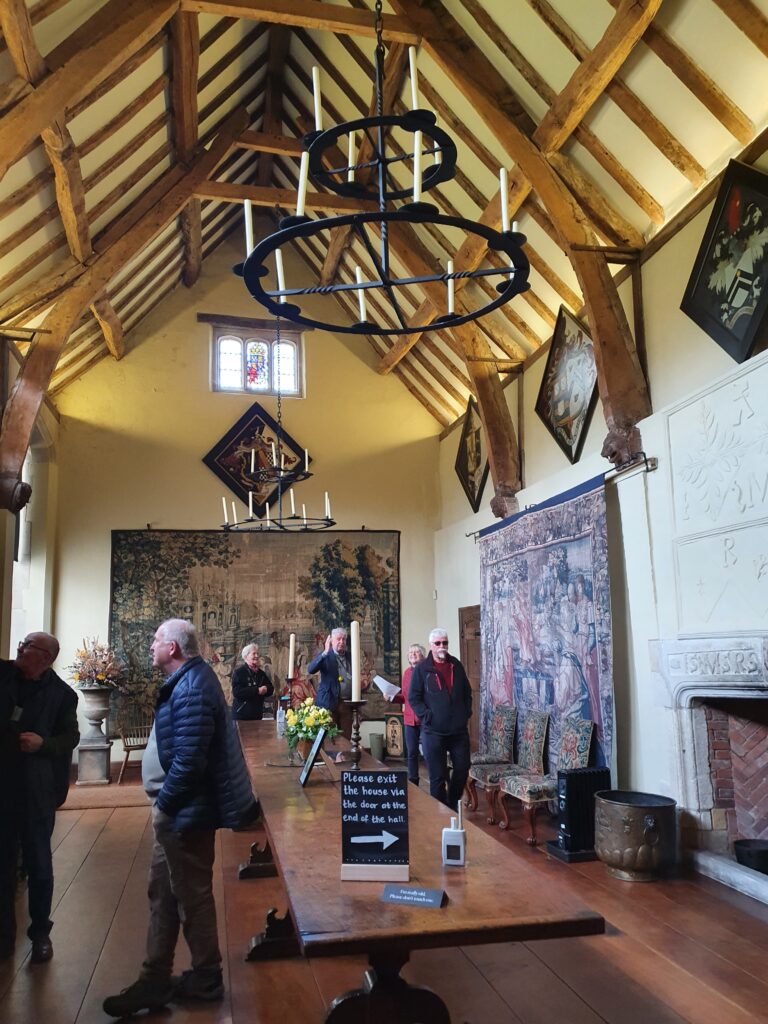
And the great hall that had been transformed from the cattle byre into the party annex

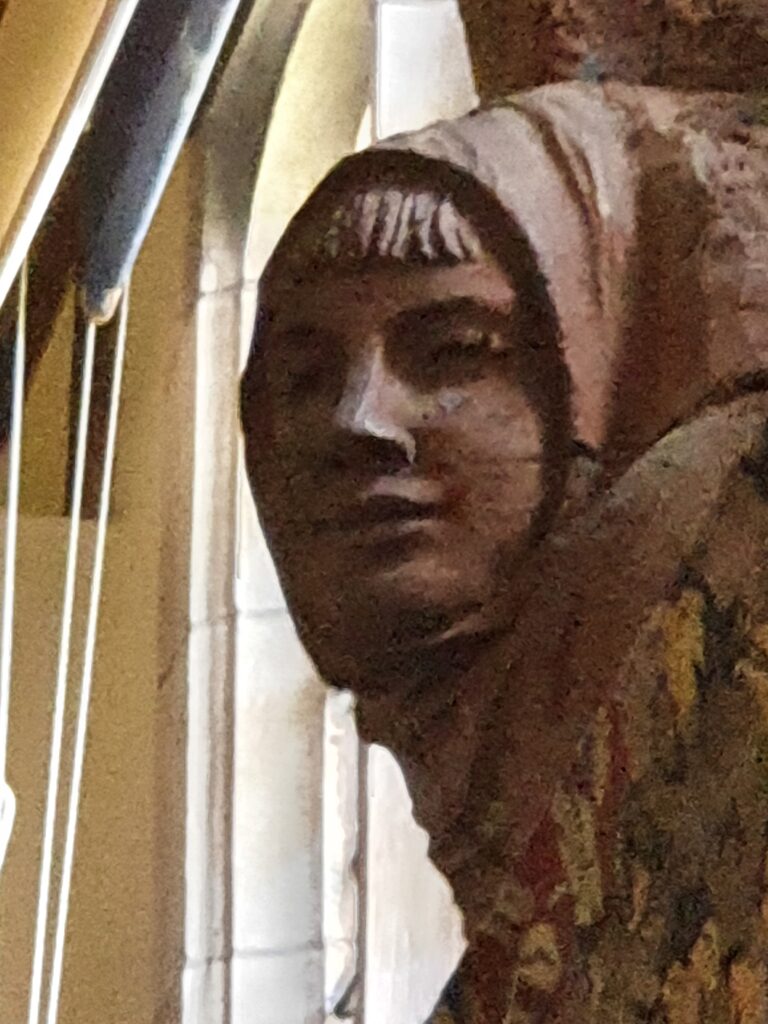
But you had better behave yourselves because you were being watched

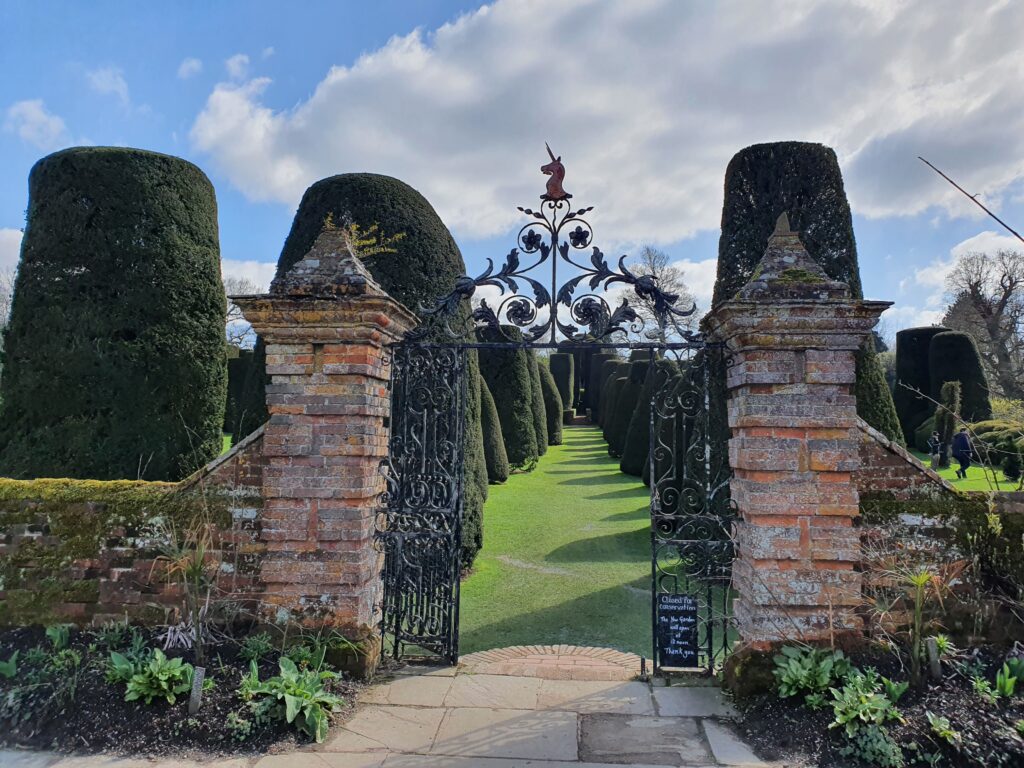
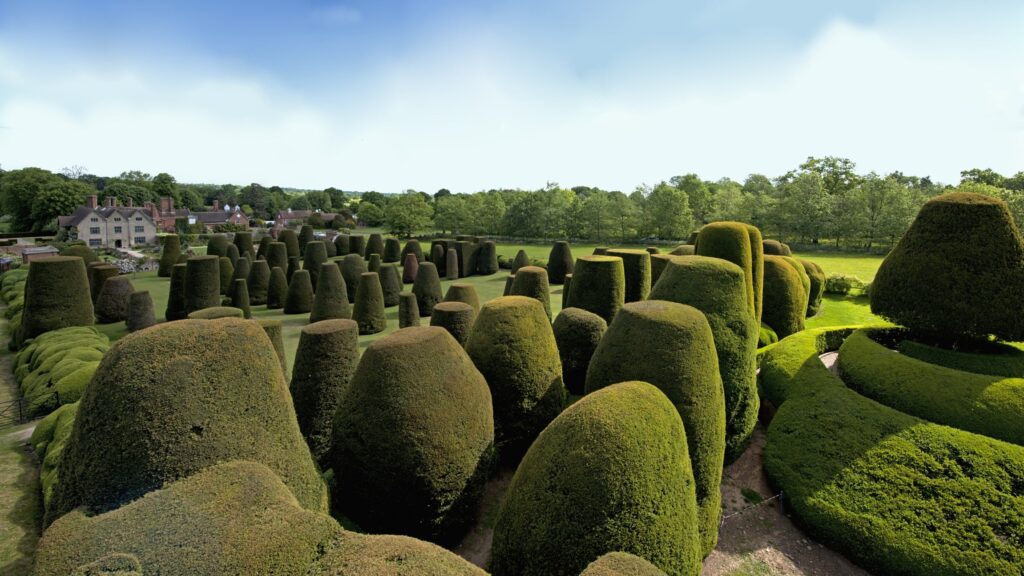
However Packwood is known most for is the Yew garden.

From the entrance its very imposing and formal , but once you’re inside, its quite surreal, we felt like characters from Alice in wonderland walking through a giant chess game. The oldest trees date back from the 1600’s, but alas they are showing their age and a lot of work is being done to restore and repair the garden.

impossible to capture without swiping a photo from the NT website

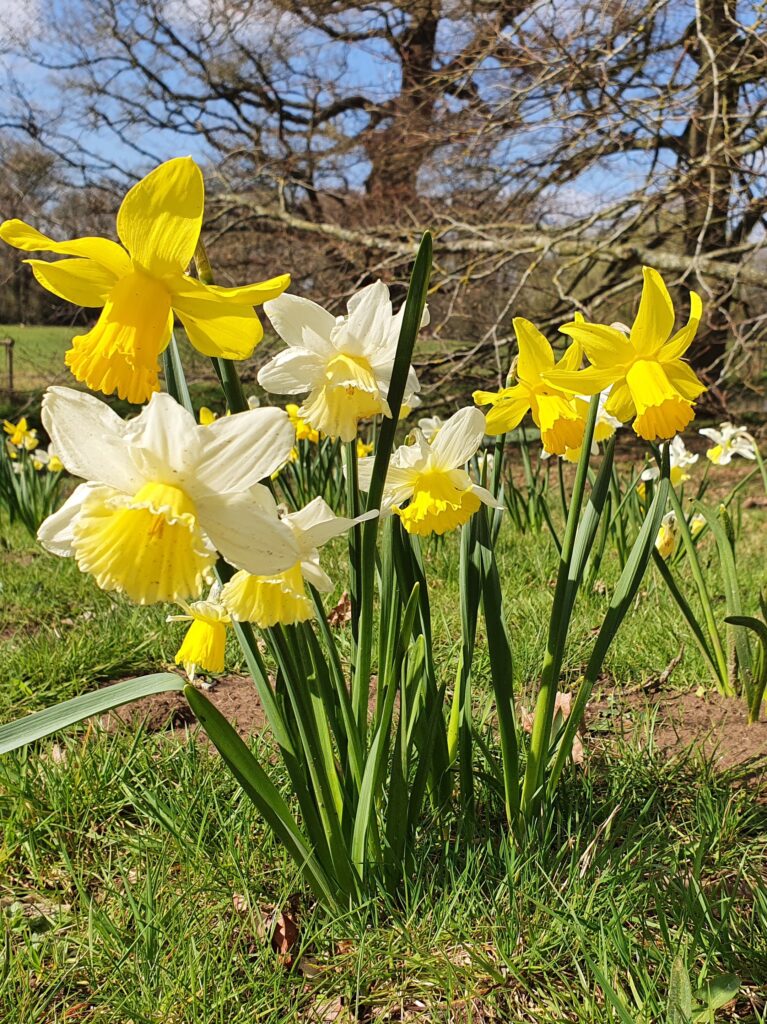
But grand though the yew trees were, you can’t beat a field of daffodils

Spring Joy

Cliveden

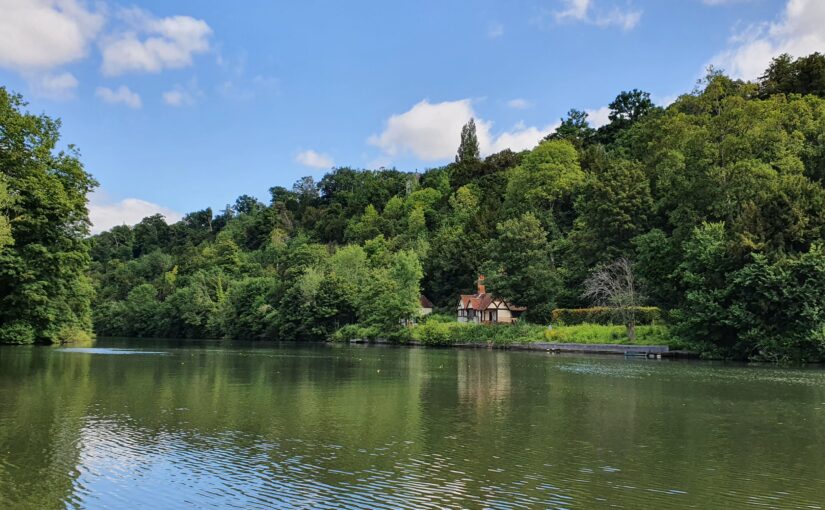
Having cruised past some sumptuous houses over the past few weeks, we dropped by to say hello at Cliveden House. Only to find that the nice little cottage on the bank, was the summerhouse where Queen Victoria used to take afternoon tea. Undeterred we duly paid our £10 mooring fee to the National Trust, (not sure why, when as members we can park for free) and climbed up the hill to the big house,

Cliveden NT (NT photo)

only to find one or two other guests had arrived first, not being our usual choice of holiday destination, we hadn’t realised not only is Cliveden a NT property but a 5 star hotel as well.

Arriving in style

Not wanting to spark further scandal, political or otherwise, photography wasn’t permitted (Cliveden is where the Profumo affair took place) and the tour of the house was very limited. (Which I suppose if you are paying a starting price of £450 for a room is fair enough) but it is worth having a look on the hotel website for some impressive internal features. Whilst we enjoyed the view from the terrace. ( remember this view for later)

I guess this is technically a house with a river view at the end of the garden

To be truthful I was a bit disappointed that we couldn’t see more of the house, but at £90, we didn’t think we were suitably dressed to enjoy afternoon tea, even if Victoria was no longer around. (£124 for the champagne tea). It was time to see the gardens.

If you need a clock in the garden, it might as well be a smart one

especially the rose garden

Just a few

and the fabulous borders

Borders

The mooring was wild and we struggled to get a rope around a tree to secure the bow,

Very wild mooring

but in the intense heat, we were quite glad of the shade and it made an excellent location for me to swim safely, it was cool clean and shallow, so much so that Eric handed me the scraper and I was able to clean off some of the growth under the waterline. But you’ll have to take my word for that.

Low cost spa

Whilst I was enjoying my natural spa day, Eric set to washing the side of the boat

Its a myth that Braidbar are self cleaning


Refreshing though this mooring was, it was also quite shallow and everytime a fast boat went past we could hear us scraping on a rock underneath us, so said goodbye to the Mandarin ducks

Mandarin duck


and only stayed one night. As we continued our cruise downstream I chanced to look and oh boy did we get a treat. Remember the river view from the terrace? I guess this is what you’d call a terrace view.

Looking back up to the house

Gawthorpe Hall and the Shuttleworth Textile collection

Whilst we were travelling through the abandoned industrial heritage of the Lancashire mills, we came across a National Trust Property within walking distance of the canal. Gawthorpe Hall at Hapton.
Gawthorpe Hall
Gawthorpe Hall

Never one to miss an opportunity I set off to indulge in a bit of house fantasy. The Hall’s origins were in the 14th century when the pele tower was build to fend off the marauding Scots. As with most old buildings like this, it’s been added to to and renovated many times over as fortunes waxed and wained.  What we see now is basically a 16th century Elizabethan country house that’s had a Victorian makeover. The guides were keen to point out that a lot of the internal structure was designed by Pugin, who had a hand in the Houses of Parliament. It was intended to be, and is, all very grand and ornate. My house fantasy prefers something with a few less nooks and crannies that need dusting.

What an Artex ceiling could look like

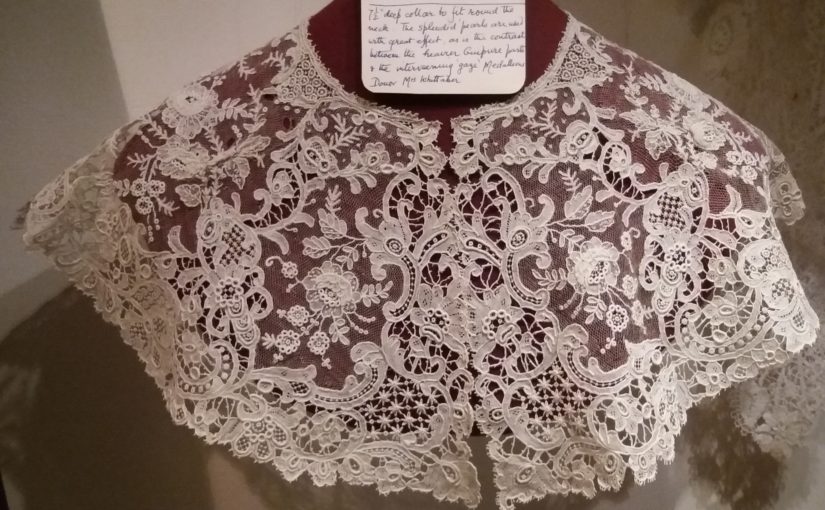
I was however bowled over by the Rachel Shuttleworth textile collection. Rachel was the last of the “family” to live in the hall, she was a great needlewoman, educator and philanthropist. In fact my Aunty spent a lot of time studying lace making in the hall. It was all very inspirational.

Now that’s my idea of an office

The other artifact inside the Hall that caught my eye was the Davy Automatic Fire escape.

The Davy Automatic Safety Fire Escape

It’s gears and braking system ensure a controlled descent. And it reassuringly says “do not hesitate, it is perfectly safe” and that these mechanisms are still for sale today.

Safer than jumping from the top floor

I always like to look out of the window and the Gawthorpe Hall garden is bordered by the Lancashire River Calder. The course of this river has been altered several times to enhance to view and to allow opencast coal mining in the fields behind the tree line. There are several Calder Rivers in the UK. The word Calder derives from celtic origins, meaning hard rapid water.

Looking out towards the River Calder and the now landscaped opencast coal field

On the other side of the hall, in a drought year, you can look down onto a ghost garden. As the outlines of the old Elizabethan garden emerge through the grass. I’m not sure whether to say luckily or unluckily I didn’t get to see this phenomenon, suffice to say that the Leeds and Liverpool canal has not suffered from water shortages this summer.

The ghost garden ( photo from google)

We didn’t linger long, as we’d got a break in the weather and set off cruising south towards Blackburn with the Forest of Bowland to our north west.

Looking back over Blackburn