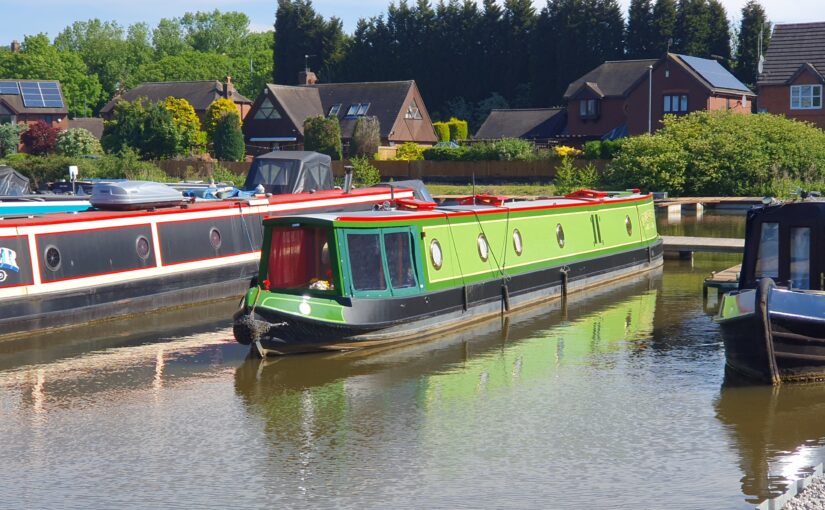
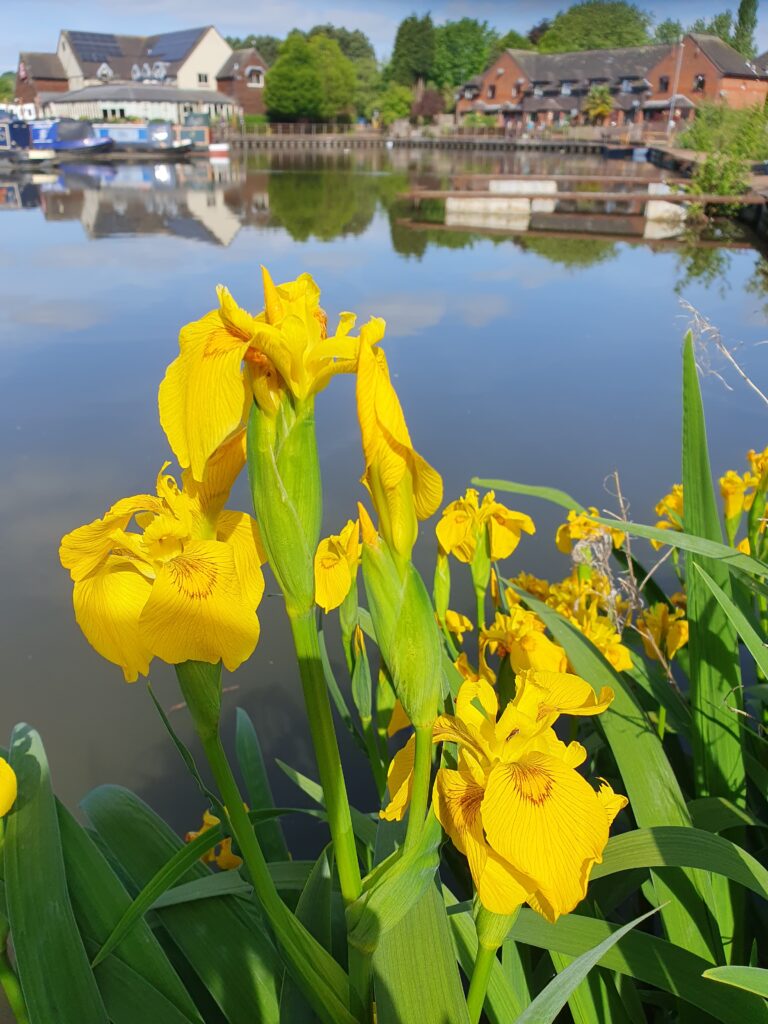
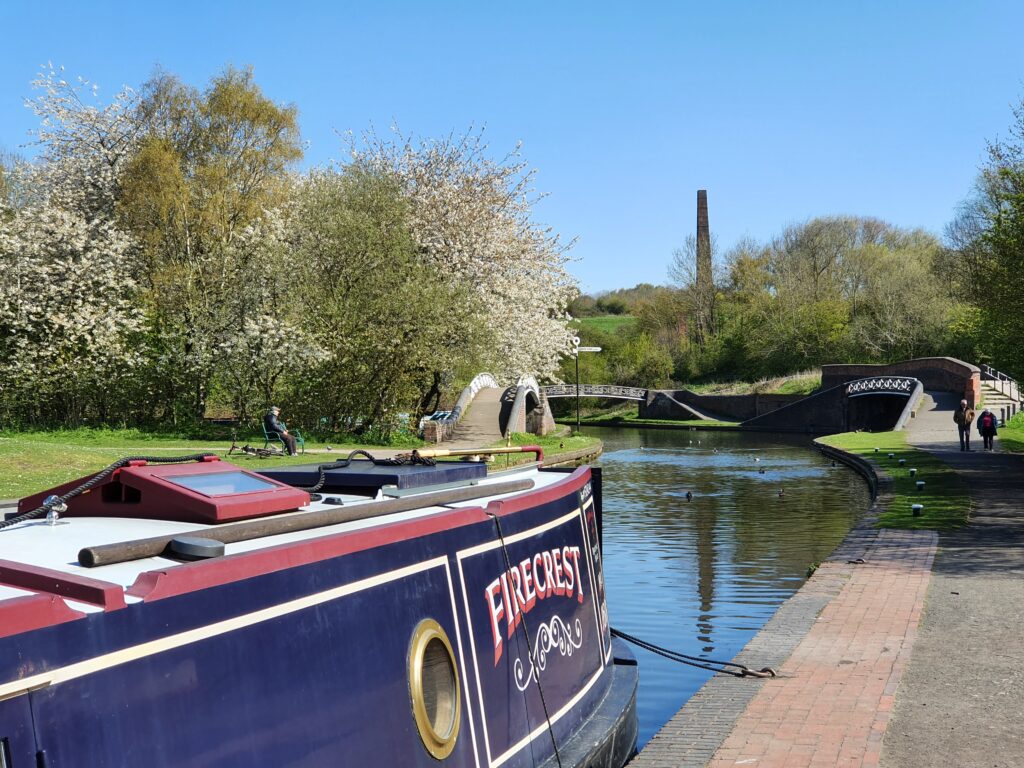
Whilst we were living it up in Alnwick, Firecrest was enjoying a peaceful weekend in Stoke’s Festival Park Marina. It’s not somewhere we’d choose to moor permanently, the power hook up trip is only 6 amp and the H&S fairies shouldn’t be allowed to look at the state of the pontoons. But for a few nights, it’s ideal. It gave us peace of mind, the staff are friendly and helpful, it’s got facilities, and a big Morrisons close by. And the Iris were in bloom so it was pretty as well.
Festival Park Marina
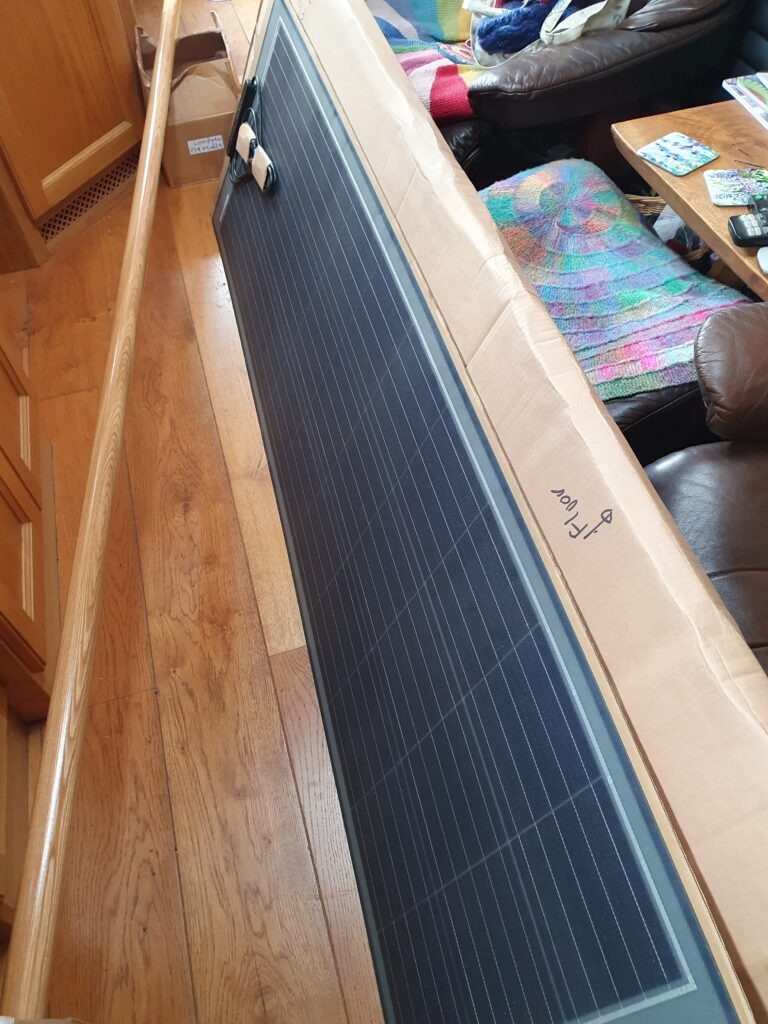
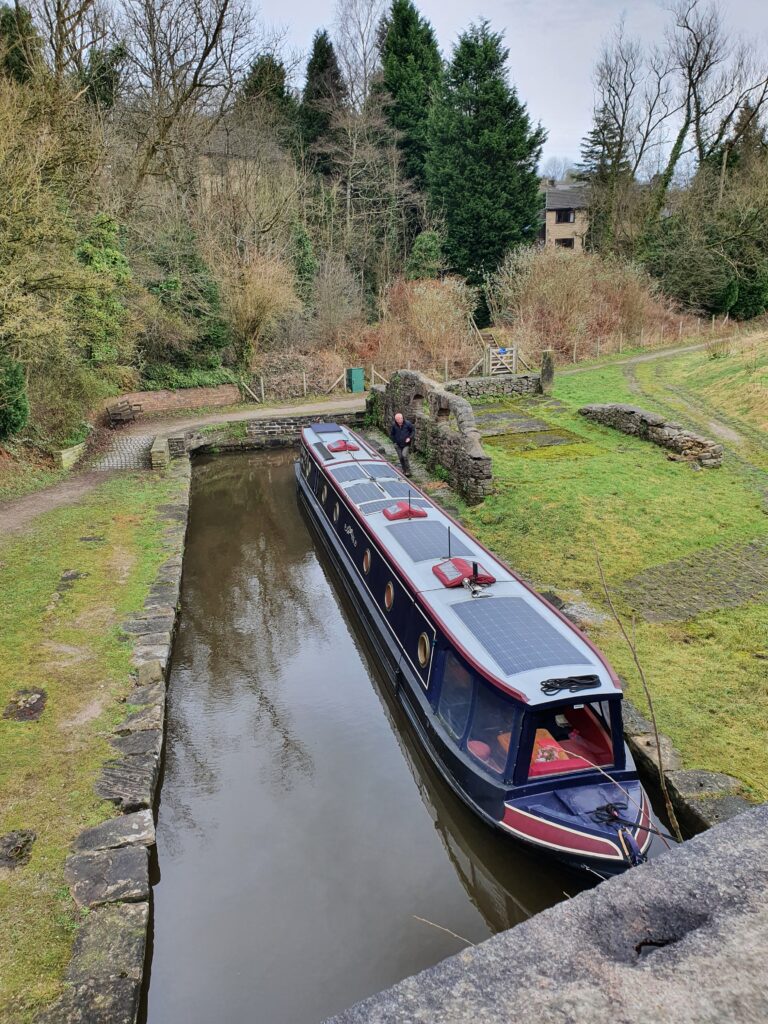
I’d collected the replacement solar panels from home, so our plan was to cruise towards Stone, looking out for a suitable mooring for some serious DIY. Cause those panels were too big to be stored in the boat for long. We’d also treated ourselves to a new boat pole that was still being oiled ready for its life under the elements.
not an ideal storage place for the panels…. or for my temperament
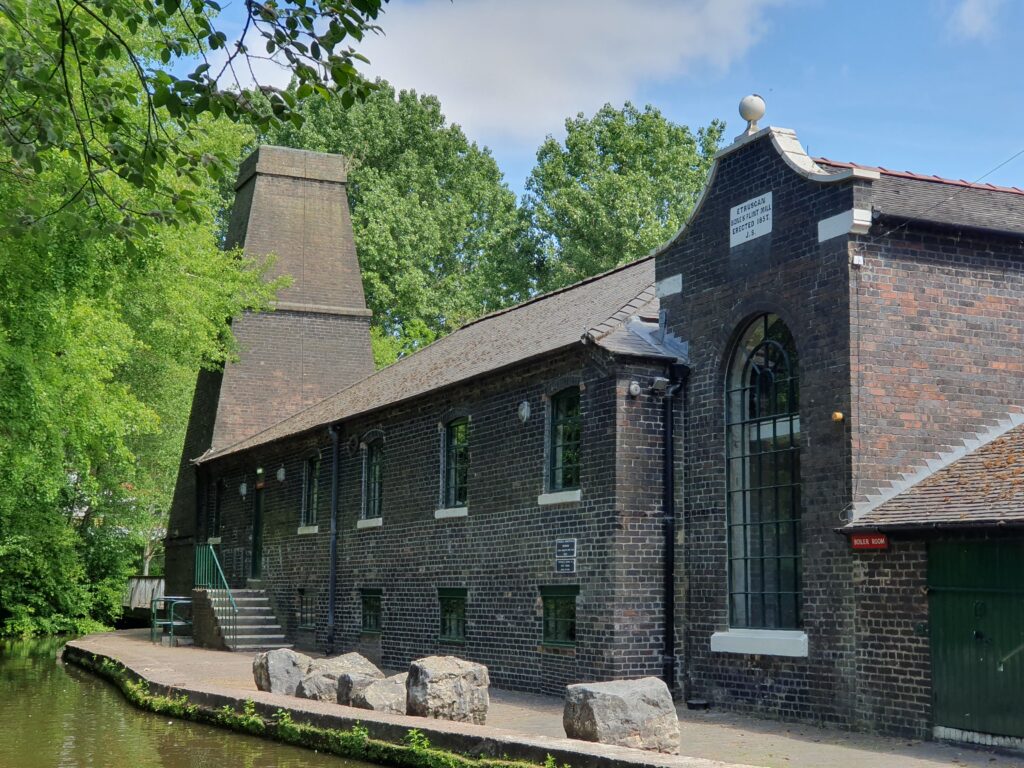
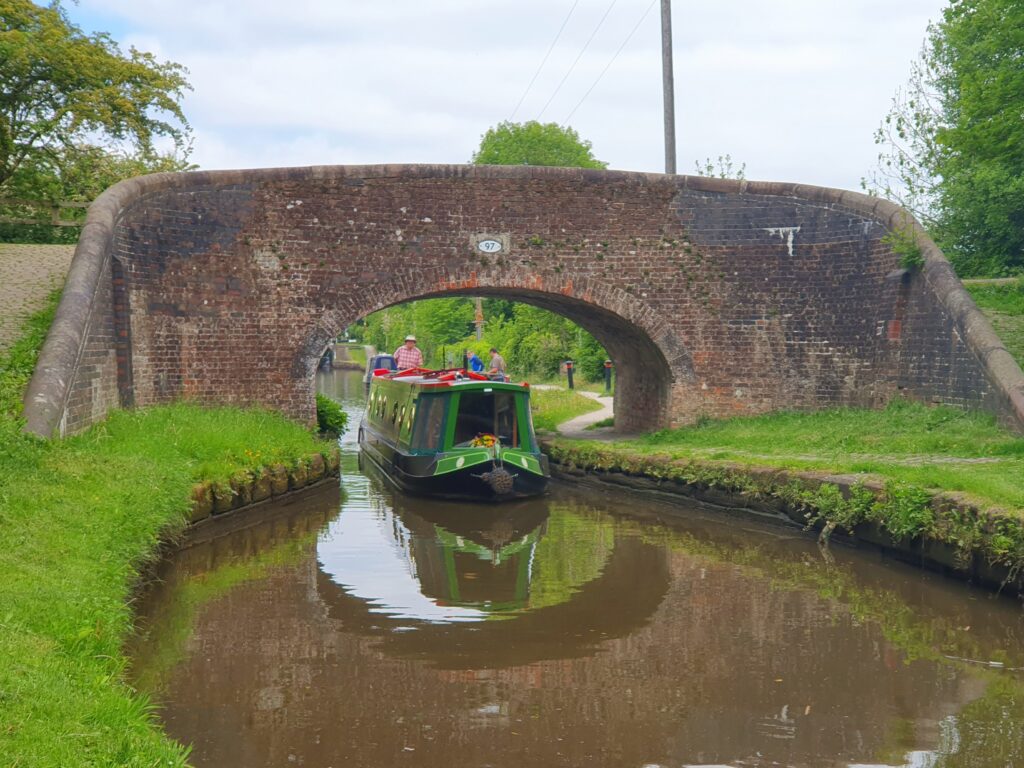
We’ve cruised through Stoke a few times, and love the heritage buildings along the canal
I’d love to know more about what goes on at a Bone and Flint mill
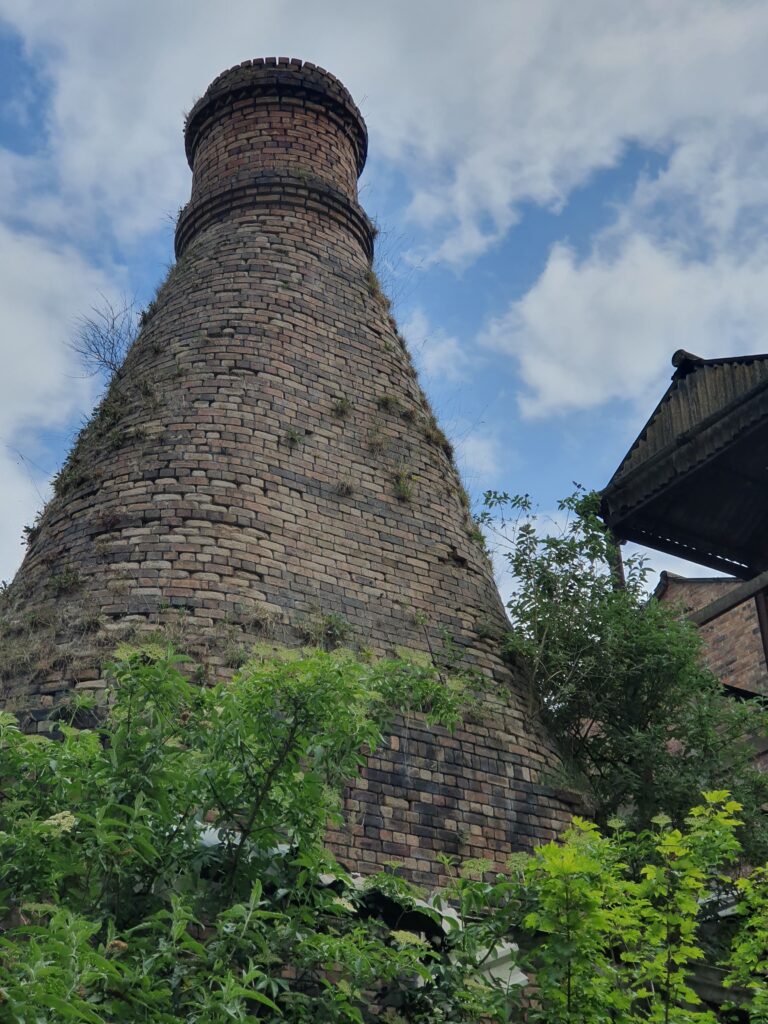
Some have been preserved and are still in use, Whist sadly, some are ready to fall down if they don’t recieve any care and attention.
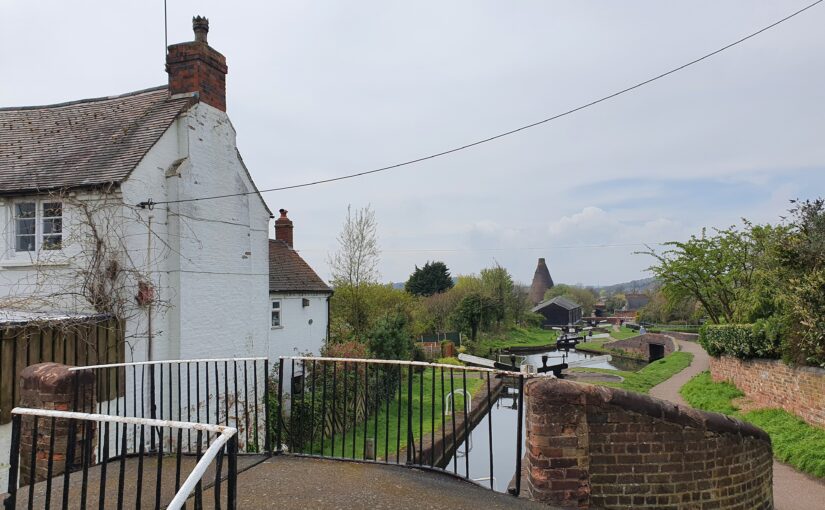
The conical kilns of the potteries might not be unique but they are a special part of our heritage and should be valued.
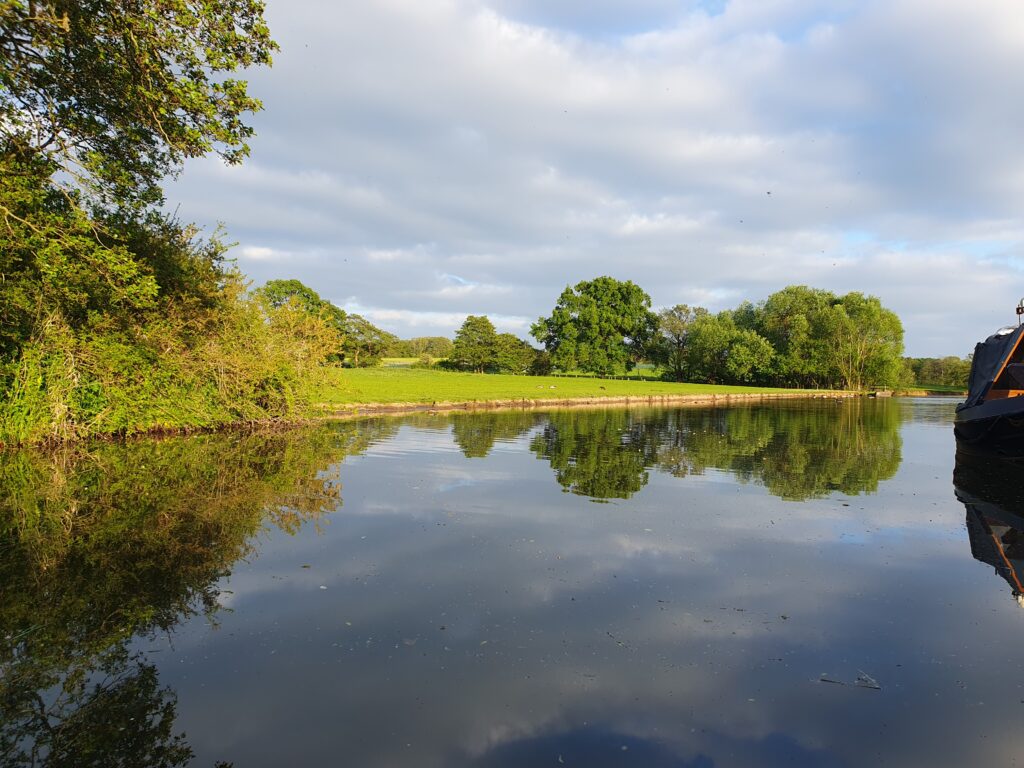
But mooring in central Stoke isn’t the most appealing so we cruised on to Barlaston for a rural view.
The Wedgwood Mooring at Barlaston
And some ducky company
No, you can never have too many photos of ducklings
We thought we’d be able to do the panels here, but the spring pollen, blossom and seeds were swirling through the air fast and furious, which meant that by the time we’d got to washing one end of the roof, the first end was already covered in bits that would pollute the glue. So pretty though it was, we moved down through the equally pretty Meaford lock flight.
The Meaford flight, above Stone
And onto the Whitebridge Lane moorings at Stone,
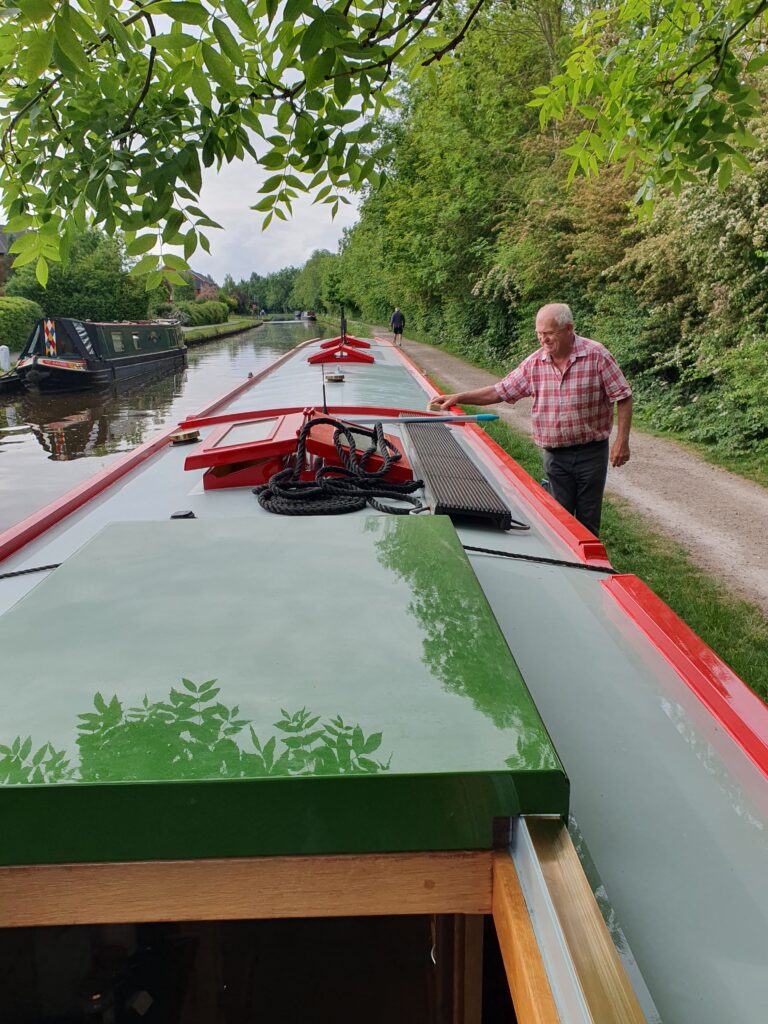
Looks like Eric can wash the roof here to his hearts content
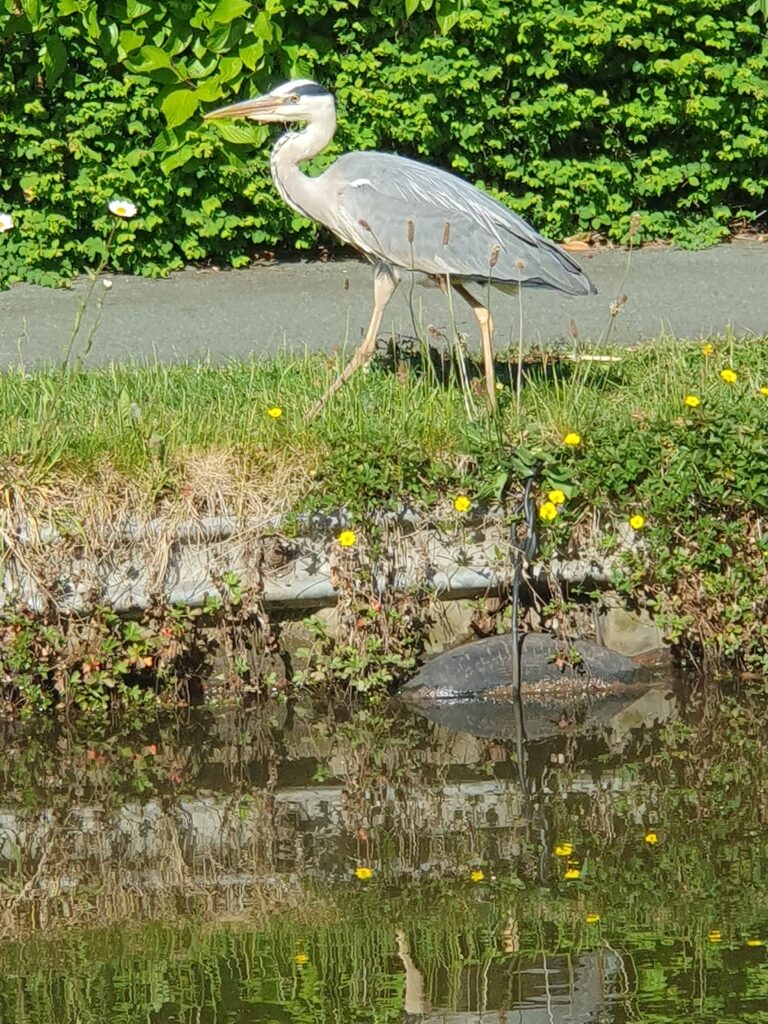
With a Heron for company and trees that wanted to keep hold of their spring leaves.
There’s something very special about narrowboating in this area, we love seeing the industrial heritage of the our country. Bugsworth Basin is a prime example of how the canals were a significant structure for the communities they served. It’s now listed as a Scheduled Ancient Monument and the Bugsworth Heritage Trust oversees the area making it an interesting and informative place to visit.
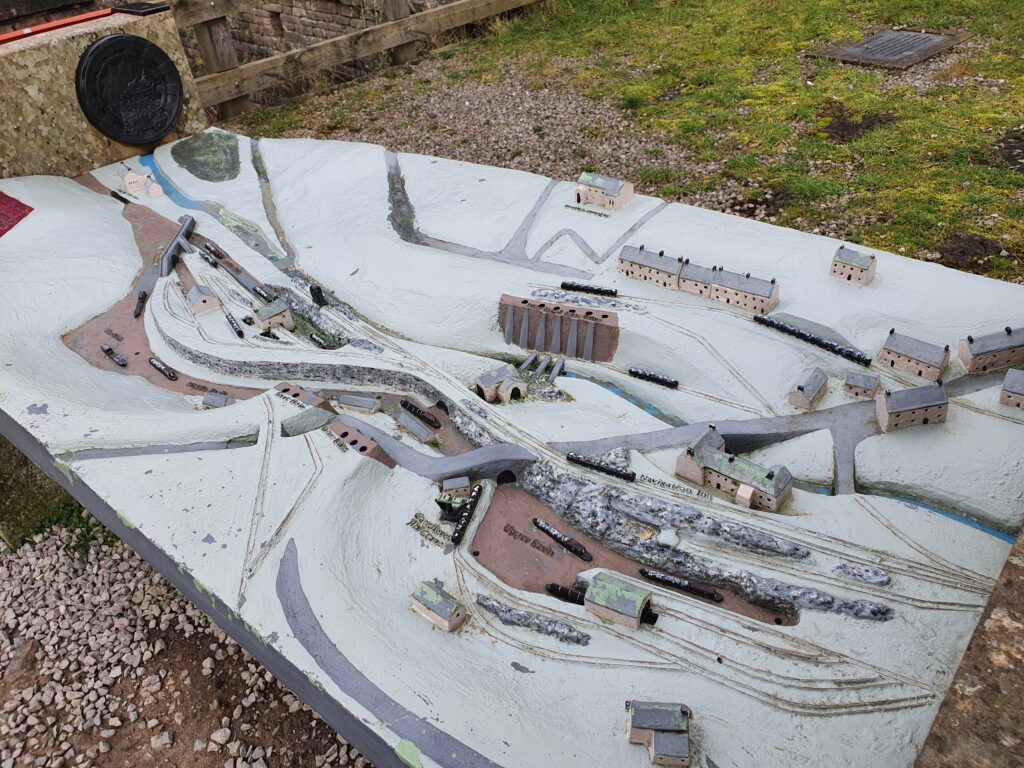
Model of the basin back in its heyday
The Peak Forest Canal was completed in 1804 to transport limestone and gritstone from the Derbyshire quarries down to the Ashton Canal where it was probably went on to help build Manchester.
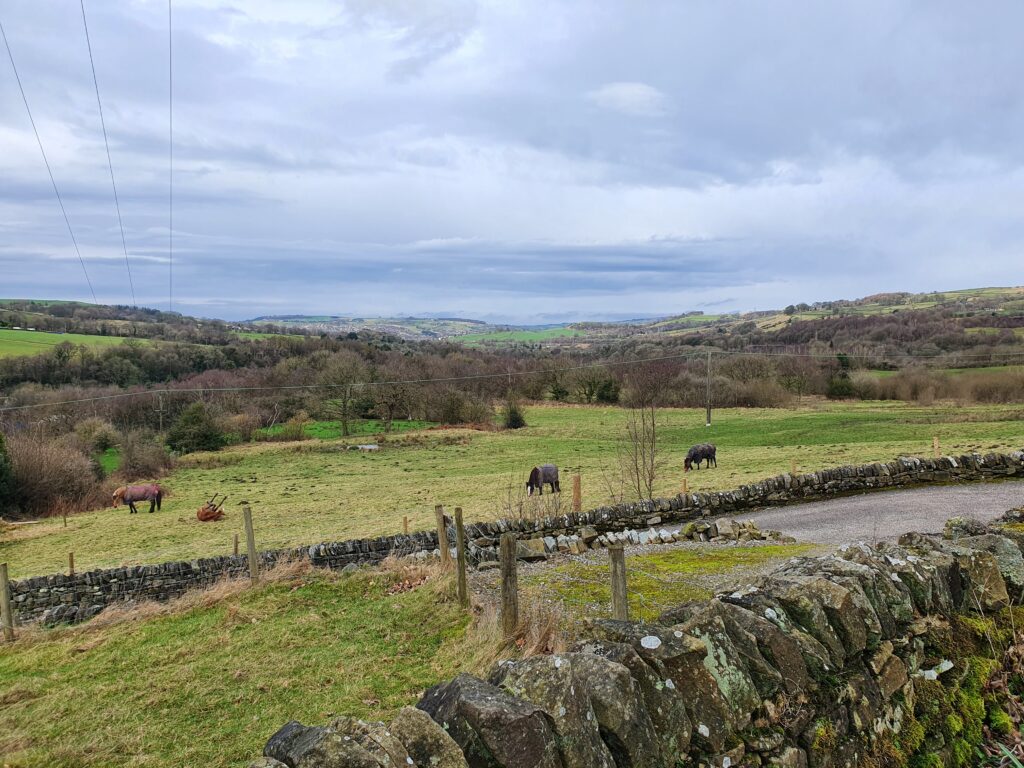
Looking towards Manchester, about 15 miles west of Bugsworth
It was hoped that the canal would go further into the peak district but alas building the necessary locks wasn’t economically viable. A terminus was created at Bugsworth which, when it was built, it was Britains largest inland port. (Aparently, Eric and I can’t agree what defines an “inland” port) Equally impressive was the 14 miles of gravity and horse powered Tramway system that was built to bring the stone down from the quarries. You can still walk the tramway, but it was too wet and muddy for us this week. Not only was the basin a storage and transhipment port, it was the hub of a thriving village where the lime was processed in huge kilns.
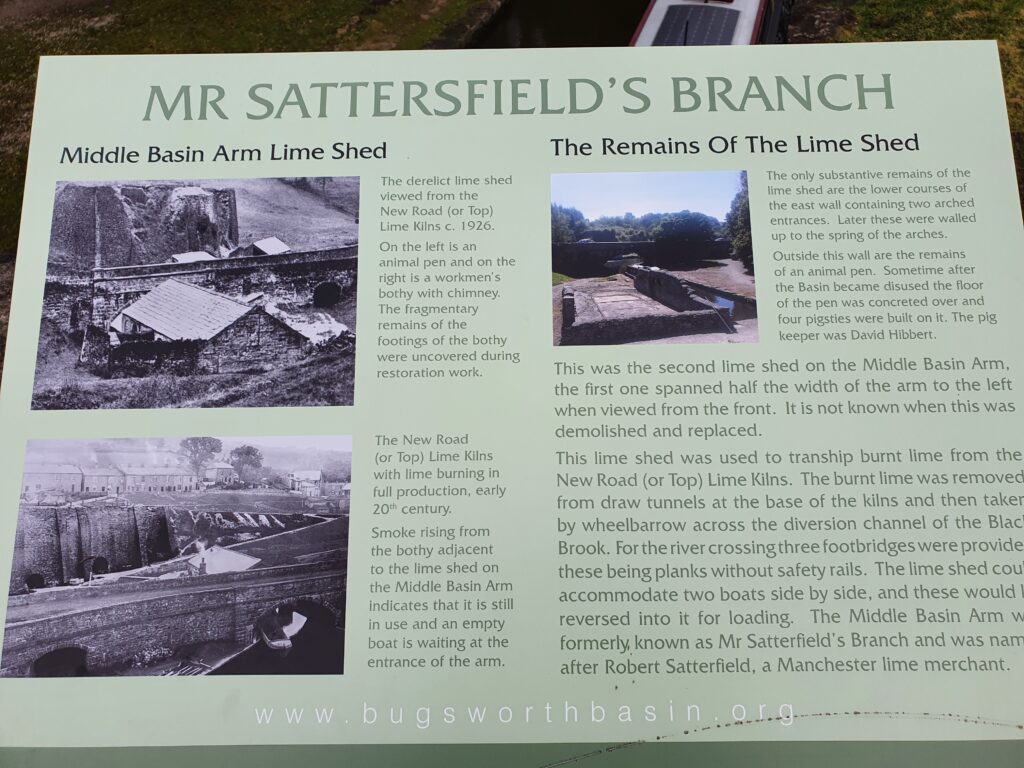
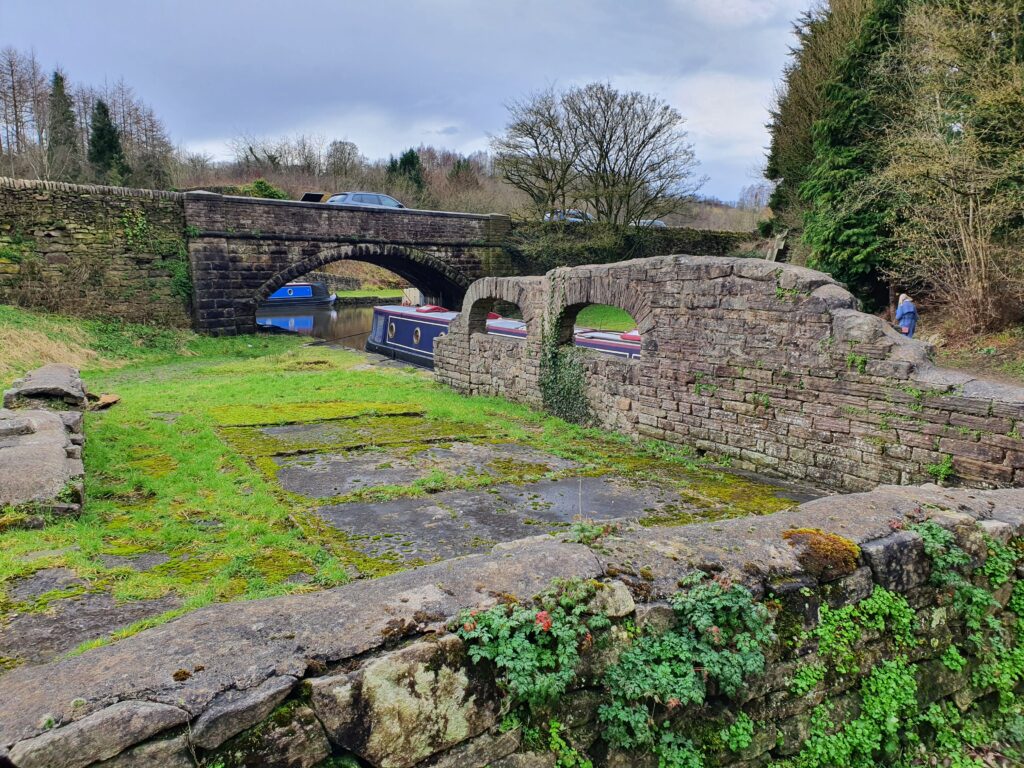
The Middle arm is considered the prime mooring spot, and although it was originally all under cover, the stone sheds have long since been dismantled and repurposed and all that’s left is the short arm, a bit of wall with 2 arches and a base of concrete- where an enterprising local build a pigsty. The working life of Bugsworth Basin remained until the 1920s,
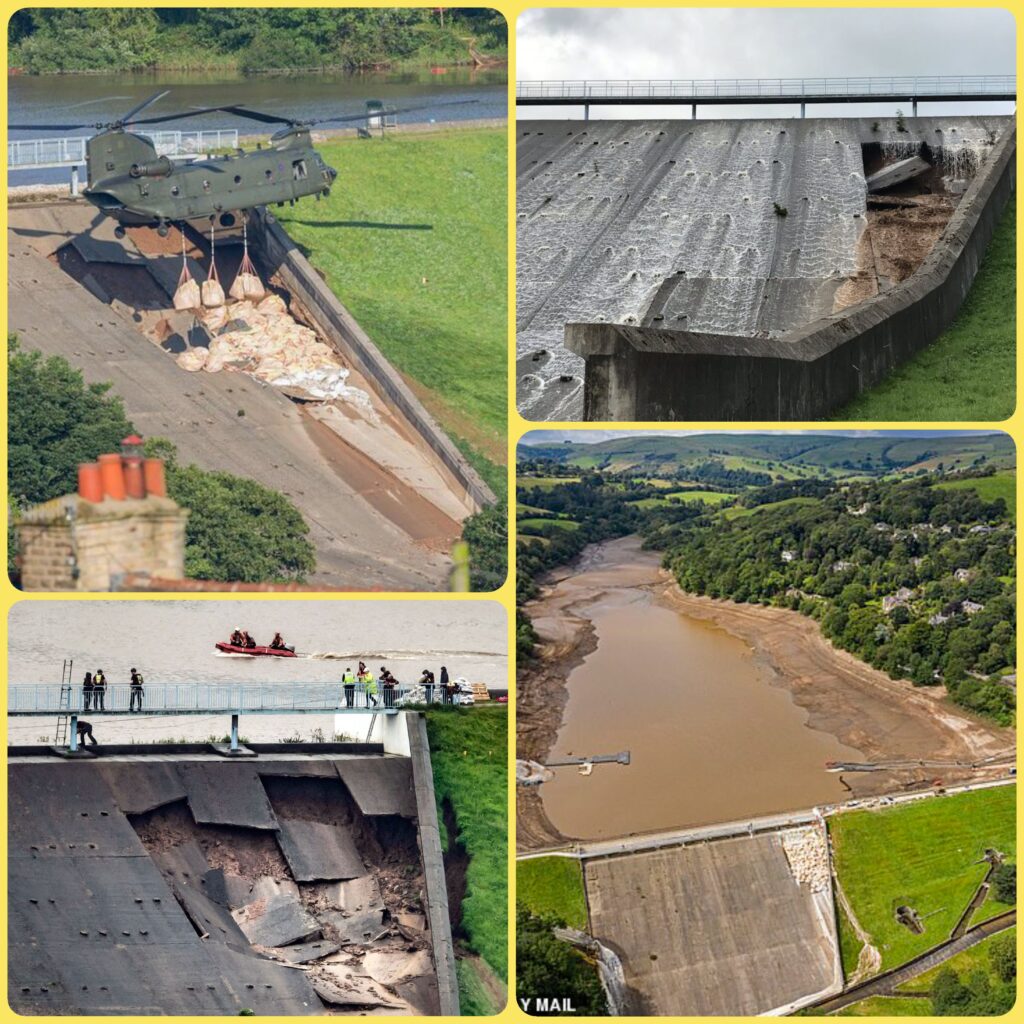
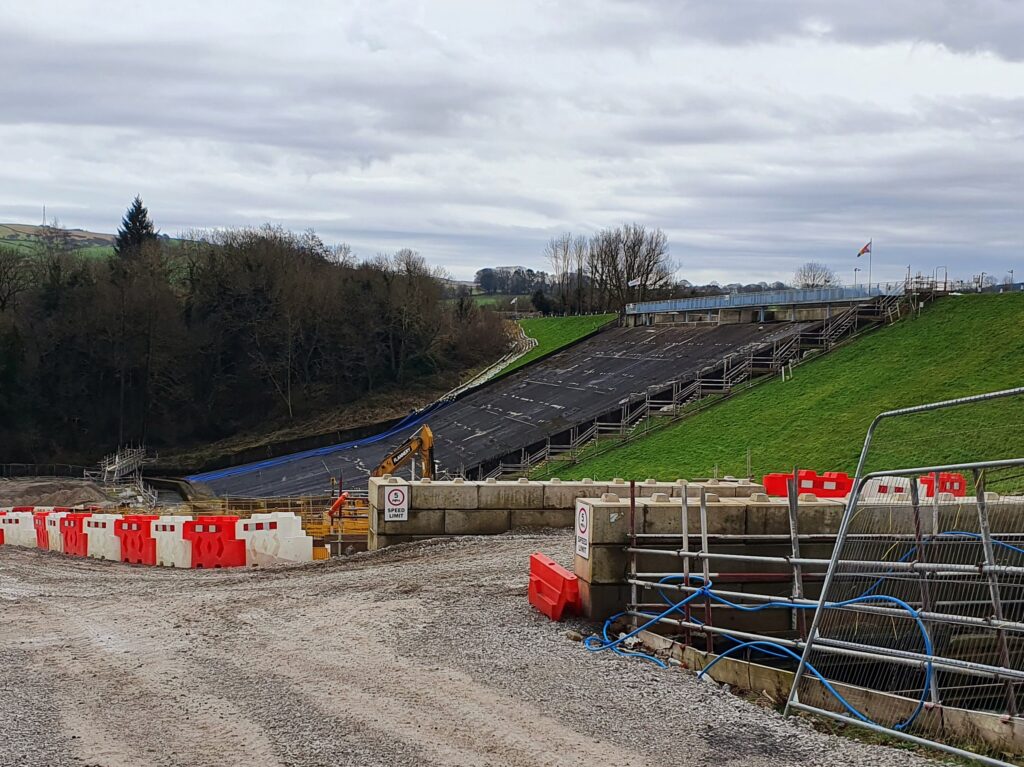
Nowadays it’s not trade that keeps the canals viable, but as with all waterways, natural or man-made, they need a constant supply of water. And whilst we might be getting a generous contribution from the heavens this week, direct rainfall isn’t sufficient without careful management. You’ll usually find a reservoir near the head of most canals with pumping stations along the route. Combes reservoir in the High Peaks was built to feed the Peak Forest canal, but it wasn’t sufficient and in 1838 the Victorians completed Toddbrook reservoir at Whaley Bridge. As with most reservoirs, Toddbrook suffered its fair share of leaks over the years but in August 2019, after a particularly wet summer, part of the modern concrete slipway collapsed. It was feared the whole structure would give way with catastrophic consequences. 1500 residents of Whaley Bridge, Furness Vale and New Mills were evacuated whilst Chinook helicopters dropped 400 tones of aggregate to help prevent a disaster. CRT has been working on the repair ever since, with some interesting modernisation, shown here.
(Images swiped from Internet search)
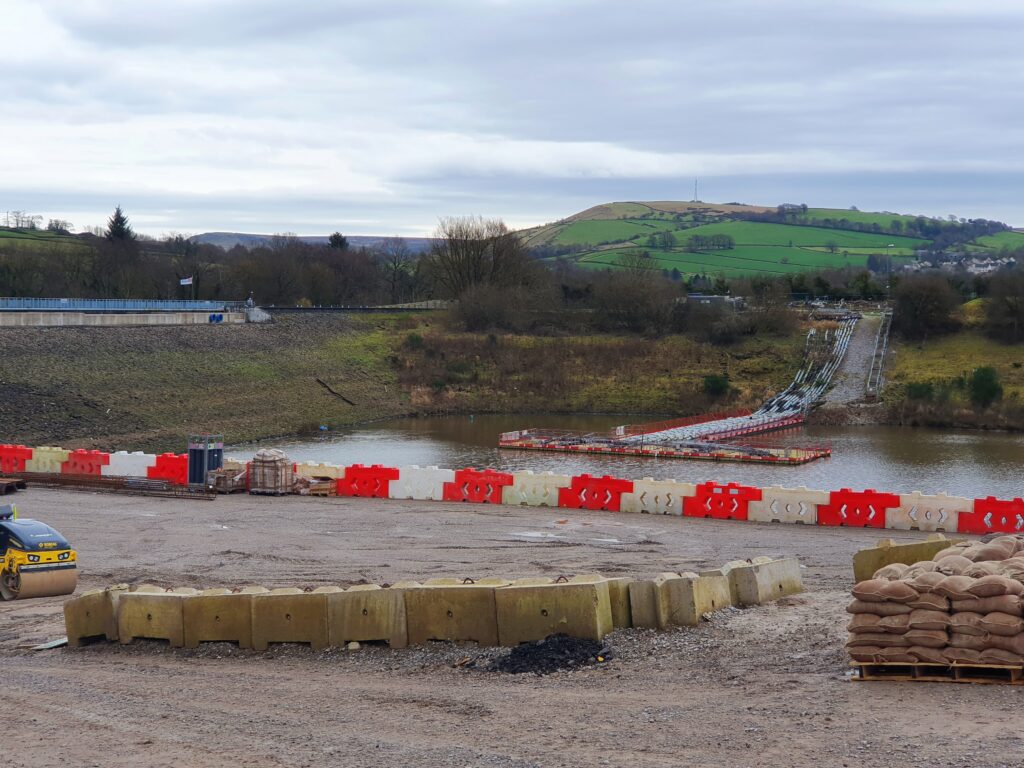
The project is supposed to be completed this year, so we took a walk up to see what was going on. Most of the dam is still fenced off from the general public so we weren’t able to get up close, but we chatted to a few of workmen and peer through the site gates. They aren’t so convinced the work will be finished this year. Neither are we.
There’s plenty of information online about the dam but I found this short little case study interesting.
Thankfully the effect of the of our current structural failure – the culvert collapse which had closed navigation on the Macclesfield has been repaired and reopened. We’re pointing in the right direction and ready to start cruising.
After 28 glorious lock free miles we were about to be brought back down to reality. We waved goodbye to the beautiful Bumblehole.
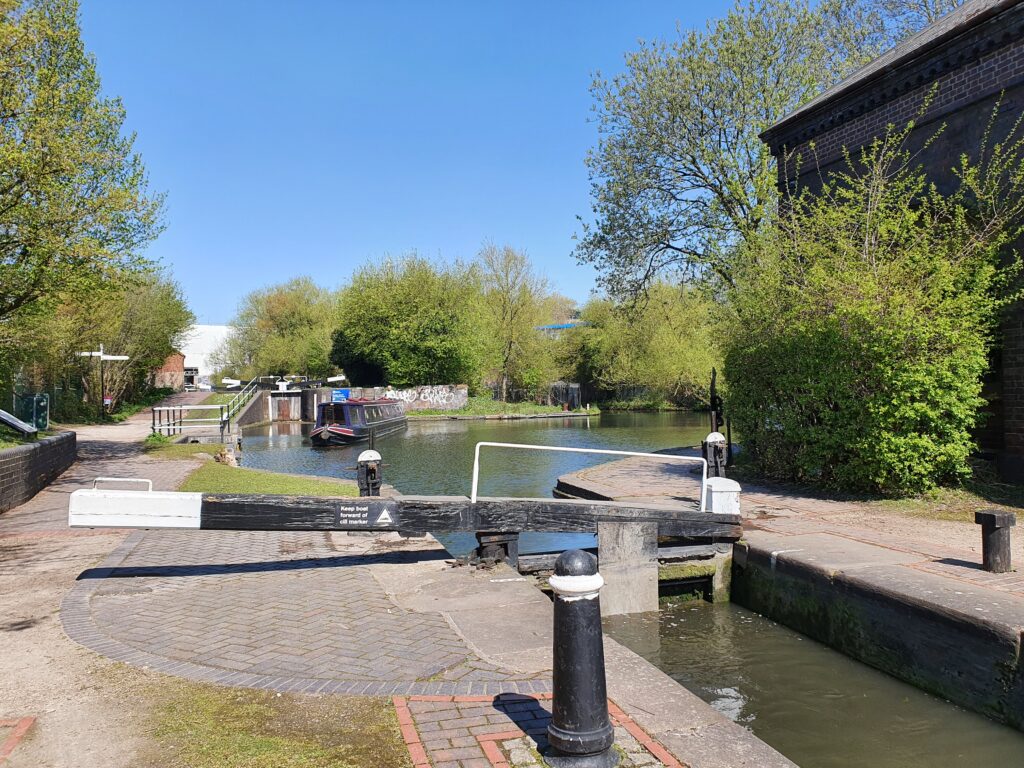
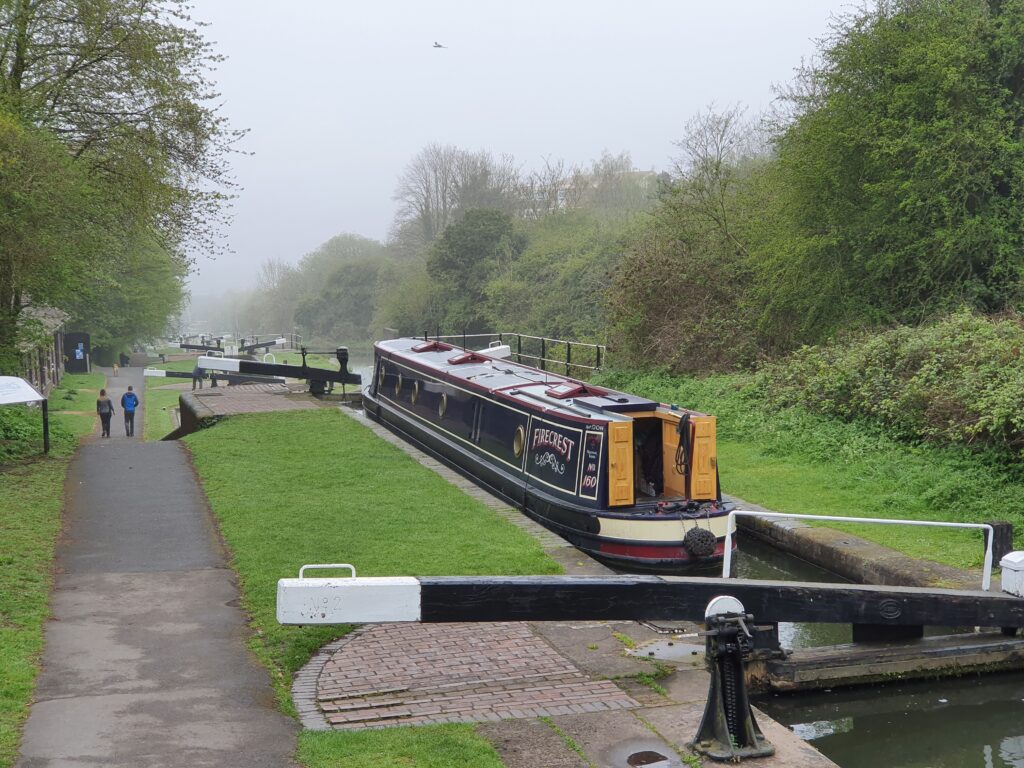
And set off, only one lock at Blowers Green pump house where the Dudley 2 meets the Dudley 1. (If we had turned right we would have reached the dudley tunnel which is restricted access only)
Blowers Green lock, junction of Dudley 1 and 2
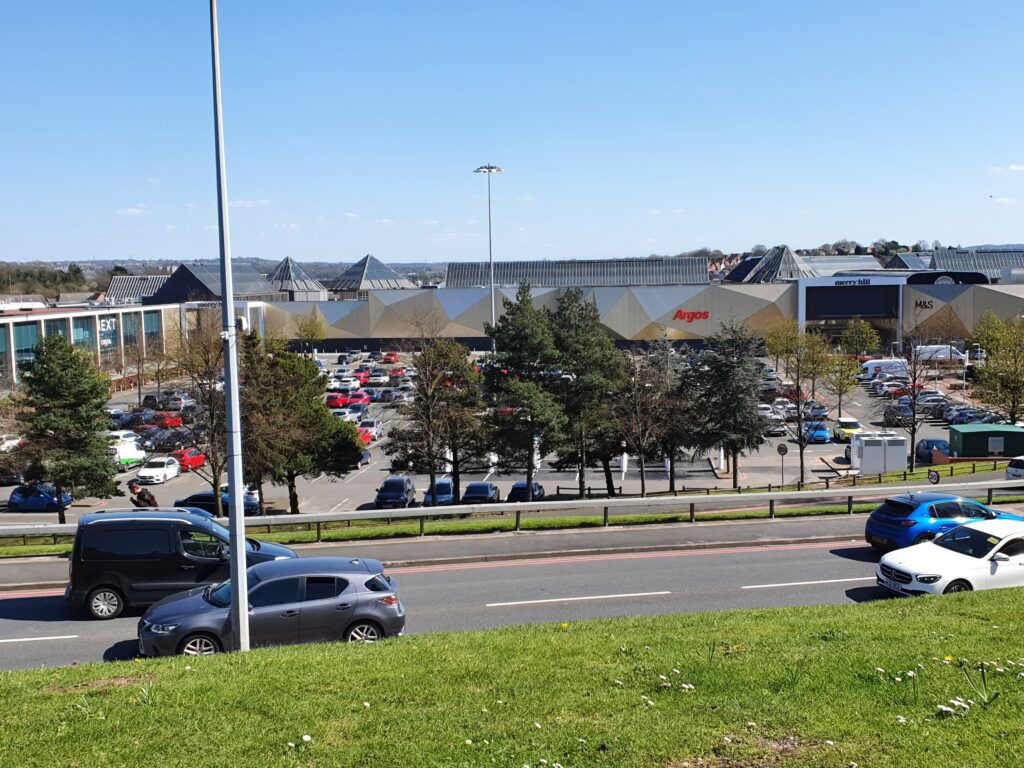
And just as we were safely in the lock, we heard sirens and a police car skidded to a halt, 2 officers leapt out, luckily they didnt consider our windlass a deady weapon, they were chasing a suspect on a motorbike last seen on the towpath, fortunately not by us, and they declined a ride on firecrest when they realised they could walk faster than we cruise. We carried on south for an overnight stop at Merry Hill because despite the beautiful blue sky we were being buffeted around by some force 9 gales.
Mooring with a view…
Tempting though the M&S food hall is, if you have too much of a good thing it stops becoming a treat. And sadly we also experiences some unwanted attention from the locals. We heard a suspicious sound outside the boat and found 6 lads in their 20s sitting on the roof taking photos. There was nothing malicious in their intent, just obliviousness to it being our home. They were very apologetic. And then a school kid, who was with his family decided to kick the boat as he walked past, he got yelled at and ran off before I got the chance to throw a bucket of water over him cause he was anything but apologetic. Where are the police when you need them – chasing proper criminals we hope. We’ll give this mooring a miss in future. But now fully fuelled with adrenaline, we set off. The plan was just to do the Black Delph flight,
can’t see the bottom, but its only 8 locks
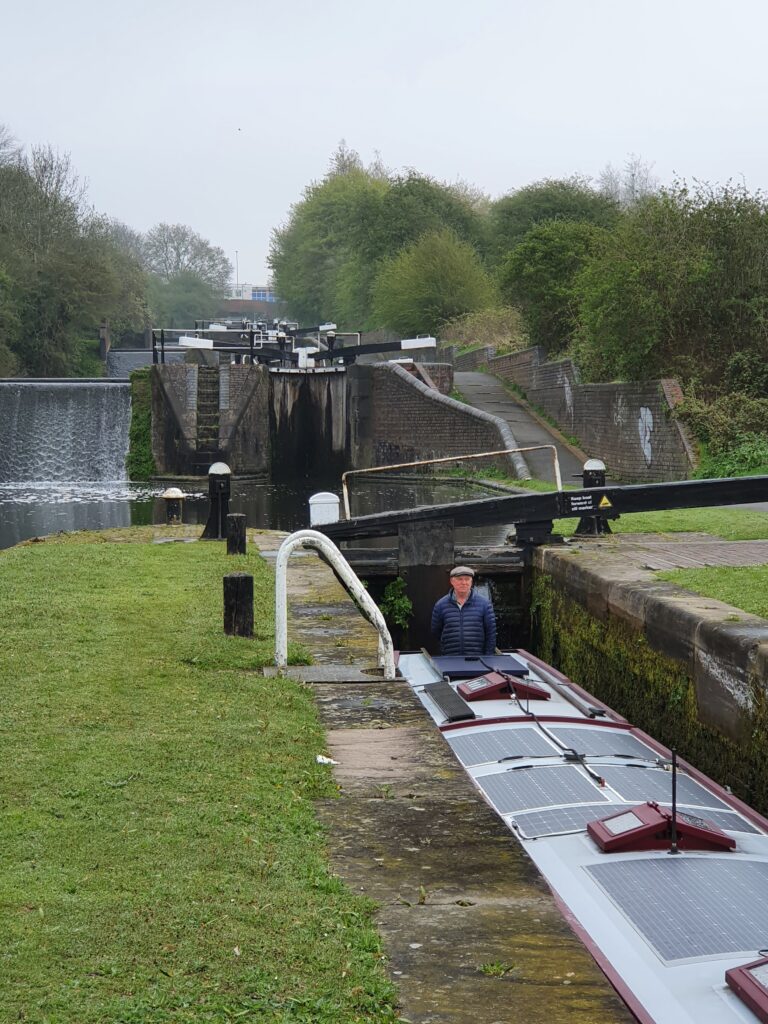
8 locks dropping 85′ but we struck gold with 2 volunteers and between us preparing the lock ahead meant we were down in well under an hour.
No mist at the bottom
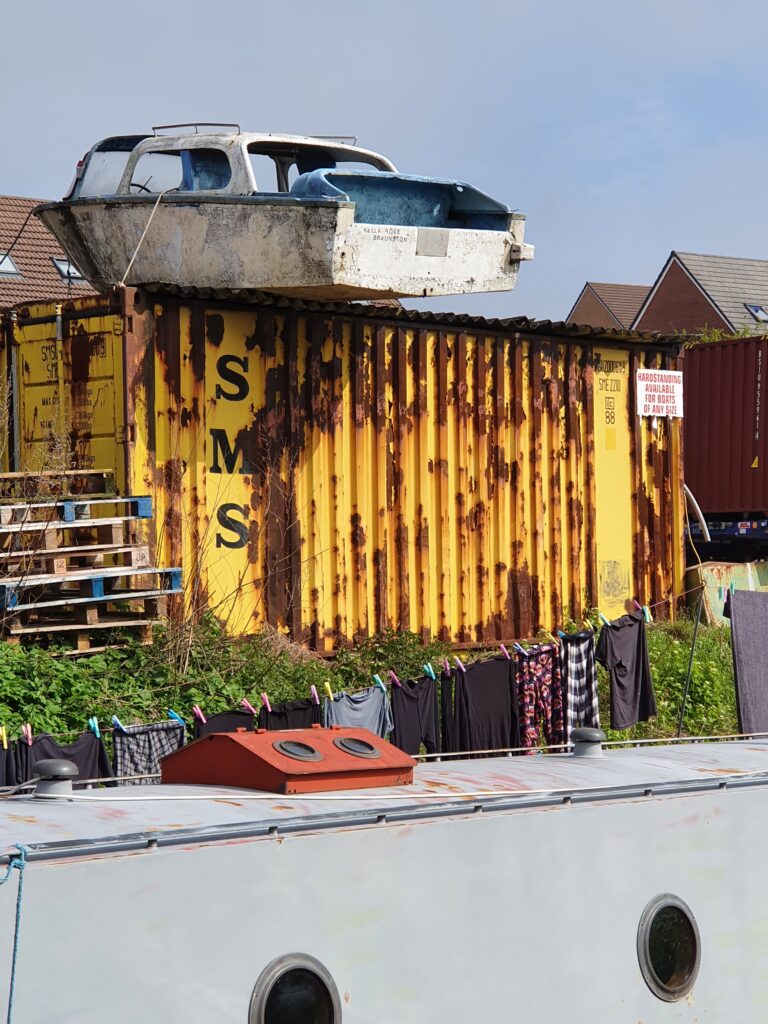
We thought we’d found a safe place to moor
Brings a new meaning to mooring up
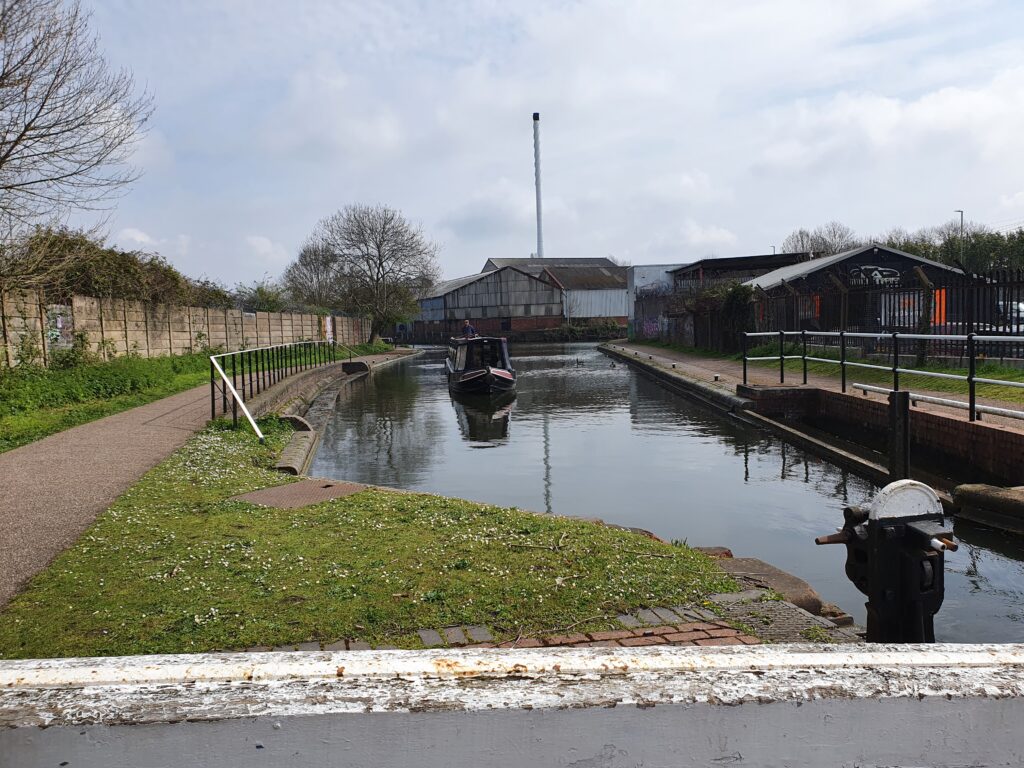
But the sun was now shining and we were intent on going down not up. The Stourbridge 16 isn’t the most salubrious areas at the top,
Top of the Stourbridge Canal
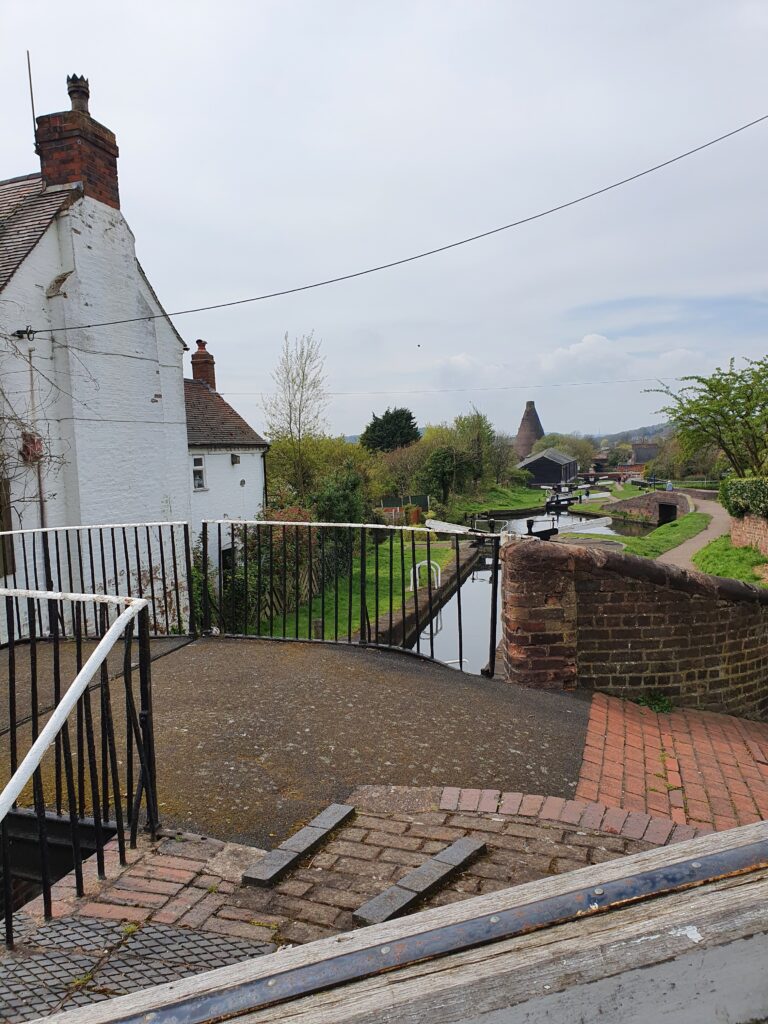
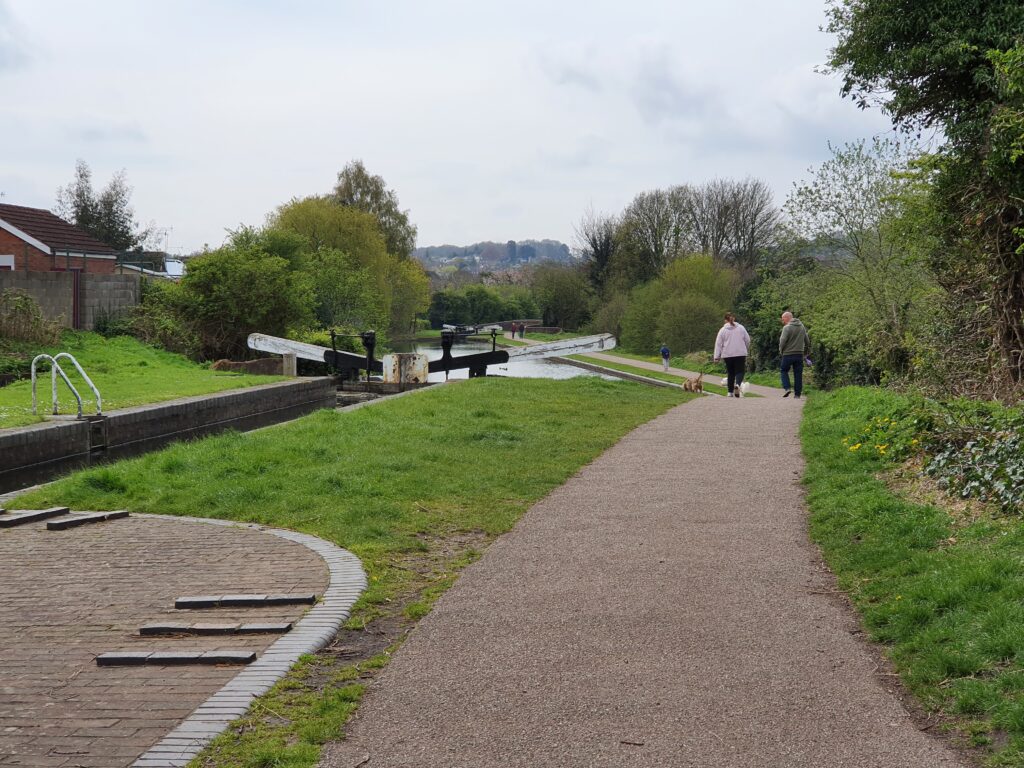
But again we struck gold, not with an official volunteer, just an old guy with a windlass who liked to work locks, he didn’t stop to chat, he just walked ahead to prepare the next lock leaving us to work our way down. We did persuade him to accept a pint to show our thanks, because not having that extra step of having to fill the lock ahead, made all the difference between us enjoying the journey and it becoming a hard slog.
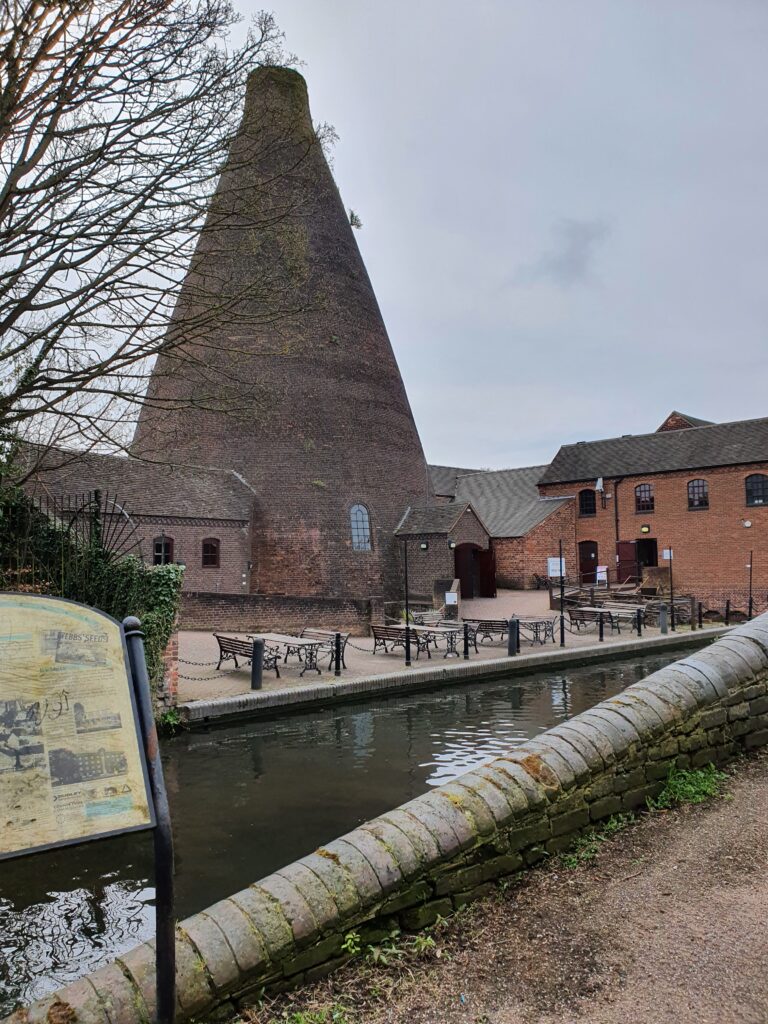
The flight drops 145′ and it does get prettier and the industrial heritage more interesting. Stourbridge was known for its glass making and the Red House Cone is a prominent feature. Built around 1790 the 100′ chimney is designed to draw the heat from the furnaces below so the temperature reaches 1000°C. Originally the glass was used for windows but in the 1830s production changed to bottles and tableware. Stuart Crystal was made here until 1930s.
The Red House Cone, one of the last remaining chimneys.
There is visitor mooring outside the cone, but with the last off the locks in site we decided to make the most of our helper and continue to the bottom.
I can see the last one
24 locks over 5 miles all in 1 day. I could have done with a fish and chip super, but we made do with a dine in for 2 from M&S instead. 158miles to go and 118 locks
We stummbled upon this gem on our way down the Froghall branch. The Cheddleton Flint Mill is a restored mill that has been on this site for 800 years, although the current buildings are from the industrial revolution when the canal was used for bringing the flint and lime. There are 2 water wheels that are powered by the water race from the river Churnet.
George and Helen, the two wheels
The opening times are a bit sketchy right now, but the wheels are turning when there are volunteers on site
Inside the mill
One thing that I appreciated about the work that had been done in creating this heritage site, was the lack of physical barriers between me and the working machinery. I didn’t feel restrained by the Health and Safety elves, but free to exercise my own common sense, knowing not to stick my fingers underneath the grinding wheel .
Flint grinding pit
Over the centuries the mill has ground flour, flint, glass and other things, although mainly products relating to the potteries. The Trust has been gifted various other pieces of machinery over time. So not everything is “original”
This engine was gifted to the site, but it can’t be given back, without demolishing the walls around it
Or housed in it’s original place
One of the smaller grinders outside
The site includes several buildings, including the Miller’s cottage. His daughter lived here until she died in her 90’s
Hard to imagine some homes have less space than we do.
Whilst we were poking around the mill we could hear that familiar toot of a steam train, and sure enough the cheddleton heritage station is just a further 10 minutes along the canal. It hadn’t yet reopened to the public but we were able to walk along the platform, they had been working on the engines preparing them for the coming season. We didnt see any of the classic engines, but I imagine the scenery makes for a stunning journey regardless of the train.