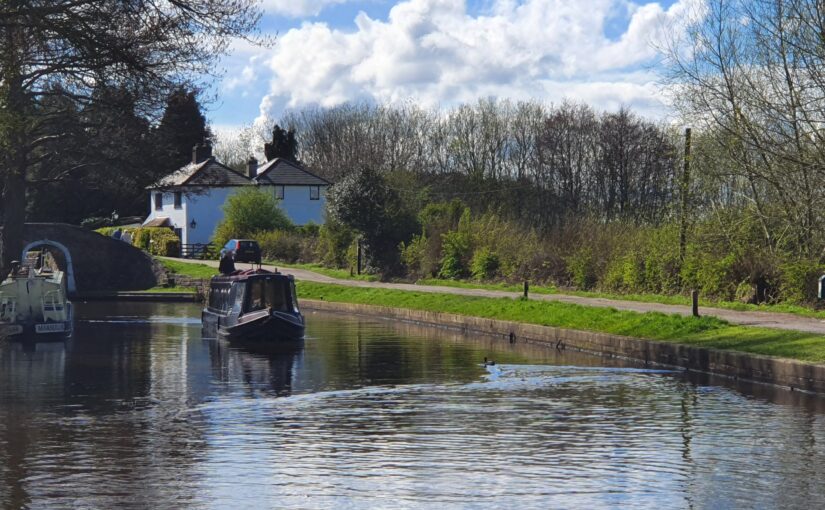
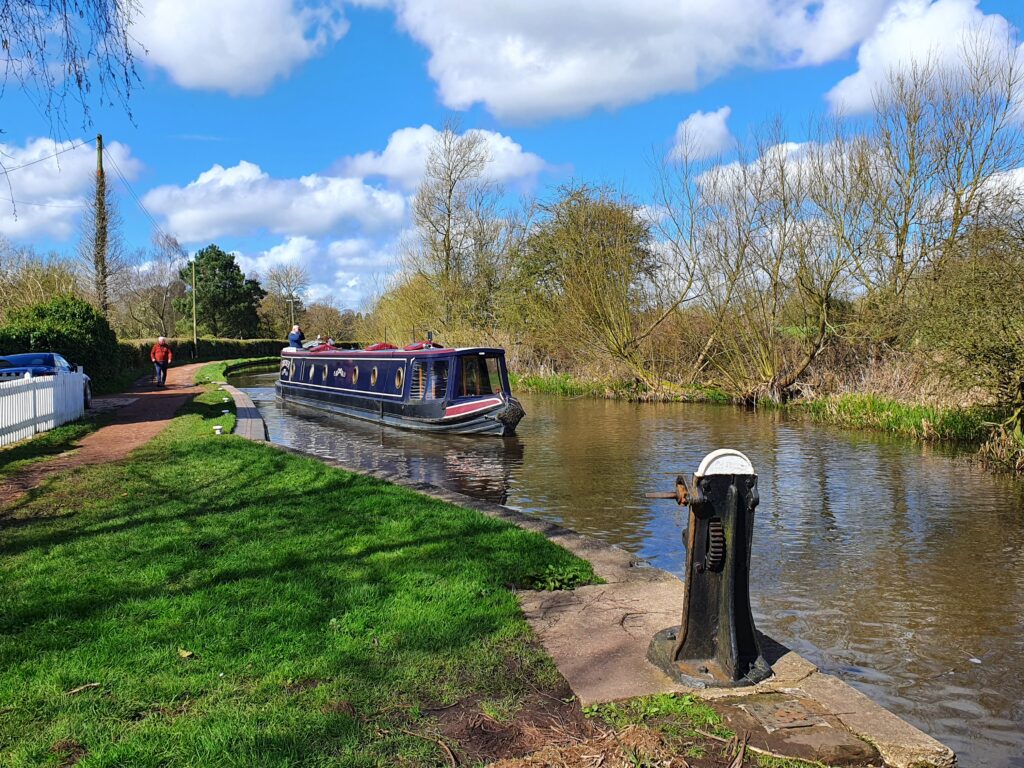
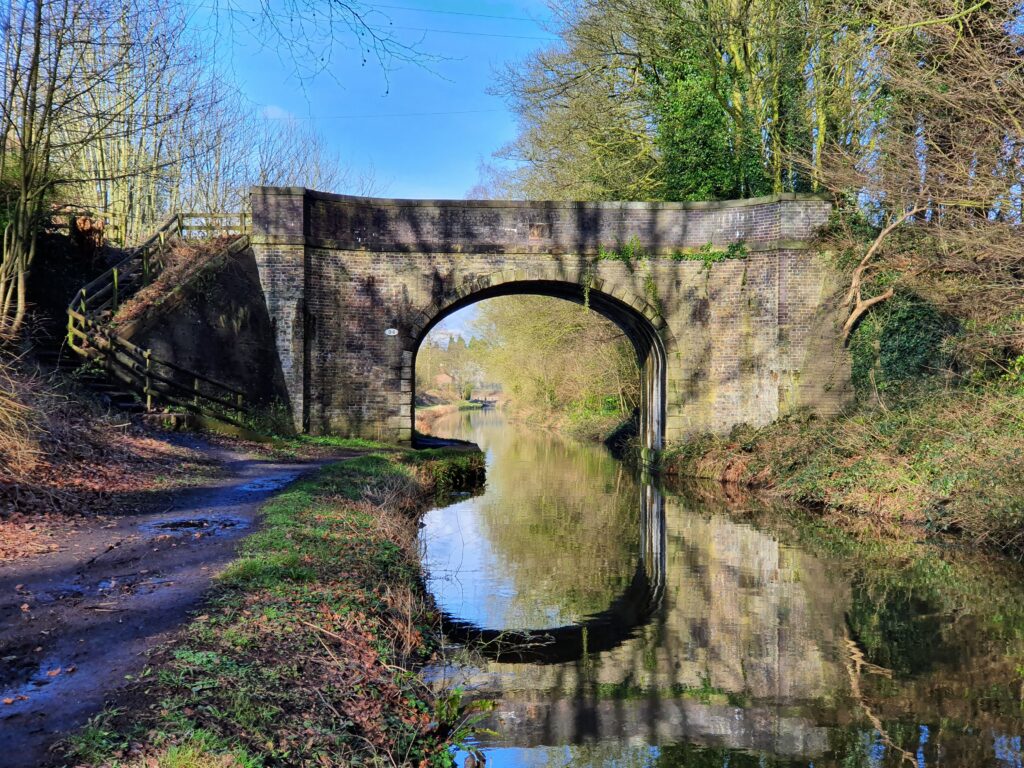
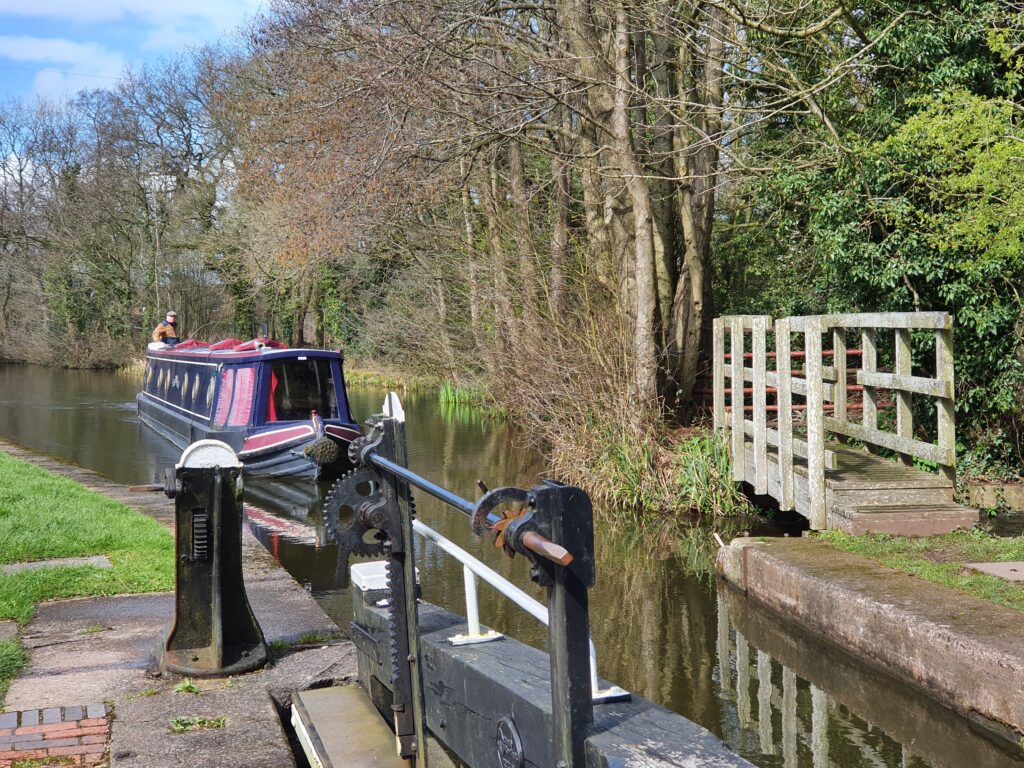
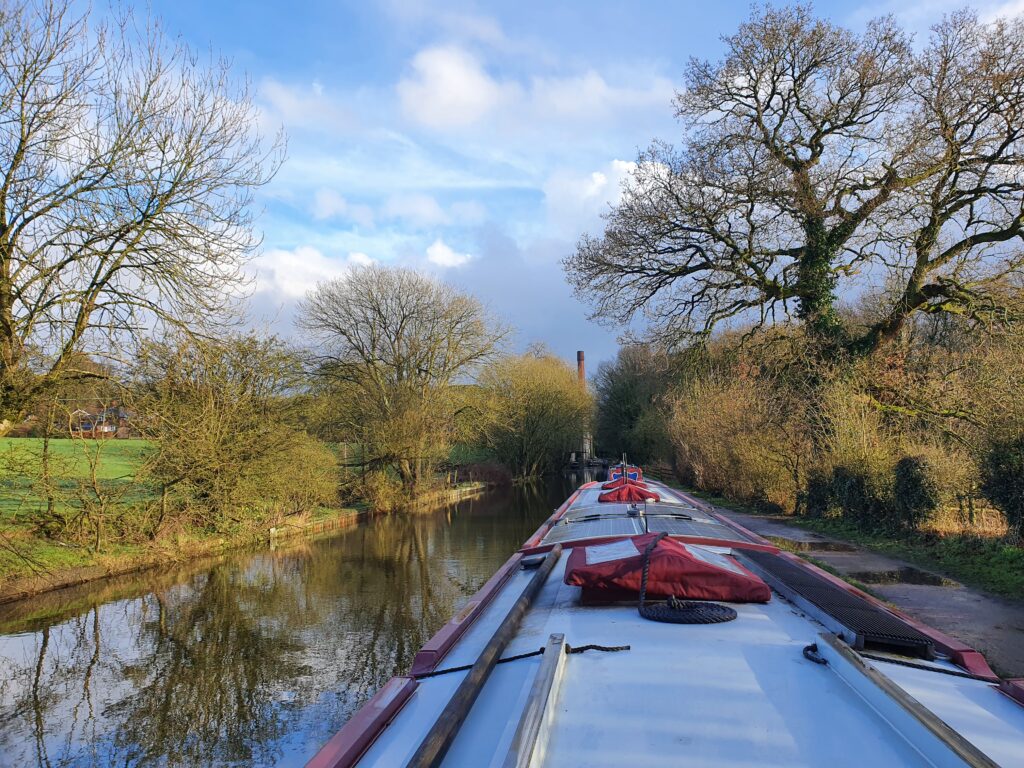
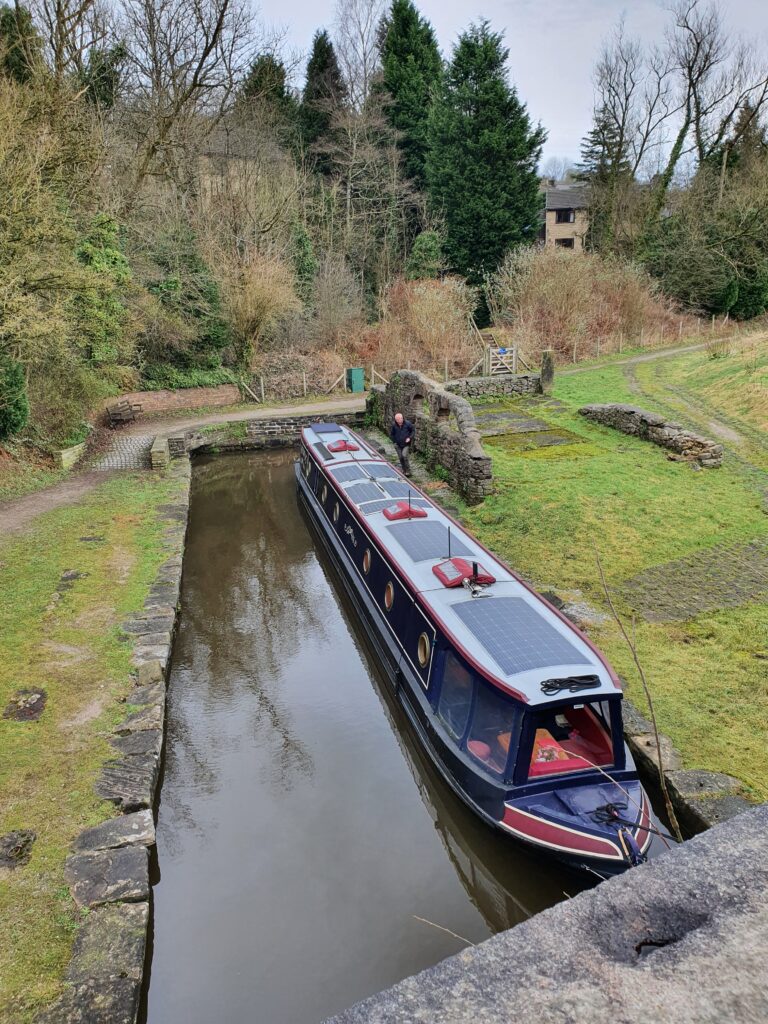
We weren’t wasting any time, and as soon as I’d got back from an obligatory trip to Coates Butchers we donned our life jackets and set off.
Woman on a mission
We got swept along the mile between Alrewas and Wychnor where the River Trent and the canal compete for supremacy.
Alrewas Weir
It’s an interesting experience when you’re not used to a flow. But once you’re past the weir it’s time to enjoy the the view of St Leonards Church on the hill.
We weren’t the only ones keen to get going as we met an oncoming boat
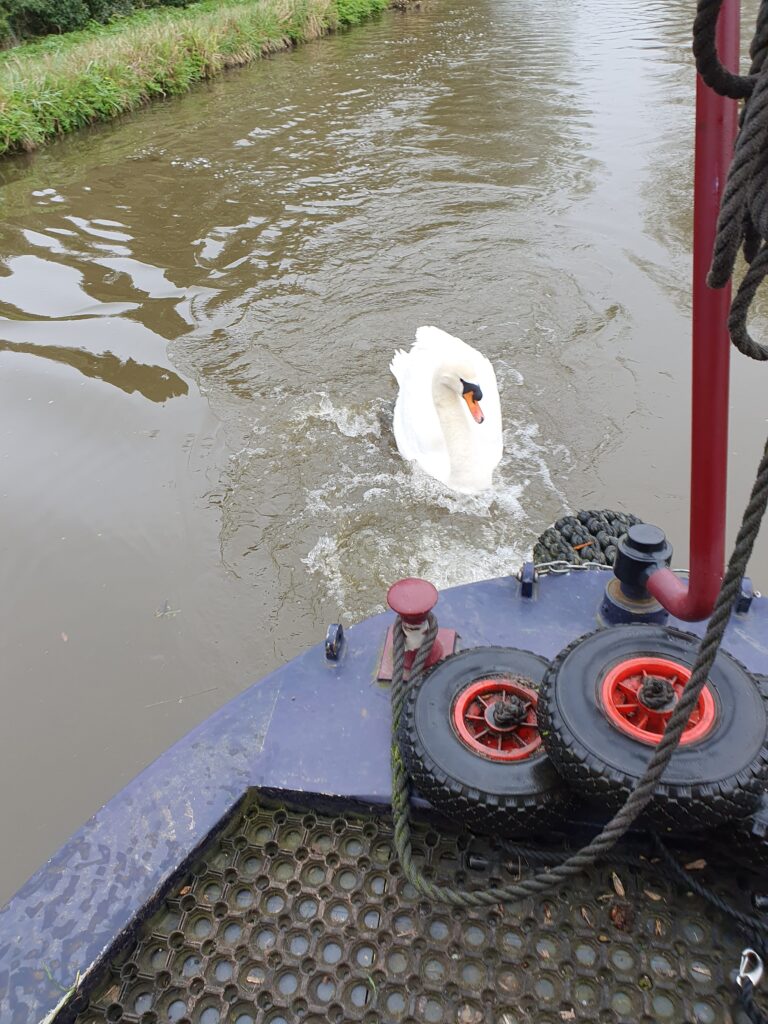
I’d like to say the canal carries on peacefully but the A38 becomes the dominant feature as it runs parallel to the canal nearly all the way to Mercia marina. And I don’t think these swans were bothered by the noise
Sharing the responsibility
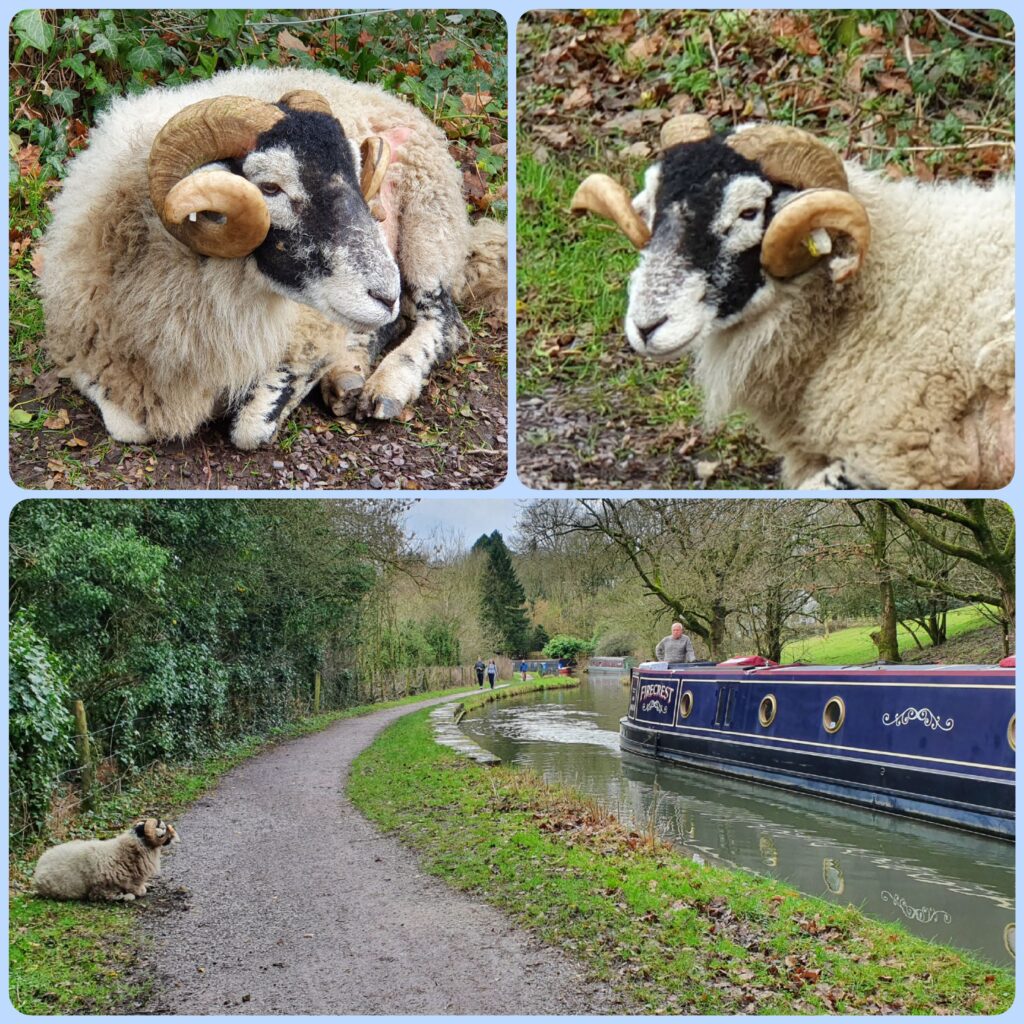
And the lovely lambs weren’t that bothered either
We stopped off at Shobnall for some of the best value diesel on the cut, just under £1 a litre if you need over 50 l. Then moored up at Willington enjoyed fish and chips for tea and called it a day.
I don’t believe it….. We finally get cruising, and ….. the memo comes through from CTR that there’s been a landslide and trees down ahead of us stopping navigation for at least 2 days. Not only that but the weather is perfect cruising weather.
We were sitting at the Fazeley Junction
Sitting at the junction, waiting to turn onto the Birmingham and Fazeley canal
Our options included staying put until we got the allclear, detouring through Aston and centre of Birmingham, or …. back tracking back to Fradley Junction, and carrying on along the Trent and Mersey then up the River Soar. Rightly or wrongly, we didn’t fancy sitting it out, or facing all the Aston locks with unknown mooring options, so we winded and back tracked.
So near yet it wasn’t to be
We’ll do the Fazeley canal another time. As I’d just had another few days off the boat sorting out mum’s affairs, we were desperate to be cruising again, and my reward was seeing our first ducklings of the year.
12th April
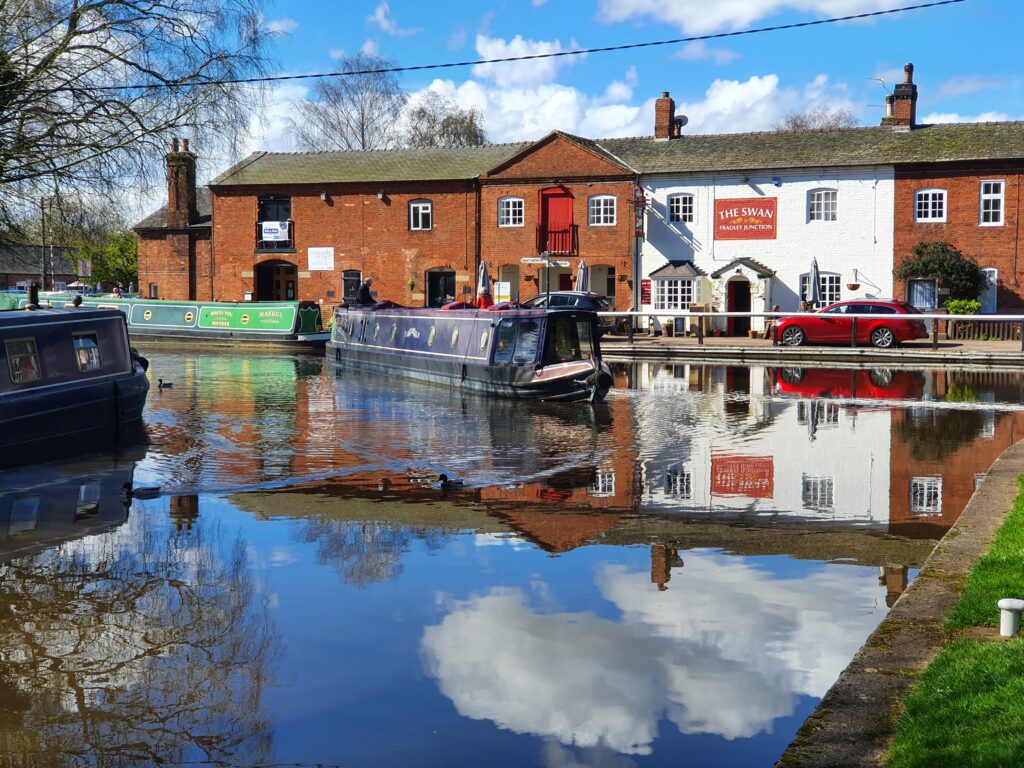
I had an easy lock free day, and even when we turned right at Fradley the volunteers were ready and willing to help us through,
Fradley Junction
Then we got to Alrewas, such a pretty place,
Until you see this
“Oh no, A red warning sign”
It didn’t take us completely by surprise to see the red warning signs but we’d spoken to the lockies and we knew the river levels were falling. Much to the consternation of a holiday boater we went through the lock knowing we could moor up on the other side of the village and await our go ahead.
We walked along the towpath to see what awaited us
Sure enough, CRT came along and removed the padlocks giving us the all clear ride the rapids. Several boats were itching to go through ASAP, but we decided to wait until the morning.
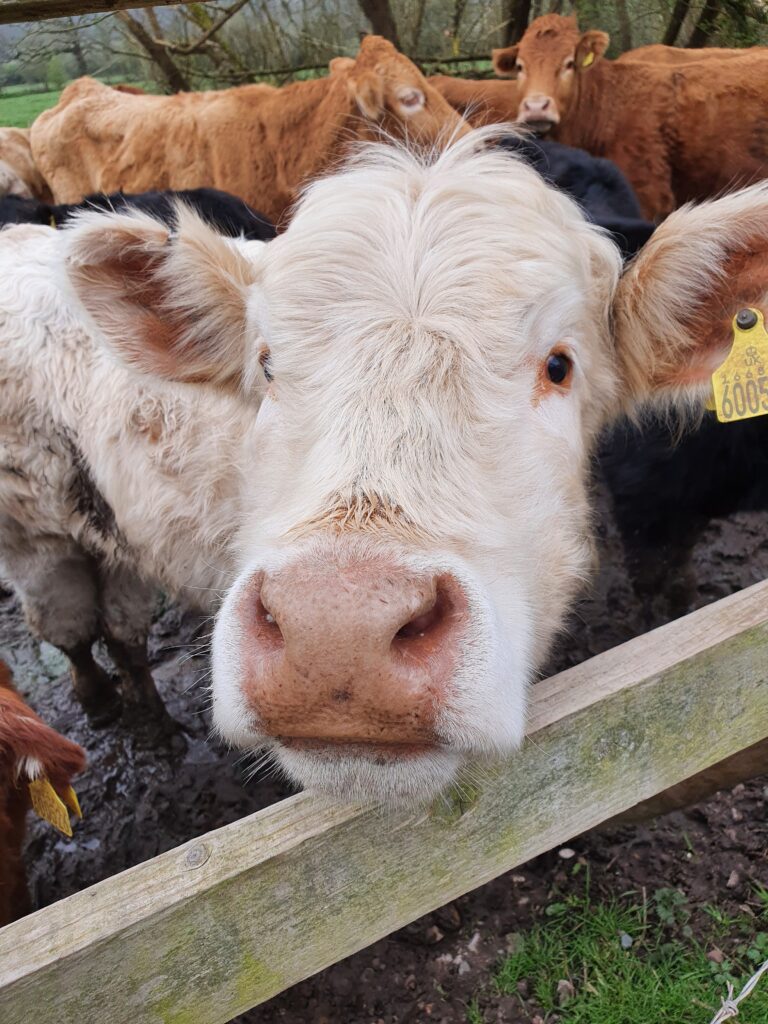
I think those fields would be more suited to water buffalo than our cows
Speed boating, or Endurance boating, ….Well it felt like it for us. We rarely cruise for over 3 hours a day, but with so many delays both Eric and I were keen to push on. 5 or 6 hours cruising on a few days.
Approaching Aston Lock, below Stone
Back in mid December, a few days before the breach at Scholar’s Green halted our journey south, we treated ourselves to a Gold Licence intending to spend the season cruising the East Anglia waterways. 10 weeks later we finally broke free and sailed through to Kidsgrove.
Almost at Kidsgrove, still on the Macc
10 and half weeks later I got the phone call to return home, but now 4 weeks later we’re finally on the move again. We dutifully checked our route maps and CanalPlanAC says 115 miles, 69 locks, 57 hours.. Kidsgrove to Northampton. But no, there’s been a major landslide at Brinklow and our direct route is blocked until mid June. We’ll have to travel via Birmingham, 125 miles and 128 locks and 68 hours. That’s almost twice as many locks to do. (James if you’re reading this, be warned we’re coming via Hatton.) But we all love locking, especially when the sun’s shining, and we’ve already done 23.
Approaching one of our 128, somewhere below Stoke
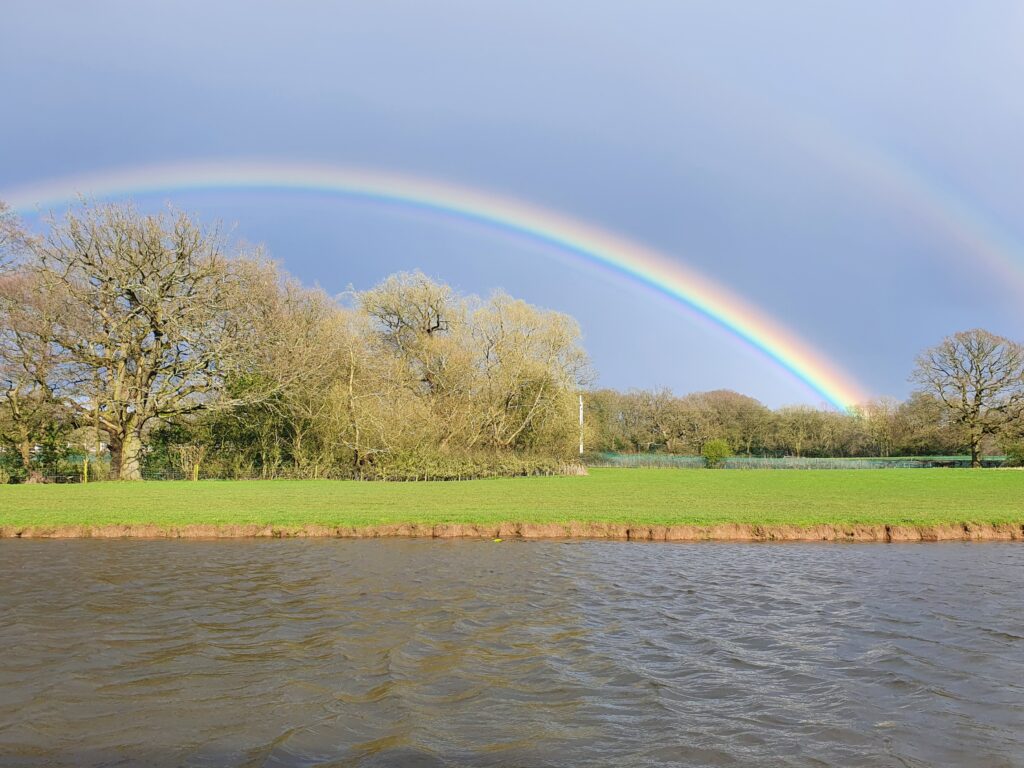
We got very lucky with the Easter Bank Holiday weather, and we had some perfect cruising weather from Stoke. Even the occassional heavy showers ended with a rainbow
No one offered to swim across to find the pot of gold
We were surprised at how quiet the canal was, despite it being the start of the hire season and a 4 day weekend,
Dead quiet, This person obviously spent too long on their mobile
Perhaps the wild swan at Weston had seen everyone off. We’ve cruised this way a couple of times and for the past few years, this territorial swan has chased us off his patch, pecking at the boat. This time we were brave enough to moor overnight in Weston and saw him attack several trespassers.
Pick on someone your own size, mate
The much nicer Swan at Fradley was doing a roaring trade and has provided a photo fit for next years self print calender
Leaving the Trent and Mersey at Fradley junction, and joining the Coventry canal
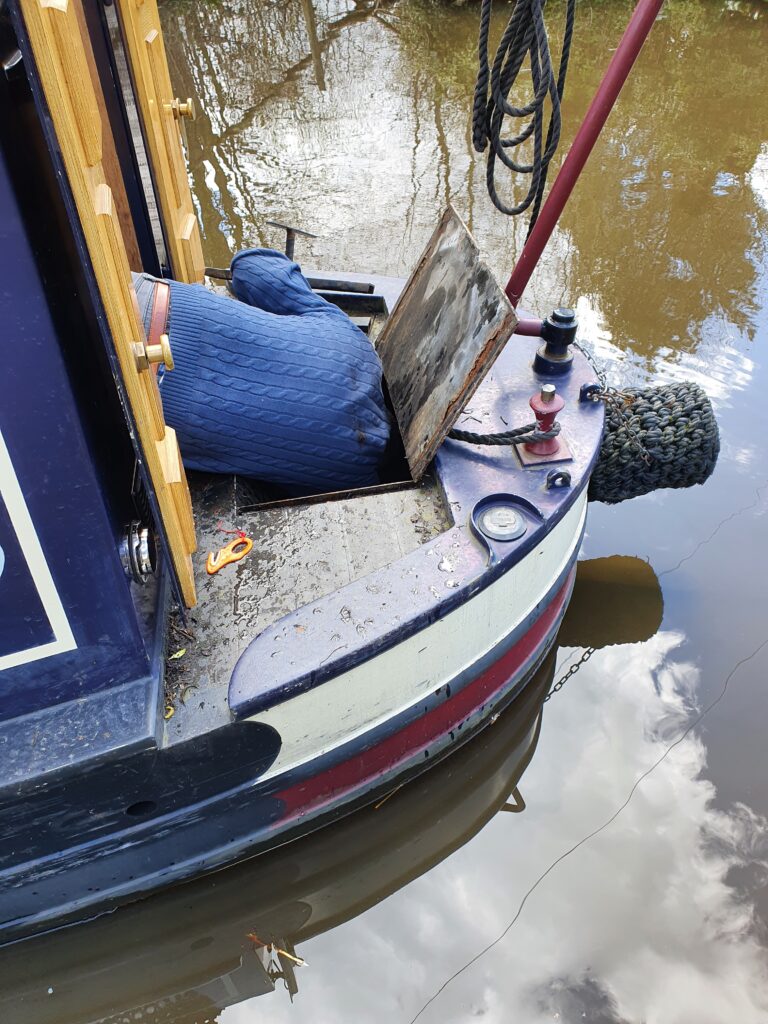
What Eric hauled up from the prop wasn’t quite so pretty,
It could have been worse, only a rope fender this time
And talking of pretty
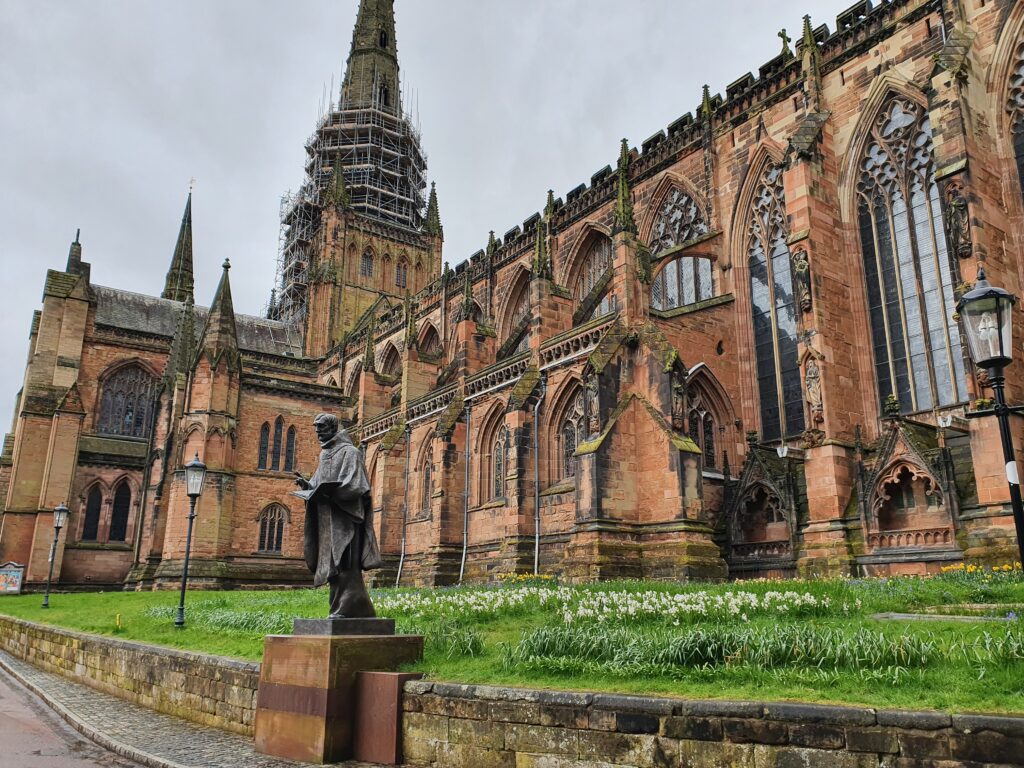
We had a rained off day, so we caught the bus into Lichfield to have a wander around. The weather didn’t make for good photos, but we did both enjoy our mooch. It’s quite a historic place, in the 7th century, Chad established his Bishopric, and it became the ecclesiastical centre of Mercia. Unfortunately the famous 3 spired cathedral was wearing scaffolding so not looking its best.
Lichfield cathedral
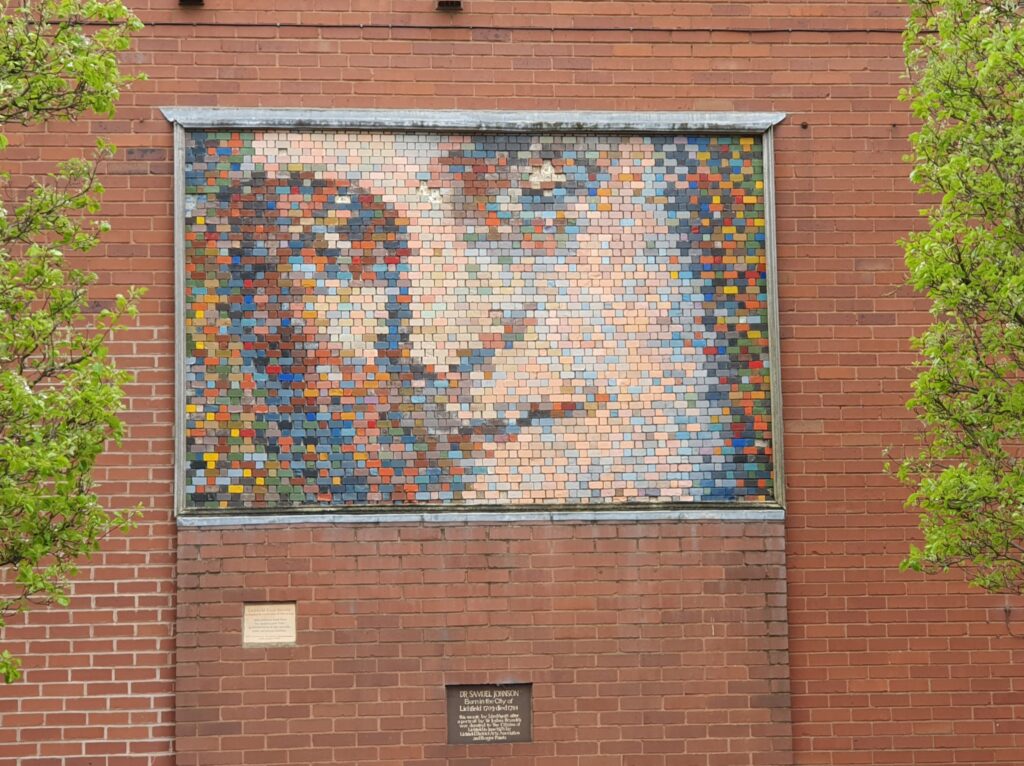
One of Lichfields other claims to fame is that it is the birthplace of Samuel Johnson, who complied the first English Dictionary
But whilst I might enjoy words, not a lot beats sunrise on your own boat.
Eric and I love cruising, it fills us with a sense of peace, and a sense of joy as we enjoy the countryside around us. Most of the time I’m happy to share my photos, but occassionally I record a video as we travel. I’ve realised I can share these on our blog, however I’d like to know how you, the reader, receive them. We don’t have comments enabled, (we had a bad experience a few years ago). So I’m asking friends and family who have my private contact details to drop me a line with some feedback, letting me know if the quality and size etc works OK for you, and if it’s something you’d like to see more of.
Bridge 58 below the Bosley flight, Macclesfield Canal
we had made it down the Bosley Flight, and we both rejoicing and bemoaning to be heading south… straight into the morning sun.
We meandered our way into Congleton. I met up with one of my many knitting friends scattered around the country. Gilly introduced us to fantastic little place, called the Wonky Pear, wine bar/pub/coffee stop just up from the canal off Park Lane, they don’t usually do food, other than cake, but they had a pop up evening of Thai Street food. And if we were local, we’d definitely make if our local. But we were on a mission, so set off as soon as the sun rose, we ignored the dire warning from the red sky in the morning and the frost on the ground (it was still the end of february)
looking towards the railway from the Congleton Aqueduct moorings
And we set off, but it was cold cruising, so we stopped near the Ramsdell Railings and went for a brisk walk up to Mow Cop which certainly warmed us up.
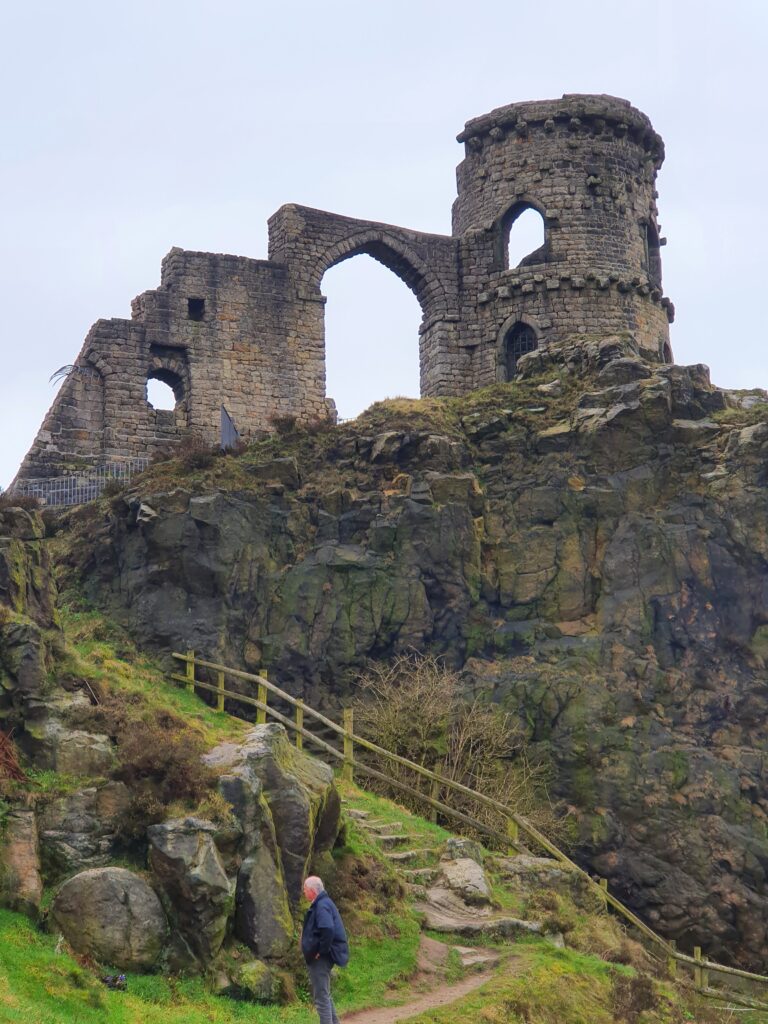
Mow Cop
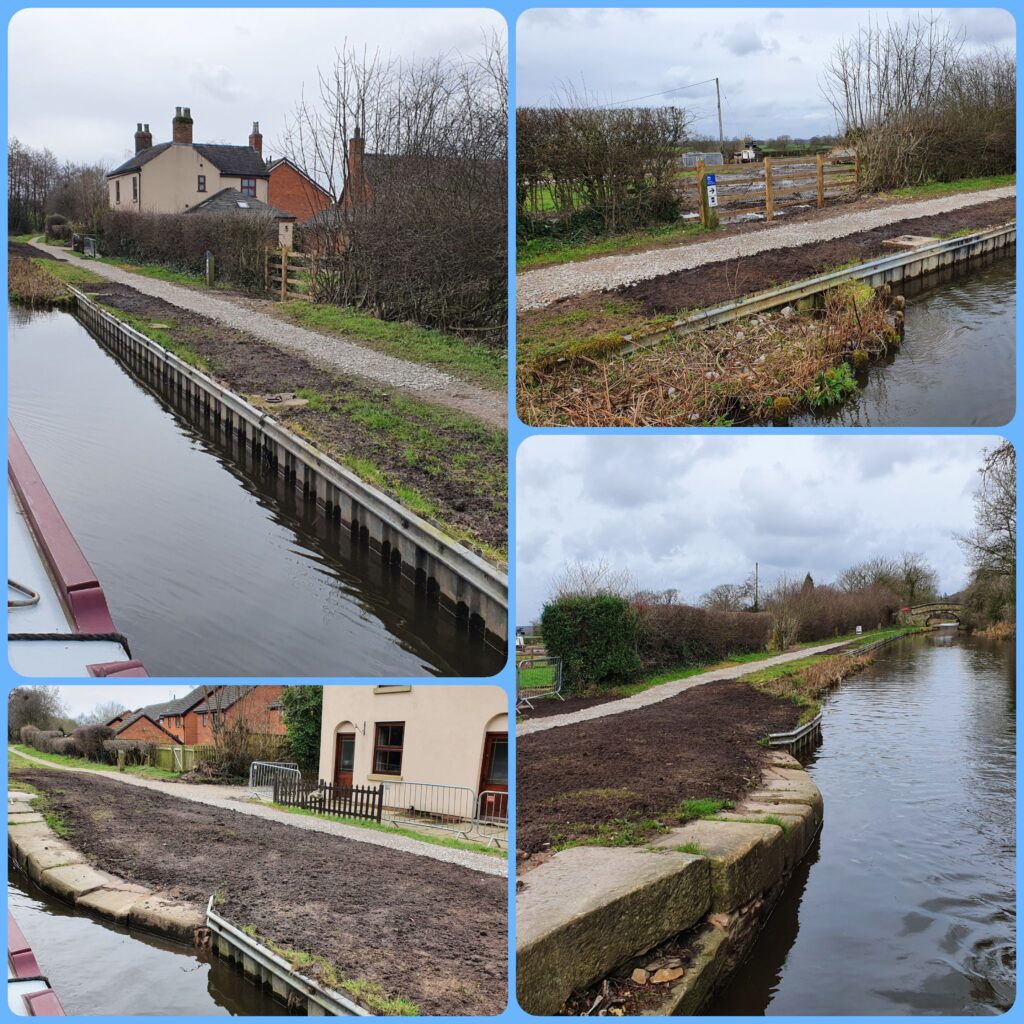
This old ruined castle is actually an 18th century folly where the gentry came for picnics. You can see for miles and it’s the intersection of the counties of Cheshire, Derbyshire and Staffordshire. It’s also the first meeting place of the Primative Methodists, a breakaway revivialist group wanting to refocus on the socialist aims of Christianity, caring for the community, being part of the trade union movement and taking an active role in women’s emancipation. I offered my prayers of thanks for such a place and we carried on journeying south. Where we also gave thanks that the culvert breach from Mid December had finally been fixed
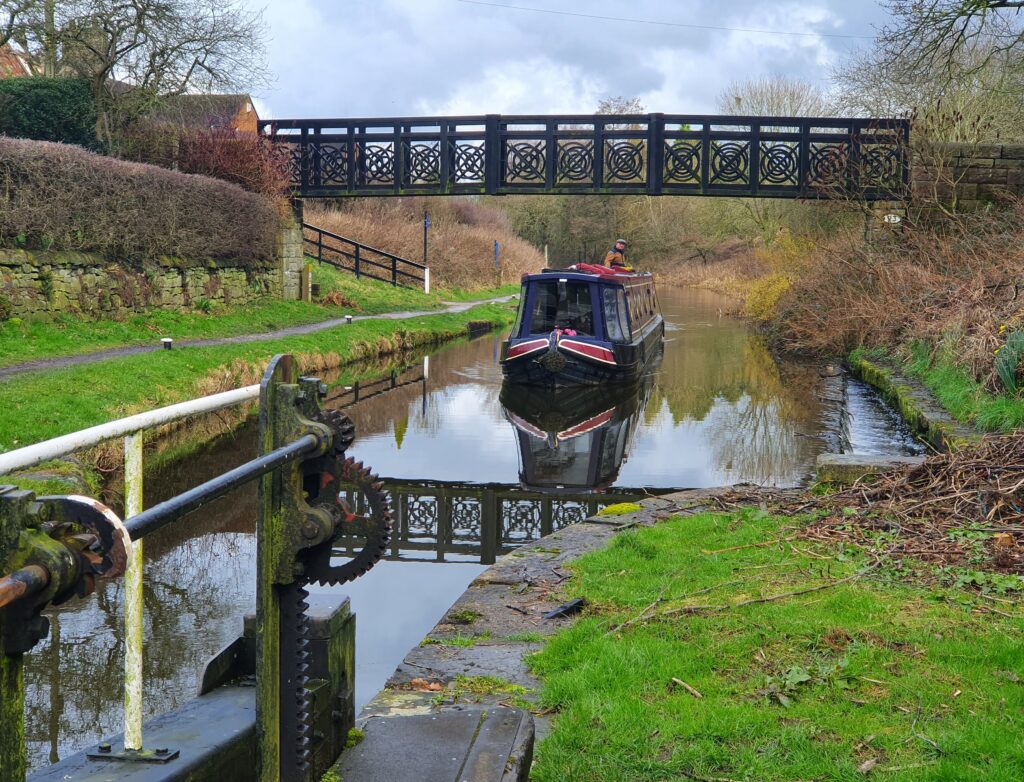
And onto the Hall Green Stop Lock at Scholar’s Green
Before our travels came to an abrupt stop at Kidsgrove
Having got back into the swing of posting every few days, everything changed at the beginning of the month. When the phone rings in the middle of the night, it’s rarely good news. Sadly, I had lost my mum. It was sudden, unexpected, and thankfully peaceful.
We had a very close relationship, lots of love and laughter, she loved visiting our floating home
We are now cruising we should have been cruising 9 weeks ago when the culvert collapsed and stopped navigation. Better late than never. The change of scenery above and below Macclesfield is quite dramatic, We’re no longer in the Peak District, and we do miss the hills, but the view is made a lot better with the promise of 4 days of sunshine on the forecast.
Looking back towards Sutton, south Macclesfield
Although looking forward, those clouds ahead seemed a bit heavy
just above the Bosely flight
And sure enough 2 minutes after we’d moored up, the heavens opened
And we woke to the warning red sky in the morning and a heavy frost.
So much for 4 days of good weather
But the sunshine quickly warmed us up and we were ready to go down the Bosley Flight.
A promising start
12 locks over the next mile, not the longest flight but one of the prettiest, and all was going well until we got halfway down. The pound was sadly lacking in an essential element – water. We don’t know if a paddle hadnt been dropped, or it could simply have been a very leaky lock,
We reckoned it would take 3 or 4 locks worth to refill the pound. It took about 20 minutes
We managed to run through enough water to float our boat and I’d gone back to check all the paddles were down, when I heard an almighty bank on the bridge above me. Two cars had collided, thankfully there weren’t any serious injuries to the drivers, although I’m fairly sure both cars were written off.
Almost there, Lock 11
The rest of our journey down was uneventful, until lock 12 when we got chatting to a family out for a walk, of course we roped them in to work the lock for us and as a reward, we treated our young gongozeler to a ride. (If you’re reading this, thankyou for your help)
Emerging from lock 12 at the bottom.
All done in 2 hours and 5 minutes, roughly 10 minutes a lock
And Eric had his reward, better late than never, boaters breakfast for lunch.
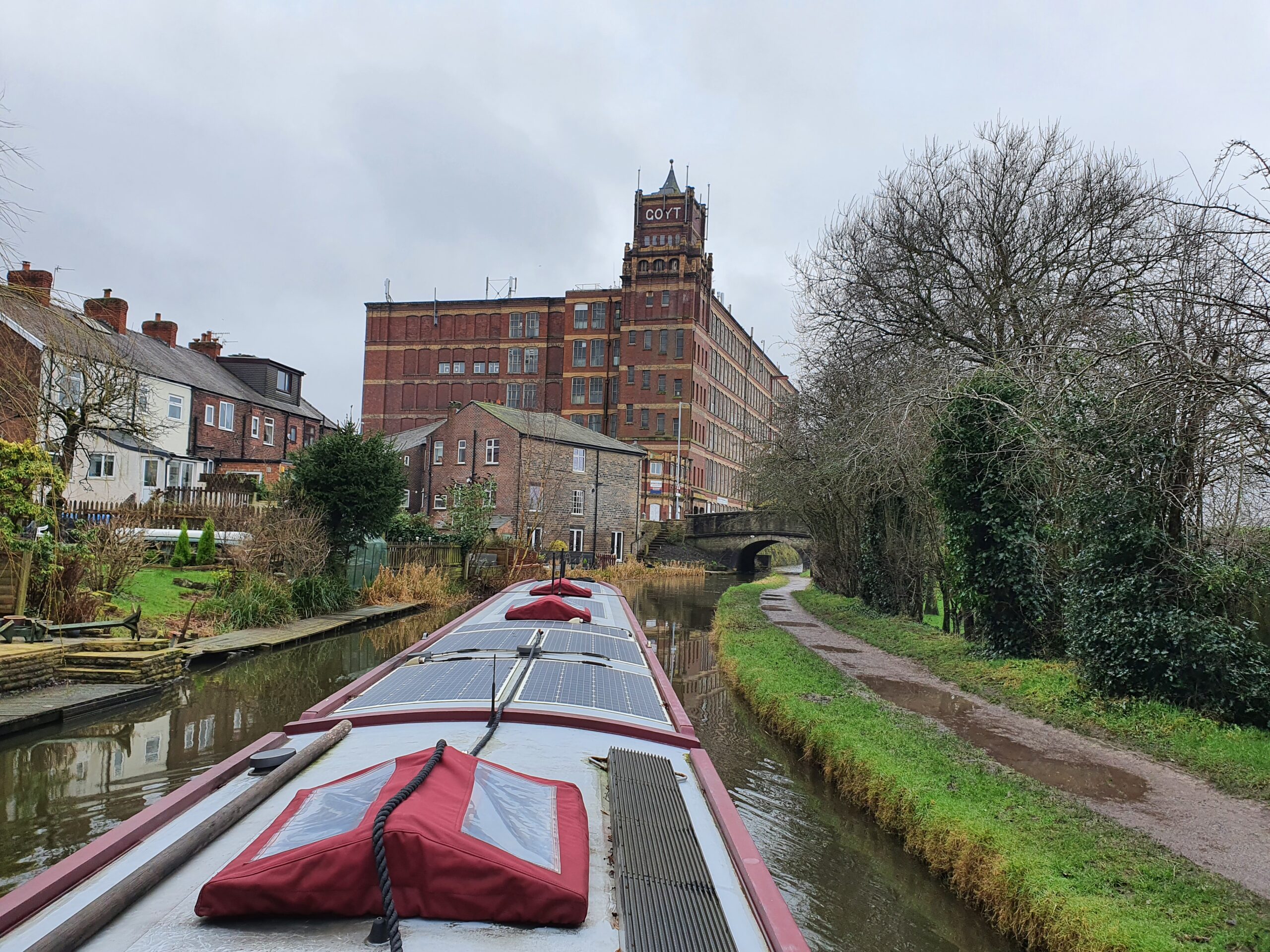
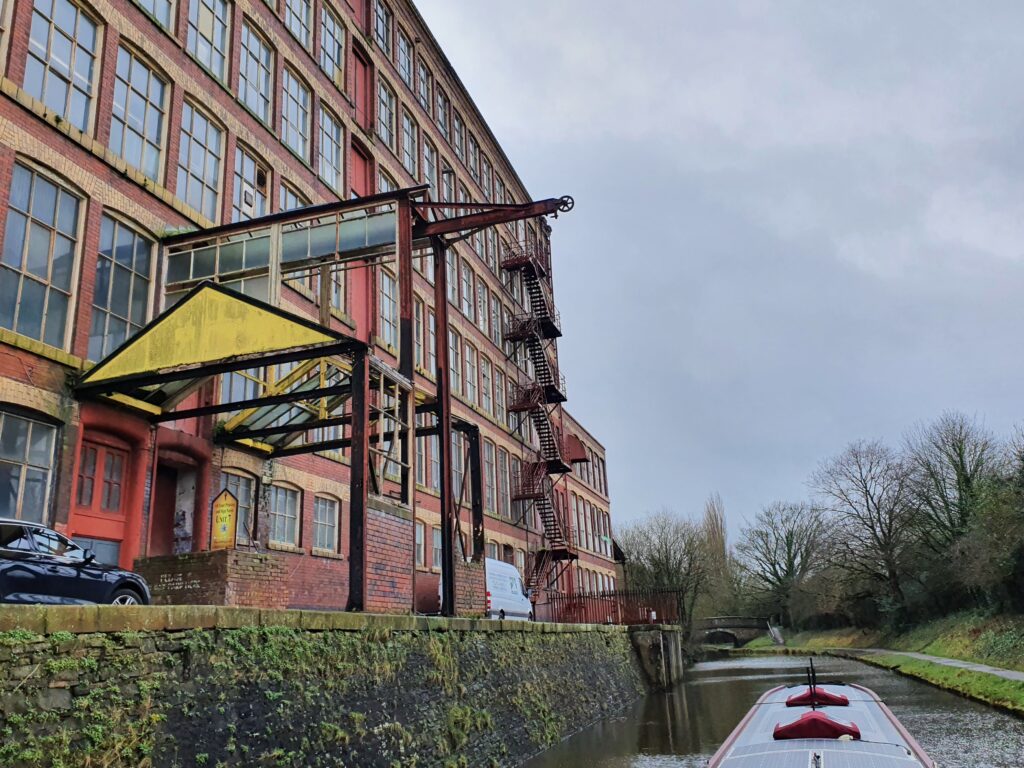
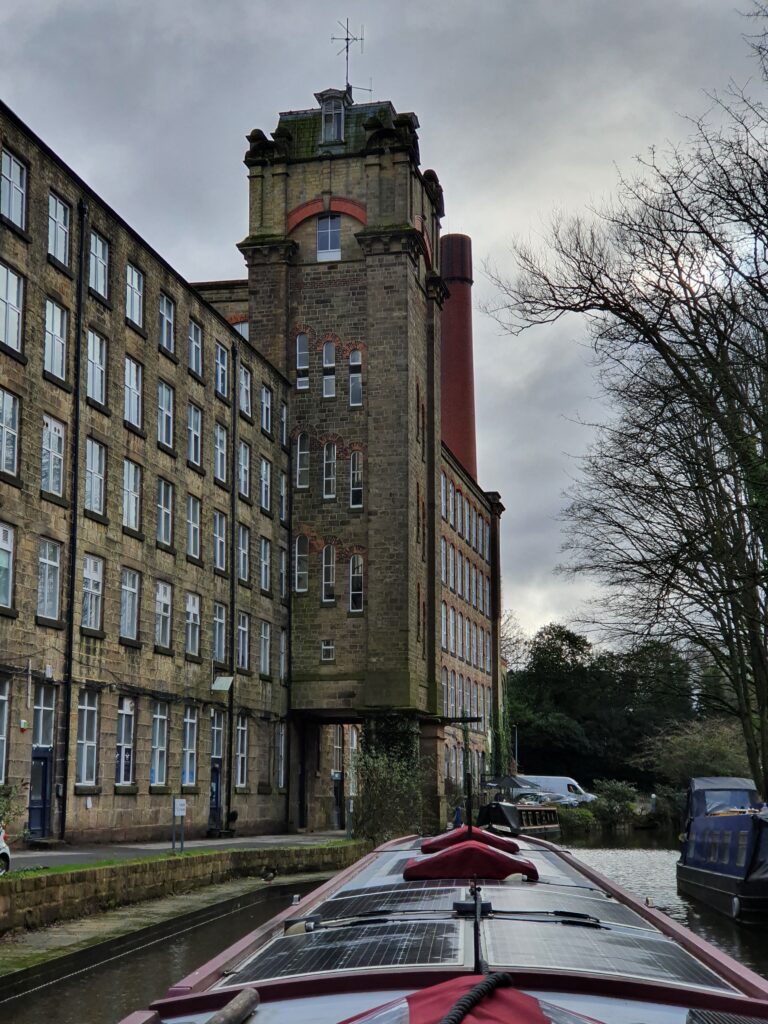
Even though we are now heading south at a vast rate of knots, okay roughly 2 miles an hour, we still look up at the Mills with a sense of wonder. Goyt Mill in Hawk Green, Marple is the youngest of the three that stand out for me. Built originally in 1905 by the Goyt Spinning company to produce cotton fabric was a major source of employment in Marple until 1960. Nowadays it predominantly houses antique warehouses, fun to wander around reminiscing about all the junk you threw away when clearing great aunt maud’s house. There is a fascinating memoire in the Marple website worth browsing if you scroll down.
Approaching Goyt MillCan you imagine loading and unloading your wares here?
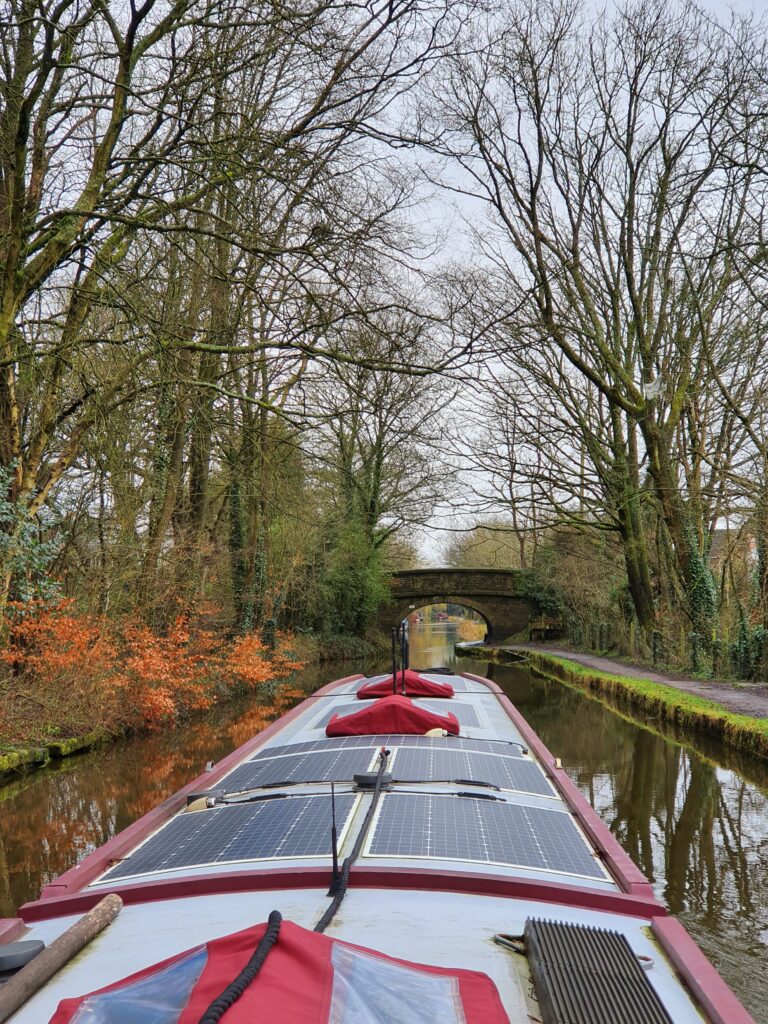
Once through Marple we were back to enjoying some rural tranquility
We wondered if that sunny day we had last week was summer and we’re already experiencing Autumn.
Before stopping for fuel at Baileys
Where we picked up a hitchhiker again, -remember the cat that came to say hello last month, we also popped in to say hello to James and Donna and the team at Braidbar.
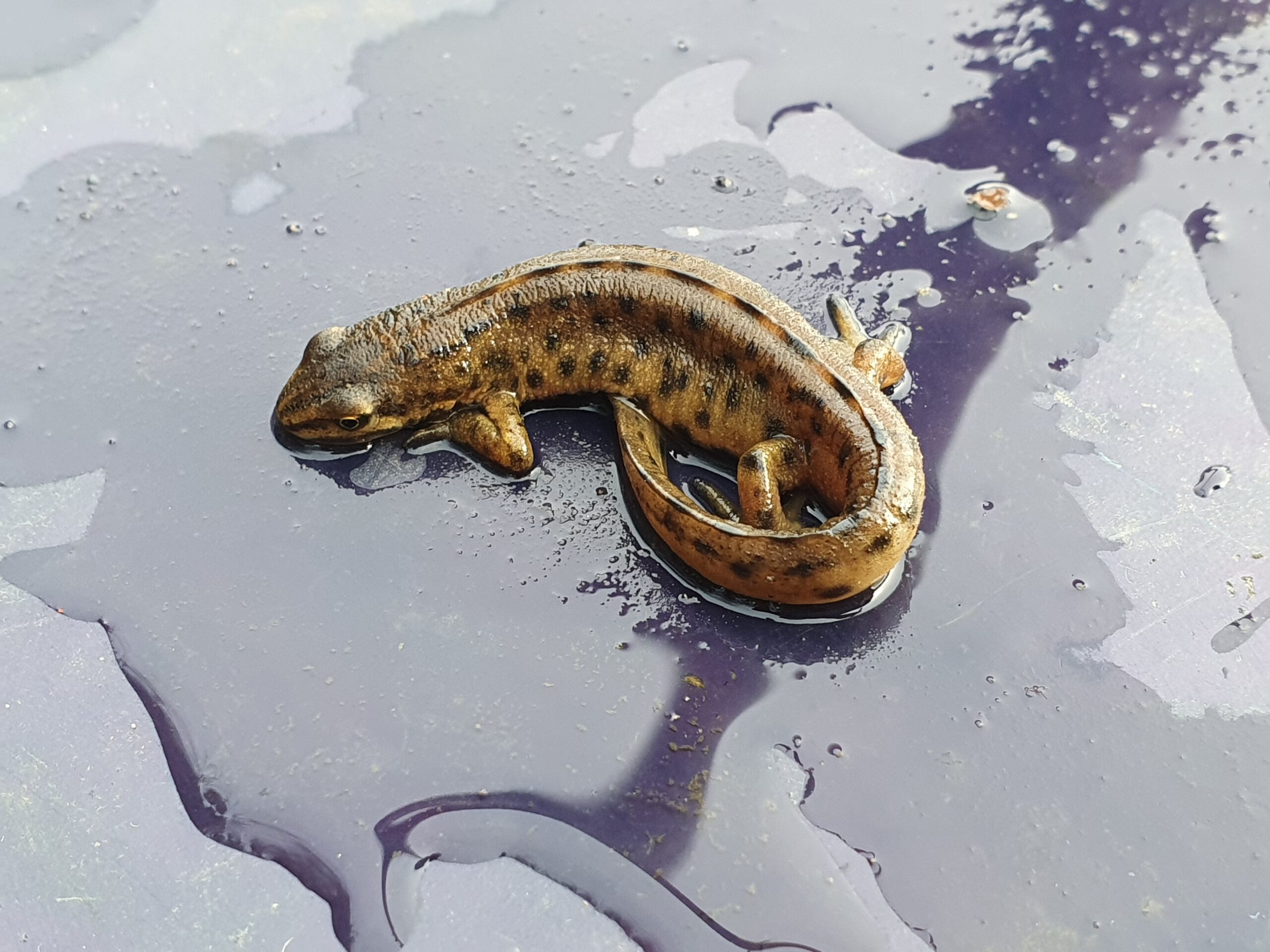
Not sure this little newt was quite ready to emerge from hibernation, we pulled him up on our tyre fender, so I carefully returned him back into the bank.
Then on to the oldest surviving Mill on this route at Bollington,
Approaching Bollington and Clarence mill
Clarence Mill was built in 1834 and specialised in spinning sea island cotton, which, for those unfamiliar with the intricacies of cotton, is an extremely fine long stapled cotton variety used for making lace and muslin. It is infact supposed to be the rarest form of cotton and can make a luxurious (expensive) silk like fabric.
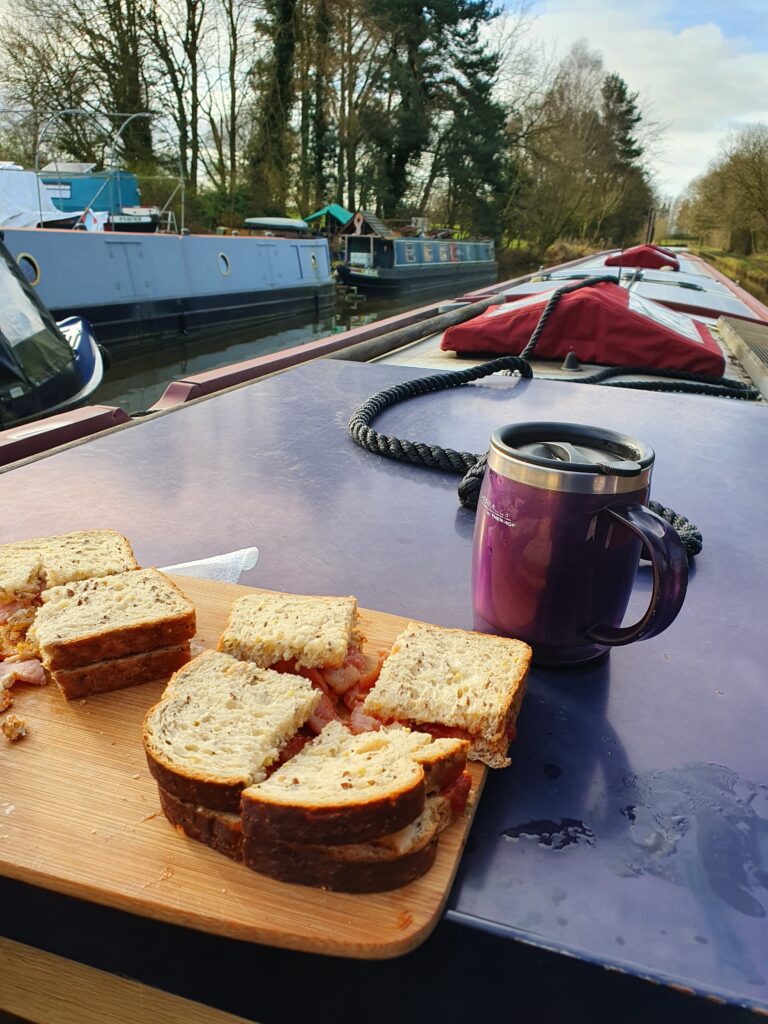
I missed the photo of the next Mill on our route south, the Adelphi Mill on the southern side of Bollington because I was in the galley cooking bacon butties. Aldelphi Mill began spinning cotton, it progressed to throwing silk, and finally spun man made fibres for Courtaulds until 1970s. Nowadays it houses offices for the nearby pharmaceutical company, Astrazennica
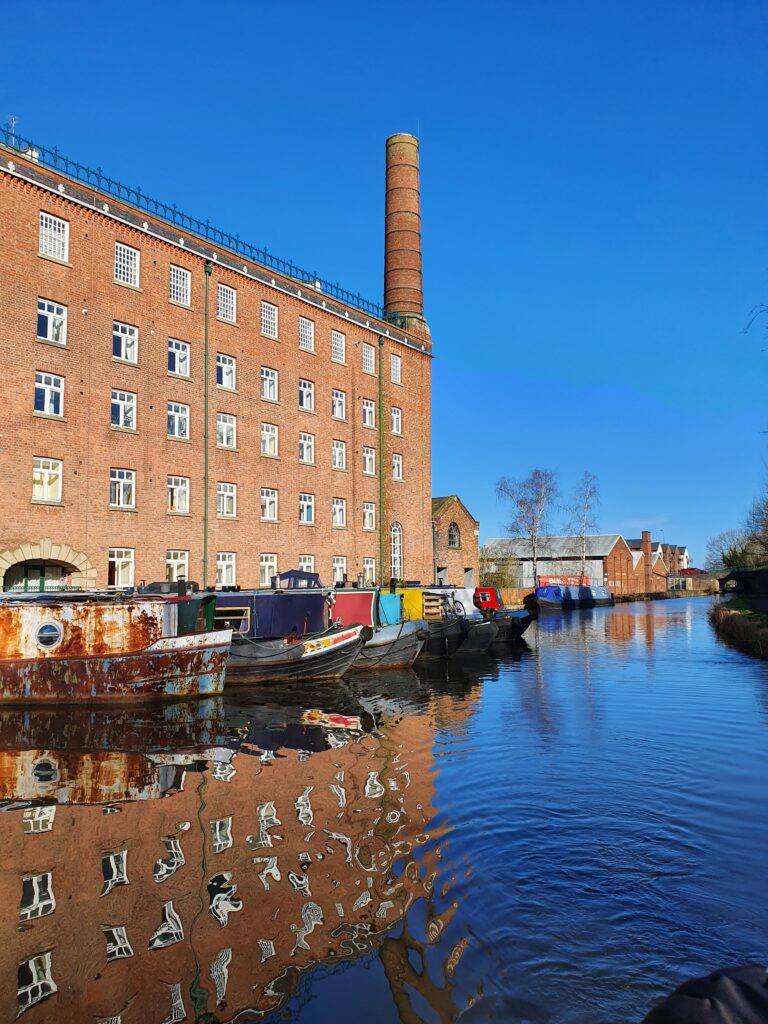
Which leads us nicely onto my third Mill, the Hovis Mill in Macclesfield itself.
The Old Hovis Mill
This is where grain was ground to make flour. The technique used produced a distinctive flavour and any baker using this flour is able to call the bread a Hovis loaf. Milling only took place here from 1898 to 1904 because demand grew and the company moved to bigger premises at Trafford Park, Manchester. They did however keep the building. It was renamed the Publicity Works, where they made the paper wrappers to wrap the bread in. Nowadays it’s a rather nice place to live. One interesting feature is the iron ballustrade along the eaves that survived being removed and smelted down during the second world war efforts. I don’t think I’d have liked climbing up there to remove it.
There were of course other mills, and industries along the canal and rivers that dominate this area, Macclesfield was known particularly for silk production, Bollington had a thriving hand made button industry, there was coal mining and sheep farming, to name but a few which helped make it a prosperous place to live. The Macclesfield canal society website if you want something to talk about.
With the culvert fully repaired we finally got the go ahead to travel south, and we’re facing the right direction
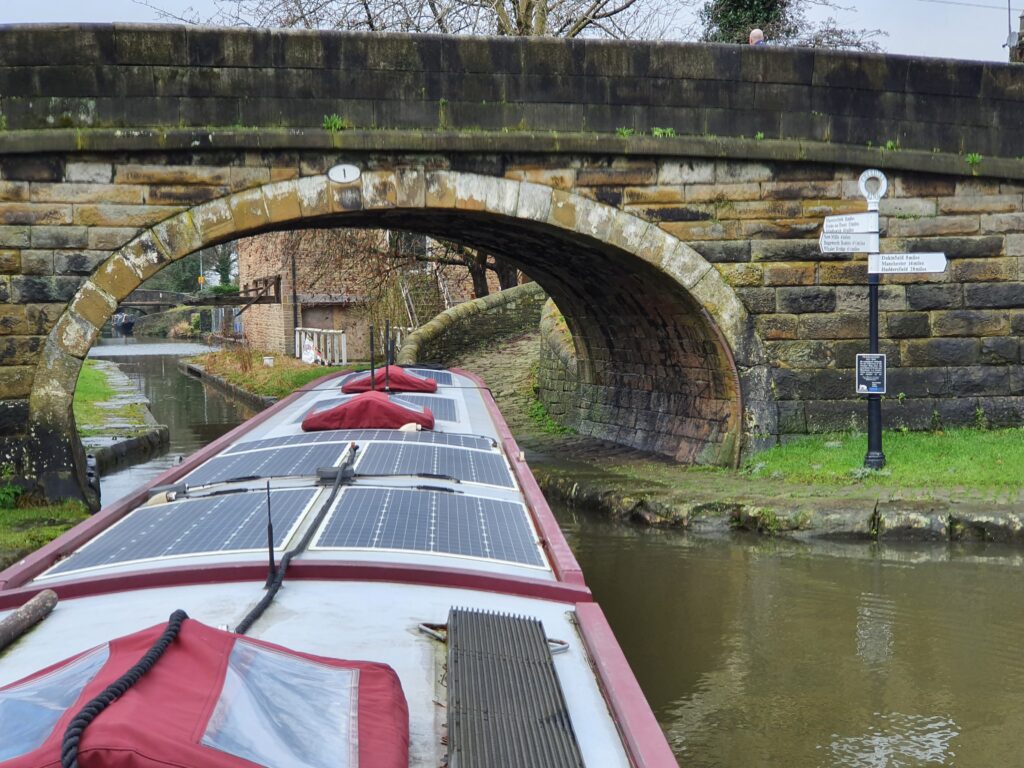
Leaving the middle arm at Bugsworth
But of course to get off the Peak Forest Canal back onto the Macc, we had to travel north. Confused? Yes, perhaps this is what happens when you hang around too long.
And this canal really gets its grip on you
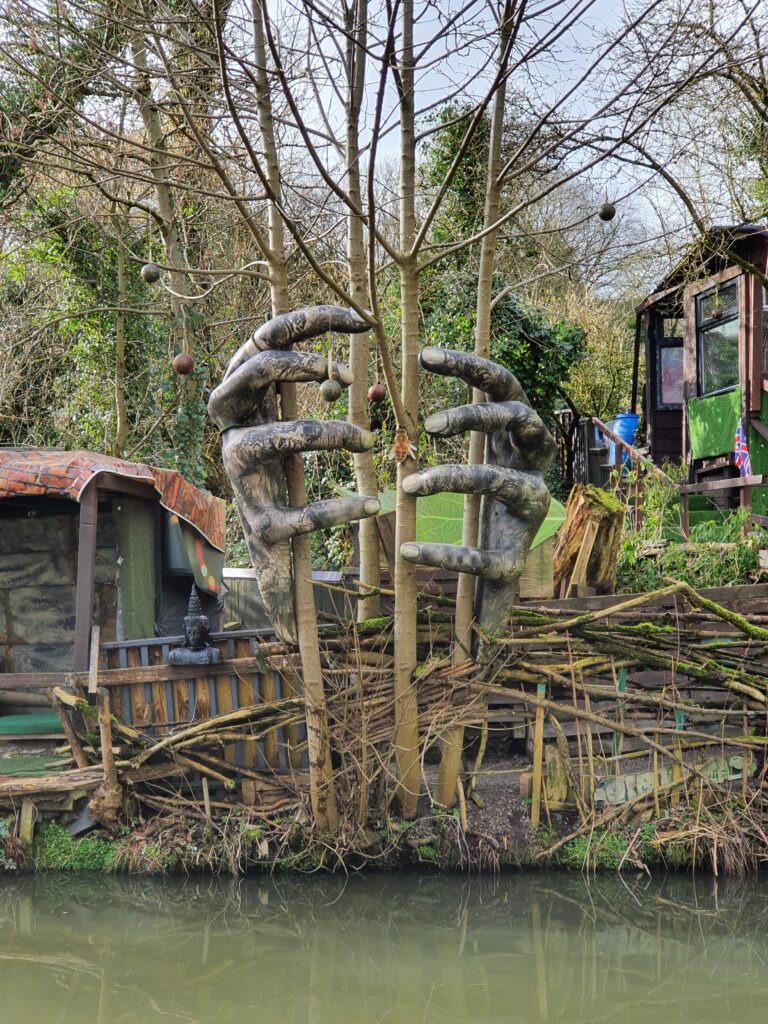
Is this art? Or does someone just have too much time on their hands?
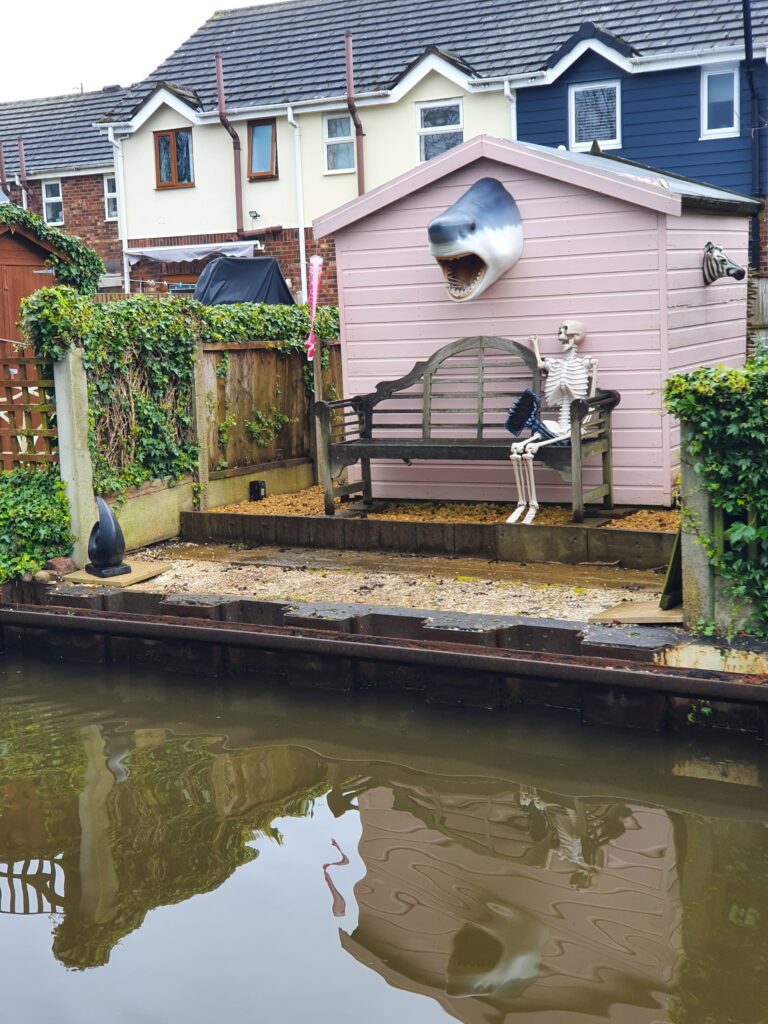
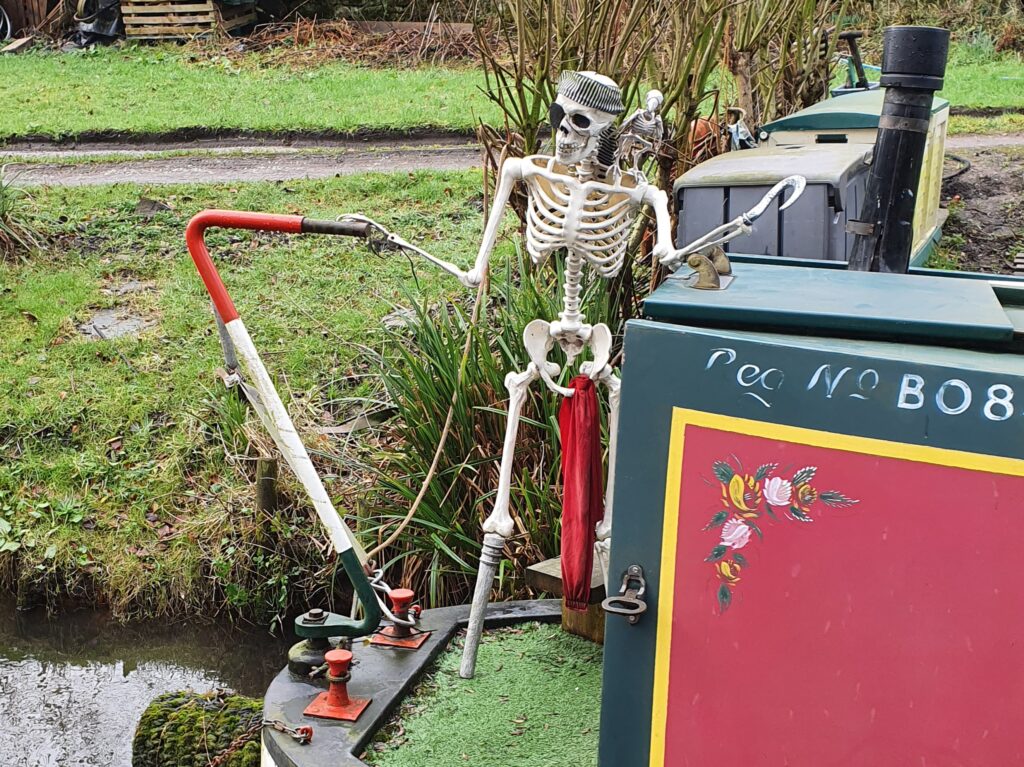
There’s definitely some odd characters on this canal
But we were happy to finally be cruising with a purpose, and it was mild enough not to need our thick coats on. No more sitting around, watching the world go by
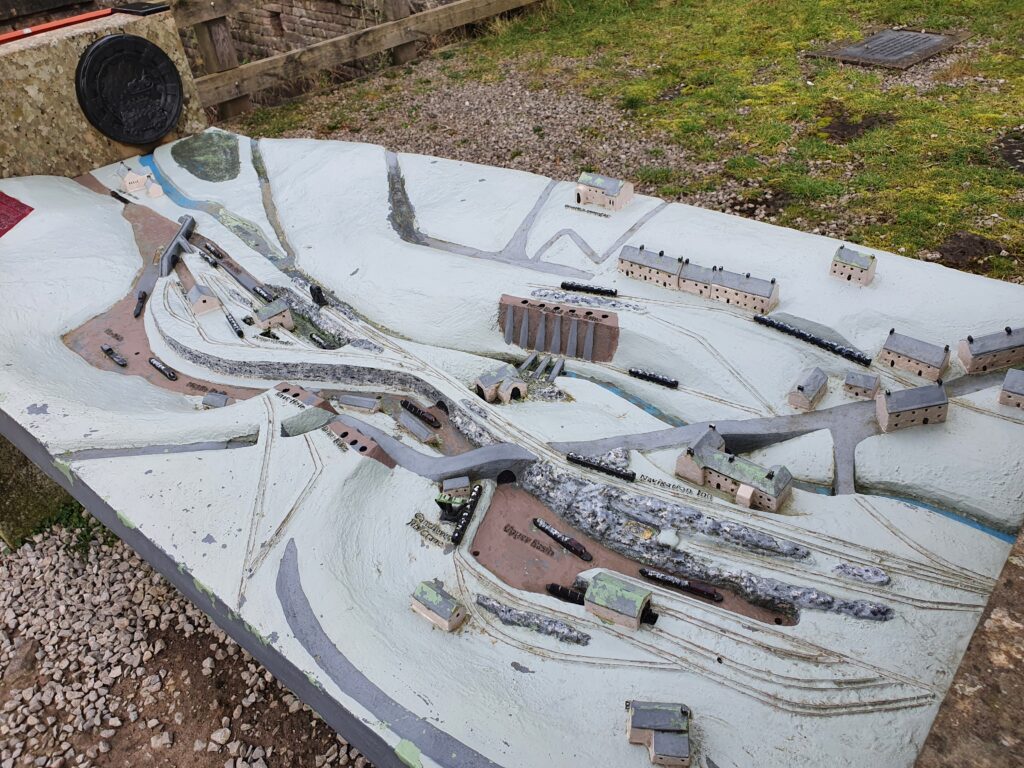
There’s something very special about narrowboating in this area, we love seeing the industrial heritage of the our country. Bugsworth Basin is a prime example of how the canals were a significant structure for the communities they served. It’s now listed as a Scheduled Ancient Monument and the Bugsworth Heritage Trust oversees the area making it an interesting and informative place to visit.
Model of the basin back in its heyday
The Peak Forest Canal was completed in 1804 to transport limestone and gritstone from the Derbyshire quarries down to the Ashton Canal where it was probably went on to help build Manchester.
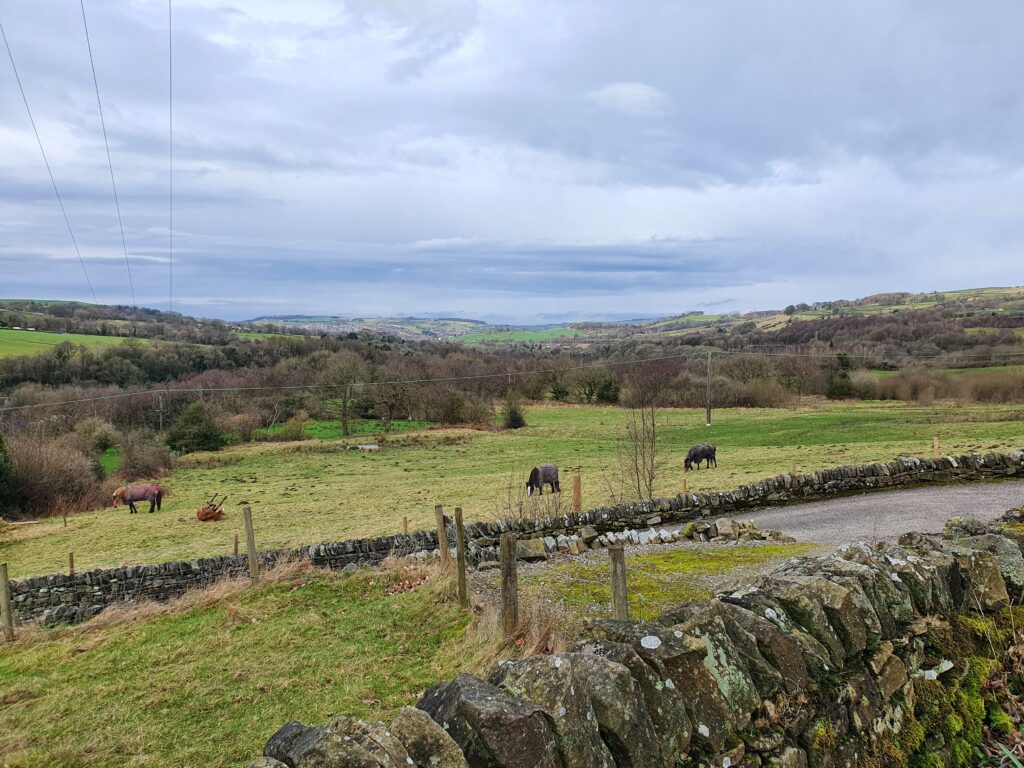
Looking towards Manchester, about 15 miles west of Bugsworth
It was hoped that the canal would go further into the peak district but alas building the necessary locks wasn’t economically viable. A terminus was created at Bugsworth which, when it was built, it was Britains largest inland port. (Aparently, Eric and I can’t agree what defines an “inland” port) Equally impressive was the 14 miles of gravity and horse powered Tramway system that was built to bring the stone down from the quarries. You can still walk the tramway, but it was too wet and muddy for us this week. Not only was the basin a storage and transhipment port, it was the hub of a thriving village where the lime was processed in huge kilns.
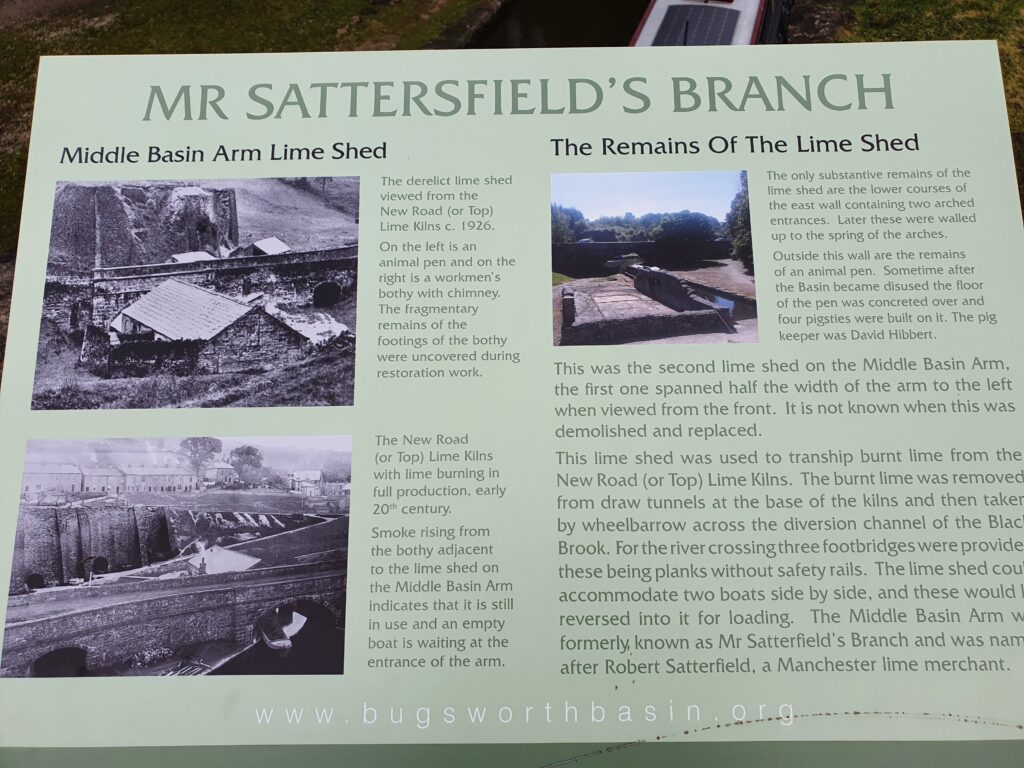
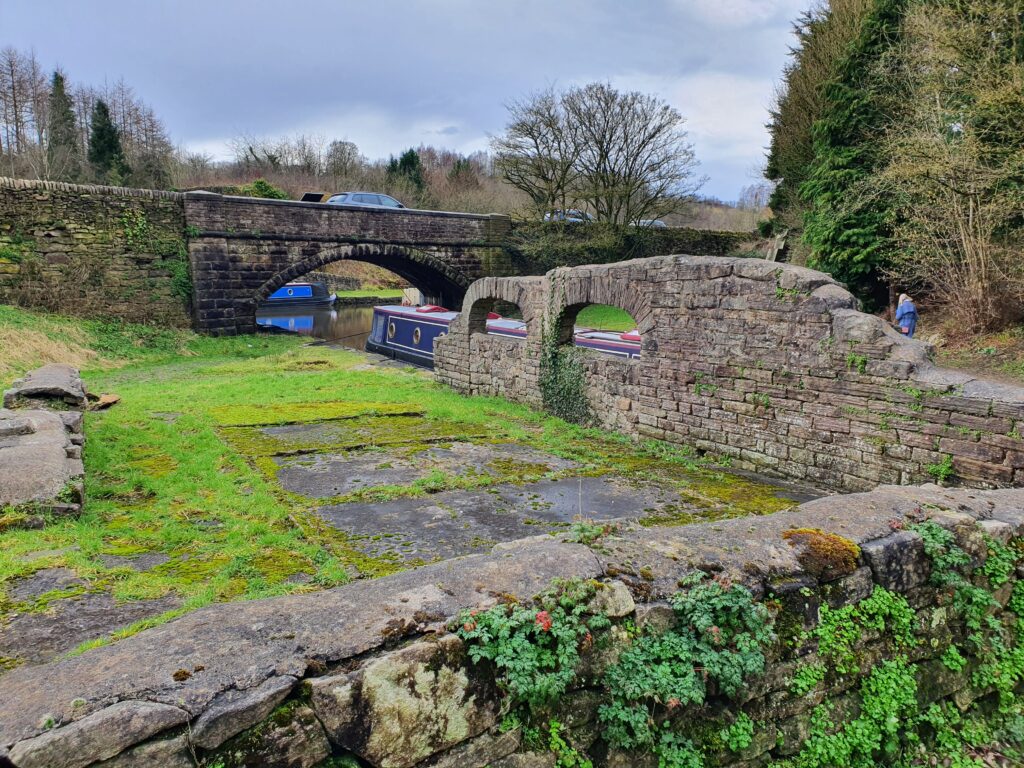
The Middle arm is considered the prime mooring spot, and although it was originally all under cover, the stone sheds have long since been dismantled and repurposed and all that’s left is the short arm, a bit of wall with 2 arches and a base of concrete- where an enterprising local build a pigsty. The working life of Bugsworth Basin remained until the 1920s,
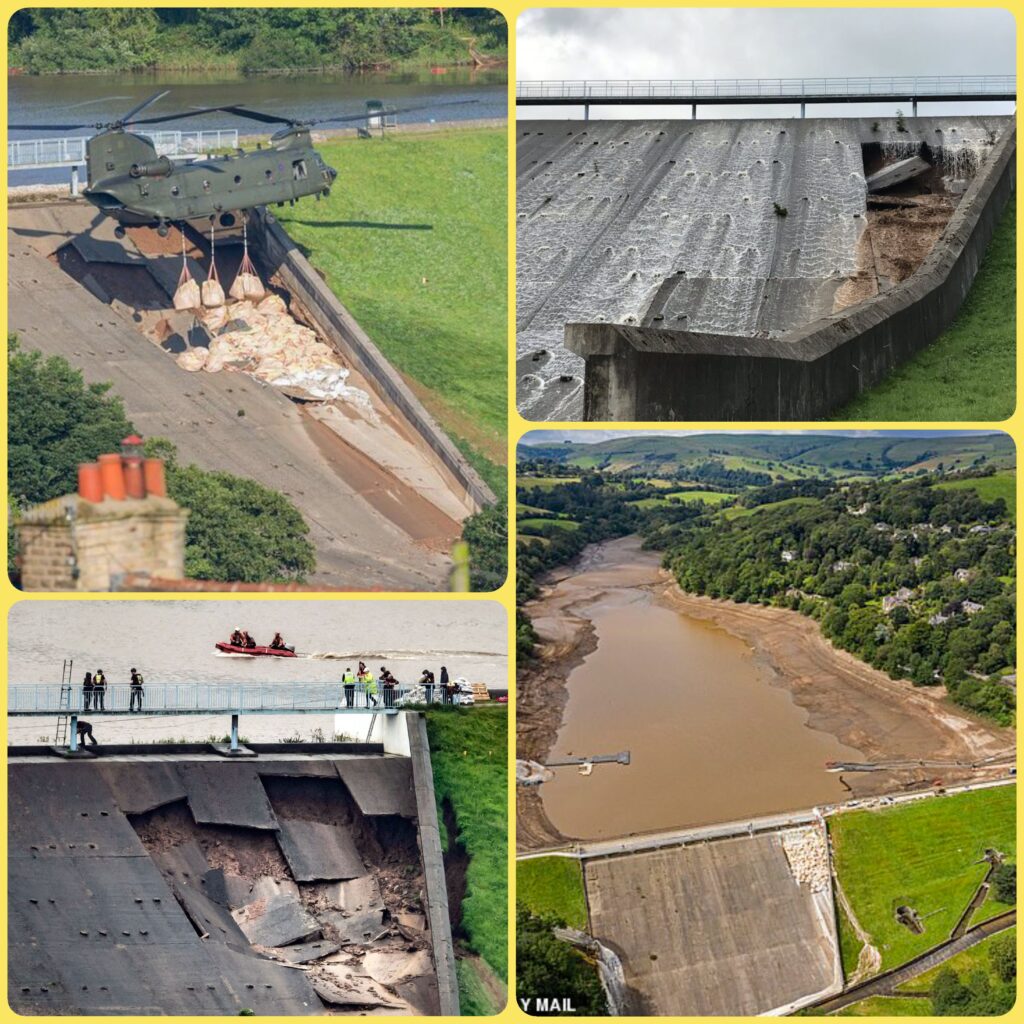
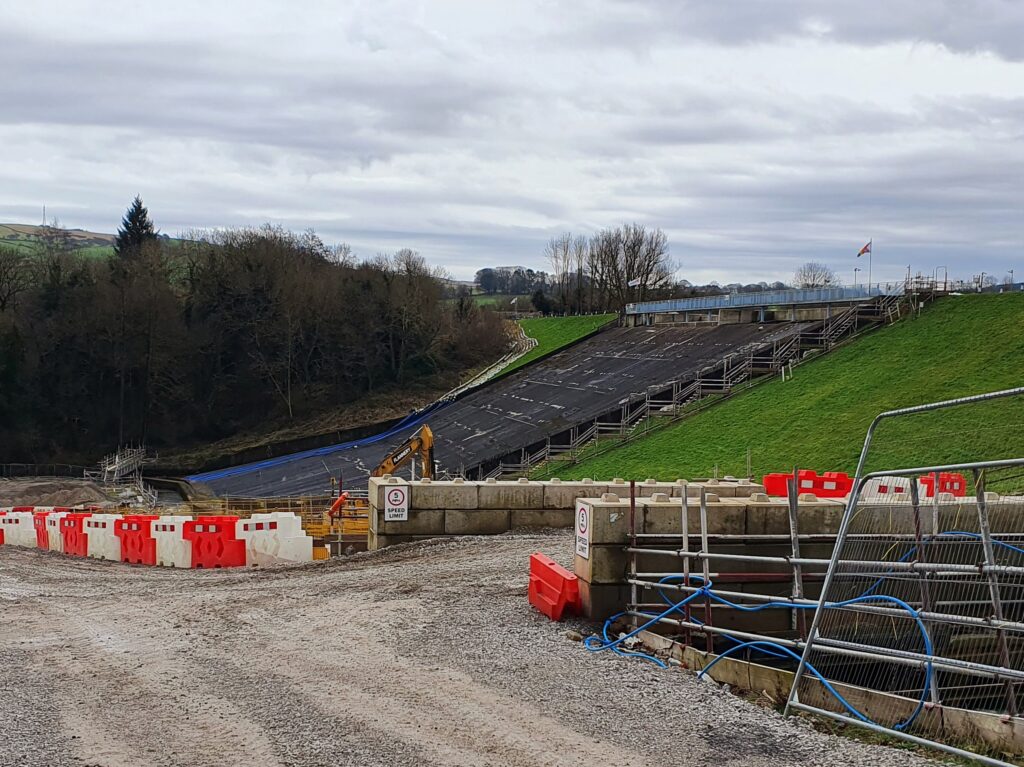
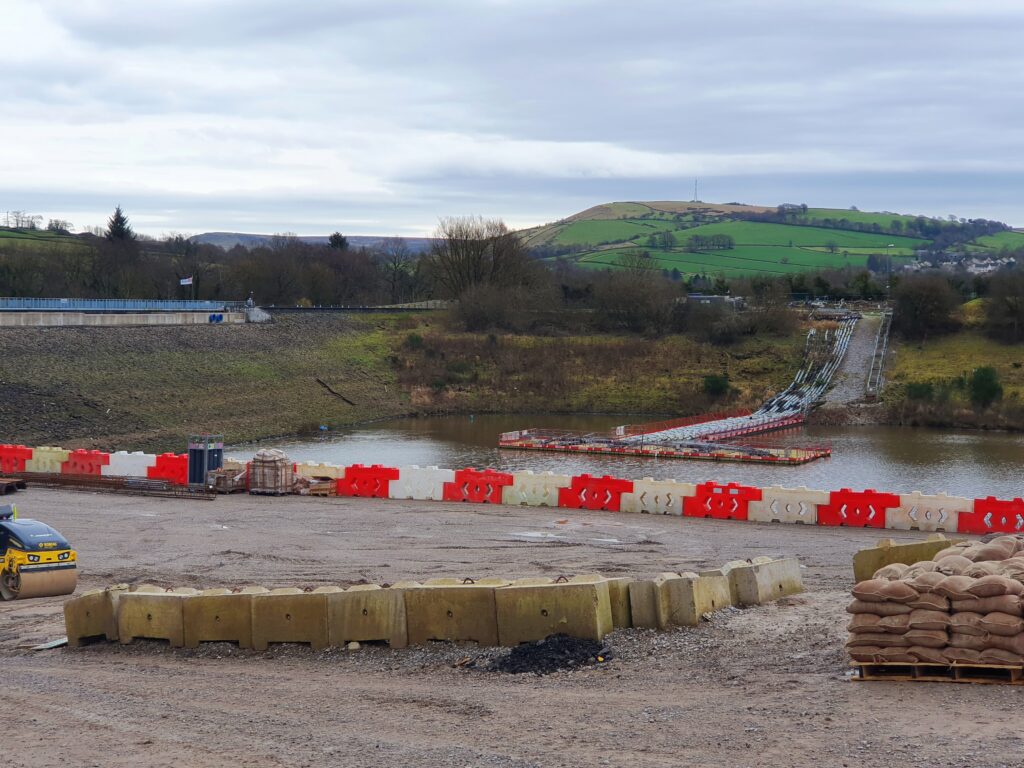
Nowadays it’s not trade that keeps the canals viable, but as with all waterways, natural or man-made, they need a constant supply of water. And whilst we might be getting a generous contribution from the heavens this week, direct rainfall isn’t sufficient without careful management. You’ll usually find a reservoir near the head of most canals with pumping stations along the route. Combes reservoir in the High Peaks was built to feed the Peak Forest canal, but it wasn’t sufficient and in 1838 the Victorians completed Toddbrook reservoir at Whaley Bridge. As with most reservoirs, Toddbrook suffered its fair share of leaks over the years but in August 2019, after a particularly wet summer, part of the modern concrete slipway collapsed. It was feared the whole structure would give way with catastrophic consequences. 1500 residents of Whaley Bridge, Furness Vale and New Mills were evacuated whilst Chinook helicopters dropped 400 tones of aggregate to help prevent a disaster. CRT has been working on the repair ever since, with some interesting modernisation, shown here.
(Images swiped from Internet search)
The project is supposed to be completed this year, so we took a walk up to see what was going on. Most of the dam is still fenced off from the general public so we weren’t able to get up close, but we chatted to a few of workmen and peer through the site gates. They aren’t so convinced the work will be finished this year. Neither are we.
There’s plenty of information online about the dam but I found this short little case study interesting.
Thankfully the effect of the of our current structural failure – the culvert collapse which had closed navigation on the Macclesfield has been repaired and reopened. We’re pointing in the right direction and ready to start cruising.