A few days of firsts

We could happily have stayed a few days soaking in the tranquility at the lower end of the Stourbridge canal.  But we were ready to continue our journey north.
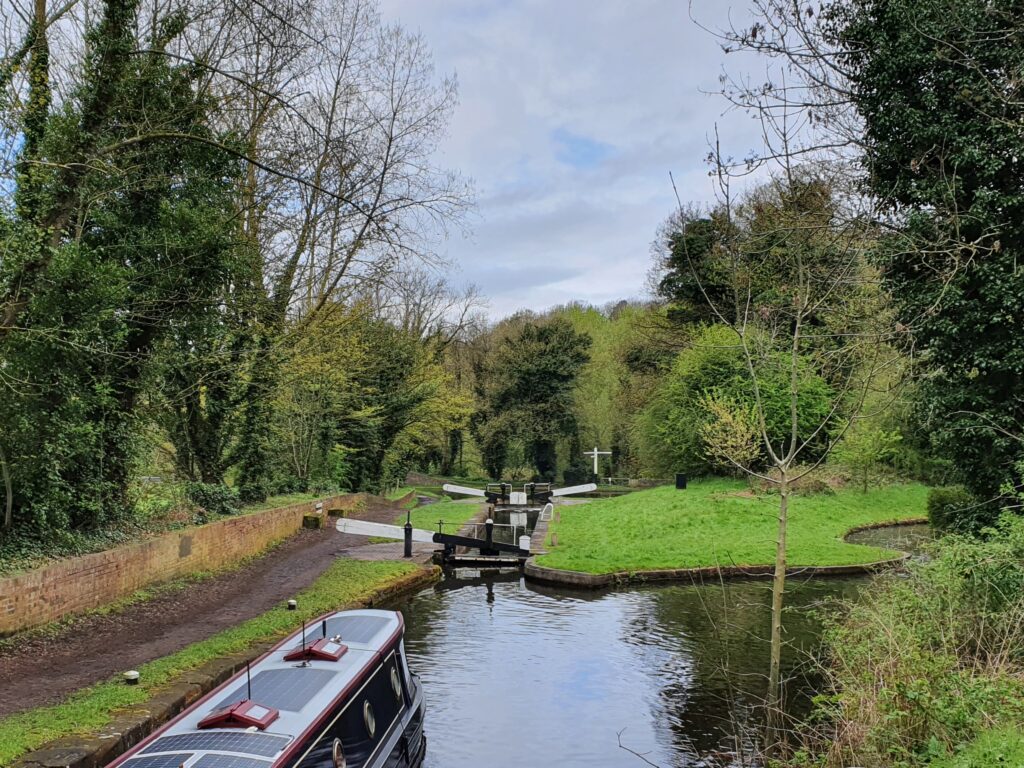
just four more locks before the junction

And onto the Stafforshire and Worcestershire canal.
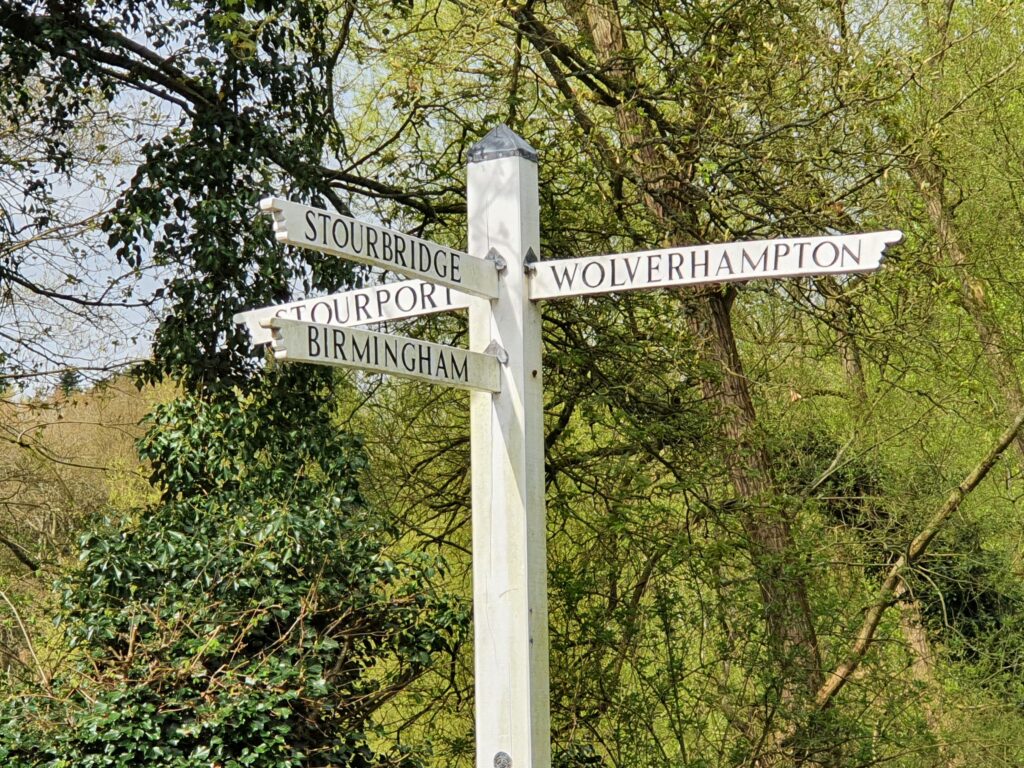
We turn right towards Wolverhampton

This canal was built in the 1770’s to service the potteries around Stoke on Trent. However trade declined when newer canals provided a more direct route between Liverpool and the South. In order to remain competitive the canal company increased the lock opening hours and reduced the tolls. Now there’s an interesting idea.   It’s a very pretty canal that cuts through the red sandstone rock in places, and follows the meandering rivers and Smestow Brook.
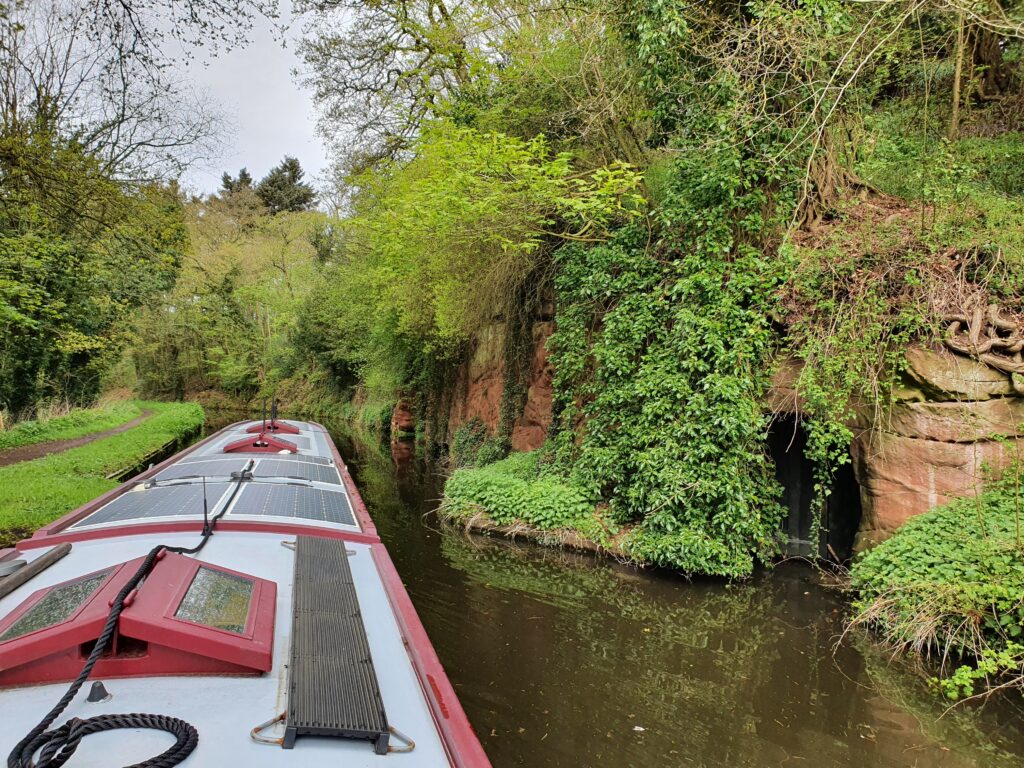
hope we don’t meet any oncoming boats

Within minutes of turning north, the smell of wild garlic hit us, so I leapt off to gather a bunch to make pesto our first spring foraging treat.
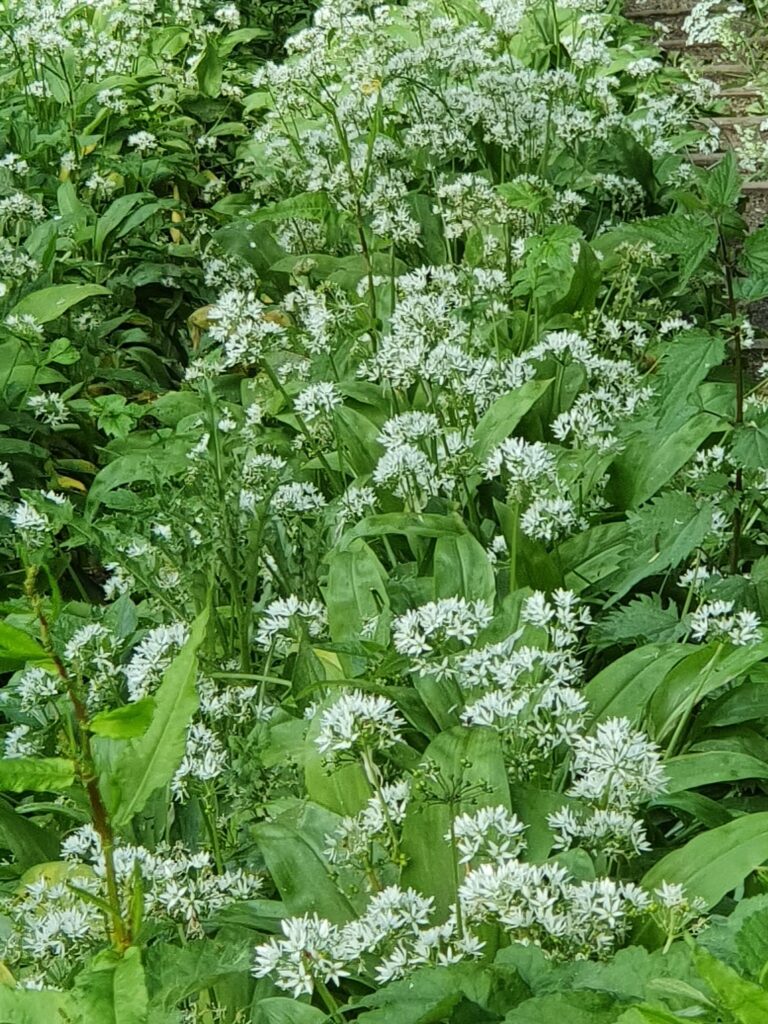
You just need to harvest the leaves, but make sure you identify what’s garlic and what isn’t, everyth8ng looks lush and green right now

Our next first was seeing our first ducklings of the year, 24th April. Out of interest I looked back to last year and my first duckling photo was on 23rd April.
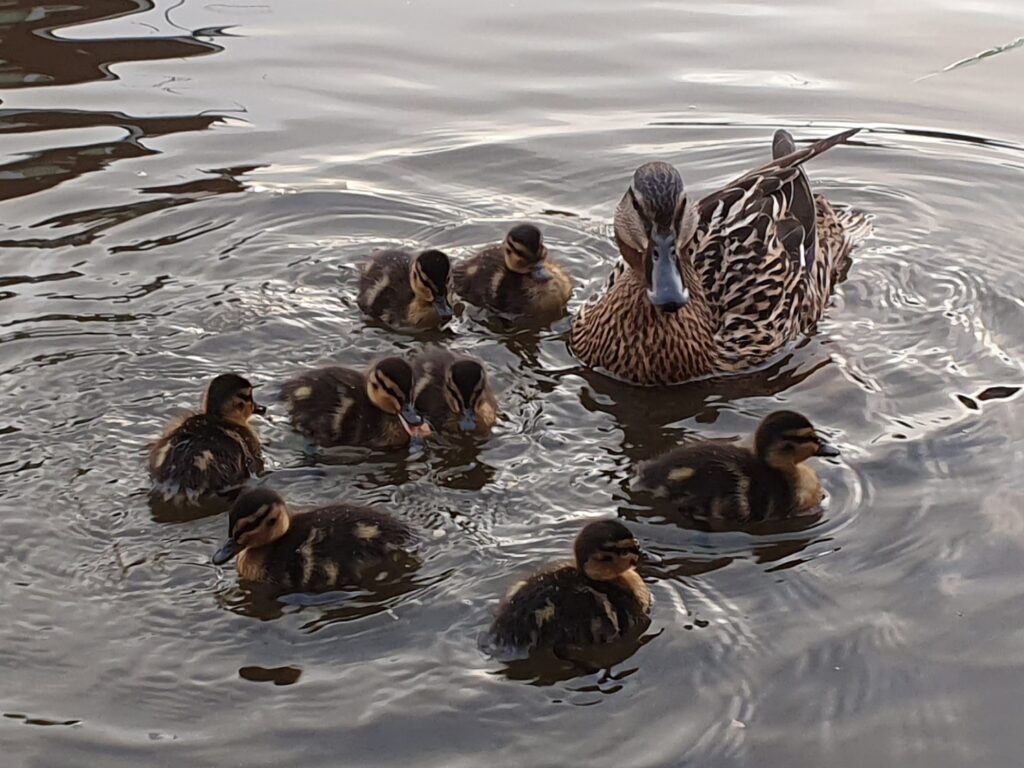
there were another 5 who were a bit camera shy

And another first, this time for James Brindley in 1770, as he managed to combine a lock and road bridge in one crossing.
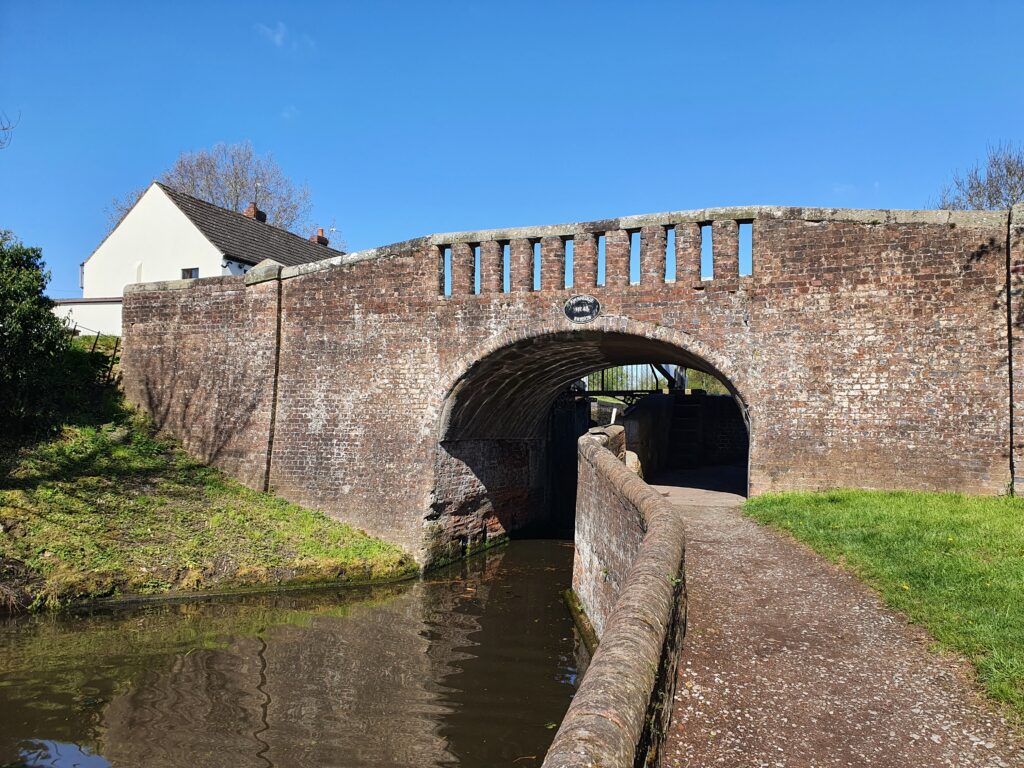
Awbridge Bridge no 49

And whilst we were ticking off firsts, we realised that this was the first time we had done the Bratch Locks in sunshine. It was raining so hard last time we had to bribe the lockies to leave their toll booth to help us
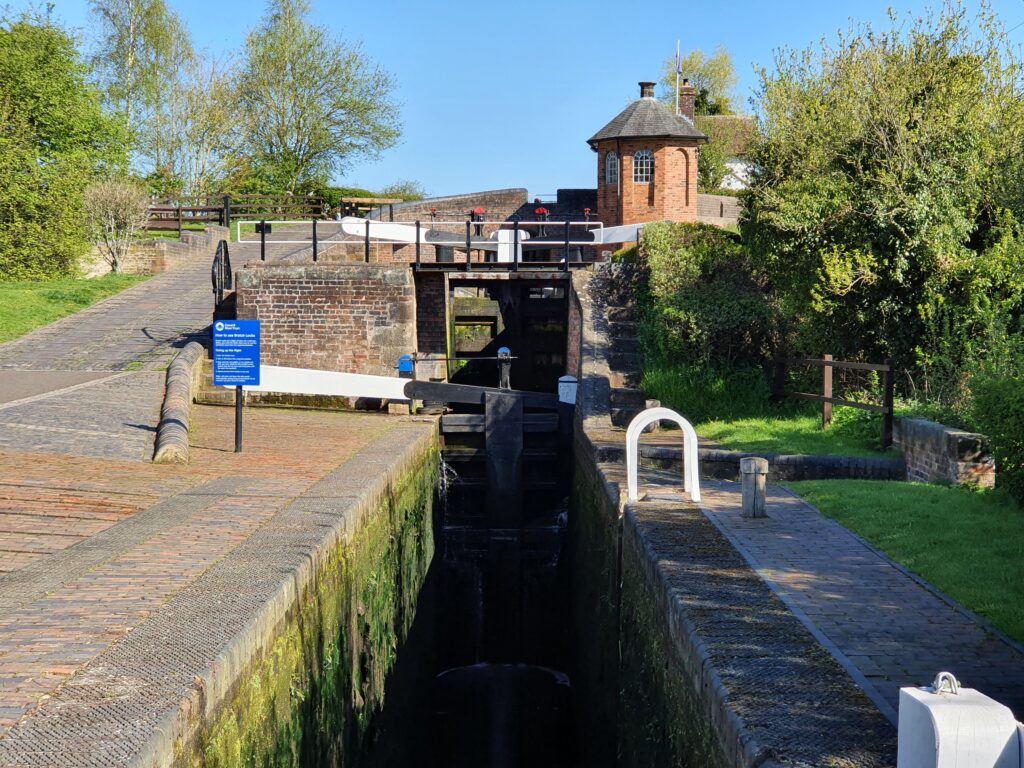
The Bratch Locks, Wombourne

It’s an amazing feat of engineering, originally a staircase lock of three, the water level changes by over 30′. Although technically its now individual locks it still needs to be treated as a staircase and there’s usually a lock keeper on duty to make sure no one sinks. Sadly James Brindley died a few months before it became operational.
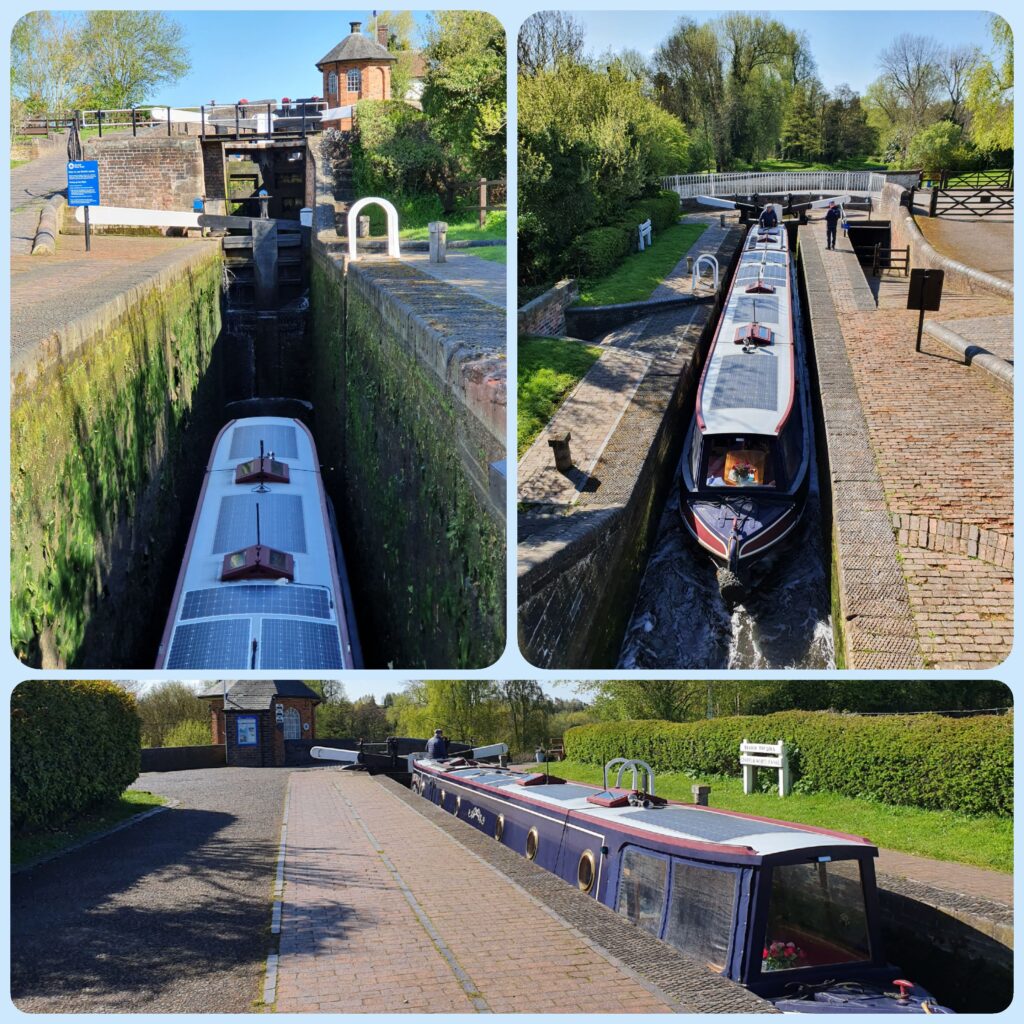
The locks are fierce and powerful, we often chat to the families watching at locks and always remind the children never to play close to the edge because of the undercurrents. We had never seen a whirlpool as big as this one at a lock
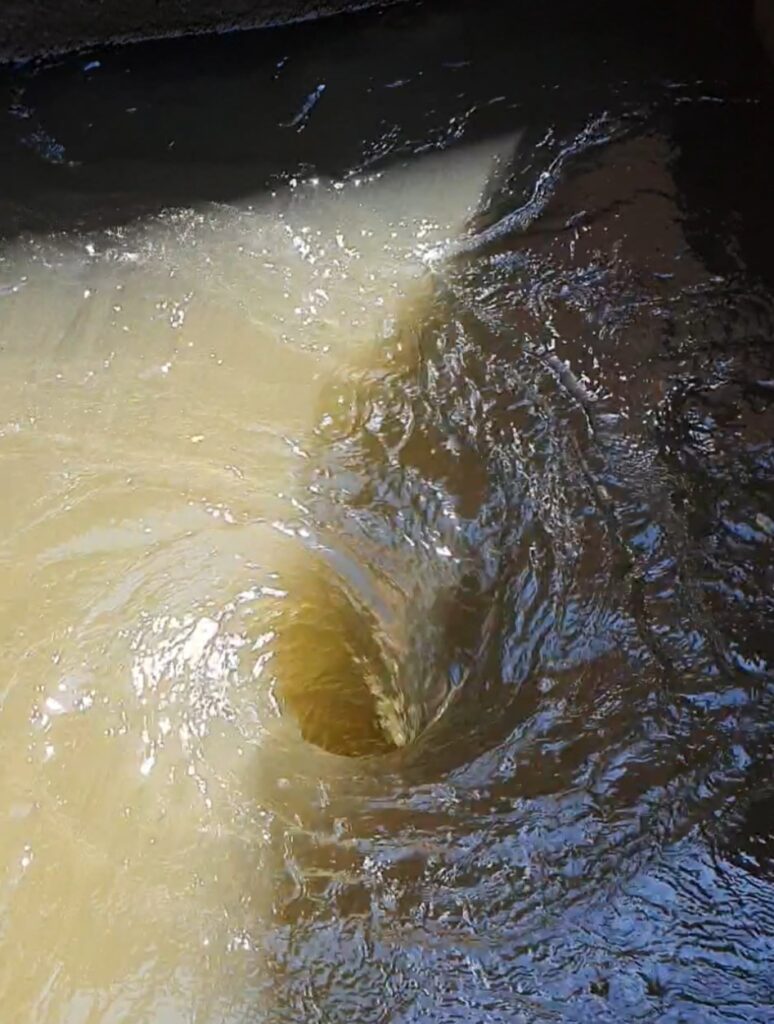
The vortex was between 8 and 12 inches across.

Finally something we’ve come to enjoy peaceful mooring
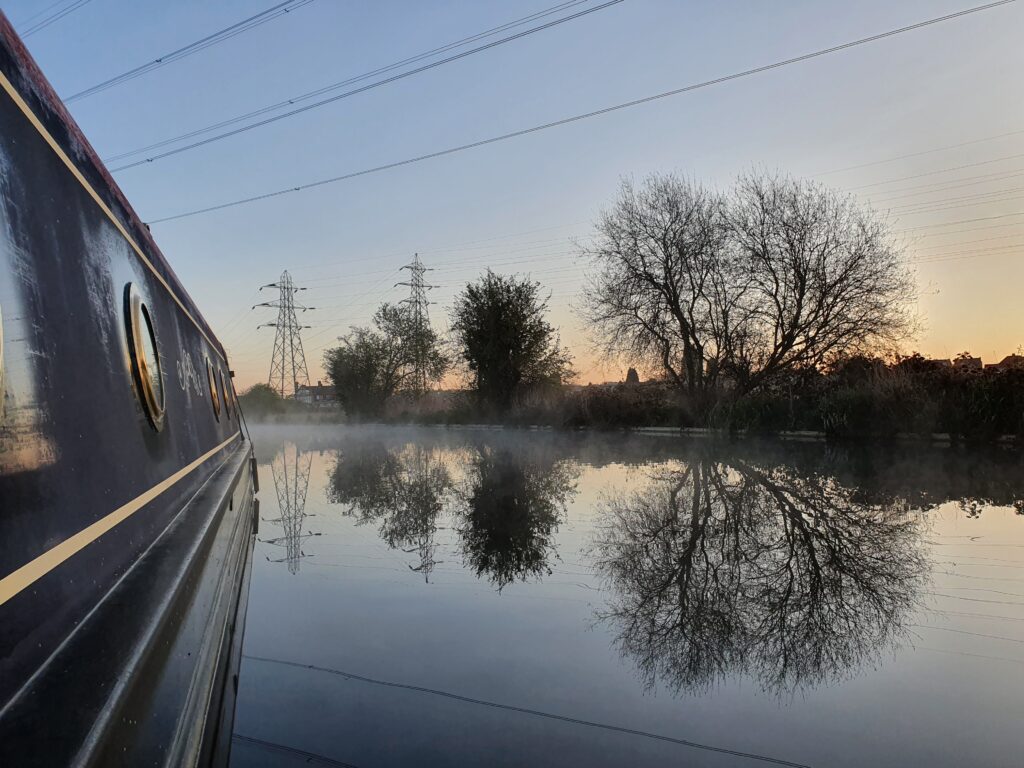
early morning at Wombourne

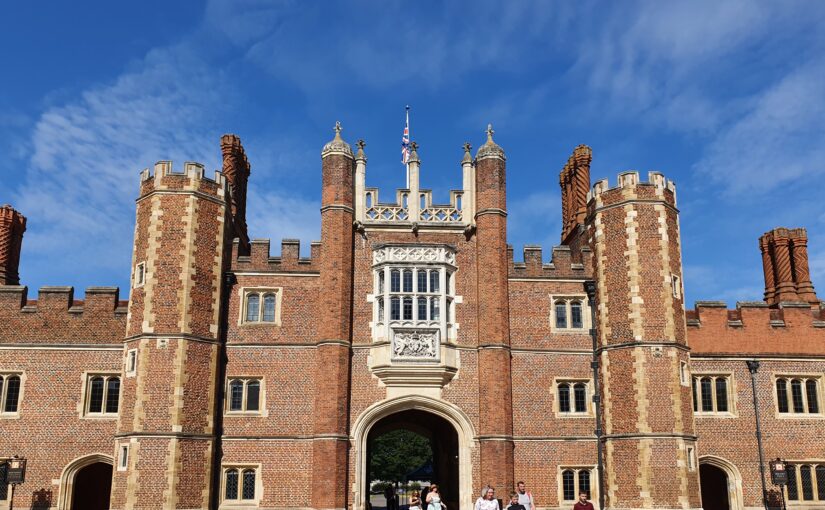
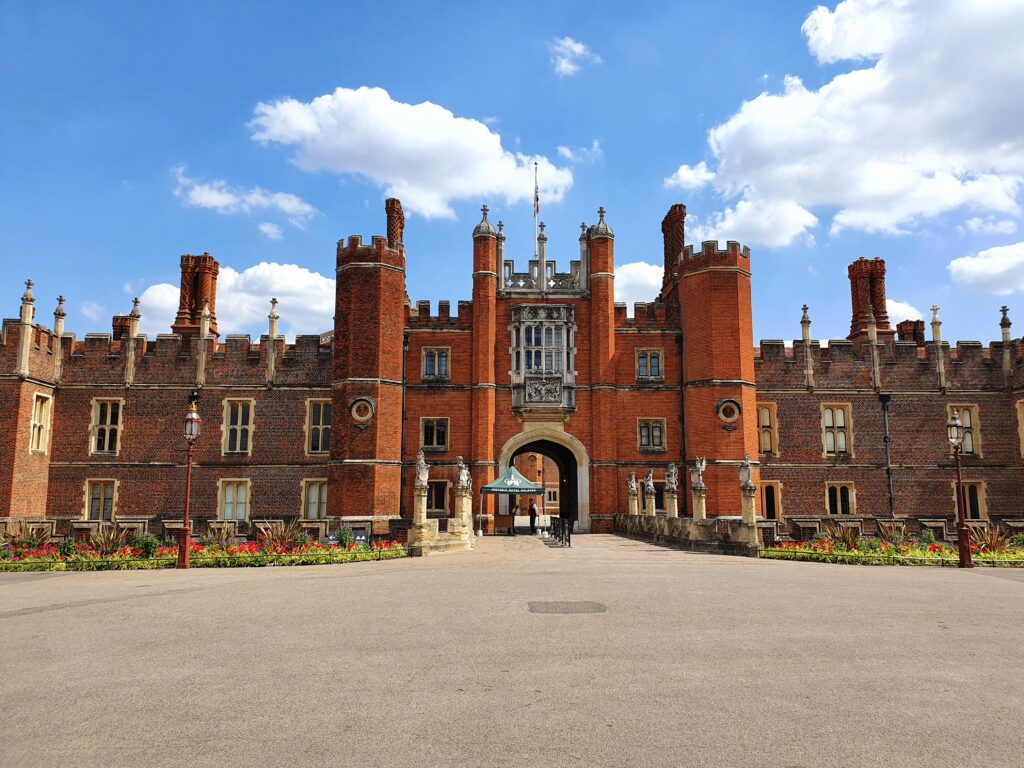
Hampton Court Palace

When your next door neighbour is Henry VIII’s pleasure palace, it would be wrong not to take advantage. We decided to treat ourselves to a years membership of the Historic Royal Palaces trust which allows unlimited visits to Hampton Court, plus 4 other royal abodes.

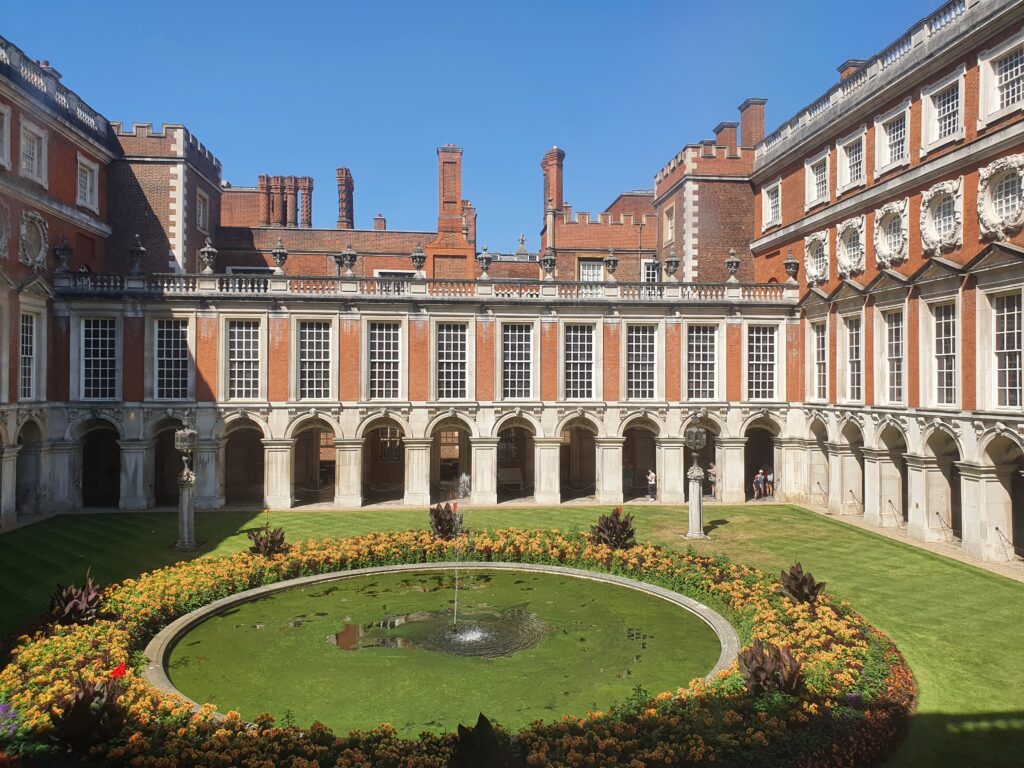
Hampton Court palace


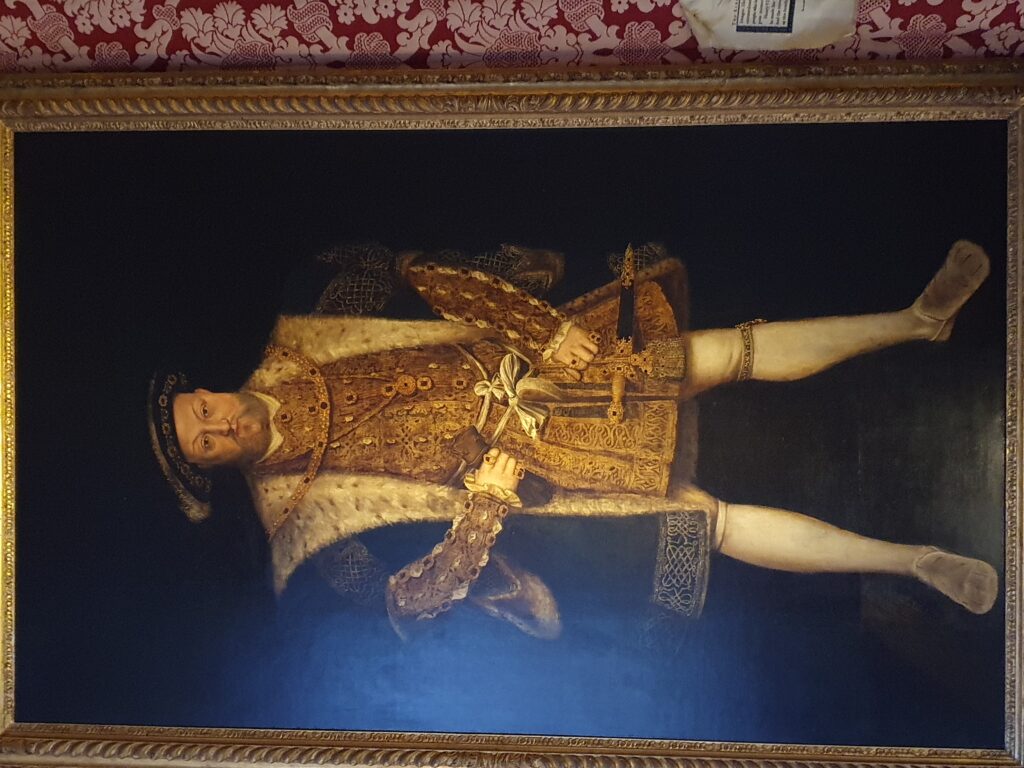
The Lord Chancellor, Cardinal Thomas Wolsey, (born in Ipswich, rose to prominence as a catholic priest serving Henry VIII, died of natural causes on his way to face charges of treason after the fiasco around the annulment of Henry’s first marriage to Catherine of Aragon.) Wolsey began the building up of Hampton Court for his own purposes in the early 1500’s but Henry took a liking to it and by 1530, it became one of his homes, showcasing his wealth and power.

King Henry VIII

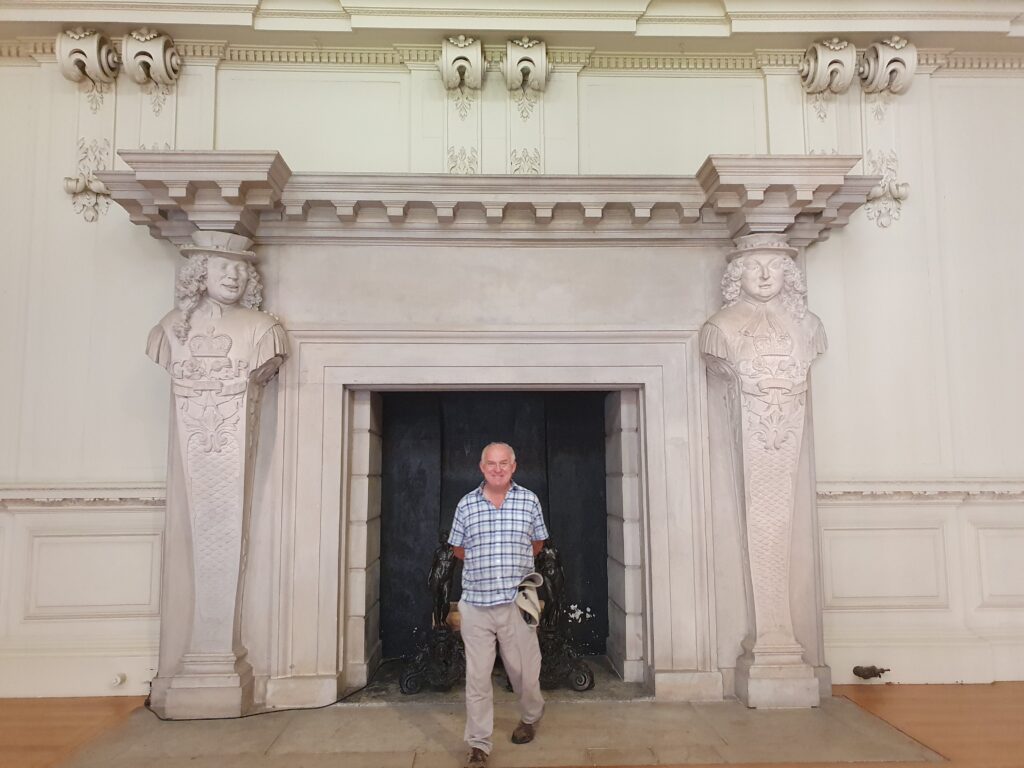
Everything is on a grand scale

Eric in minature


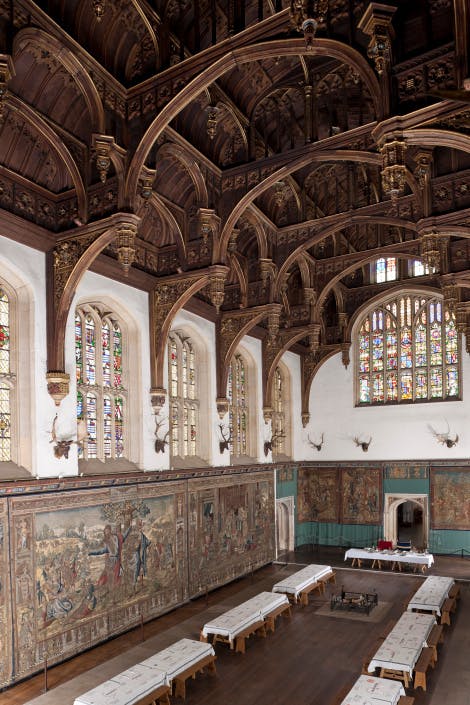
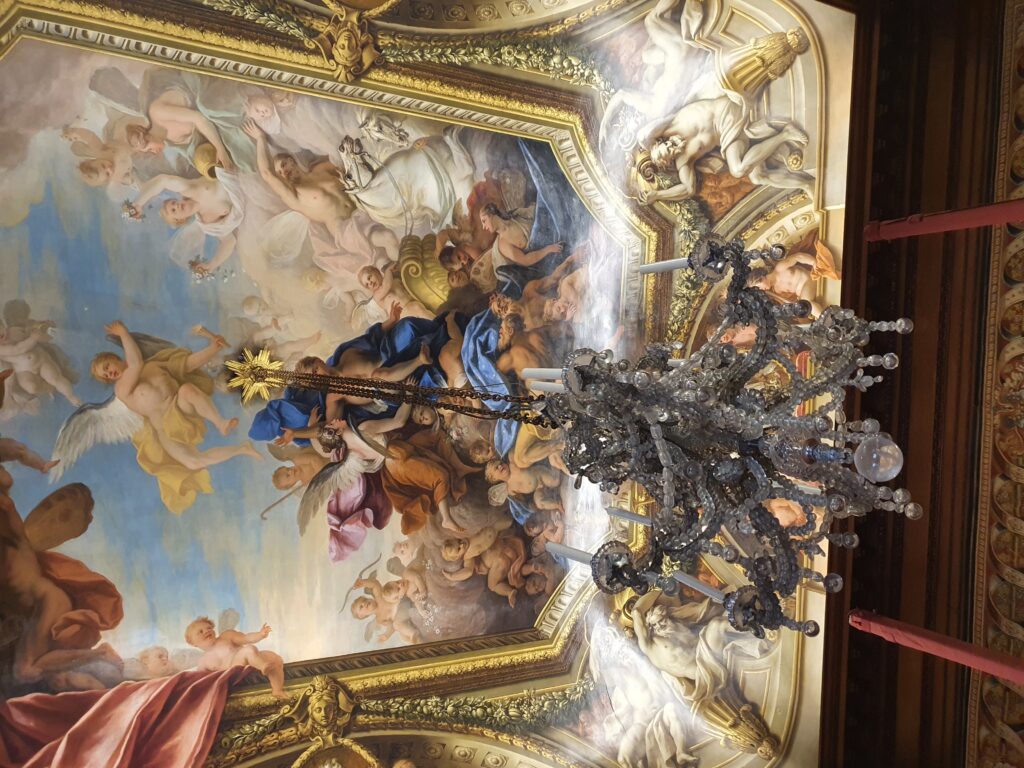
and my photography doesn’t do any justice to the inside of beautiful old buildings Hence me borrowing this photo of the Grand Hall and its 500 year old tapestries from the HRP trust web pages.

The Grand Hall (from HRP story of Hampton Court)

These priceless tapestries depict the story of Abraham as Henry tried to affiliate himself with good biblical teaching. They would have travelled with Henry as he moved his “court” to various other palaces around the country. But Henry did love the lavish lifestyle and this was where he chose to spend a lot of time, entertaining and showing off. The palace continued to be a royal residence long after Henry and his six wives had lived there.

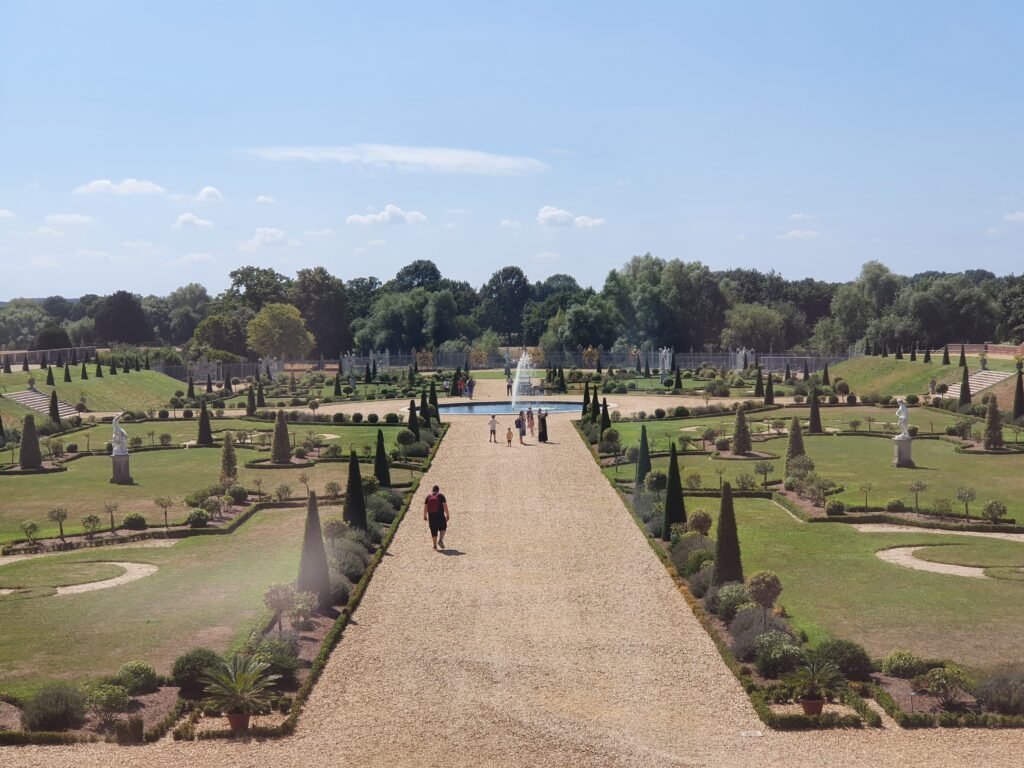
Now thats some back garden

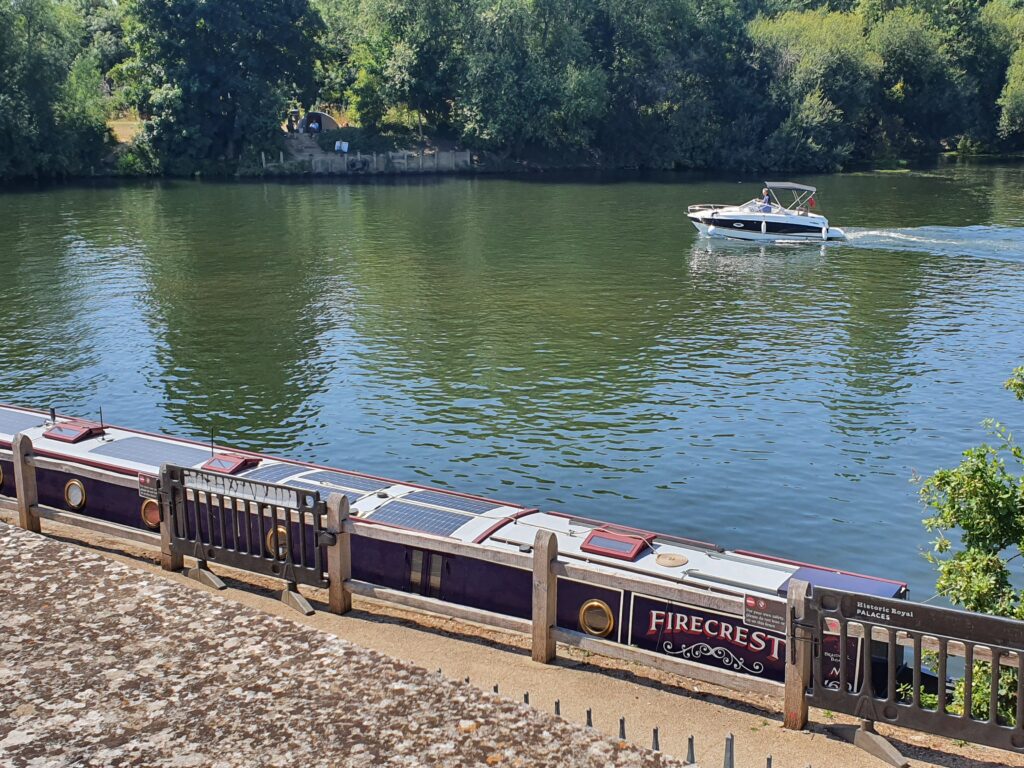
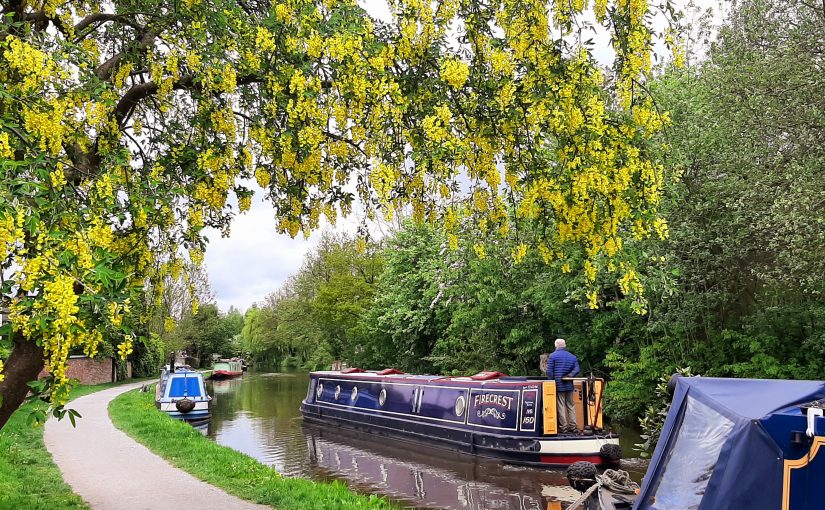
And if you look over the fence, theres Firecrest.

Hello neighbours

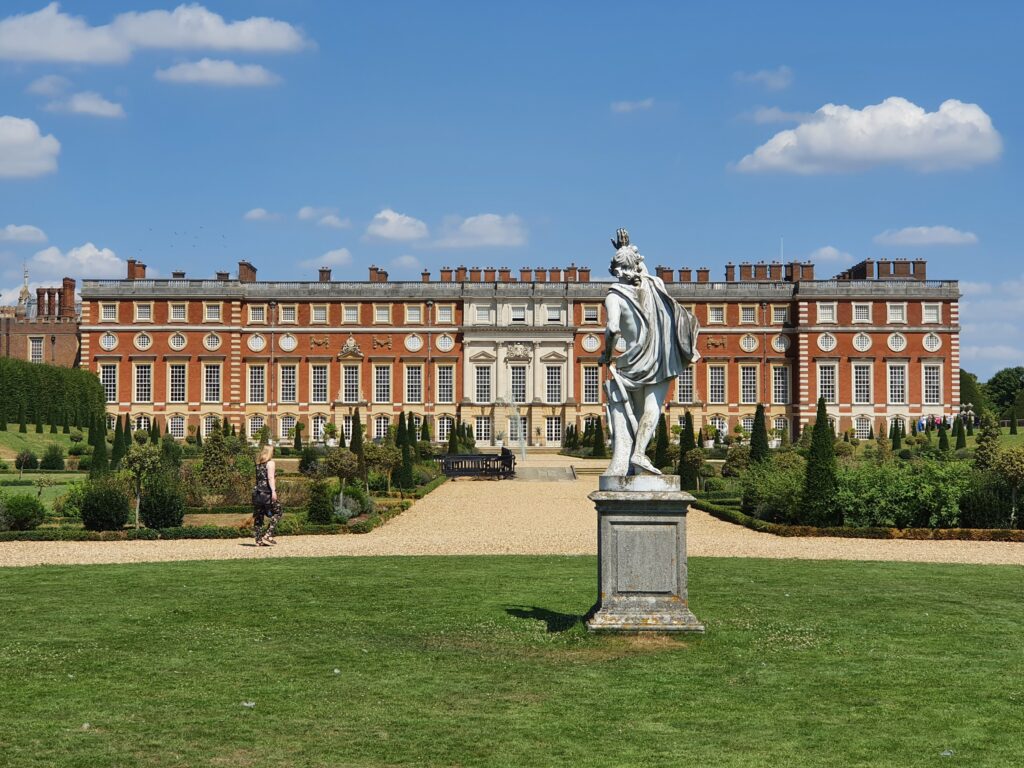
Shakespeare performed many of his plays for Elizabeth I and James I in the 1600s. During the Georgian era in the 1700s Sir Christopher Wren was commissioned to revamp the palace and thankfully instead of tearing down the old Tudor buildings he added the little extention that we can see through the gates from our mooring.

No money was spared with the decor, and Hampton Court is likened to the palace of Versailles

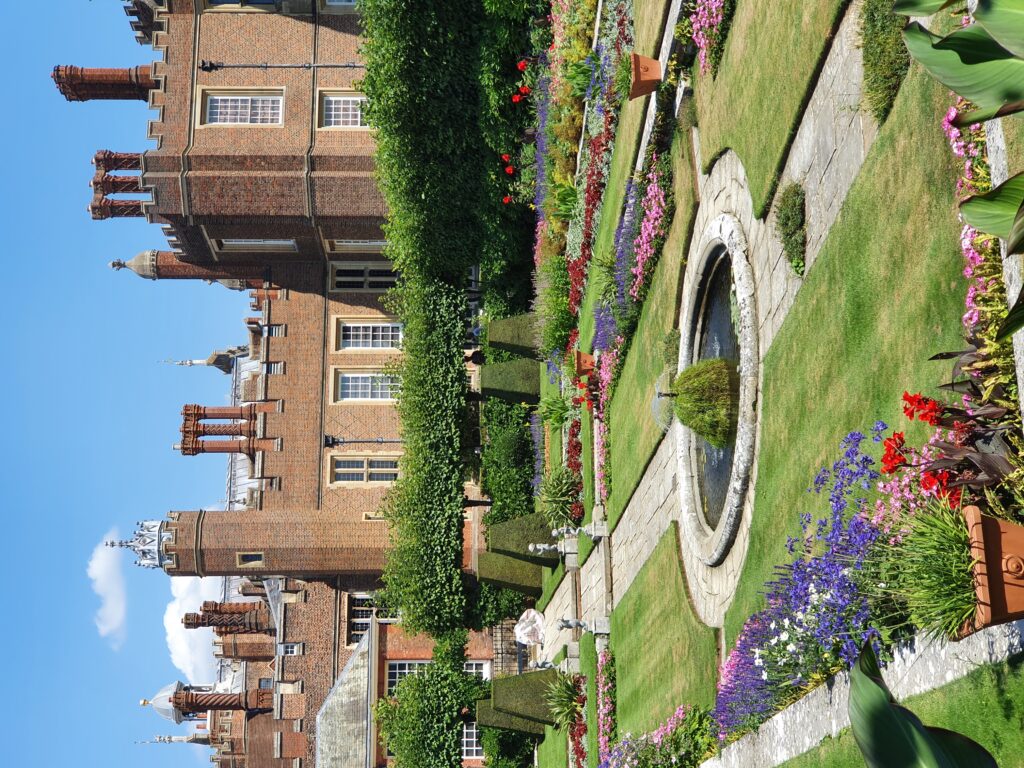
But grand though the insides were, I do love wandering around the gardens

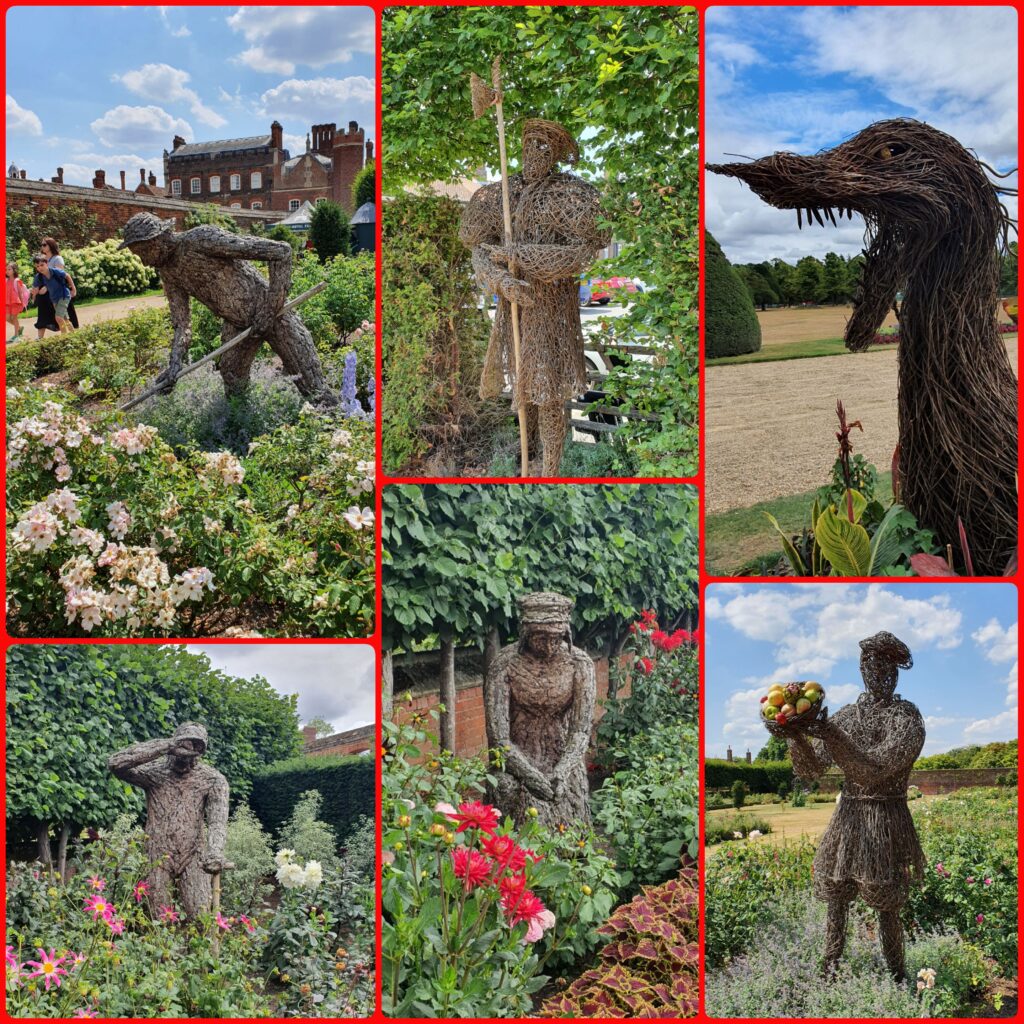
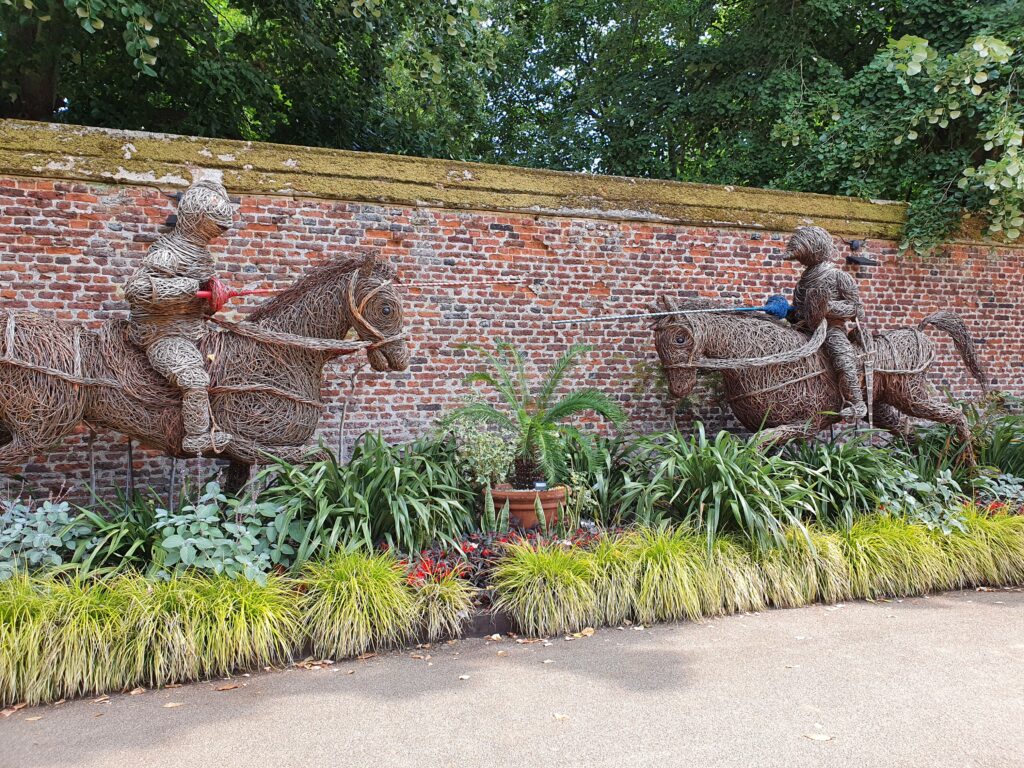
Hampton Court is famous for its maze, but we didn’t fancy competing with hordes of little kids getting lost. Instead we enjoyed searching for all the amazing characters made out of willow weaving that were lost amongst the flower beds

The gardeners at work

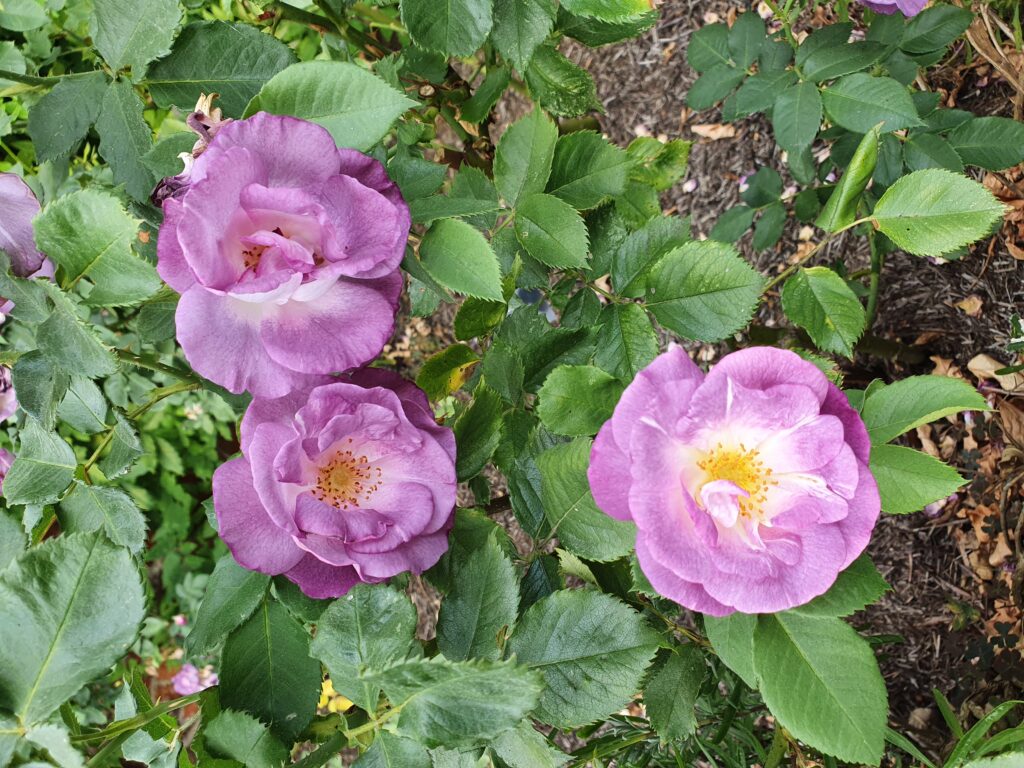
But thankfully the war of the Roses was done and dusted before Henry VIII came to the throne

Jousting in the flower beds

Hampton court fell out of favour as a royal residence in the 18th C. Many of the rooms became Grace and Favour apartments for the aristocracy if they had fallen upon hard times and had served the monarchy well. This continued until the 1980s. It was Queen Victoria who first opened up the Court to the general public to stroll around.

Whilst I have barely scratched the surface of what we saw, having HRP trust membership definitely paid for itself as we both popped in and out several times to enjoy different aspects of the palace during our 5 day stay.

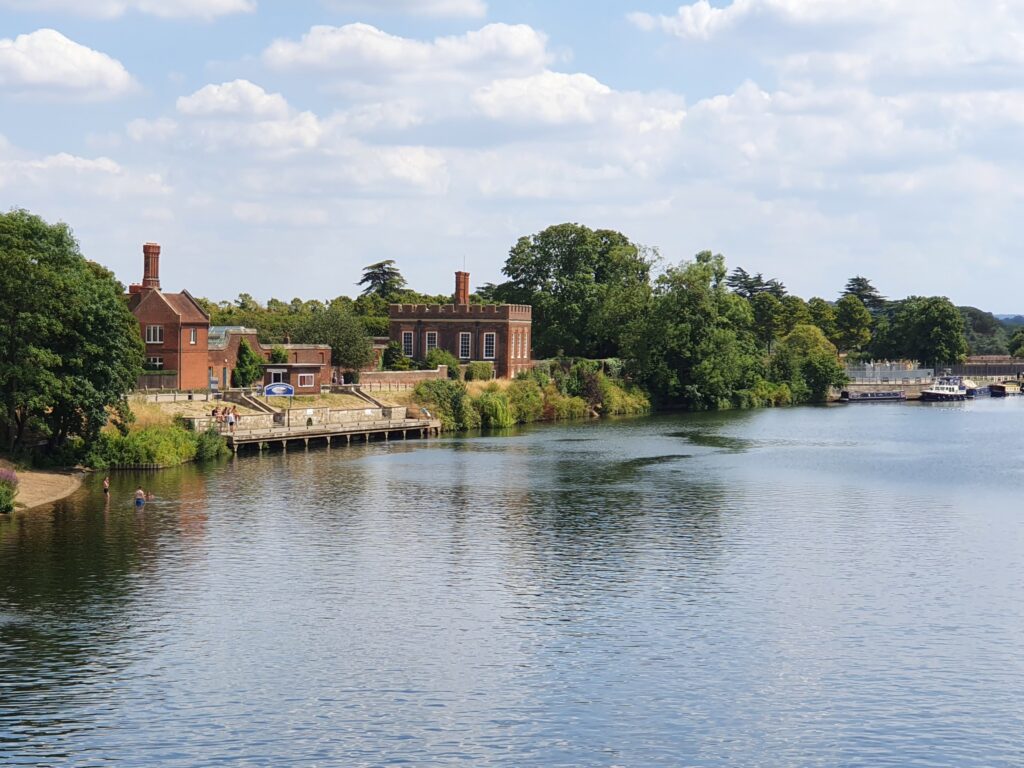
Standing on Hampton Court Bridge looking at Firecrest moored (on the right of the photo)

https://www.hrp.org.uk/hampton-court-palace/#gs.a0czva

From Windsor to Wey via America

We spent our final night in Windsor on the Baths Island electric charging point, which is exceptionally good value, £10 to moor plus £5 for the electric.

Baths Island, Windsor Mooring

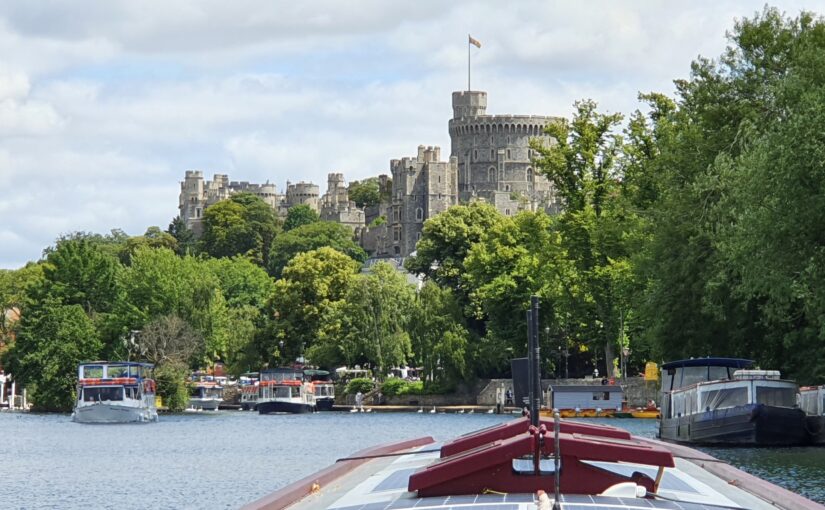
And I make no apology for sharing more photos of the amazing views of Windsor castle when we set off. After Romney Lock the river skirts the royal estate with strict warnings not to even think about stepping foot on the hallowed turf

One of the smaller castle cottages, keeping watch to make sure we dont set foot on Home Park

But it didn’t stop us getting out our long lens’ to enjoy another side of her Majesty’s home

Windsor castle from the river near Datchet

The river seems to have changed again, its wider, the cruisers are huge, and we are seeing more and more residential moorings, many that appear to be in fabulous old river barges.

We couldnt find out any details but this is possibly a dutch sailing barge, over 100 years old

We moored up for the night at Runnymede.

National trust moorings at Runnymede

It had been such a hot day we didnt go exploring until the early evening which meant we missed the visitor centre, (and icecream seller)

The Magna Carta, the document that still enshrines Justice into, not only our own legal system but many countries around the world have followed our example.


but we got to wander around some of the monuments and installations

“The Jurors”

I particularly liked “the Jurors” a series of decorated chairs representing the concepts of law and the struggles to gain freedoms and equalities. I like accessible art that is free to be enjoyed by all and thought provoking to those who want to look more deeply.

A place to play not just ponder

Having pondered the impact of the Magna Carta and its worldwide impact, we then found ourselves ascending a path known as the Steps of Individuality, only to realise we had also stepped over onto American Soil, as this “English Acre” was given to to America for the UK Kennedy memorial. (Thats one for the pub quiz)

The steps of individuality leading tothe Kennedy memorial

The memorial is entered from the flat, but often wet, meads of Runnymede through a gate. Once a visitor, who is assumed to be a ‘pilgrim,’ passes through this gate he or she steps onto American soil and into the allegory of life, death and spirit.
The gate gives access to a pathway of 60,000 individual axe-hewn Portuguese granite setts, which rise steeply through the surrounding woodland. There are 50 steps in all, each representing an individual state in the USA. The setts can also be seen to represent a multitude of pilgrims on their progress through life to enlightenment. Each step is unique and each sett has been laid at random. The craftsmen were unable to comprehend the need for individuality, and could only complete their task when the steps were likened to the uneven appearance of a crowd at a football match.
” Copied from the info board

We continued our journey back on English water, looking out for one of the very few statues of our Queen Elizabeth, but whilst she and her loyal subject might have had a good view of us cruising past, with the sun directly behind her we couldn’t see much

She’s standing in front of the tree

We had a few move overnight stops on the Thames before we reached another significant point in our journey, the confluence of the River Wey joining the River Thames.

Thats the River Wey ahead

And through Thames lock(which is on the Wey) to pay our fee to the National trust allowing us 3 weeks cruising on the Wey

Thames Lock at Weybridge
We came back to see the Queen’s statue

Oxford, part 1 – all work and no play

Of course I’d like to say I studied here, well no not really, it wouldn’t have been the best or right place for either of us, but oh boy what a lovely place to immerse yourself in academia if you’re so inclined.

One very proud young man


And the day we explored was graduation day so plenty of smiling happy family’s milling around the closed gates Sheldonian.


And without any logical plan of our own we just walked around town enjoying the atmosphere

And soaking up some of the history of the place

The faculty of history building

There was too much reading up to do

The Bodleian library

and taking good photos was proving difficult

The Radcliffe camera

But Christchurch has to be the most magnificent

Christchurch from the meadows

Or perhaps not wanting to be left behind Magdalen College

Magdalen College

Which sits on the banks of the Cherwell and where we could watch the haphazard tourists trying to outdo the students punting. The queue was long so we didn’t have a go

Punting on the cherwell

And we ended our day back at Christchurch for choral evensong

Inside the quad a christchurch
Awaiting evensong

The Midlands March, Blue Sky at the Engine Arm

Having escaped the scumbags disturbing the tranquillity on board Firecrest and travelled along the M5 at 2.6 mph, we found ourselves briefly cruising along another surprisingly quiet and peaceful stretch. But although we had blue sky it was still quite chilly. We had earmarked the old Pump House as a place to moor.

Smethwick pump house


Nowadays, it houses the Galton Valley Heritage centre, but in its heyday it was a pump house., Brindley’s original old main line(c1769) was 18 feet higher as the canal climbed up the hill and then back down again, thus requiring locks both up and down and 2 steam engines to pump water back up to the summit. However the amount of traffic transporting coal was sufficient to warrant a new cutting to be built at the lower level which in 1829 became part of Telfords efficient straighter and wider and lockless, New Main Line. Steam powered pumps continued to used on the old line up until c1930. During WWII two ex submarine diesel pumps were installed as the canal was part of the fire fighting water supply for the essential factory’s in Birmingham, thankfully they weren’t actually needed and the building fell into disrepair until the 80s when work began to restore it as a heritage centre.

Unfortunately although there are mooring rings, the centre is currently closed and there was a lot of fast food takeaway trash next to the bin and bench indicating a congregating place for thoughtless people. And we didn’t want to risk a repeat of our Oldbury experience. Quite odd standing on a Towpath looking down onto another canal.

Looking down onto the New Main line

We only needed to cruise a short distance before we arrived at the Engine Arm junction

The Engine Arm Aqueduct

The short branch takes the old line over the new line on an aqueduct onto what is now mainly residential moorings, but must have served a wharf at some point in the past. The aqueduct itself is a beautiful iron structure

Over the New line

We took advantage of this open quiet mooring and whilst Eric got on with some DIY on the roof,

Caution, men at work

I took advantage of some Seville oranges and made some marmalade.

My first ever batch of marmalade

Ellesmere Port

Having got to Chester, we just had to complete the journey to the end of the line at Ellesmere Port. Back in the 1790s, engineers had a similar idea when they wanted to create a waterway which would connect the Mersey and the Severn. However disagreements, rising costs and falling traffic needs meant that the full route was never completed, and instead of being the Ellesmere canal, this section earnt the nickname of the most unsuccessful canal. Nowadays however it is a interesting change from the rest of the Shroppie. Much much quieter than the run into Chester, floating weed replacing hire boats as the main obstacle

Weedy waters

It would have caused havoc if the weed had got wrapped around the prop so we were going extra slowly, so the locals didn’t really need it keep such a close eye on us, cause we weren’t going to trigger this speed camera

Smile you’re on camera


But apart from the weed it was ok to cruise along, and we found some lovely mooring places

No weed here

At Ellesmere Port , where the Shroppie, Manchester Ship canal , Mersey all come together the Canal and River trust have utilised the old wharf buildings to create a fantastic museum

The incline plane down to the Manchester Ship canal

It showcases canal history, how times have changed. When families worked the canals instead of mooching about like we do, they lived in a fraction of the space we have, with one tiny cabin for the whole family to cook, eat and sleep in, and moving from first to last light every day.

I’m glad we have so much space on Fircrest

It brings a new meaning to WFH(working from home)

No room for a dishwasher


And they were no less proud of their homes. A tradition barge would have been beautifully decorated with ornate paintwork of roses and castles, crochet trim and polished brass.

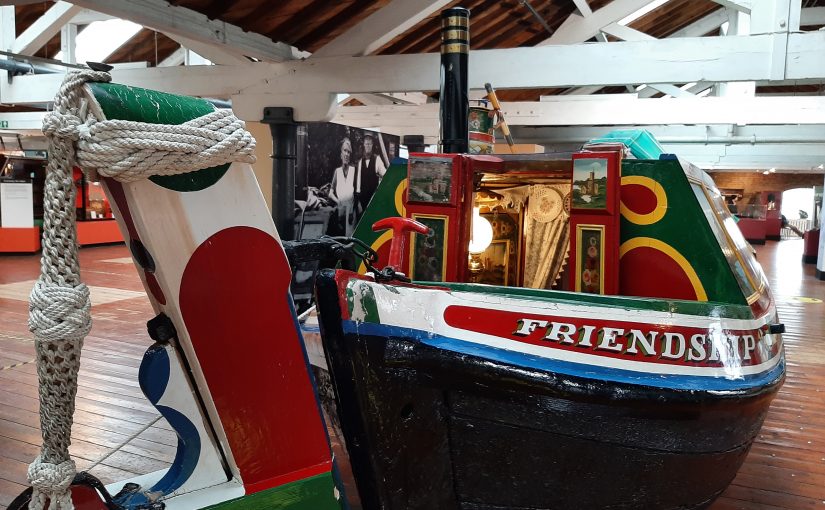
What a beautiful boat


The horses would also have had crocheted fly protectors and painted tack. But I don’t think they would have had a whole granny square coat like this one.

Meet Rainbow, the granny square horse

Of course not all narrowboats were how we imagine them with our rose tinted glasses. The first commercial canal was the Bridgewater canal , servicing the coal mines at Worsley. These were known as Stavationers, because the internal ribbing looked like a starving persons ribs.

A Stavationer coal boat


And the wide beam boats often did shorter journeys so didn’t all have living quarters. The site at Ellesmere Port was not only a wharf for goods ferried across the Mersey, but it was the site of the local gas works, where coal was burnt to produce Town gas. One of the buildings is dedicated to some magnificent old engines and we were lucky to get a guide who talked us through the machinery.

Theres a machine for everything

The entry ticket to the museum is valid for a whole year, which is a good thing because there is so much to see and too much to absorb in a single visit. But the day we visited felt like November not September and we got our wires crossed about what we both wanted to do, so didn’t stop overnight as we could and should have done. And of course once we had left and moored up the weather improved.

No more rain

I would wholeheartedly recommend a visit to this museum for all boaters. Just don’t cycle to it along the Towpath.

King Charle’s Chester

We took a few more days to cruise up into Chester, stopping under the Egg bridge at Waverly and outside the Cheshire Cat, but eventually found ourselves the perfect mooring in King Charles’s garden.

King Charles’s tower

The early morning golden sunshine lit up his tower on the Roman wall filling us with a sense of adventure as we explored the city. It is suggested that during the first English Civil war (1642-1646) this is where Charles I stood and watched his soldiers being defeated at the Battle of Rowton Heath. Personally I think he was enjoying looking at the narrowboats moored below, until Eric pointed out that he might have been plotting the route but the canal wasn’t actually built until the 1770’s.

Looking down into “our” garden

Chester has a fascinating history, far too complex for me to do justice to. However it’s proximity to the River Dee made it ideal for the Romans to establish it as a major fortress between England and Wales. They named it Deva Vitrix , and built the original wall. The Anglo-Saxons maintained, repaired and strengthened the wall to help defend against the marauding Danes. And it continued to protect its residents until the disastrous 16 month siege in 1645 when the Royalists fell to the parliamentarians. Chester then realised it was more profitable to welcome visitors, both traders and tourists, and the wall became a 2 mile circular pedestrian thoroughfare.

Eric the gladiator

Until the 1800’s Chester had thrived as an inland port, and although hard to imagine now, taking some quite big ships on the River Dee.

The River Dee

Sadly or fortuitously -I would say the latter, the combination of the River Dee silting up and Liverpool being able to take the bigger ships on the Mersey, the port faded away. But the local entrepreneurs realised that a canal could help maintain trade links both onto the Dee and the Mersey.

Is it a most or a canal?

Beside the canal, one of the highlights of the city, is the stunning architecture. Many of the original Tudor buildings remain, but the spectacular city centre is predominantly Victorian. We shouldn’t complain because we fall into this catergory but they are a significant draw for the tourists making it a strangely busy place to be. Both Eric and I were content just to wander around looking up and all the intricate wooden carvings, and the unique balcony walkways,

Waltons jewellers and the Chester cross

and at the same time looking down to the Roman ruins

What remains of the Roman bath houses

Luckily for us the mooring below the wall is 14 day so we had plenty of time to explore.

The Eastgate clock tower

Pottering around Stoke


From the south, Stoke on Trent itself isn’t the prettiest of places to cruise into. It suffers from the typical neglected backsides of light industrial units, security fences, barbed wire, graffiti and litter entangled in overgrown vegetation. But it is what it is, and it isn’t the worst we’ve seen. At least here the town planners have realised what an asset the canal can be and the towpath is in good condition.

A warm welcome

But there are some major highways that run close by so the mooring is either noisy, undesirable or non existent, and with 5 locks within the centre of town, it means that we have never stopped to explore the centre of Stoke itself. I have a sneaking suspicion that if I took the time to explore, Stoke could be a fascinating place with a strong industrial and creative heritage. However, we carried on cruising until we got to Etruria junction and the canal regains its prominence.

One of the old flint mills, now home to two historic working boats

Many of the old wharfs have been repurposed to serve as CRT yards and workshops for the benefit of boaters and gongoozlers alike. And although many of the heritage buildings which were once a hive of activity for the canal traffic have been allowed to fall into disrepair.

This is the Anderton wharf which possibly has some connection to the Anderton boat lift,


At least one gem remains, the Middleport Pottery has thrown open it’s gates to the tourist trade and despite still being a working pottery, it welcomes visitors.

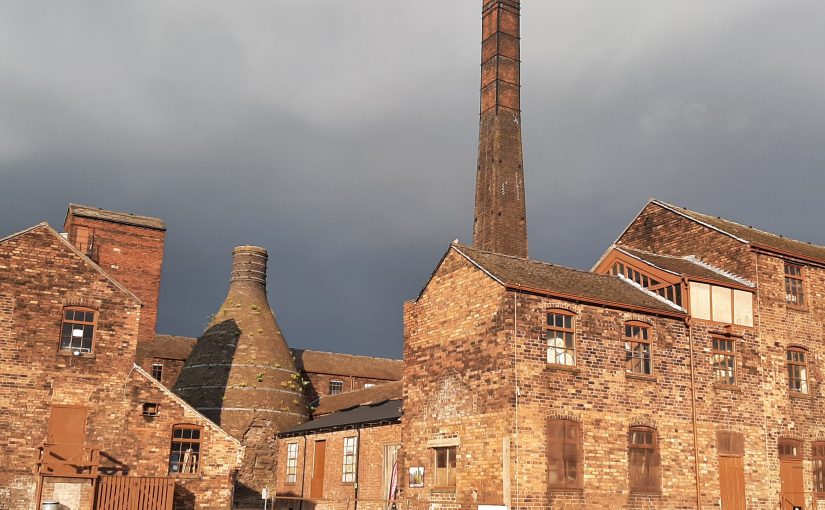
The Middleport bottle kiln

Although we were a bit concerned about it’s health and safety notices warning people to be careful near the canal

Don’t say you haven’t been warned

The abundance of coal and clay meant that Stoke was ideally placed for entrepreneurs and innovators such as Wedgewood and Spode to create a world famous industry here and why in the mid 1700’s Brindley’s team began to dig the canal where bridge 128 now stands.

Where it all began


100 years after the canal had been in existence Westport Lake was created , although not for the benefit of the local industry, Brownhills Colliery hit the water table and flooded both the mine and surrounding land. Nowadays its a local beauty spot along side the canal.

Westport Lake

We were lucky enough to moor opposite the pottery and spent a few days walking around and enjoying the sights. (Middleport have daytime only mooring for visitors)

A prime mooring spot


We would have loved to have done the factory tour, but it is still waiting for it’s release from Covid restrictions. We were allowed to walk around the site though, and it’s very atmospheric.

I can’t imagine it was this quiet in it’s hey day

Most of Stokes bottle kilns have been dismantled now, although some just appear to have been abandoned.

So sad to see such an eyesore

As I looked opposite this decay I wondered if our descendants will feel the same nostalgia for the current factories if they are still standing in 50 years time.

I wonder how long this one will last.

From Stone to Stoke


Having achieved the first of our commitments by getting the Boat Safety Certificate, it was time to move on to Stoke for “mission possible 2”. But with 4 days to do the 10 miles, we were going to take our time enjoying this bit of canal.
We paid our respects to poor Christina Collins, a passenger travelling south, who, in 1830, was “meddled with and murdered” despite having reported her fears to the canal company office in Stone. Her sculpture by the bridge has been cleaned up since we saw her last October.

Stone bottom lock overlooked by Christna.

Stone itself, was a prominent place on this canal when, in 1755, a group of Liverpool merchants and Staffordshire potters, sponsored Thomas Brindley to survey the land with a view to linking the Trent and the Mersey rivers together. However it wasn’t until 1764 when Josiah Wedgewood and his partner Thomas Bently, realised the potential and took the idea forward. In 1766 an act of parliament was passed and the Grand Trunk Canal company was formed. With its headquarters here, the Stone section was opened in 1771. Amusingly, the celebration party proved to be a little too exuberant as £1000 worth of damage was done “by repeated firing of the cannon”. A whole lock and bridge fell in causing CRT to issue a navigation closure notice… (Ok I made up that last bit about CRT)
Despite initial opposition to the canal from packhorse owners and river navigators, Stone grew and thrived bringing a huge economic upturn for the small market town. And not just for the potteries.

Beer is still brewed in Stone,

After all the rain we’ve had , it looks like summer might be putting in an appearance and it’s a joy to wake up and want to set off cruising

Oh what a beautiful morning…

Good bye swans, thanks for having us.

Past the Wedgewood factory, thanking Josiah for his part in getting this Canal built, but not stopping to for a visit this time.

I don’t think this is the original building


However we did moor up to do some essential shopping at the Trentham Estate, a destination shopping complex incorporated into the Trentham Hall and Gardens. (About a mile’s walk from bridge 106) It’s focus is more on garden centre type concessions, rather than the high street fashion, and we needed a Mountain Warehouse to pick up a replacement pair of shoes for Eric. Footwear sorted we moored for the night at Sideaways, on the long straight section that’s just ripe for development before Stoke. It’s close to the railway and is what we call a functional overnighter. So gave us the breathing space we needed before the final push through the graffiti covered neglect that sadly seems to be the norm on the outskirts of some towns and cities.

You’ve got to hand it to them, not all graffiti is bad

However it’s not all bad, someone along the line has realised what an asset a well maintained Towpath is to the community and has given us a warm welcome.

Stoke bottom lock