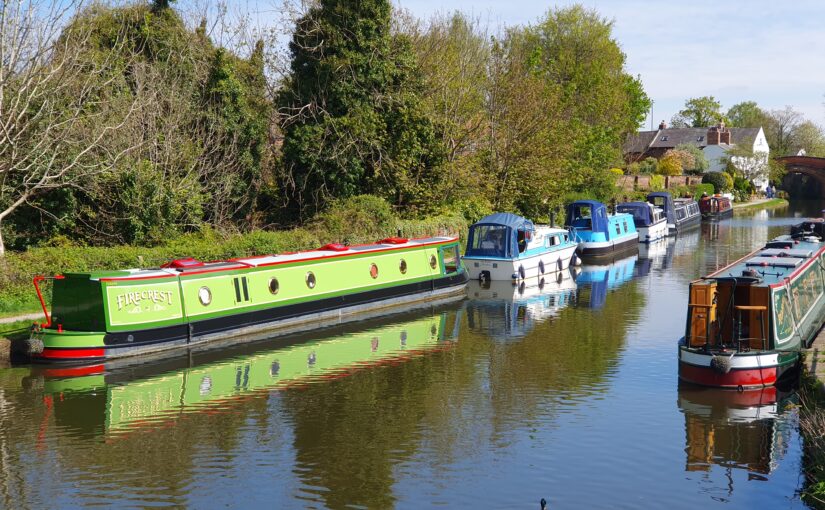
Bank Holiday weekend in Lymm

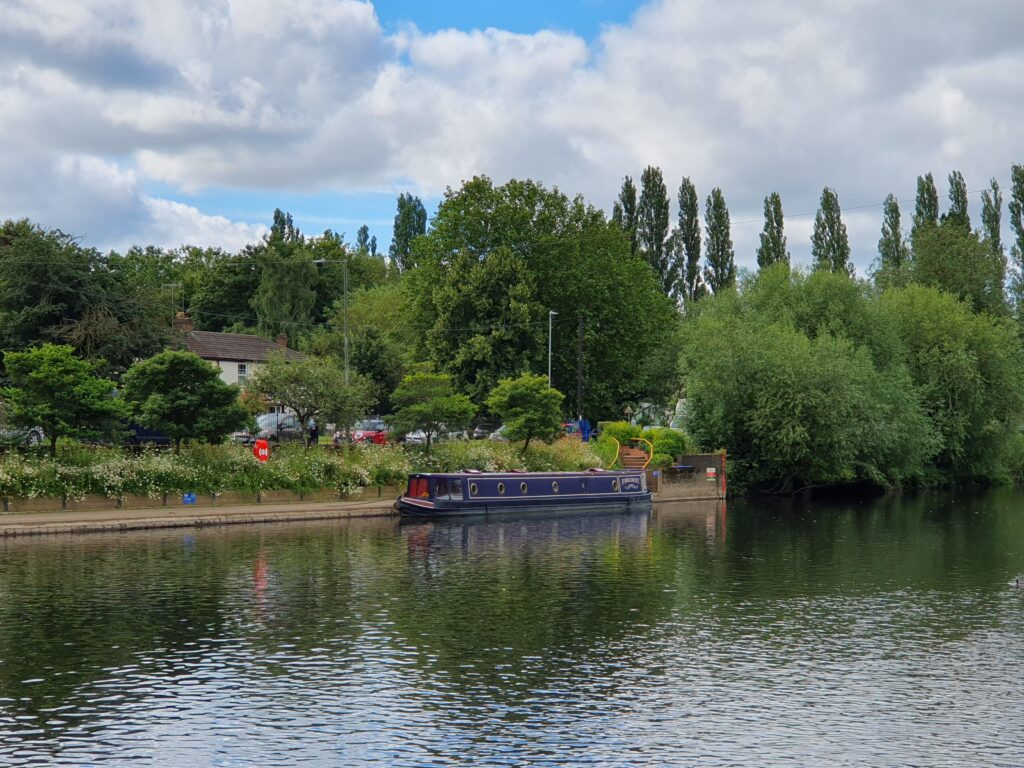
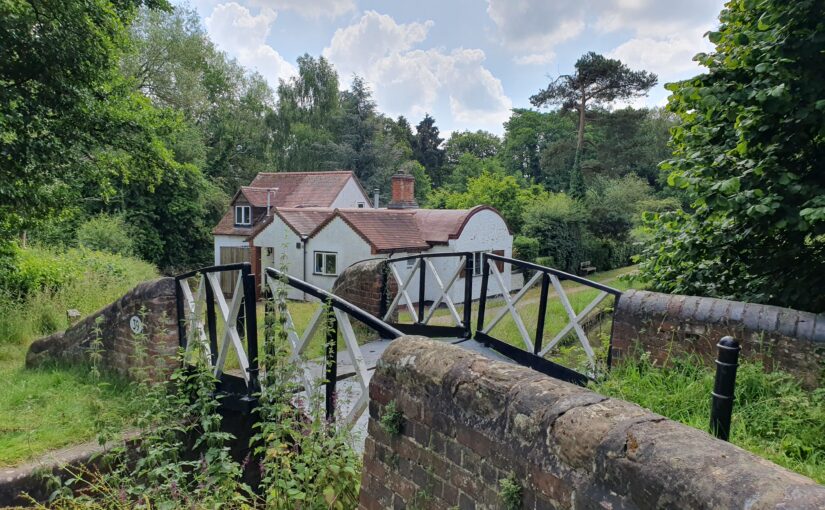
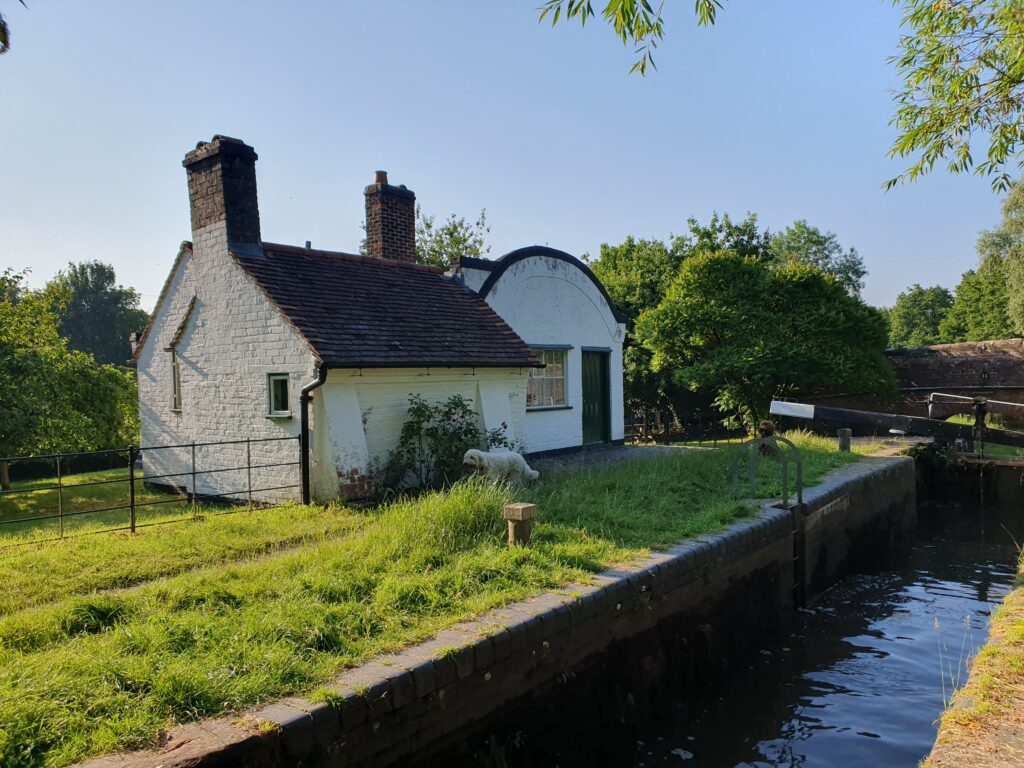
One of the prettiest canal villages is Lymm on the Bridgewater canal. I’m sure this house must have been photographed more times than the narrowboats that cruise past it. We were lucky to get moored in over the bank holiday weekend.
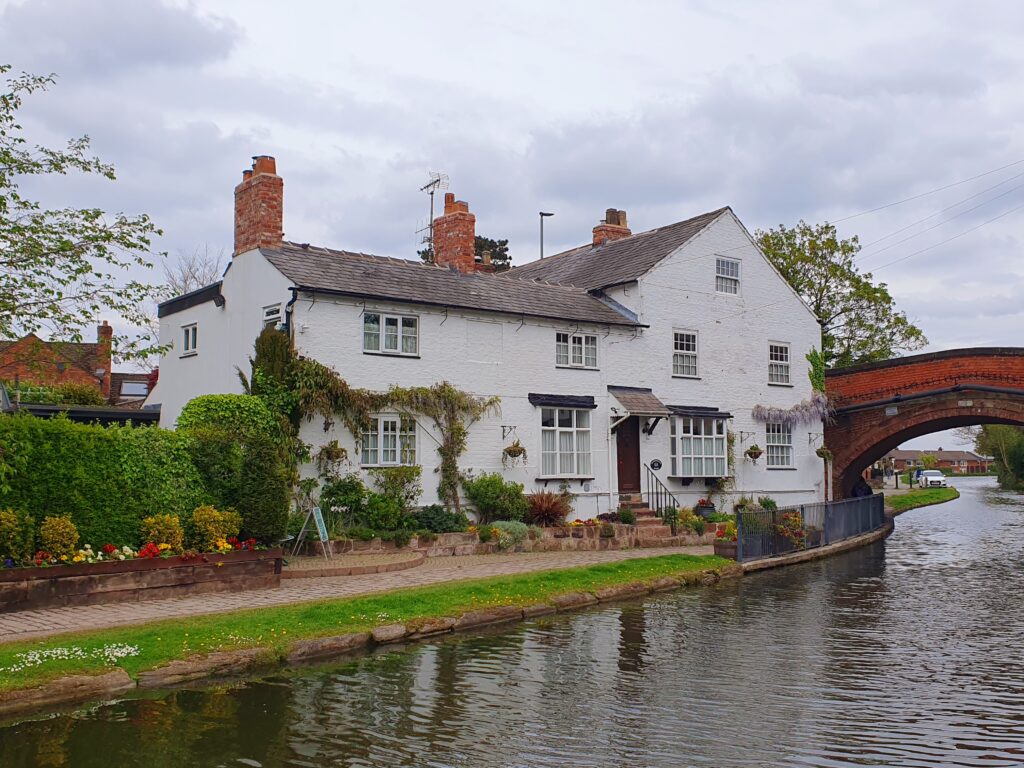
It looks good even when the sun’s not shining

The village is easy to stroll around and very picturesque, is it any wonder it regularly wins best village in bloom prizes
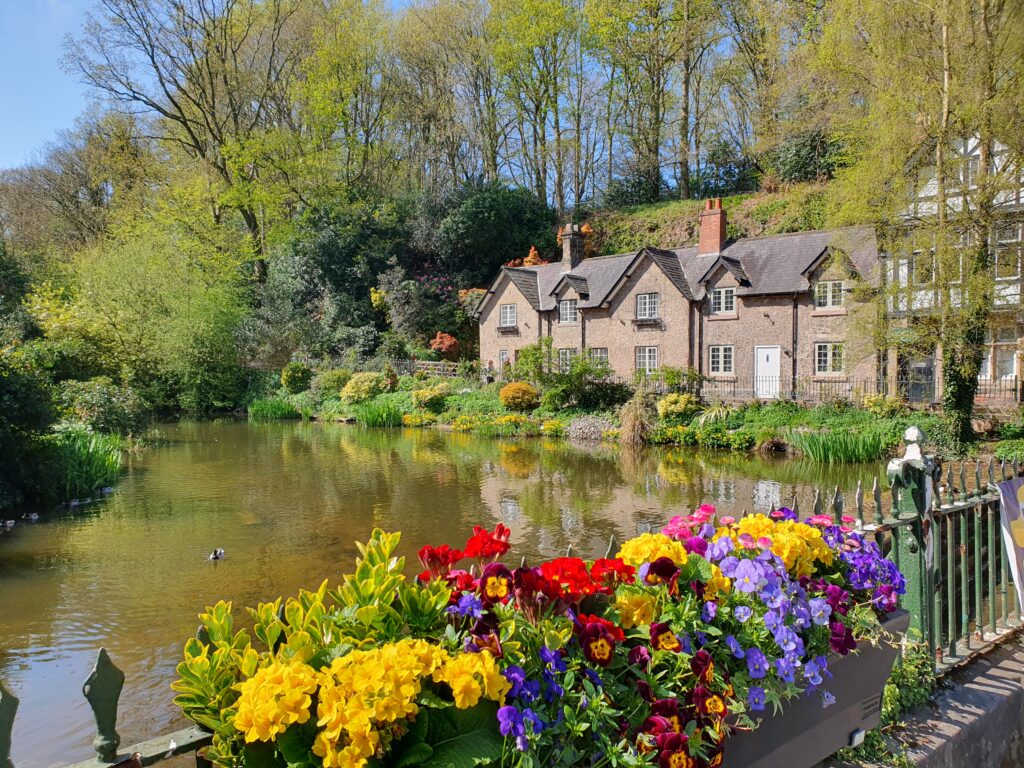
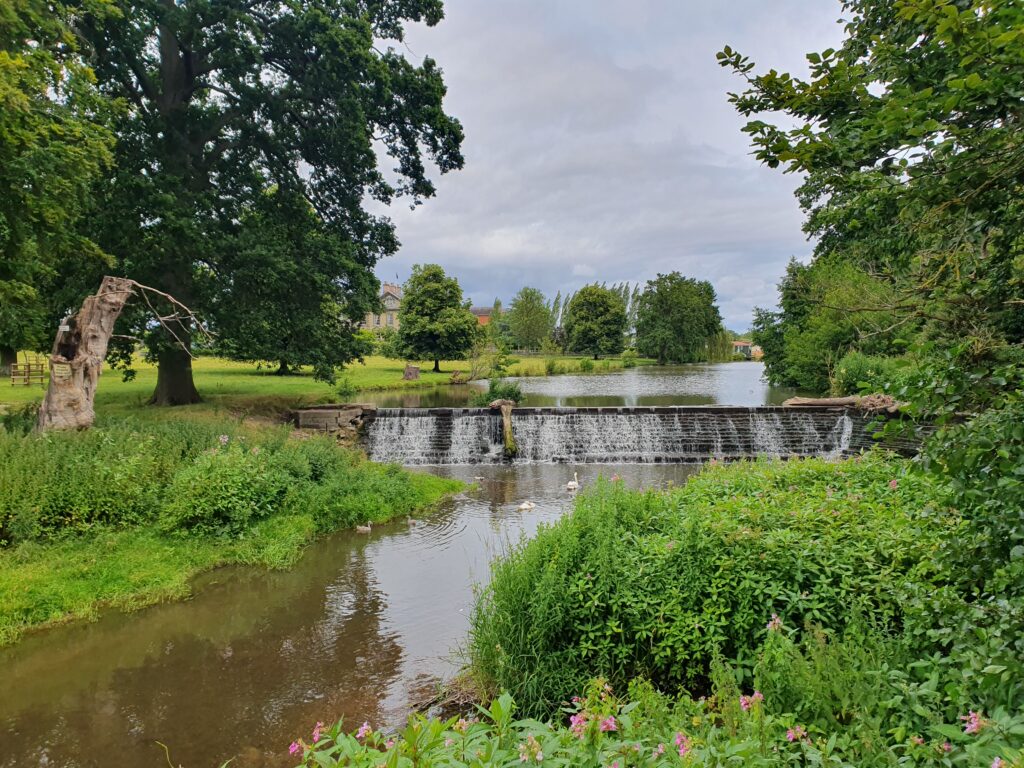
Lymm lower dam,

And I’d give them a prize for the best dressed Christmas tree as well. Not surprised it’s an all year round tree
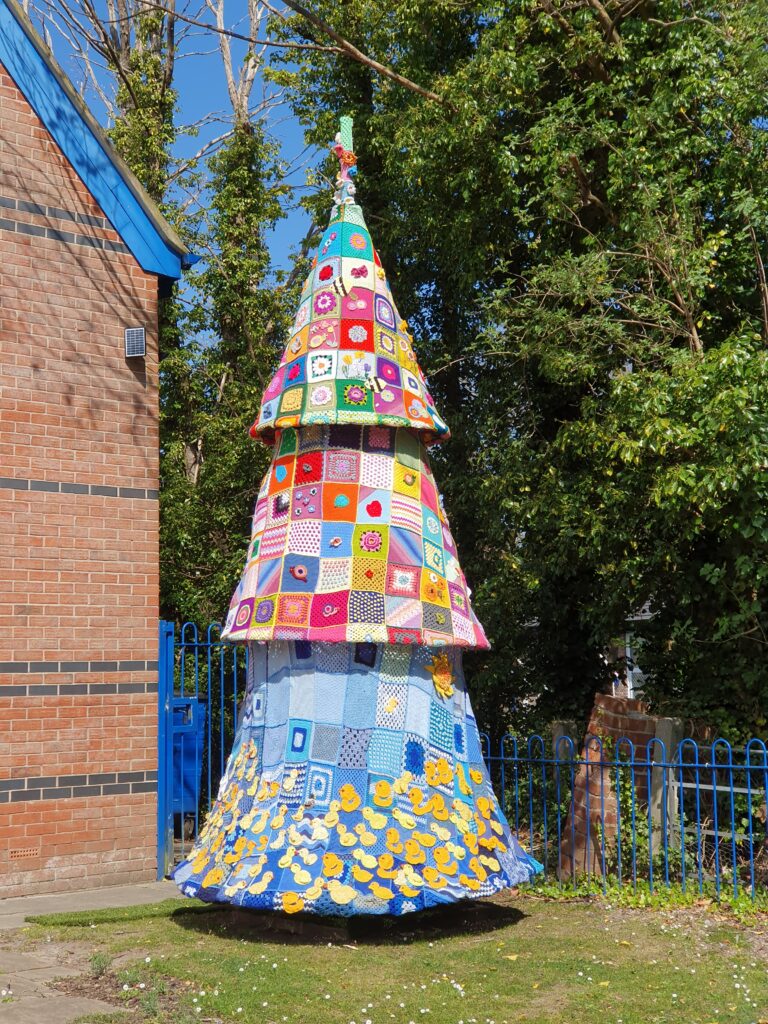
Im not a great fan of yarn bombing, but this is first class installation art

As usual we debated which one of us deserved to be put into the stocks, but I reminded Eric that there’s a good butchers in Lymm and I’d bought steak for tea
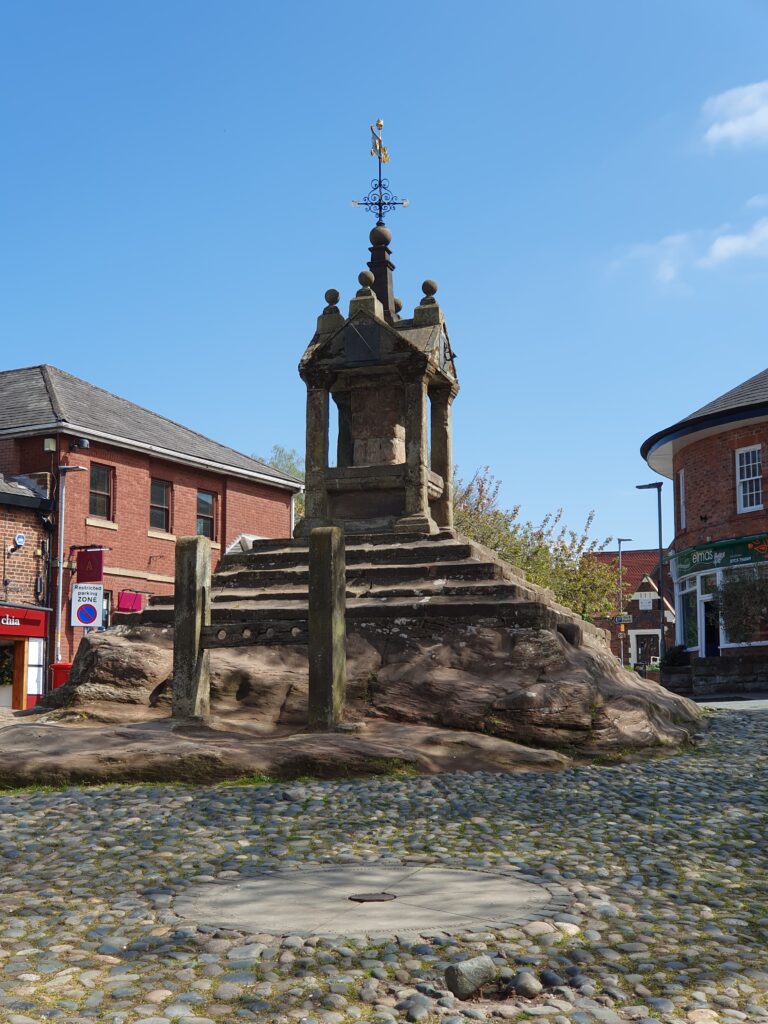
The Lymm Cross and it’s stocks

We decided to walk a little further out of Lymm on this visit, heading north towards the Manchester Ship Canal. Our route took us past the Slitting Mill. This is where iron bars were cut into sheets for use making nails, one of Lymms many varied industries during the industrial revolution.
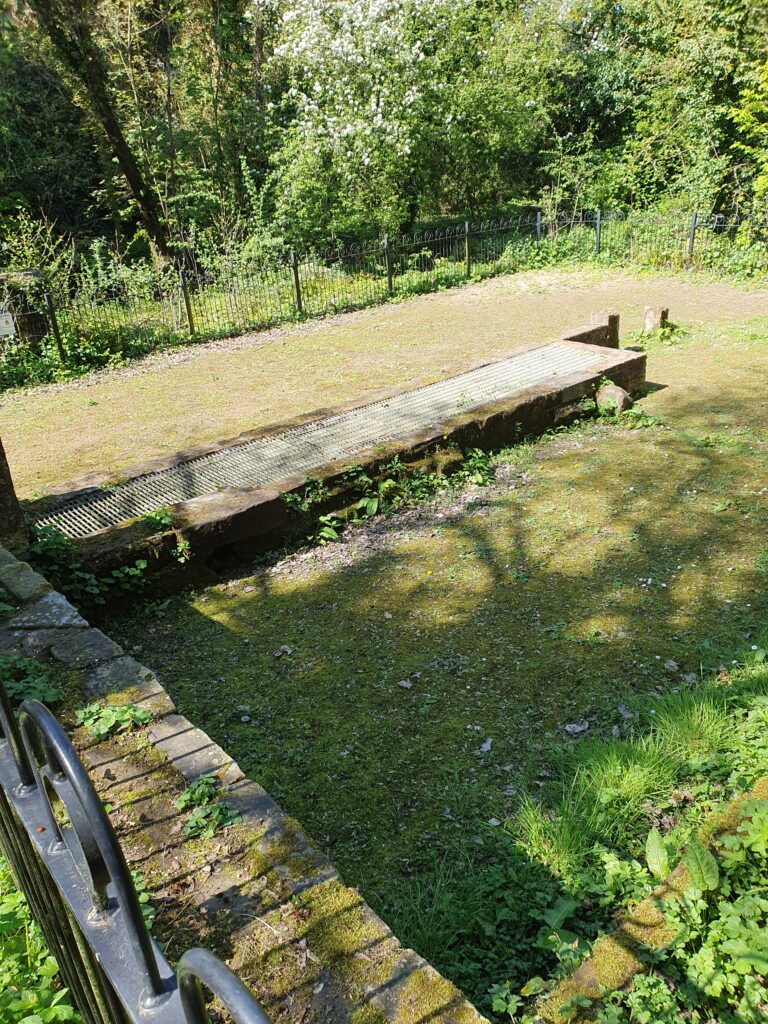
The Slitting Mill

It’s not really very interesting to look at from the footpath, but the Lymm heritage site has some interesting photos of its excavation

https://thelymmarchive.co.uk/archive/trades-and-industry/slitting-mill?

As we carried on along the footpath, sniffing and sneezing as the hay-fever took hold
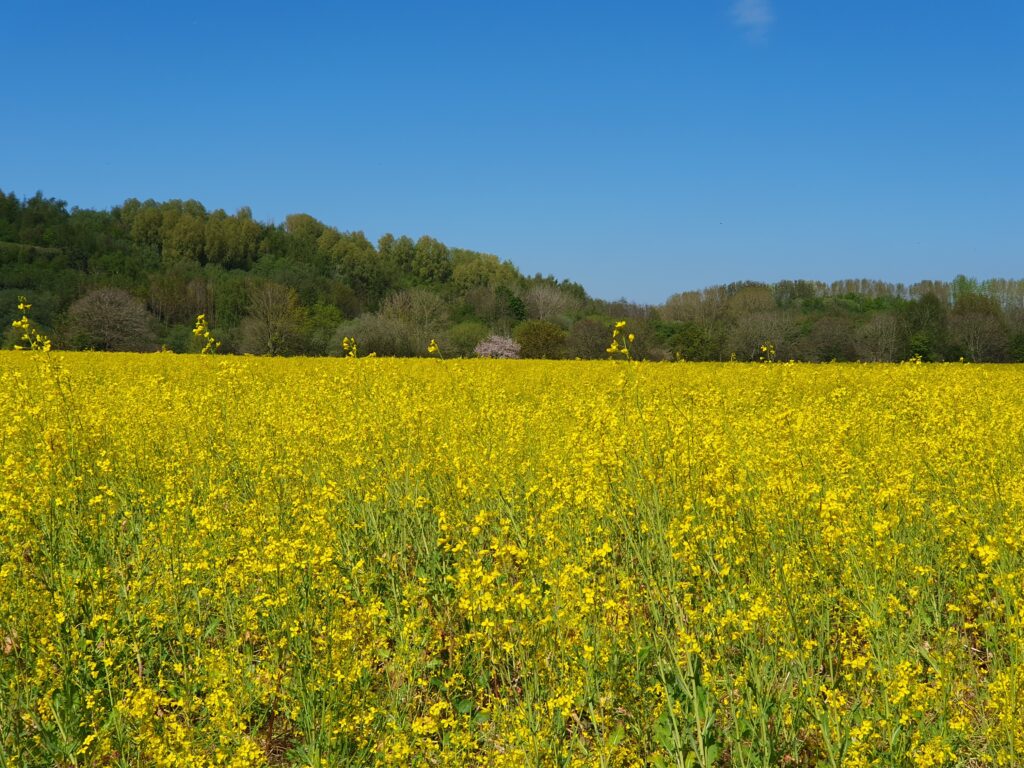
Until we came to the big canal. Looking west we could just about see the Thelwall Viaduct carrying the M6 over the MSC and the river Mersey
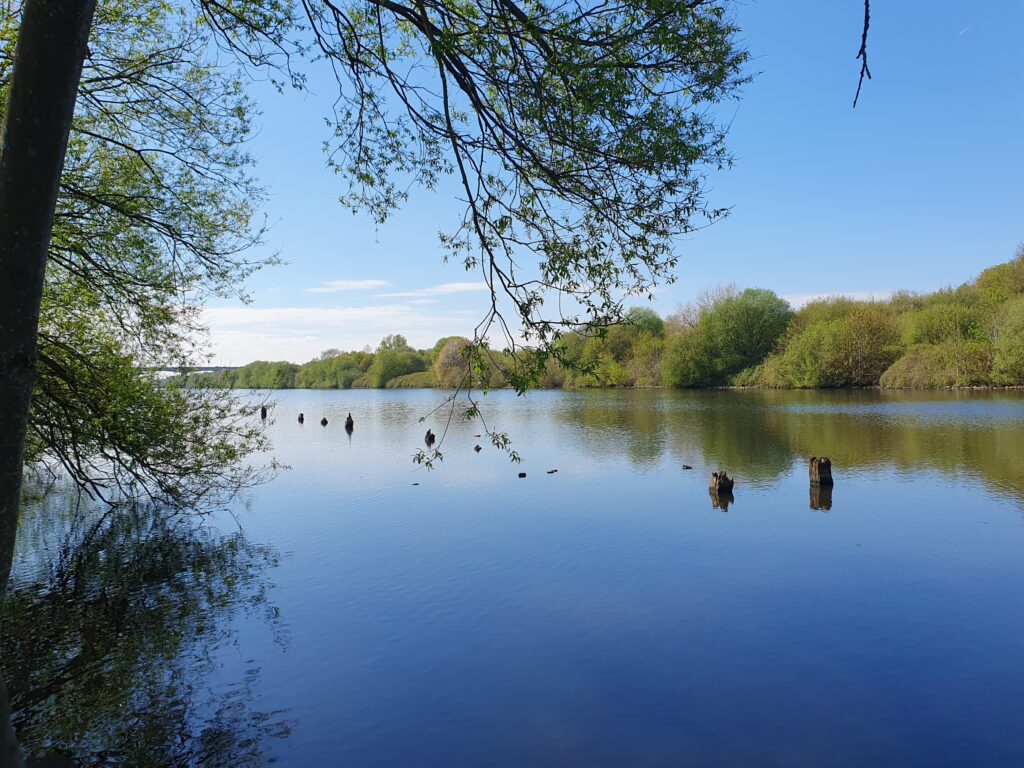
Looking to the left you can just about see the Thelwall viaduct

The Ship canal was opened in 1895 making Manchester the third busiest port in Britain, despite being 40 miles inland. In its heyday,  the canal carried up to 18million long tons of commercial cargo, but with the increasing size of container vessels the ecconomic viability of it dropped that to less than 7 million long tons by 2009. Peel Holdings who own it have plans to reinstate its use as an atlantic gateway in a major effort to reduce road congestion. The plan is to increase the number of containers shipped from 8000 in 2010 to 100,000 in 2030. Narrowboats and leisure craft are not encouraged but can use the ship canal for a hefty fee and some stringent regulations which include a strict no mooring policy Maximum length 600′ x beam 65′. Perhaps we could hitch a ride inside one of the containers, or perhaps we should just stick to the “proper” canals

Peel holdings also own the Bridgewater canal, and are responsible for repairing the breach just beyond Lymm. We had hoped to see the temporary coffer dam and see the progress being made, but it was quite a hike and last winding hole was  just beyond Lymm, so we winded and re-moored on the 14 day mooring where Eric took advantage of the hard edge to touch up the gunwale paint. (Which hadn’t been part of the PaintShed’s remit)
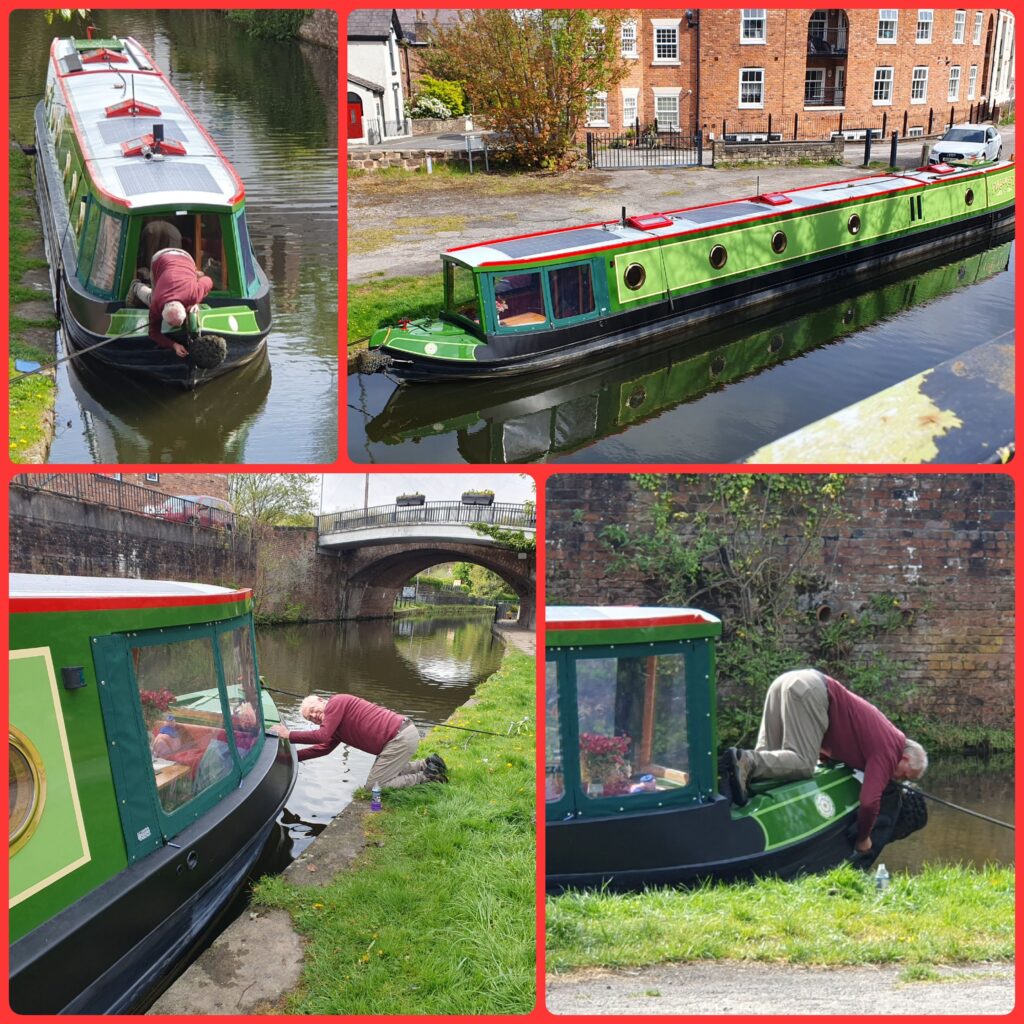
Before we set off back the way we’d come
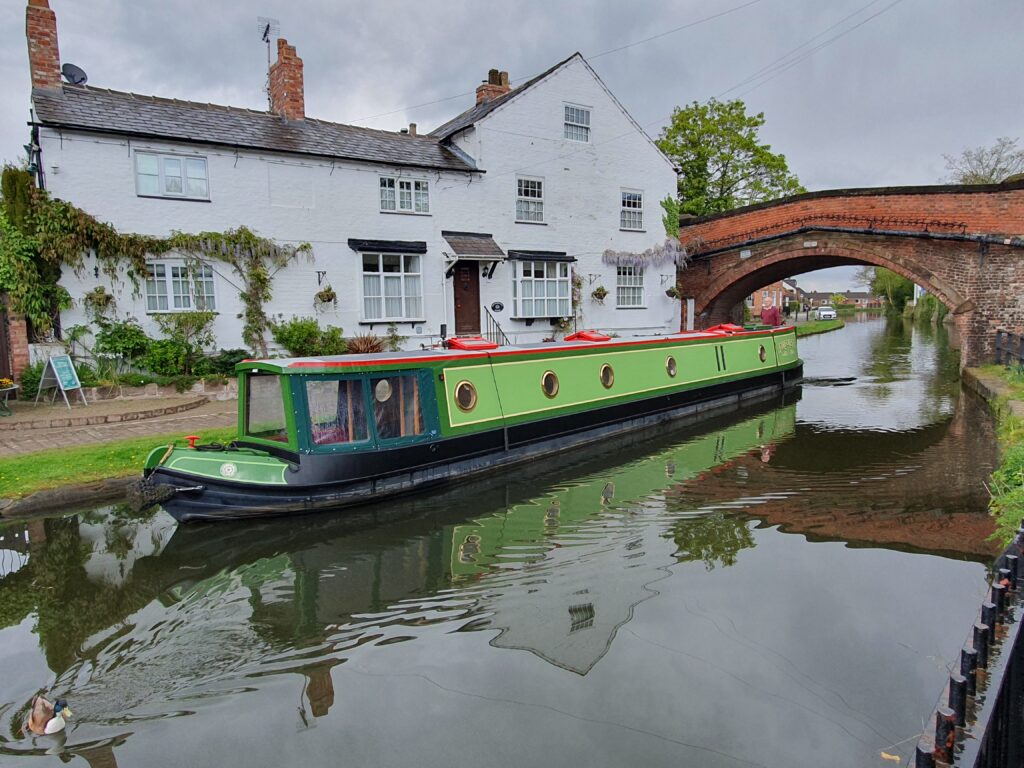
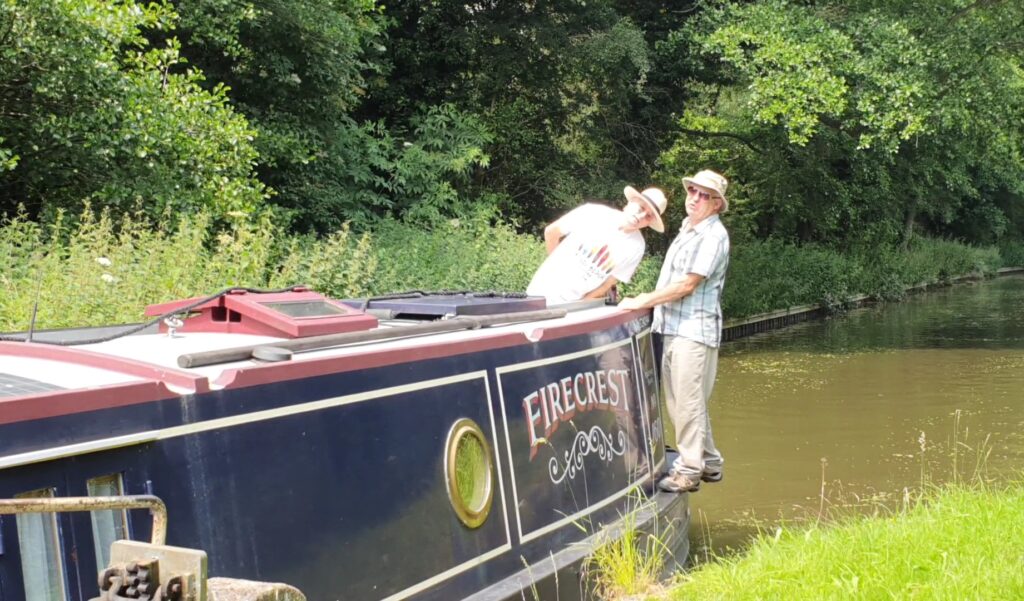
Beautiful house and beautiful boat

To the Ships Graveyard and Back

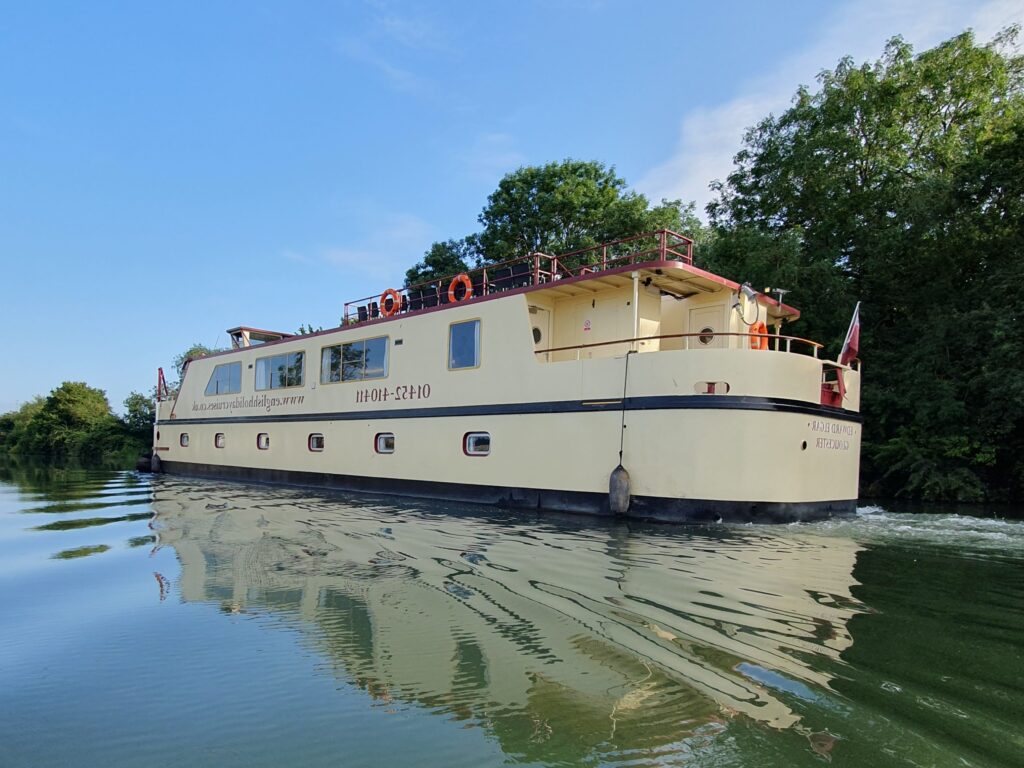
The Gloucester and Sharpness canal was completed in 1827 in order to provide a safer transit than the dangerous tidal Severn estuary. Although only 16.5 miles long it was once the deepest and broadest canal in the world. It was a major route for goods being brought in from overseas, there was an oil tanker delivering to Gloucester and in 1937 two submarines also made the journey inland. Commercial traffic more or less ceased by the mid 1980s but the largest inland hotel boat in UK, the Edward Elgar still uses it regularly.

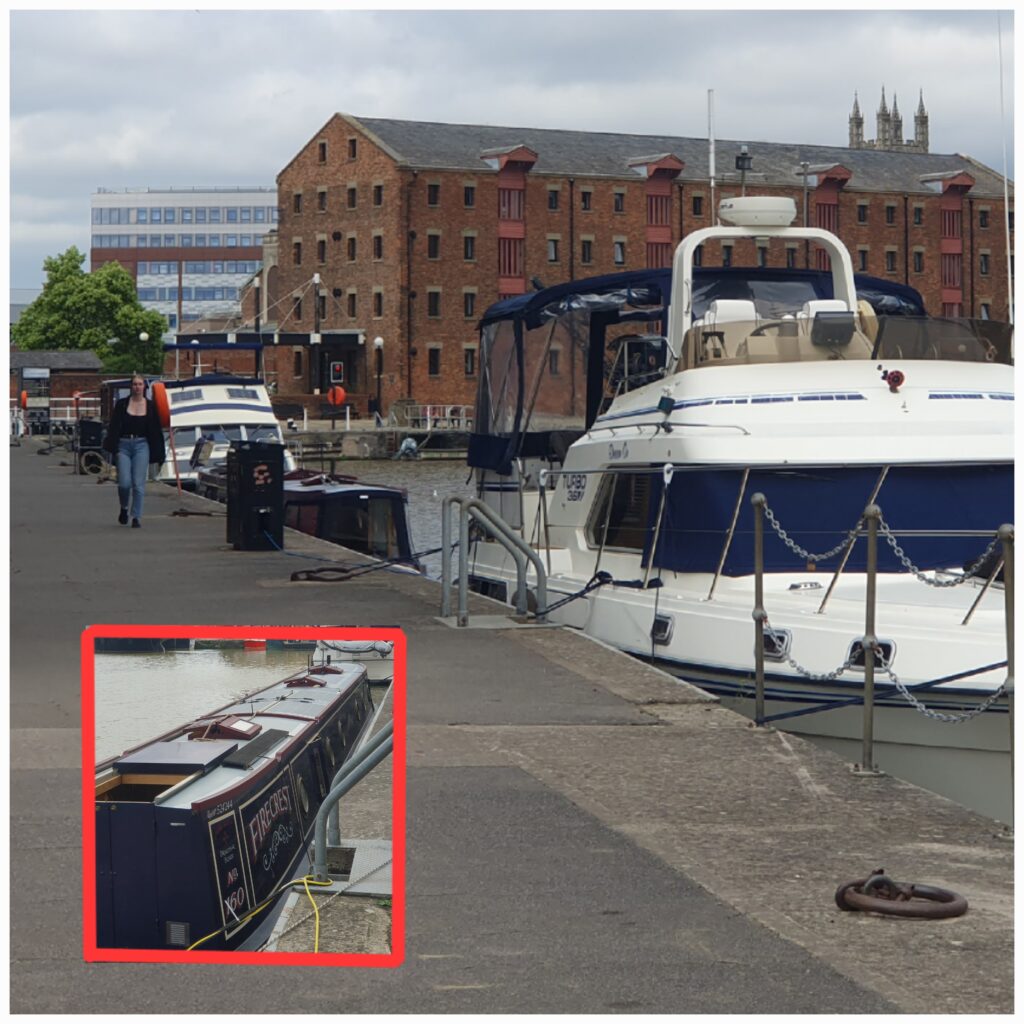
Just a bit bigger than Firecrest

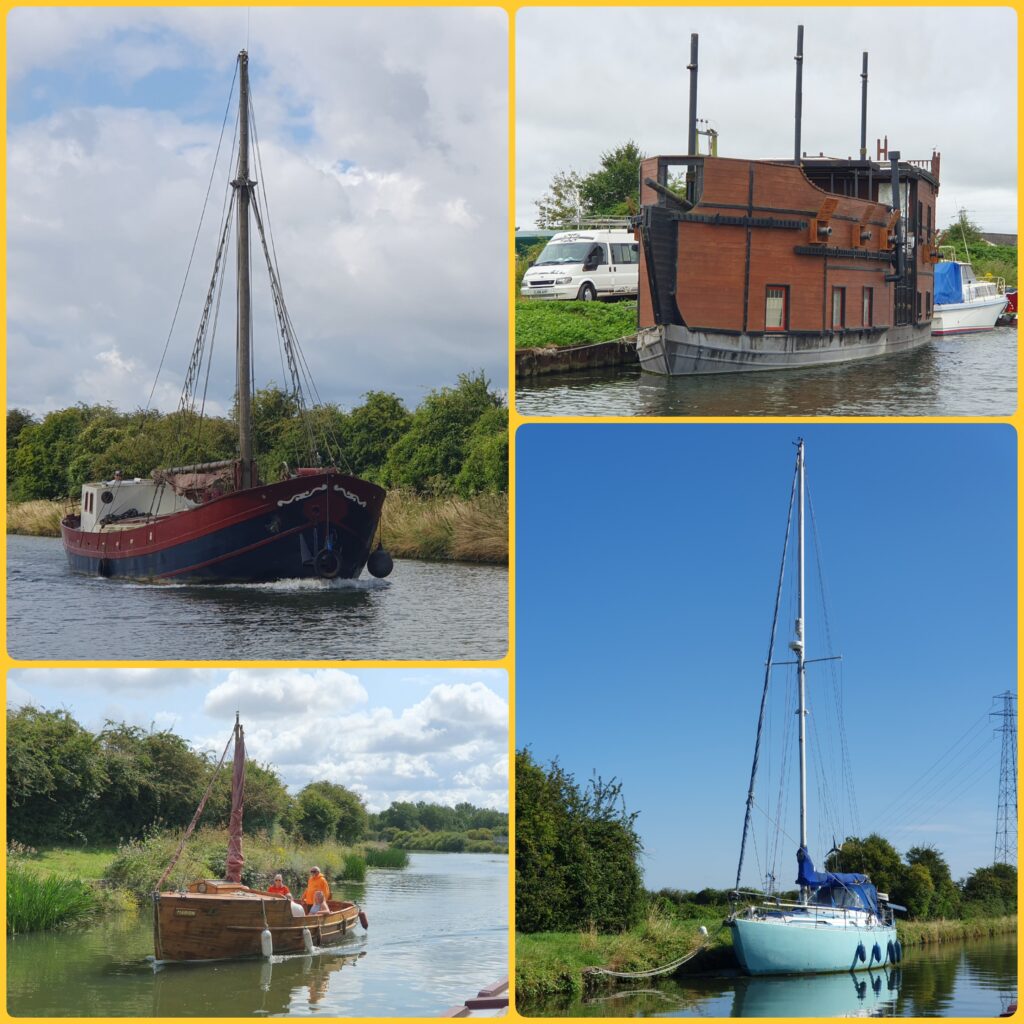
It’s a fascinating waterway for us with lots of unfamiliar boats making it home

Dutch Barges, Pirate Galleons, Yachts and little launches

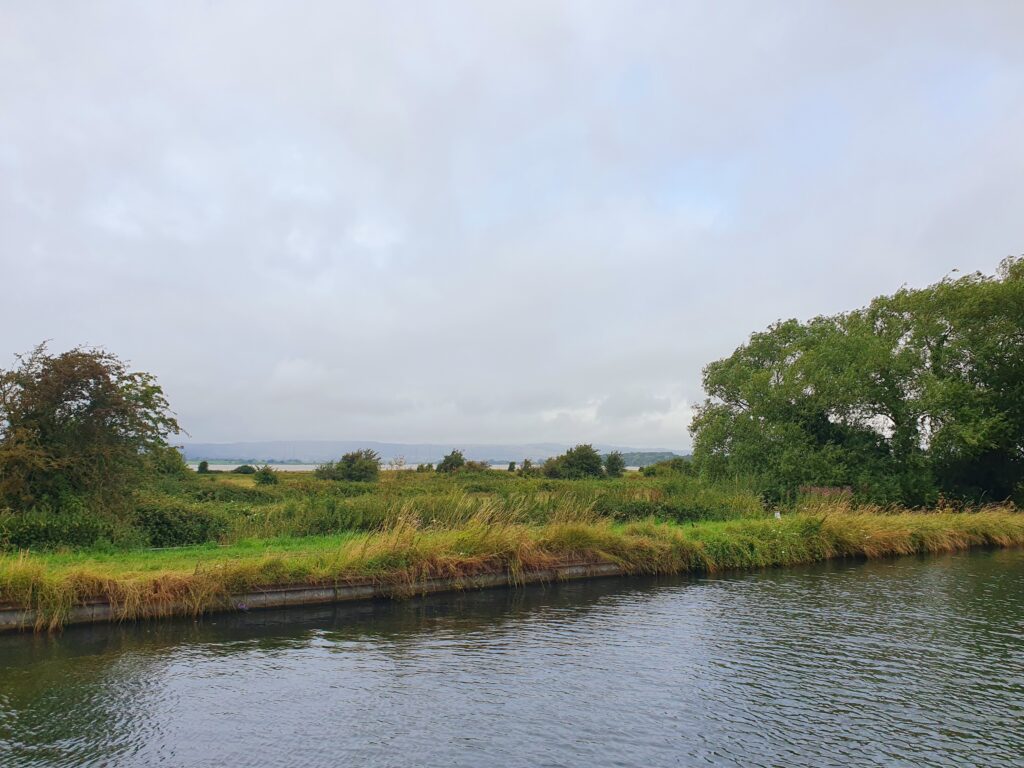
lot of the journey south you can look to the west and see the river running close to the canal, and the Welsh hills in the distance.

Glimpsing the big River


The proximity of the river and canal proved to be a constant source of worry, as any breach would have rendered the canal unusable. At Purton, there was little more than the width of the towpath between the two during a high spring tide. When the river bank collapsed in 1909 a plan was devised to create a tidal erosion barrier
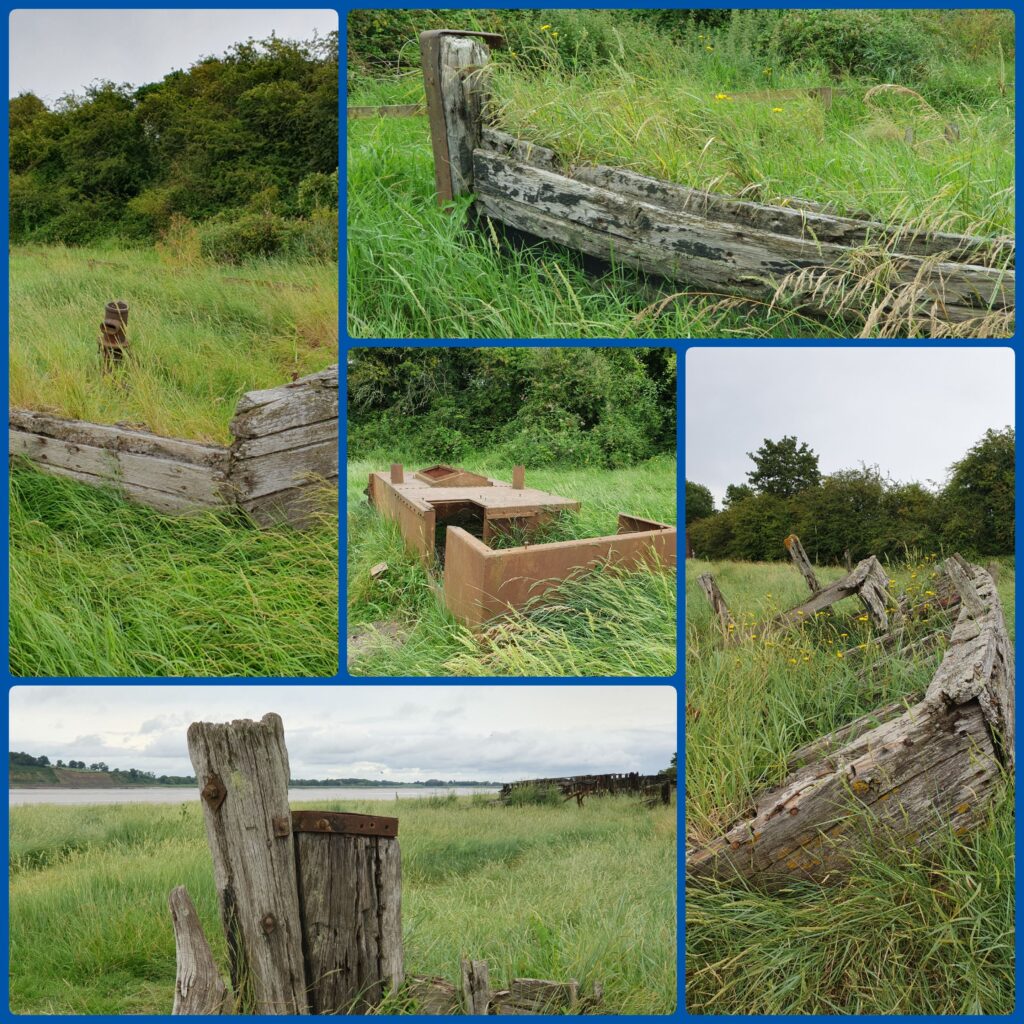
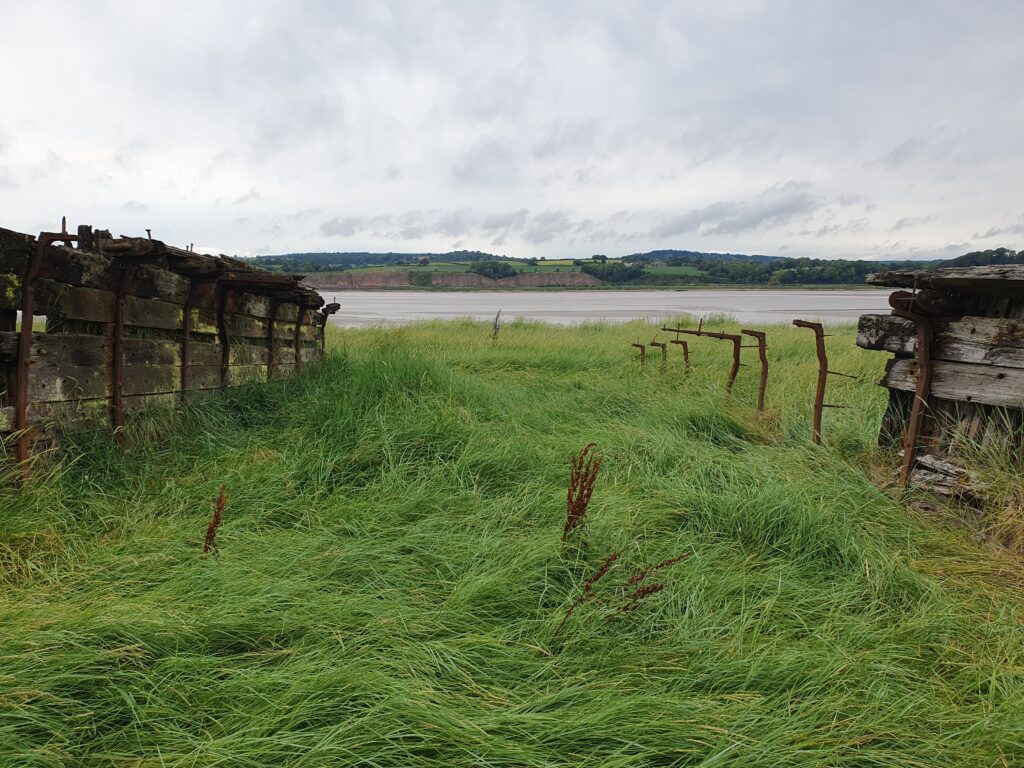
Between 1909 and 1965, ships and boats that had reached their sell by date were “hulked”  by towing them up to Sharpness then releasing them to be carried up the bank to Purton at high tide. They were then holed and left to fill up naturally with silt, much in the same way that stone groins protect coastal beaches.

Only visible at low tide

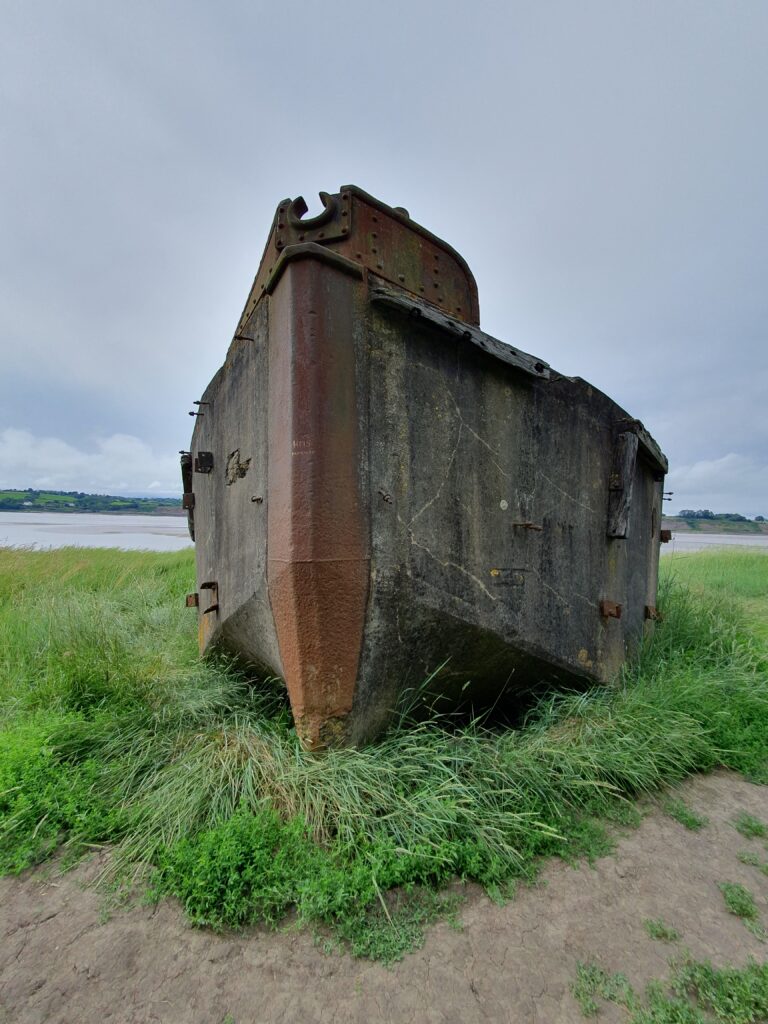
A total of 86 known vessels were hulked, including Severn Trows, Kennet Canal Barges, Schooners and some WWII ferrocement barges. 

Tread carefully cause you don’t know what’s lurking in that grass

Nowadays, the “Purton Hulks” would be preserved as historic boats as there are so few of them left.  Burocracy stands in the way of doing so now, as they are neither covered by the “Preservation of Wrecks” act because they aren’t on the sea bed and they aren’t classed as “Ancient Monuments” because they aren’t on land. Although since 1999 an enthusiastic team of Friends has been doing what they can to record what they can and the tales these ships can tell.  Our favourite story, was the Katherine Ellen a schooner that was impounded for gun running to Ireland in the 1920s. But the most impressive to look at now are the ferrocement barges

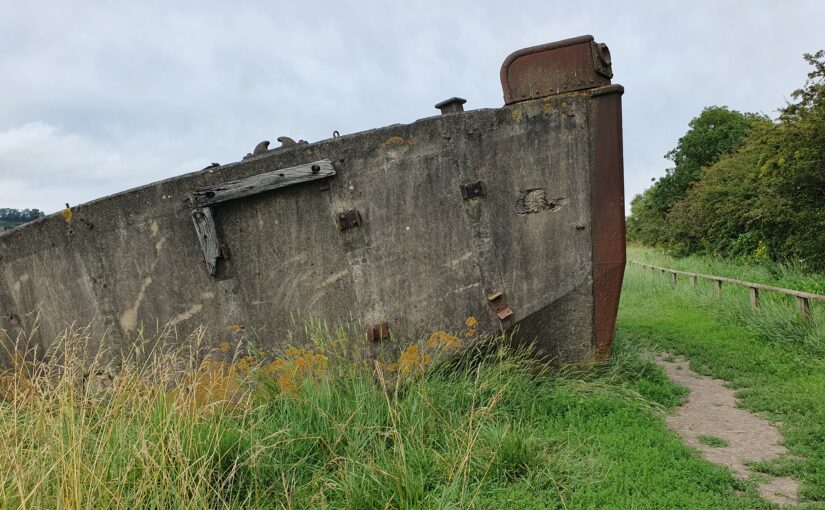
Hard to imagine a boat made of concrete

It really was a surreal and quite emotional sight seeing all these boats at what is the largest Ships Graveyard in Britain. It’s not the safest place to walk, around because there are metal ribs and sink holes camouflaged by the grass, but nothing that common sense and respect can’t handle.

A poignant image that such a splendid boat will rot away to nothing in time.


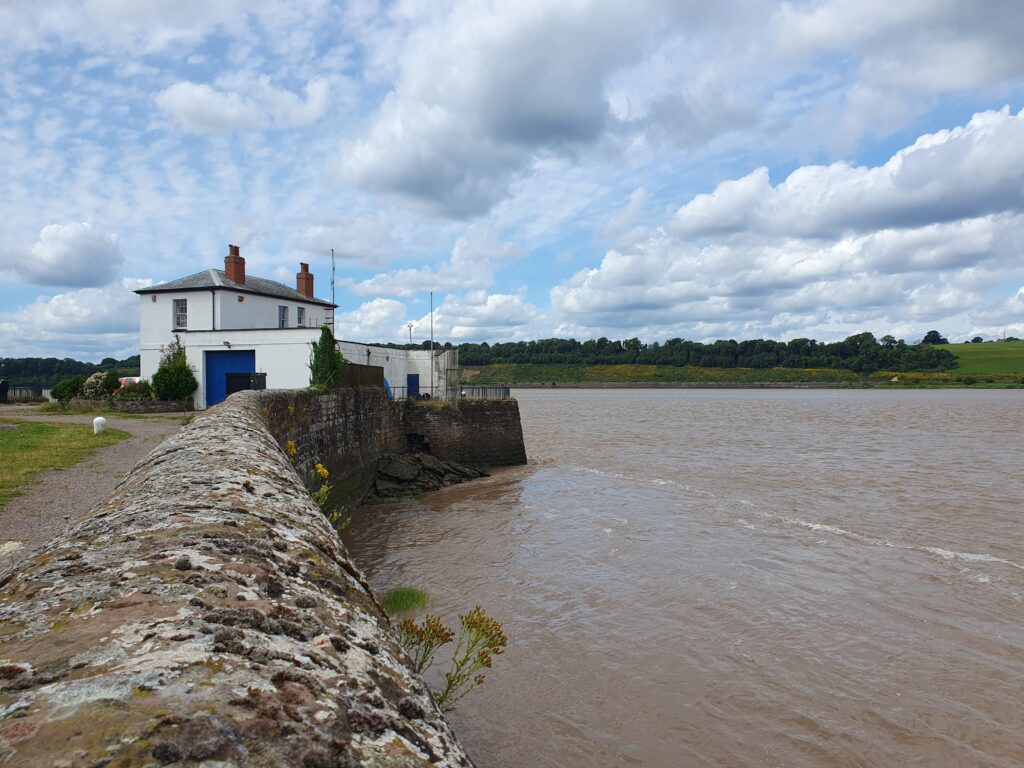
Sad though it is that most of them are now lost, they have served their purpose and the canal is safe. For most narrowboaters, Sharpness is the end of the line. You can walk along to the disused lock and stand in awe as the tide swirls around.

Now that’s a lockies cottage with a view

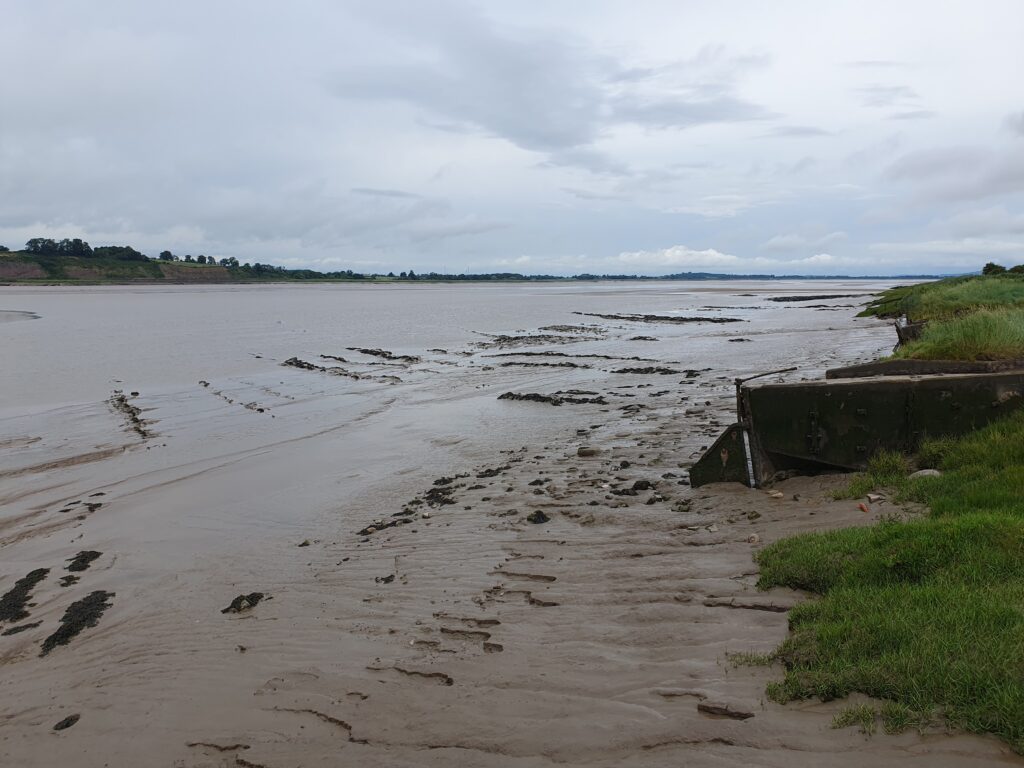
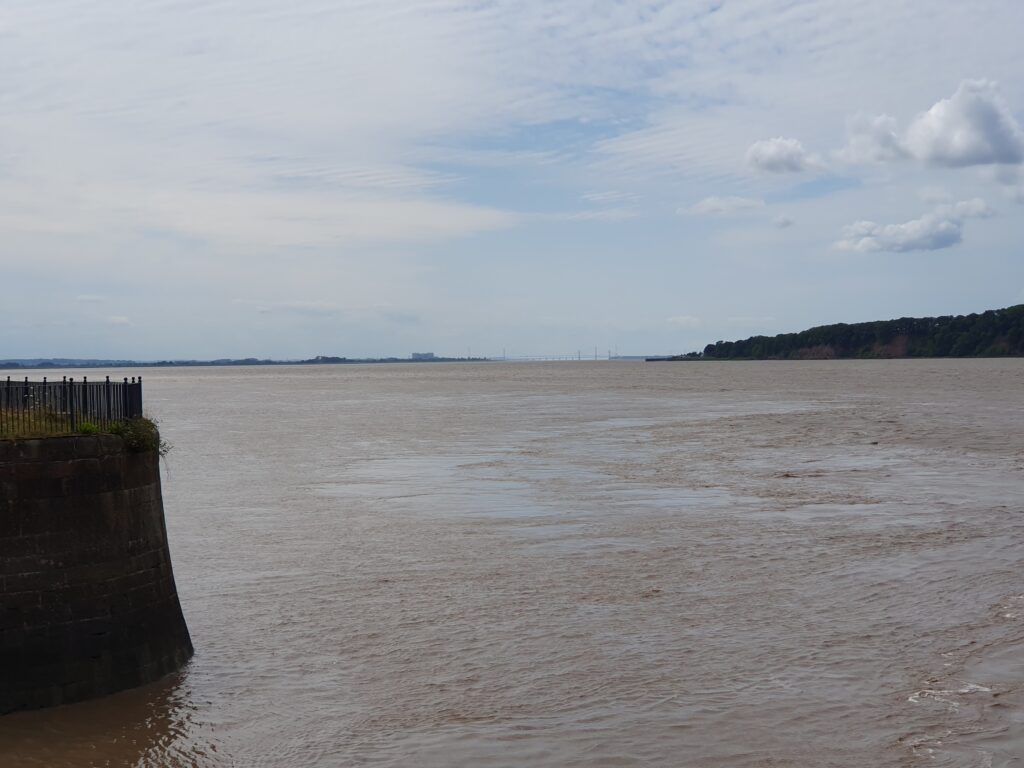
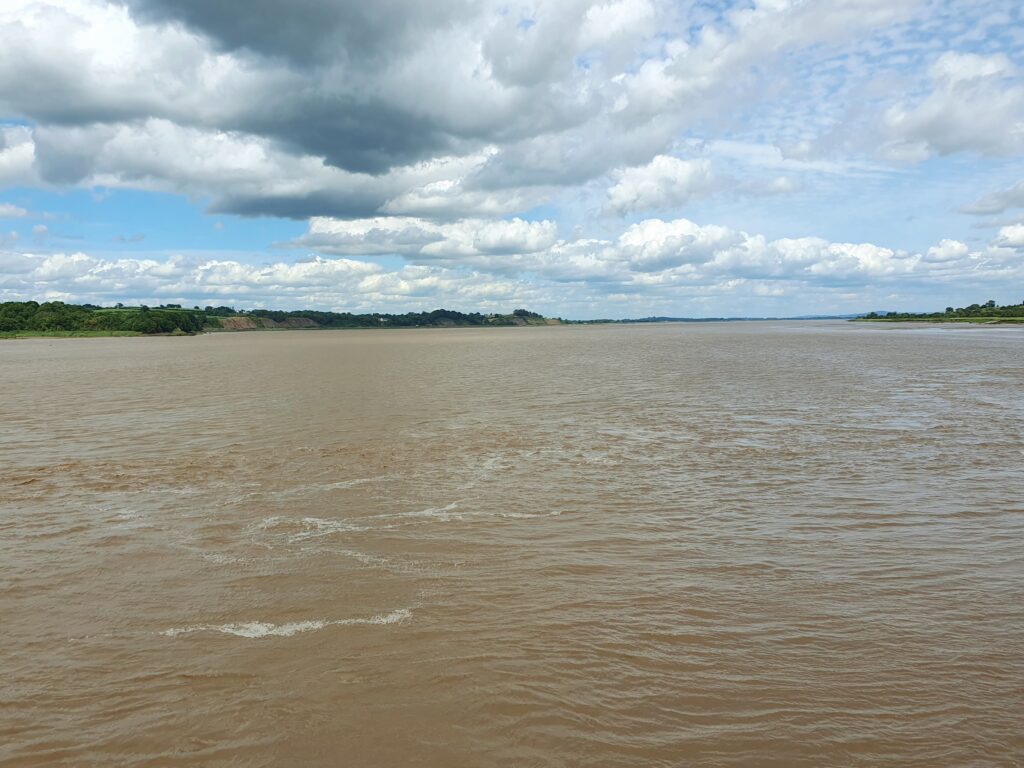
And there is a tidal basin and dock yard which provides access onto the river. Some intrepid travellers, engage a pilot to take their narrowboat out onto the estuary and down to Bristol, like our friend Jo did this summer, but not for us. The currents and tides can be legendary at certain times of the year when surfers ride the Severn Bore. We were quite disappointed not to have arrived when the tide was more dramatic. But even so the size of the estuary is awesome, you can just about see the severn bridges in the distance.

Looking to the south with the Severn Bridges in the distance
Looking inland


We spent a week, there and back on the Gloucester and Sharpness canal. It was a novel change, the channel is deep and wide so highly efficient on fuel, the variety of boats is interesting and the mooring is rural and peaceful. There’s no locks to pass through and all the swing bridges are operated for you. It’s not somewhere we will rush back to because it’s so far off the main system, but we’d strongly recommend it as a short trip.

Just stick to the canal if you want calm water

Gloucester

It’s always a mix of emotions arriving somewhere new. An exciting adventure, somewhere new to explore, would we find Dr Fosters puddle….

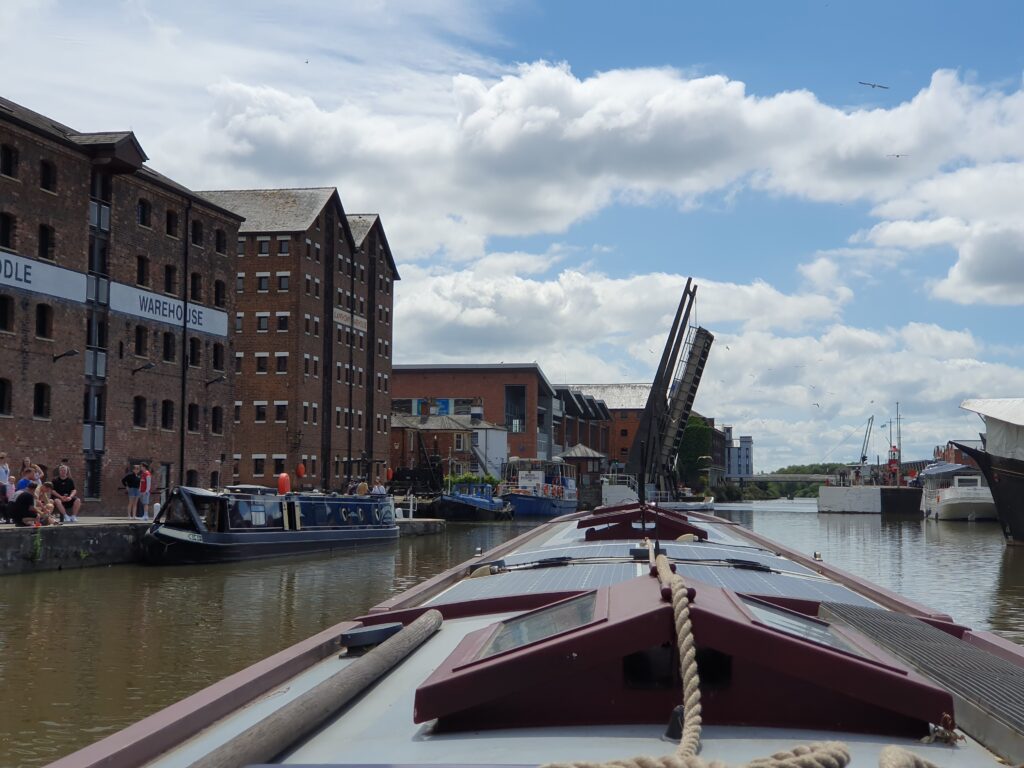
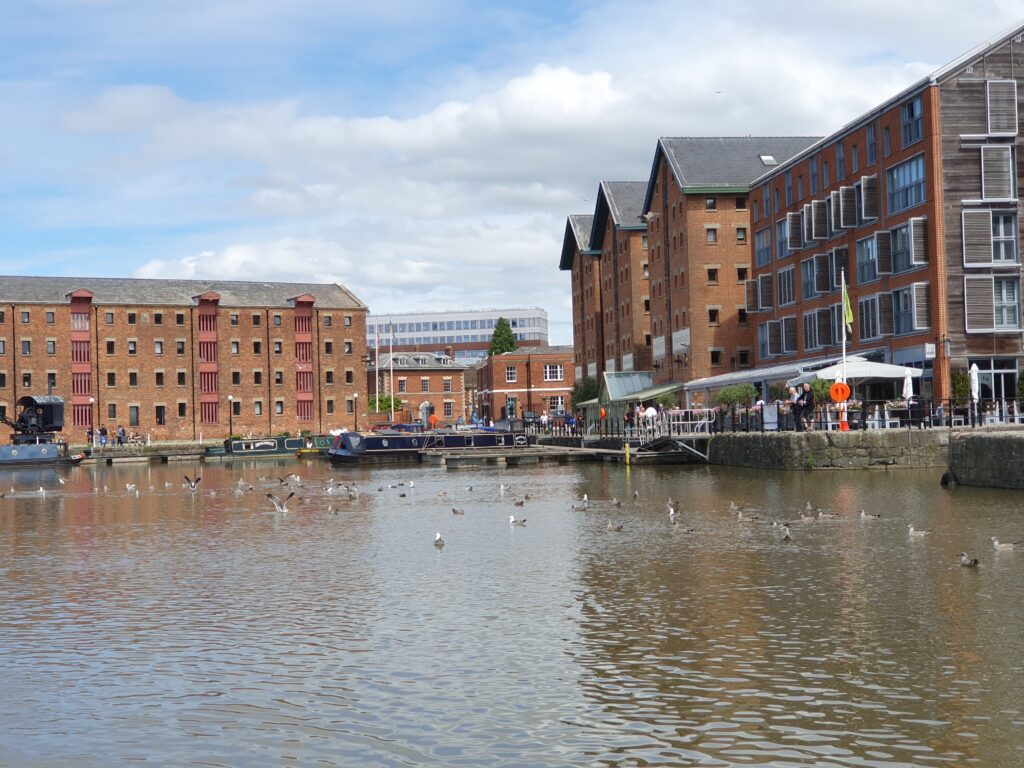
Arriving in Gloucester dock, looking towards the canal


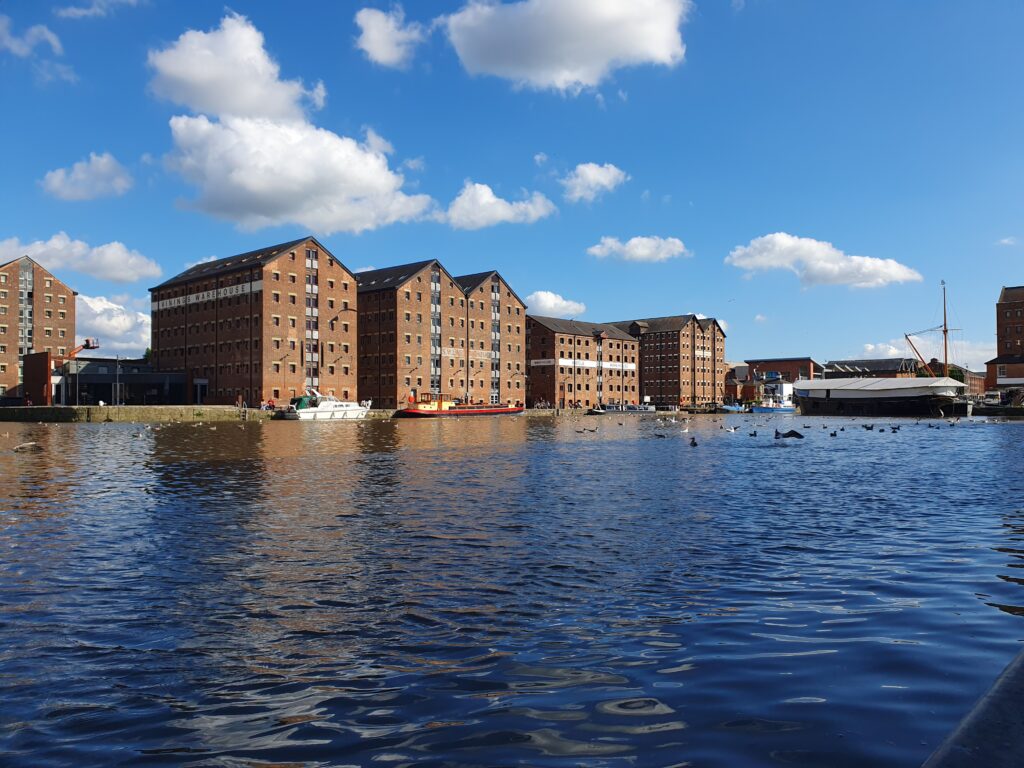
We’d just completed a journey down the tidal section of the River Severn, albeit a very tame tide but still a big river for our little canal boat.  We were faced with this huge space, surrounded by 18th century warehouses and a choice of mooring.

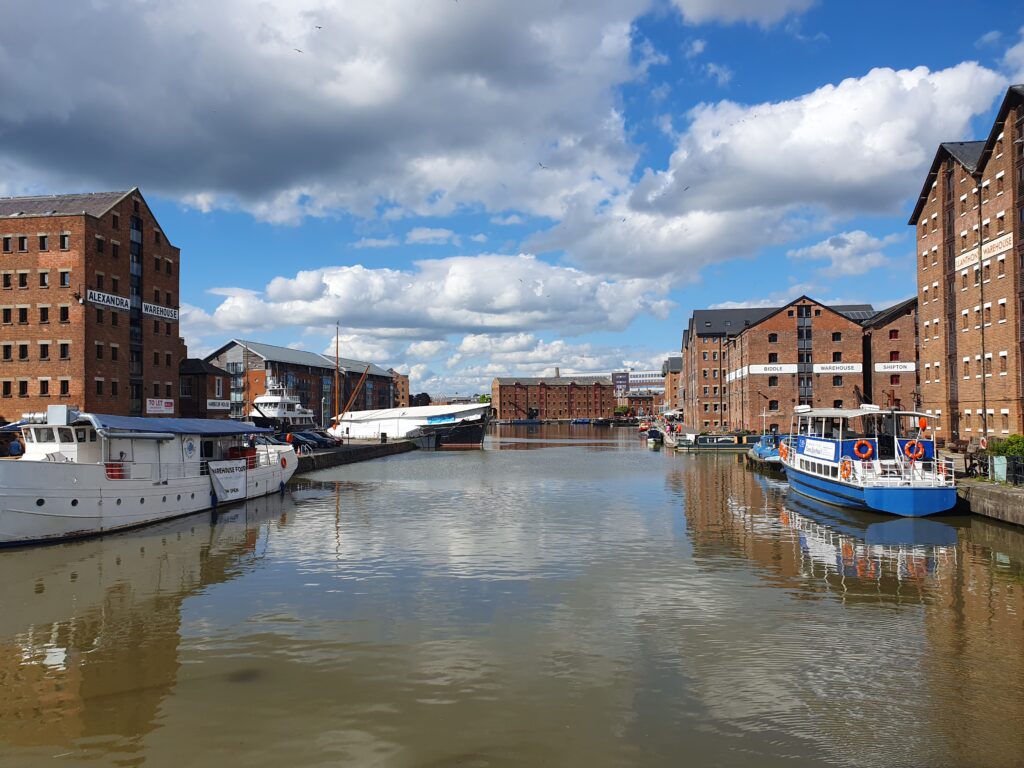
Looking back towards the lock entrance


But we’d heard that Gloucester had some extra magic awaiting Firecrest – electric points. So our first goal was to recharge our batteries. It’s never a given that the shore power advertised by CRT will be available and in working order, or for that matter that we would be able to access one of the several payment methods used along the cut. And Gloucester was no exception- you need a prepaid card, which are sold at the museum, which is closed on a Sunday, the day we arrived. Luckily we had one squirreled away from a trip up the Trent in 2018. Once we’d hooked up, between the big boys, we set off to explore.

Yes, we’re down there somewhere, getting on and off the boat was somewhat undignified, but it entertained the passers by.

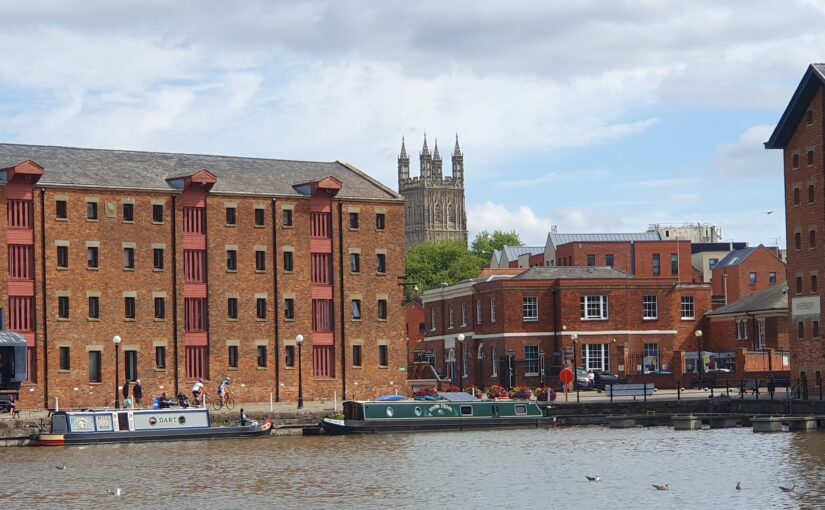
The dock  complex has undergone extensive gentrification since it became superfluous to requirements for the transhipment of goods.

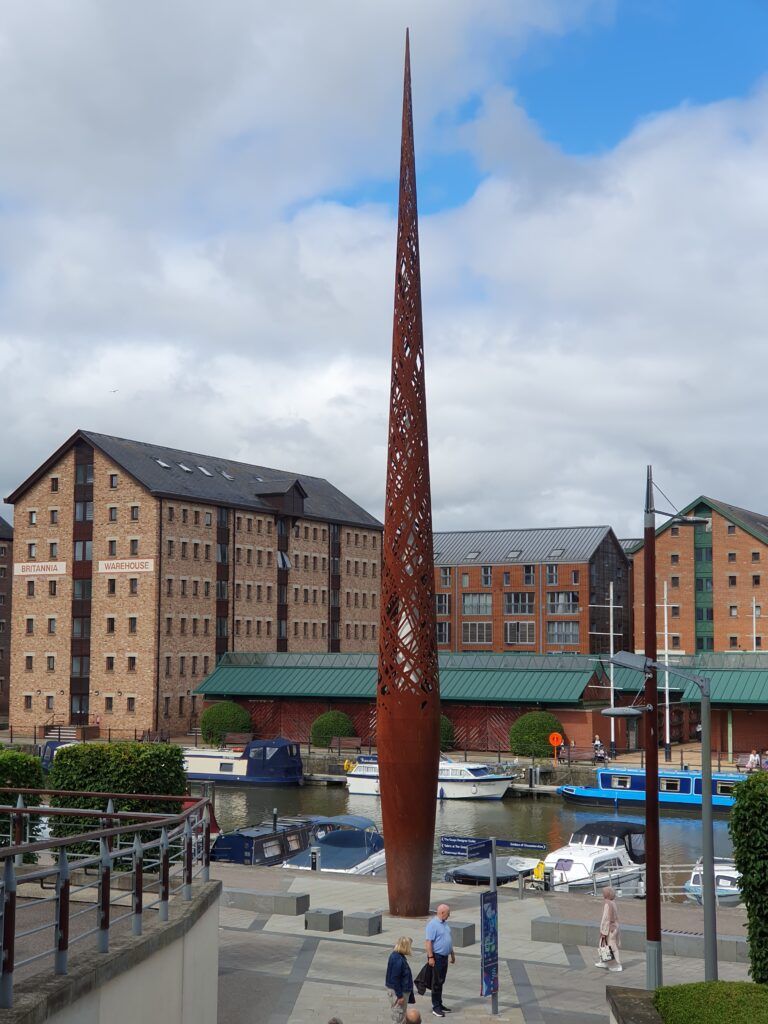
This sculture is known as the candle.

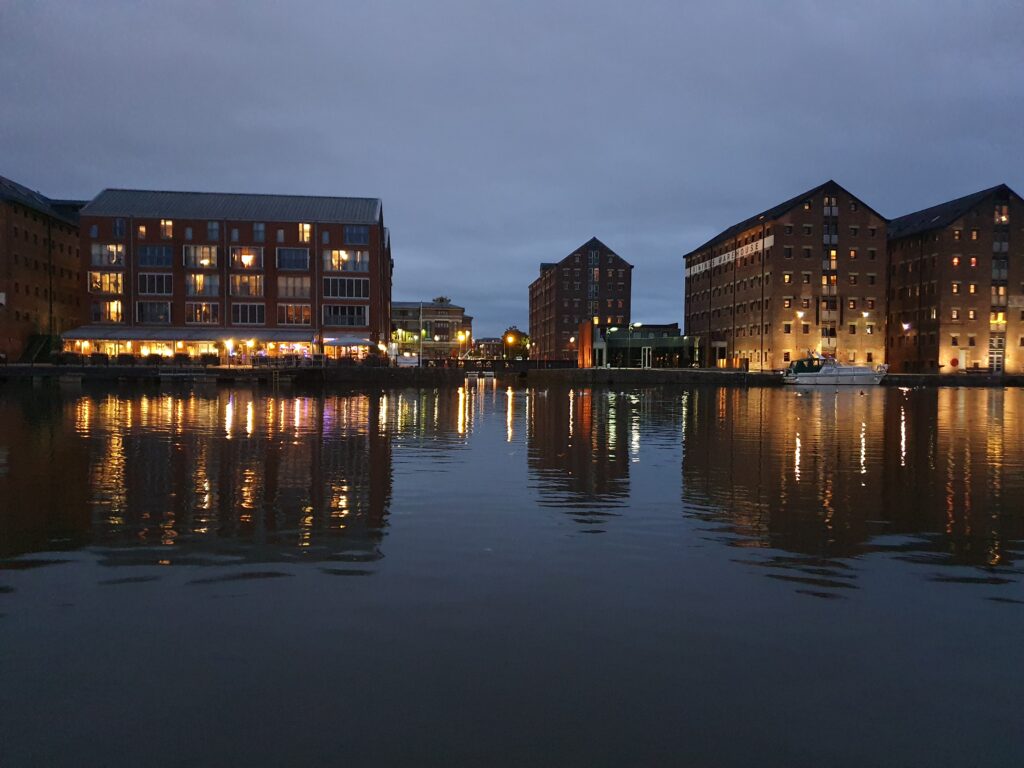
The warehouses that once held corn from Ireland  salt from Worcestershire and timber from Canada have been restored and now hold a mixture of vibrant restaurants and rather nice apartments.

We wondered if the seagulls outnumber the people


That look wonderful at night


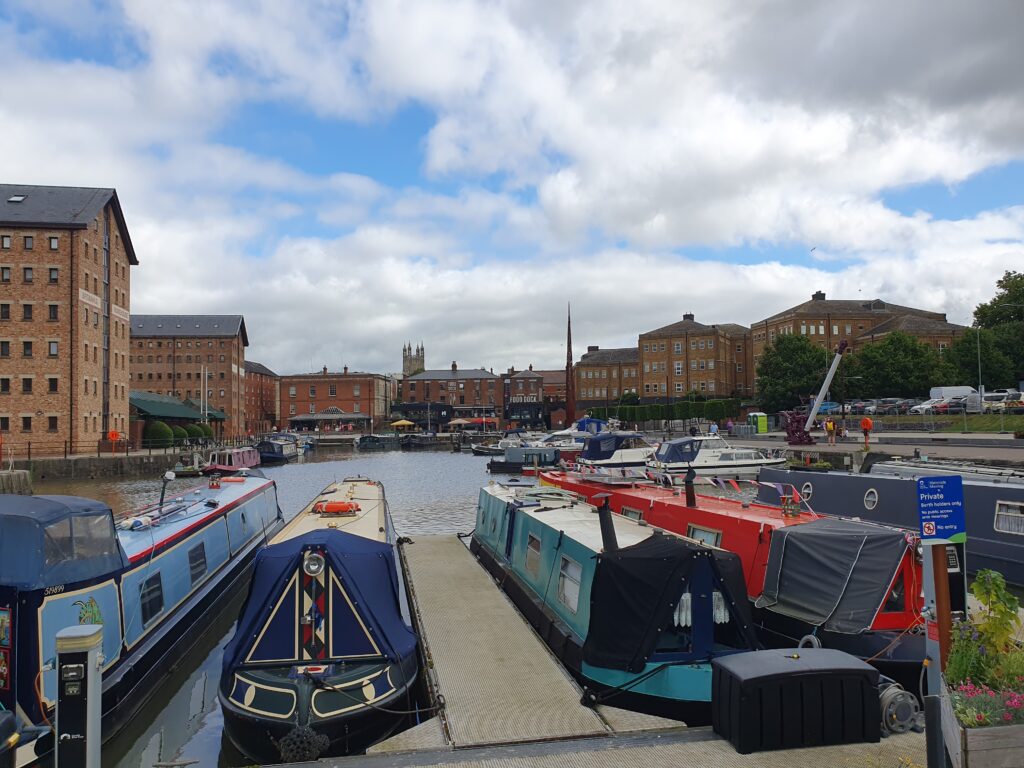
One of the smaller docks has become a residential marina


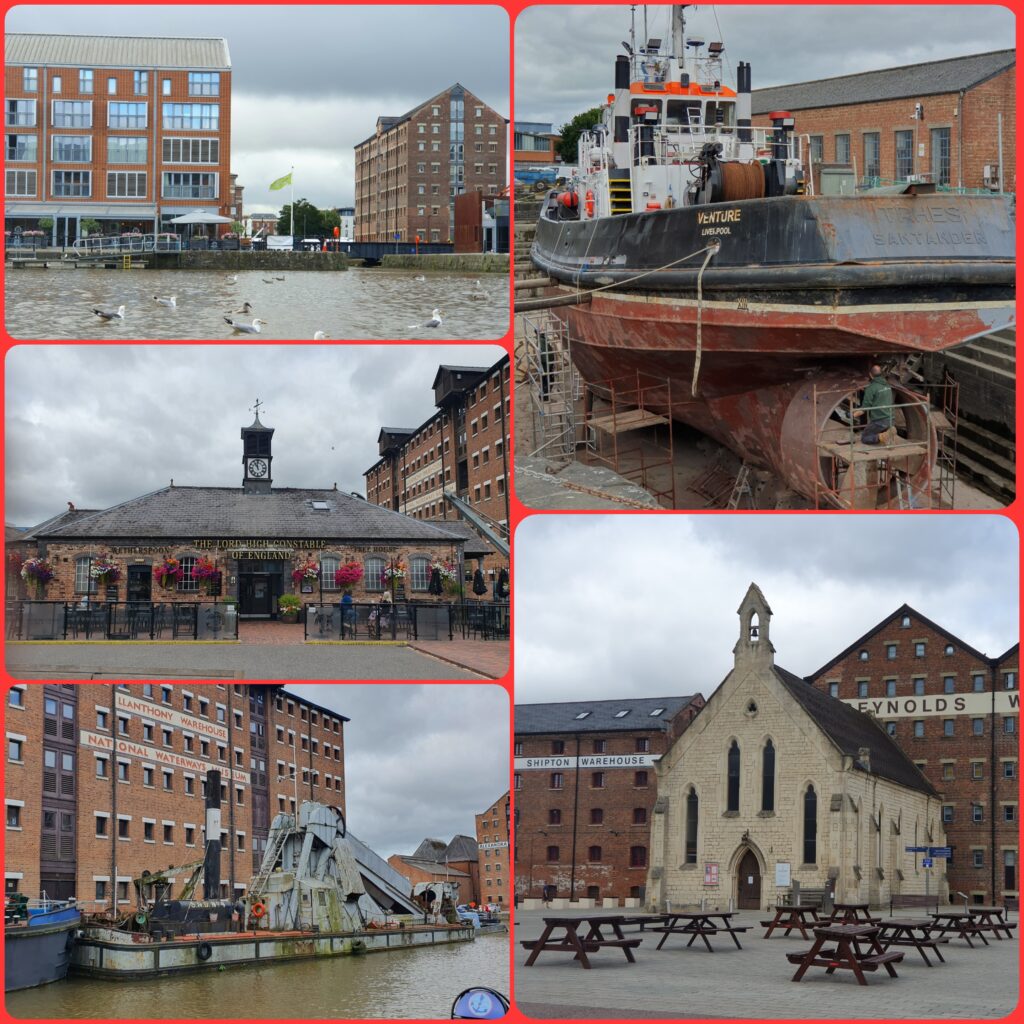
And there’s still areas for commercial dockyard enterprises with dry docks and mooring for historic boats

It reminded us of Liverpool’s Albert Dock complex and ironically the warehouses were used to film the Liverpool based Onedin Line tv series.


Mooring in the dock is free for the first 48 hours and although we enquired about staying longer, no one seemed to know who we could pay or how much an extra night would be. It seems a shame that so few boats were moored there.

We explored the town centre, but with a few exceptions,

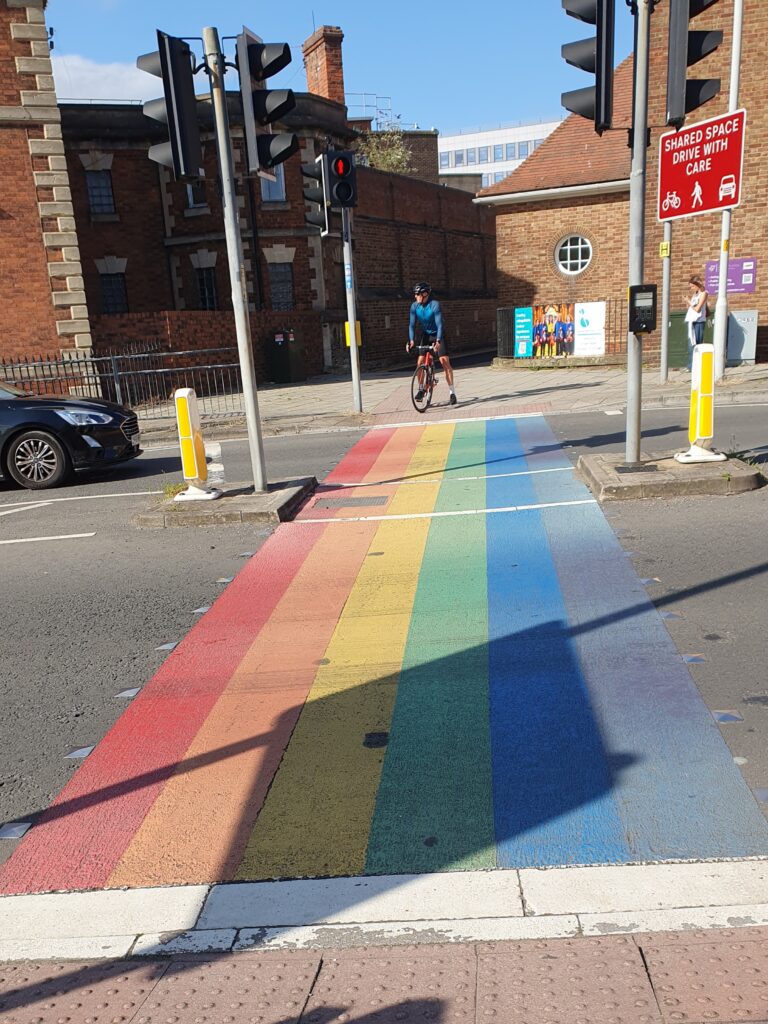
There’s a growing number of rainbow crossings although they aren’t without controversy


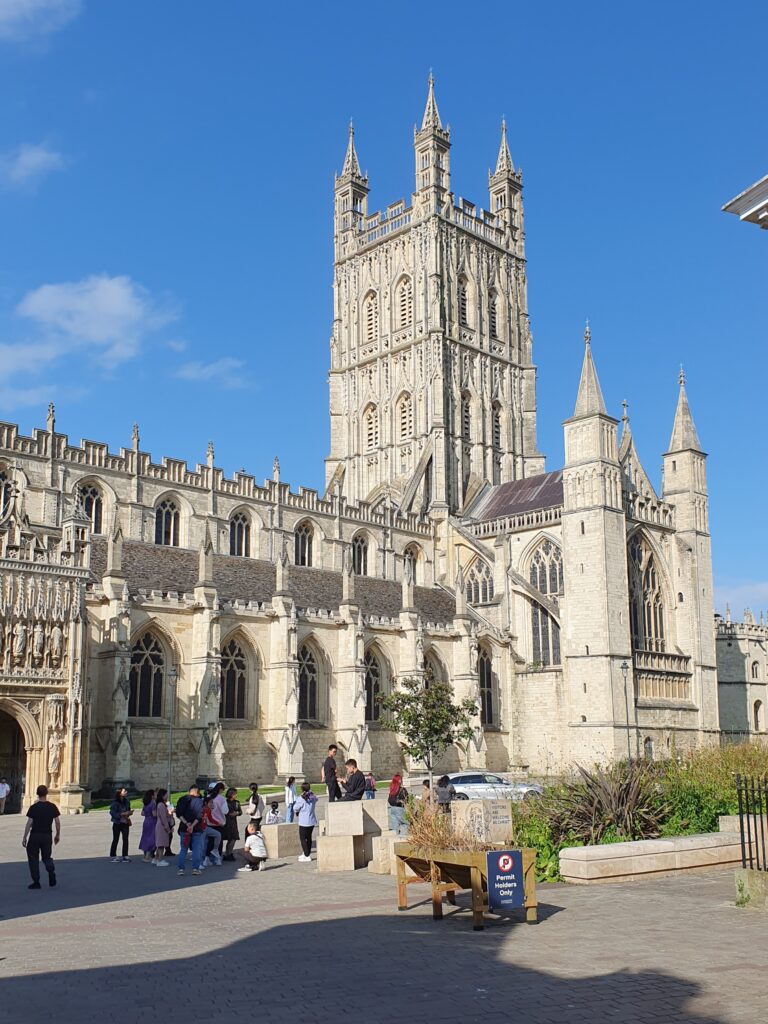
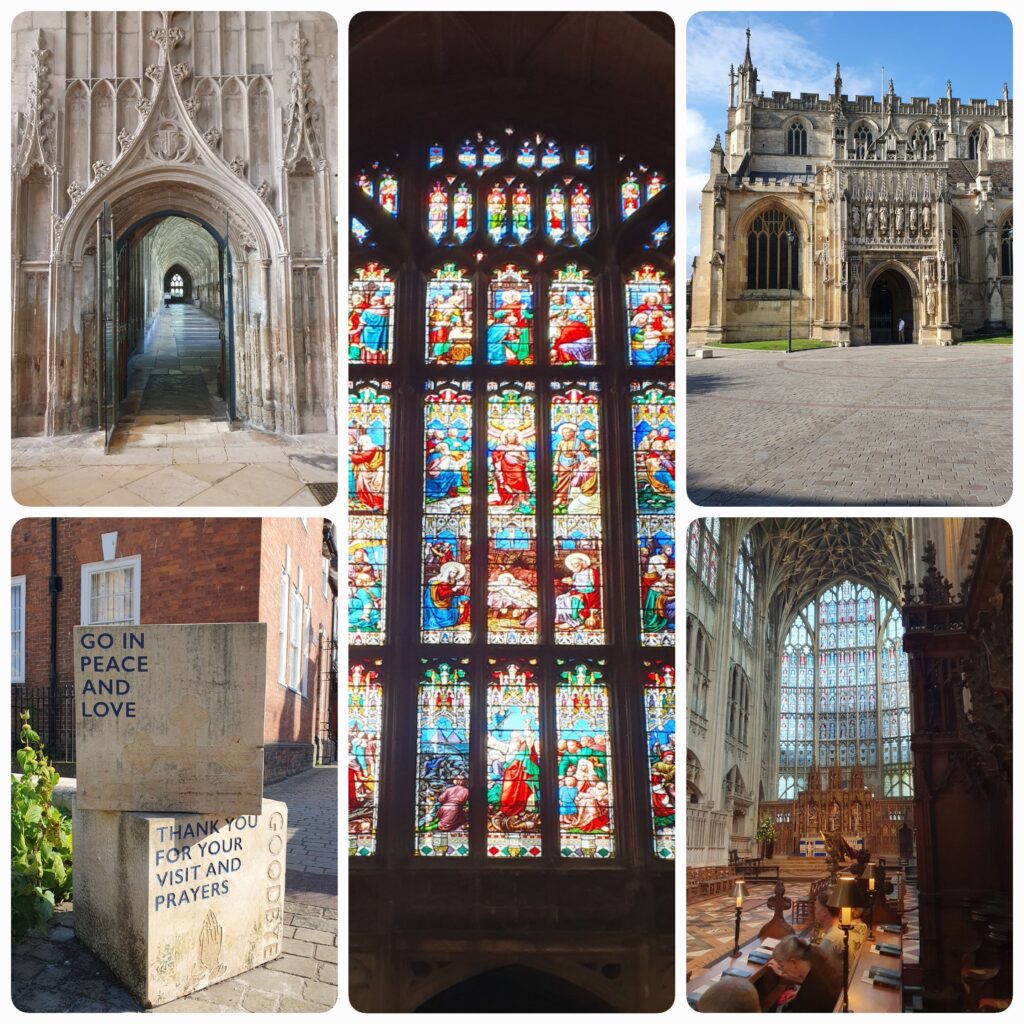
It all felt a bit modern and soulless although the cathedral complex was stunning.

Gloucester cathedral


It didn’t surprise us to recognise it as part of Harry Potter’s Hogwarts


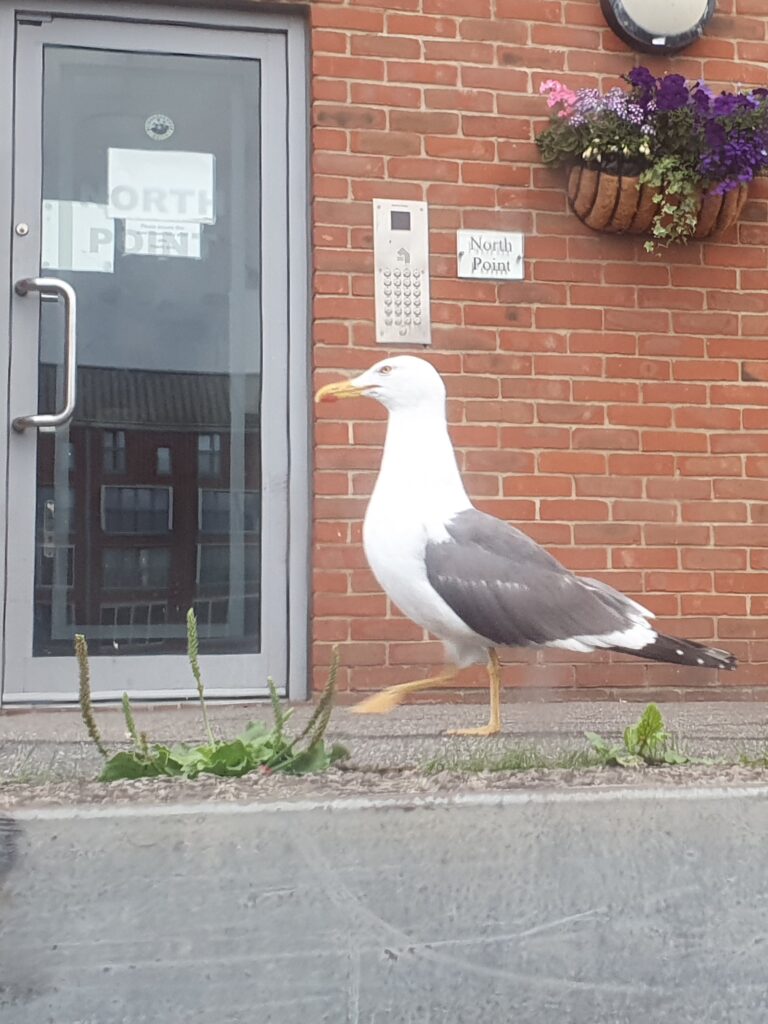
Luckily we didn’t see any Basilisks, but the giant seagulls strutting their stuff next to out boat were a bit scary.

Well that puts it all in perspective


We would have liked a few more days here cause I’m sure there’s a lot more to see than just the modern city centre. But next stop the Gloucester and Sharpness canal.

Crossing the river in Evesham

Workman Gardens in Evesham is a super place to moor,

The End of the Wall at Workman Gardens

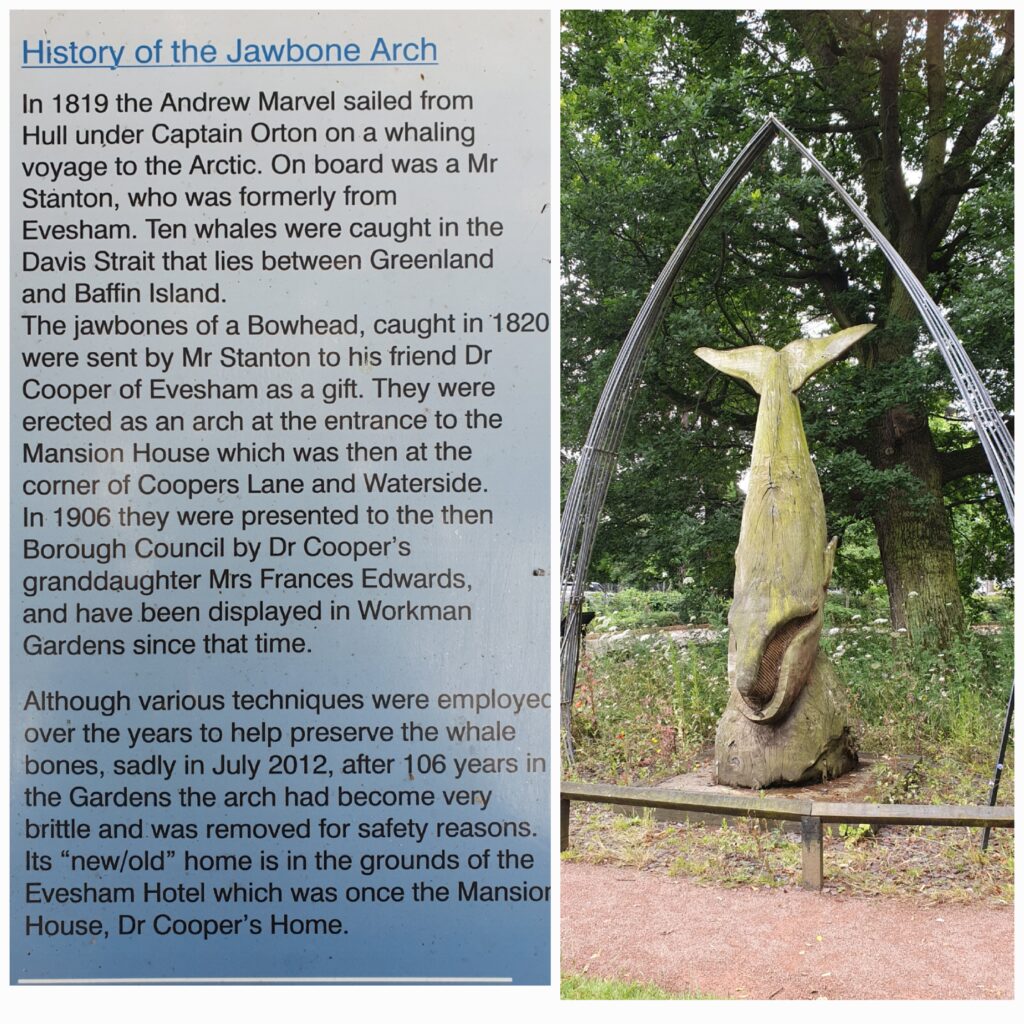
lots to see and nice and close to walk over the bridge into town. I didnt expect to see a whale in Evesham, but there it was in the gardens, albeit a scaled down sculpture.


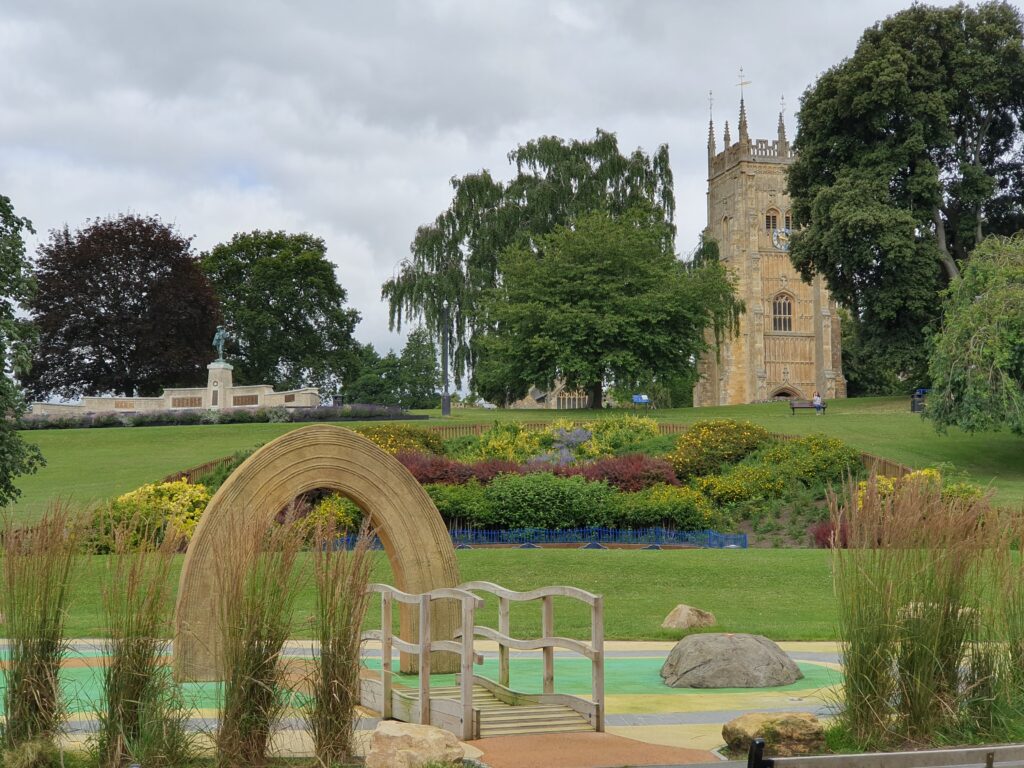
Crossing over the river into the town, we found ourselves in the Abbey gardens. The Norman Abbey was built in the early 700s, it was huge, almost a town in its own rights, not only a place of worship but providing employment, health care and education and a reason for Evesham to thrive. Shamefully, it was razed to the ground during the 16th century dissolution of the monasteries, but the newly built clock tower was saved.


There’s some fascinating history in Evesham, most famously the Battle of Evesham where Simon De Montfort was fighting for democracy, in the belief that the common people would be less resistant to paying taxes if they had representatives negotiating on their behalf, as opposed to the king, (Bad King John at the time) just helped himself.

Lots of interesting little places to explore in Evesham


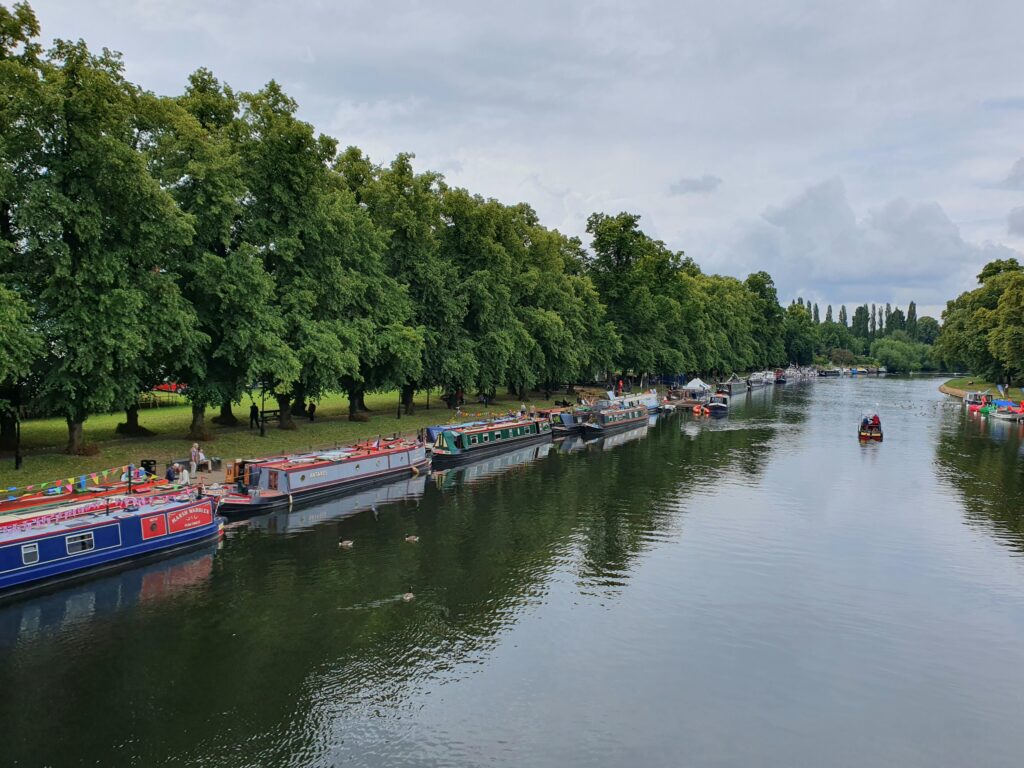
We’d been leap frogging down the River Avon with some lovely narrowboats all chug chugging their way to the river festival and a Russell Newby convention (big traditional thud thud engines, that are beautifully maintained and usually housed in an engine room for ventilation, ) despite Eric having a beer belly, he doesn’t smoke a pipe, have a beard or keep his brass polished so we moored at the opposite end of the gardens so as not to draw too much attention. But it looked like we were going to be in for a lively weekend

looking downstream, Firecrest is moored just where the River disappears from view


As more and more boats appeared, signs went up on the towpath saying “closed from 9am Saturday morning”  We were a bit confused by this, what was closed? There was reserved mooring notices at one end for the RN boats, but nothing to indicate if it was the towpath, park or the mooring that was closed. And none of the organisers seemed to be able to give us an answer. Feeling a bit disgruntled we untied the ropes and cruised on, luckily only as far as the pontoon 200m away. And we soon realised why as the cruisers emerged from their marinas to join the party. We were treated to an array of boats in all shapes and sizes

Little and large

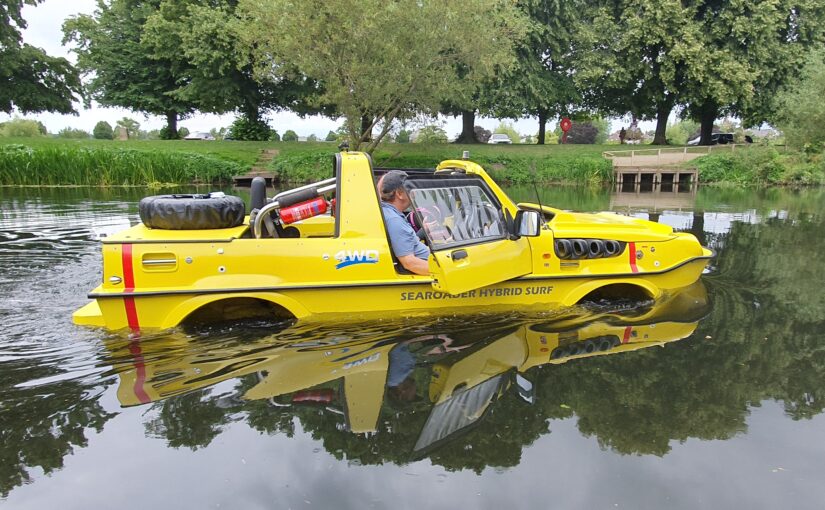
But the best one had to be the Dutton amphibious car enjoying a trip out.


Despite big expectations that the River Festival would be fun to watch, it turned out to be a bit of a damp squib, all the action took place on the short frontage of the gardens so we hardly saw any of it. At least the steam boats were all fired up when they returned home late afternoon


I stayed up way beyond my bedtime to watch the fireworks only to realise too late that the trees were in the way and I should have been on the other side of the river.

Still, we’d had a nice few days in Evesham and been visited by friends who live locally. Look out Pershore, we’re coming your way.

Staying in Stratford

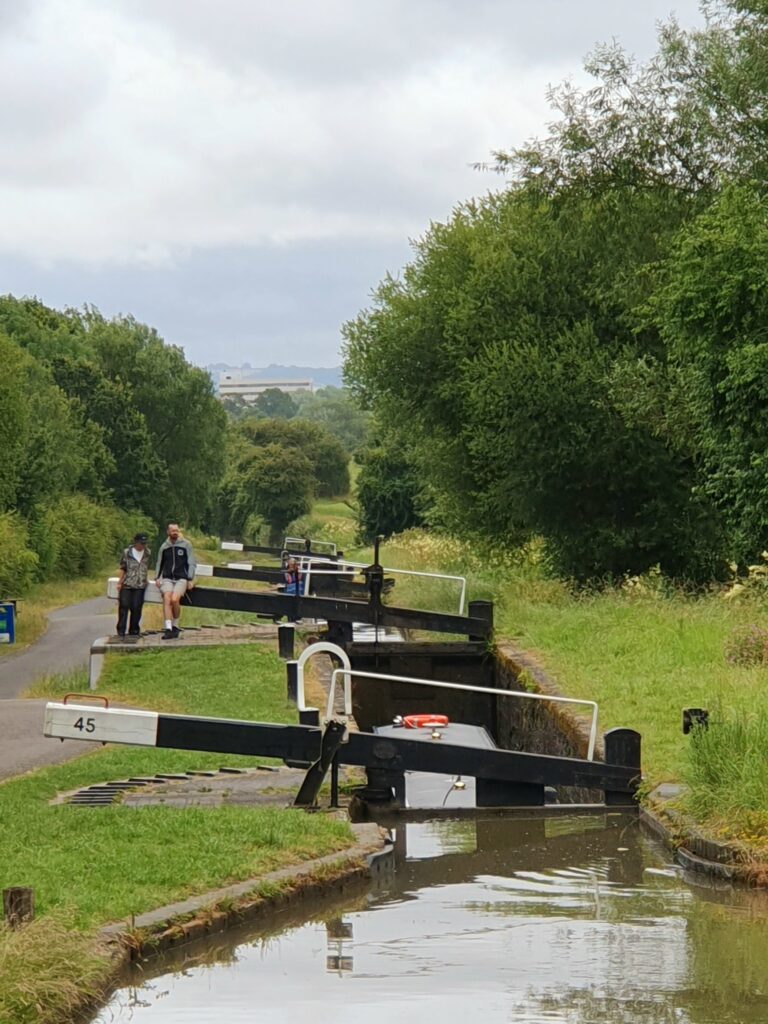
We downed a hearty breakfast to fuel us down the last 16 locks towards Stratford.

A taste of what’s to come
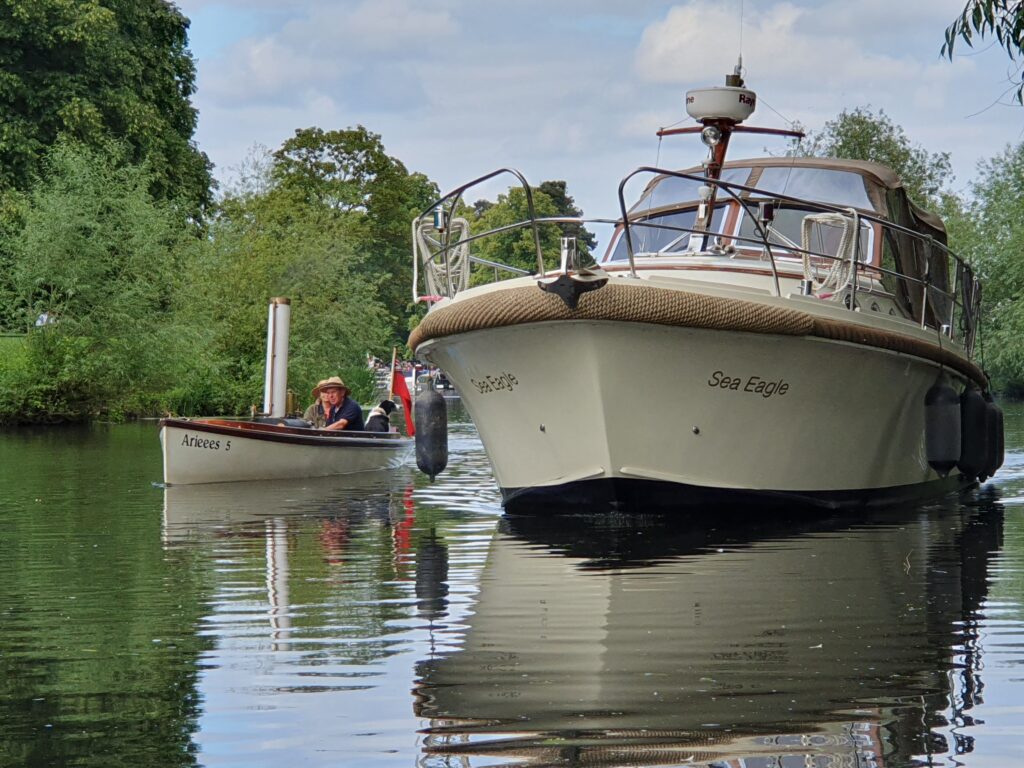

Fortunately they are all single locks and being a popular destination we met enough boats coming up as going down, some very helpful volockies, and some very pretty lock landings adopted by a local couple.

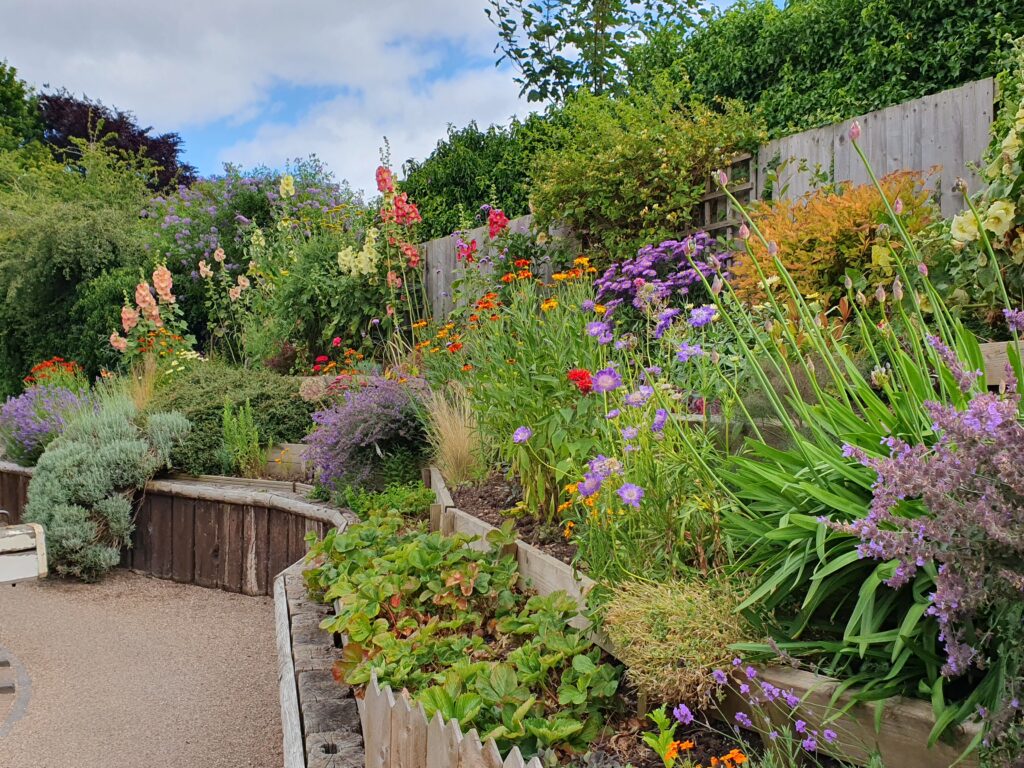
I think this is the best lockside garden we’ve seen


I have to confess we’re never sure how we’re going to feel arriving in such a busy tourist destination.


Generally we want to run a mile back to the tranquility of the countryside, but occassionally, we arrive just get a sense of, yes, let’s treat this as a holiday and be tourists, and enjoy the atmosphere. I think a lot depends on where we actually get a mooring.

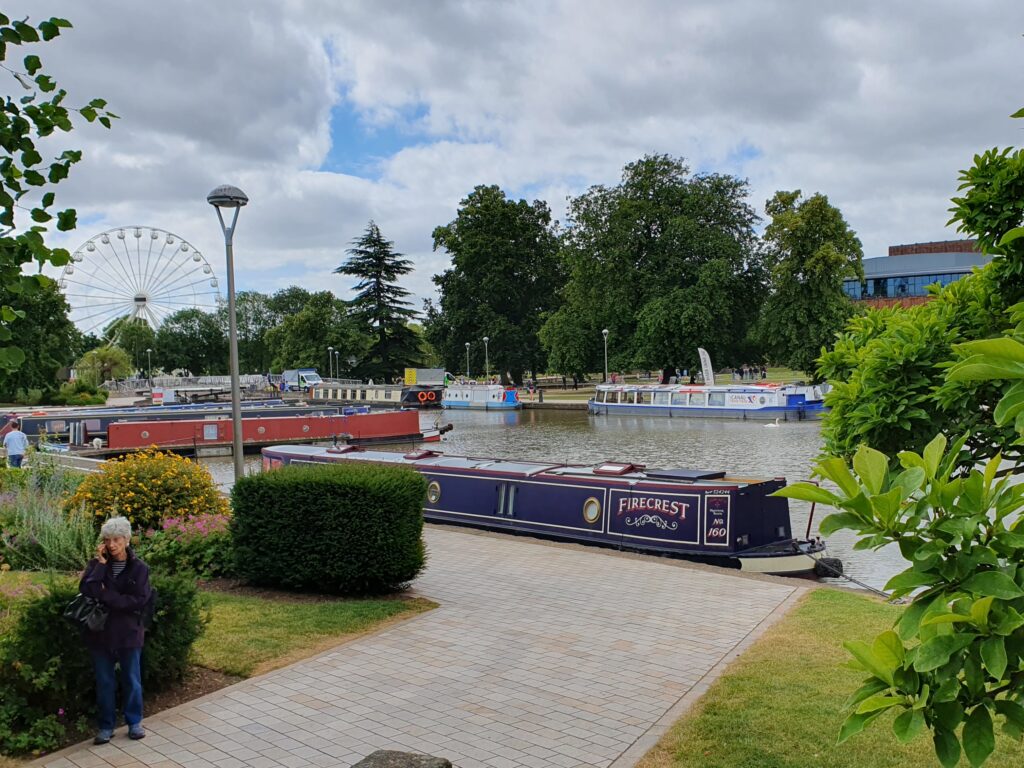
Bancroft Gardens

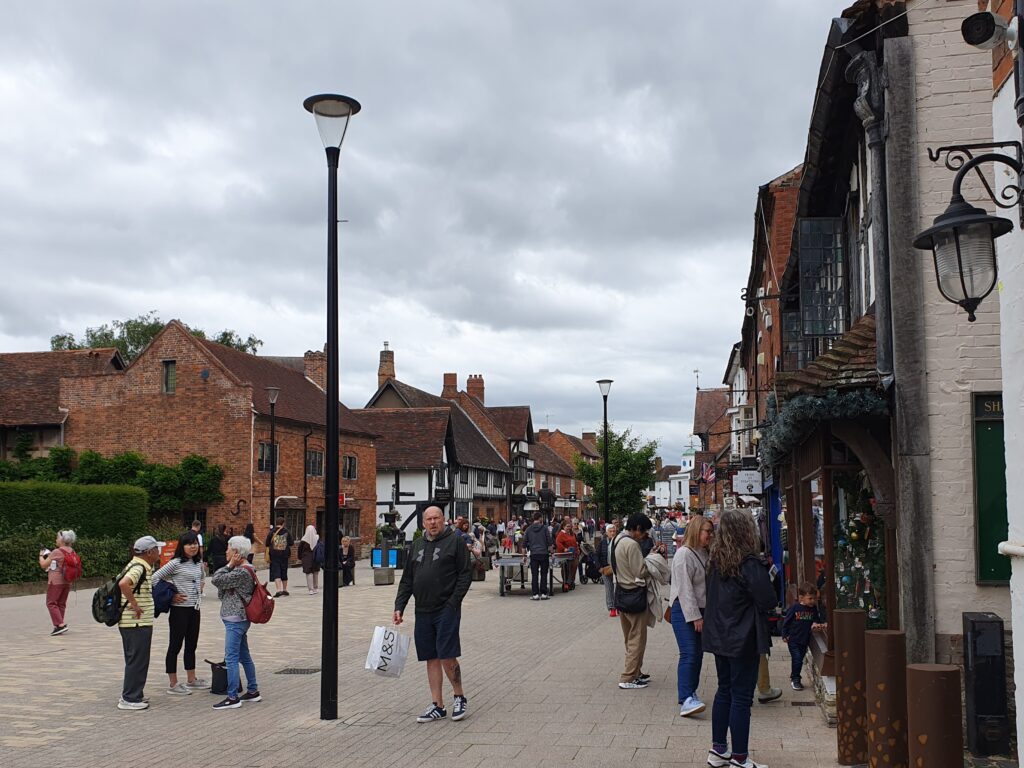
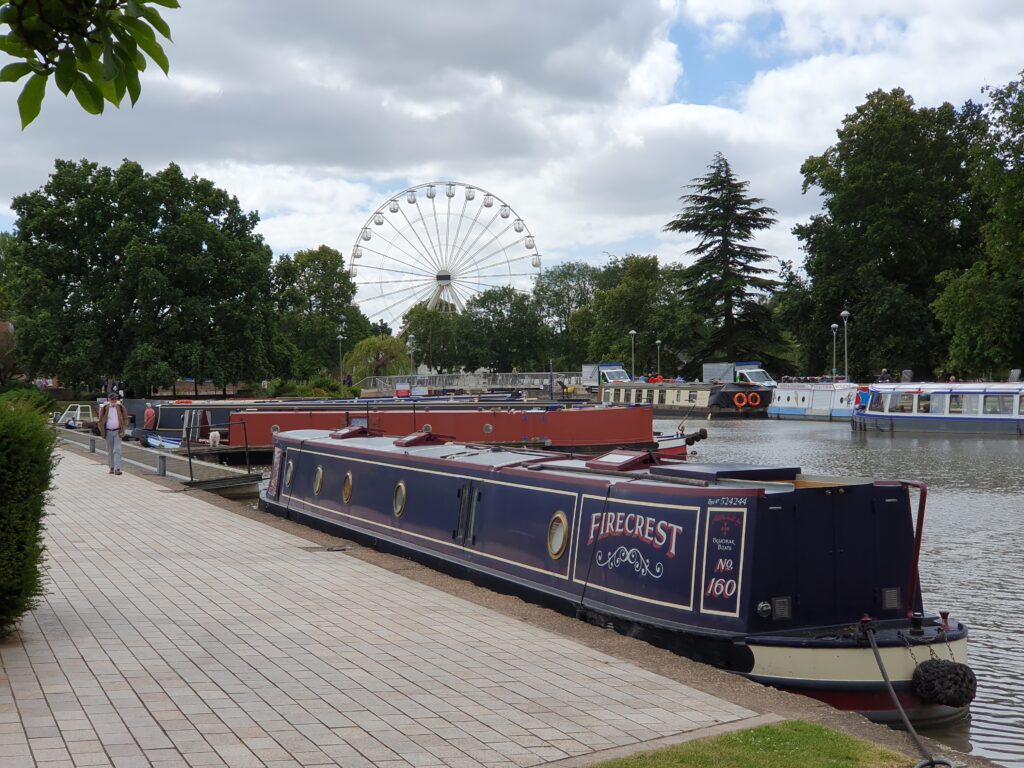
The Stratford canal terminates at Bancroft Basin. The basin is in one of two remaining wharfs. The other was filled in in the 1930s and became Bancroft Gardens. It’s a hub of entertainment for all the visitors with buskers, icecream vendors, and peddlers all willing to lighten your purse.


In the mid 1800s however, I doubt it was quite so pretty. The area was heaving with commercial activity, 50 000 tonnes of coal passed through Statford each year. There were also  glass and lead wharfs, a cooperage, a cider press, a skin yard and a timber yard all served by a tram way. Nowadays, Warwickshire can expect well over 6 million tourists per year and I think half of them come to take a ride on the trip boats that now operate from the basin.

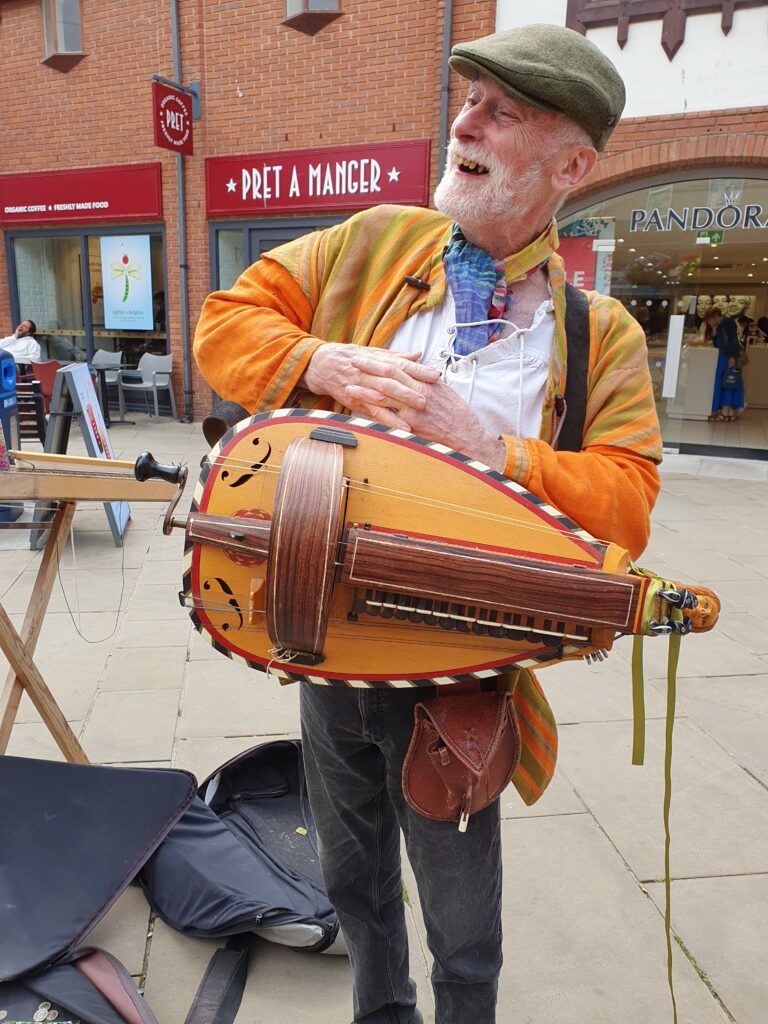
Of course Statfords most famous face is the hurdy gurdy playing busker in the town centre.

He confessed to me that his wife was just glad to have him out of the house


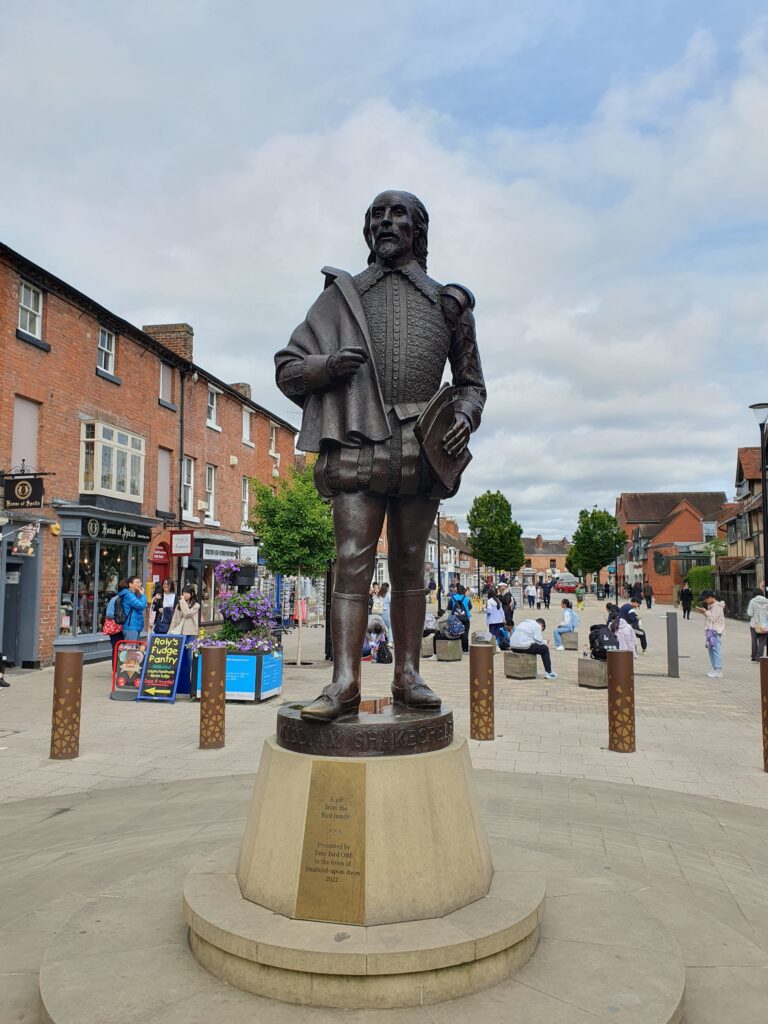
closely followed by William Shakespeare.


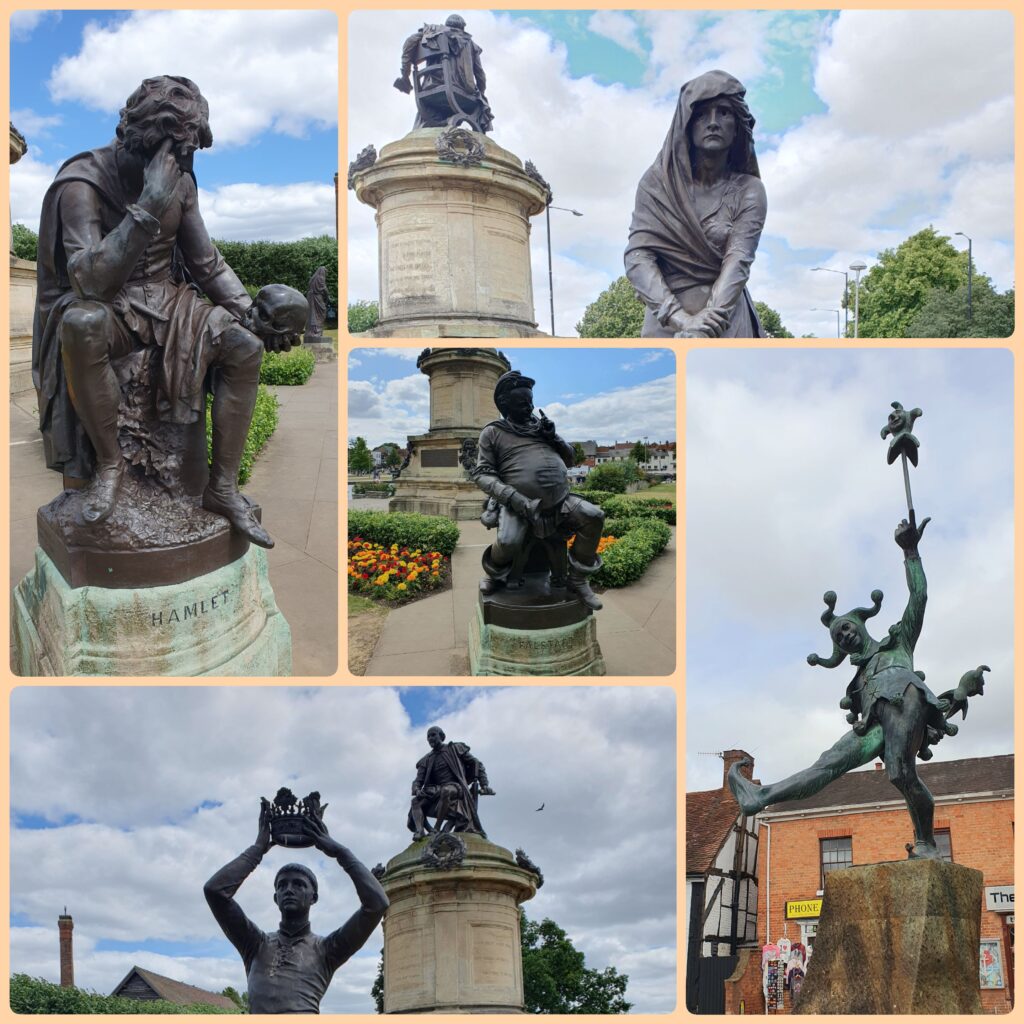
And there are monuments all over the place


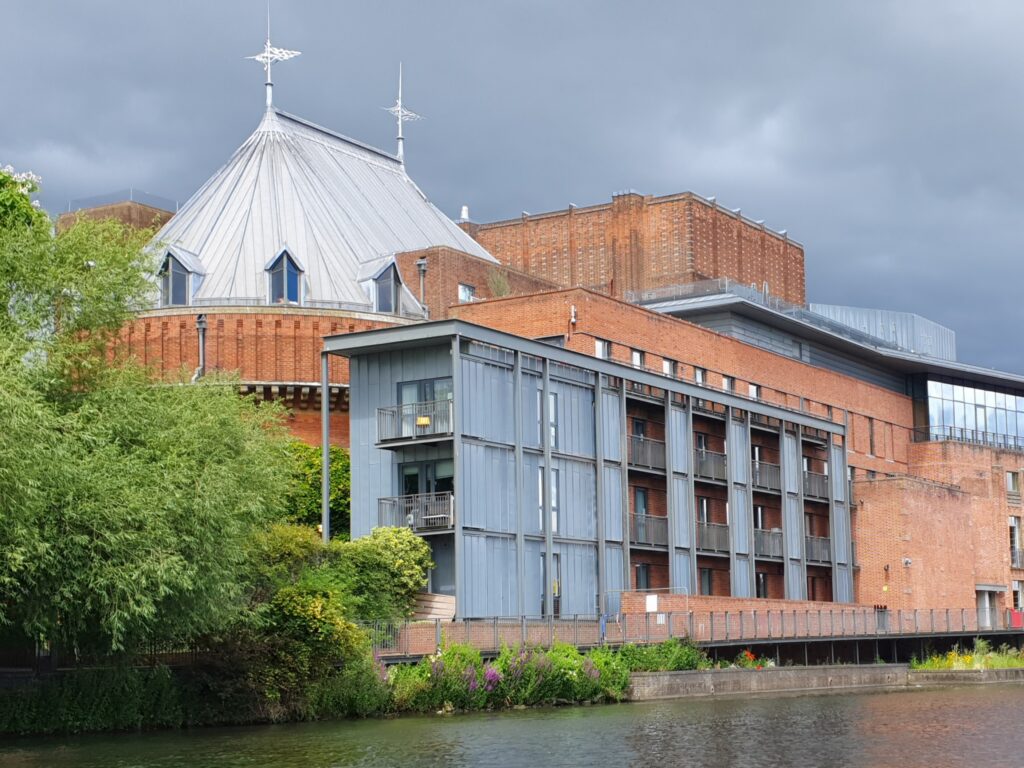
The fabulous Royal Shakespeare Company Theatre dominates the gardens and river. We chose to go to one of the fringe theatres, even closer to Firecrest than the RSC. The Attic, housed in the old wood yard at the end of the basin, we saw Noel Coward’s Private Lives, and thoroughly recommend this little theatre company to anyone passing through Stratford.

Home to the RSC
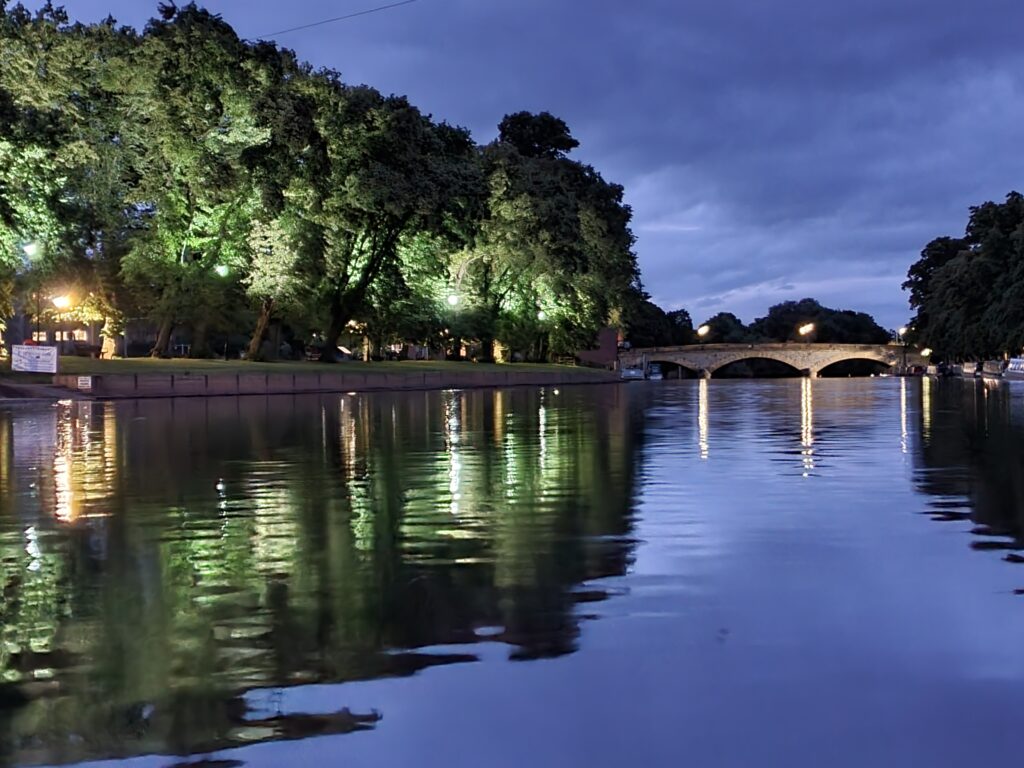

Mooring is restricted to 48 hours in the basin, and whilst we got one of the prime linear spots, most of the mooring is on pontoons, which aren’t quite long enough to make for the easiest of mooring venues. Although this is terminus for the Stratford canal, there is a lock which opens out onto the River Avon.
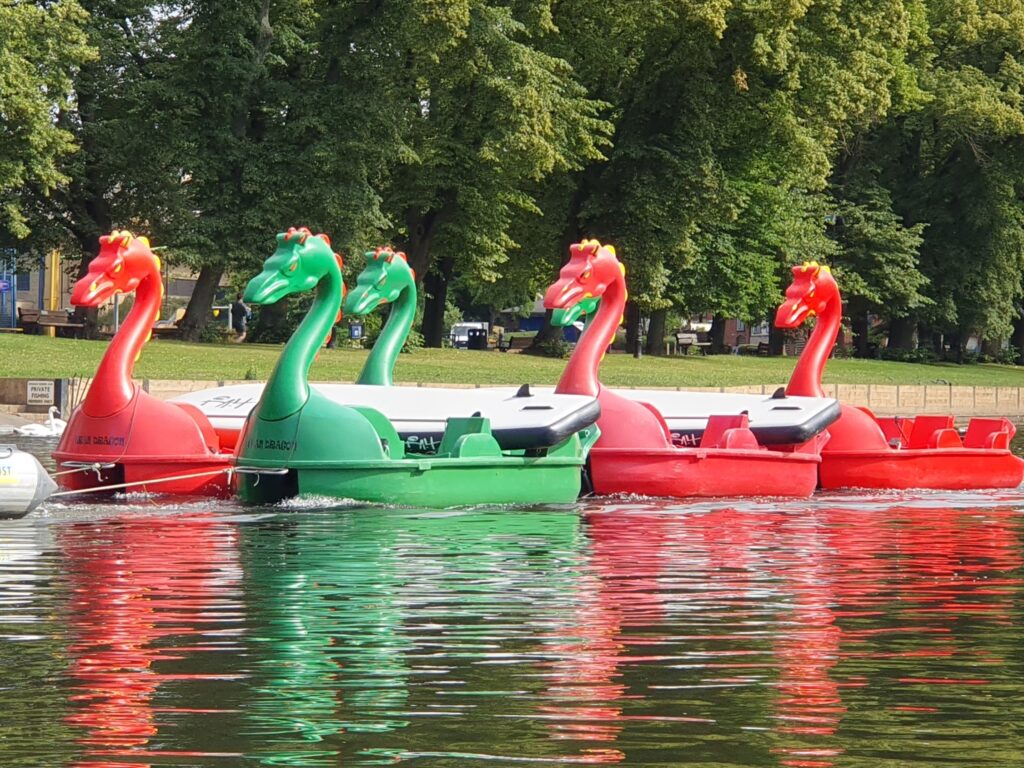
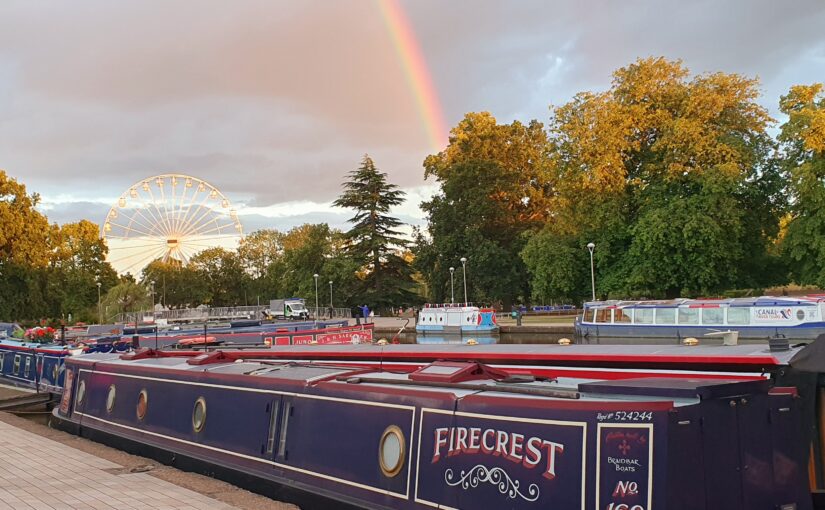

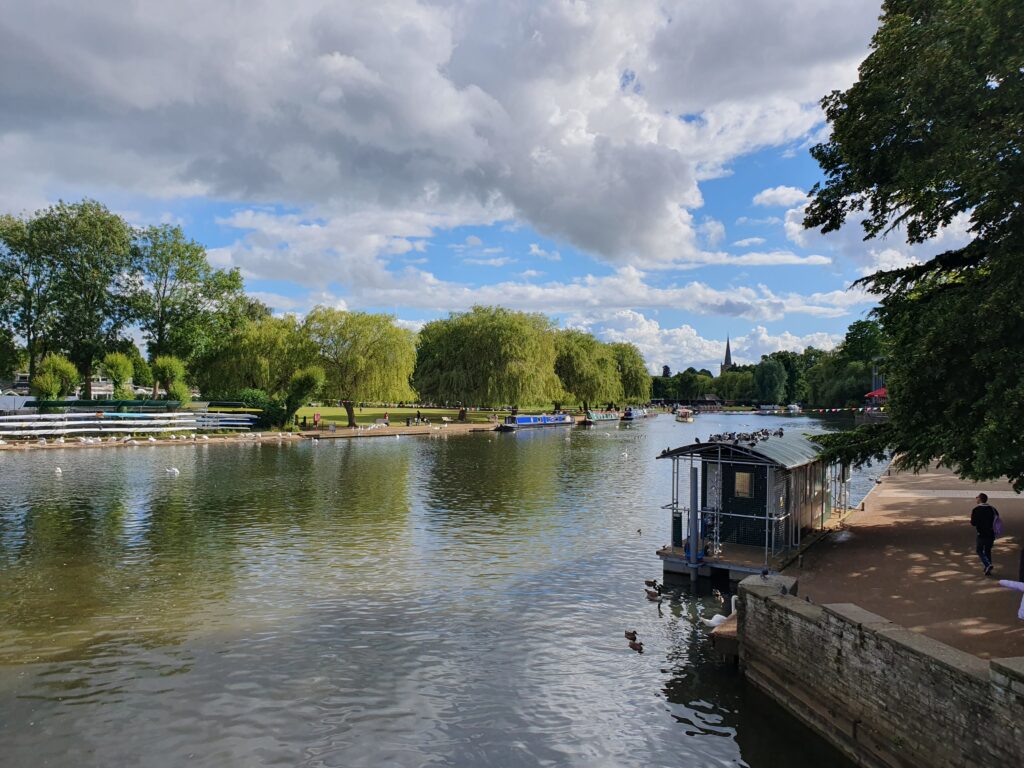
We bought our ANT licence, (£70 for 2 weeks) and spent another night on the River Avon

Leaving the lock and entering the River Avon


With everything in such easy walking distance we could easily have stayed another few nights in Stratford. Good fish and chips from the Kingfisher on Ely Street, worth the extra 10 minutes walk.

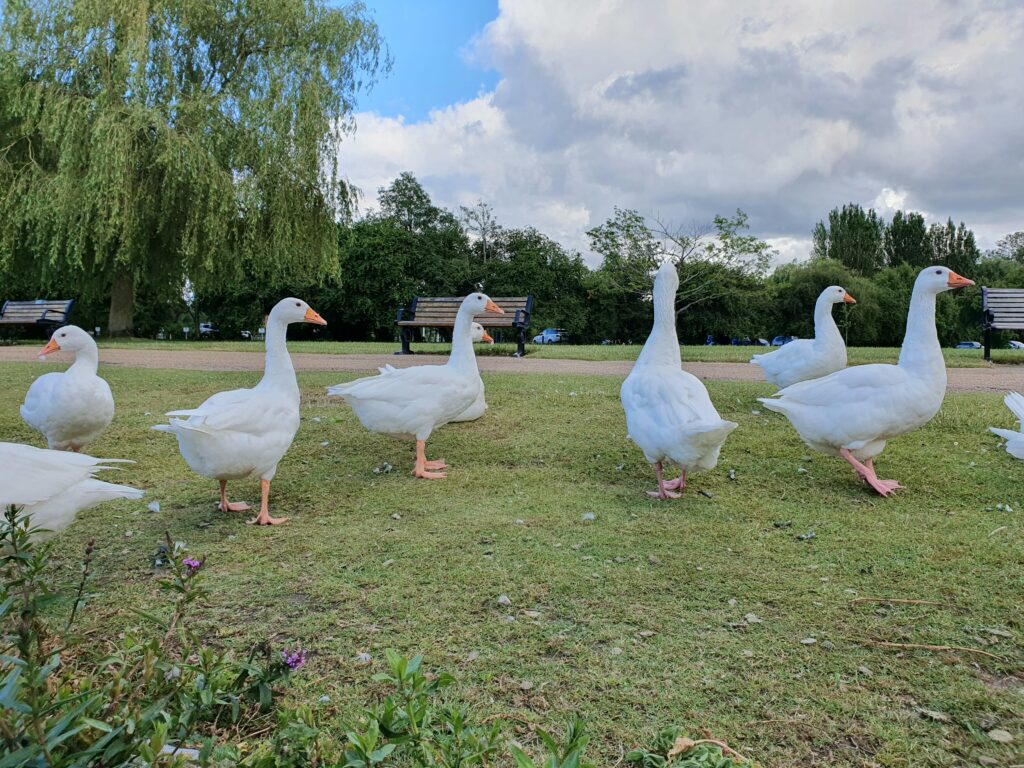
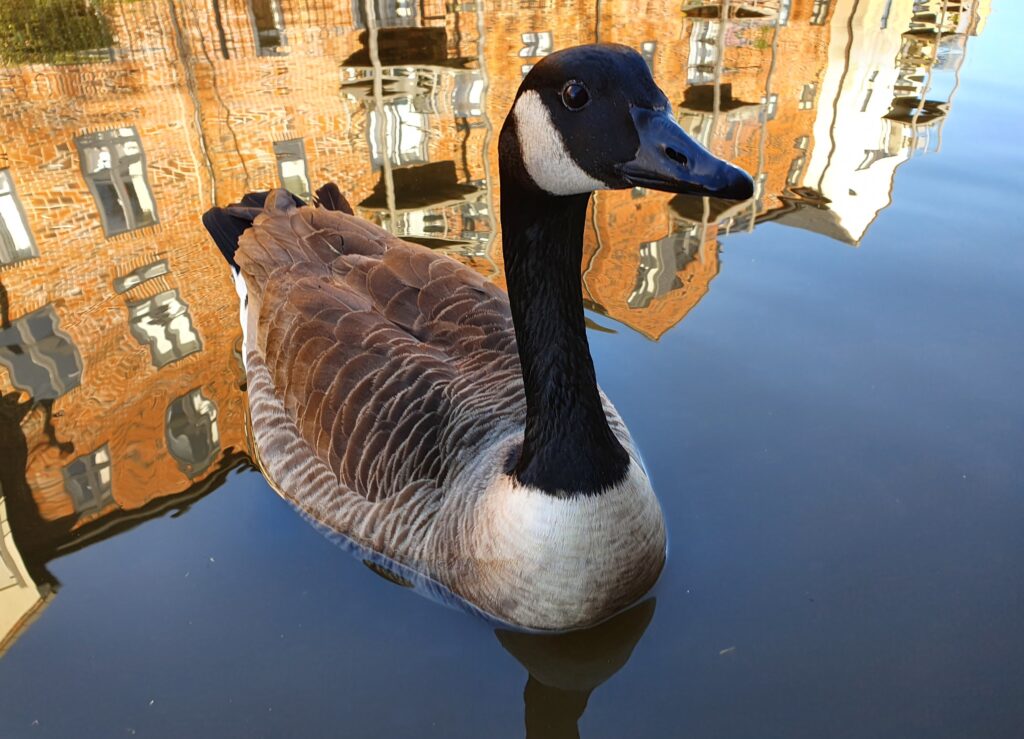
Makes a change from Canada Geese, but just as noisy

Wootton Wawen

Mooring at Wootton Wawen

We found ourselves mooring up at the pretty village of Wootton Wawen- if only because I love the sound of the name Wootton Wawen. So please indulge me if I say Wootton Wawen many times in this post. And with a name like Wootton Wawen, I knew there had to be some history worth reading up on, starting with the toponomy, (study of place names). Wootton Wawen is a combination of the words Wudu, meaning wood, and Tun meaning enclosed piece of land and Wagga, (aka Wagen) who was the original Saxon thane, ruling the settlement. Thus the name is essentially “the farm near a wood belonging to Wagga”.

The River Alne and Wootton Hall


The oldest records of the settlement date from around 723 when Aethelbald, king of the Mercians gave Earl Aethelric 20 hides of land (about 2000acres)  to build a monastery, however within 50 years the Vikings arrived and burnt it all down. Undefeated a stone church was rebuilt and the Doomsday book records Wootton as having 7 hides, land for 9 ploughs, 23 villagers and a priest, and 23 smallholders who have 6 ploughs, 2 Mills at 11s and 8 sticks of eels; woodland 2 leagues long and 1 league wide Value £4. A hide is a unit of measurement roughly equivalent to 120 acres, traditionally considered to be the amount of land to support a household and cover rent and taxes, providing food for the manor house and men to fight wars. The 2021 census show 1400 people now live there and average house prices are around £600,000 I don’t know about the eels those houses would have now. The church is still standing with various additions but is proud to be the oldest church in Warwickshire.

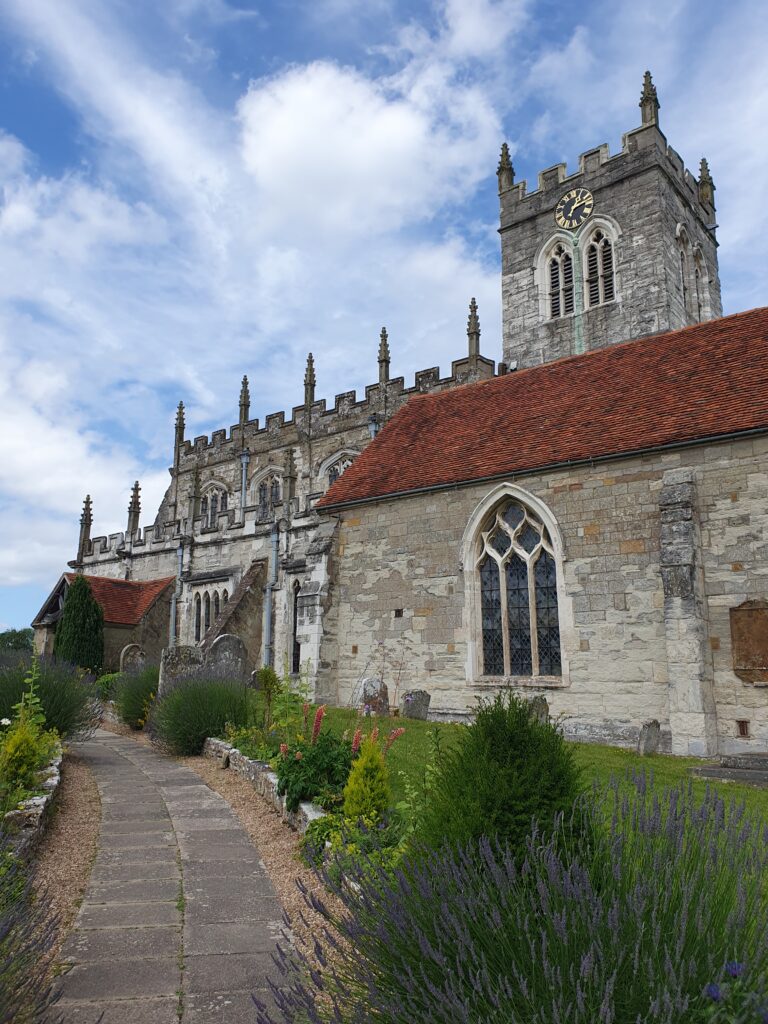
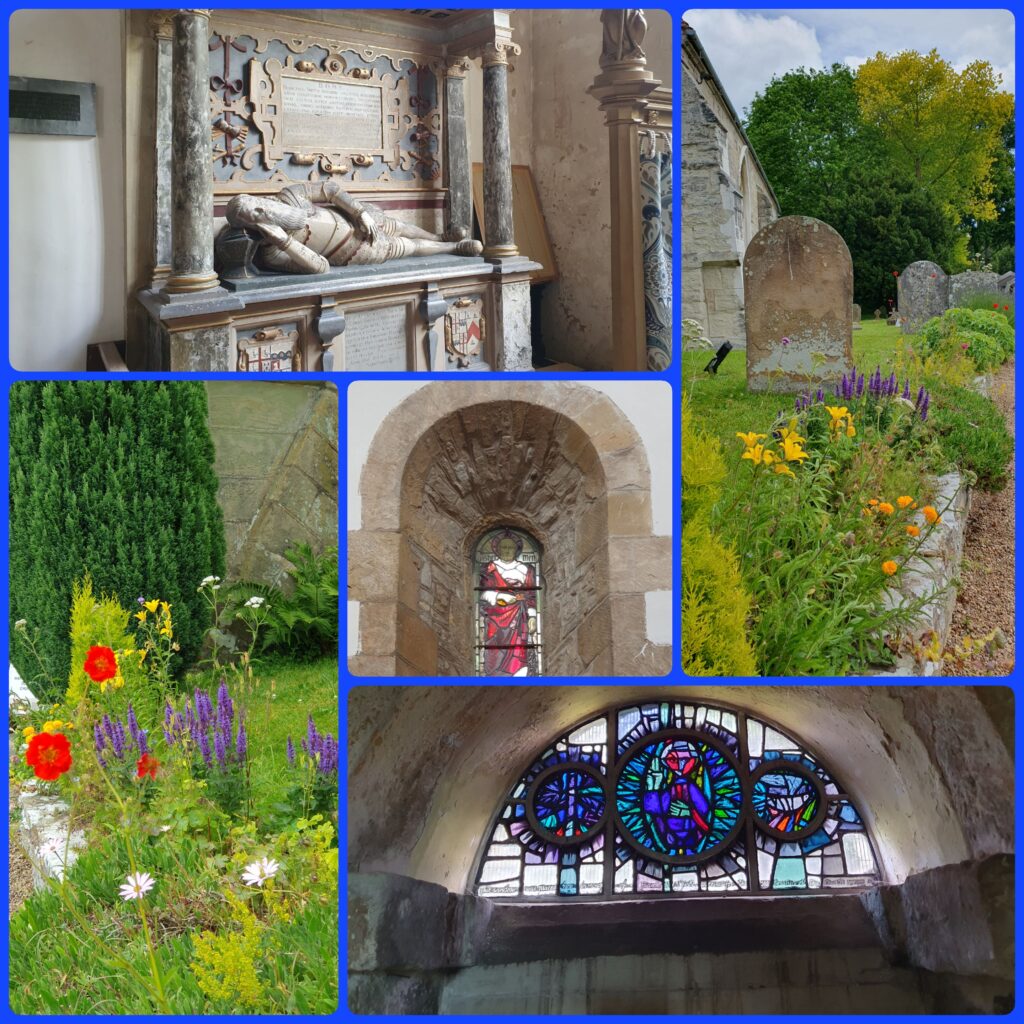
St Peters

The church had gone to a lot of effort to make it an interesting place to visit, and I suspect it had a thriving congregation.

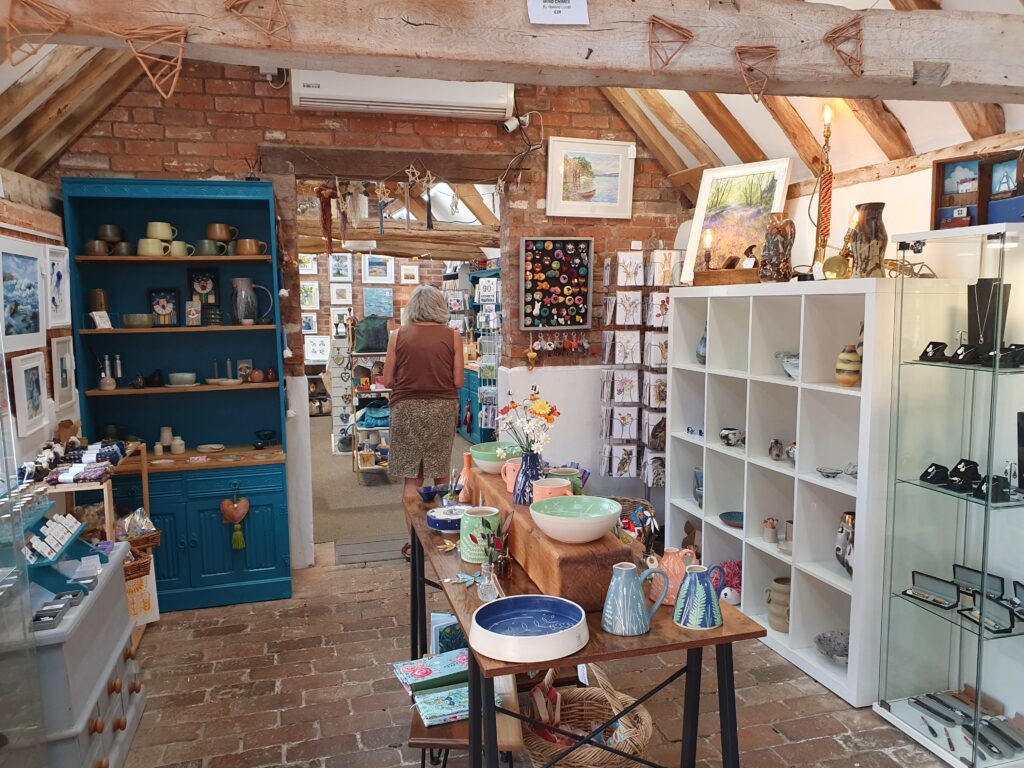
Just up from our mooring is Yew Tree Farm shopping village with the most amazing craft gallery. If we lived in a house with wall space and window sills I’d have spent a lot of money there. There were several browsing galleries, including a hand made chocolates shop, antiques, clothes, garden stuff and a farm shop that had honey and ginger icecream, although it’s food range was rather limited or high end. (But there’s a well stocked village store as well.)

We ended up enjoying several more days at Wootton, it was sunny and peaceful, and after a week of heavy locking we needed to put our feet up and watch the water flow by.

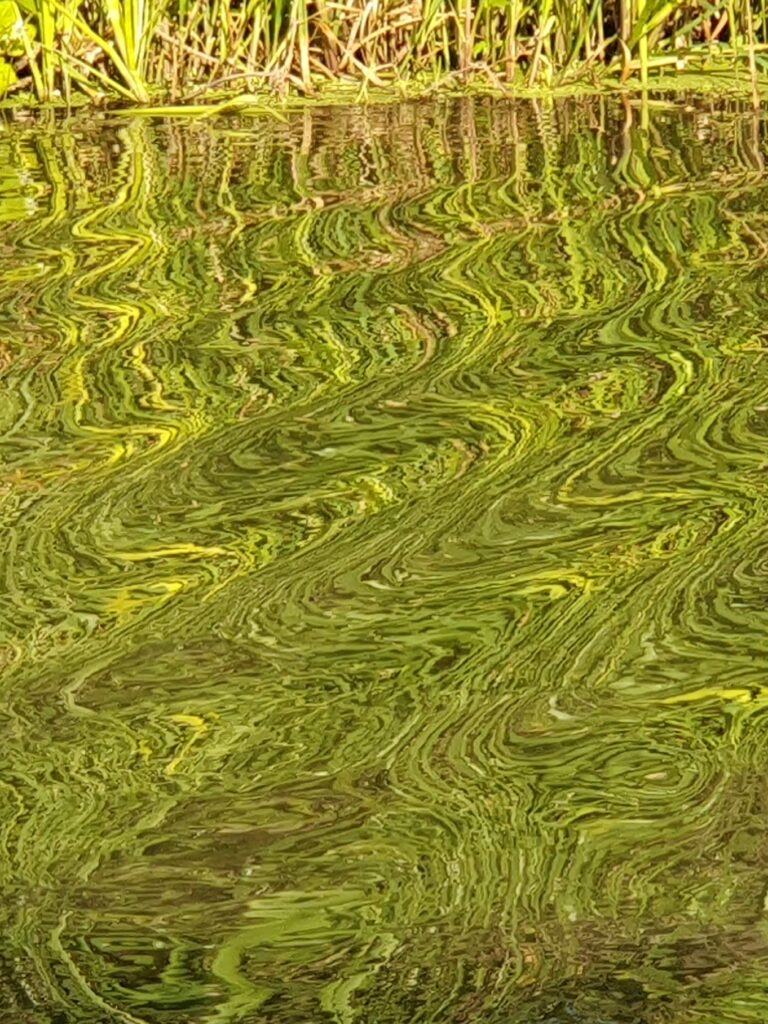
Mesmerising colours

Mesmerising colours both on the water and in the sunset

South Stratford Canal

This month, it’s exactly 7 years since we were last on the South Stratford canal, and that time we were hurrying to meet a friend in Braunston. Now we know better, and “encourage” our friends to come to us. The Stratford on Avon canal actually starts at King’s Norton, but the little village of Lapworth is is a busy junction on the canal system, with routes going north, south, east and west, and the North Stratford becomes the South Stratford
Lapworth


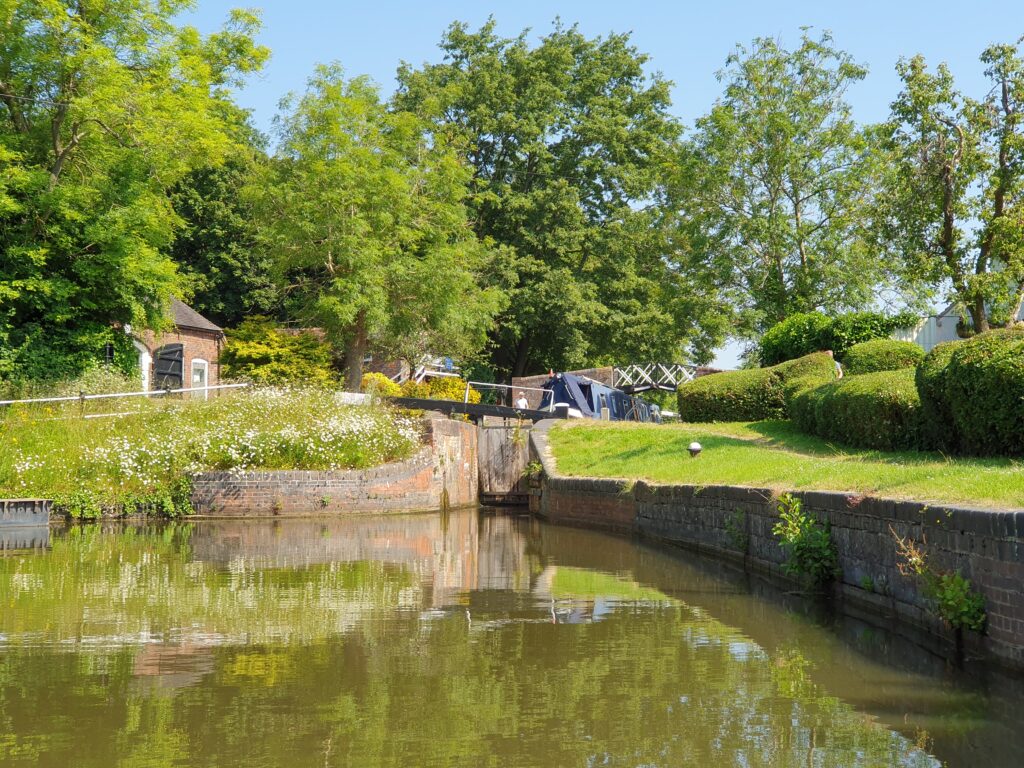
This is where we left the Grand Union Canal and the Lapworth link to squeeze through the narrow gap to head south,

Lapworth junction turn right for King’s Norton turn left for Stratford

And where our friends James and Caroline who live locally joined us for the day.


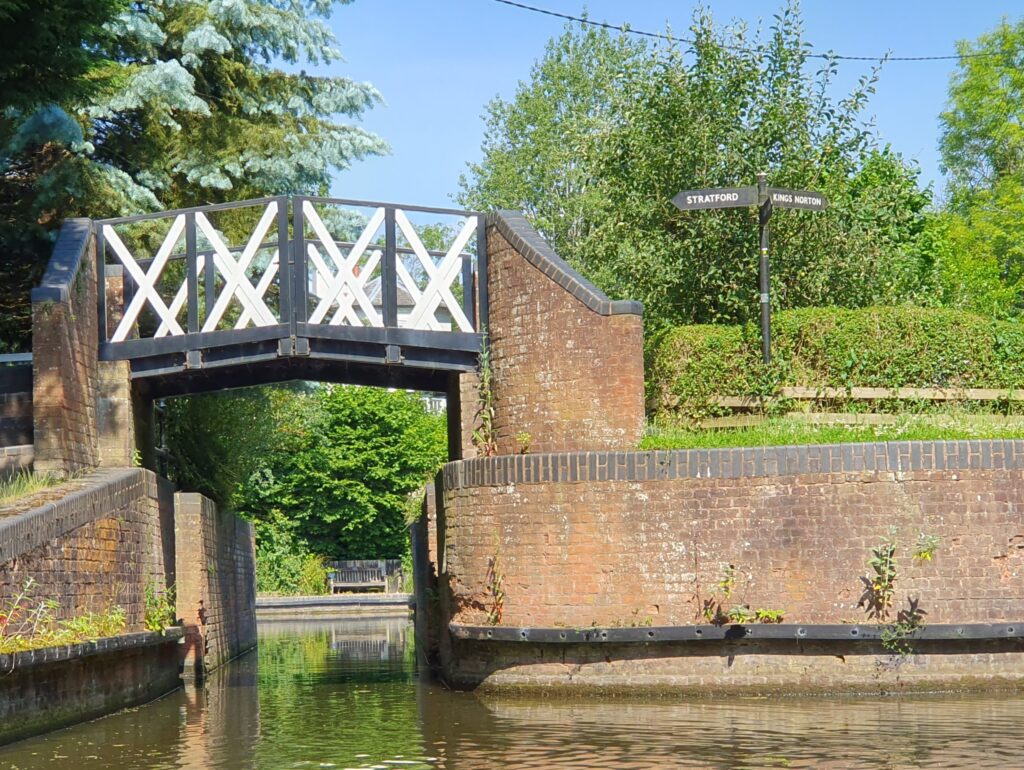
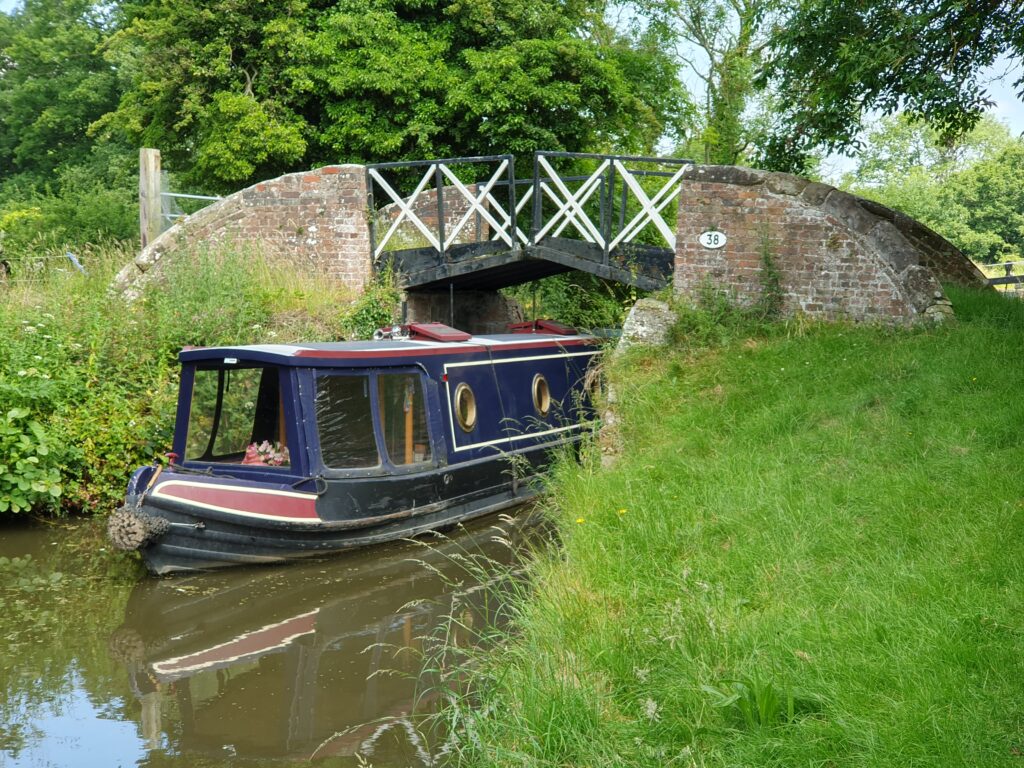
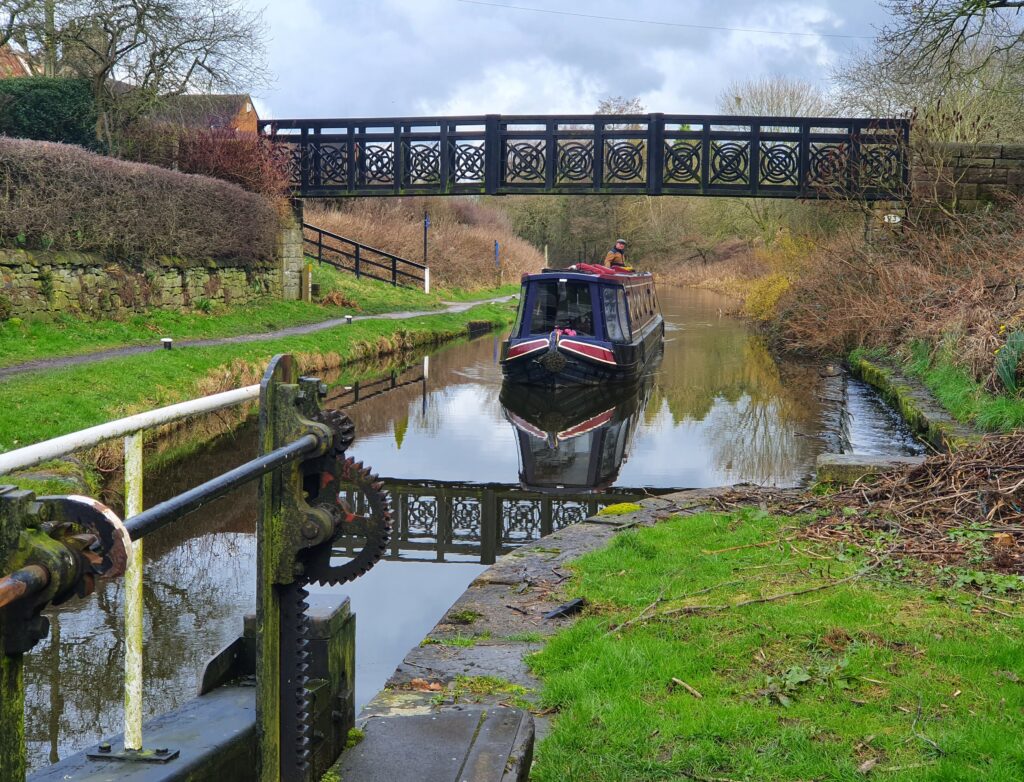
It’s an incredibly pretty canal, with a lot of unique features.  The bridges were built in two cantilevered halves which allowed the horse drawn boats to be pulled through the gap without having to untie , simple and sensible really


And there are 6 very unusual houses built for the Lengthmen, these were the men who were responsible for maintaining the Lock and their length of the canal. The navvies who built the canals weren’t house builders so they put the skills they did have and constructed the roofs the same way that they did building tunnels, hence the barrel shaped roof

The Lengthmans Barrel cottage, most of these cottages have been extended now,


James and Caroline saw us through several locks so we thought it only fair to make James take the helm

Mmmm another scratch on the paintwork doesn’t matter that much

Yes James they really do fit into that narrow gap


After all that hard work

we moored up at Lowsonford and went for a very enjoyable meal out at the Fleur De Lys.

A month ago

A month ago….

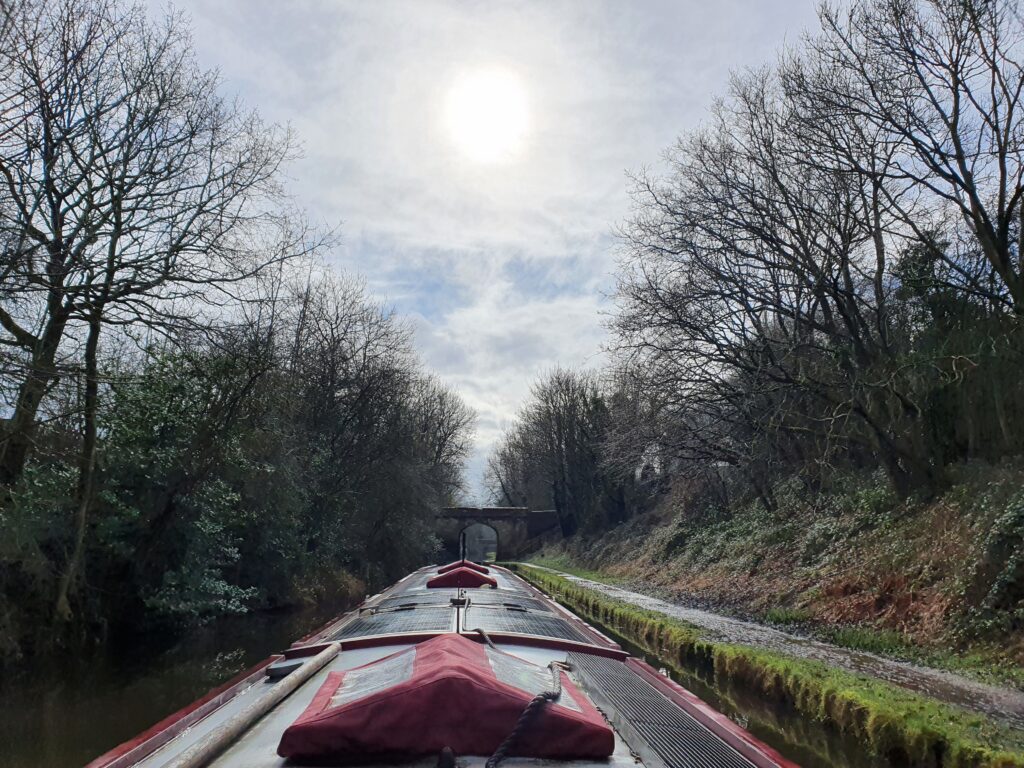
we had made it down the Bosley Flight, and we both rejoicing and bemoaning to be heading south… straight into the morning sun.

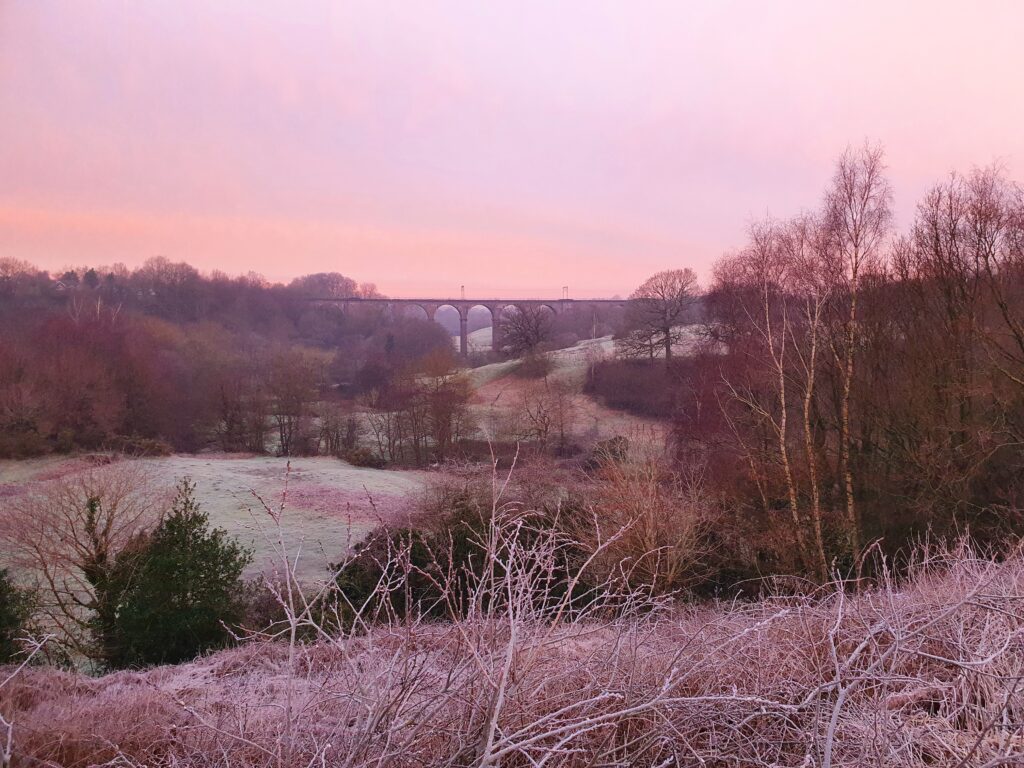
We meandered our way into Congleton. I met up with one of my many knitting friends scattered around the country. Gilly introduced us to fantastic little place, called the Wonky Pear, wine bar/pub/coffee stop just up from the canal off Park Lane, they don’t usually do food, other than cake, but they had a pop up evening of Thai Street food. And if we were local, we’d definitely make if our local. But we were on a mission, so set off as soon as the sun rose, we ignored the dire warning from the red sky in the morning and the frost on the ground (it was still the end of february)

looking towards the railway from the Congleton Aqueduct moorings


And we set off, but it was cold cruising, so we stopped near the Ramsdell Railings and went for a brisk walk up to Mow Cop which certainly warmed us up.

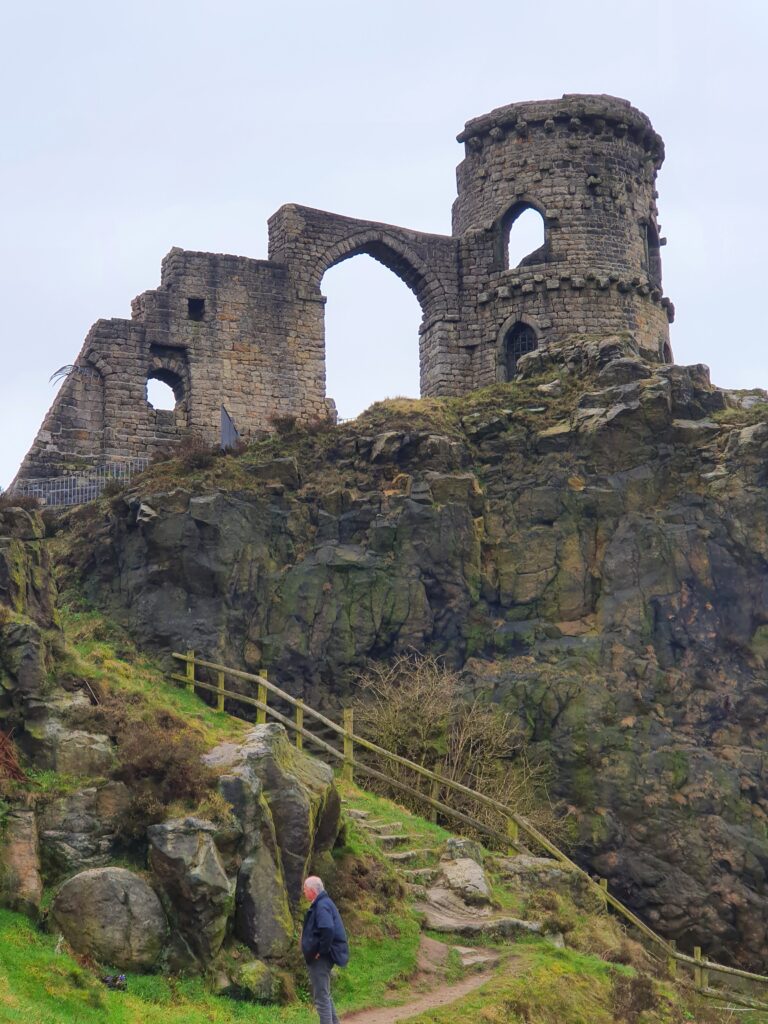
Mow Cop


This old ruined castle is actually an 18th century folly where the gentry came for picnics. You can see for miles and it’s the intersection of the counties of Cheshire, Derbyshire and Staffordshire. It’s also the first meeting place of the Primative Methodists, a breakaway revivialist group wanting to refocus on the socialist aims of Christianity, caring for the community, being part of the trade union movement and taking an active role in women’s emancipation. I offered my prayers of thanks for such a  place and we carried on journeying south. Where we also gave thanks that the culvert breach from Mid December had finally been fixed

And onto the Hall Green Stop Lock at Scholar’s Green

Before our travels came to an abrupt stop at Kidsgrove

The Many Mills of the Macc

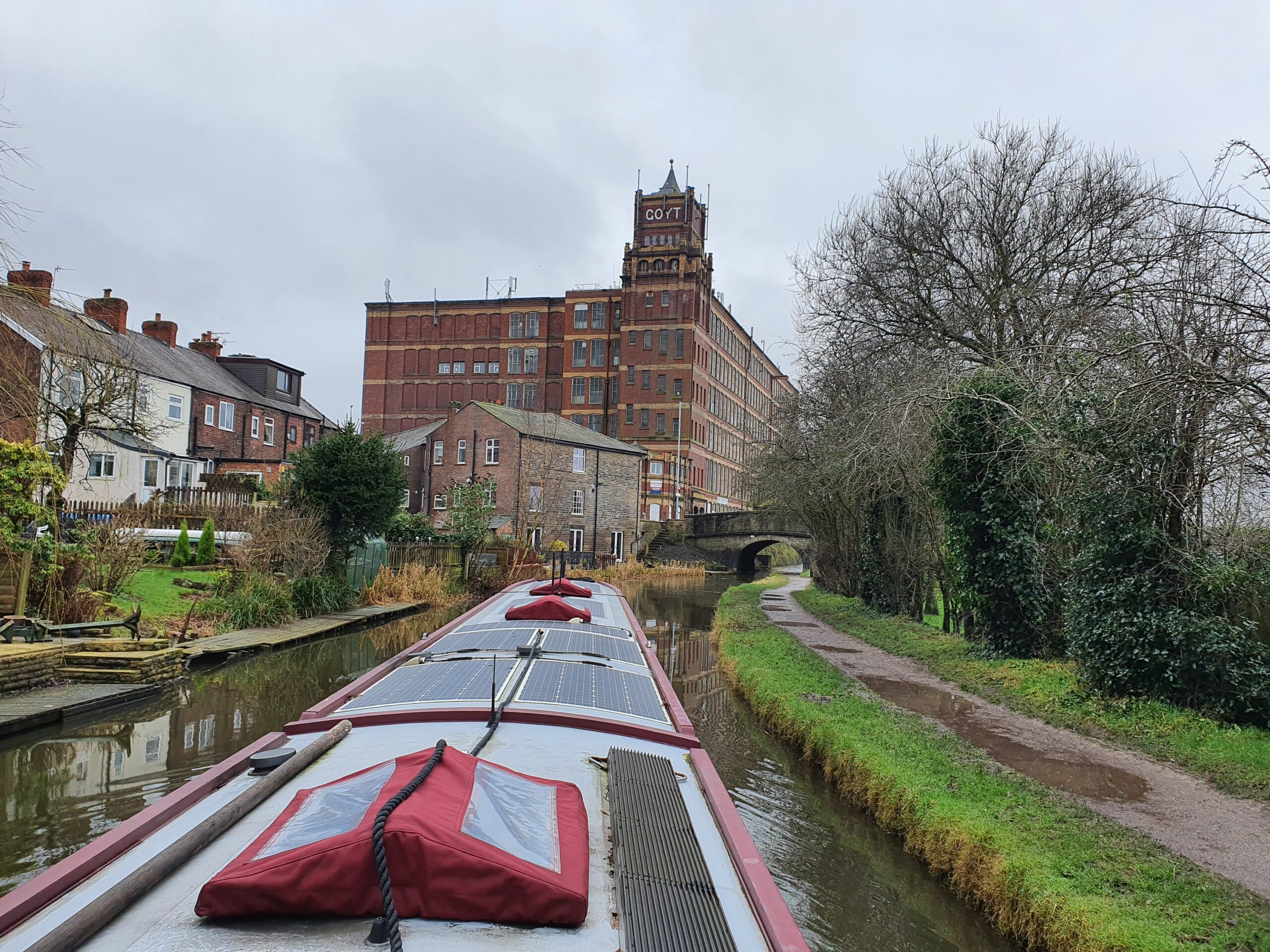
Even though we are now heading south at a vast rate of knots, okay roughly 2 miles an hour, we still look up at the Mills with a sense of wonder. Goyt Mill in Hawk Green, Marple is the youngest of the three that stand out for me. Built originally in 1905 by the Goyt Spinning company to produce cotton fabric was a major source of employment in Marple until 1960. Nowadays it predominantly houses antique warehouses, fun to wander around reminiscing about all the junk you threw away when clearing great aunt maud’s house. There is a fascinating memoire in the Marple website worth browsing if you scroll down.

Approaching Goyt Mill
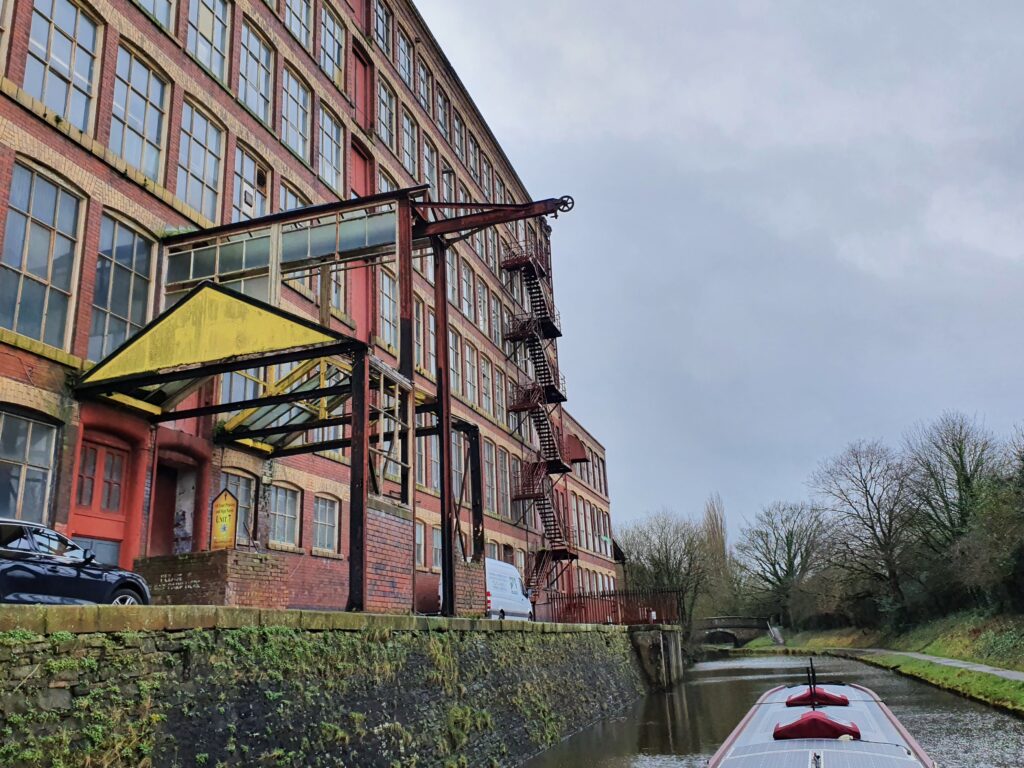
Can you imagine loading and unloading your wares here?

Once through Marple we were back to enjoying some rural tranquility
We wondered if that sunny day we had last week was summer and we’re already experiencing Autumn.

Before stopping for fuel at Baileys

Where we picked up a hitchhiker again, -remember the cat that came to say hello last month, we also popped in to say hello to James and Donna and the team at Braidbar.
Not sure this little newt was quite ready to emerge from hibernation, we pulled him up on our tyre fender, so I carefully returned him back into the bank.

Then on to the oldest surviving Mill on this route at Bollington,

Approaching Bollington and Clarence mill


Clarence Mill was built in 1834 and specialised in spinning sea island cotton, which, for those unfamiliar with the intricacies of cotton, is an extremely fine long stapled cotton variety used for making lace and muslin. It is infact supposed to be the rarest form of cotton and can make a luxurious (expensive) silk like fabric.


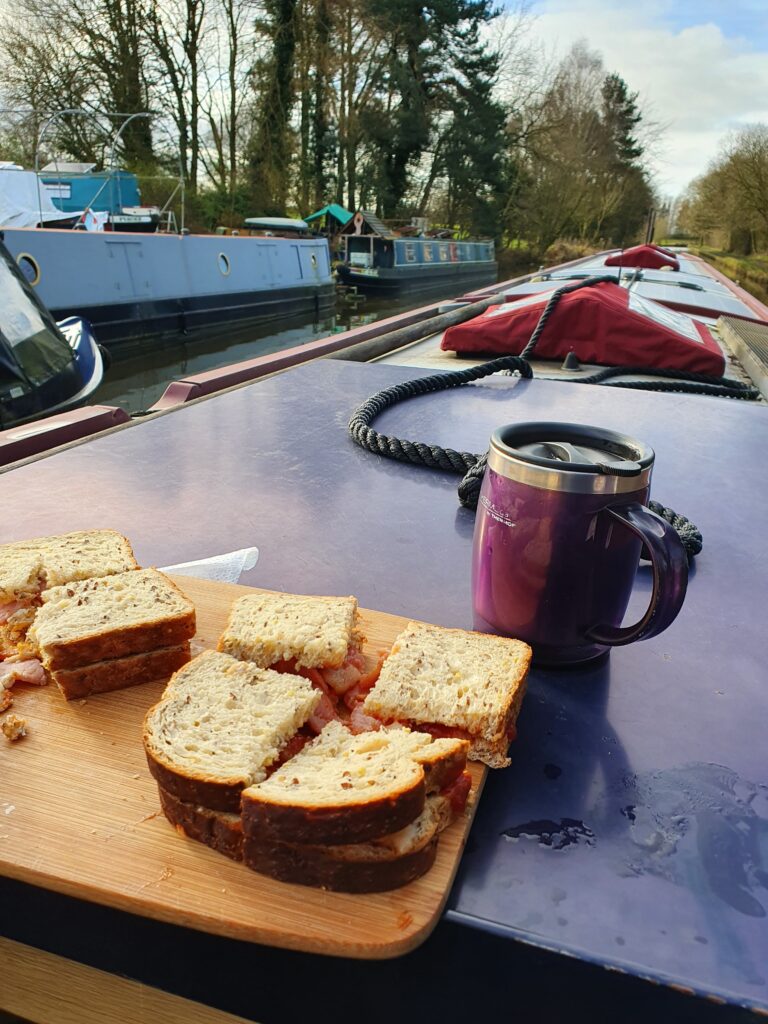
I missed the photo of the next Mill on our route south, the Adelphi Mill on the southern side of Bollington because I was in the galley cooking bacon butties. Aldelphi Mill began spinning cotton, it progressed to throwing silk, and finally spun man made fibres for Courtaulds until 1970s. Nowadays it houses offices for the nearby pharmaceutical company, Astrazennica

Which leads us nicely onto my third Mill, the Hovis Mill in Macclesfield itself.

The Old Hovis Mill

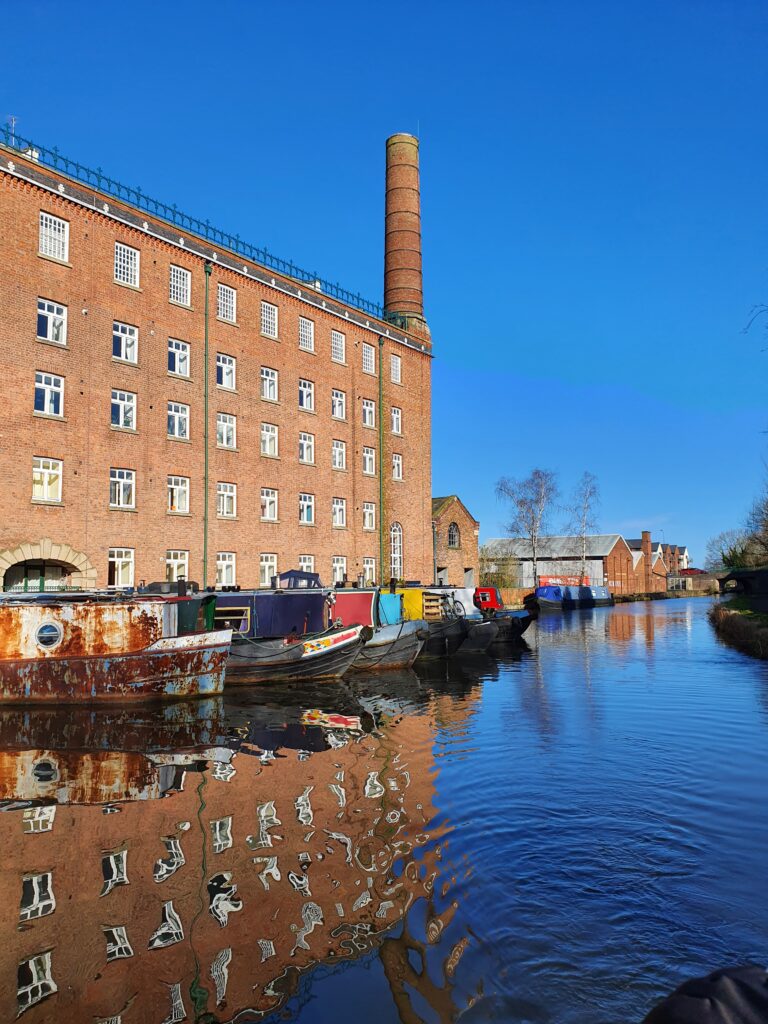
This is where grain was ground to make flour. The technique used produced a distinctive flavour and any baker using this flour is able to call the bread a Hovis loaf. Milling only took place here from 1898 to 1904 because demand grew and the company moved to bigger premises at Trafford Park, Manchester. They did however keep the building. It was renamed the Publicity Works, where they made the paper wrappers to wrap the bread in. Nowadays it’s a rather nice place to live. One interesting feature is the iron ballustrade along the eaves that survived being removed and smelted down during the second world war efforts. I don’t think I’d have liked climbing up there to remove it.

There were of course other mills, and industries along the canal and rivers that dominate this area, Macclesfield was known particularly for silk production, Bollington had a thriving hand made button industry, there was coal mining and sheep farming, to name but a few which helped make it a prosperous place to live.
The Macclesfield canal society website if you want something to talk about.

Enjoying some old Infrastructure

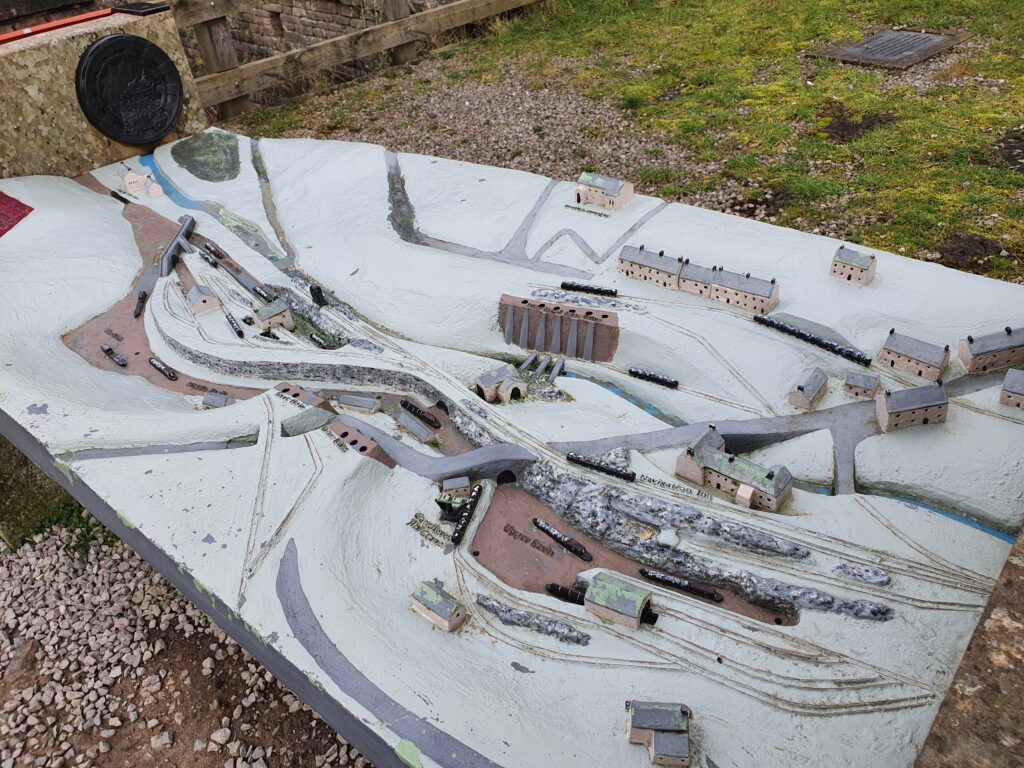
There’s something very special about narrowboating in this area, we love seeing the industrial heritage of the our country. Bugsworth Basin is a prime example of how the canals were a significant structure for the communities they served. It’s now listed as a Scheduled Ancient Monument and the  Bugsworth Heritage Trust oversees the area making it an interesting and informative place to visit.

Model of the basin back in its heyday


The Peak Forest Canal was completed in 1804 to transport limestone and gritstone from the Derbyshire quarries down to the Ashton Canal where it was probably went on to help build Manchester.

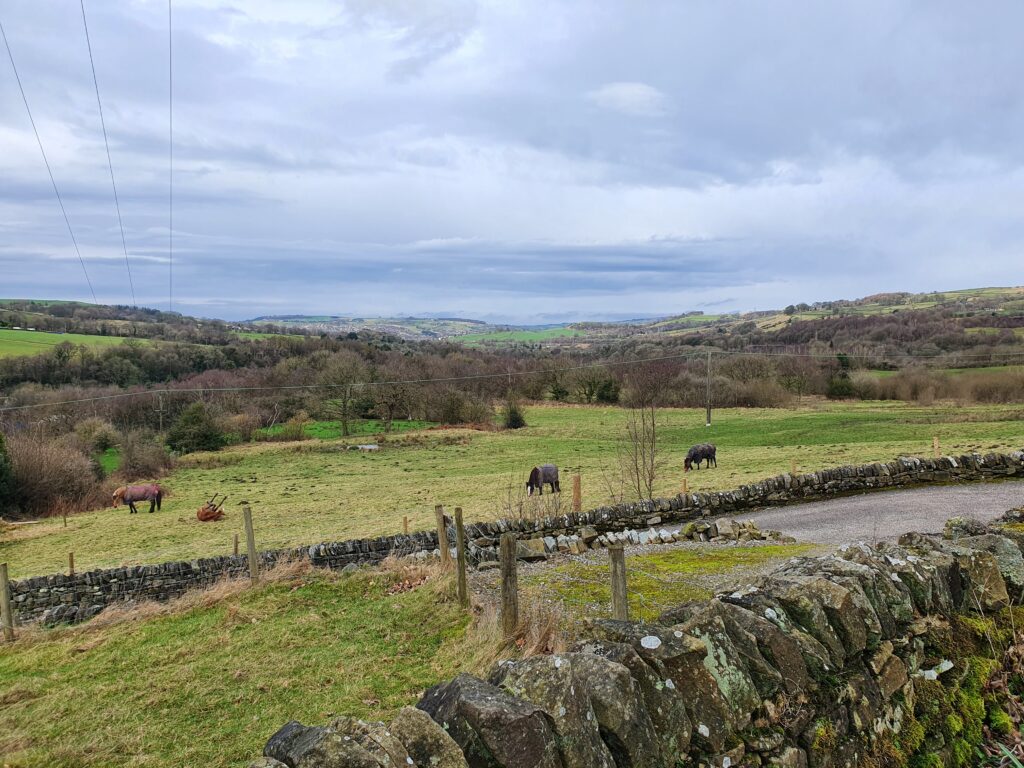
Looking towards Manchester, about 15 miles west of Bugsworth

It was hoped that the canal would go further into the peak district but alas building the necessary locks wasn’t economically viable. A terminus was created at Bugsworth which, when it was built, it was Britains largest inland port. (Aparently, Eric and I can’t agree what defines an “inland” port) Equally impressive was the 14 miles of gravity and horse powered Tramway system that was built to bring the stone down from the quarries.  You can still walk the tramway, but it was too wet and muddy for us this week. Not only was the basin  a storage and transhipment port, it was the hub of a thriving village where the lime was processed in huge kilns.


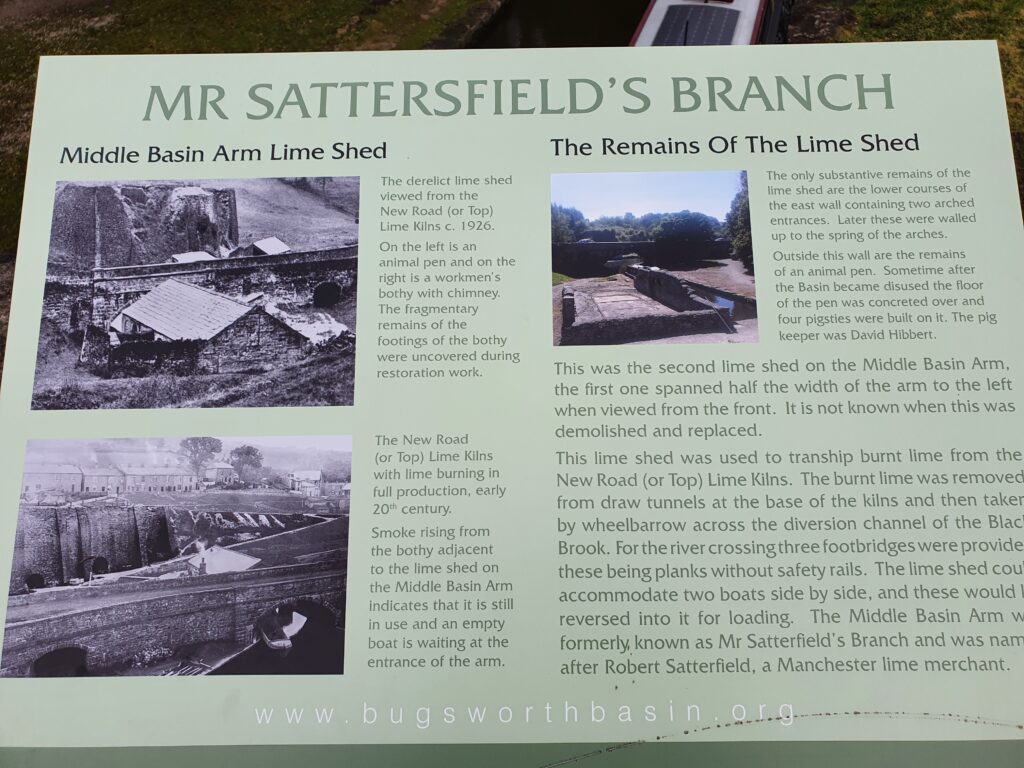
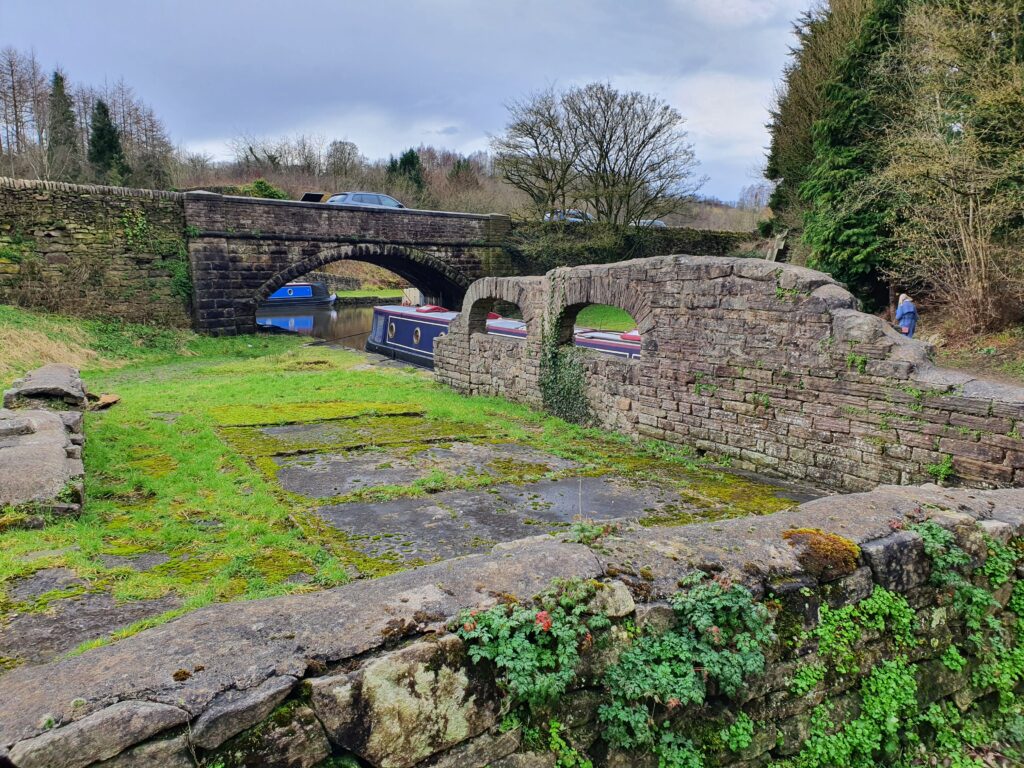
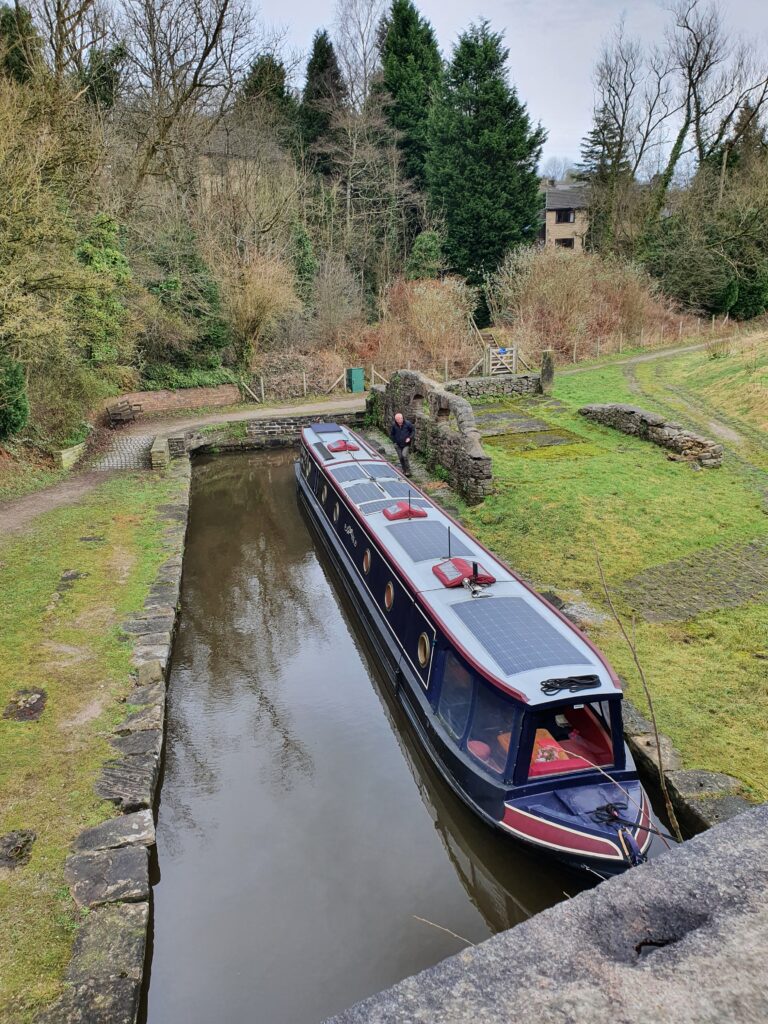
The Middle arm is considered the prime mooring spot, and although it was originally all under cover, the stone sheds have long since been dismantled and repurposed and all that’s left is the short arm, a bit of wall with 2 arches and a base of concrete- where an enterprising local build a pigsty. The working life of Bugsworth Basin remained until the 1920s,

Our favourite moorings spot, Mr Sattersfield branch,

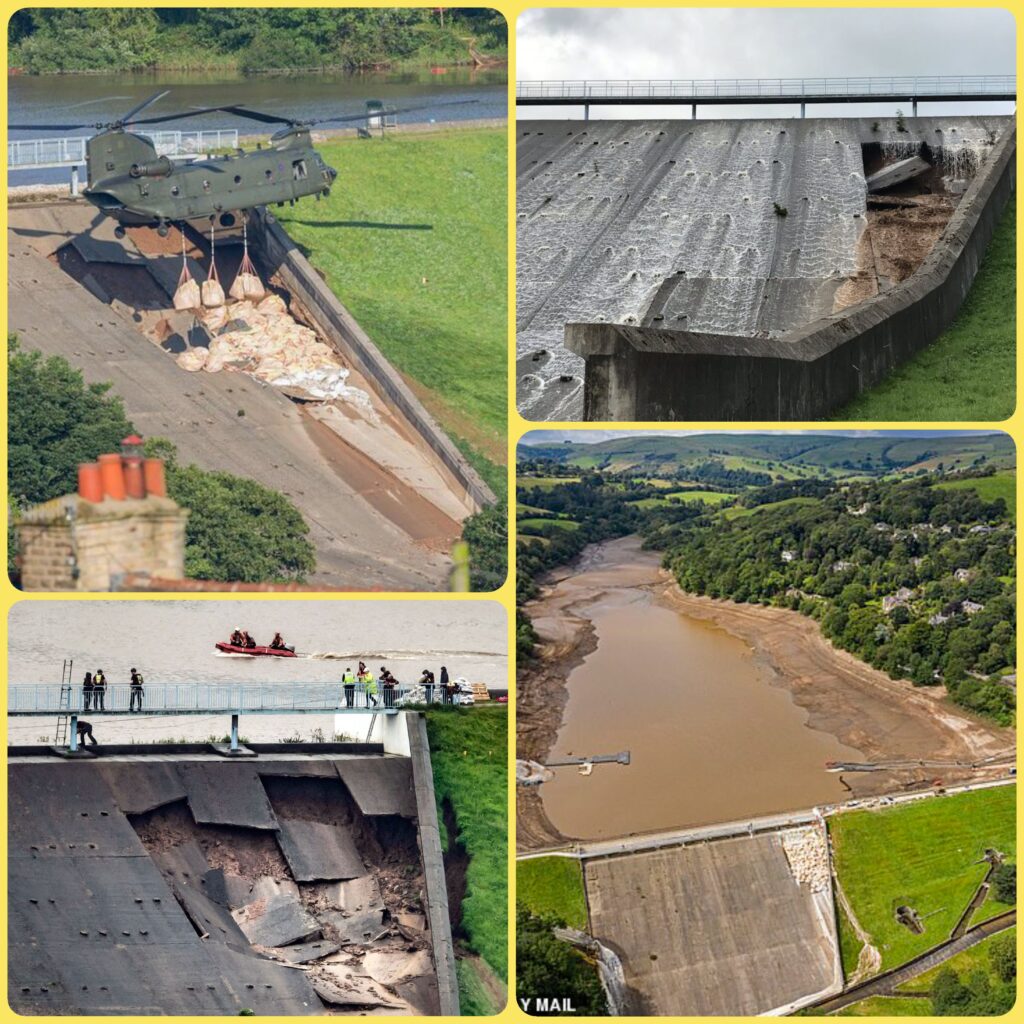
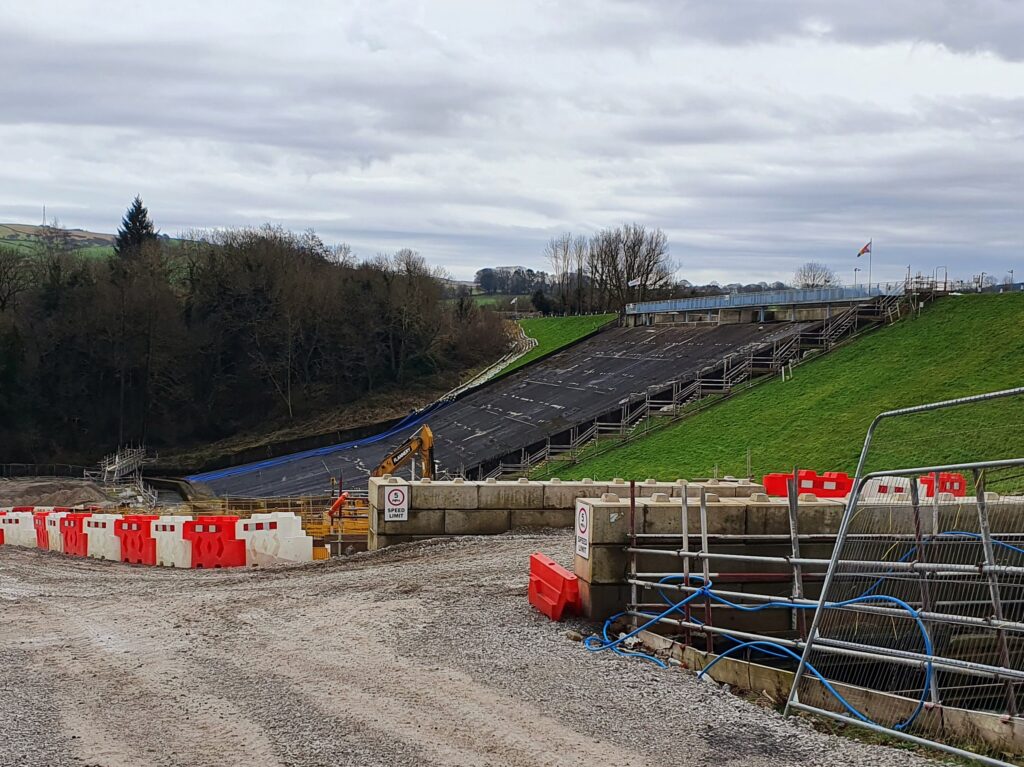
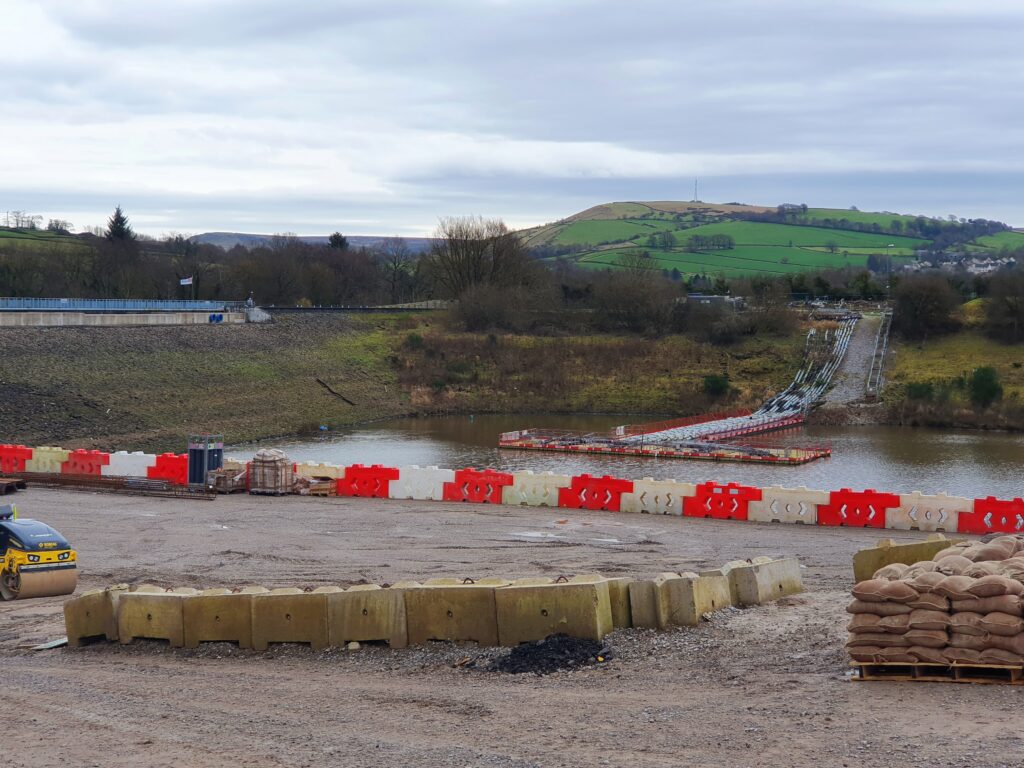
Nowadays it’s not trade that keeps the canals viable, but as with all waterways, natural or man-made, they need a constant supply of water. And whilst we might be getting a generous contribution from the heavens this week, direct rainfall isn’t sufficient without careful management.  You’ll usually find a reservoir near the head of most canals with pumping stations along the route.  Combes reservoir in the High Peaks was built to feed the Peak Forest canal, but it wasn’t sufficient and in 1838 the Victorians completed Toddbrook reservoir at Whaley Bridge.  As with most reservoirs, Toddbrook suffered its fair share of leaks over the years but in August 2019, after a particularly wet summer, part of the modern concrete slipway collapsed. It was feared the whole structure would give way with catastrophic consequences. 1500 residents of Whaley Bridge, Furness Vale and New Mills were evacuated whilst Chinook helicopters dropped 400 tones of aggregate to help prevent a disaster. CRT has been working on the repair ever since, with some interesting modernisation, shown here.

(Images swiped from Internet search)

The project is supposed to be completed this year, so we took a walk up to see what was going on. Most of the dam is still fenced off from the general public so we weren’t able to get up close, but we chatted to a few of workmen and peer through the site gates.  They aren’t so  convinced the work will be finished this year. Neither are we.


There’s plenty of information online about the dam but I found this short little case study interesting.


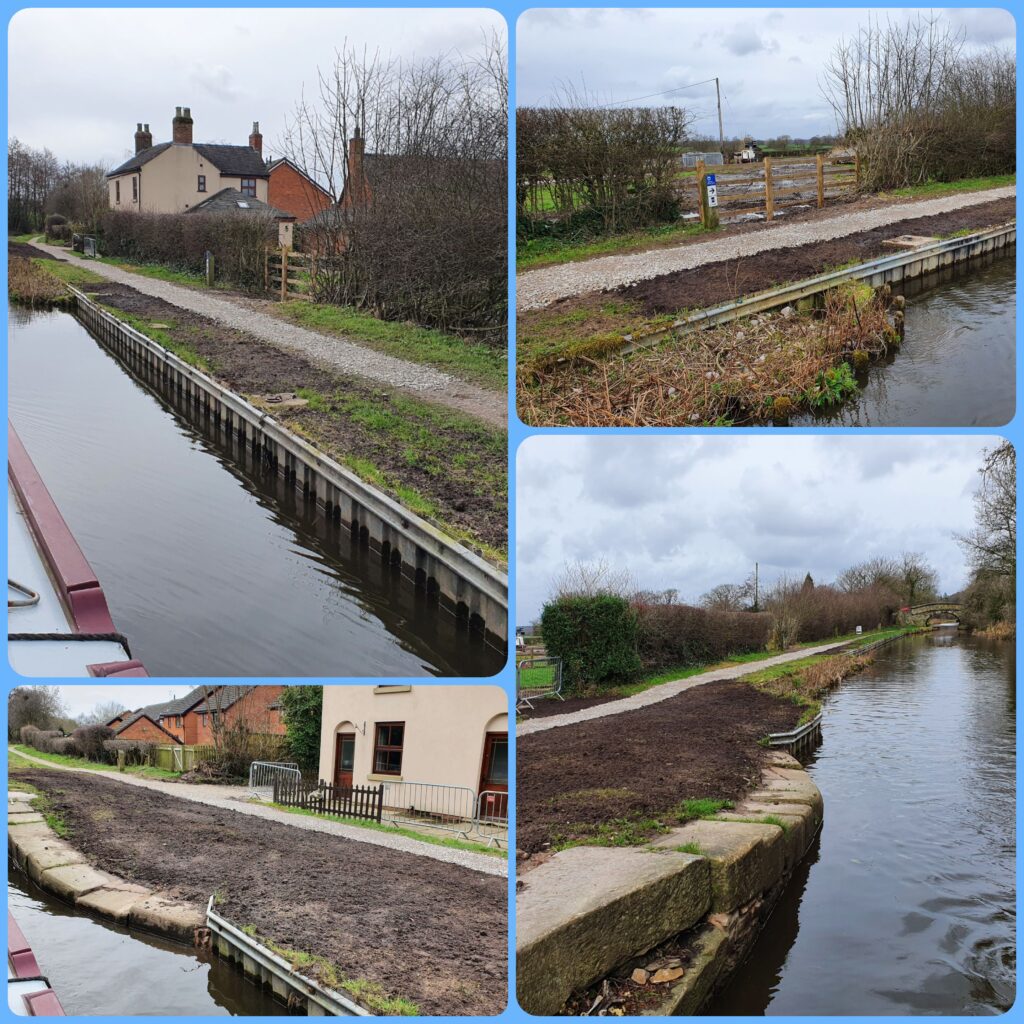
Thankfully the effect of the of our current structural failure – the culvert collapse which had closed navigation on the Macclesfield has been repaired and reopened. We’re pointing in the right direction and ready to start cruising.